Reviewed By: Medsdog Team
Last Updated: September 2026
If your dog is scratching constantly, sneezing, or has red, inflamed skin, you’ve probably search for “can dogs take Allegra” for a fast answer. The short version: yes, in many cases dogs can take Allegra (fexofenadine), but only the plain, single-ingredient version, only at the right dose for their weight, and only after checking with your veterinarian.
This guide breaks down exactly how much Allegra is generally considered safe for dogs, what a real dosage chart looks like, which forms of Allegra to avoid entirely, and when a dog needs to see a vet immediately instead of getting another dose at home.
Disclaimer: All information in this guide is provided for educational purposes only and should never replace professional veterinary advice.
Allegra Dosage Calculator For Dogs By Weight
• Avoid “Melts” or liquids containing Xylitol.
• Verify all doses with your vet before use.
© medsdog.com
Allegra® (fexofenadine) For Dogs Overview
- Allegra® (fexofenadine) dosage is an antihistamine drug occasionally used in dogs to treat allergy symptoms such as itching, sneezing, itchy skin and watery eyes.
- It's a less sedating / non-drowsy antihistamine than older ones like Benadryl.
- Allegra is an antihistamine that blocks certain receptors (H1 receptors) to reduce swelling, itching and other allergic symptoms.
- Dogs can only take plain Allegra (fexofenadine).
- Allegra-D® or products with pseudoephedrine should never be used in dogs.
- Liquid human products can sometimes contain xylitol, which is toxic.
- The dose varies by weight, age, health status and severity of allergies.
- Allegra is not FDA-approved for animals and should only be given on a vet's advice.
- Side effects may include nausea, vomiting, diarrhoea, or lethargy.
- Your vet can help you decide if Allegra is right for your dog.
What is Allegra® For Dogs?
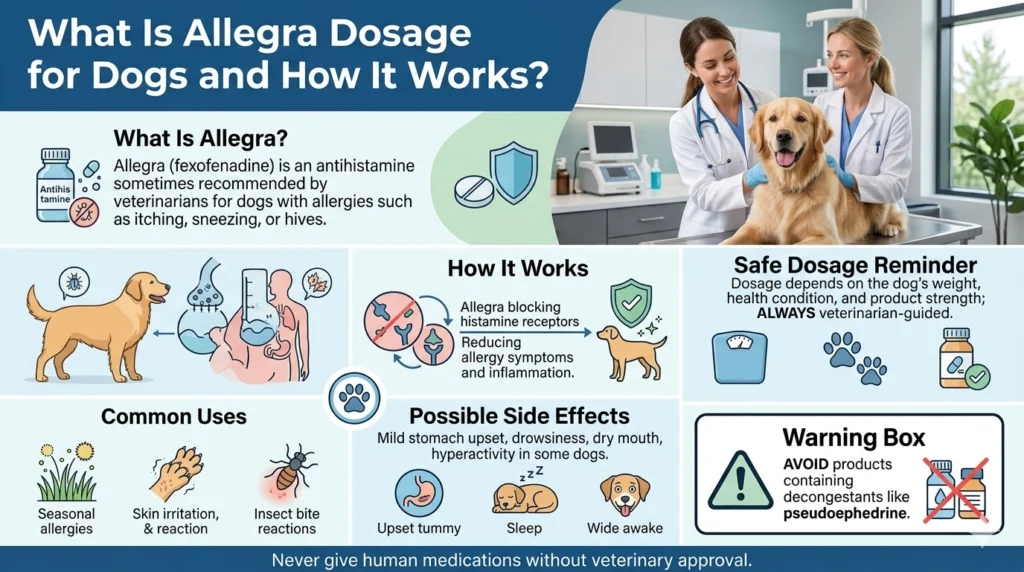
Allegra® (generic name fexofenadine) is a second-generation antihistamine sometimes prescribed by veterinarians to treat itching and other allergy symptoms in dogs. As it is thought to be less or non-sedating than older antihistamines such as diphenhydramine (Benadryl), it may be beneficial for some pets if used properly.
Allegra dose works by blocking the effects of histamine H1 receptors, which are responsible for allergic responses like swelling, itching, sneezing, runny nose, watery eyes and irritation.
This can help to alleviate the symptoms that dogs may experience when suffering from seasonal allergies, environmental allergies, and even mild allergic skin flare-ups.
But there is limited research on its use in dogs, so the dose, efficacy and safety will depend on your dog's size, health status, age and uses.
It's important to note that not all types of Allegra dosage are safe for dogs. Products that combine Allegra with other drugs, such as Allegra-D® (containing pseudoephedrine) are poisonous for animals.
The liquid human products include Fexofenadine oral suspension can also contain the sweetener xylitol, which is toxic to dogs. Only products containing only fexofenadine should be used, and only on veterinarian's advice.
Allegra medication is an over-the-counter medication for humans, but is not approved by the FDA for pets, and is used by veterinarians as an extra-label drug. This means pet owners must not calculate the dose.
Can Dogs Take Allegra?
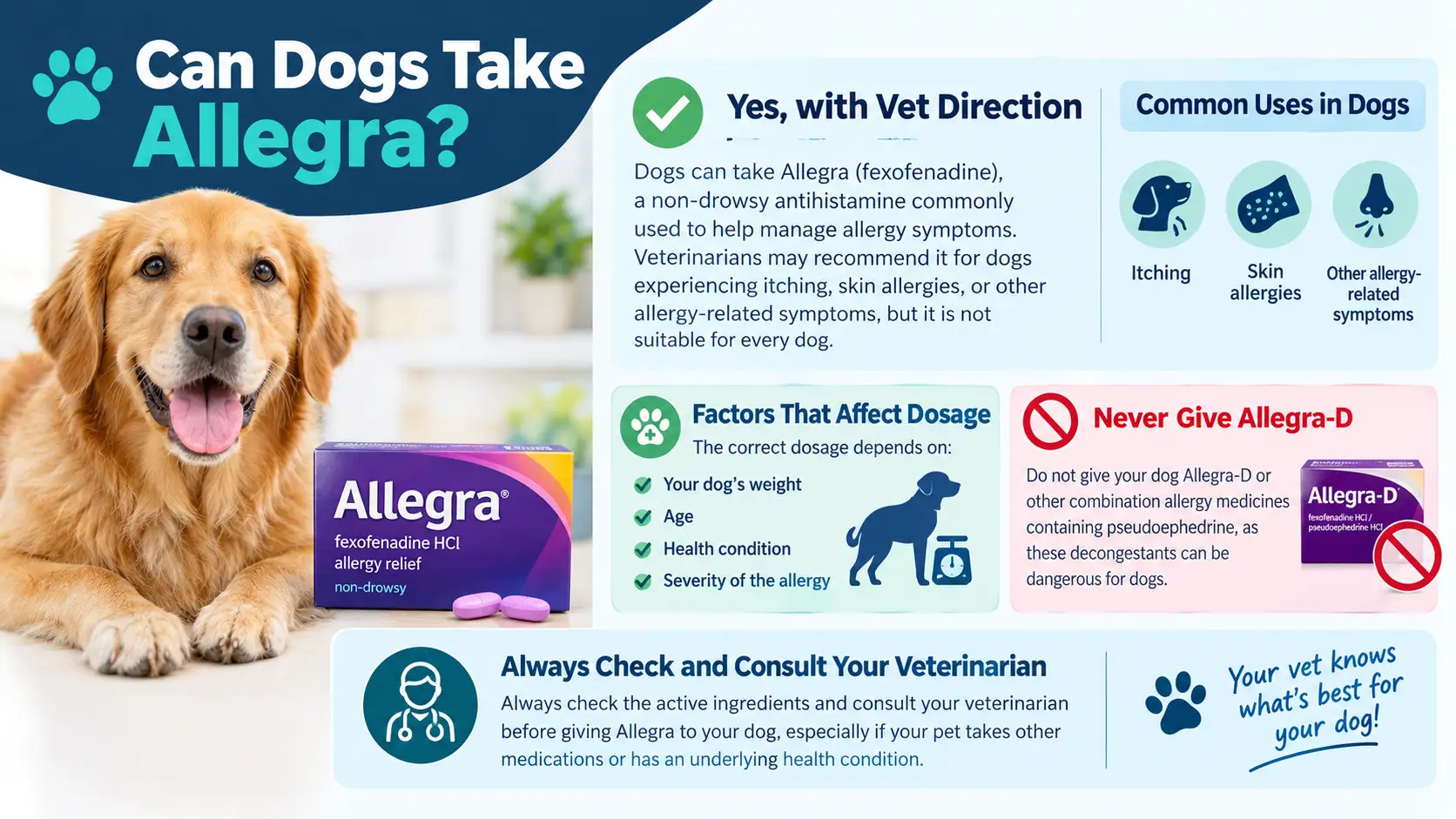
Yes, many veterinarians consider plain fexofenadine (Allegra) a safe option for dogs with mild seasonal or environmental allergies, itching, or allergic rhinitis.
The correct dosage depends on your dog’s weight, age, health condition, and the severity of the allergy. Never give your dog Allegra-D or other combination allergy medicines containing pseudoephedrine, as these decongestants can be dangerous for dogs.
Always check the active ingredients and consult your veterinarian before giving Allegra to your dog, especially if your pet takes other medications or has an underlying health condition.
This is the answer to nearly every version of the question pet owners search for can you give dogs Allegra, can I give my dog Allegra, can a dog take Allegra and it applies whether the concern is seasonal allergies, itchy skin, or occasional hives. The nuance is always in the how much and which product, which is what the rest of this guide covers.
Is Allegra Safe for Dogs?
Allegra safe for dogs is a fair question, and the honest answer is: it depends entirely on the product and the dose.
Plain fexofenadine tablets, dosed correctly, are generally well tolerated by most healthy adult dogs. But three specific risks turn a normally safe medication into a dangerous one:
- Allegra-D and any product combined with pseudoephedrine a decongestant that is toxic to dogs and can cause dangerously elevated heart rate, agitation, and seizures.
- Liquid suspensions or "meltable" dissolvable tablets that contain xylitol, a sugar substitute that causes a rapid, life-threatening drop in blood sugar in dogs.
- Incorrect dosing giving a full adult tablet without adjusting for your dog's weight.
If you only take one thing from this section: check the active ingredients label every single time, not just the brand name on the box.
How Much Allegra Can I Give My Dog?
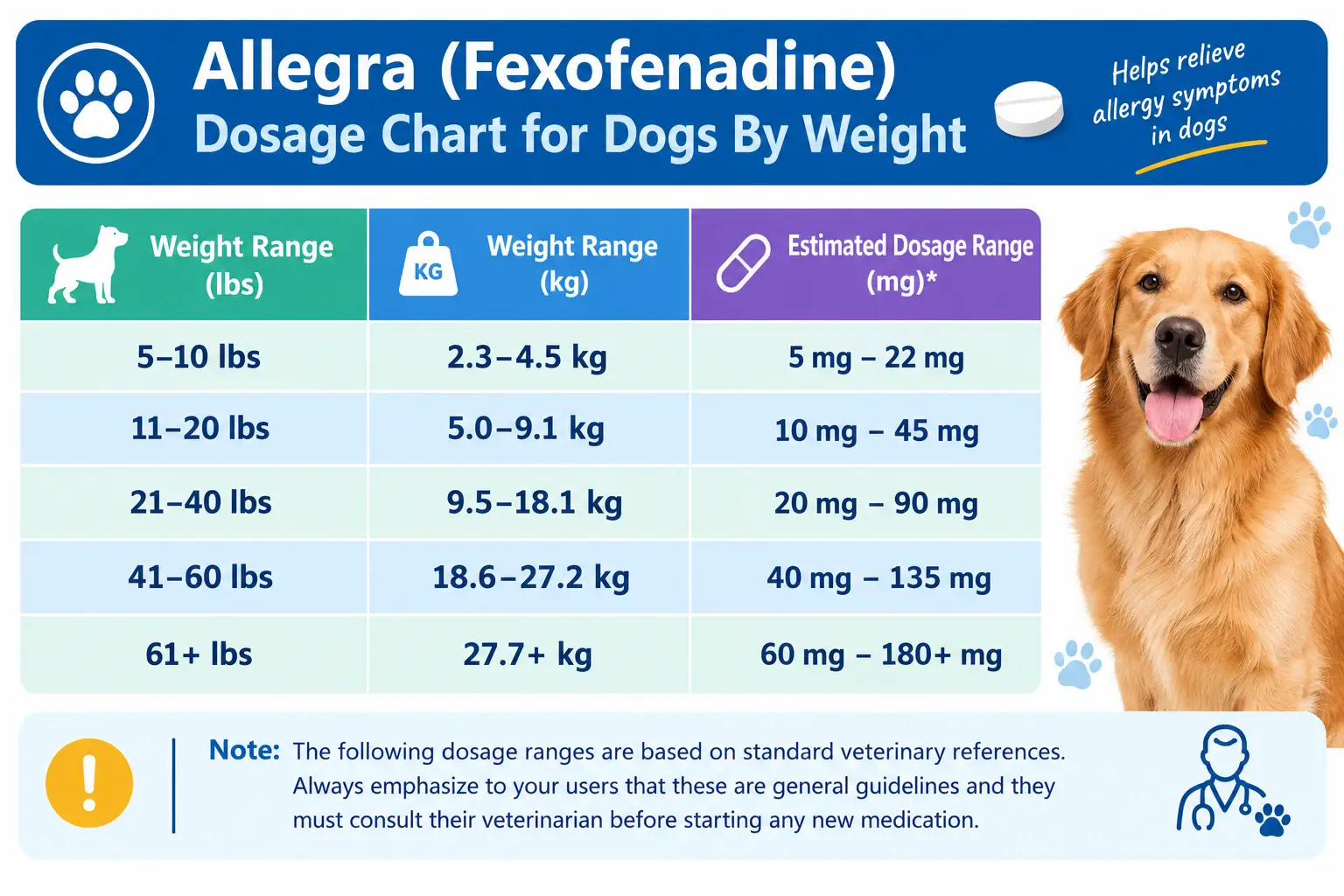
The Standard Veterinary recommended Allegra® dosage for dogs is 2–5 mg/kg (1–2.3 mg/lb) of body weight by mouth every 12–24 hours. Remember that Fexofenadine should not be used in canines with a known hypersensitivity or allergy to the drug.
Allegra (Fexofenadine) Dosage Chart for Dogs By Weight
| Weight Range (lbs) | Weight Range (kg) | Estimated Dosage Range (mg)* |
| 5–10 lbs | 2.3–4.5 kg | 5 mg – 22 mg |
| 11–20 lbs | 5.0–9.1 kg | 10 mg – 45 mg |
| 21–40 lbs | 9.5–18.1 kg | 20 mg – 90 mg |
| 41–60 lbs | 18.6–27.2 kg | 40 mg – 135 mg |
| 61+ lbs | 27.7+ kg | 60 mg – 180+ mg |
Note: The following dosage ranges are based on standard veterinary references. Always emphasize to your users that these are general guidelines and they must consult their veterinarian before starting any new medication.


Paid Links - As an Amazon Associate, I earn from qualifying purchases.
What About the 180 mg Tablet?
A common search is "can I give my dog Allegra 180 mg" this is the strongest human adult tablet strength, designed for a 24-hour dose in adult humans. For almost all dogs, a full 180 mg tablet is far more than the calculated dose and should not be given whole.
If a 180 mg tablet is the only size you have, talk to your vet or pharmacist about safely splitting it don't estimate a fraction by eye. This is exactly the kind of situation the dosage calculator above and weight chart below exist to prevent.
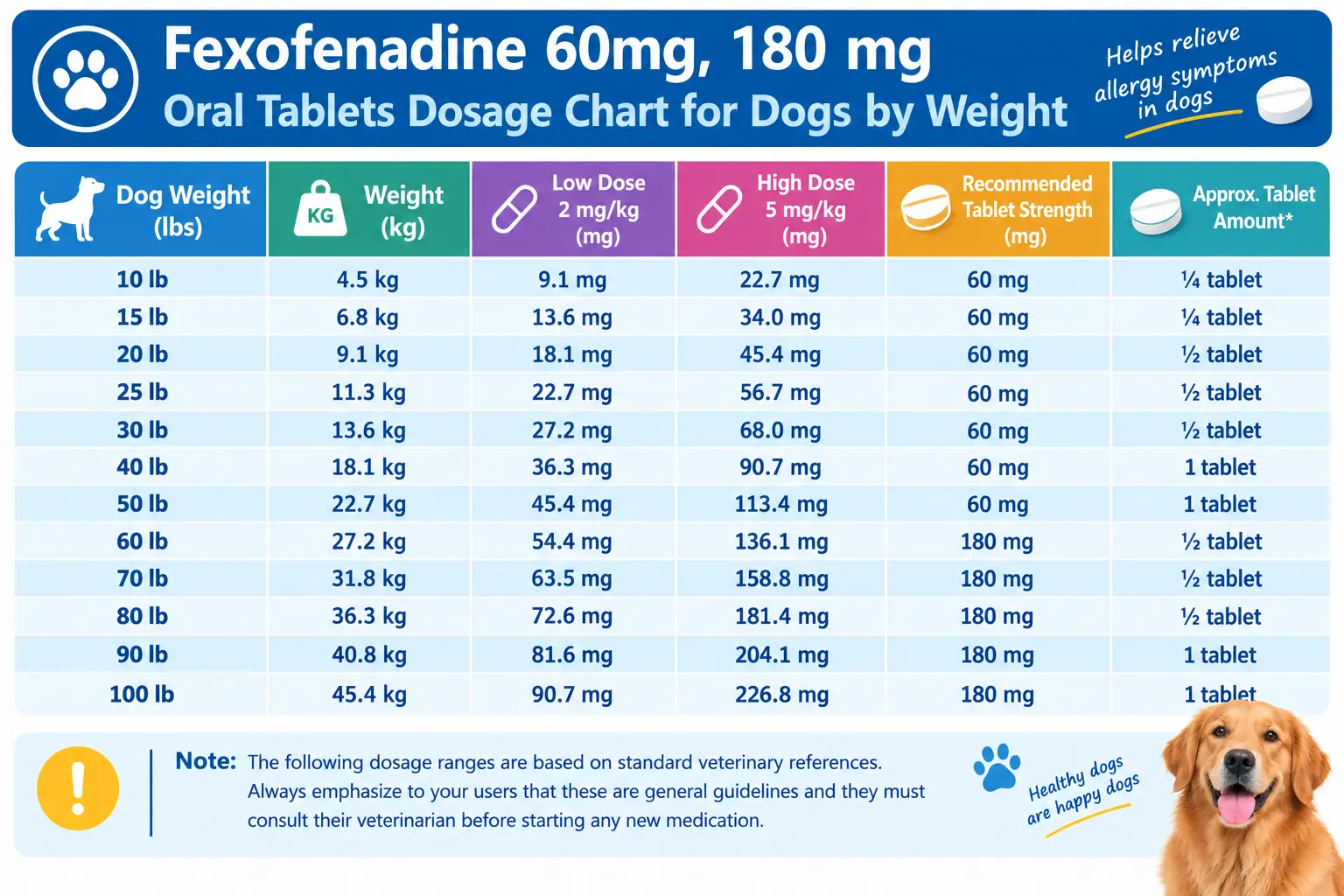
Fexofenadine 60mg, 180 mg Oral Tablets Dosage Chart For Dogs by Weight
| Dog Weight | Weight (kg) | Low Dose 2 mg/kg | High Dose 5 mg/kg | Recommended Tablet Strength | Approx. Tablet Amount* |
|---|---|---|---|---|---|
| 10 lb | 4.5 kg | 9.1 mg | 22.7 mg | 60 mg | ¼ tablet |
| 15 lb | 6.8 kg | 13.6 mg | 34.0 mg | 60 mg | ¼ tablet |
| 20 lb | 9.1 kg | 18.1 mg | 45.4 mg | 60 mg | ½ tablet |
| 25 lb | 11.3 kg | 22.7 mg | 56.7 mg | 60 mg | ½ tablet |
| 30 lb | 13.6 kg | 27.2 mg | 68.0 mg | 60 mg | ½ tablet |
| 40 lb | 18.1 kg | 36.3 mg | 90.7 mg | 60 mg | 1 tablet |
| 50 lb | 22.7 kg | 45.4 mg | 113.4 mg | 60 mg | 1 tablet |
| 60 lb | 27.2 kg | 54.4 mg | 136.1 mg | 180 mg | ½ tablet |
| 70 lb | 31.8 kg | 63.5 mg | 158.8 mg | 180 mg | ½ tablet |
| 80 lb | 36.3 kg | 72.6 mg | 181.4 mg | 180 mg | ½ tablet |
| 90 lb | 40.8 kg | 81.6 mg | 204.1 mg | 180 mg | 1 tablet |
| 100 lb | 45.4 kg | 90.7 mg | 226.8 mg | 180 mg | 1 tablet |
Important Guidelines
- Avoid "Allegra-D": Explicitly warn users never to use products containing pseudoephedrine, which is toxic to dogs.
- Check for Xylitol: Advise users to check labels for Xylitol, especially in liquid or "meltable" formulations, as it is extremely dangerous to dogs.
- Veterinary Consultation: State clearly that antihistamines are often only "weakly effective" for canine atopic dermatitis and should be used under professional guidance, especially for long-term management.
- Dosing Frequency: Standard veterinary practice for fexofenadine in dogs is typically every 12 to 24 hours.
Uses of Allegra for Dogs
- Atopic Dermatitis: Reduces symptoms of chronic itching, licking, redness and irritation associated with environmental allergies.
- Allergic Rhinitis: Can help reduce sneezing, nasal irritation and allergy-induced respiratory issues.
- Itchy Skin: May help reduce itchiness associated with seasonal and environmental allergies.
- Minor Allergies: Can be used to treat mild allergic reactions like hives or rashes.
- Long-Term Allergy Treatment: Can be prescribed as part of an ongoing allergy management strategy by a veterinarian.
Whether the concern is framed as "can dogs take Allegra for allergies" or "can I give my dog Allegra for itching," the underlying answer is the same: it can help with mild-to-moderate symptoms in many dogs, but it's rarely a complete solution on its own for more severe or chronic cases.
Best results tend to happen when Allegra is:
- Given consistently rather than only after symptoms flare
- Started before known allergy triggers (like pollen season)
- Combined with other vet-recommended support, such as regular omega-3 supplementation for skin and coat health
Precautions and Side Effects
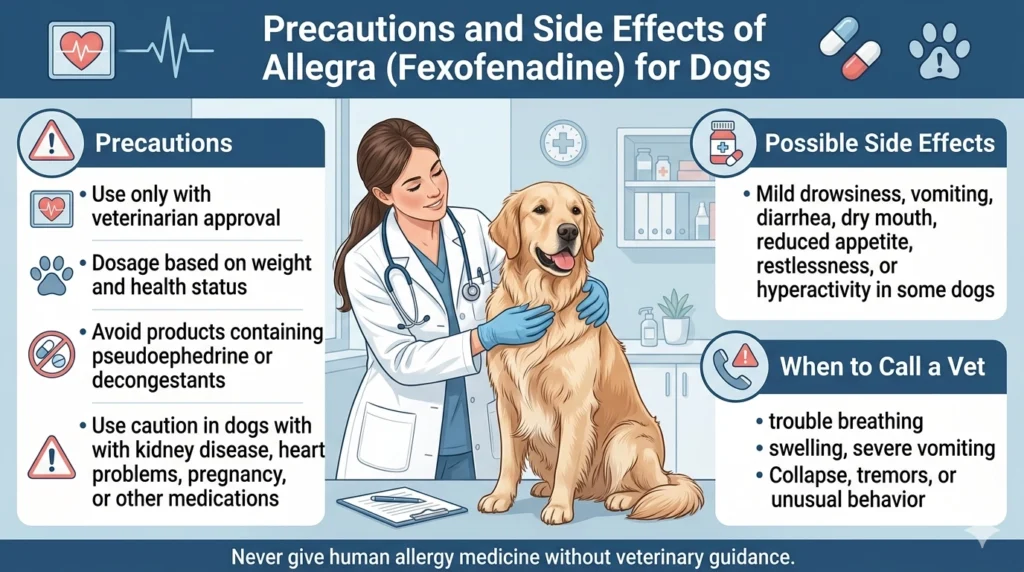
Allegra® (brand name) or fexofenadine is considered safe for veterinary use but like all medications it can have side effects and should be used with caution. Owners should be cautious and seek veterinary advice before using the drug.
Important Precautions
- Avoid use in dogs with an allergy/hypersensitivity to fexofenadine.
- Not used in dogs expecting or milking and should only be considered if recommended by a veterinarian.
- Use with caution in dogs with renal disease, as the latter can impact the metabolism of the medication.
- Drug interactions may occur with:
- Antacids
- Erythromycin
- Ketoconazole
- Ivermectin
Always tell your veterinarian about any supplements or medications your dog is taking.
Possible Side Effects
- Drowsiness (uncommon, but more common with higher doses)
- Lethargy / low energy
- Dry mouth
- Vomiting
- Diarrhea
- Nausea
- Indigestion
- Headache (in humans)
High-Dose Risks
- While Allegra is a non-sedating antihistamine, higher doses can increase the risk of drowsiness.
- High doses of second-generation anti-histamines can have a negative impact on the heart.
When to Contact a Vet
If your dog exhibits excessive lethargy, vomiting, diarrhoea, weakness or any other reaction after being administered Allegra, please contact a veterinarian.
How Fexofenadine Is Supplied
Allegra® (fexofenadine) is available in various forms for humans, but not all are safe for dogs. Read the label and ask your veterinarian.
Available Forms
- Oral Tablets: 60 mg and 180 mg are frequently used.
- Dispersible / Orally Disintegrating Tablets - 30 mg; made for humans and may be difficult to administer. Do not use for dogs.
- Oral Suspension / Liquid - 30 mg/5 mL (6 mg/mL). Do not use for dogs.
Important Warnings
- Dissolvable tablets and liquids can contain xylitol, which is poisonous to dogs.
- Human liquid suspension is not recommended for pets if it contains xylitol.
- Allegra-D® and other fexofenadine + pseudoephedrine products should not be used in dogs.
Best Option for Dogs
- When prescribed by a vet, plain fexofenadine tablets are generally safe.
Allegra (Fexofenadine) Dosing Information for Dogs
Allegra® (fexofenadine) should only be given to dogs on the advice of a veterinarian. The dose will vary based on your dog's weight, health and severity of their allergies. Only use regular Allegra (containing fexofenadine).
Recommended Dosage
- 1-2.5 mg per pound (mg/lb) of body weight
- 2-5 mg/kg of body weight
- Given every 12-24 hours as prescribed by your vet
- Higher doses (once a day) may be given for some dogs under the supervision of a vet
General Dose Examples
- Small dogs: around 15 mg total dose
- Large dogs: about 30 mg total dose
- Doses are rounded up to tablets sizes
How to Give It
- Can be taken with or without food
- If upset stomach, with food
- May be trialled for 2 weeks to assess its effectiveness
Overdose Signs
- Lethargy
- Vomiting
- Rapid heart rate
If you think your pet has overdosed, call your veterinarian immediately.
Allegra vs. Other Antihistamines for Dogs
Allegra isn't the only antihistamine vets consider for canine allergies, and it's not always the first choice. Here's how it stacks up against the other options pet owners commonly ask about:
| Antihistamine | Typical Dose Reference | Dosing Frequency | Sedation Level |
|---|---|---|---|
| Fexofenadine (Allegra) | 1–2.3 mg/lb (2–5 mg/kg) | Every 12–24 hrs | Low |
| Cetirizine (Zyrtec) | ~0.5 mg/lb | Once daily | Low |
| Loratadine (Claritin) | ~0.2 mg/lb | Once daily | Low |
| Diphenhydramine (Benadryl) | ~1 mg/lb | Every 8–12 hrs | Higher |
If your vet decides fexofenadine isn't the best fit, it's worth reading up on how cetirizine dosing works out for dogs or how Claritin's active ingredient is dosed at a noticeably lower rate than Allegra.
For dogs that need something faster-acting for an acute reaction, our full breakdown of giving Benadryl to dogs safely covers that scenario in detail. Some vets also move to higher, more frequent antihistamine dosing with hydroxyzine for chronic itch management when standard antihistamines aren't enough.
For dogs with more persistent or moderate-to-severe allergic skin disease, antihistamines are often not the main treatment at all vets frequently move to options like oclacitinib (Apoquel) and how that dosing compares, a monthly injectable alternative covered in our lokivetmab (Cytopoint) dosing guide, or in flare-ups, a short course explained in our prednisone dosing chart for dogs.
Is Fexofenadine Good for Dog Allergies?
Fexofenadine is potentially some relief to dog allergies, but scientific evidence, overall, indicates that it has limited an inconsistent efficacy. Studies on the use of antihistamines in canine atopic dermatitis and allergic diseases have reported mixed outcomes, with many studies demonstrating only a small benefit.
The American College of Veterinary Dermatology has performed a review that has found that there was a lack of high quality evidence to prove or disprove the effectiveness of antihistamines in dogs, mostly due to small and diverse studies that have been published so far.
Experimental evidence indicates that although individual dogs can be improved in itching or allergy symptoms by antihistamines such as Allegra, not many dogs react. The international veterinary guidelines on canine atopic dermatitis also indicate that oral administration H1 antihistamines only have minimal effects in some instances.
They are not believed to be effective as a mono-therapy in moderate to severe allergic skin disease. Instead, they can play a minor role as supportive therapy in mild cases or as a preventive measure when conducted prior to exposure to allergens.
FAQs
How many times do I give my dog Allegra dosage for dogs?
Allegra for dogs dose is typically administered one or twice a day, as directed by your veterinarian. When it comes to your dog, the precise schedule ought to be determined by the condition of the animal and the recommendation of experts.
What is the duration of activity of Allegra in dogs?
It begins to work after 1-2 hours of administration, usually, because it is absorbed into the blood. Nevertheless, it can take several days before major changes in the symptoms of allergy can be observed.
Can Allegra be used in dogs?
Allegra dosage for dogs is typically well tolerated in proper dosage, however, administration must be under the direction of a veterinarian as improper dosage or type of product taken may lead to complications.
What are the typical side effects of Allegra in dogs?
The side effects are mild and can be sleepiness, vomiting, diarrhea, upset stomach or loss of appetite.
Are there any serious side effects of Allegra in dogs?
Dogs can also in isolated instances develop a rapid heart rate, extreme agitation, tremors, difficulty breathing or collapse, which is life-threatening and needs prompt veterinary attention.
Is it possible to use human Allegra to dog?
Fexofenadine products should only be considered plain and even then only after veterinary advice. Others have dangerous elements such as xylitol or pseudoephedrine, which are poisonous to dogs.
What is the maximum duration of a dog on Allegra?
Little information is available on long-term use in dogs, so a veterinarian should decide how long to continue depending on your dog response and condition.
What would you recommend in case Allegra does not work in my dog?
In case the symptoms of allergy do not improve after several days, you need to approach your veterinarian to modify the treatment plan or consider alternative means.
Final Thoughts
In certain dogs, allergic conditions, such as itching and irritation, can be treated with allegra (fexofenadine), which may be a beneficial option to treat mild signs of allergy. Nevertheless, it is not always effective, and it is not as effective with all dogs since canine allergies are often associated with more than just a histamine response.
Although dosage for dogs by weight it is normally tolerable when administered appropriately, it is not advisable to take Allegra without veterinary consultation since it may cause side effects, incorrect dosing, and inappropriate formulations. Pseudoephedrine or xylitol that are in products should be avoided at all costs, as they are harmful to dogs.
In general, Allegra can be an adjunct component of an allergy management program, however, it is not typically a solitary treatment of moderate or severe allergic disease. The advice of a veterinarian is necessary to use safely and to understand whether it is the appropriate choice in the case of your dog.
References
- Bruet, V., et al. (2022). Clinical Guidelines for the Use of Antipruritic Drugs in the Control of the Most Frequent Pruritic Skin Diseases in Dogs. Veterinary Sciences, 9(4), 149.
- Olivry, T., DeBoer, D.J., Favrot, C., et al. (2015). Treatment of canine atopic dermatitis: updated guidelines from the International Committee on Allergic Diseases of Animals (ICADA). BMC Veterinary Research, 11:210.
- Plevnik, A., Kotnik, T., & Kobal, S. (2006). Fexofenadine Treatment of Atopic Dogs: Preliminary Clinical Results. Acta Veterinaria Brno, 75, 549–555.
- DeBoer, D.J., et al. (2001). The ACVD task force on canine atopic dermatitis: antihistamine pharmacotherapy. Veterinary Immunology and Immunopathology.
- Merck Veterinary Manual. Antihistamine Dosages for Integumentary Disease in Animals.