KBroVet Dosage Calculator For Dogs
Calculate potassium bromide dosing regimes for canine seizure management
Calculated Dosing Protocol
Important Clinical Guidance & Warnings
- Veterinary Guidance: Follow specific loading and maintenance dosages prescribed by a veterinarian tailored to your dog.
- Administration: KBroVet may be dosed with or without food. Tablets should not be split.
- Monitoring: Therapeutic concentrations may be reached around 4 weeks. Steady-state serum concentrations generally take 4 to 5 months. Test serum bromide levels at the end of loading, at 4 weeks, at 4 months, and then every 6–12 months.
- Side Effects: Monitor for sedation or gastrointestinal upset and report them to your veterinarian.
KBroVet® is an FDA approved potassium bromide (KBr) medication (marketed as KBroVet-CA1; application number 141-615 — the first potassium bromide chewable conditionally approved by FDA for reasonable expectation of effectiveness) to help control seizures that may occur with IE. KBr does not stop seizures altogether but increases the threshold for seizures and stabilizes neurons against the excitatory signals that start a seizure, which can result in more stable seizures and a more normal life—at least to the extent of having more predictable seizures.
The first step to getting the KBroVet dosage for dogs correct is to know what form you are using, as there are differences in dosage and administration. Since KBr does not undergo hepatic metabolism like many other antiepileptics, it may be a safer/softer alternative in dogs with impaired liver function, and the French vanilla flavored chewable tablets are easier to work into a pet’s daily schedule, lessening the chances of a missed dose.


Paid Links - As an Amazon Associate, I earn from qualifying purchases.
K•BROVet® Oral Solution is a butterscotch vanilla flavored liquid containing 250 mg of potassium bromide per mL, with cyanocobalamin and pyridoxine HCl. As a chemical, potassium bromide is a crystalline, bitter-tasting and odourless substance with a high water, glycerol and ethanol solubility and a molar mass of 119.002 g/mol.
Below, let’s take a look at how KBroVet dosage for dogs by weight is calculated, from loading doses to long-term maintenance.
What is KBroVet Dosage For Dogs?
Dogs typically require a daily dose of 25 to 68 mg/kg KBroVet (potassium bromide), depending on the individual canine’s therapeutic requirements and the response to treatment with KBr. Veterinarians will often start treatment with a higher loading dose (120-160mg/kg/day for 5 days) and then switch to a lower maintenance dose (30-40mg/kg/day) due to the time it takes for KBr to reach steady-state serum levels.
KBroVet Oral Solution is standardized at 250 mg/mL and can be dosed precisely by volume. Since the efficacy of the treatment is directly affected by both the amount of chlorides consumed and the blood chloride levels of each dog, always check with your veterinarian regarding the correct safe dose and monitoring program for your dog.
KBroVet (Potassium Bromide) Dosage Overview Chart For Dogs
| Protocol / Goal | Phase | Daily Dosage (mg/kg) | Solution Volume (250 mg/mL) | Schedule / Frequency | Notes |
| Standard Recommended Range | Maintenance | 25 – 68 mg/kg | 0.10 – 0.27 mL/kg | Daily (single or split) | Overall clinical therapeutic range |
| Target Serum: ~1.0 mg/mL | Loading Phase | 120 mg/kg | 0.48 mL/kg | Daily for 5 days | Rapidly establishes initial therapeutic serum levels |
| Target Serum: ~1.0 mg/mL | Maintenance Phase | 30 mg/kg | 0.12 mL/kg | Once daily | Ongoing maintenance following 5-day loading |
| Target Serum: ~1.5 mg/mL | Loading Phase | 160 mg/kg | 0.64 mL/kg | Daily for 5 days | Higher loading regimen for severe seizure management |
| Target Serum: ~1.5 mg/mL | Maintenance Phase | 40 mg/kg | 0.16 mL/kg | Once daily | Ongoing maintenance following 5-day loading |
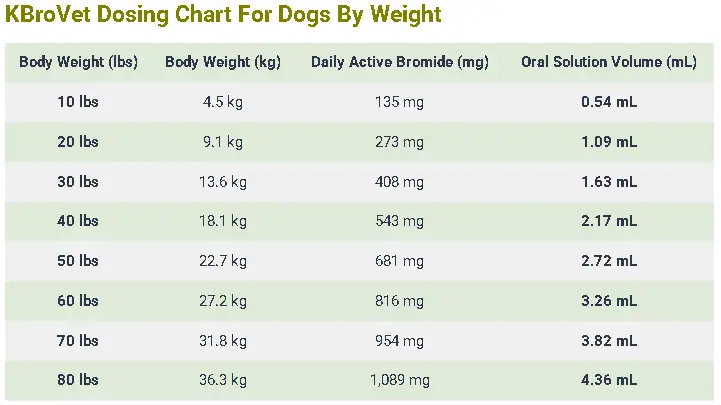
KBroVet Dosing Chart For Dogs By Weight
Below is a reference guide for common weight increments using the standard target maintenance dose of 30 mg/kg/day (using KBroVet Oral Solution at 250 mg/mL):
| Body Weight (lbs) | Body Weight (kg) | Daily Active Bromide (mg) | Oral Solution Volume (mL) |
| 10 lbs | 4.5 kg | 135 mg | 0.54 mL |
| 20 lbs | 9.1 kg | 273 mg | 1.09 mL |
| 30 lbs | 13.6 kg | 408 mg | 1.63 mL |
| 40 lbs | 18.1 kg | 543 mg | 2.17 mL |
| 50 lbs | 22.7 kg | 681 mg | 2.72 mL |
| 60 lbs | 27.2 kg | 816 mg | 3.26 mL |
| 70 lbs | 31.8 kg | 954 mg | 3.82 mL |
| 80 lbs | 36.3 kg | 1,089 mg | 4.36 mL |
Important Clinical Considerations
- Administration: May be administered with or without food. Chewable tablets should not be split.
- Therapeutic Monitoring: Serum testing should be conducted at the end of loading, at 4 weeks (initial therapeutic response), at 4–5 months (steady-state concentration), and every 6–12 months thereafter.
- Disclaimer: Dosages must be customized by a licensed veterinarian based on seizure control and serum bromide testing.
What’s K-BroVet for Dogs?
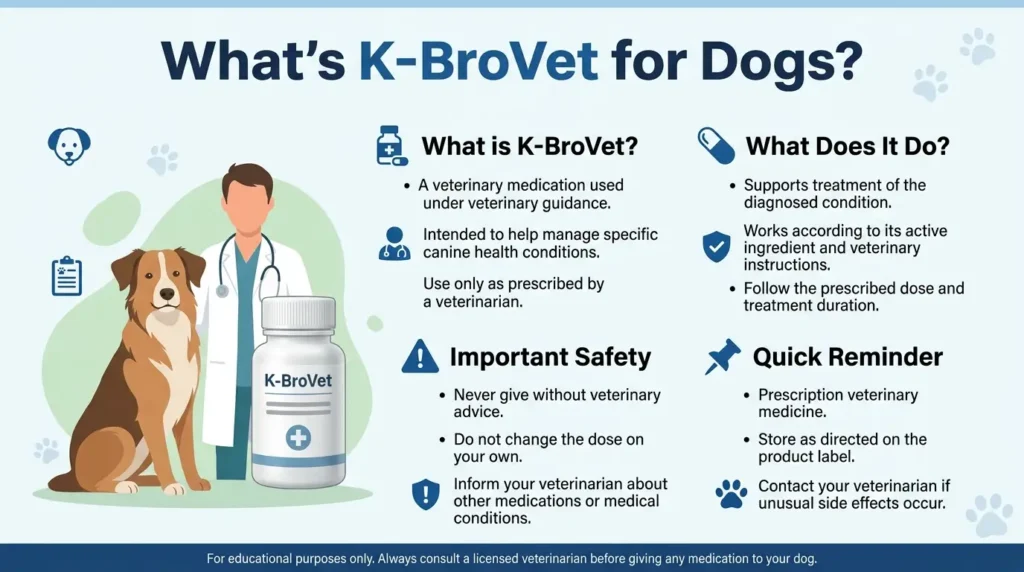
K-BroVet (potassium bromide chewable tablets) (also known as KBroVet-CA1) is a prescription drug that contains potassium bromide (KBr) and is used for controlling seizures related to idiopathic epilepsy (IE) in dogs. It received FDA approval under application number 141-615, with KBroVet-CA1 being the first potassium bromide chewable to be proven safe with a reasonable expectation of effectiveness pending ongoing effectiveness data.
K-BroVet for dogs is a chewable tablet with a pleasant French vanilla taste, for use in dogs only, once a day, which is convenient, consistent dosing – helps to prevent missed doses and fits into a dog’s daily routine. Unlike other antiepileptic medications, potassium bromide does not need to be metabolized in the liver and may be a good choice for dogs with liver disease.
K-BroVet is only available by prescription on the advice of a veterinarian and prescribing information should be consulted for full details of adverse events, warnings and precautions. Contraindications are in dogs with a history of bromide allergy, in cats and humans, and children, and accidental ingestion in humans should be treated by contacting a physician. The safety of its use has not been assessed in breeding dogs, pregnant and lactating dogs, or puppies less than 6 months of age.
Prescription K-BroVet should be obtained from the manufacturers and wholesale distributors directly from the FDA-registered manufacturer and wholesale distributor licensed by the applicable state boards, which will guarantee that the drug is genuine and where applicable, backed by the manufacturer.
K-BroVet Uses for Dogs
K-BroVet (potassium bromide chewable tablets), also known as KBroVet-CA1, is used for control of seizures associated with idiopathic epilepsy in dogs. K-BroVet can be useful in managing epileptic seizures in dogs when prescribed by a veterinarian.
Key points:
- Secondary use: Control of seizures following drug-resistant IE (refugee treatment)
The purpose of the prescribed use is: When a dog has epileptic seizures, as diagnosed by a veterinarian - Species restriction: For use in dogs only — not for use in cats
- Not for human use: Not recommended for human use.
- Accidental ingestion: If ingested by human, contact physician immediately.
The KBroVet Advantage for Dogs
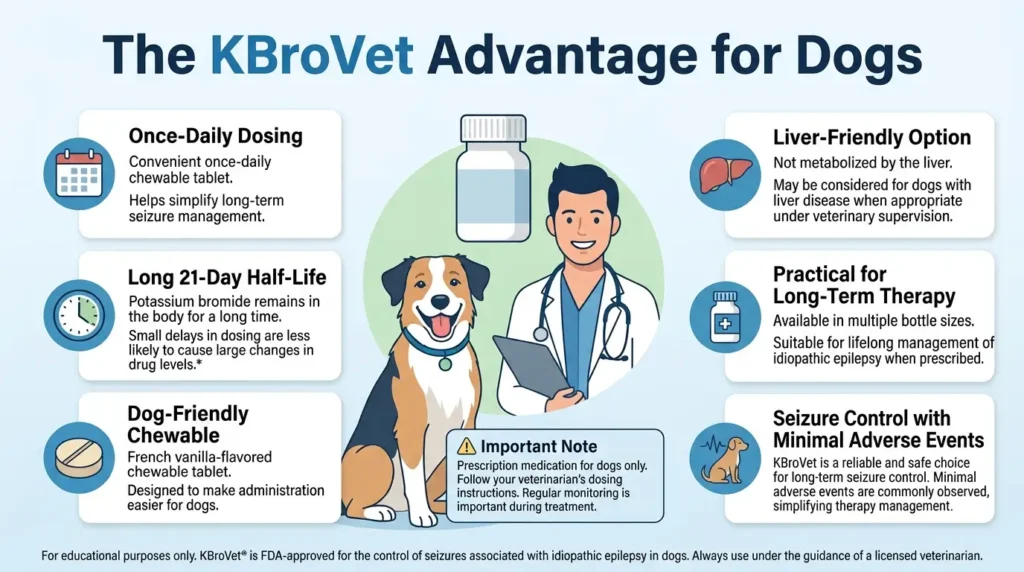
A veterinarian might prescribe KBroVet Dosage For Dogs if a dog experiences epileptic seizures, and it has several unique benefits that make it a top choice to manage a dog’s seizures.
Key advantages:
- 1x daily dose: Easy to take – once daily dose – helps to not miss a dose
- Half-life in the blood stream is 21 days: If a dose is missed, the drug level in the blood is not likely to change by much, which will decrease the risk of a seizure and provide additional reassurance.
- Dog friendly flavor: French vanilla flavored will taste good to the dog and is designed to be fed to dogs, therefore it is easy to administer and is treat-like.
- Easy on dogs’ livers: Perfect for dogs with reduced liver function that are unable to tolerate antiepileptics that pass through the liver.
- Ease of packaging: Packing of 60 and 180 counts offers ease of storage and convenient dosing
Additional benefits:
- The only approved drug for idiopathic epilepsy in dogs (conditional approval)
- Designed to regulate the epileptic seizures and as a dependable source of potassium bromide, a proven anti-convulsant to manage canine seizure disorders.
- Regarded as the ‘lightning quick’ treatment for idiopathic epilepsy in dogs
KBroVet Side Effects in Dogs
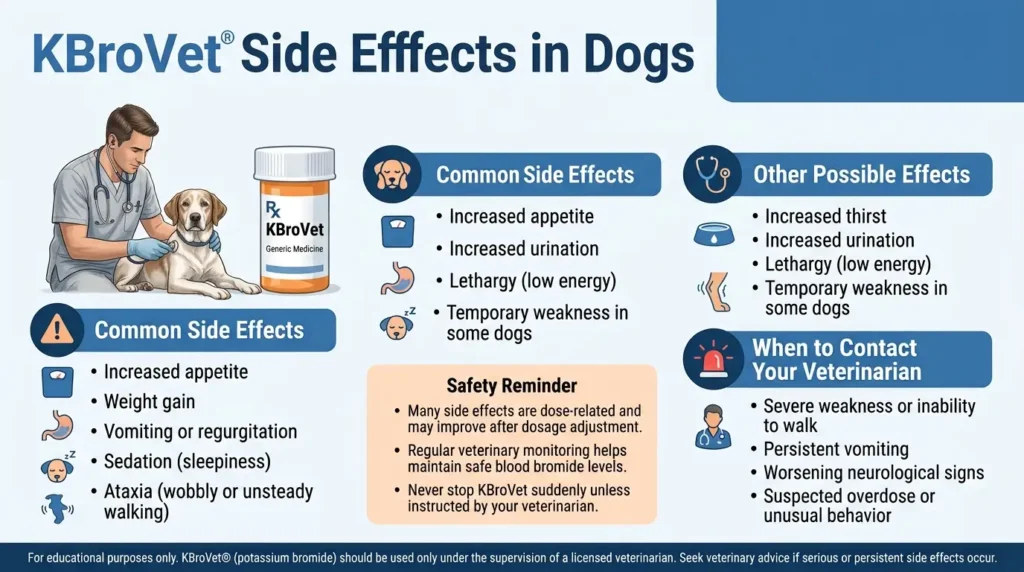
Dogs on KBroVet™ (potassium bromide chewable tablets) or K-BroVet® may be sedative/sleepy this does usually improve after about 3 weeks. Other side effects reported include increased appetite, weight gain, increased hunger, increased thirst and urination, vomiting/regurgitation, constipation, anorexia and uncoordinated movements (ataxia). Nausea can get worse during the time you are taking the loading dose.
Appetite stimulation, weight gain, vomiting/regurgitation, and sedation were the most frequently reported clinical abnormalities seen within the first 60 days of KBr treatment in a retrospective field study of 51 dogs treated for idiopathic epilepsy. Neurologic signs were the most common adverse events overall, and were reported as reversible.
Occasionally personality changes are also reported. KBr has been reported to be associated with other adverse events when used with other antiepileptic drugs, including an increased incidence of pancreatitis when compared to the use of phenobarbital alone.


Paid Links - As an Amazon Associate, I earn from qualifying purchases.
Common side effects:
- Drowsiness/sedation (usually improves after about 3 weeks)
- Greater hunger and weight gain
- Eating and drinking more than usual, and urinating frequently
- Vomiting/regurgitation
- Constipation
- Anorexia
- Uncoordinated movements (ataxia)
- More nausea (when loading dose is given)
Reversible neurologic signs (most common adverse event category):
- Sedation
- Irritability
- Restlessness
- Depression
- Behavioral changes
- Ataxia
- Hind limb paresis
- Mydriasis (dilated pupils)
- Stupor
- Coma
Occasional personality changes:
- Attention-seeking behavior
- Irritability or aggression
- Aimless pacing
Other reported risks:
- Pancreatitis: No information is available regarding the frequency of its occurrence with bromide alone; however, it has been reported more often with combinations of bromide and phenobarbital than with phenobarbital alone.
- Other negative effects when KBr is combined with other anti-epileptic medication
If your dog suffers from any of the following symptoms, seek help from your vet ASAP:
- Any other abrupt and/or atypical changes
- Profound sedation
- Stupor
- Ataxia
- Diarrhea
- Excess salivation
- Shivering
- Skin lesions
KBroVet Precautions for Dogs
List Use restrictions:
- Do not use in cats
- Not intended for human use
- Not proven in dogs to be used for breeding, or in dogs that are pregnant or lactating
- Safe use in neonates and young animals hasn’t been established
KBr is reported to have reproductive effects on other species.
Monitoring requirements:
- When making dietary changes, chloride infusions alone as intravenous fluids, and concurrent medications, dogs should be carefully monitored.
- However, careful monitoring should be considered in dogs with a disease that may make it difficult to maintain electrolyte balance.
- Bromide toxicosis may be a problem in animals with reduced renal (kidney) function.
Treatment limitations:
- There are some dogs that may have epileptic episodes that are unresponsive or refractory to KBr monotherapy.
- KBr may not be enough for all dogs suffering from idiopathic epilepsy (IE).
Allergic reaction risk:
- let your vet know if your dog is sensitive to or allergic to any medications
Allergic reactions can include: swollen lips, tongue, face or airways, trouble breathing, agitation, salivation, vomiting and widespread hives and itching. - If any of these symptoms do occur, contact your veterinarian right away or seek care at a veterinary emergency clinic.
High levels of bromide toxicosis:
- Ataxia, diarrhea, hematochezia, salivation, shivering, lesions of the skin, stupor followed by coma, and death have been observed in dogs at doses of 200-500 mg/kg/day for 4-26 weeks.
In case of suspected adverse reaction:
- See your vet if you think your pet has had a bad reaction to this medicine
KBroVet Drug & Food Interactions in Dogs
Potassium bromide may interact with a variety of drugs and dietary supplements; make sure your veterinarian is aware of all the product your dog is receiving.
Drugs that can interact with potassium bromide:
- Acepromazine
- Amitriptyline
- Clomipramine
- Diphenhydramine
- Furosemide
- Levetiracetam
- Methocarbamol
- Phenobarbital
- Tramadol
- Trazodone
- Zonisamide
Food interactions:
- Potassium bromide can interact with foods that contain chloride (salt) — follow veterinarian’s directions to keep dietary changes to a minimum
Important guidance:
- Never give any other medication to your dog without consulting your veterinarian
- Your veterinarian may need to use two drugs together in spite of their interactions, in which case the dose and/or the monitoring of your pet may need to be adjusted.
- If your pet has any reaction that you don’t expect to his/her combination of medications, please contact your veterinarian.
KBroVet Dosage Storage Instructions for Dogs
Storage guidelines:
- Store at controlled room temperature, 68°F to 77°F (20–25°C)
- Keep in a cool, dry location
- Keep out of direct sunlight and heat.
- Avoid bathroom, kitchen sink or other wet areas where medicine may deteriorate when exposed to heat or moisture.
Safety guidelines:
- Store in a childproof container
- Out of reach of children
You May Also Like to Read:
- Iverhart Max Dosage For Dogs: Calculator, Chart & Safe Guide
- Itrafungol Dosage For Dogs: Calculator, Chart & Safe Guide
FAQs
Why do dogs use K-BroVet?
If your dog suffers from epileptic seizures, your veterinarian may prescribe K-BroVet to help control them.
What else should I know about K-BroVet?
K-BroVet medication is used to treat seizures associated with epilepsy in dogs, and contains vitamin B12 as an added supplement for healthy neurological function.
It comes in either the French vanilla flavored chewable tablets or the butterscotch vanilla flavored oral solution; the liver flavored chewable tablets have been discontinued and replaced with the new French vanilla flavor. Please note: tablets are not scored and may be hard to divide.
What problems could my dog have with K-BroVet?
Because of adverse effects, K-BroVet is rarely used in cats. The most common side effect is drowsiness, which typically resolves after a few weeks of potassium bromide, but other side effects can be more serious, so consult your veterinarian if you see something that concerns you after you begin potassium bromide.
How do you use K-BroVet?
Always feed KBroVet with food as directed by your veterinarian. Don’t offer salty snacks or salty foods when your dog is taking potassium bromide as it may affect the drug.
What is in K-BroVet?
This prescription drug contains potassium bromide, which is known to help prevent seizures by reducing the amount of activity in the cells that can lead to a seizure, by suppressing nerve activity and excitability that can trigger a seizure.
Who makes K-BroVet?
The manufacturer of K-BroVet is called PRN Pharmacal.
What does conditionally approved mean?
Conditional Approval” by the FDA indicates that the product has been shown to be safe, and that it has a reasonable likelihood of effectiveness, but that the sponsor is still gathering evidence of effectiveness for full approval.
Conditionally approved animal drugs have a restricted use, as described on the package insert, and conditional approval has to be renewed on a yearly basis, demonstrating progress towards full approval, for up to four years.
What is the difference between KBroVet-CA1 and the previously KBroVet tablets?
The two products have different labelling because of the FDA’s conditional approval for KBroVet-CA1; please refer to the product label and package insert for full details. The new tablets are now non-scored, and no longer contain Cyanocobalamin (Vitamin B-12), but all other ingredients are unchanged.
How big are KBroVet-CA1 tablets and do they have a flavour?
An individual KBroVet-CA1 tablet is the size of a dime, and you’ll find that yes, they have their own special flavor to make them more palatable to dogs.
Key Takeaways
- K-BroVet (potassium bromide chewable tablets) is FDA approved/conditionally approved for the control of seizures as a result of idiopathic epilepsy (IE) in dogs.
- It increases the seizure threshold, which means it helps stabilize neurons against the brain’s overactive signals and helps make seizures less frequent, but not cease altogether.
- Once-daily French vanilla–flavored chewable tablets or butterscotch vanilla-flavored oral solution (250 mg/mL) containing cyanocobalamin and pyridoxine HCl (liver flavored tablets are no longer available).
- Tablets are unscored and may be difficult to divide; are about the size of a dime.
- High half-life of ~21 days, thus a missed dose is not likely to lead to hazardous blood level fluctuations
- It is less toxic to the liver than hepatically metabolised antiepileptics, and is a suitable choice for dogs with liver dysfunction.
- For dogs — not for use in cats, humans, breeding, pregnant/lactating dogs or puppies under 6 months.
- Common side effect is sedation/drowsiness (usually resolves in about 3 weeks); other side effects include increased appetite, increased weight, thirst, urination, vomiting, constipation and ataxia.
- Serious/emergency signs (profound sedation, stupor, ataxia, diarrhea, excess salivation, shivering and skin lesions) should prompt immediate veterinary care.
- Needs to be monitored closely when dietary changes occur, when chloride containing IV fluids are used, when other drugs are used, and in dogs with kidney disease or electrolyte problems
- Interacts with a number of medications (such as phenobarbital, furosemide, tramadol and zonisamide) and dietary salt/chloride intake.
- Should be administered with food and salty food or snacks should be avoided during therapy.
- Store in a container out of reach of children in a controlled room temperature (68-77 F/ 20-25 C), away from heat, moisture and direct sunlight.
- Made by PRN Pharmacal; always be sure to ask your Veterinarian for the correct dosage, length of treatment and monitoring plan.
Final Thoughts
KBroVet Dosage For Dogs is now a trusted, veterinarian-recommended treatment for idiopathic epilepsy in dogs, providing the same day-to-day seizure control, yet in a convenient once-a-day, dog-friendly formulation. It is not a cure and will not stop seizures altogether, but for many dogs it will provide genuine stability to a condition that can be unpredictable – and for those dogs that are sensitive to liver, it will provide an alternative to hepatically metabolized antiepileptics.
Like any prescription drug, it’s important to work closely with your veterinarian: follow the dosage exactly, be aware of side effects, monitor and be consistent with your vet’s plans, and immediately alert your vet to any unusual symptoms. However, with proper advice and guidance, K-BroVet can play a key role in improving a dog’s epilepsy life.