Prazosin Dosage Calculator for Dogs
Calculate dosage accurately according to veterinary protocol standards.
Calculated Dosage Results
Pharmacology: Prazosin is an alpha1-adrenergic receptor antagonist and mixed vasodilator. It is administered orally (PO).
Important Considerations:
- Tolerance develops rapidly with continued administration.
- Undergoes pronounced first-pass metabolism.
- Rarely administered clinically in small animals to treat primary cardiac disease.
- Always consult a licensed veterinarian to confirm precise dosing and monitor response to treatment.
© medsdog.com


Paid Links - As an Amazon Associate, I earn from qualifying purchases.
If your dog was just prescribed prazosin Dosage, you're probably staring at a bottle wondering exactly how much to give and how often. The short answer: most veterinary dosing references list prazosin dosage for dogs at 0.07 mg per kilogram, given every 8 to 12 hours, though some vets use a fixed 0.5–2 mg per dog instead. In This Guide, you'll find a full dosage chart by weight, a free calculator, and everything you need to know about side effects, interactions, and safety.
As the dog owner you have two questions right now if your dog just got prescribed Prazosin: how much do I give and is it safe? This guide will answer both and walk you through a weight based dosage chart, and provide a free calculator so you don't have to do the math manually.
What Is Prazosin For Dogs?
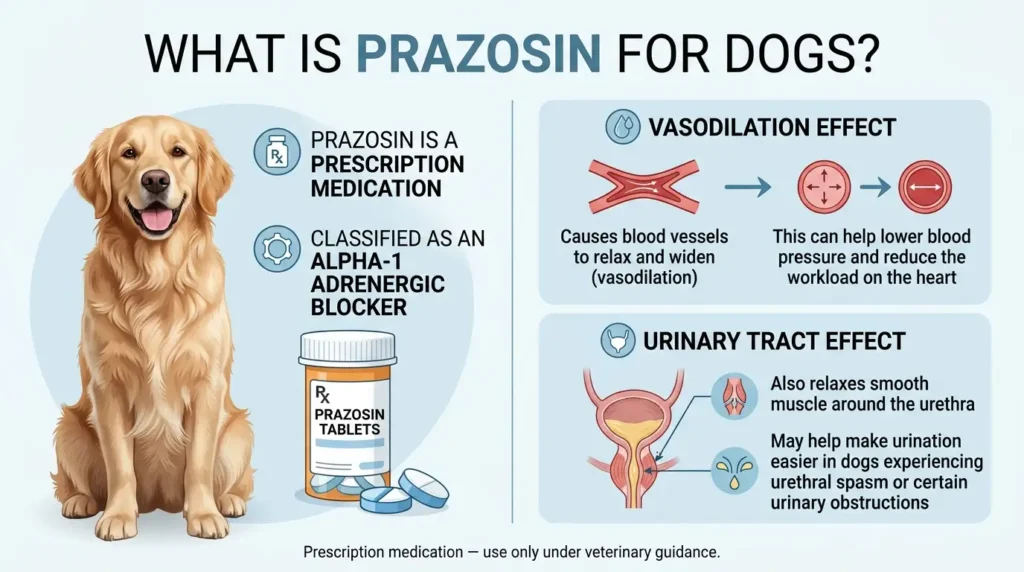
Prazosin is a prescription Medication in the group of medications known as alpha-1 adrenergic blockers. Simply put, it is a vasodilator, meaning that it makes the blood vessels relax and widen, thus decreasing the blood pressure and the work that has to be done by the heart. It is also used to relax the muscle around the urethra in dogs, making it easier for dogs to urinate if there is a blockage or spasm.
How Prazosin Works in a Dog's Body
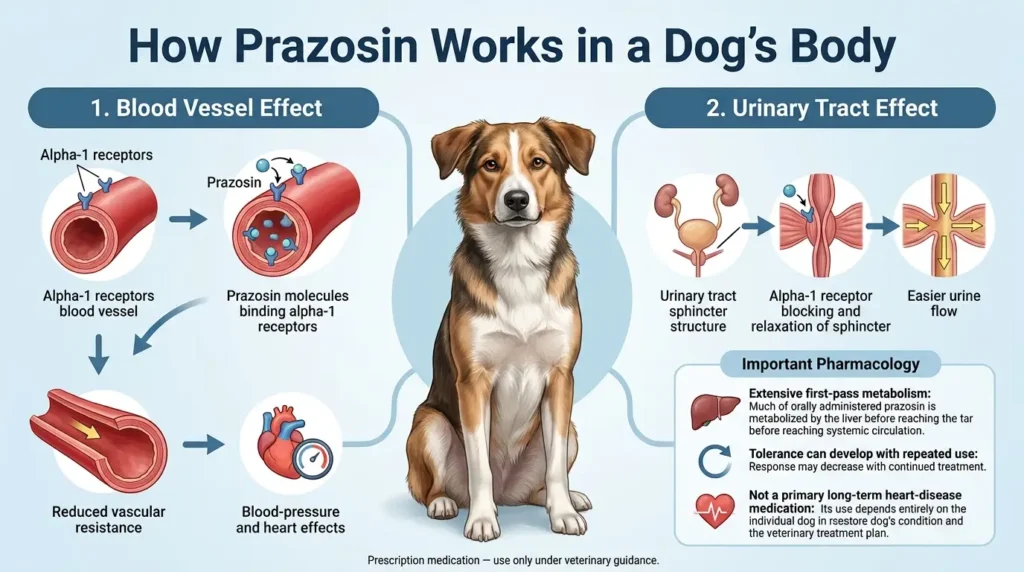
Alpha-1 receptors are located on blood vessels and smooth muscle, including the smooth muscle of the urethral sphincter. By blocking these receptors, prazosin makes the blood vessels relax and dilate and the muscle that surrounds the urethra relax as well. This is why they come across the same drug in two totally different settings, heart and blood pressure care and urinary tract care.
Here is one important point: prazosin is subject to extensive first-pass metabolism, which means that a large percentage of the drug is metabolized before it can enter the bloodstream when taken orally. It's also known to develop tolerance rapidly with repeated use, which is another reason why, it is not normally used as the primary and long-term heart disease treatment for dogs but rather as a part of a treatment plan.
Is Prazosin FDA-Approved for Dogs?
Prazosin dosage is FDA-approved for use in humans (originally marketed as Minipress), but not Approved For Dogs. It is a legal and common practice in veterinary medicine for veterinarians to prescribe a drug "off-label" or "extra-label" when no approved animal drug is available or appropriate. Due to this, it is particularly crucial to stick to your vets directions precisely and not a generic label.
What Is Prazosin Used For in Dogs?
Veterinarians may prescribe prazosin for:
- Systemic hypertension (high blood pressure: usually in combination with other high blood pressure drugs.
- Support for congestive heart failure: as a supplemental vasodilator in certain multidrug treatments, but it is not commonly used as a first line vasodilator in a heart disease treatment plan for dogs.
- To ease urine passage including if obstructed: urinary retention or urethral spasm to relax urethral sphincter and ease urinary passage
It is important to note that Prazosin drug is much less commonly prescribed to dogs versus cats with urinary blockages, and recent studies on its efficacy for that purpose are still in its infancy. Your veterinarian will take all of the latest information into consideration when making the decision as to whether or not it is the right fit for your dog.
Prazosin Dosage Chart for Dogs By Weight
Standard Dosage Guidelines
Veterinary dosing rates suggest that there are two general methods of giving prazosin to your dog:
- Weight-based dosing: 0.07 mg/kg, by mouth, every 8 to 12 hours
- Fixed dosing: 0.5 to 2 mg per dog (regardless of weight), by mouth, every 8 to 12 hours
These ranges are for reference only, not a prescription. Your vet will determine the actual dosage based on the condition(s) being treated, your dog's weight, liver and kidney function and other medications that your dog may be taking.
The table below illustrates the equivalent 0.07 mg/kg weight-based rate for a variety of common dog weights. Calculations are rounded to 2 decimal places.
| Dog Weight (lb) | Dog Weight (kg) | Dose per Administration (0.07 mg/kg) | Dose per Administration (Fixed Range) | Frequency Options |
| 5 lb | 2.3 kg | 0.16 mg | 0.5 mg | Every 8 to 12 hours (PO) |
| 10 lb | 4.5 kg | 0.32 mg | 0.5 mg | Every 8 to 12 hours (PO) |
| 15 lb | 6.8 kg | 0.48 mg | 0.5 mg | Every 8 to 12 hours (PO) |
| 20 lb | 9.1 kg | 0.64 mg | 0.5 – 1.0 mg | Every 8 to 12 hours (PO) |
| 30 lb | 13.6 kg | 0.95 mg | 0.5 – 1.0 mg | Every 8 to 12 hours (PO) |
| 40 lb | 18.1 kg | 1.27 mg | 1.0 – 2.0 mg | Every 8 to 12 hours (PO) |
| 50 lb | 22.7 kg | 1.59 mg | 1.0 – 2.0 mg | Every 8 to 12 hours (PO) |
| 60 lb | 27.2 kg | 1.91 mg | 1.0 – 2.0 mg | Every 8 to 12 hours (PO) |
| 70+ lb | 31.8+ kg | 2.00 mg (Capped range max) | 2.0 mg | Every 8 to 12 hours (PO) |
Important Dosage & Administration Notes
- Calculation Method 1 (Weight-Based): Calculated strictly at 0.07 mg/kg orally (PO).
- Calculation Method 2 (Fixed Range): Standard clinical guideline range of 0.5 mg to 2.0 mg per dog orally (PO), regardless of specific body weight.
- Administration Interval: Administer orally every 8 to 12 hours (2 to 3 times daily) as directed by a veterinarian.
- Pharmacological Considerations: Rapid tolerance develops with ongoing treatment. Prazosin dose undergoes pronounced first-pass metabolism and is rarely used for primary cardiac disease in small animals.
How to Give Your Dog Prazosin
- Prazosin medication for dogs is typically administered as an oral capsule, but can be compounded as a liquid, very small capsule, or transdermal gel if necessary for a dog that's hard to pill.
- Can be offered with or without meals. If your dog vomits after giving a dose on an empty tummy, try giving a dose with a little bit of food.
- When administering a liquid or compounded form, use the syringe or dosing device provided to measure the dose carefully, not a household spoon.
- Wash hands after handling the medicine.
What If You Miss a Dose?
In case of missed dose, give the dose immediately if remembered. In case it is nearing the time for the next dose, skip the missed dose and resume the regular schedule. Don't give two doses at the same time to "catch up" — increased risk of low blood pressure and side effects.
Prazosin Side Effects in Dogs
Common Side Effects
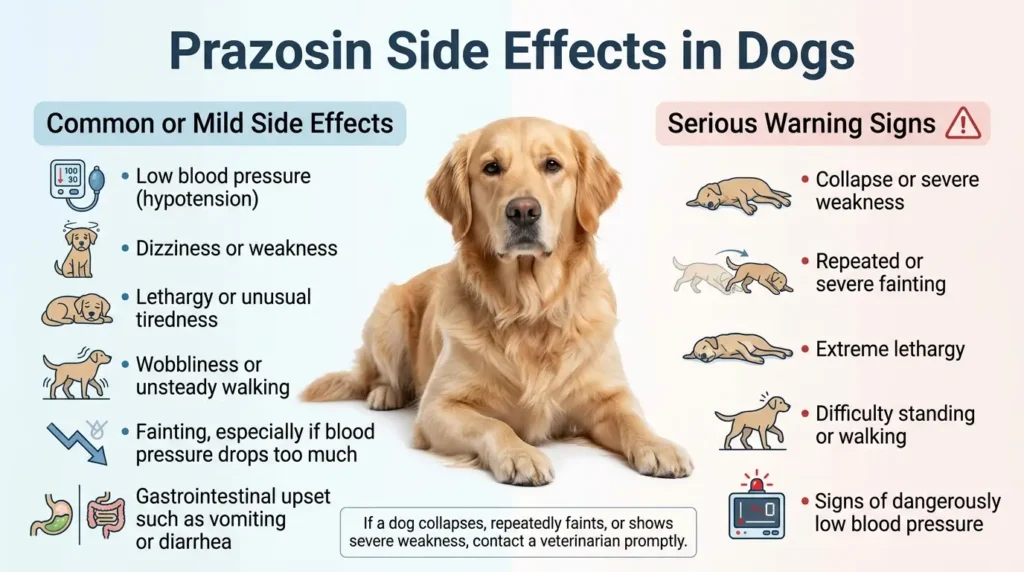
The side effects that occur most commonly are due to the blood pressure lowering effect and gastrointestinal effects and occur early in treatment:
- Lethargy or tiredness
- Dizziness or wobbliness, especially when standing up quickly
- Vomiting
- Diarrhea
- Constipation
Serious Side Effects — Call Your Vet Immediately
If you notice: Stop giving the medication and contact your veterinarian immediately.


Paid Links - As an Amazon Associate, I earn from qualifying purchases.
- Fainting or collapse
- Extreme weakness
- Fast or difficult (gasping) breathing.
- Swelling of the face, hives or any other sign of allergy reaction.
Over time, your dog may develop tolerance to prazosin, even if it didn't cause any problems with the first couple doses. Continue to monitor for new or progressive symptoms during therapy, not just for the first couple days.
Risks, Precautions, and Dogs Who Should Avoid Prazosin
Generally, do not use Prazosin for dogs that have experienced allergic reactions to it. Should be used with caution in dogs with:
- Kidney disease
- Low blood pressure for any other reason.
MDR1 Gene Sensitivity in Certain Breeds
The body's response to certain drugs can be affected by the presence of a gene mutation known as MDR1 (ABCB1) and some breeds such as Collies, Australian Shepherds, Old English Sheepdogs and those mixes are at risk of developing the mutation. If a dog is positive for this mutation it must be treated very carefully and more closely monitored when taking prazosin.
If you don't know if your dog's breed is affected, it is wise to check with your vet before beginning treatment to determine if your dog has been tested for MDR1.
Prazosin Drug Interactions
Before beginning prazosin, let your veterinarian know about all medicines, supplements and herbal products your dog is taking. Some of the more commonly flagged for possible interaction medications are:
- Angiotensin Converting Enzyme (ACE) inhibitors (enalapril, benazepril etc.)
- Calcium channel blockers, such as amlodipine.
- Medications that block the beta receptors (e.g., propranolol)
- Sildenafil
- Other blood-pressure-lowering drugs, because the effect of these drugs may add together to lower blood pressure
Do not start, stop or mix medications without physician guidance – that is why your vet should know the complete list of what your dog is taking in order to prevent any potential interactions.
Prazosin Overdose in Dogs: Signs and What To Do
Signs of a prazosin overdose can include:
- Loss of balance or clumsiness
- Dizziness or collapse
- Symptoms of hypotension (low blood pressure)
- Trembling
- A fast heart rate
- Loss of consciousness
If you suspect your dog got into more prazosin than prescribed, treat it as an emergency. Call your veterinarian or an emergency animal hospital right away.
When calling, be prepared with the medication container, your dog's weight, and a description of symptoms (may charge consultation fees with poison control lines).
How to Store Prazosin Safely
- Capsules should be stored at room temperature (between 68°F and 77°F or 20°C and 25°C).
- Store the medication in a place where it will be protected from moisture and from direct light.
- The storage instructions may be different for compounded liquids, gels or very small tablets – check the label directions from your compounding pharmacy.
- Do not leave forms in reach of children and other pets.
Monitoring Your Dog on Prazosin
Your veterinarian might want to perform periodic examinations, like blood pressure, or monitor urine output, depending on the reason your dog's taking prazosin. But at home, you've got an easier job: Be on the lookout for the side effects mentioned above, be sure to make a note of when you administer a dose, and if you have concerns, don't wait until the next check-in; call your vet!
Prazosin Dosage: Myth vs. Fact
| Myth | Fact |
| "More prazosin means faster results." | Higher-than-prescribed doses raise the risk of dangerously low blood pressure and fainting — they don't make the drug work better. |
| "It's fine to give my dog my own prazosin prescription." | Human and pet dosing needs are different, and giving a pet human medication without veterinary guidance can be harmful. |
| "If my dog seems fine, side effects won't show up later." | Sensitivity to prazosin can develop after weeks of normal tolerance, so ongoing monitoring matters throughout treatment. |
| "The dosage is the same for every dog at a given weight." | The right dose also depends on the condition being treated, kidney/liver function, and other medications — weight is only one factor. |
You May Also Like to Read:
- Salmon Oil Dosage For Dogs: Calculator, Chart & Safe Guide
- Lorazepam Ativan For Dogs Dosage Calculator & Dosing Chart
FAQs
What is prazosin used for in dogs?
Prazosin medicine is primarily indicated for the treatment of hypertension; as part of a treatment program for congestive heart failure; and to relax the urethra for easier urination in dogs with urinary retention or urinary obstruction.
How much prazosin can I give my dog?
Veterinary references indicate a dosage of 0.07mg/kg every 8-12 hours or 0.5-2mg per dog every 8-12 hours. Always take information for how much to give your dog from your vet and not a chart.
Is it safe to give Prazosin to a dog?
When used under the supervision and direction of a veterinarian, it can be safe, but it can also have side effects such as low blood pressure, fainting, and interactions with other heart/blood pressure medication, therefore should not be administered without veterinary advice.
Is it OK to give my dog prazosin with food?
Yes, generally. It may be administered with or without food, but if your dog vomits after taking it on an empty stomach, consider offering it with a bit of food in the future.
What is the frequency of administration of prazosin in dogs?
Every 8 to 12 hours (two to three times a day), as prescribed by your veterinarian.
What are the side effects of prazosin in dogs?
Most commonly reported side effects include lethargy, dizziness, vomiting, diarrhea and constipation, particularly in the early stages of treatment.
If I forget to take a dose, what should I do?
Check to see if you can take it as soon as you remember, unless it's close to the time of the next dose, then skip the dose and continue with the schedule. Never double up.
Can prazosin cause fainting in dogs
Yes. It can decrease blood pressure and some dogs may feel dizzy or faint, especially if they stand up rapidly after taking the medication. If this occurs, call your veterinarian.
What are some breeds of dogs that should be used with additional caution when taking prazosin?
Breeds that are susceptible to inheriting the MDR1 (ABCB1) gene mutation, including Collies, Australian Shepherds and mixes of these breeds, require special care and more frequent monitoring.
Are there any drugs that interact with prazosin?
Yes. Other medications that lower blood pressure (ACE inhibitors, amlodipine, beta-blockers, sildenafil) may add to its effects. Be sure to provide your veterinarian with a comprehensive list of medicines.
Does prazosin have FDA approval for dogs?
No. It is legal and common to use it in veterinary medicine at the same time as it is FDA approved for humans but extra-label (off label).
If my dog eats too much prazosin, what will happen?
Symptoms of overdose are loss of coordination, dizziness, trembling, rapid heartbeat and collapse. This is an emergency and your vet or animal poison control center should be called right away.
What are the differences between treating a cat and a dog with prazosin?
Although both species might be candidates for prazosin for similar reasons, dosing varies by species and by individual patient; the effectiveness of prazosin for treating urinary blockage alone in cats is recently came into question. Do not use a cat drug on a dog, or a dog drug on a cat.
Will Prazosin cure my dog's heart disease or high blood pressure?
No, Prazosin is to help relieve symptoms by relaxing blood vessels; it does not cure the actual heart or blood pressure problem. It is typically a part of a larger treatment plan.
How long does it take prazosin to act in dogs?
Typically, it starts to take effect in a few hours after it is administered, but your veterinarian will be able to tell you a better time frame based on your dog's condition.
Key Takeaways
- What it treats: High blood pressure (systemic hypertension), may be used as a supplement for some CHF (congestive heart failure) treatment protocols and to relax the urethra in dogs with urinary retention or obstruction.
- How it works: Prazosin is an alpha-1 adrenergic blocker, which means it helps to dilate blood vessels and the urethral muscle, helping to reduce blood pressure and improve urinary output.
- Not FDA Approved For Dogs: It is an extra-label (off-label) use and this is legal and as per usual in veterinary medicine, however dosing should be sought through your veterinarian and not a generic label.
- Common side effects: lethargy, constipation, diarrhea, dizziness and vomiting (most of these occur early in treatment).
- Call your vet immediately if your dog shows any of the following serious warning signs: fainting, extreme weakness, irregular breathing or facial swelling.
- Extra caution: If your dog has kidney disease, low blood pressure, or the MDR1 (ABCB1) gene mutation (which is common in Collies, Australian Shepherds and related breeds), they should be monitored more closely.
- It's important to remember that drugs do interact: Other blood-pressure-lowering drugs (ACE inhibitors, amlodipine, beta-blockers, sildenafil) can add to the effect of prazosin, so make sure your vet knows of all the drugs you're using.
- An overdose is an emergency: Be aware of wobbling, shaking, collapsing or a rapid heart rate and call your vet or animal poison control center immediately.
- Don't guess the dose: Always remember that the dose is based on the weight chart or calculator and should be used as a guide only — your vet will always give you the correct dose according to a prescription.
Final Thoughts
Prazosin Dosage For Dogs can be a very useful medicine for dogs with high blood pressure, heart failure or urinary retention, however it is not a one-size-fits-all dosage. The key to safety is this: Take the dosage chart and calculator above to get a general sense of the dosage range, and then take the dose exactly as prescribed by your vet.
When any indications of weakness, fainting, or possible overdose are observed, it's considered an emergency so please contact your veterinarian or animal poison control center immediately.