Written by: JK | Medically reviewed by: medsdog Team
Last updated: Aug 2026
The standard acepromazine dosage for dog’s fear, anxiety and motion sickness is 0.5–1.5 mg per pound (1–3 mg/kg) by mouth, or 0.01–0.1 mg per pound (0.02–0.2 mg/kg) by injection, with injectable doses capped at 3 mg total regardless of the dog’s weight.
Estimate an acepromazine dose range for fear, anxiety, or motion sickness based on your dog’s weight and route of administration.
This calculator provides a general estimate only and is not a substitute for professional veterinary advice. Always confirm dosing with your veterinarian before giving any medication.


Paid Links - As an Amazon Associate, I earn from qualifying purchases.
Disclaimer: All the information in this guide is for informational purposes only and is not a substitute for professional veterinary advice.
Acepromazine Dosage for Dogs Overview
- Acepromazine (“Ace”) for canines is a prescription sedative and tranquilizer, not a pain reliever or an anti-anxiety medication.
- The typical oral dose is 0.5–1.5 mg/lb (1–3 mg/kg); the injectable dose is far smaller 0.01–0.1 mg/lb (0.02–0.2 mg/kg), capped at 3 mg total.
- The medicine come in a strength of 5 mg, 10 mg, and 25 mg tablets, and as a 10 mg/ml injectable.
- Popular brand includes PromAce® and Aceproject®.
- Effects begin in 30–60 minutes (oral) and typically last 6–8 hours.
- Side effects may include lowered blood pressure, slowness in heart rate, inhalation rate, lethargy, unsteadiness, and loss of control in body temperature.
- Dogs with certain illness include heart disease, seizure history, or the MDR1 gene mutation (collies, sheepdogs, and related mixes) often need a reduced dose or an alternative sedative.
- A serious case of sedation, a collapse, a seizure, or respiratory distress may happen in case of overdose, and it is necessary to provide a veterinary care immediately.
What is Acepromazine For Dogs?

Acepromazine maleate (brand names PromAce®, Aceproject®, and Atravet®) is an FDA-approved, low-toxicity neuroleptic drug which is a phenothiazine and is most commonly used in both dogs and cats.
In case of anxiety, stress or stay-calm requirements of your dog during a procedure, your veterinarian can prescribe Acepromazine, which is a common tranquilizer and sedative medication in veterinary care.
Its mechanism of action is the ability to depress the central nervous system which leads to sedation, muscle relaxation, and decreased activity. The precise action of it is that it has the ability to block dopamine receptors within the brain thus changing how your dog reacts to stress and stimuli.
Notably, acepromazine is not painkilling, and that is why it is usually used together in conjunction with other drugs in case of a surgical or medical operation. Some vets prefer gabapentin or trazodone for dogs with chronic anxiety.
It is necessary to learn how much Acepromazine dosage for dogs should be administered to canines because the appropriate dosage will safely make your pet relax, and a wrong dosage will result in undesirable side effects.
Most Common Acepromazine Veterinarians Uses in Dogs
- Short-term situational stress (fireworks, thunderstorms)
- Pre-anesthetic sedation before surgery or dental work
- Restraint and calming for vet visits, X-rays, nail trims, or grooming
- Travel-related stress in the car or cargo hold
- Motion sickness and travel-related nausea
How Acepromazine Help Your Dog
Acepromazine is commonly used by veterinarians as a pre-anesthetic drug to allow dogs to calm down prior to surgery, as an anti-anxiety drug during traveling, thunderstorms, fireworks, grooming, or visits to the veterinary clinic.
It may as well be useful in regulating agitation and in other instances, motion sickness. Due to its impact on the performance and circulation of blood vessels, as well as the possibility to be used in combination with other sedatives or anesthesia, it is important to have professional advice.
It is important to get the correct Ace dosage for dogs. An insufficient amount will not help your furry freind relax whereas an excessive one can create a higher risk of side effects, including low blood pressure, over sedation, or behavioral change.
This is why lots of pet owners use a dog acepromazine dosage calculator and the recommendations of veterinarians to make sure it is safe to use.
Acepromazine Dosage Chart for Dogs by Weight (Oral Dosage)
| Dog’s Weight (lb) | Dog’s Weight (kg) | Low Dose (0.5 mg/lb) | High Dose (1.5 mg/lb) |
|---|---|---|---|
| 5 lbs | 2.3 kg | 2.5 mg | 7.5 mg |
| 10 lbs | 4.5 kg | 5 mg | 15 mg |
| 20 lbs | 9.1 kg | 10 mg | 30 mg |
| 30 lbs | 13.6 kg | 15 mg | 45 mg |
| 40 lbs | 18.2 kg | 20 mg | 60 mg |
| 50 lbs | 22.7 kg | 25 mg | 75 mg |
| 75 lbs | 34.1 kg | 37.5 mg | 112.5 mg |
| 100 lbs | 45.4 kg | 50 mg | 150 mg |
Most vets start at the low end of this acepromazine dosage chart and adjust upward only if needed high doses like the upper end of this range are reserved for large, healthy dogs under close veterinary guidance, not a default starting point.
Acepromazine Dosage Chart For Dogs (Injectable Dosage)
The Ace injectable dose for canines is significantly smaller than the oral dose.This is one of the most common points of confusion, so it’s worth repeating: never give an injectable-strength dose by mouth, or an oral-strength dose by injection
| Dog’s Weight (lb) | Dog’s Weight (kg) | Low Dose (mg) | High Dose (mg) |
|---|---|---|---|
| 10 lbs | 4.5 kg | 0.1 mg | 1.0 mg |
| 25 lbs | 11.4 kg | 0.25 mg | 2.5 mg |
| 50 lbs | 22.7 kg | 0.5 mg | 3.0 mg (capped) |
| 75 lbs | 34.1 kg | 0.75 mg | 3.0 mg (capped) |
| 100 lbs | 45.4 kg | 1.0 mg | 3.0 mg (capped) |
Note: Self administration of Injectable can harm your pup. Acepromazine injections are administered almost exclusively by veterinary staff in a clinical setting, where blood pressure and heart rate can be monitored during and after dosing.
PromAce®, Aceproject®, Atravet® 5 mg, 10 mg, and 25 mg Dosage Chart For Dogs
| Dog Weight | Dose Range at 0.5–1.5 mg/lb | Ace Dose | PromAce®, Aceproject®, Atravet® Tablet Strength | Tablet Amount |
|---|---|---|---|---|
| 5 lb | 2.5–7.5 mg | 5 mg | 5 mg | 1 tablet |
| 10 lb | 5–15 mg | 10 mg | 10 mg | 1 tablet |
| 15 lb | 7.5–22.5 mg | 15 mg | 10 mg | 1½ tablets |
| 20 lb | 10–30 mg | 20 mg | 10 mg | 2 tablets |
| 25 lb | 12.5–37.5 mg | 25 mg | 25 mg | 1 tablet |
| 30 lb | 15–45 mg | 30 mg | 25 mg + 10 mg | 1¼ + ½ tablet |
| 40 lb | 20–60 mg | 40 mg | 25 mg + 10 mg | 1 + 1½ tablets |
| 50 lb | 25–75 mg | 50 mg | 25 mg | 2 tablets |
| 60 lb | 30–90 mg | 60 mg | 25 mg + 10 mg | 2 + 1 tablet |
| 70 lb | 35–105 mg | 70 mg | 25 mg + 10 mg | 2 + 2 tablets |
| 80 lb | 40–120 mg | 70–80 mg | 25 mg | 3 tablets |
| 90 lb | 45–135 mg | 90 mg | 25 mg + 10 mg | 3 + 1½ tablets |
| 100 lb | 50–150 mg | 100 mg | 25 mg | 4 tablets |
The above chart is based on1 mg/lb midpoint.
Dosing Schedule & Frequency
Acepromazine is almost always used situationally a single dose ahead of a specific stressful event rather than on a fixed daily schedule. A typical dosing schedule looks like this:


Paid Links - As an Amazon Associate, I earn from qualifying purchases.
- Give the oral dose 60–90 minutes before the anticipated stressor (vet visit, grooming, car ride, fireworks).
- Onset of sedation typically begins in 30–60 minutes.
- Effects usually last 6–8 hours, though some dogs stay sedated up to 24 hours depending on dose and individual metabolism.
- Do not re-dose within that window just because sedation seems mild — wait for your vet’s guidance rather than stacking doses.
If your furry friend needs acepromazine on a recurring basis (for example, ahead of multiple grooming visits), your vet may recommend a small “test dose” beforehand to confirm how your individual dog responds before the real event, since sensitivity varies significantly by breed and temperament.
What If You Miss a Dose?
Because acepromazine Ace is typically given situationally rather than daily, missed doses are uncommon. If your dog is on a recurring schedule and you miss one, give it as soon as you remember unless it’s close to the next scheduled dose, in which case skip it. Never double up to make up for a missed dose.
How Acepromazine Works in Dogs
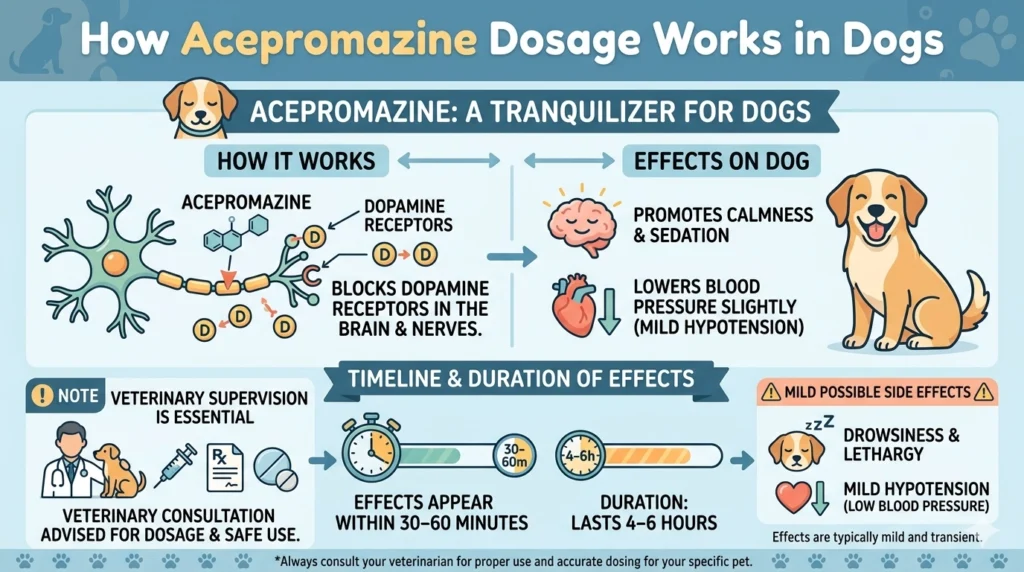
Acepromazine dosage acts by suppressing the central nervous system (CNS) and preventing dopamine receptors in the brain resulting in sedation, relaxation of the muscles and decreased involuntary movement. It suppresses stress, agitation, nausea, and overstimulation, and is useful in reducing the dopamine levels in dogs, which are a neurotransmitter of movement, emotion, and motivation.
- It brings about effects of sedation and calming without causing pain relief.
- Relaxes muscle and lowers the activity rates.
- Assists with agitation at the veterinary, grooming, travelling and procedures.
- Usually taken as a pre-anesthetic to induce relaxation and decrease the chances of vomiting.
- May are used to treat motion sickness, nausea, some toxicities, tetanus, hypertension, and increased heart rate.
- Generally starts working in 30-60 minutes and takes hours.
- The underlying anxiety is not treated and can be used along with other drugs when necessary.
Acepromazine doses is a prescription drug, low-toxicity and FDA-approved medicine, which is not to be administered without veterinary supervision, as it is associated with a number of side effects such as low blood pressure, slowing heart rate, respiratory depression.
Possible Side Effects of Acepromazine in Dogs
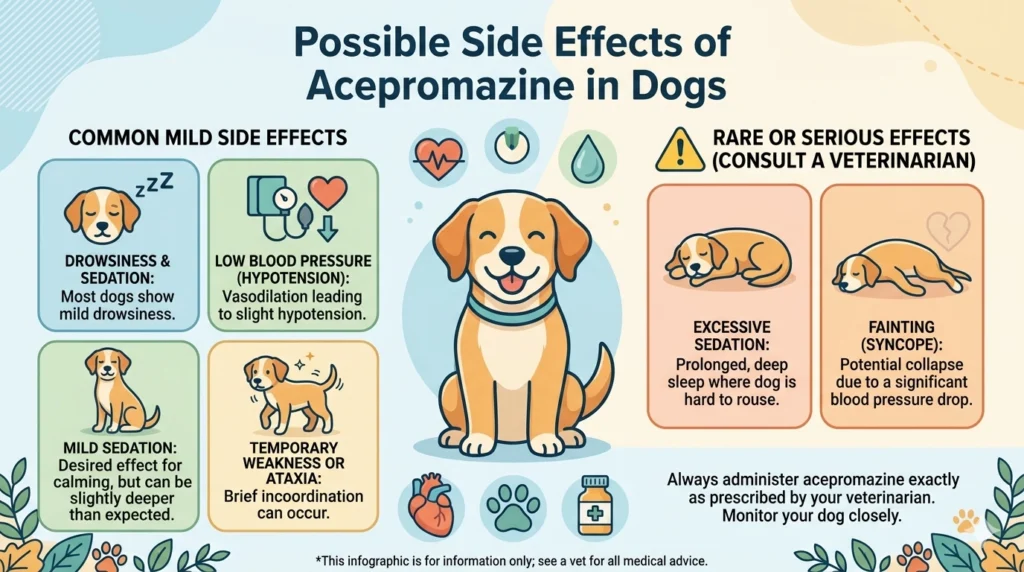
The side effects of acepromazine for dogs are numerous common, uncommon and severe, principally because of the depressant action of the drug on the central nervous and cardiovascular systems. Close observation is of great importance after administration.
Common Side Effects
- Fatigue, drowsiness and listlessness.
- Low blood pressure
- Reduced heart rate or even accelerated heart rate.
- Retarded breathing (respiratory depression)
- Shakiness, shaky walking and lack of coordination.
- Mix-up and retarded response.
- Third eyelid protrusion (temporal and without harm)
- Pale gums
- Decreased tear production
- Uvula sneezing and chewing.
- Hypersensitivity to noises.
- Impaired control of body temperature (possesses the threat of hypothermia)
Behavioral & Paradoxical Reactions
- Heightened apprehension or anxiety.
- Hyperactivity
- Aggression or aberrant behavior.
Severe or Uncommon Side effects
- Epileptic attacks or exacerbation of epileptic diseases.
- Allergic reactions
- Unconsciousness
- Rhythm abnormalities of the heart (arrhythmias) particularly in some breeds such as Boxers.
- Extreme low blood pressure which results in cardiovascular collapse (life-threatening)
- Risky relations with anesthetics or other drugs.
Important Risks & Precautions
- Contraindicated in dogs with heart disease, seizure diseases, and drug hypersensitivity.
- Interacts with drugs like narcotics, barbiturates, propranol, epinephrine, antacids and antidiarrheals.
- May reduces low body temperatures hence dogs are required to be warm.
- Dogs should be treated with care and not left without some supervision when being used with children.
Acepromazine dosage for dogs is to be administered under veterinary care only and severe and strange side effects demand immediate veterinary intervention.
Most Serious Risks of Acepromazine for Dogs
Acepromazine dosage for dogs by weight can be very dangerous and even fatal particularly in the old age dogs or in those with underlying health conditions, it is usually safer in young healthy dogs under the care of the veterinarian.
Major Health Risks
- Rigorous hypotension (life-threatening low blood pressure) that may result in a collapse.
- Dilapidation or unconsciousness.
- Seizures especially in dogs that have a tendency to suffer seizure disorders.
- Allergic reactions
- At high dosage, there are neurological effects such as:
- Muscle tremors
- Muscle rigidity
- Movement disorders
High-Risk Situations
- Heart disease in dogs increases the risk to collapse because of the change in blood pressure.
- An increase in dosage poses more risks of neurological complications.
Breed-Specific Sensitivities
- Boxers: increased chances of fainting because of low blood pressure.
- Greyhounds/Whippets: May undergo prolonged sedation because the drugs are metabolized at a slow pace.
- Giant breeds (e.g., Great Danes, Mastiffs): Can be put on reduced doses to prevent complications.
In case of such signs as collapse, seizures, or neurological abnormalities in a dog, the drug might be terminated, and emergency assistance of a veterinarian should be requested.
Critical Clinical Factors
- Breed Sensitivity: Hypersensitive are the Collies and Shepherds with the MDR1 mutation. Most veterinarians cut the dosage of these dogs by 25 percent or greater.
- Giant Breeds & Seniors: Large/Giant breeds and senior dogs are generally more sensitive and generally need the low end of the dosage range.
- The 3mg Rule: When injecting, most clinics have a strict rule of not injecting more than 3mg of total drug each time in order to be safe.
- Onset of Action: Oral Acepromazine is someone who needs between 45 and 60 minutes to act. Never re-dose again when you no longer see the effect as this may result in an overdose.
Does Acepromazine Interact with Other Dog Medications?
Acepromazine dosage for dogs will be susceptible to most drugs, supplements and treatments, which can either augment the adverse effects, diminish efficacy, or pose hazards. Your veterinarian should be informed about all substances that your dog is consuming and they may include prescription drugs, over-the-counter drugs, herbal treatments, and flea/tick treatments.
Common Drug Interactions
- Anesthetic agents and other sedatives: Have the potential of causing additive sedation and inappropriate central nervous system depression.
- CNS depressants (e.g. barbiturates such as phenobarbital): Can cause over-sedation, and necessitate dose changes.
- Opioid analgesic drugs: Enhanced drowsiness.
- Propranol: Could elevate the concentration of the two medications.
- Antacids: Have the ability to decrease the efficacy of acepromazine (not during a period of two hours)
- Antidiarrheal drugs: The possibility of interaction.
- Organophosphate insecticides (flea, tick, worm treatments): Can have an adverse effect.
Important Safety Considerations
- Vets can use alternative dosages or select other options to prevent the occurrence of harmful interactions.
- Increased dosage may raise the chances of long-term sedation or depression particularly among sensitive dogs.
In Cases where extra care is required
- Heart disease in dogs: The strain is increased by alterations in blood pressure.
- Dogs which have liver disease, epilepsy or risk of seizures.
- Dogs that are pregnant and lactating, as well as very young puppies.
- Older dogs, who might be more sensitive towards the drug.
It is always advisable to talk with your veterinarian before using acepromazine along with any other drug so as to be safe and effective.
Acepromazine vs. Trazodone vs. Gabapentin for Dogs
Dogs Acepromazine isn’t the only sedation option, and it isn’t always the best fit for chronic anxiety. Here’s how it compares to two common alternatives:
| Acepromazine | Trazodone | Gabapentin | |
|---|---|---|---|
| Best for | Pre-anesthetic sedation, situational calming | Anxiety, travel, situational stress | Anxiety, mild pain support, travel |
| Pain relief | None | None | Mild |
| True anti-anxiety effect | No — sedation only | Yes | Partial |
| Onset | 30–60 min | 30–60 min | 1–2 hours |
| Common use case | Vet clinics, grooming, surgery prep | Long car rides, storms, chronic situational anxiety | Combined with trazodone for travel or vet visits |
Ask your veterinarian which option fits your dog’s specific triggers many vets now reach for trazodone or gabapentin over acepromazine specifically for travel anxiety, reserving acepromazine for clinical and pre-surgical sedation.
Download Acepromazine Dosage for Dogs Chart PDF
You May Also Like to Read:
- Cetirizine Dosage For Dogs Calculator: Dosage Chart & Guide
- Meloxidyl Dosage For Dogs: Dosage Calculator, Chart & Guide
FAQs
Is it possible to administration acepromazine doseto my dog without a prescript?
No, acepromazine is a prescription-only drug which is not to be administered without guidance of a veterinarian.
Is gold standard safe on dogs?
Yes, as long as it is administered as per the dose given by your veterinarian. Use the form that is given by your vet.
Should puppies be put on acepromazine dosage for dogs?
Puppies are also more sensitive to acepromazine and they need to be dosed accurately. Should only be used under the strict veterinary supervision.
Is acepromazine by weight a viable option as travel sedation?
Yes, but only with the recommendation of the veterinarian. Dosage should be determined depending on weight of your dog and other vets might choose to use some other drugs such as trazodone or gabapentin as an alternative.
Acepromazine for dogs and its duration of action in dogs?
The effects usually take a period of 6-8 hours but there are some dogs that can be sedated even to 24 hours.
But what about the dog that comes late?
Missing a dose should be administered as soon as possible, unless this is close to the next dose. Avoid administration of two doses.
What are the symptoms of acetophenylpromazine overdose?
Some of the symptoms are excessive sedation, lethargy, extreme weakness, pale gum, incoordination, alteration in the size of the pupil, agitation, shallow breathing, collapse, and seizures.
What would you advise in the case of an overdose?
Call your veterinarian, an emergency veterinary clinic or a helpline on pet poisoning. The supportive care can involve the use of activated charcoal, IV fluids, and vital signs monitoring.
What are the acepromazine options of dogs?
Tablets (5 mg, 10 mg, 25 mg) and injectable (10 mg/ml). Depending on the weight and health of your dog, the vet will prescribe its right form and dose.
What do you think of acepromazine storage?
Store at 68–77°F (20–25°C). Brief exposure to 59–86°F (15–30°C) is acceptable. Store the container in a closed and dry place that is not exposed to light and water and it should not be accessible to children and pets. Directions on how to follow compounding pharmacy with compounded drugs.
Are Xanax 125 and Acepromazine one and the same thing?
No. Xanax(alprazolam) is used to manage anxiety in the behavior aspect whereas acepromazine is a tranquilizer/sedative in calming of dogs, pre-anesthetic sedation of dogs and motion sickness.
What should I do to procure acepromazine to my dog?
Acepromazine can be obtained by means of a veterinarian. Get in touch with your vet to determine whether your pet dog is good to use it.
Final Thoughts
Acepromazine is a common tranquillizer and sedative medication given to dogs mostly before anesthesia, when a patient is stressed or even taken to the veterinary to induce calmness and relaxation. Administered under veterinary guidance, it is normally safe, particularly to young healthy dogs, yet dose should be calculated carefully depending on weight, health conditions and sensitivity to different breeds.
The owners of pets must always keep up with the instructions given by the veterinarian, watch out to the side effects of the medicine (low blood pressure, heart rate, or respiratory rate) and notify the doctor immediately in case of any unusual reactions. Acepromazine should not be administered without professional advice because it may be too serious when the patient overdoses or abuses it.
Though in some cases natural means are applicable in management of stress and anxiety, drugs such as acepromazine ace are essential in some cases where the patient needs to be sedated.