You walk into the living room and spot fresh tooth marks on the chair leg. Your dog looks up, tail wagging, proud of the new groove in the wood.
Chewing feels good to a dog, and chair legs sit at the perfect height. This guide shows you how to stop your dog chewing furniture with a calm plan that protects your chairs and gives your dog something better to chew.
Dogs chew for clear reasons. Puppies chew while their adult teeth come in. Grown dogs chew when they feel bored, restless, or tense.
Wood smells interesting, and the edge of a table leg fits a jaw well. None of that means your dog is bad or angry at you. It means your dog needs a clear outlet for a normal urge, plus a few rules about what stays off limits.
The fix has three parts. You make the furniture taste bad and hard to reach. You give your dog chews that feel even better.
You train a trade and a leave it cue, so your dog chooses the right thing on their own. Most dogs show real change inside two weeks when the plan runs every day.
Plan for about 10 minutes a day, split into two 5-minute sessions. You need a rubber chew toy, a bitter spray, and a pocket of small treats. Clear one room, gather your gear, and we can start.
What You Need
Gear
- Rubber chew toy, hollow and stuffable
- Rope toy
- Long-lasting chew, like a bully stick
- Bitter apple spray made for dogs
- Baby gate or puppy pen
- Low basket for the chew station
Supplies
- Small, soft training treats, pea-sized
- Peanut butter, xylitol-free
- Old towel for cleanup
- Treat pouch or a pocket for treats
At a Glance
- Move tempting furniture out of reach
- Offer a chew your dog likes more than the chair
- Spray chair legs with a bitter taste deterrent
- Trade the furniture for a toy every time
- Praise calm chewing on the right thing
- Teach “Leave it” to stop your dog chewing furniture
- Set up a chew station beside your sofa
- Build alone time a few minutes at a time
Move tempting furniture out of reach
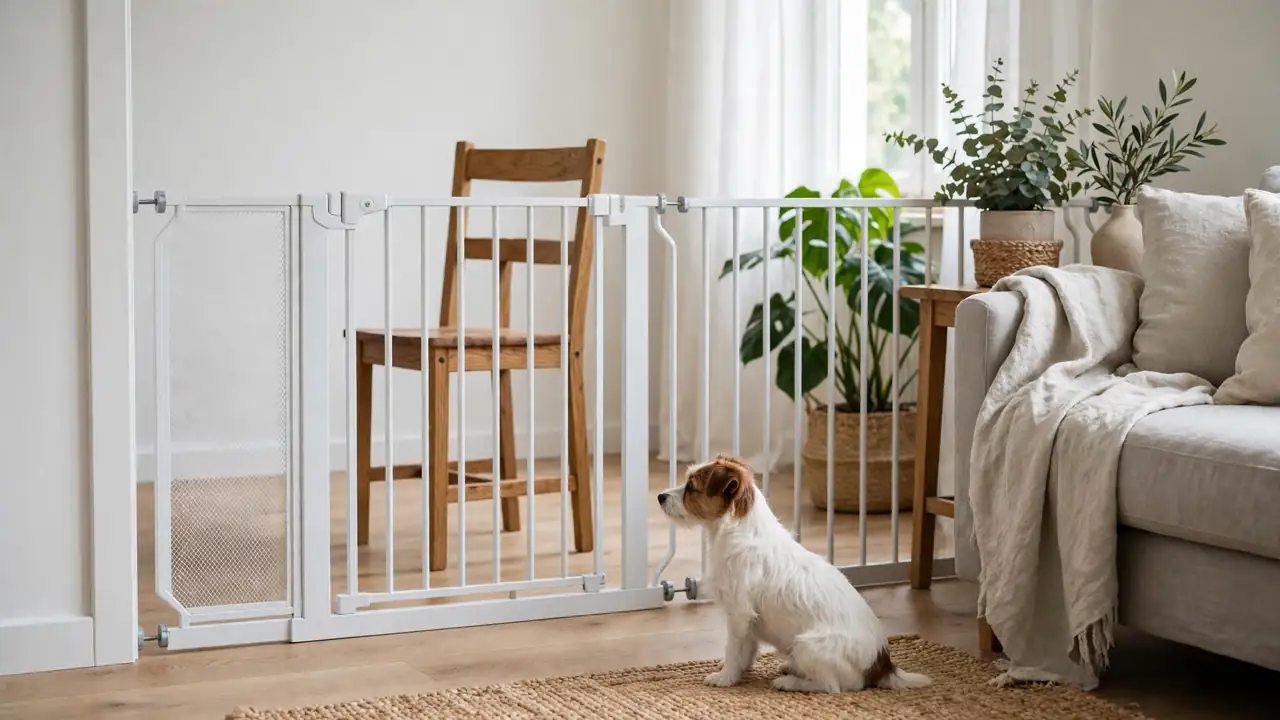
Start with the pieces your dog targets most. Slide light chairs behind a baby gate, or move a small side table into another room for now.
A puppy pen around a wooden coffee table works well, too. Distance removes the habit before it starts.
Your dog cannot chew what they cannot reach, and every day without a new tooth mark helps the habit fade. Keep the room clear for the full two weeks, even on days when your dog shows no interest in the wood.
Offer a chew your dog likes more than the chair
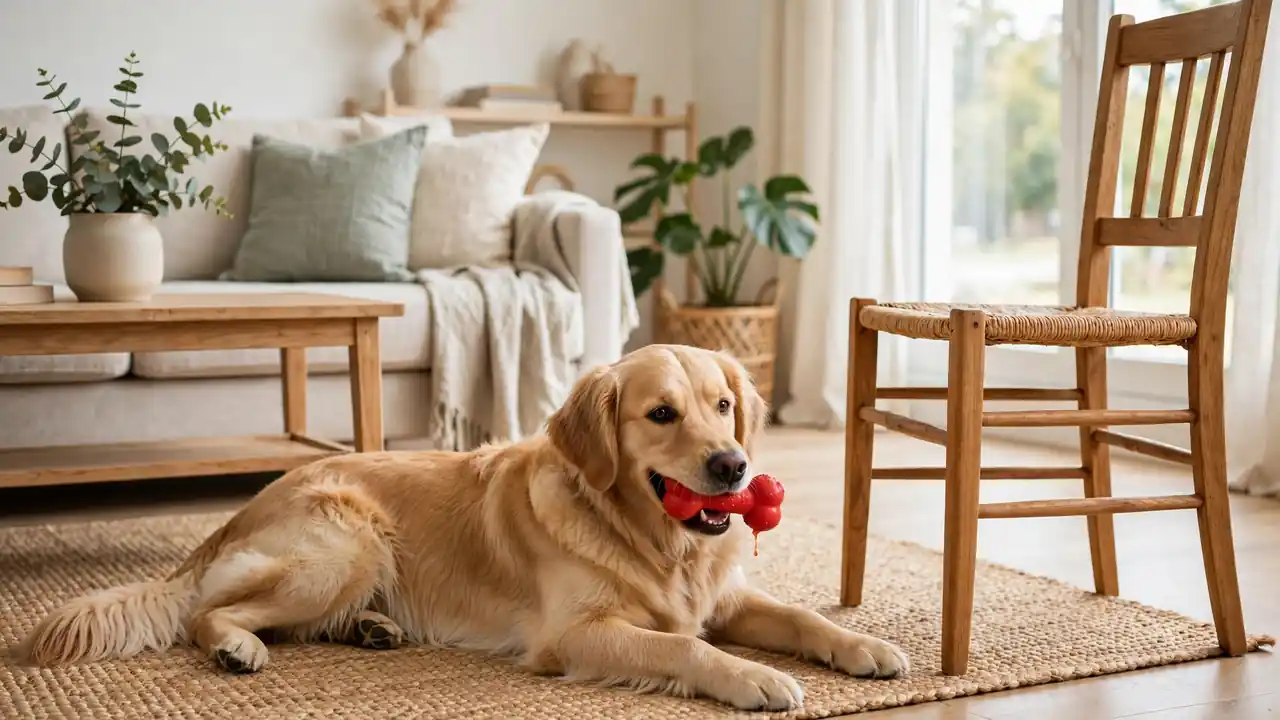
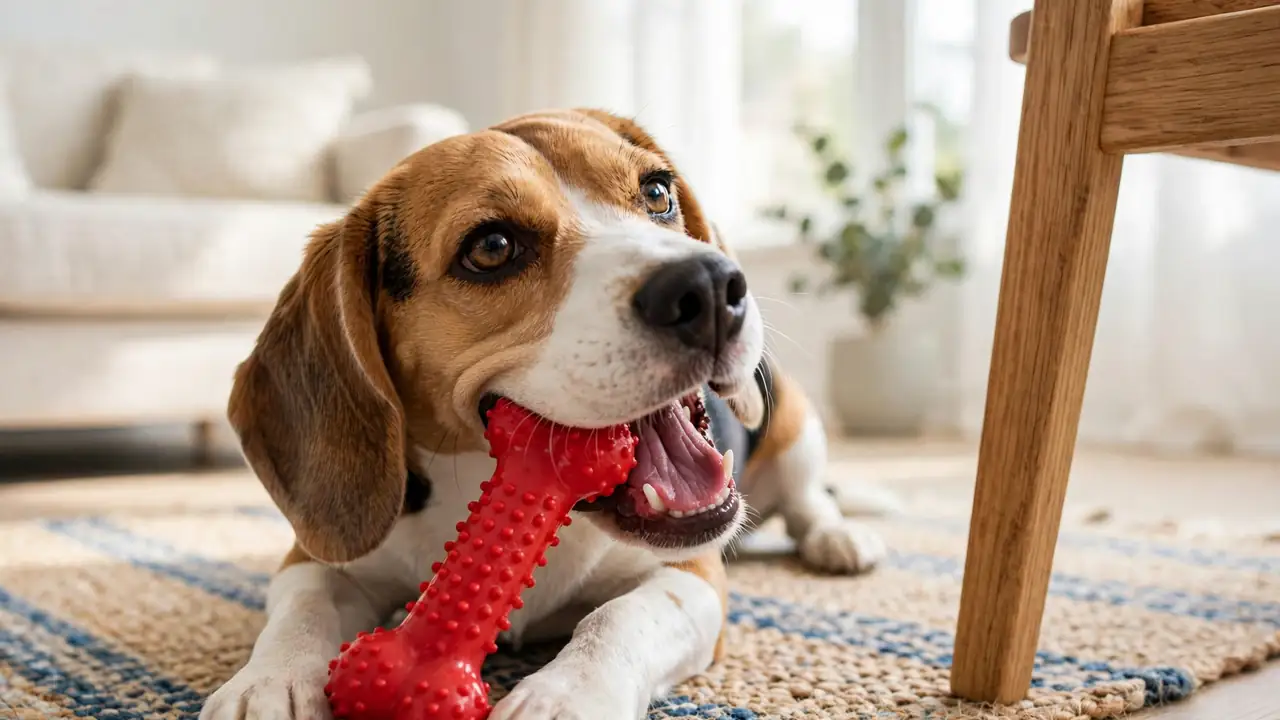
Hold a rubber chew toy next to the chair leg and let your dog sniff both. Most dogs pick the toy, because rubber gives under their teeth and wood does not. Smear a thin layer of peanut butter inside a hollow toy, or freeze it for 30 minutes so it lasts longer.
Hand the toy over the moment your dog turns toward the chair. A good chew wins the contest on its own, and your dog never has to be told what not to do.
Spray chair legs with a bitter taste deterrent
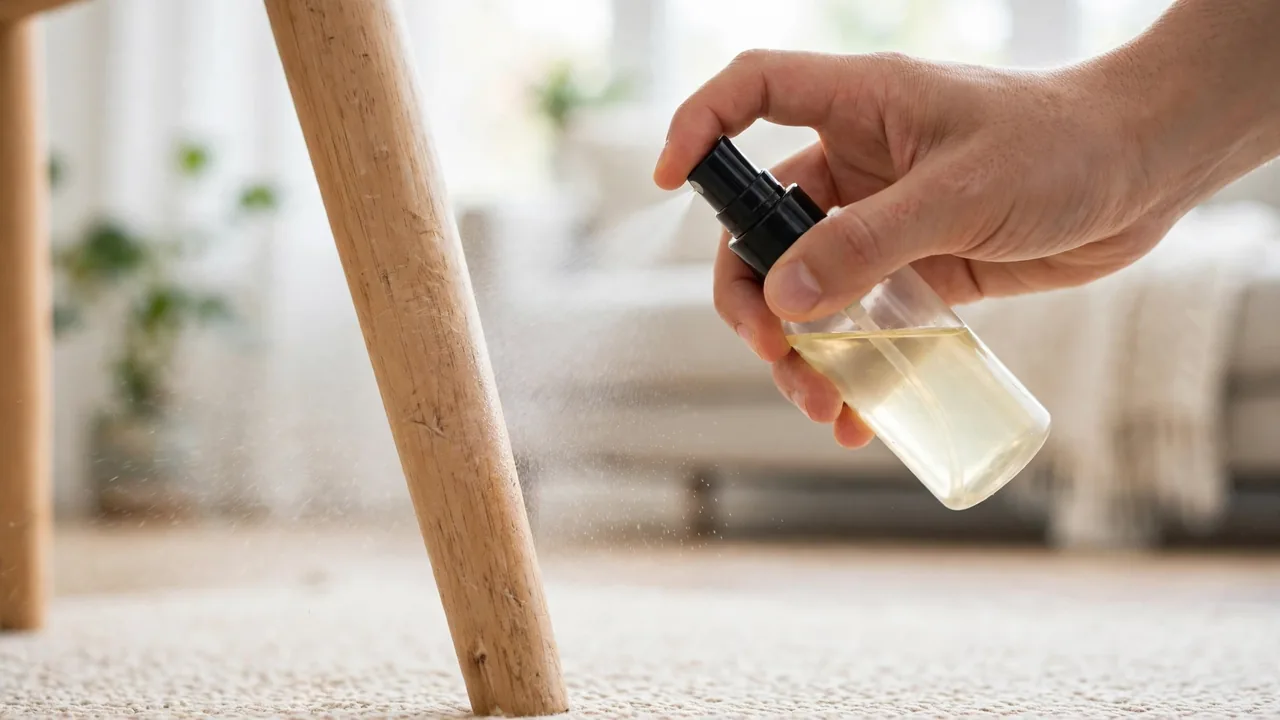
Pick a bitter apple spray made for dogs, and test one squirt on a hidden spot first. Wait 10 minutes and check for a mark or a sticky patch. Once the spot looks fine, spray each leg from floor level up to about 12 inches high.
Reapply every morning and after you mop, since the taste fades fast. One bad-tasting bite teaches more than a scolding ever could, and most dogs stop testing the wood after two or three tries.
Trade the furniture for a toy every time
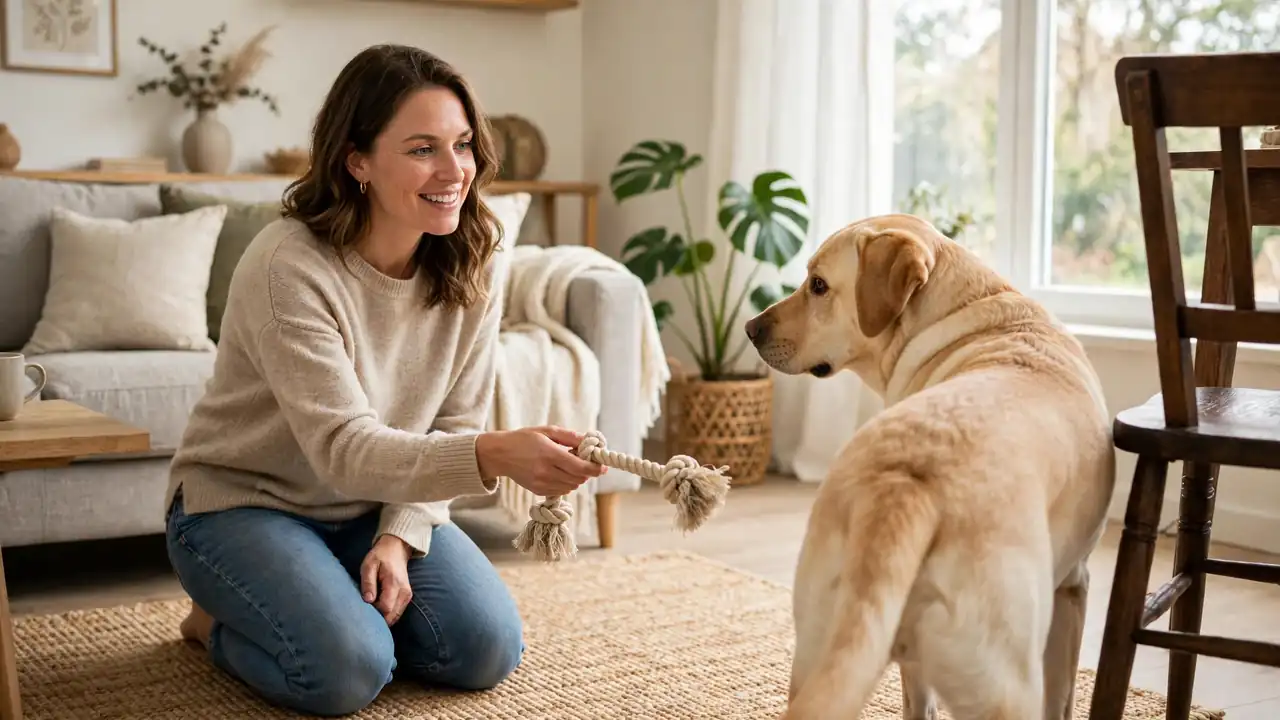
Watch for the moment your dog’s mouth opens near a chair leg. Step in calmly, hold a toy beside their nose, and say your dog’s name once. The second they let go of the wood, hand over the toy and praise them.
Repeat the trade each time it happens. Your dog learns that dropping the chair brings a reward, and the chair itself brings nothing at all. Stay calm through every trade, even when the same leg gets a second visit in one afternoon.
Praise calm chewing on the right thing
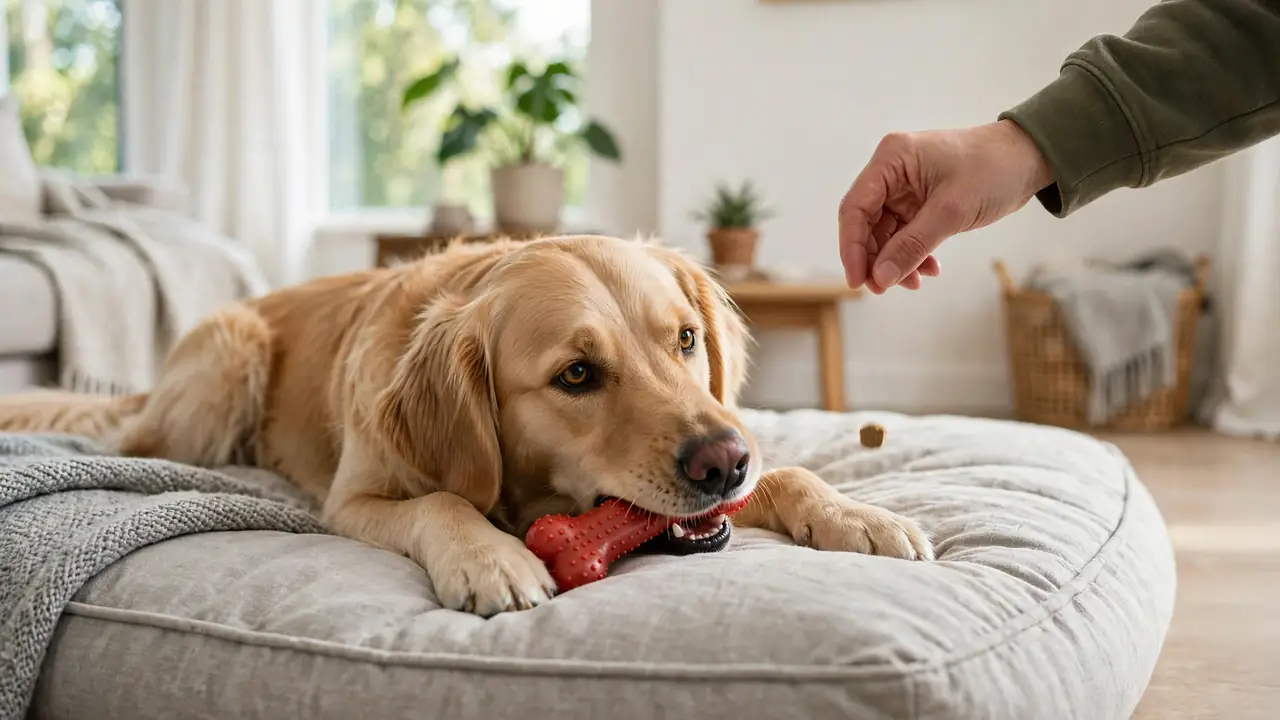
Catch your dog chewing the toy on their own and say something warm right away. Drop a small treat between their paws while they keep chewing. Three quiet rewards a day build the habit faster than one long session.
The goal is a dog that walks past the chair leg, picks up the toy, and settles down without a word from you. That quiet choice is the real win, and it grows stronger every time you notice it.
Teach “Leave it” to stop your dog chewing furniture
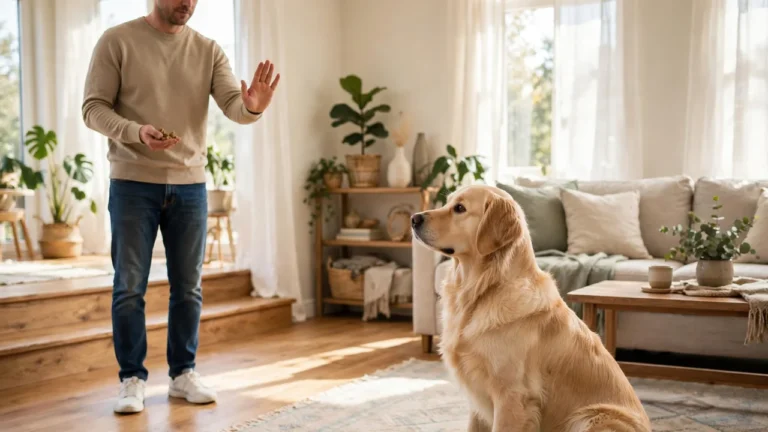
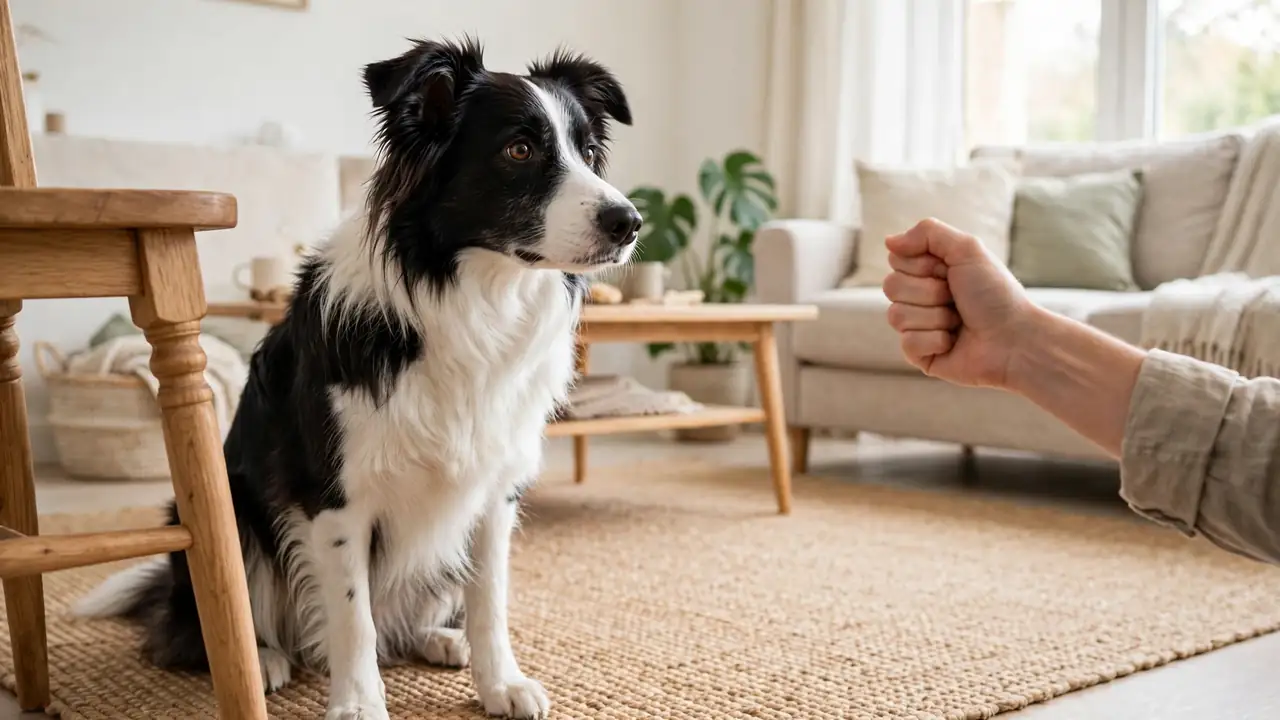
Hold a treat in your closed hand near the chair leg. Say “Leave it” once, in a flat, calm voice.
Wait for your dog to turn their head away, even for one second. Mark the look with “Yes!” and give a treat from your other hand.


Paid Links - As an Amazon Associate, I earn from qualifying purchases.
The treat in your closed hand never becomes the reward. Practice for five minutes, then rest. A solid leave it gives you a way to protect the chair before the teeth touch the wood.
Set up a chew station beside your sofa
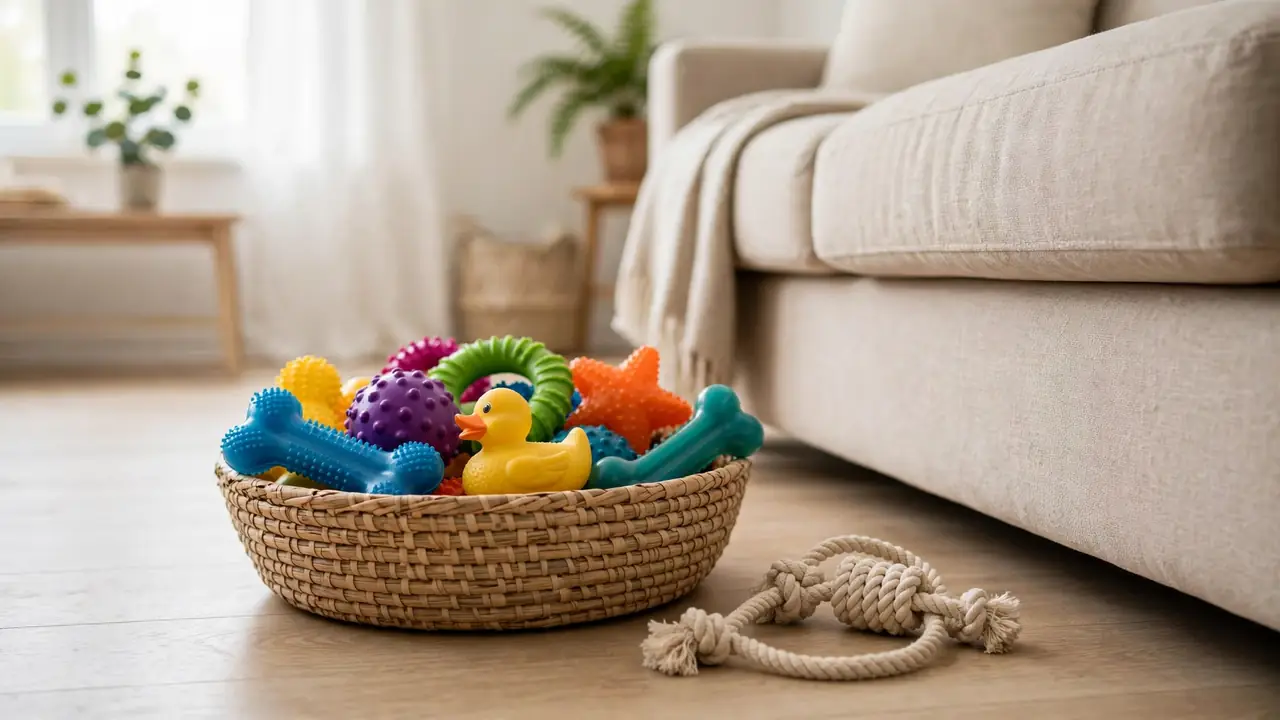
Put a low basket by the spot where your dog rests most. Fill it with two rubber toys, a rope toy, and one long-lasting chew. Keep the basket in the same place every day so your dog learns where the good chews live.
When your dog walks to the basket on their own, you have proof the new habit is taking hold. Refill the basket each morning, and swap in a fresh chew when one wears down.
Build alone time a few minutes at a time
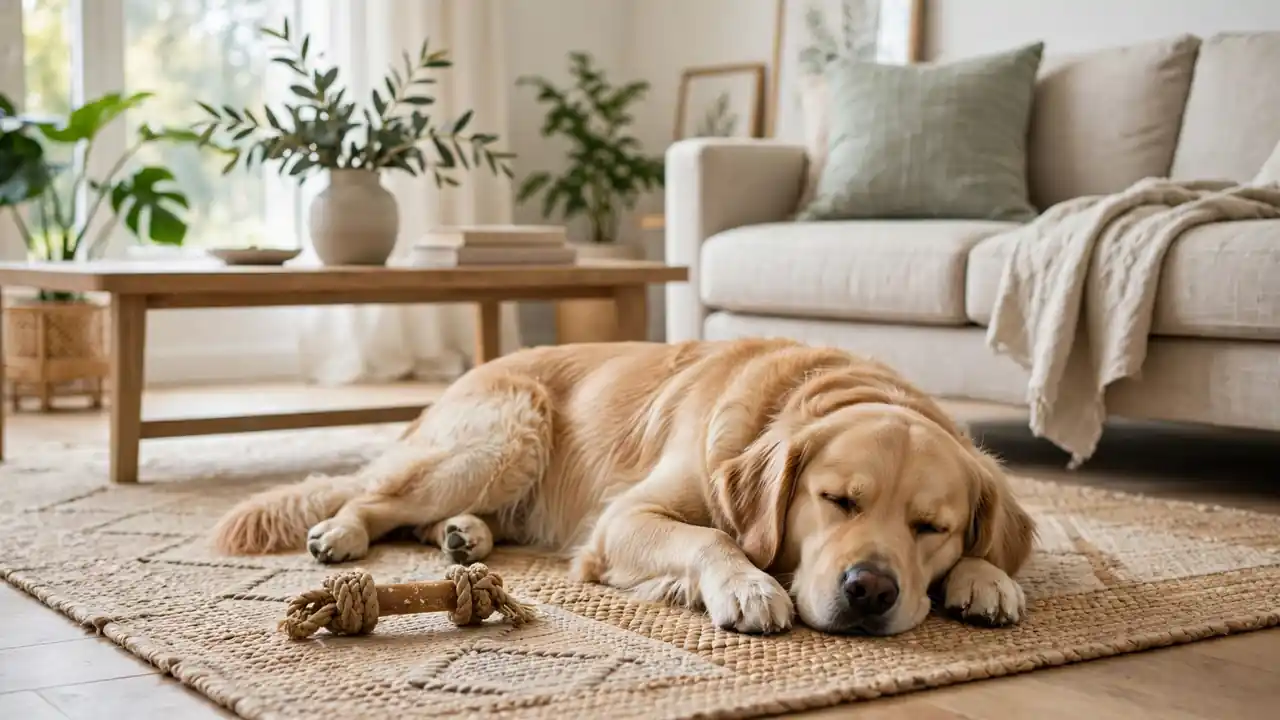
Most furniture chewing happens when nobody is watching. Leave the room for two minutes, then come back before your dog starts on the chair. If the furniture is untouched, leave a chew toy and go again for five minutes.
Add a few minutes each day until your dog rests calmly for 30 minutes alone. If you come back to fresh marks, shorten the time again and rebuild from the last stretch that worked.
Troubleshooting: Fix Common Furniture Chewing Problems
| If This Happens | Try This |
|---|---|
| Dog chews the chair even with the spray on | Reapply the spray, and check the taste is still strong. Move the piece out of reach until the habit fades. |
| Dog picks the chair over every toy | Try a softer chew or a frozen stuffed toy. A toy that smells like food beats plain wood. |
| Dog chews only when left alone | Shorten alone time and leave a long-lasting chew. Build up in small steps. |
| Dog chews one chair leg and ignores the rest | Spray that leg twice a day and place the chew basket right beside it. |
| Dog drops the chair, then goes back to it | Pick the toy up with the trade and toss a treat a few feet away, so your dog moves off the spot. |
Frequently Asked Questions
How long does it take to stop a dog chewing furniture?
Most dogs show clear change in about two weeks of daily practice. Puppies still teething may need longer, since the urge to chew stays strong until their adult teeth settle.
Is bitter apple spray safe for dogs?
Yes, sprays made for dogs use a bitter taste that is safe to lick in small amounts. Test on a hidden spot first, and skip sprays with hot pepper or strong oils on fine wood.
Why does my dog chew furniture when I leave the house?
Dogs often chew when they feel bored or tense on their own. A long-lasting chew, a short absence, and a calm return help more than a scolding after the fact.
Should I punish my dog for chewing the chair?
No. Punishment after the fact does not teach your dog what to chew instead. A trade, a reward for the right chew, and a spray on the wood work better.
What is the best chew to give instead of furniture?
A rubber toy stuffed with peanut butter and frozen works well for most dogs. Rotate a few chews through the week so the novelty stays fresh.
Quick Reference Card
What You Need: Rubber chew toy; rope toy; long-lasting chew (bully stick); bitter apple spray; baby gate or puppy pen; low basket; small soft treats; xylitol-free peanut butter; old towel; treat pouch.
Steps: 1) Move tempting furniture out of reach. 2) Offer a chew your dog likes more than the chair. 3) Spray chair legs with a bitter taste deterrent. 4) Trade the furniture for a toy every time. 5) Praise calm chewing on the right thing. 6) Teach “Leave it” to stop your dog chewing furniture. 7) Set up a chew station beside your sofa. 8) Build alone time a few minutes at a time.
You now know how to stop your dog chewing furniture, step by step. Your chairs taste bad, the chew basket sits full, and your dog has a clear cue for leaving wood alone.
Keep the basket stocked and the spray fresh for two more weeks. Pin this guide so the steps are close at hand the next time a chair leg looks tempting.