15 First Week Puppy Checklist Items Every Owner Needs
The first night with a new puppy is sweet and a little chaotic. The puppy cries at 2 a.m., you are not sure if the whining means potty or fear, and the kitchen floor already has a puddle on it. Most new owners feel this way, and it does not mean you did anything wrong.
The difference between a rough first week and a calm one is rarely luck. It is a short list of things handled early: a vet visit booked, the right food in the bowl, a crate that feels safe, and a routine the puppy can learn fast. This first week puppy checklist walks through all 15 items, in the order that matters most.
Work through it before pickup day if you can. If your puppy is already home, start at the top and tick things off one by one. Each item takes a few minutes to set up, and each one saves you a headache later in the week.
You do not need to be perfect. You only need the basics in place.
1. Set Up the Crate Before Your Puppy Comes Home
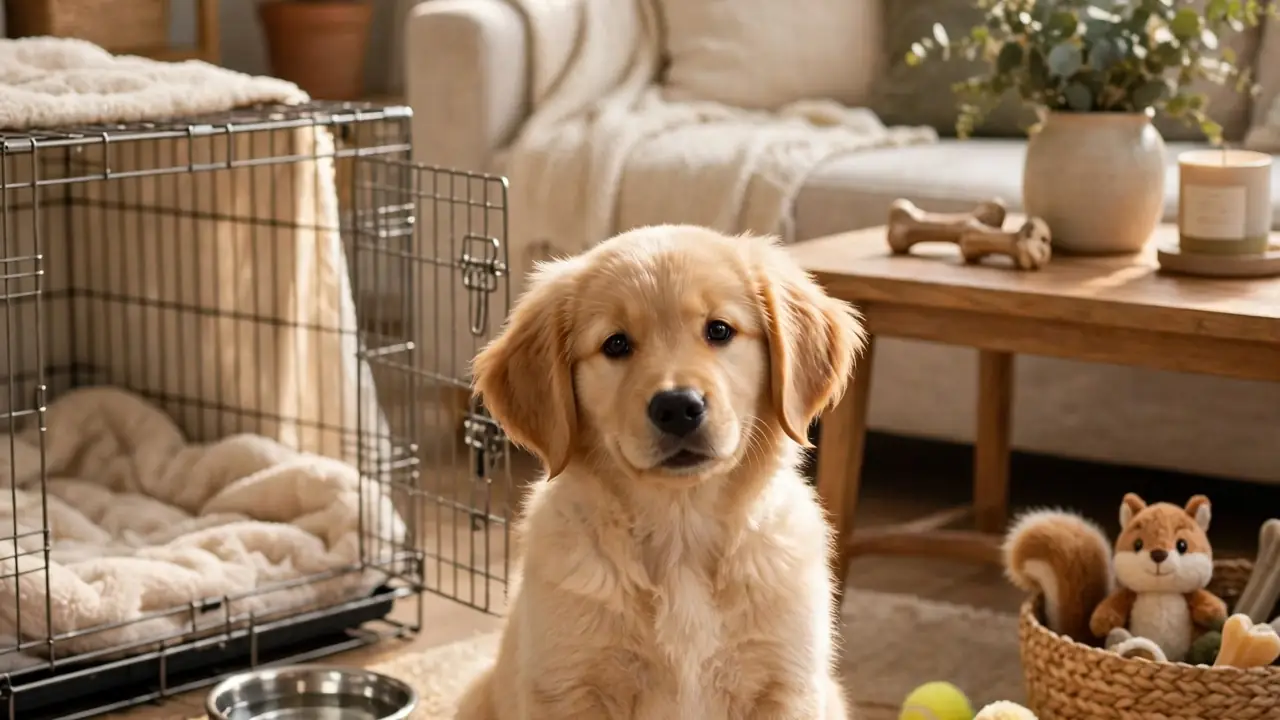
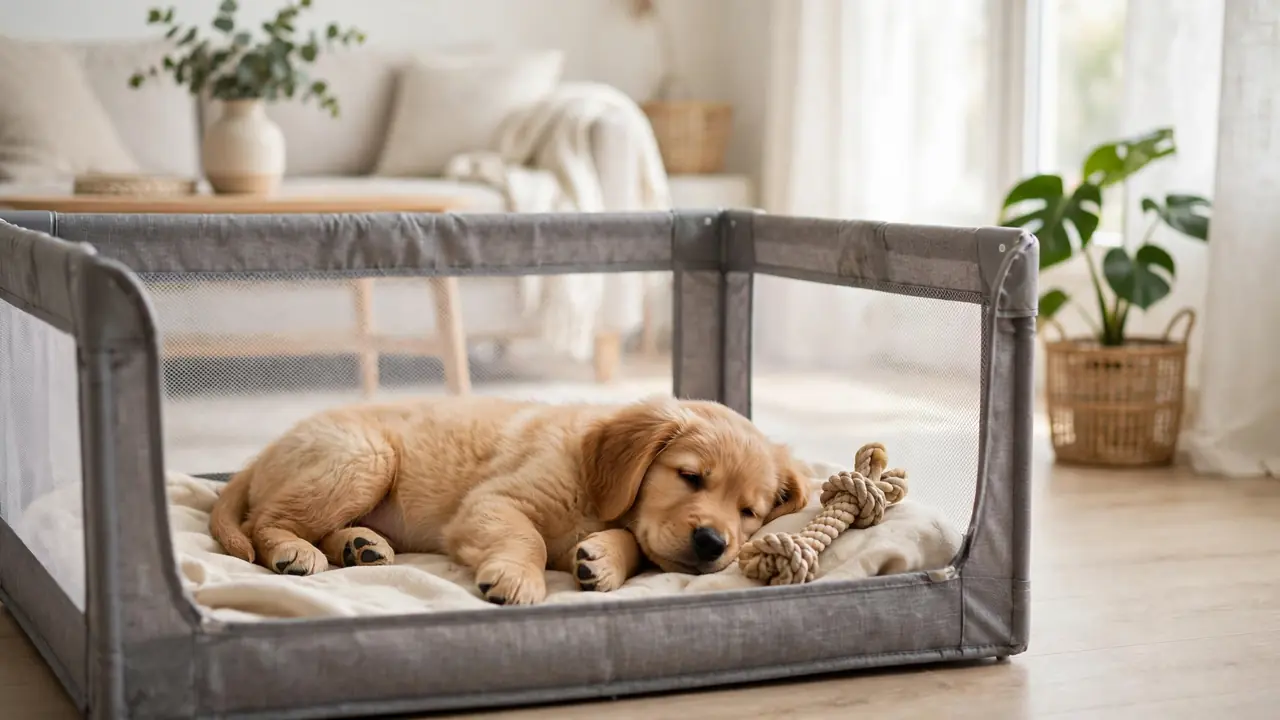
A crate gives your puppy a den, and a den gives your puppy a way to settle. Set it up a day before pickup so the bedding smells like your house, not like a box it just came out of. Put it where the family spends the evening, not in a far room where the puppy feels alone.
- Size it so the puppy can stand, turn, and lie flat, with no extra room to potty in a corner.
- Add one washable blanket and one safe chew, and leave the door open at first.
- Feed the first few meals just inside the door so the crate means good things.
2. Book the First Vet Visit Within 48 Hours
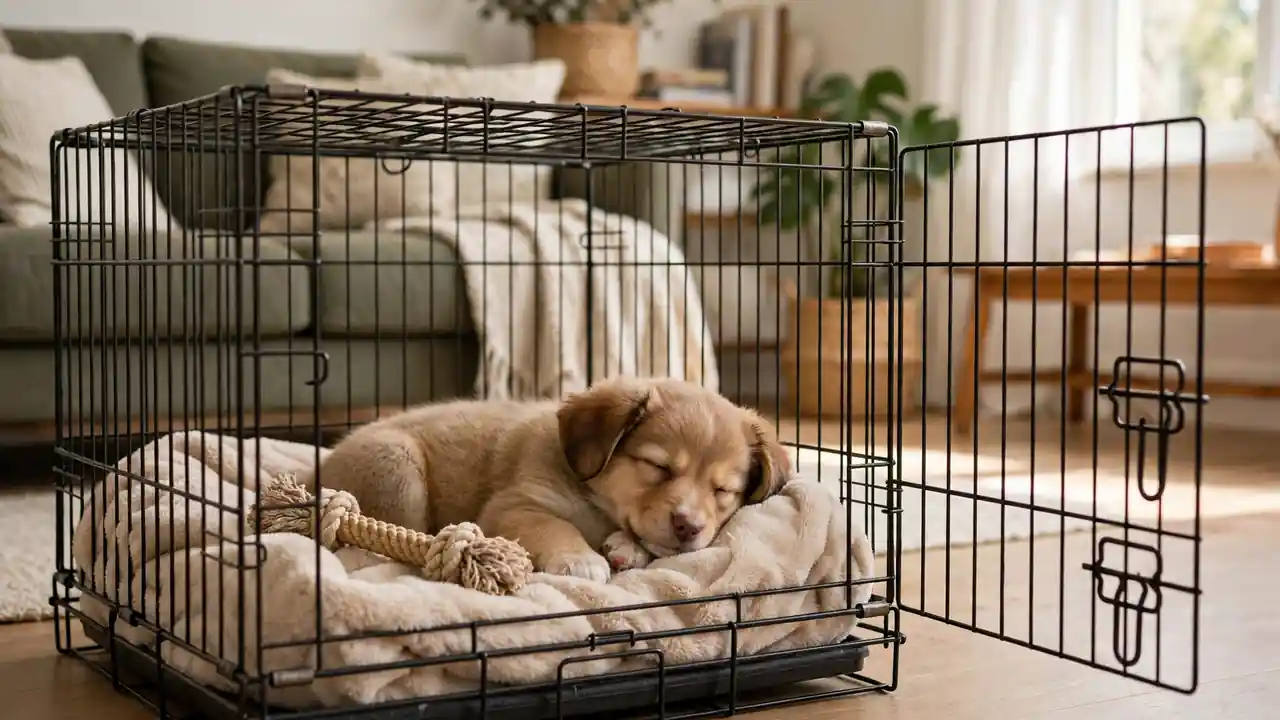
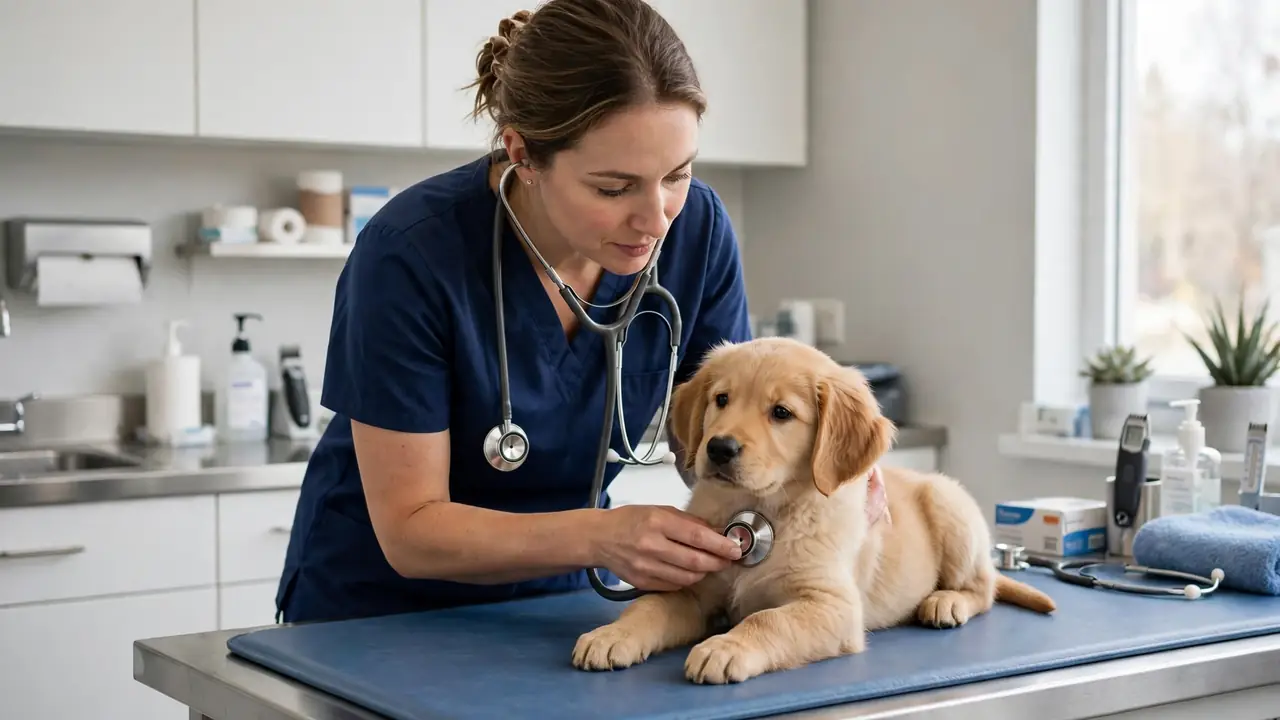
Call the vet before you pick the puppy up, not after a problem shows up. A first visit in the first two days checks weight, ears, belly, and vaccination records, and it gives you a vet who already knows your puppy if something changes at midnight. Bring the breeder or shelter paperwork with you.
Write your questions down before you go, because the exam room is the worst place to try to remember them. Ask about the next vaccine date, the deworming schedule, and what food amount fits your puppy’s weight. A short visit now prevents a worried call later.
💡 Quick Tip
Ask the clinic for its after-hours number at this first visit and save it in your phone before you leave the parking lot.
3. Keep Feeding the Food Your Puppy Already Knows
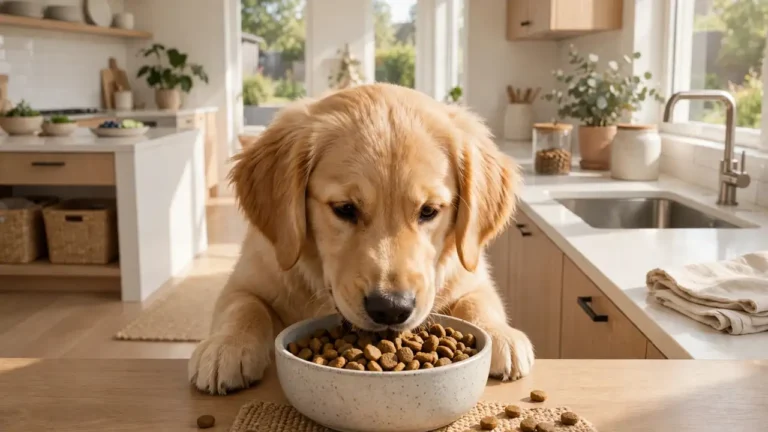
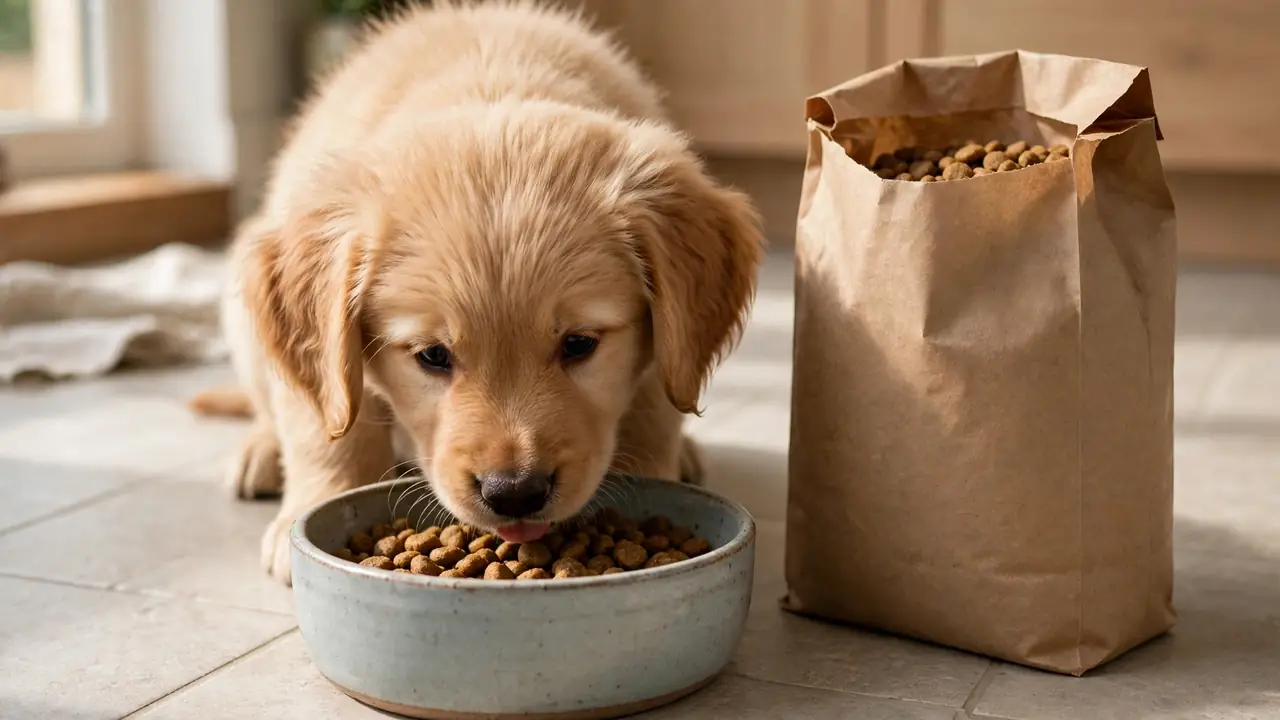
A new home is already a lot of change. A new food on top of it is the fastest way to an upset stomach. Ask the breeder or shelter exactly what brand and recipe the puppy eats, buy a small bag of the same food, and keep the same amount for the first week.
You can switch foods later, slowly, once the puppy is settled.
If the puppy turns away from the bowl, check the simple things first. Fresh water nearby, a quiet spot to eat, and a bowl that does not slide across the floor fix most skipped meals. Call your vet if the puppy skips more than two meals in a row.
4. Write the Feeding Schedule on the Fridge
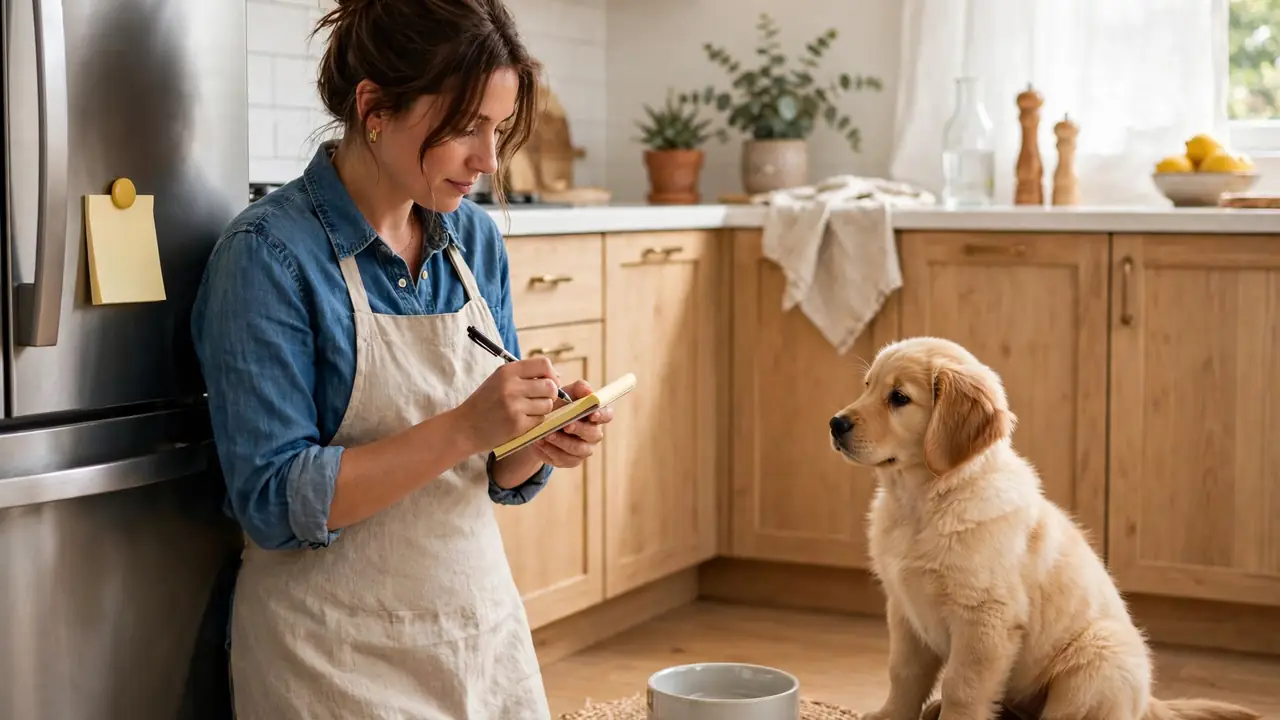
Everyone in the house needs the same answer to one question: did the puppy eat yet? A paper schedule on the fridge ends the guessing. Puppies under six months usually eat three to four small meals a day, spaced out, and the exact times matter less than keeping them steady.
- Write the meal times, the amount per meal, and who feeds each one.
- Tick each meal off as it happens so no one feeds twice.
- Keep treats out of the count, or the puppy fills up on snacks and skips dinner.
What to grab first
5. Pick One Potty Spot and Use It Every Time
Puppies learn places faster than they learn words. One patch of grass, used after every meal, every nap, and every play session, teaches the puppy where to go without a lecture. Carry the puppy to the same spot so the trip itself becomes part of the routine.
Stand still, stay boring, and wait. Praise the second the puppy finishes, then head back inside. If you want the full routine, our guide to how to potty train a puppy in 2 weeks walks through the day-by-day plan that builds on this first spot.
Every trip goes to a different patch of yard, the puppy sniffs for ten minutes, and nothing happens until you are back inside.
The same spot, the same short wait, a quick praise, and the puppy starts heading there on its own by the end of the week.
6. Put On the Collar, Tag, and Leash on Day One
A puppy can slip out a door in the time it takes to carry in groceries. A light collar with an ID tag and your phone number turns a scary moment into a short one. Fit the collar so two fingers slide under it, and check the fit again at the end of the week, because puppies grow fast.
- Clip the tag on before the first garden trip, not after.
- Let the puppy wear the collar indoors for short stretches first.
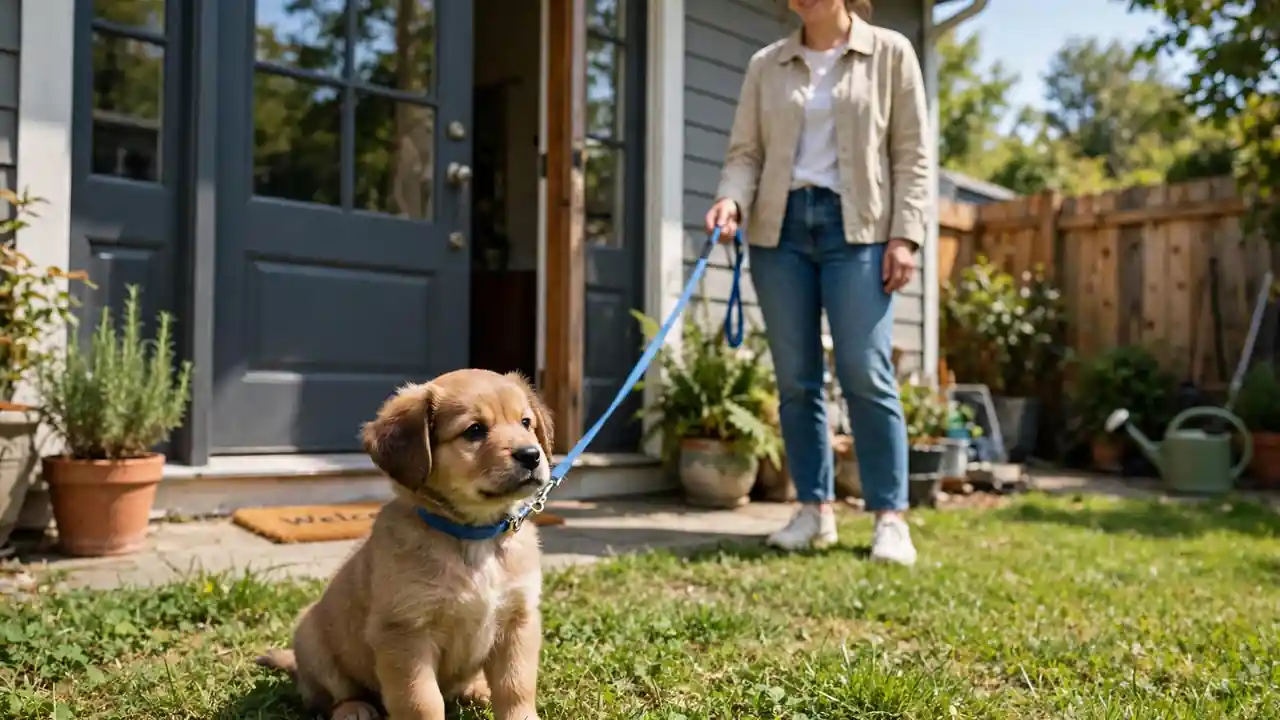
- Attach the leash for a few calm minutes inside before the first walk outside.
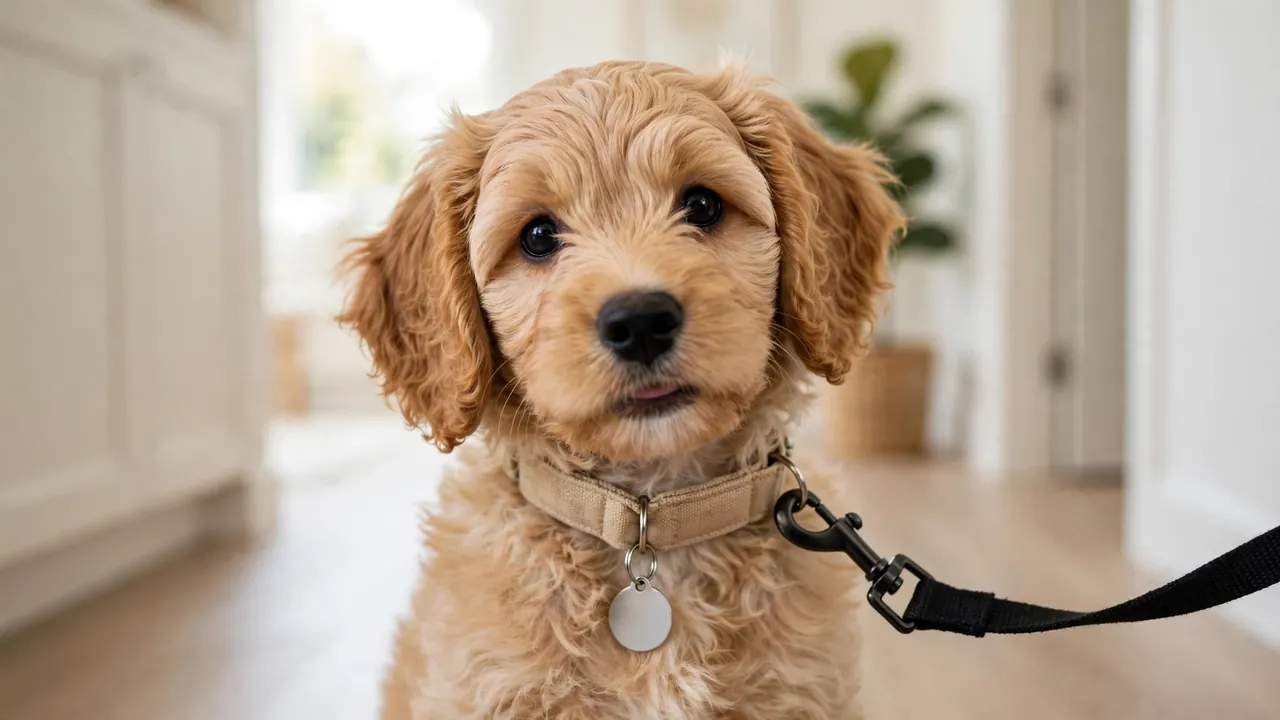
Fit the collar with the two-finger check and clip on the ID tag.


Paid Links - As an Amazon Associate, I earn from qualifying purchases.
Let the puppy wear it indoors for short, happy stretches with treats.
Clip on the leash and practice a few calm steps inside before going out.
7. Make a Quiet Sleep Spot Away From the Noise
Puppies sleep most of the day, and tired puppies are cranky puppies. A bed in a calm corner, away from the TV and the front door, gives the puppy a place to crash without being stepped over. A ticking clock wrapped in a towel can help on the first nights, since the sound feels a little like littermates.
Keep the spot the same every night. The puppy learns that this corner means sleep, and the whole house gets quieter once that lesson lands. If crying starts, a calm potty trip and a return to the same bed beats a long cuddle on the couch.
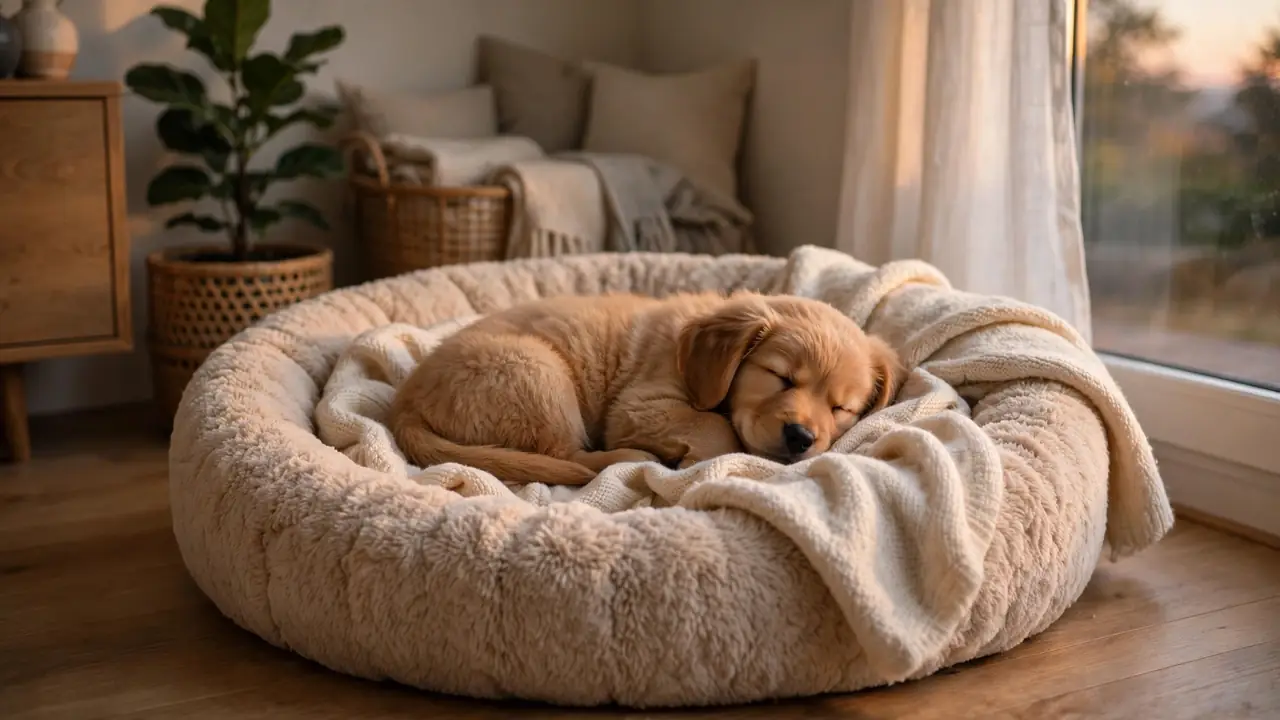
Pick one calm corner and keep the bed there every night.
Keep evenings low key so the puppy winds down on its own.
Moving the bed around the house every night.
Big play sessions right before bedtime.
8. Stock Chew Toys Before Your Shoes Become the Toy
Puppies chew because their gums hurt and the world is interesting, not because they are naughty. Have four or five safe chews ready before the first evening, and rotate them so the puppy does not get bored of the same one. Rubber toys, rope toys, and frozen carrots all work well for most puppies.
- Offer a chew the moment the puppy starts mouthing a shoe or a chair leg.
- Skip toys with small parts that can break off and be swallowed.
- Check toys each night and toss any that are cracked or fraying.
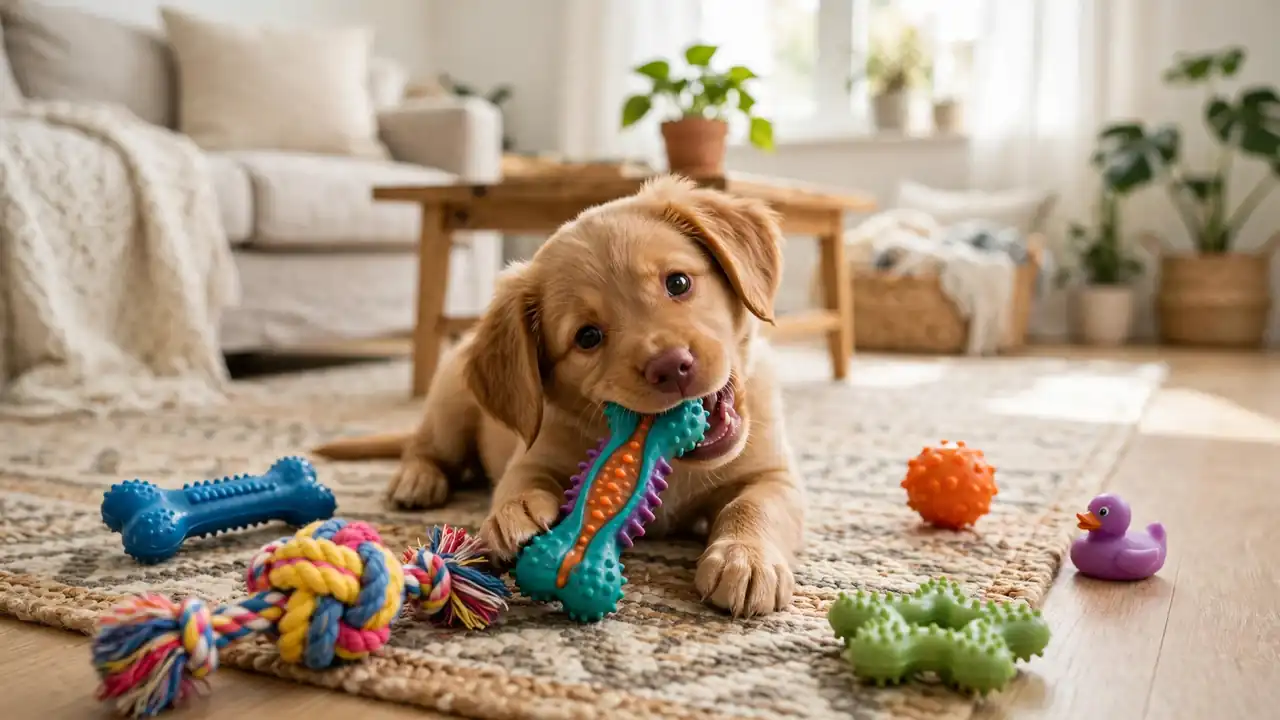
- ▸Rubber chew: tough, bouncy, easy to stuff with a treat.
- ▸Rope toy: good for gentle tugging and sore gums.
- ▸Frozen carrot: cold, cheap, and gone in ten minutes.
9. Puppy-Proof One Room on Your Hands and Knees
Get down to puppy height and look around. Cords, shoes, cleaning bottles, and small objects all look like toys from down there. Pick one room, make it safe, and keep the puppy in that room with a baby gate when you cannot watch closely.
Freedom can grow as the puppy learns the rules.
This is the single best accident prevention you can do in the first week. A puppy that cannot reach trouble cannot eat it, and you get to relax instead of shadowing every step. For the full list of things new owners get wrong, see our 12 mistakes new puppy owners make and how to avoid them.
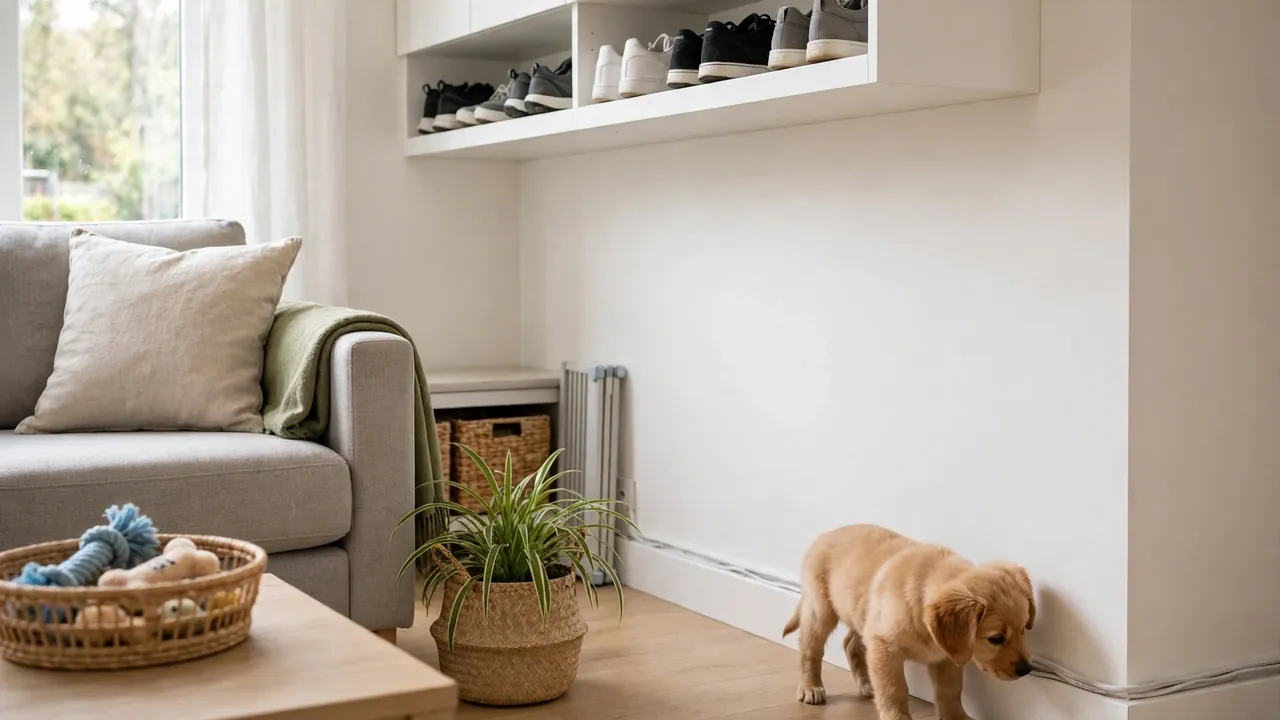
If a puppy can reach it, a puppy will chew it. Safe rooms beat constant watching.
10. Keep Training Treats in Every Pocket
Training a puppy is mostly about timing. The reward has to arrive within seconds of the good behaviour, or the puppy never connects the two. Small jars of tiny treats by the door, in the kitchen, and in your coat pocket mean you are always ready when the puppy sits, comes, or potties outside.
Keep the pieces tiny, about the size of a pea. A puppy that fills up on biscuits stops working for food, and a puppy that works for food learns fast. Break soft treats in half if the bag pieces are too big.
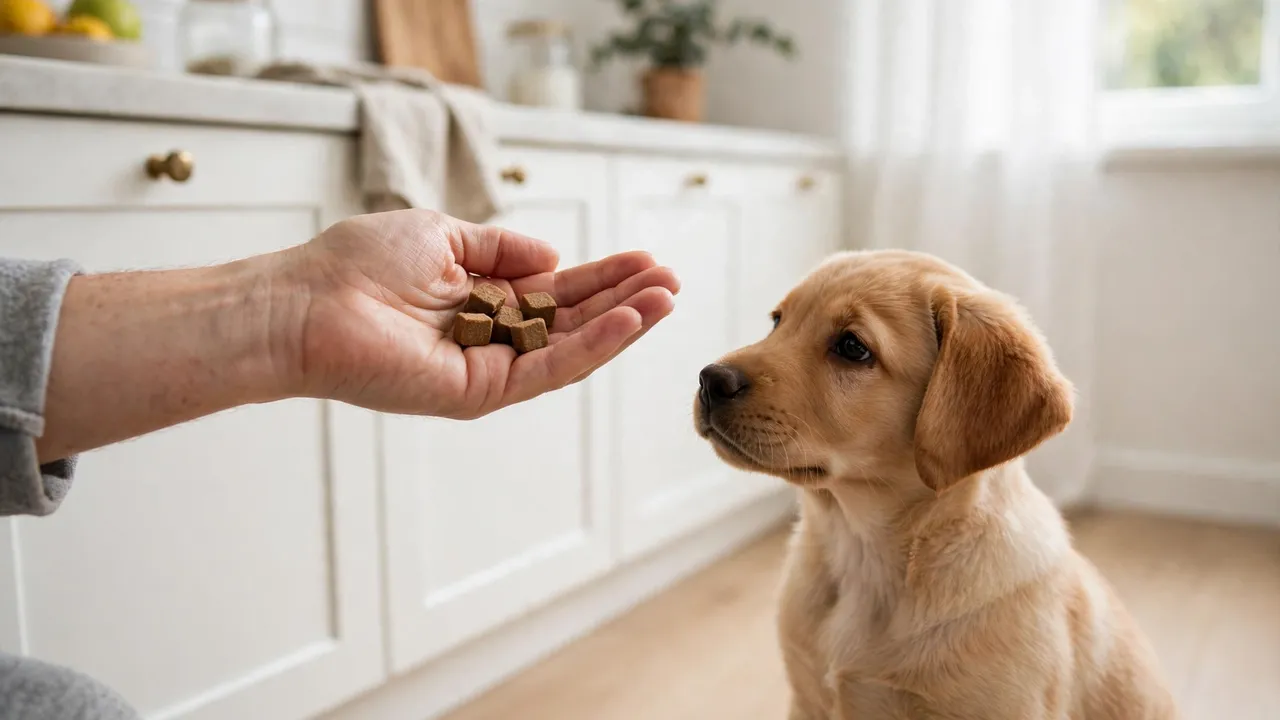
| Tiny training treats | Big biscuits |
|---|---|
| Eaten in one second, puppy stays focused. | Take a minute to crunch, puppy wanders off. |
| Easy to repeat ten times in one session. | Two biscuits and the puppy is full. |
11. Brush Your Puppy for Two Minutes a Day
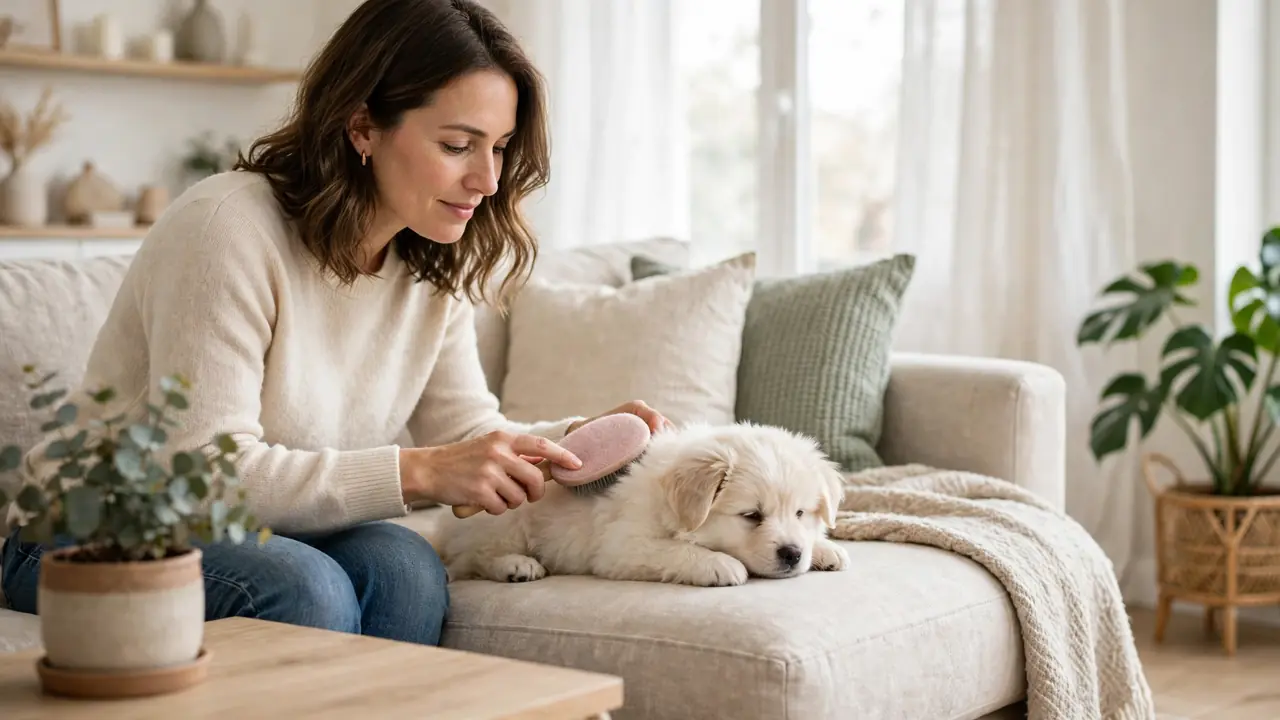
Start grooming while the puppy is small and the coat is easy. Two gentle minutes a day with a soft brush teaches the puppy that handling is normal, and it keeps mats from forming before you notice them. Pair each session with a treat so the brush becomes a good thing.
- Brush a little each day instead of a long session once a week.
- Touch the ears, paws, and belly gently during the same two minutes.
- Stop while the puppy is still happy, and try again tomorrow.
12. Keep Enzyme Cleaner Where You Can Reach It
Accidents will happen in the first week, and how you clean them decides whether they happen again in the same spot. Enzyme cleaner breaks down the smell that draws a puppy back, while a regular spray often leaves it behind. Keep the bottle, paper towels, and a small trash bag in one spot near the back door.
Clean calmly, without a fuss. Scolding after the fact only teaches the puppy to hide next time.
Blot, spray, wait a few minutes, and blot again. The puppy will get it, and the floor will forgive you.
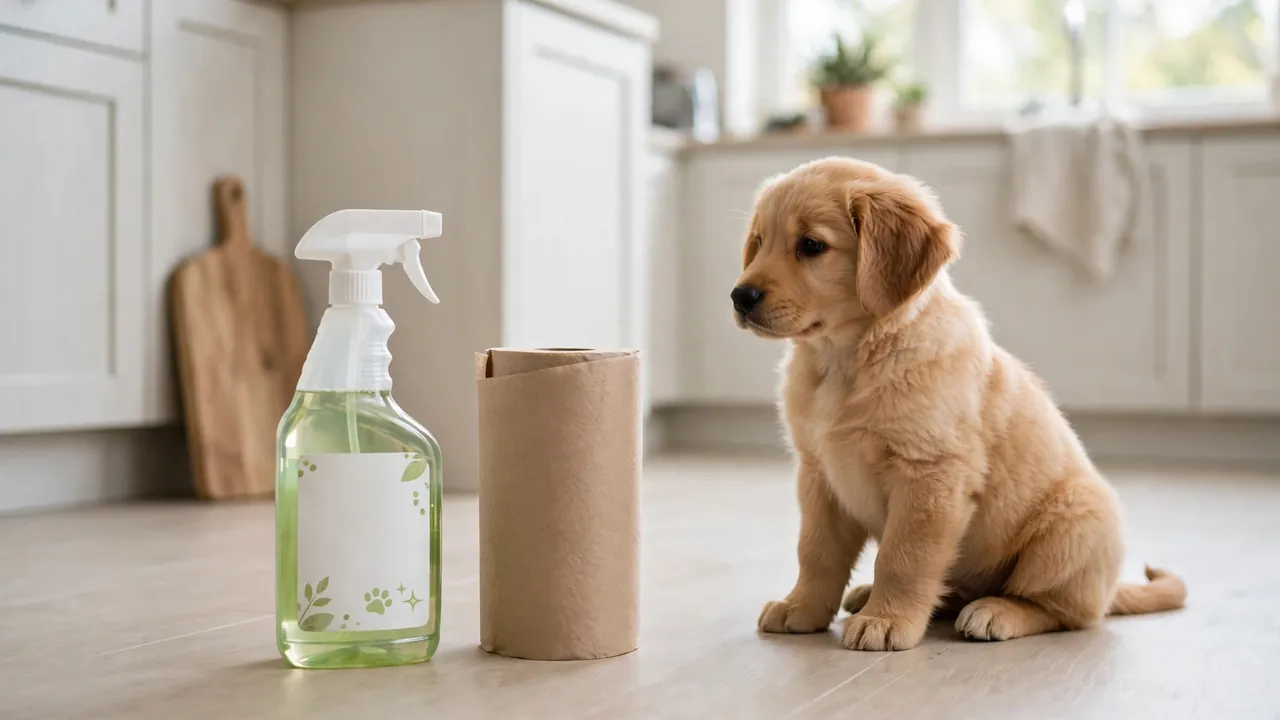
What to grab first
13. Plan One Short Socialization Moment Each Day
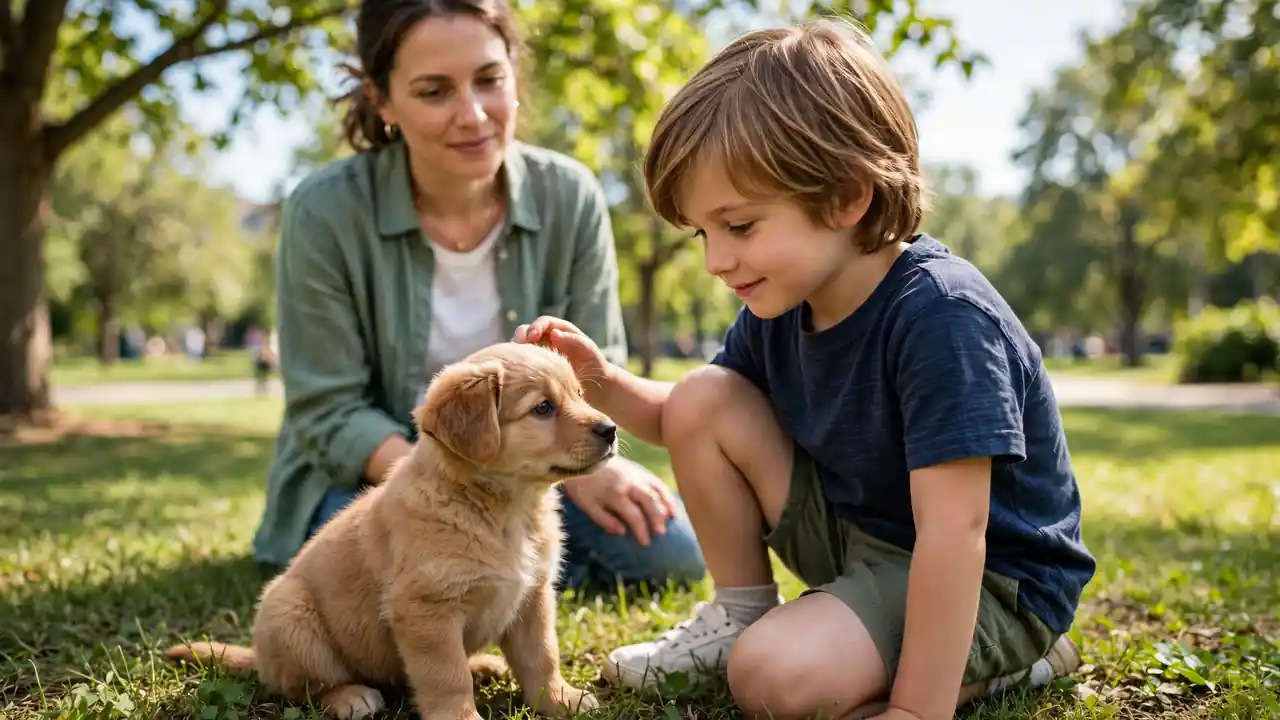
The first week is prime time for gentle new experiences. One short moment a day is plenty: a new sound, a friendly visitor, a different surface under the paws. Keep it brief and calm, and let the puppy watch first before getting closer.
A puppy that meets the world slowly grows into a dog that handles it well.
Watch the body language. A loose body and a wagging tail mean keep going.
Hiding, yawning, or lip licking means the puppy needs space, so step back and try again tomorrow. Short and sweet beats long and stressful every time.
14. Teach Short Alone Time From the First Day
It feels unkind to leave a new puppy alone, but a puppy that never practices alone time panics the first time you go out. Start tiny. Step into another room for thirty seconds with a chew in the crate, then come back before the puppy gets upset.
Build up slowly over the week.
Keep arrivals and departures boring. No big hellos, no long goodbyes, just a calm treat and a quiet exit. The puppy learns that you leaving is normal, and that you always come back.
💡 Quick Tip
Leave a worn T-shirt near the crate. Your scent helps the puppy settle while you are in the next room.
15. Start a Notebook for Vet Questions and Wins
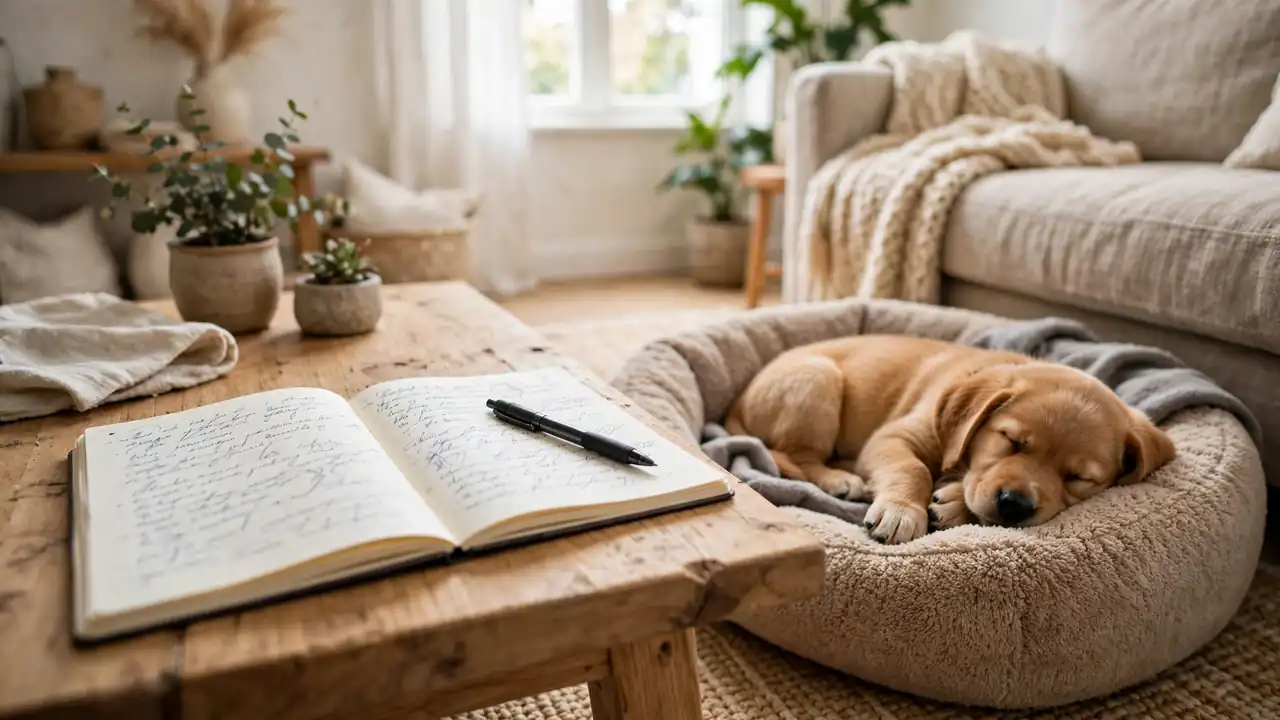
The first week flies by, and the small details slip away fast. A simple notebook on the counter holds the weight at pickup, the vaccine dates, the food amount, and the questions you want to ask at the next visit. It also holds the wins, like the first night with no accidents, which are easy to forget when you are tired.
Bring the notebook to every vet visit. A vet who can see the puppy’s first week in your own notes can give better advice than one working from memory alone. Before you bring your puppy home, our 15 things to buy before bringing a puppy home list pairs well with this checklist.
Vaccine dates on a scrap of paper, food amounts in your head, and no record of what the puppy weighed on day one.
One notebook, one page per week, and a vet visit where you have real answers instead of guesses.
Your First Week, One Check at a Time
Fifteen items sounds like a lot, but most of them take less time than a cup of coffee. Set up the crate, book the vet, keep the food steady, and give the puppy one calm routine to learn. Your puppy does not need a perfect owner, just a steady one.
Tick the list off as you go, and enjoy the small wins along the way. The first night without crying and the first trip to the right potty spot are signs the week is working. Save this list for the next time you want to check what is left, and share it with a friend who just brought a puppy home.