Disclaimer: All information in this guide is provided for educational purposes only and should never replace professional veterinary advice.
Entyce Dosage Calculator For Dogs
Dosage Results
- Recommended dosage: 3 mg/kg (1.4 mg/lb) by mouth once daily.
- Entyce is supplied as a 30 mg/mL oral solution.
- Gently shake the bottle before use.
- Use the supplied dosing syringe to measure the calculated volume.
- Rinse the syringe and plunger with water between doses and allow them to dry separately.
- The effectiveness of Entyce has not been evaluated beyond 4 days of treatment in the clinical field study.
- Use only as directed by your veterinarian.
© medsdog.com
Entyce® (Capromorelin oral solution) is a prescription appetite stimulant that has been approved by the FDA for use in dogs with reduced or suppressed appetites due to short or long term medical issues, and/or as a secondary effect of some medications.
Entyce Dosage For dogs is a flavored, oral solution, administered once a day, to stimulate appetite, increase food consumption, and help maintain healthy body weight. When used as directed, most dogs do well with this medicine.
In this guide, you will discover the suggested dosage chart for dogs using Entyce, an dosage calculator, how to correctly administer the dosage, how frequently they can be dosed, safety guidelines, and important precautions for accurate and safe dosing.


Paid Links - As an Amazon Associate, I earn from qualifying purchases.
What is Entyce Dosage For Dogs?
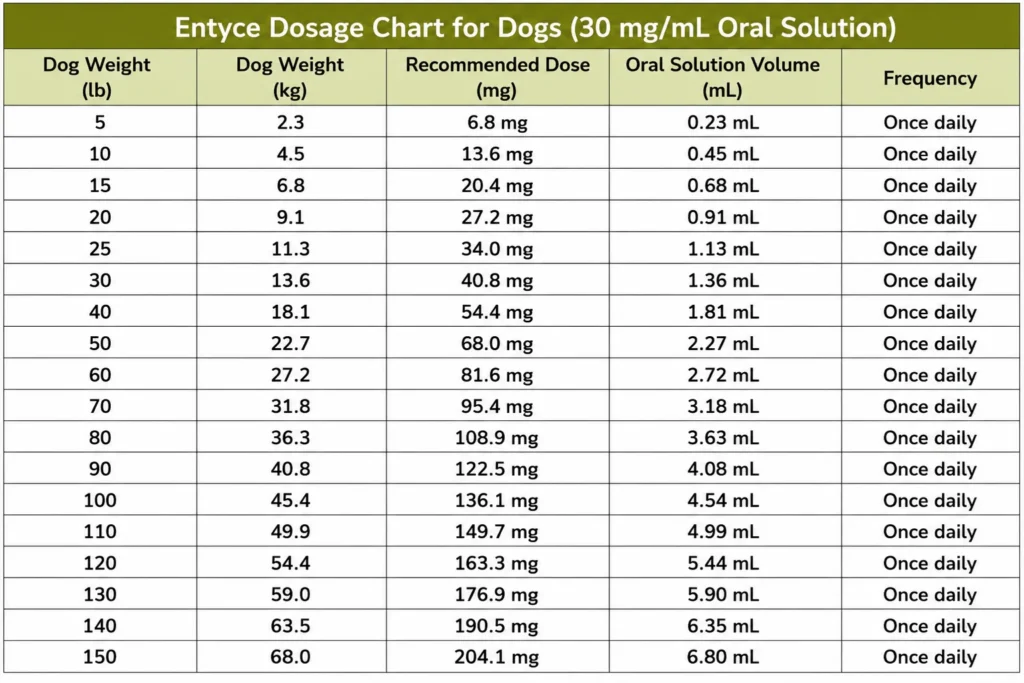
Entyce dosing for dogs is the recommended doses of Entyce® (capromorelin oral solution) to stimulate the appetite of the dog. The recommended dosage is 3 mg/kg (1.4 mg/lb) orally once a day as a labeled dosage in the oral solution.
It is important to determine the correct dosage according to your dog’s weight to make sure that it is administered correctly. Entyce is a prescription medicine, so only use it under your vet’s advice and following their treatment plan.
Entyce Dosage Chart for Dogs By Weight
| Dog Weight | Weight | Recommended Dose | Oral Solution Volume | Frequency |
|---|---|---|---|---|
| 5 lb | 2.3 kg | 6.8 mg | 0.23 mL | Once daily |
| 10 lb | 4.5 kg | 13.6 mg | 0.45 mL | Once daily |
| 15 lb | 6.8 kg | 20.4 mg | 0.68 mL | Once daily |
| 20 lb | 9.1 kg | 27.2 mg | 0.91 mL | Once daily |
| 25 lb | 11.3 kg | 34.0 mg | 1.13 mL | Once daily |
| 30 lb | 13.6 kg | 40.8 mg | 1.36 mL | Once daily |
| 40 lb | 18.1 kg | 54.4 mg | 1.81 mL | Once daily |
| 50 lb | 22.7 kg | 68.0 mg | 2.27 mL | Once daily |
| 60 lb | 27.2 kg | 81.6 mg | 2.72 mL | Once daily |
| 70 lb | 31.8 kg | 95.4 mg | 3.18 mL | Once daily |
| 80 lb | 36.3 kg | 108.9 mg | 3.63 mL | Once daily |
| 90 lb | 40.8 kg | 122.5 mg | 4.08 mL | Once daily |
| 100 lb | 45.4 kg | 136.1 mg | 4.54 mL | Once daily |
| 110 lb | 49.9 kg | 149.7 mg | 4.99 mL | Once daily |
| 120 lb | 54.4 kg | 163.3 mg | 5.44 mL | Once daily |
| 130 lb | 59.0 kg | 176.9 mg | 5.90 mL | Once daily |
| 140 lb | 63.5 kg | 190.5 mg | 6.35 mL | Once daily |
| 150 lb | 68.0 kg | 204.1 mg | 6.80 mL | Once daily |
Dosage Formula
- Recommended dose: 3 mg/kg (1.4 mg/lb) by mouth once daily.
- Solution strength: 30 mg/mL oral solution.
- Volume to administer (mL) = Recommended dose (mg) ÷ 30 mg/mL.
Note: This chart is for dogs only and is based on the labeled Entyce (Elura for dogs) dosage. Always use the dosing syringe supplied with the medication and follow your veterinarian’s instructions.
What Is Entyce for Dogs?
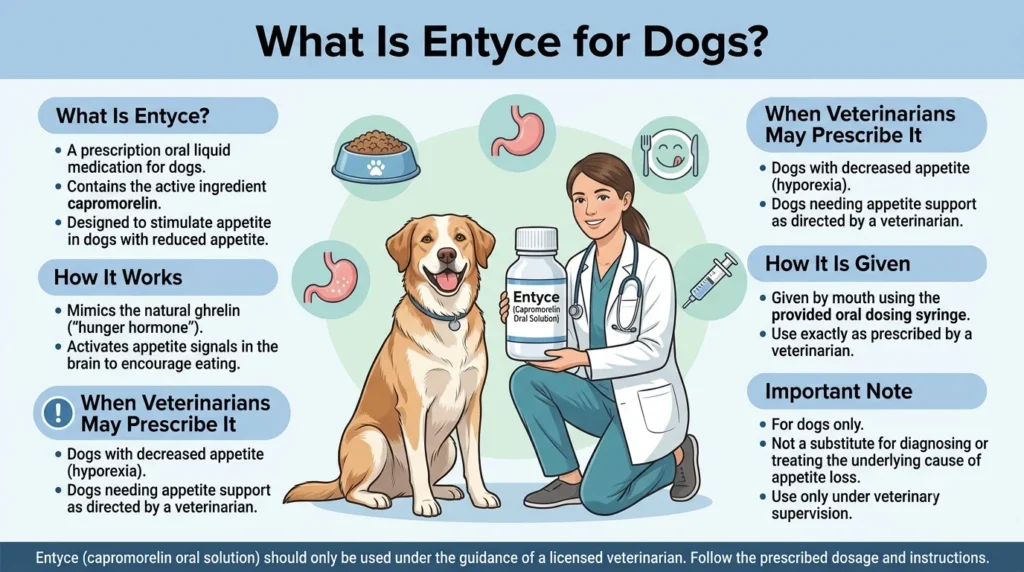
Entyce® (capromorelin oral solution) is the only FDA-approved veterinary medication for appetite stimulation in dogs. Capromorelin is a selective ghrelin receptor agonist that is found in this prescription oral solution and acts on the hypothalamus of the brain where ghrelin receptors are located, stimulating the brain’s appetite centers.
It also stimulates growth hormone secretagogue (GHS) receptors in the pituitary gland, which results in an increased production of growth hormone. Designed for once-daily use, Entyce medication helps dogs with decreased or suppressed appetites caused by short- or long-term medical conditions or medication side effects.
It’s flavored oral solution allows for easy administration, and is beneficial for appetite stimulation, food consumption and maintaining a healthy body weight. Entyce is well tolerated when prescribed by a veterinarian.
What Is Entyce Used for in Dogs?
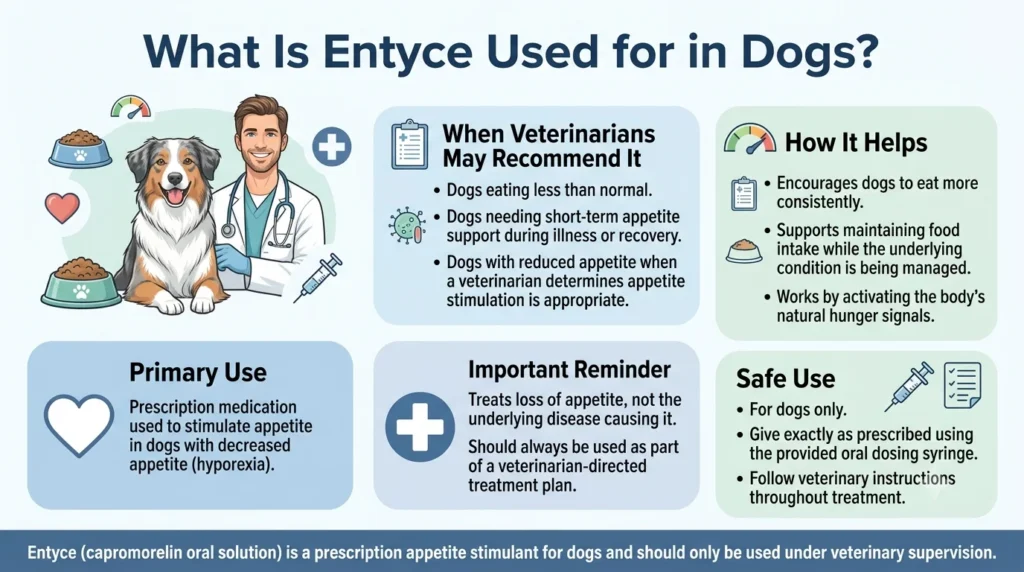
Entyce® (capromorelin oral solution) is an FDA approved prescription appetite stimulant that increases appetite and stimulates hunger in dogs. It is a combination of capromorelin and is given as flavored liquid oral medication. Elura Dosage for dogs is used by veterinarians to help dogs with a diminished appetite to eat and keep them from losing interest in food.
Common uses of Entyce for dogs include:
- Stimulating appetite in dogs with decreased or suppressed appetites.
- Increasing the drive to eat by raising the hunger sensation.
- Dogs recovering from surgery, injury or illness.
- Assisting dogs that are not eating because of a stressful situation.
- When food intake is decreased due to the use of certain medications, improving food intake is a goal of the treatment.
- Helping dogs with a decrease in appetite due to an underlying illness or disease (as directed by a veterinarian).
How Does Entyce Work for Dogs?
Entyce® (capromorelin oral solution) stimulates the body’s natural “hunger hormone” (ghrelin) by acting on the receptors that respond to it. Entyce activates these receptors in a dog’s brain, to make a dog feel more hungry which increases the likelihood that a dog will eat more and have a better appetite. These receptors have a stimulatory effect on appetite promotion but also stimulate the production of growth hormone which contributes to the overall effect of the medication for dogs with decreased appetite.
What Are the Side Effects of Entyce in Dogs?
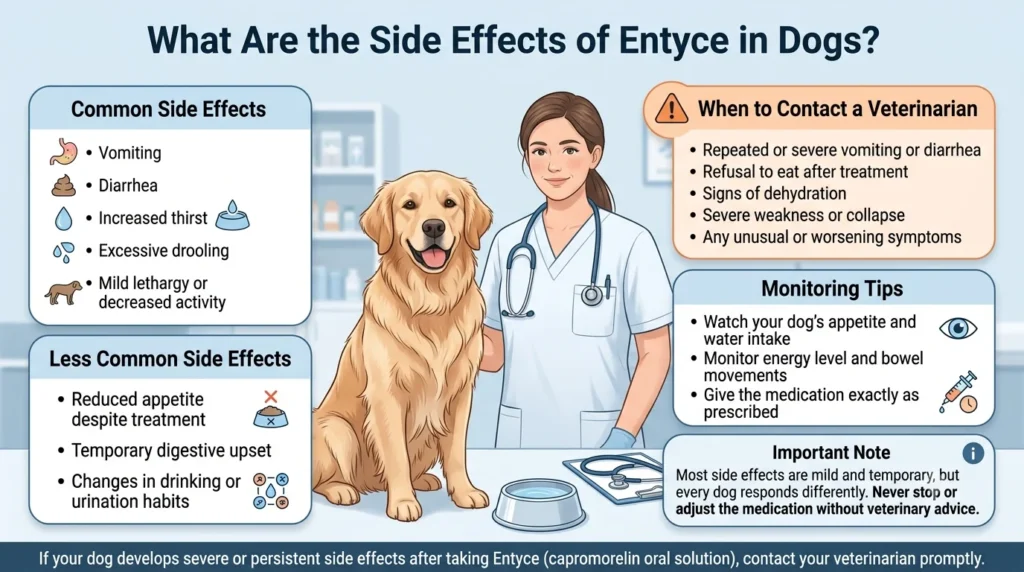
Like all medicines, Entyce® (capromorelin oral solution) can have side effects, but most dogs are tolerant of it. Most of these reactions are light and transitory, however if they are severe, long-lasting or strange it is advisable to consult your veterinarian.
Possible side effects of Entyce in dogs include:
- Diarrhea
- Vomiting
- Drooling (hypersalivation)
- Nausea
- Stomach pain or cramps
- Flatulence (gas)
- Increased gastrointestinal sounds
- Increased thirst (polydipsia)
- Drinking and urinating more
- Lethargy
- Depression
- Head shaking
Potential bloodwork changes may include:
- Increased blood urea nitrogen (BUN)
- Increased phosphorus levels
- Increased creatinine levels
Important precautions:
- Avoid use of Entyce Dosage For dogs known to be allergic to capromorelin or any of its components.
- Caution is advised in dogs with kidney or liver disease as the effects of the medication may be slightly longer in these animals.
- Entyce has not been tested in pregnant, lactating or breeding animals and should be used with caution in these animals.
- Entyce is a short-acting drug, and is typically excreted within 24 hours in healthy dogs.
When giving your dog Entyce, if you see or experience any unusual or disturbing side effects, please consult your veterinarian as soon as possible.
Entyce Precautions for Dogs
Talk to your veterinarian before administering Entyce® (capromorelin oral solution) to your dog, as there is information about your dog’s medical history you should share. While appetite stimulant, Entyce should be used with caution in some dogs and should only be administered as directed by the veterinarian.


Paid Links - As an Amazon Associate, I earn from qualifying purchases.
Important precautions include:
- Care needs to be exercised when using in dogs with hepatic (liver) dysfunction or hepatic impairment because Entyce may be metabolized by liver enzymes CYP3A4 and CYP3A5.
- Should be used with caution in dogs with renal insufficiency (kidney failure) due to the fact that the drug is excreted in the urine (37%) and feces (62%).
- May cause temporary reduction in heart rate (bradycardia) and blood pressure (hypotension) after administration, use with caution in dogs with heart disease or in very dehydrated dogs.
- Carefully use in dogs who have diabetes mellitus; hyperglycemia (high blood sugar) has been reported after treatment.
- Never use in dogs that have a known capromorelin or ingredient hypersensitivity or allergy.
- Entyce has not been evaluated for safety in breeding dogs, pregnant or lactating females and should be used with caution in these animals.
- Use in dogs only. Avoid use by children and other animals.
- Not for human use. In case of unintentionally ingested by a person, immediately seek medical attention.
- Follow all directions for use as prescribed by your veterinarian and as written on the label before giving Entyce.
Do any medications interact with this medication?
Yes. Some medications may interact with Entyce® (capromorelin oral solution); therefore, Entyce® should be used with caution in patients receiving drugs that could interact with the way that Entyce® is processed in the body.
Drugs that might affect how Entyce works include:
- Amiodarone
- Diltiazem
- Cimetidine
- Erythromycin
- Ketoconazole
- Itraconazole
- Rifampin
- Phenobarbital
Discuss with your veterinarian all medicines and products that your dog is taking, including prescription medications, over-the-counter products, vitamins, supplements and herbal medications. This will help your veterinarian prevent any interaction between the two and decide if you need to adjust the dosage or monitor you more closely.
Is There Any Monitoring Needed While Using Entyce?
Yes. Your veterinarian may wish to perform periodic checks during your dog’s treatment with Entyce® (capromorelin oral solution) to make sure the drug is safe and effective.
Your veterinarian may check it:
- To see how your dog’s appetite is improving if they are eating more.
- Use of water (fluid) to monitor drinking behaviour changes.
- Your dog’s weight to check if your dog is losing weight or gaining weight as desired.
- Overall response to treatment to check whether the appetite stimulant (Entyce) is working and if any changes in treatment plan are necessary.
You May Also Like to Read:
- Cestex Dosage For Dogs: Calculator, Chart & Safe Guide
- Phenylbutazone Dosage For Dogs: Calculator & Safe Guide
FAQs
Can Entyce dose be given with food?
Yes. Food can be used or not when giving Entyce. It should be given directly into your dog’s mouth, though, and food should be provided following this to give your dog a chance to eat.
What is the duration of action of Entyce medication?
Appetite stimulation is usually seen within 1 to 2 hours of Entyce administration, and the drug usually starts to work within 1 hour. During clinical trials, a lot of owners reported that their pets were eating more for the first couple of days of treatment.
What time of day should I give Entyce?
Entyce is best fed at the same time of day, preferably before your dog’s main meal, unless advised otherwise by your veterinarian.
Is it okay to alter the dosage due to my dog’s appetite?
No. Unless your veterinarian says otherwise, do not start, stop or give Entyce every other day according to your dog’s appetite. Take medication as directed.
May I decrease my dog’s dosage?
No. Always follow your veterinarian’s instructions with regards to the dose. Veterinary advice should always be sought before adjusting doses as this could decrease the efficacy of the medication.
What is the maximum duration that my dog can stay on Entyce?
As long as recommended by your veterinarian. Treatment length will vary depending upon medical condition and dog’s therapeutic response.
Does Entyce have any age or weight limitations?
The available prescribing information does not specify any age or weight limitations for the use of Entyce in dogs. You will be advised by your veterinarian whether or not it is suitable for your pet.
What flavor of Entyce is it?
The synthetic vanilla taste of entyce makes it easier to administer orally to dogs.
Is there animal or plant protein in Entyce?
No. Animal or plant proteins are not used in the flavoring agent in Entyce. As with any medicine however, an allergic or hypersensitivity reaction may occur, so if you notice signs of an allergic reaction, contact your vet.
Do I need to monitor my dog when taking Entyce?
Yes. It is important to maintain a log of how much your dog eats, how hungry your dog is and how much your dog weighs daily, as this will help you and your doctor determine the effectiveness of the medication and if you need to change anything.
Key Takeaways
- Capromelin oral solution (Entyce®) is the one appetite stimulant approved by FDA for dogs.
- The oral solution is recommended for 3 mg/kg (1.4 mg/lb) orally once a day.
- Entyce for dogs acts by stimulating ghrelin (“hunger hormone”) receptors, which stimulate appetite and promote eating.
- Dogs are often given it when they don’t have much interest in eating because of illness, surgery, injury, stress or some medicines.
- Side effects are vomiting, diarrhea, drooling, nausea, flatulence, increased thirst and lethargy.
- Caution should be used in dogs with liver, kidney, heart, diabetes, and dehydration diseases and only administered when supervised by a veterinarian.
- Let your veterinarian know if your dog is taking any other medications, supplements, or herbal products; this will help prevent any possible drug interactions.
- Keep out of direct sunlight, out of reach of water and store at or below 30C (86F) away from children and pets.
- Do not double the dose if the medication is missed – follow veterinarian’s instructions.
- If your dog has severe side effects, overdoses, or if the appetite does not improve with treatment, contact your veterinarian immediately.
Final Thoughts
When used as prescribed, Entyce® (capromorelin oral solution) is an effective, FDA-approved appetite stimulant that may help dogs who are not eating regularly or at a healthy body weight gain more regularly. Treatment is safe and effective only if the dosage is correct based on your dog’s weight, it is administered correctly and your veterinarian’s directions are followed.
Monitor your dog’s appetite, food intake, and overall condition during therapy, and contact your dog veterinarian if you notice persistent side effects, worsening symptoms, or signs of an overdose. With the right dosage and regular veterinary guidance, Entyce can play an important role in supporting your dog’s recovery and nutritional health.