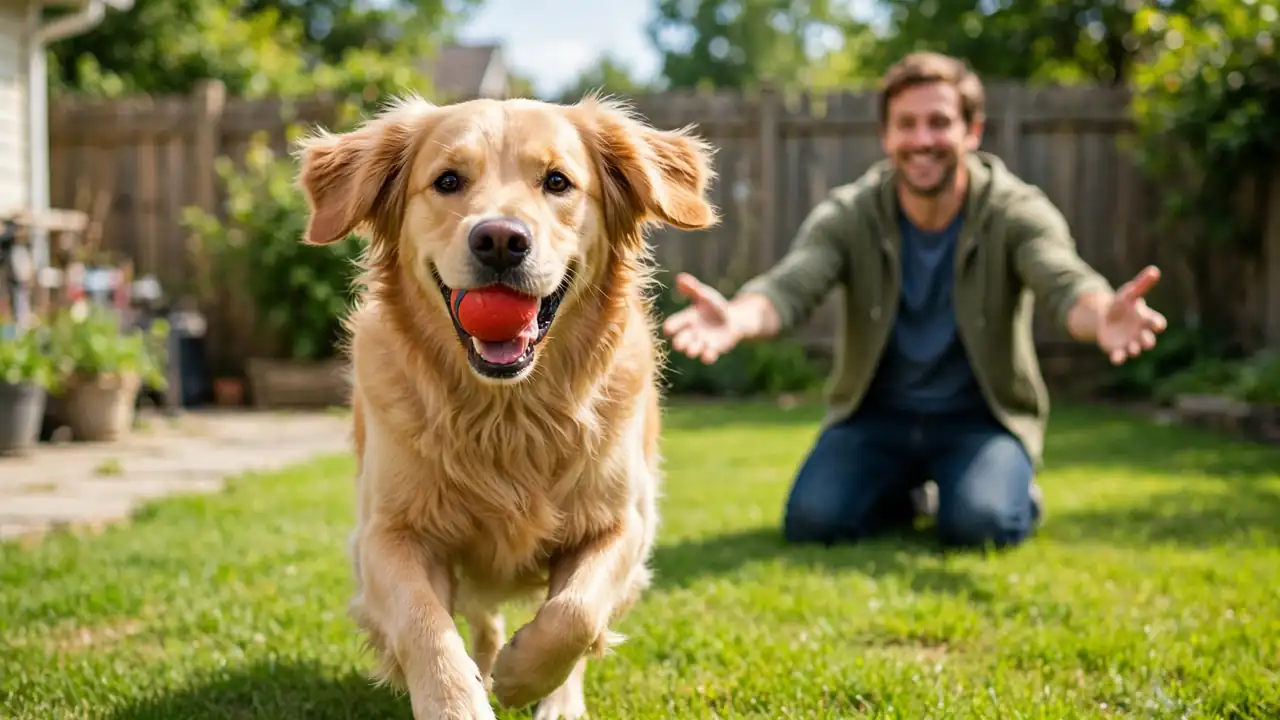
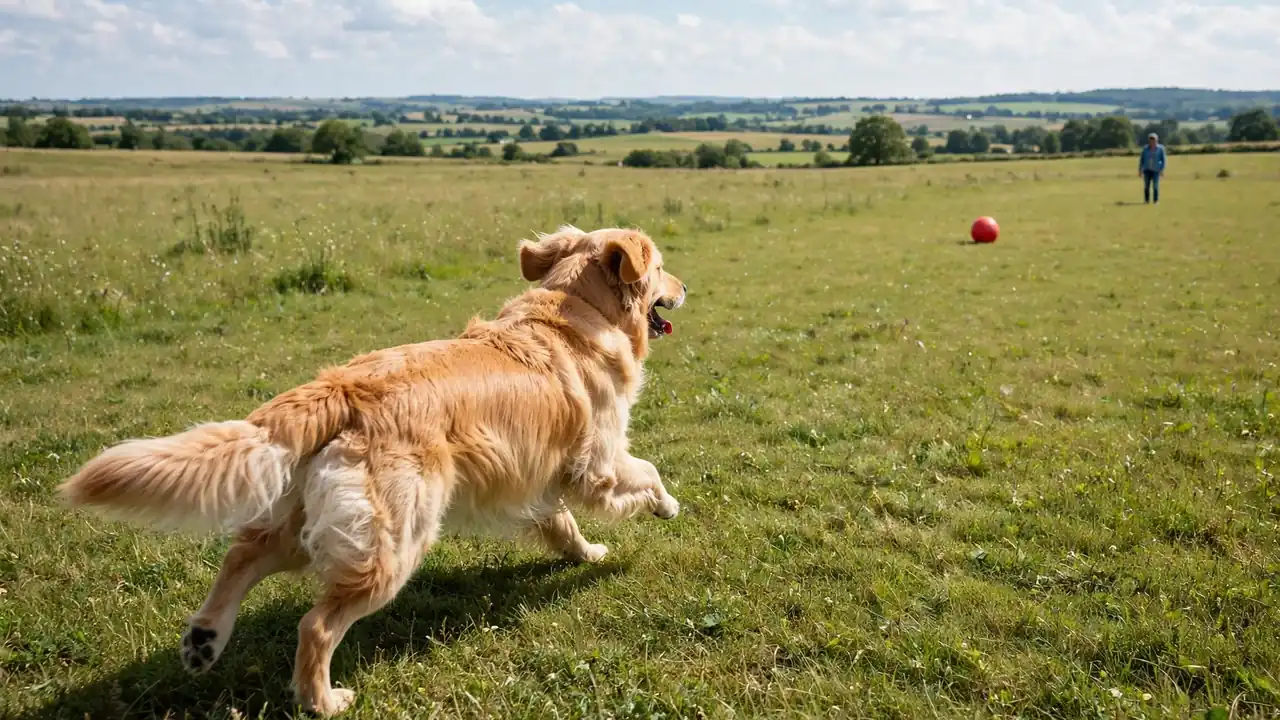
You throw the ball, and your dog races after it with pure joy. Then your dog grabs the ball, turns away, and settles down to chew it in peace. If you want to teach your dog to fetch and bring the ball back, you are in the right place.
Most dogs love the chase part of fetch. The return part needs teaching, because a ball in the mouth feels like a prize to keep.
Your dog is not being stubborn. Your dog has not learned that bringing the ball back starts the next throw.
This guide breaks the game into small wins. You teach a trade, a short toss, and a happy return, one piece at a time. Each step builds on the last, so your dog never has to guess what comes next.
Plan for about 10 minutes a day, split into two 5-minute sessions. You need a ball your dog loves, a pocket of small treats, and a long line for the middle steps. Pick a quiet yard or a calm park corner, gather your gear, and we can start.
What You Need
Gear
- Ball your dog loves, rubber or tennis
- Long training line, 20 to 30 feet
- Second ball as a backup
- Treat pouch or a pocket for treats
- Harness that fits your dog well
Supplies
- Small, soft training treats, pea-sized
- High-value treats, like tiny cheese cubes
- Water bowl and fresh water for breaks
At a Glance
- Pick a ball your dog loves to chase
- Trade the ball for a treat every time
- Toss the ball a short distance
- Wait for your dog to pick the ball up
- Call your dog back with a happy voice
- Teach your dog to fetch on a long line
- Add the word fetch once the pattern works
- Grow the distance a few feet at a time
Pick a ball your dog loves to chase
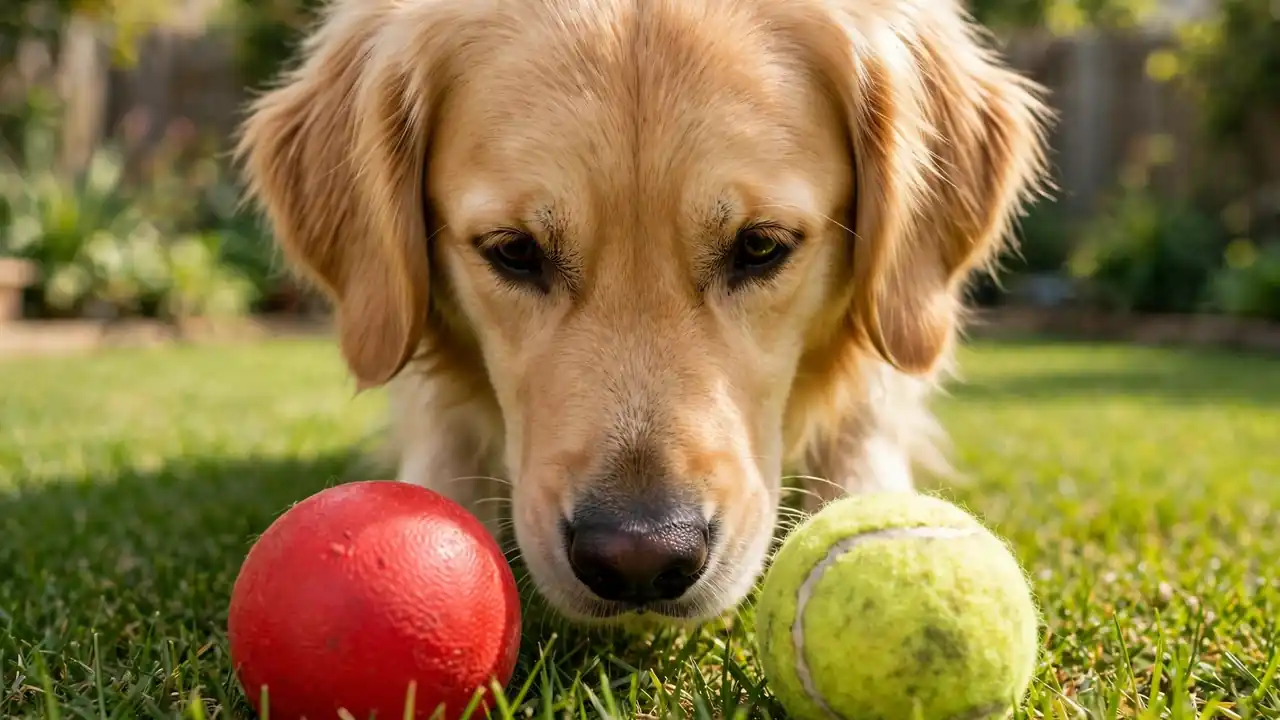
Offer two balls on the grass and watch which one your dog picks up first. A rubber ball with a bit of bounce wins for most dogs, and a tennis ball suits dogs who like to carry things gently.
The ball should fit your dog’s mouth without forcing the jaw wide open. A ball that is too small can slide too far back, so size it to your dog and check the fit before you play.
Trade the ball for a treat every time
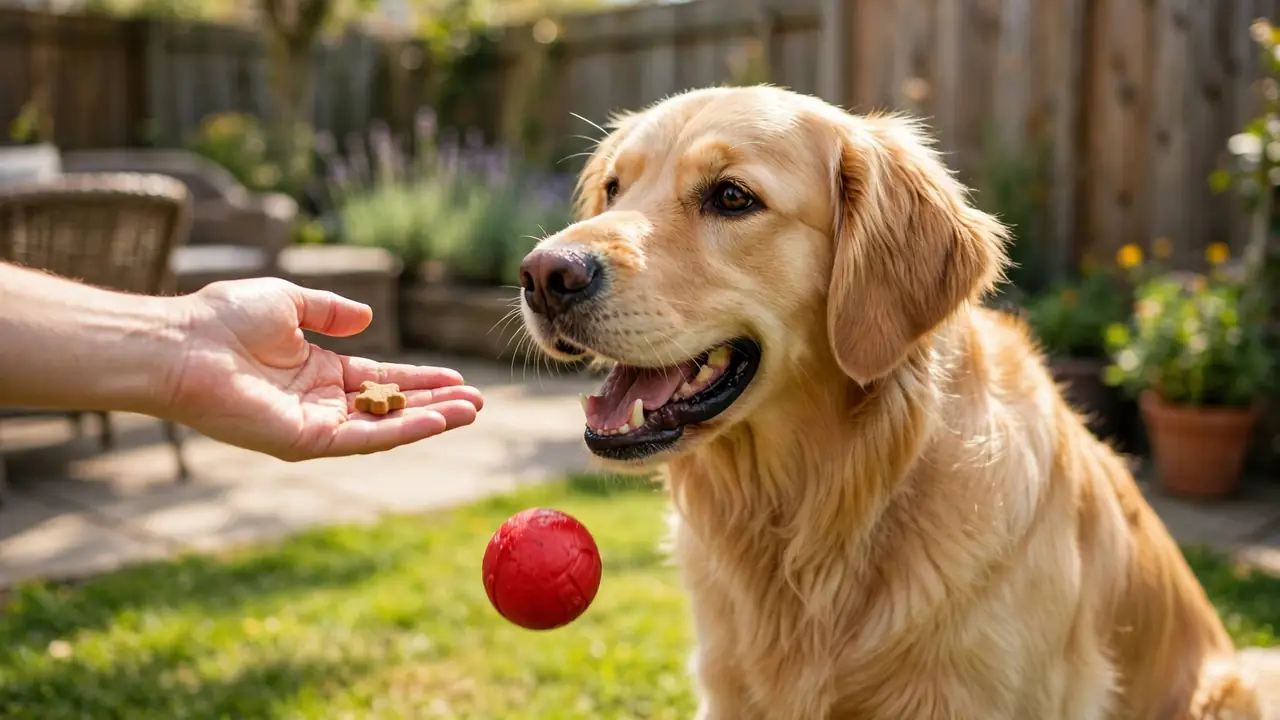
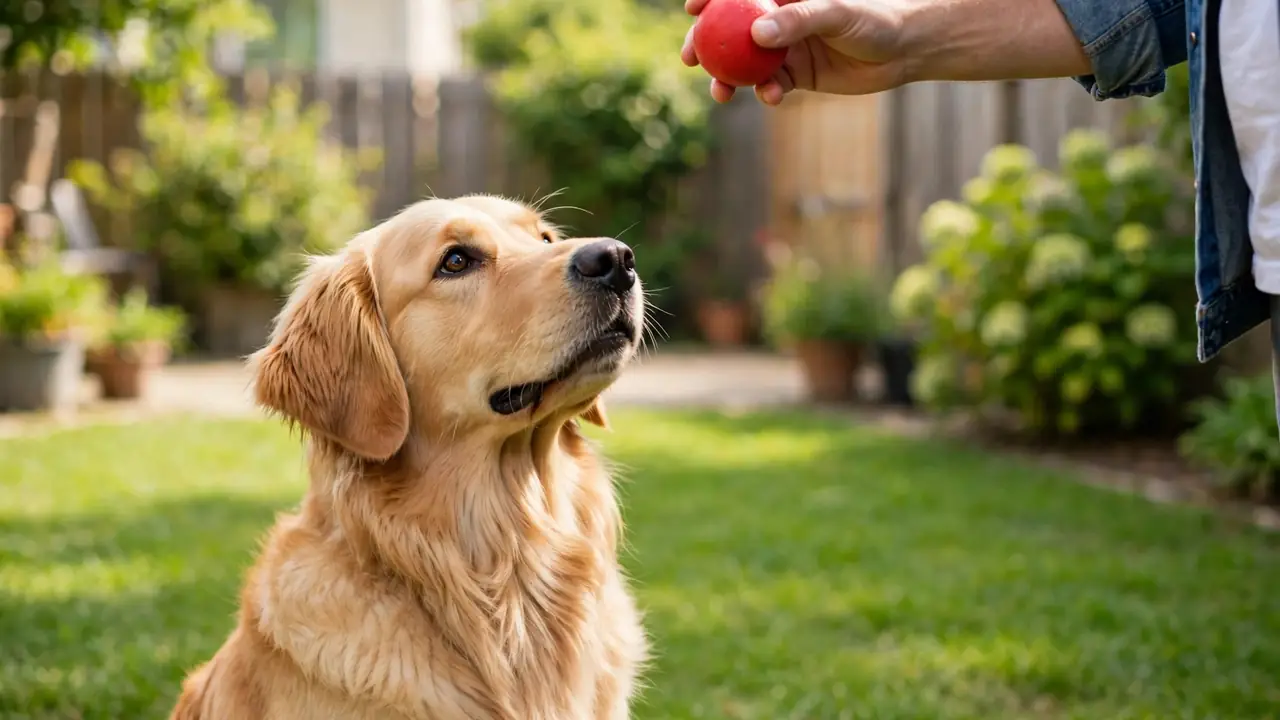
Hold the ball in your hand and let your dog take it. Show a treat in your other hand, close to your dog’s nose, and wait for the ball to drop from the mouth.
Say “Yes!” the moment the ball leaves the mouth, then hand over the treat. Give the ball straight back after the trade, so your dog learns that letting go never means losing the toy.
Pro Tip: Use treats your dog loves more than the ball at first. Tiny bits of cheese or cooked chicken work well for most dogs.
Toss the ball a short distance
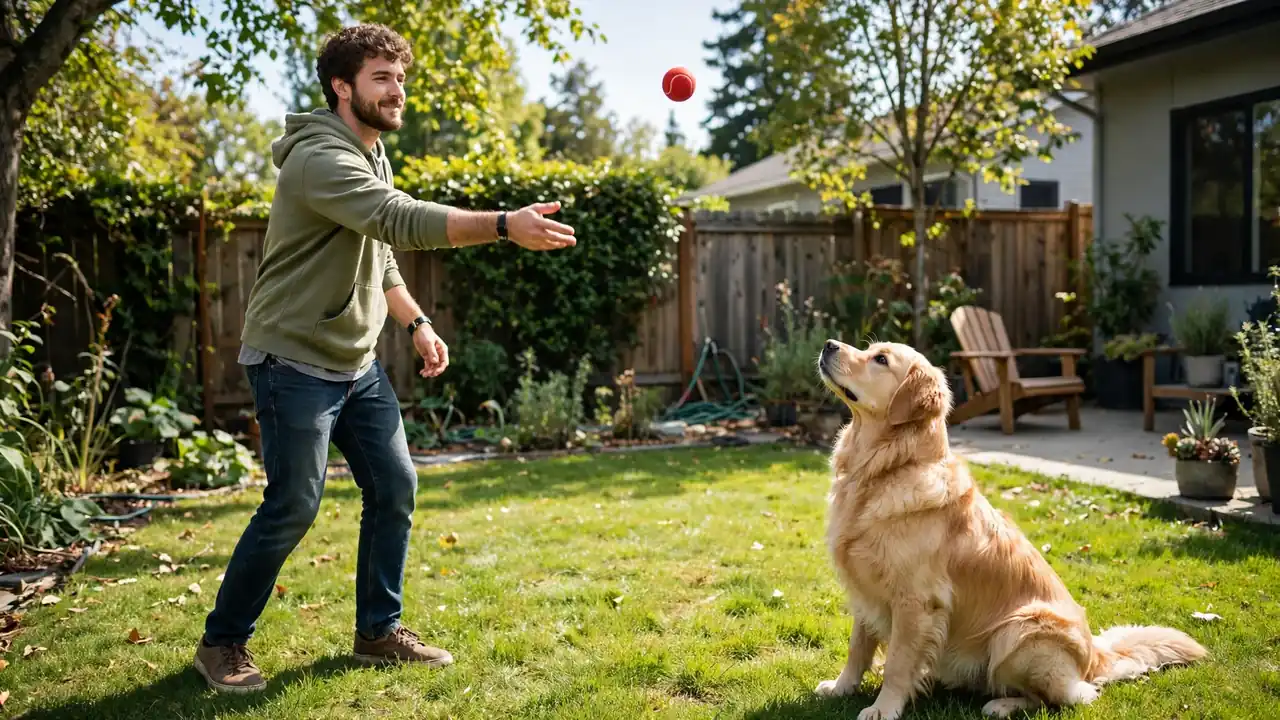
Roll the ball along the ground, only about 3 feet away. A short roll keeps your dog close and makes the return part much simpler.
Stand still while your dog moves toward the ball. Running after your dog turns the game into a race, and the race is one your dog will win every time.
Wait for your dog to pick the ball up
Stand still and give your dog time to sniff the ball, mouth it, and pick it up. Some dogs grab the ball at once, and others need a few seconds to decide.
If your dog walks past the ball, roll it again from the same spot. Keep your voice quiet here. Excitement from you can pull your dog away from the ball before the pickup happens.
Heads Up: Never chase your dog to get the ball back. Chasing teaches your dog that holding the ball starts a fun game of keep away.
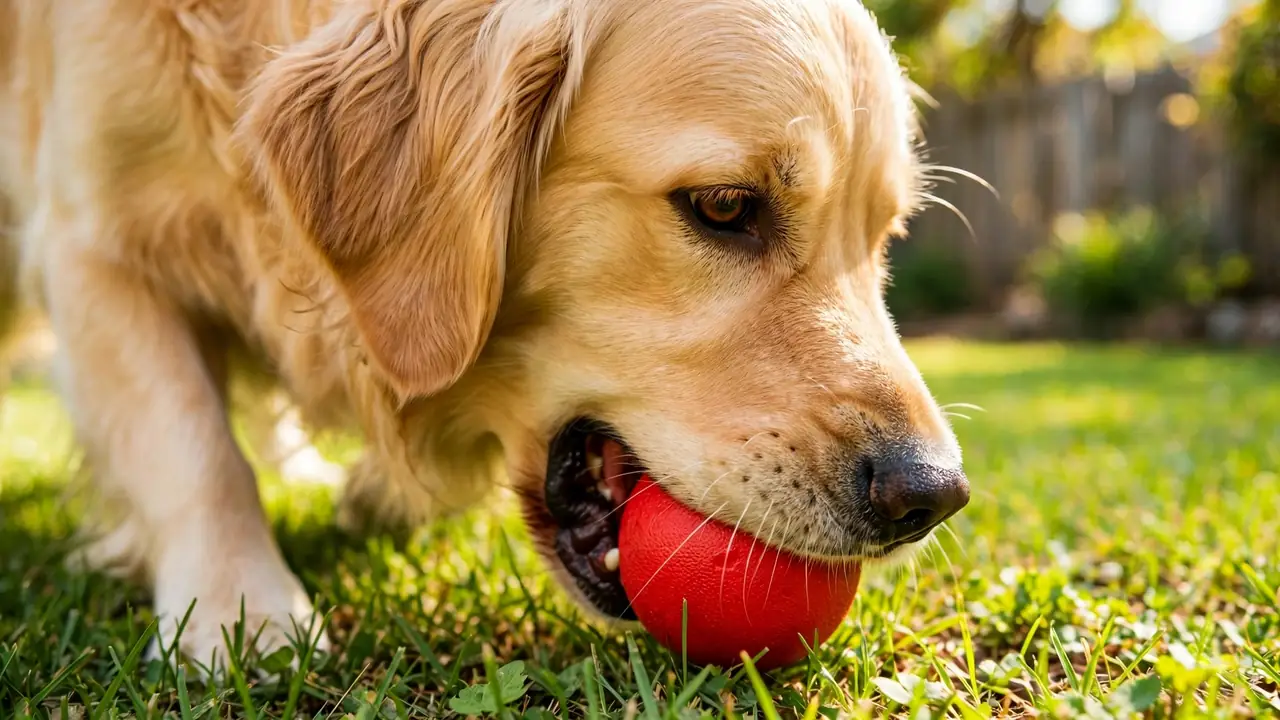
Call your dog back with a happy voice
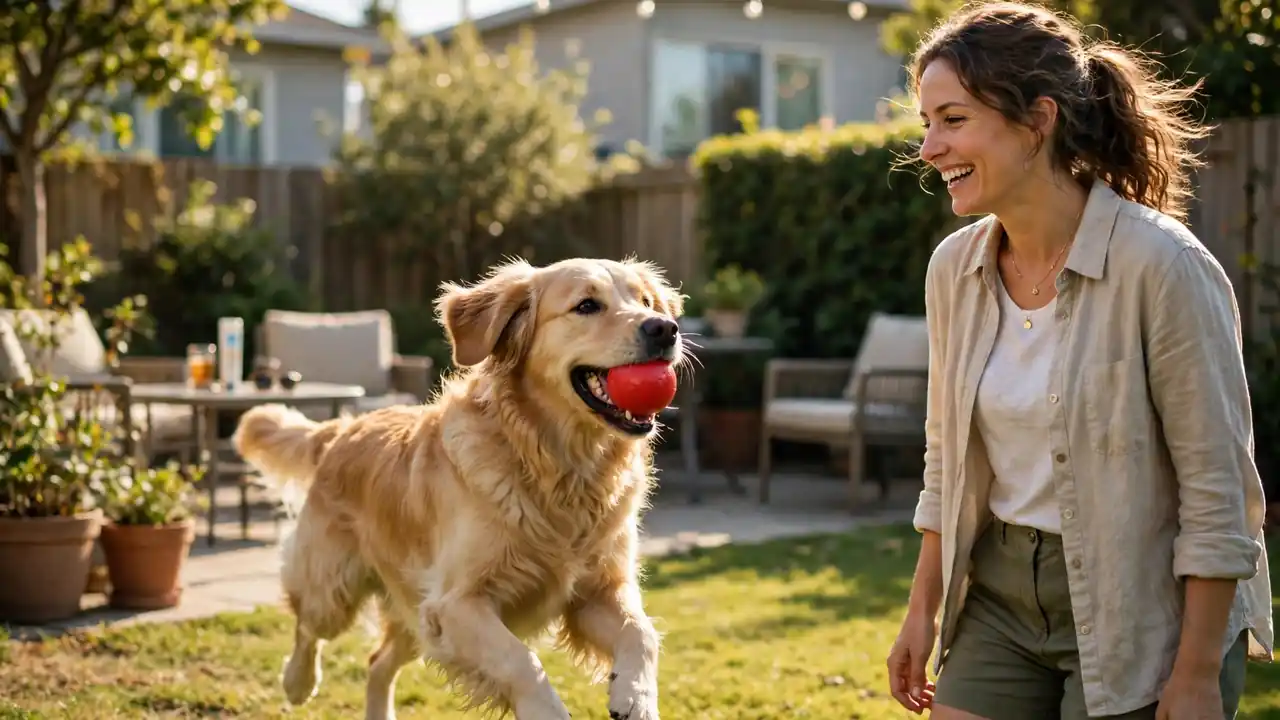
The moment your dog has the ball, crouch down and call your dog in a bright, high voice. Clap your hands once, and pat your knees to give your dog a clear target to run toward.
Back up two steps as your dog moves toward you. That small bit of movement pulls your dog in your direction and keeps the return feeling like a win.
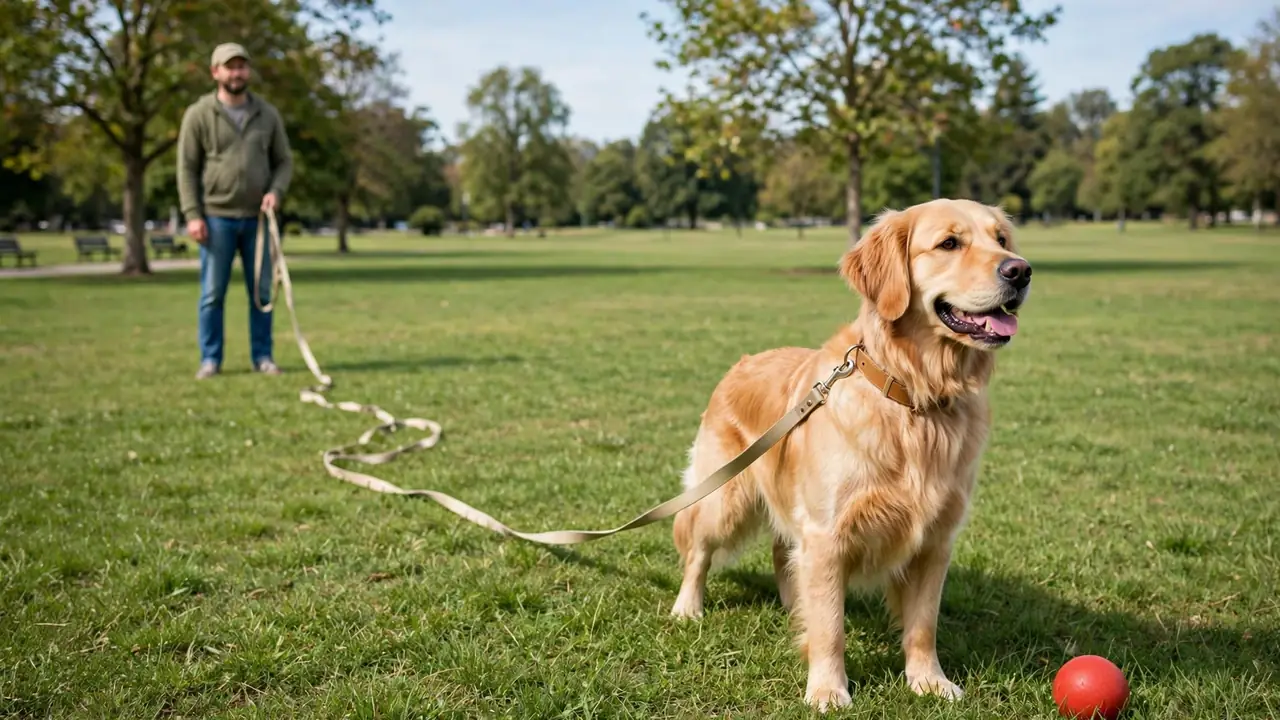
Teach your dog to fetch on a long line
Clip a 20-foot long line to your dog’s harness before the next throw. Toss the ball 10 feet, and let your dog run out to grab it.
Call your dog back, and use a light, steady pull on the line to guide your dog toward you. The line is a guide, not a tug of war. Keep it loose whenever your dog moves in the right direction.
Reward the return with a treat and a fresh throw. After five clean returns on the line, you can try one throw with the line trailing on the ground.


Paid Links - As an Amazon Associate, I earn from qualifying purchases.
Add the word fetch once the pattern works
Say “Fetch!” right as you toss the ball, only after the return works well for three days in a row. The word should mark a game your dog already knows, not a new puzzle.
Use the same word every time, in the same bright tone. If the return falls apart, drop the word for a day and go back to silent throws until the pattern holds again.
Grow the distance a few feet at a time
Add 5 feet to the throw each day, up to a full throw of about 30 feet. Longer throws too soon can break the return, so let your dog earn the extra distance.
End each session while your dog still wants more. Three good returns beat ten tired ones, and a dog who ends happy comes back keen the next day.
Troubleshooting: Fix Common Fetch Problems
| If This Happens | Try This |
|---|---|
| Dog grabs the ball and runs away | Clip the long line on for the next session and shorten the throw to 3 feet until the return holds. |
| Dog drops the ball halfway back | Run the trade game indoors first, with the ball and treats close by, until dropping near you earns the treat every time. |
| Dog will not pick the ball up | Try a softer ball or a ball with a squeak. Some dogs need a ball that smells like a treat, so rub it with a bit of cheese. |
| Dog loses interest after two throws | End the session and rest. Short sessions of 5 minutes keep the game fresh, and a bored dog learns nothing. |
| Dog brings the ball but will not drop it | Hold a treat by your dog’s nose and wait. The trade from step 2 fixes most drop problems in a few days. |
Frequently Asked Questions
How long does it take to teach a dog to fetch?
Most dogs learn the full game in two to three weeks of short daily sessions. Dogs who love to chase may learn in a week, while dogs who guard toys may need a month of patient trades.
What if my dog never brings the ball back?
Use the long line from step 6 and shorten the throw. A short toss and a guided return build the habit, and the distance can grow once the return is solid.
What age can a puppy learn fetch?
Puppies from about 12 weeks old can learn the trade and short toss. Keep sessions to 5 minutes, use a soft ball, and stop while your puppy still wants more.
Should I use a stick instead of a ball?
No. Sticks can splinter and hurt your dog’s mouth. A rubber ball sized to your dog is safer, bounces well, and is light for your dog to carry.
My dog only fetches inside the house. Is that normal?
Yes. Many dogs fetch better indoors, where there are fewer smells and sounds. Practice the same steps outside in a quiet yard, and build up to busier places slowly.
Quick Reference Card
What You Need: Ball your dog loves; long training line, 20 to 30 feet; second ball; treat pouch; harness; small soft treats; high-value treats like cheese cubes; water bowl and fresh water.
Steps: 1) Pick a ball your dog loves to chase. 2) Trade the ball for a treat every time. 3) Toss the ball a short distance. 4) Wait for your dog to pick the ball up. 5) Call your dog back with a happy voice. 6) Teach your dog to fetch on a long line. 7) Add the word fetch once the pattern works. 8) Grow the distance a few feet at a time.
You now know how to teach your dog to fetch, from the first trade to a full throw across the yard. Your dog chases, picks up, returns, and drops the ball, and the game starts again.
Keep sessions short, end on a win, and pin this guide so the steps are close at hand the next time the ball comes out.