Itrafungol® (Itraconazole) Dosage Calculator For Dogs
For canine (dog) patients only — based on a 5–10 mg/kg daily dosing range.
📋 Calculated Dosage Results
These results are calculated from general veterinary dosing guidance (5–10 mg/kg/day) and are provided for reference only. Always confirm the exact dose, frequency, and treatment duration with a licensed veterinarian before administering any medication.
© medsdog.com
Itrafungol® (Itraconazole) is an antifungal drug that is frequently used in dogs to treat fungal skin infections such as ringworm and more serious, systemic fungal infections and is known by the brand names of Sporanox or Itrafungol® (oral solution). It comes in several formulations, including capsules, tablets, and an oral solution with a yellowish to orange color containing 10 mg/mL of the active ingredient, offering veterinarians the flexibility of dosing and administration.


Paid Links - As an Amazon Associate, I earn from qualifying purchases.
When used properly, Itrafungol dosage for dogs is a very good and relatively safe antifungal drug for most dogs. Getting the itraconazole dosage for dogs right is crucial for both safety and treatment success, and this guide covers everything you need to know—from proper itraconazole dosage per kilogram to guidelines for administering this medication, monitoring during treatment, potential side effects, drug interactions, and best practices to ensure your dog’s fungal infection is treated safely and effectively.
What is Itraconazole Dosage For Dogs?
The standard dose for Itrafungol for dogs is 5-10mg/kg of body weight and is administered either as a single dose or twice a day depending on the severity of the fungal infection that is being treated. The capsules and tablets should be taken with a high-fat meal and the oral solution should be taken on an empty stomach.
The length of treatment depends on the condition and ranges from weeks for skin infections to 60+ days for systemic fungal diseases – always assess by a veterinarian. Unless compounded by a trusted compounding pharmacy, bioavailability may be compromised with substandard compounding and compounded formulations should not be used.
Itraconazole (Itrafungol dosage for dogs) dosages vary depending on the infection, formulation, and the dog’s health – never alter or start a treatment without the advice of a veterinarian.
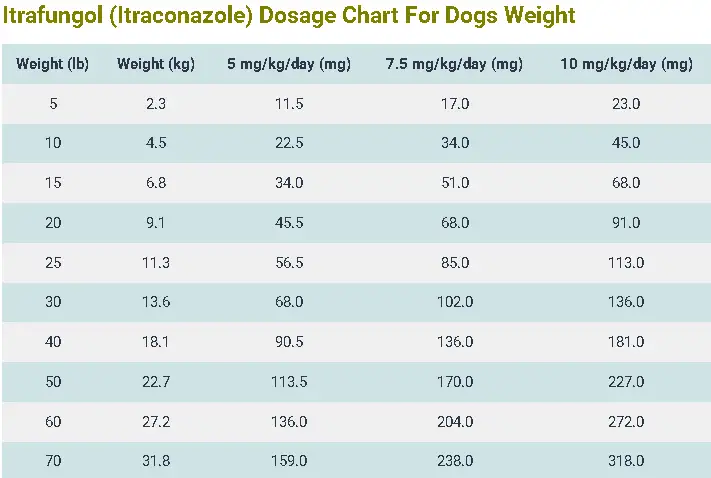
Itrafungol (Itraconazole) Dosage Chart For Dogs Weight
Here’s a reference dosage table for itraconazole (Itrafungol) in dogs, based on the 5–10 mg/kg/day range you provided.
| Weight (lb) | Weight (kg) | 5 mg/kg/day (mg) | 7.5 mg/kg/day (mg) | 10 mg/kg/day (mg) |
|---|---|---|---|---|
| 5 | 2.3 | 11.5 | 17.0 | 23.0 |
| 10 | 4.5 | 22.5 | 34.0 | 45.0 |
| 15 | 6.8 | 34.0 | 51.0 | 68.0 |
| 20 | 9.1 | 45.5 | 68.0 | 91.0 |
| 25 | 11.3 | 56.5 | 85.0 | 113.0 |
| 30 | 13.6 | 68.0 | 102.0 | 136.0 |
| 40 | 18.1 | 90.5 | 136.0 | 181.0 |
| 50 | 22.7 | 113.5 | 170.0 | 227.0 |
| 60 | 27.2 | 136.0 | 204.0 | 272.0 |
| 70 | 31.8 | 159.0 | 238.0 | 318.0 |
| 80 | 36.3 | 181.5 | 272.0 | 363.0 |
| 90 | 40.8 | 204.0 | 306.0 | 408.0 |
| 100 | 45.4 | 227.0 | 340.0 | 454.0 |
Notes:
- Frequency: Total daily dose may be given as a single dose or split into two doses 12 hours apart, depending on infection severity (per your guidance).
- Oral solution (10 mg/mL): Divide the mg value by 10 to get mL/day. E.g., a 20 lb dog at 5 mg/kg/day → 45.5 mg ÷ 10 = ~4.6 mL/day.
- Capsules/tablets: Give with a high-fat meal to improve absorption.
- Oral solution: Give on an empty stomach.
- Compounding: Unless done by a trusted and reputable compounding pharmacy, bioavailability can be reduced.
- These are general reference figures only and the prescribed dose, frequency and duration should always be confirmed with a vets surgery for the particular dog and infection type.
What Is Itrafungol for Dogs?
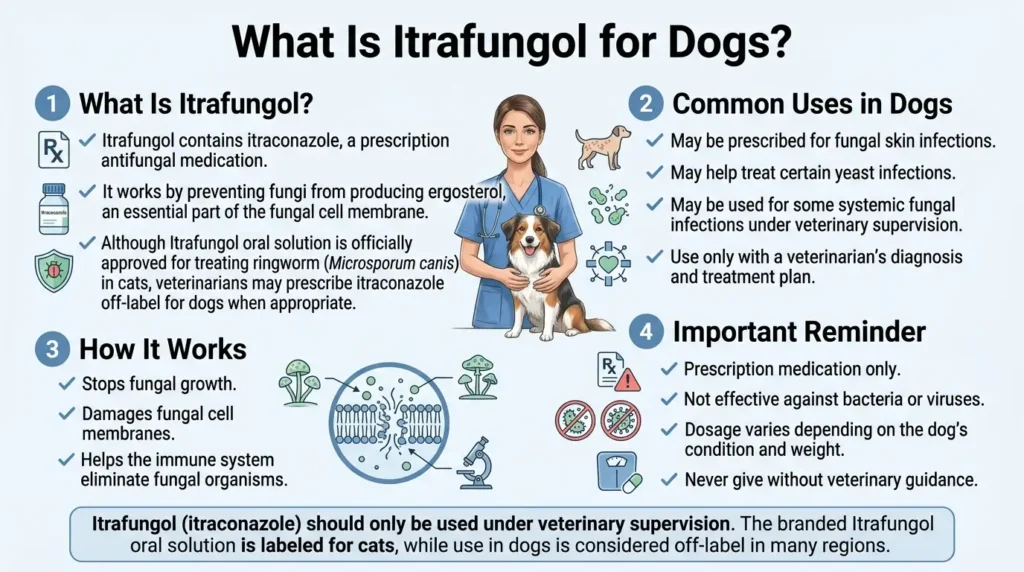
Itrafungol® is the brand name of itraconazole oral solution, a systemic antifungal drug which was originally developed and labelled to treat fungal infections in cats. Itraconazole is also marketed in other forms, such as Sporanox® and Onmel®, and is used to treat fungal infections like ringworm and blastomycosis.
Itrafungol and itraconazole are the only drugs that are labeled for use in cats, but are used “off-label” (also known as “extra-label”) in dogs and other species such as horses, birds, small mammals and reptiles.
Off-label/extra-label: Using a drug for a species or condition other than those specified on the label; a legal and common practice in veterinary medicine under a veterinarian’s supervision.
Off-label use in dogs may require different doses, monitoring and precautions than those written on the label, so always be sure to follow your veterinarian’s instructions carefully.
What Is Itrafungol Used for in Dogs, and How Does It Work?
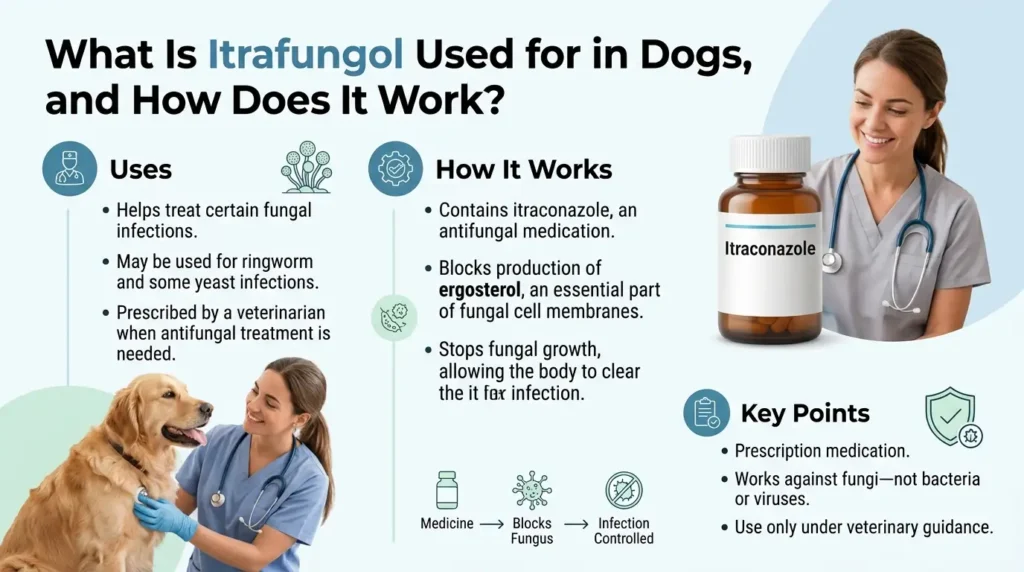
Itrafungol (itraconazole) treats fungal infections in dogs, usually when they are systemic, meaning spread throughout the body. It is used to treat a variety of fungal diseases in dogs, including Valley fever, ringworm, and blastomycosis, and is a recommended treatment for both dermatologic and systemic fungal diseases.
Itraconazole for dogs is in a group of drugs known as azole antifungal drugs, which are used to treat many fungal infections. It acts by blocking the activity of enzymes in the fungus that are part of the P450 enzyme system used to synthesize ergosterol, which is used in the construction of the fungal cell membrane. Itraconazole dosage for dogs works by blocking the enzyme, so the fungi cannot make healthy cell membranes, thus stopping the fungi’s metabolism and growth and adding to the death of the fungal cells.
Although Itrafungol dosage for dogs is FDA approved for the treatment of ringworm (Microsporum canis) in cats, it is considered “off-label” or “extra-label” use in dogs because it has not been FDA approved for veterinary use in dogs. As a result, dosage instructions for dogs may differ from that found on the label and it is always best to follow your veterinarian’s directions closely, rather than just the label.
How Is Itrafungol Given to Dogs?
Itrafungol (itraconazole) can be administered either as a capsule, tablet or as an oral solution once a day or twice a day (12 hours apart) as directed by your veterinarian.
The liquid oral solution may be administered with or without food but if vomiting occurs when given on an empty stomach, try administering with a small meal or treat. Capsules and tablets, however, should always be administered with a high fat meal to aid absorption.


Paid Links - As an Amazon Associate, I earn from qualifying purchases.
Do not compound from bulk chemicals – compounded versions unlikely to be effective.
Itraconazole may take several weeks to work, but some people may see results after a few days of taking it. For complete elimination of the infection, your dog should complete the entire course of treatment as prescribed — even if he or she seems fine before the treatment is over.
What Are the Common Side Effects of Itrafungol in Dogs?
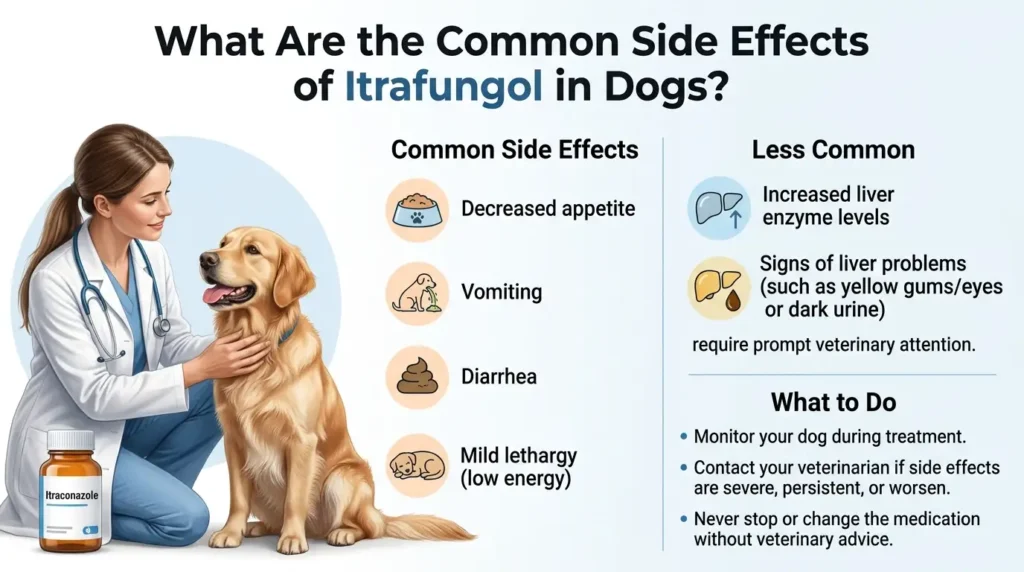
Side effects of itraconazole do not generally occur, and it is fairly well tolerated by most dogs. Most frequent side effect is loss of appetite; other side effects occur occasionally and seem to be dose dependent:
- Loss of appetite
- Vomiting
- Diarrhea
- Drooling
- Weight loss
- Lethargy
When giving on an empty stomach, if vomiting or loss of appetite occurs, try to give with a small meal or treat.
Itraconazole may also have dermatologic side effects, which occur less frequently:
- Skin ulcers
- Skin inflammation
- Edema, or fluid retention, in the legs or in the extremities (arms or legs)
In the case of the oral solution, there may also be a temporary increase in saliva production.
Liver toxicity is a more serious, but less common issue. Symptoms of trouble with the liver or inflammation of the blood vessels are:
- Ongoing vomiting
Lacks of appetite - Pale or yellow skin, gums or whites of the eyes
- Bloody or severe diarrhoea
- Painful abdomen
- Changes in behavior
For this reason, vets will usually measure liver enzymes (ALT/ALKP) prior to treatment and then at 4-6 weekly intervals during treatment. Treatment should be stopped immediately, if any signs of liver dysfunction appear.
Itraconazole dog medication should not be used in pets that are known to be sensitive to it, or in pets with kidney (renal) disease. It is also a prescription drug for humans, but with different dose and side effect profiles, so itraconazole should not be administered to a pet that it was prescribed for a human.
Side effects usually go away within 24 hours or so after the drug is discontinued, although it may take longer in dogs with liver or kidney disease. It may take several weeks for the medication to be completely effective, but most people will feel some improvement in their symptoms within the first few days. If you see your pet have any unusual signs while on treatment, call your veterinarian right away.
What Are the Most Serious Risks of Itrafungol for Dogs?
Itraconazole can cause serious side effects in some dogs, although it is not very common, pet owners need to be aware of the signs to look for.
The greatest potential risk is liver damage in up to 10% of dogs taking the drug. Symptoms of liver damage are:
- Jaundice (yellowing of skin or the eyes)
- Loss of appetite
- Vomiting
- Abdominal pain
Other, although rare, serious side effects are:
- Open sores, rash
- Swollen legs
- Vasculitis (inflammation of blood vessels) which may cause low energy, bruising, and fever
Discontinue itraconazole and contact your veterinarian immediately if your dog develops any of these symptoms during itraconazole treatment.
Who should avoid or use caution with itraconazole:
- There are no uses for Itraconazole in dogs that are allergic to the drug or to similar anti-fungal drugs.
- Should be avoided in dogs with low stomach acid production and liver disease and should be used with great caution.
- Should be used with caution in dogs with heart disease and in pregnant, breeding and nursing dogs, where safety has not been demonstrated.
Does Itraconazole Interact with Other Dog Medications?
Itraconazole dog dosage is a potent inhibitor of the cytochrome P450 (CYP) system, and therefore will affect the metabolism of other drugs. As a result, it has been found to interact with a variety of medications and should be managed very carefully – or in close consultation with your veterinarian – if your dog is on any of the following medications:
- Amphotericin B
- Antacids
- Antidepressant drugs or anti-anxiety drugs (including tricyclic antidepressant drugs)
- Alprazolam (Xanax), barbiturates, and other drugs that are classified as benzodiazepines.
- Inhaled steroids (e.g., salbutamol, fluticasone, and budesonide)
- Calcium channel blocking agents (CCBs)
- Other drugs, such as cyclophosphamide, which are used to treat cancer
- Histamine 2 receptor antagonists (H2 blockers)
- Ciprofloxacin
- Cisapride
- Corticosteroids (steroids)
- Cyclosporine
- Drugs to treat heart failure or other heart diseases.
- Fentanyl
- Ivermectin
- Macrolide antibiotics
- Meloxicam and other anti-inflammatory drugs (NSAIDs)
- Methadone
- Opioid pain medications
- Phenobarbital
- Proton-pump inhibitors
- Rifampin
- Sildenafil
- Thiazide diuretics
- Tramadol
- Warfarin
Itraconazole can interact with the metabolism of numerous other medications, supplements, vitamins and herbal therapies; it is important to advise your veterinarian of all of your dog’s current medications, supplements, vitamins and herbals prior to beginning itraconazole treatment. This can allow your vet to make dosage changes or watch for interactions if necessary.
You May Also Like to Read:
- Incurin Dosage For Dogs: Calculator, Safe Guide & More
- GentaVed Dosage For Dogs: Calculator, Chart & Safe Guide
FAQs
If your dog misses a dose of itraconazole medicine, what should you do?
If your dog takes itraconazole once a day, and misses a dose, give a dose as soon as it is remembered, then go back to the normal dose the following day. If your dog is on a twice a day regime and it is near to the time of the next dose, skip the missed dose and dose at the scheduled time. Do not double up doses to compensate for a missed dose and never take doses within 6 hours of each other.
How long will my dog have to take itraconazole?
The duration of treatment varies according to the type, location and severity of the fungal infection. Some dogs have only to be treated for a few days or weeks, whereas those with a more severe infection may need to be treated for months. Depending on your dog’s condition and response, your veterinarian will decide what to do.
How soon does itraconazole works?
Itraconazole starts to be active in your dog’s body several hours after it’s swallowed, but several days are required before symptoms improve and a few weeks for the full effects to be recognized.
How will my dog be monitored while taking itraconazole?
Routine blood tests, usually every 4-6 weeks, to screen for liver enzyme values and periodic follow-up exams to assess the treatment’s effectiveness and the presence of any changes in symptoms are generally implemented for long-term use. It is also important to be aware of any side effects at home and to contact your vet immediately if any unusual changes occur.
What are the conditions for the storage of itraconazole dosage for dogs?
Capsules and tablets should be stored at room temperature, 59-77° F (15-25° C), in a dry place, protected from light and moisture. Oral solution should be kept in the same way as the tablet, at room temperature, typically 68-77F (20-25C). Follow the directions on the label for product storage exactly, and store the product away from children and pets.
If my dog does not react well or seems to be having an adverse reaction or possible overdose, what should I do?
Symptoms of overdose include vomiting, drooling, loss of appetite and effects on the liver. If a serious side effect or possible overdose is suspected contact the veterinary practice immediately, if not available follow their advice on which emergency veterinary clinic or animal poison control to contact.
Are there any precautions I need to take if I use itraconazole myself?
Yes — gloves should be worn when giving the oral solution and hands should be washed after to prevent unnecessary contact of the skin with the medication.
Key Takeaways
- Itraconazole (Itrafungol® or Sporanox®) is one of the azole antifungal drugs that are used to treat both systemic and skin fungal infections in dogs, including ringworm, blastomycosis and Valley fever.
- Itraconazole can be used safely and effectively in most dogs when it is dosed correctly and administered properly.
- While the medicine has some side effects — minor ones like reduced appetite, drooling, diarrhea and vomiting — these side effects are not frequent.
- Administration should be according to the instructions of the specific formulation, e.g. capsules and tablets should be administered with a high fat meal, the oral solution usually can be given with or without meals.
- Monitoring should be done during treatment, such as monitoring for gastrointestinal side effects and periodic liver values, particularly when treatment is continued over a long period of time.
- Itraconazole may interact with numerous other medications and it is important to tell your veterinarian if your dog is taking any other medications, supplements or vitamins before starting this treatment.
- The entire recommended treatment course is essential to complete, even if symptoms improve, to ensure that the infection is eradicated and relapse is avoided.
Final Thoughts
Itraconazole (Itrafungol® or Sporanox®) is a very effective anti-fungal drug that can be used to treat fungal diseases in dogs such as ringworm and more systemic fungal diseases such as blastomycosis and Valley fever. It is not known to have any side effects, and is generally well tolerated, which is why so many veterinarians prefer it.
However, there are some things to consider about itraconazole medication for dogs. May interact with a variety of other drugs, supplements or over the counter medications that your dog may be receiving; be sure to advise your veterinarian of other drugs your dog may be on before beginning treatment. Liver values should also be monitored regularly, particularly when the drug is used for prolonged periods of time, to ensure the drug is still safe for your dog.
most important, however, is the completion of antifungal treatment for the complete removal of infection. Although the dog may look better in a couple days, it is important to complete the course of treatment to prevent reinfection. Follow the entire treatment as directed and contact your veterinarian if you have any questions or concerns during treatment.