Citravet Dosage Calculator For Dogs
Accurate Potassium Citrate (675 mg) dosage calculations for dogs.
© medsdog.com
When looking for the right Citravet dosage for dogs, it’s important to know that this prescription urinary supplement is dosed based on dog body weight and should only be used in consultation with a veterinarian. With proper dosage, it can do the most to help your dog’s urinary health without diminishing returns.
CitraVet® is a double-scored, liver flavored chewable tablet containing potassium citrate, a urinary alkalinizer for dogs prone to recurring calcium oxalate bladder stones, or with low pH urine. It works by raising the level of citrate in the bladder, which binds calcium in the bladder rather than oxalate and thereby helps to inhibit the formation of calcium oxalate stones. The same mechanism might also be important in the management of other types of urinary stones such as urate and cystine stones.
CitraVet medication can be used as part of a veterinarian-recommended urinary management program, and helps maintain a healthy urinary tract, as well as preventing reoccurrence of stones. Easy to dose chewable tablets can be given whole as a tasty chew or crumbled over food for most dogs.
This guide will provide all the necessary information about Citravet dosage for dogs, such as a dosage chart by weight, a dosage calculator, suggested administration every 12 hours, feeding instructions, benefits, possible side effects, safety guidelines and answers to frequently asked questions to help you use CitraVet safely and effectively.
What is Citravet Dosage For Dogs?
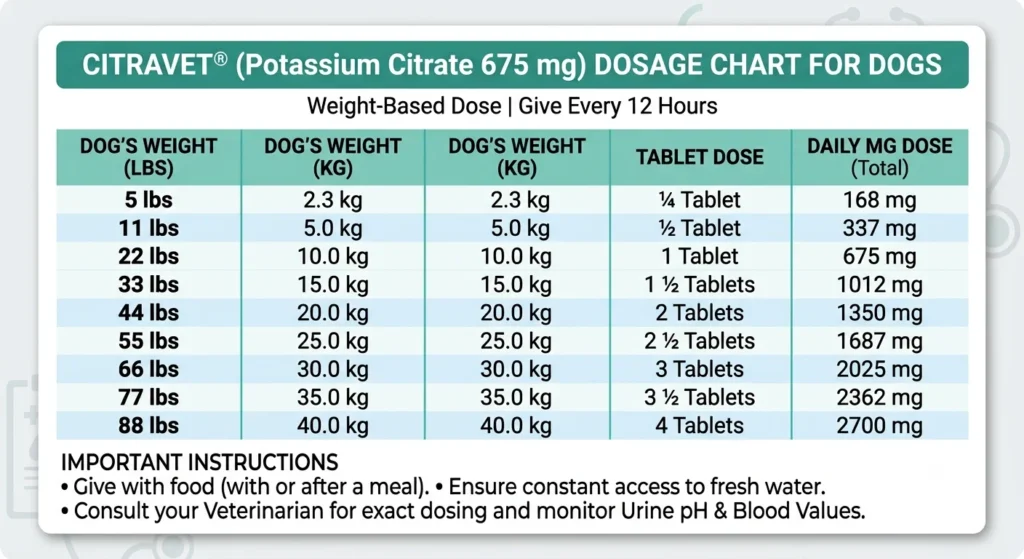
CitraVet® (potassium citrate 675 mg) dosage for dogs is based on body weight only to help support urinary tract health and maintain proper pH levels. The standard baseline dose is 1/4 tablet for a 5 lb (2.3 kg) dog, 1/2 tablet for a 11 lb (5 kg) dog and 1 tablet for a 22 lb (10 kg) dog. For large dogs it is 1 tablet for every 22 lbs (10 kg) of body weight.
Typically these chewable tablets are given twice daily, 12 hours apart, and can be given free choice as a treat or sprinkled on their food. Due to the need for careful monitoring, it is highly recommended to have regular follow-up visits with your veterinarian to monitor your pet’s urine pH levels and blood values.
Citravet Dosage Chart For Dogs By Weight
Here is the quick-reference dosage table based on the official Citravet (Potassium Citrate 675 mg) guidelines.
| Dog’s Weight (lbs) | Dog’s Weight (kg) | Tablet Dose(Every 12 Hours) | Clinical mg Dose(Every 12 Hours) | Total Daily mg Dose(Every 24 Hours) |
| 5 lbs | 2.3 kg | ¼ tablet | ~153 mg | ~306 mg |
| 11 lbs | 5.0 kg | ½ tablet | ~337 mg | ~673 mg |
| 22 lbs | 10.0 kg | 1 tablet | ~673 mg | ~1,346 mg |
| 33 lbs | 15.0 kg | 1 ½ tablets | ~1,010 mg | ~2,020 mg |
| 44 lbs | 20.0 kg | 2 tablets | ~1,346 mg | ~2,693 mg |
| 55 lbs | 25.0 kg | 2 ½ tablets | ~1,683 mg | ~3,366 mg |
| 66 lbs | 30.0 kg | 3 tablets | ~2,020 mg | ~4,039 mg |
| 88 lbs | 40.0 kg | 4 tablets | ~2,693 mg | ~5,386 mg |
Important Administration Reminders
- Frequency: Give the designated dose twice daily (every 12 hours).
- With Food: Always give Citravet with or immediately after a meal to prevent stomach upset.
- Fresh Water: Ensure your dog has constant, unrestricted access to clean drinking water.
- Veterinary Care: Always consult your veterinarian before starting or adjusting doses. They will perform serial urinalysis to check urine pH and tweak these baseline numbers.
What Is CitraVet for Dogs?
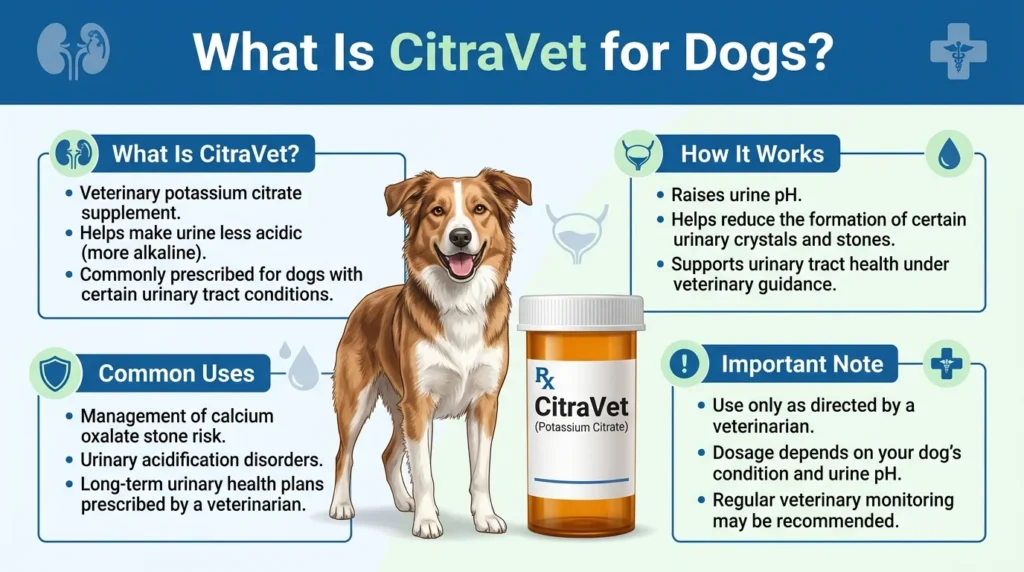
CitraVet® is a prescription urinary health supplement with the active ingredient potassium citrate. It comes in a liver flavored, double scored chewable tablet and is recommended for dogs that are susceptible to recurrence of calcium oxalate urinary stones, or those with low urine pH. CitraVet dose will raise the pH (potential of hydrogen) and citrates in the urine and bladder to help minimize the formation of calcium oxalate stones, and may also help prevent uric acid bladder stones and some types of kidney stones. Promotes general urinary tract health and may be used alone or as part of an extended urinary health management program.
Potassium citrate also can be used to adjust low potassium levels and keep the blood and urine from becoming too acidic, in some dogs, especially those with kidney disease. CitraVet should be used by a veterinarian and in the amounts prescribed. Potassium citrate products are sometimes used ‘off label’ in veterinary medicine, which is when a product is used in a manner not specified in the label. The best place to get advice on choosing the right product and using it safely and effectively to treat your dog’s condition is from your veterinarian.
How Does CitraVet Work?
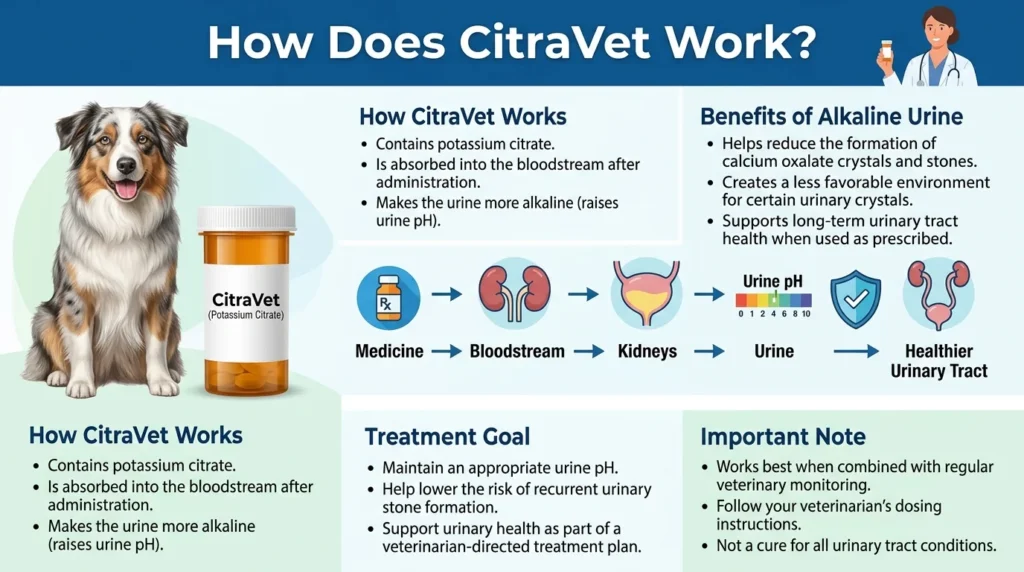
CitraVet® dosage contains potassium citrate which increases urine acidity, thus maintaining a healthy pH for dogs. Increasing citrate in the bladder will bind calcium to citrate rather than oxalate. This decreases calcium oxalate urinary stones and helps keep the urinary tract healthy to minimize the risk of the formation of bladder stones.
Possible Side Effects of CitraVet for Dogs

When used at the recommended dose, CitraVet® (potassium citrate) is generally well tolerated, with side effects being rare. As with all drugs, there can be minor, or in rare cases, major side effects in some dogs. Watch your dog closely during treatment and let your veterinarian know if your dog displays unusual symptoms.
Common Side Effects
Side effects are most frequently digestive related and can be:
- Decreased appetite (inappetence)
- Nausea
- Vomiting
- Diarrhea or loose stool.
These reactions are typically mild; however, if they persist or become more severe, ask advice from your veterinarian.


Paid Links - As an Amazon Associate, I earn from qualifying purchases.
Serious Side Effects (Seek Veterinary Care Immediately)
If your dog shows any of the following, stop the CitraVet and seek immediate veterinary attention:
- Difficulty breathing
- Face, lips, or tongue swelling
- Hives or other allergic reaction.
- Abdominal pain
- Stools that are black, bloody, or tarry
- Blood in the vomit
- Muscle weakness
- Other: collapse, unusual low energy
- Irregular heartbeats
- Symptoms of stomach/oesophageal ulceration
These signs can be a sign of a serious reaction or elevated levels of potassium in the blood and should be treated immediately by a veterinarian.
Additional Safety Information
- Certain dogs can become sensitive or allergic to a medication after multiple applications, although they may not have previously experienced such reaction.
- If your dog’s behavior or physical appearance changes during treatment, contact your veterinarian.
- Potassium citrate is a short-acting drug and should no longer be used 6-12 hours after the last dose (longer if your dog has liver or renal disease).
Cautions for Using CitraVet in Dogs
Use of CitraVet® (potassium citrate) should be under the supervision of a licensed veterinarian. For veterinary use only, to be administered by mouth, and should NOT be used in human beings. Store the medication out of reach of children and pets, keep in the tightly closed container at room temperature (59-86°F) and make sure to have your dog seen by a veterinarian regularly to check on the progress and health of your dog’s urine.
CitraVet is not to be used in dogs that:
- Have a known allergy or hypersensitivity to potassium citrate.
- Have high levels of potassium in the blood (hyperkalemia) or conditions that may predispose one to hyperkalemia, including Addison’s disease, severe kidney disease, severe dehydration, uncontrolled diabetes mellitus, or severe heart disease/heart failure.
- History of struvite crystals or bladder stones of struvite origin, UTIs from calcium and/or struvite stones, or conditions where urine acidification is indicated.
- Have stomach or esophageal ulcers or other serious gastrointestinal disorders.
Caution should be used when administering CitraVet dose to a dog with chronic diarrhea or blood disorders that increase the acidity of the blood, such as kidney disease, as such disorders may require more frequent monitoring and/or adjustment of dosage.
Do not give your dog potassium supplements unless directed by your vet. CitraVet is not a replacement for antibiotic treatment for an existing UTI, and has not been shown to be safe for use in breeding, pregnant or lactating animals. Ensure that treatment is safe and effective by always following your veterinarian’s instructions.
Are There Any Drug Interactions I Should Be Aware Of?
Yes. Prior to beginning treatment with CitraVet® (potassium citrate), it is important to mention to your veterinarian that your dog is taking any other medications (prescription or over-the-counter), or supplements such as vitamins, minerals or herbal remedies.
The following medications should not be used with potassium citrate unless specifically directed by your veterinarian:
- Ammonium chloride
- Chlorpheniramine
- Hydroxyzine
- Hyoscyamine
- Irbesartan
- Meclizine
- Methenamine
- Methylene blue
- Mexiletine
- Oxybutynin
- Telmisartan
- Triamterene
- Trilostane
- Trimeprazine/Prednisolone
Medications to be used with caution include those that may increase the risk of interactions:
- Aspirin
- Antibiotics used to treat most bacterial pneumonia.
- Enalapril
- Ephedrine
- Heparin
- Ipratropium
- Methionine
- Methylphenidate
- Minocycline
- Mycophenolate
- Oxytetracycline
- Phenylpropanolamine
- Tetracycline
- Tripelennamine
Also, be extra cautious if your dog is on potassium supplementation or Potassium sparing diuretics like Spironolactone and ACE inhibitors like Enalapril, Lisinopril and Digoxin, as these can also interact with CitraVet. Before starting, stopping or changing any other medication consult your veterinarian while your dog is taking potassium citrate.
What Else Should You Know About CitraVet?
CitraVet® dosage for dogs helps to minimize the risk of bladder stone formation and promotes urinary tract health in dogs. It comes in tablet form that tastes better to dogs and is flavored with liver, which helps with extended usage during treatment.
It’s important to have routine checkups and follow-up appointments while your dog is on CitraVet. Your veterinarian might follow your dog’s progress and change treatment as appropriate to keep your dog’s urinary function healthy.
Avoid using any other potassium supplementation without your veterinarian’s advice, since certain products can cause too much potassium and may help contribute to the cause of complications.
You May Also Like to Read:
- Cosequin DS Dosage For Dogs: Calculator & Safe Guide
- Cholodin Dosage For Dogs: Calculator, Chart & Safe Guide
FAQs
What’s the use of CitraVet medication for dogs?
CitraVet is a prescription potassium citrate drug for the treatment of dogs to increase urine pH, to inhibit the formation of recurrent urinary stones and to promote the maintenance of urinary tract health.
What is the active ingredient in CitraVet?
The active ingredient works by increasing the pH of the urine so that the production of some urinary stones is decreased.
What type of dosage should I use for CitraVet in my dog?
CitraVet drug may be given with food, directly after food or mixed with your dog’s food. Follow the directions of your veterinarian when using the medication.
What happens if I forget to take my medicine?
Administer missed doses as soon as possible. Do not double the dose if almost time for the next scheduled dose, but resume the dose with the next scheduled dose. Take two doses not simultaneously.
If my dog has been over dosed with CitraVet what should I do?
Should an overdose be suspected, contact your veterinarian or an emergency veterinary clinic right away. Have the dog’s weight, the number of treats fed, and any symptoms your dog is exhibiting ready.
Does my dog need monitoring while taking CitraVet?
Yes. Your vet may want to do baseline and follow up blood tests and urinalysis to track your dog’s progress and to measure the urine pH, blood values and how well your dog responds to treatment. Be aware of any side-effects at home and call the vet if there are any.
What should I avoid in my diet for medication or supplements?
Do not feed potassium-containing supplements to your dog unless advised to do so by a veterinarian. Before beginning CitraVet, tell your veterinarian about any medications, vitamins and herbal preparations your dog is currently using.
What is the recommended storage for CitraVet drugs?
CitraVet should be stored in the original, tightly closed container at room temperature (59°F-86°F or 15°C-30°C). Keep away from light and children and pets.
How long will my dog need to take CitraVet medication?
The length of treatment varies depending on your dog’s condition. Others may need long term urinary health management, and others may need short term therapy. Always adhere to your veterinarian’s advice and never discontinue treatment without veterinarian’s advice.
Key Takeaways
- CitraVet® is a prescription Potassium Citrate that aids in the health of the urinary system for dogs.
- It is used commonly to alkalinize urine and decrease the risk of recurrent calcium oxalate urinary stones.
- The normal dose depends on the size of the dog, and is usually administered twice daily.
- CitraVet dosage can be administered either as a food bolus or mixed into food to enhance palatability and to help minimize stomach upset.
- Make sure your dog always has access to fresh drinking water during treatment.
- Urine and blood tests may be ordered periodically to monitor the medication’s effectiveness and safety and the pH of the urine.
- The digestive system may have mild reactions, including vomiting and/or diarrhea; severe reactions will need immediate veterinary attention.
- Avoid giving potassium-containing supplements or starting new medications without consulting your veterinarian.
- If you forget a dose, take it as soon as possible, except if it’s nearly the time for the next dose. Do not administer double dose.
- For optimal results, use CitraVet under veterinary supervision and in compliance with dosing, monitoring and follow-up guidelines.
Final Thoughts
CitraVet® may be a suitable item for dogs requiring long term urinary support, especially those dogs who tend to have recurrent urinary stones or have low urine pH. If administered correctly at the right dosage, under veterinary care, potassium citrate can keep the urinary environment more healthy and minimise the risk of future stones forming.
To ensure the safest use, be sure to always follow your veterinarian’s instructions, administer the medicine exactly as prescribed, keep follow up appointments with your veterinarian, and watch for any unusual side effects. Always check with your vet if you have any questions about dosage, missed doses or if your dog is not responding to treatment.