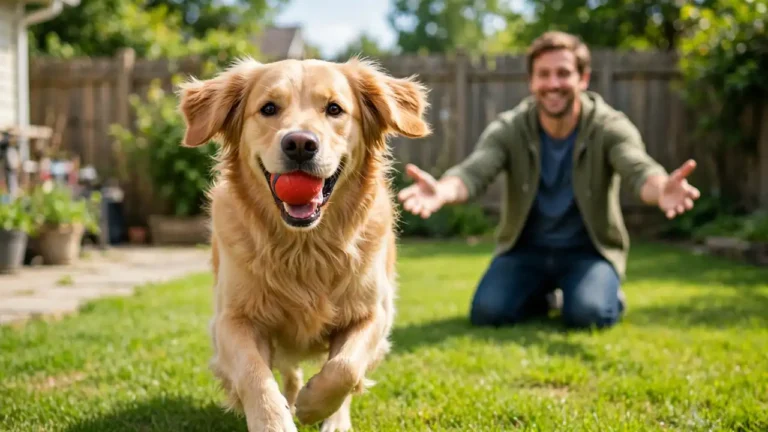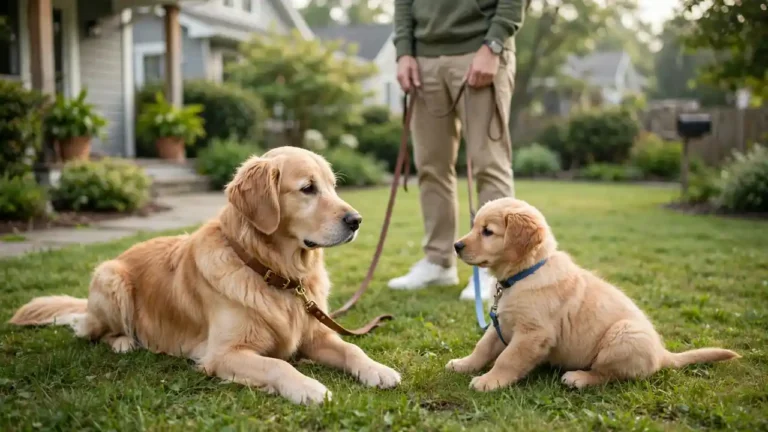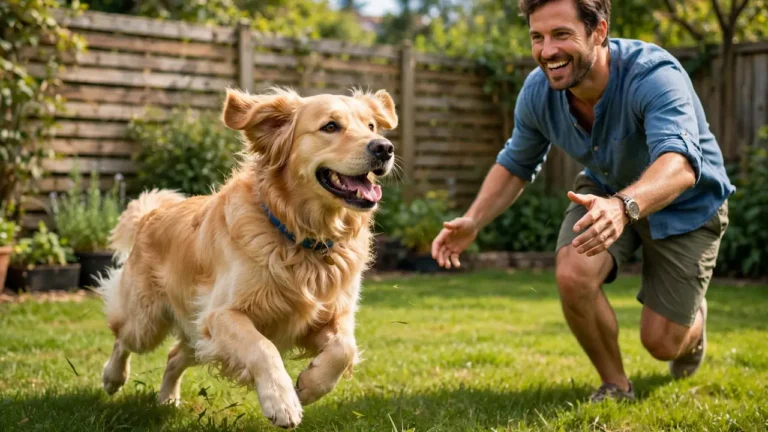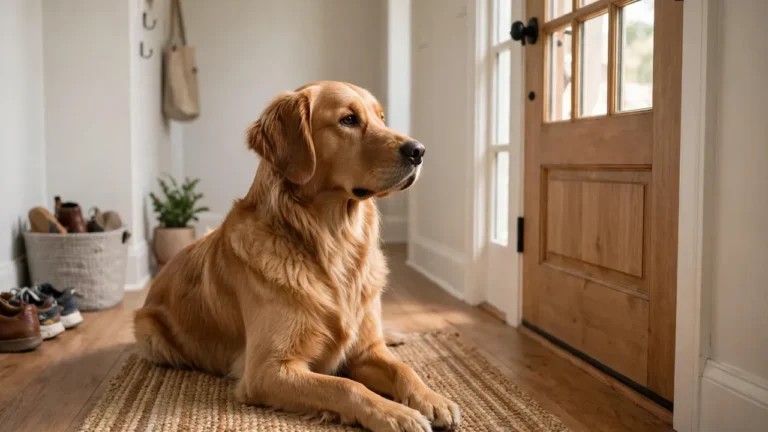
You open the front door, and your dog is already past you. You put the food bowl down, and your dog is under your feet before the bowl touches the floor. A dog that cannot wait is not being rude on purpose. The dog has never learned that holding still pays off, so movement wins every time. This guide will teach your dog to stay in a sit or a down until you give a release word, starting with waits of two seconds and building from there.
This nine-step plan works in short sessions at home, with no special gear and no harsh corrections. You will teach a release word first, add a clear palm signal, stretch the wait in small jumps, add distance, and then practise around real-life distractions. Most dogs hold a 30-second stay in a quiet room within two weeks if sessions stay short, rewards land while the dog is still in place, and the whole household uses the same release word. Each session takes 5 to 10 minutes, two or three times a day.
Time and Difficulty
Total time: about 2 weeks of short sessions | Active time: 5 to 10 minutes, 2 to 3 times a day | Difficulty: Beginner
Best for dogs of any age that already know sit or down and need to learn to wait for a release.
What You Need
- Small, soft treats your dog loves, cut to pea size
- A treat pouch or pocket you can reach fast
- A mat or rug that marks your dog’s waiting spot
- A quiet room with few distractions for the first sessions
- A lead, for practise near doors and outside
- A phone timer, to track wait times honestly
- A helper, for distraction practise in later steps
At a Glance
- Teach a release word before you ask for a stay.
- Ask for a sit or down your dog already knows well.
- Show your palm and say “stay” one time only.
- Reward your dog while your dog is still in place.
- Release your dog with your word after every short stay.
- Teach your dog to stay longer with small time jumps.
- Step back one pace and return before you reward.
- Turn away and move around your dog in short bursts.
- Practise stay with gentle distractions in new rooms.
Teach a Release Word Before You Ask for a Stay
A release word tells your dog when waiting is over, so “stay” has a clear end. Pick one word, such as “Okay” or “Free”, and use it for every release. Ask your dog to sit, pause for 1 second, say your release word, and toss a treat away so your dog moves to get it. Repeat that five times in a row. Your dog learns fast that the word means “you may move now”, and that lesson stops guessing later.
Ask for a Sit or Down Your Dog Already Knows Well
Stay is not a new position. It is extra time added to a position your dog can already hold, so start with the stronger of sit or down. Stand in front of your dog in a quiet room, ask for that position one time, and wait for your dog to settle. A dog that wobbles, paws at you, or pops up again is telling you the base position needs more practise first. Spend a day on sit or down alone, then come back to stay with a dog that can settle.
Show Your Palm and Say “Stay” One Time Only
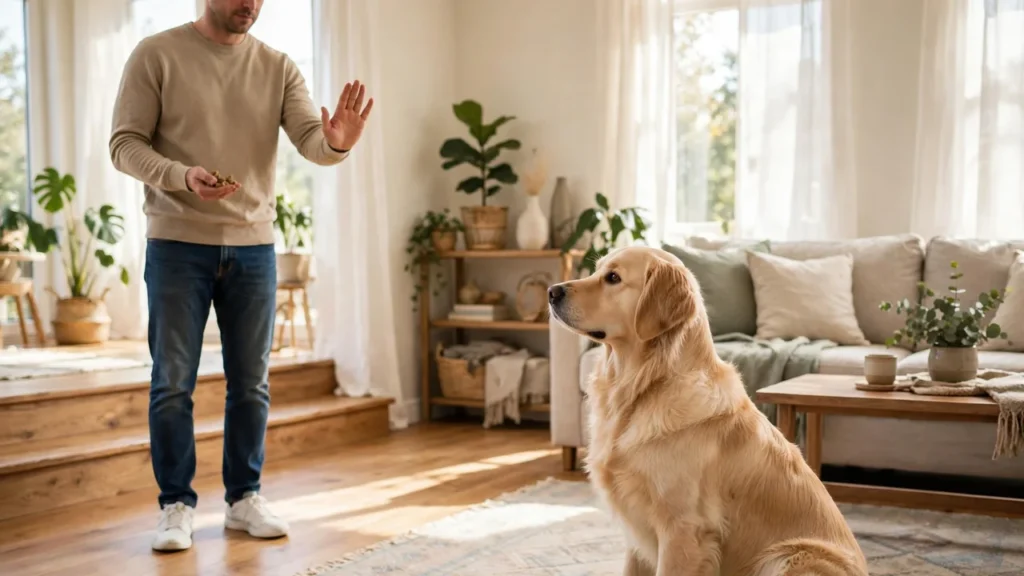
With your dog sitting or lying down, hold one hand up like a stop sign, palm facing your dog, and say “Stay” a single time. Keep your hand still for 2 seconds, then lower it and reward your dog in place. Saying the word over and over teaches your dog to wait for the third repeat, not the first cue. One word and one hand signal build the habit from the first rep.
Reward Your Dog While Your Dog Is Still in Place
Where the treat lands teaches the lesson, so deliver it low, between your dog’s front paws or right at nose height while your dog is still sitting or lying down. Say “Yes” the moment your dog holds still, then place the treat in position without luring your dog forward. Treats handed over after your dog stands up pay for breaking the stay, even when that was not your plan. Watch your hand height on every rep: a treat held up high pulls a sitting dog straight up onto its feet. Watch creeping paws too.
Pro Tip
Reward in place on at least nine out of ten reps. The odd treat tossed after the release word is fine, but the bulk of the pay should arrive while your dog is still holding the position you asked for.
Release Your Dog With Your Word After Every Short Stay
Every stay needs an ending your dog can count on, so close each rep the same way. After the in-place reward, pause for 1 second, say your release word, and step back or toss a treat so your dog has a reason to move. Dogs that never hear a release start releasing themselves, usually at the worst moment, like the second the front door opens. That ending teaches patience.
Teach Your Dog to Stay Longer With Small Time Jumps
Duration grows in a ladder, not in a leap. Work through 2 seconds, 5 seconds, 10 seconds, 20 seconds, and 30 seconds, spending a full session at each rung before you move up. Reward in place at the end of each wait, then release. A break at a new rung is useful news: your dog is saying that rung is too hard today, so drop back one rung, get three calm reps there, and end the session on a win. Slow ladders beat fast ones, because a dog that succeeds stays keen to try again.
Step Back One Pace and Return Before You Reward
Distance is a separate skill from duration, so build it on its own while the wait stays short. Ask for a stay, take one step back, pause for 2 seconds, step back to your dog, and reward in place. Stretch that gap to 3 feet, then across the room, always returning to your dog for the reward. Calling your dog to you for the treat trains recall, not stay. Return, reward, release, and repeat.
Heads Up
Never raise duration, distance, and distraction on the same day. Push one of the three, keep the other two low, and your dog keeps succeeding. Push all three at once and most dogs break, through no fault of their own.
Turn Away and Move Around Your Dog in Short Bursts
Movement from you is often the hardest part for a dog, because dogs read body motion as an invitation to follow. Turn sideways for 3 seconds while your dog stays, then face your dog again and reward in place. Later, take two sideways steps, bend as if to pick something up, and walk a slow half-circle behind your dog before you return and reward. Keep each burst short at first, and keep the wait at 10 seconds or less while movement is new. Keep movements slow and voice calm.
Practise Stay With Gentle Distractions in New Rooms
Real life is full of movement, sounds, and smells, so practise must leave the room in stages. Start with a low distraction, such as a television on low or a helper walking past at 10 feet away, while the stay itself stays short. Move to a new room, then to the hallway by the front door, and then to the garden with your dog on a lead. Keep your dog on a lead near roads, gates, and other dogs, and drop the difficulty back a rung whenever a new distraction breaks the stay twice in a row.


Paid Links - As an Amazon Associate, I earn from qualifying purchases.
Troubleshooting
| If This Happens | Try This |
|---|---|
| Your dog breaks at 10 seconds every time | Drop back to 5 seconds, get five calm reps, and climb the ladder again more slowly. |
| Your dog creeps forward as you step back | Shorten the distance to a single step and reward in place before any creep starts. |
| Your dog only stays when a treat is visible | Hide treats in your pouch, vary which reps pay, and always reward in place. |
| Your dog gets up when you turn away | Turn only your head first, then your shoulders, then your whole body, over several sessions. |
Frequently Asked Questions
How long before my dog holds a 30-second stay? Most dogs reach a calm 30-second stay in a quiet room within two weeks of short, daily sessions, with calmer stays around distractions taking a few weeks longer.
Does my dog need to know sit first? Yes. Stay adds time to sit or down, so teach the position first and add stay only when your dog can settle on cue in a quiet room.
What if my dog breaks the stay every time? Make the task smaller: a shorter wait, a shorter distance, or a quieter room. Three calm reps at a lower level beat one failed rep at a level that is too hard.
Can an older dog learn to stay? Yes. Older dogs often learn stay well because they settle more readily than puppies, and the same ladder of duration, distance, and distraction works at any age.
Quick Reference Card
You need: small treats, treat pouch, mat, quiet room, lead, phone timer, helper.
- Teach a release word before you ask for a stay.
- Ask for a sit or down your dog already knows well.
- Show your palm and say “stay” one time only.
- Reward your dog while your dog is still in place.
- Release your dog with your word after every short stay.
- Teach your dog to stay longer with small time jumps.
- Step back one pace and return before you reward.
- Turn away and move around your dog in short bursts.
- Practise stay with gentle distractions in new rooms.
Your dog can now hold still while you step back, turn away, and open a door. Keep sessions short, keep the same release word, and practise in a new spot each week so the stay holds outside the living room. If this guide helped, save it to Pinterest so you can teach your dog to stay, one calm rep at a time.