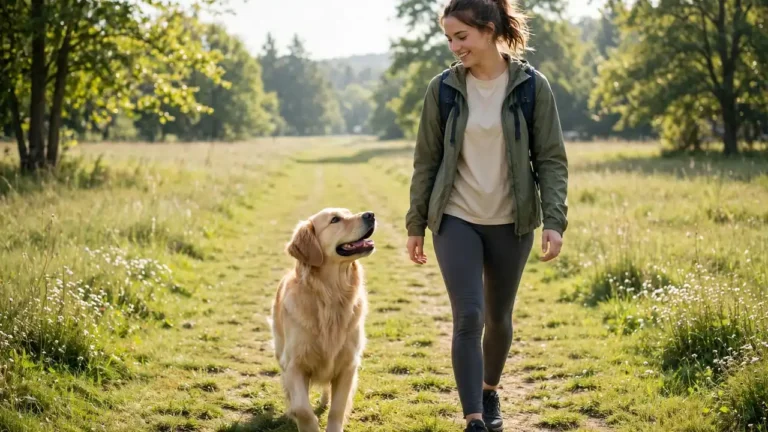
You call your dog in the park, your dog looks up, and then your dog runs the other way. Your voice gets louder, your dog gets farther away, and by the time you catch up, the walk has turned into a chase. If you want to teach your dog recall, the fix is not a louder voice. It is a word your dog trusts, paired with a reward worth coming back for, practised in small steps from your living room to an open field.
This guide builds that trust in order. You will pick one recall word, charge it with value indoors, add distance and distractions one at a time, and test it on a long line before you ever trust it off lead. Most dogs need about four weeks of short daily sessions to build a solid recall, with some dogs moving faster and some needing longer. The work takes 5 minutes a session, and the payoff is a dog you can call back from a squirrel, a puddle, or a new friend.
Time and Difficulty
Total time: about 4 weeks of short sessions | Active time: 5 minutes, twice a day | Difficulty: Beginner
Best for dogs of any age. Puppies often learn faster, while older dogs may need more repetitions before the new word beats an old habit.
What You Need
- Small, soft treats your dog loves, cut to pea size
- A treat pouch or pocket you can reach fast
- A 10-metre long line for garden and park work
- A flat collar or harness, never a choke or slip lead for recall work
- A quiet room indoors and a fenced garden or quiet field
- A helper for a few sessions, if one is free
At a Glance
- Choose one recall word and use it only for coming.
- Teach your dog recall in a quiet room first.
- Add a few steps of distance indoors.
- Practise in the garden on a long line.
- Call once, then wait for the turn.
- Reward every recall with a high-value treat.
- Release your dog back to play after some recalls.
- Add one distraction at a time.
- Test recall in a safe open space on a long line.
- Keep daily recall games short and frequent.
Choose one recall word and use it only for coming
A dog that has heard its name shouted at the park, at the vet, and at the dinner table has learned that the word means many things, and none of them urgent. Pick a fresh word, such as “here” or “close,” and reserve it for one meaning: come to me now. Say it in a bright, upbeat tone, and never use it to call your dog for a bath, nail trimming, or medicine. When the word keeps one clear meaning, your dog can trust it.
Teach your dog recall in a quiet room first
With your dog 2 metres away in a quiet room, say your recall word once, then show a treat and back up a step. Your dog follows the treat, and the moment your dog reaches you, give the treat and praise warmly. Repeat this 10 times, then stop while your dog still wants more. Short wins in a room with no distractions teach the core lesson fast: the word predicts a reward, and coming to you pays better than staying put.
Add a few steps of distance indoors
Distance is a skill, not a test, so grow it slowly. Stand 1 metre farther back each day, and keep sessions at 5 minutes until your dog comes quickly at the new distance 8 times out of 10. If your dog hesitates, step closer again and rebuild, rather than repeating the word louder. A recall that works at 6 metres indoors is worth more than a shaky recall shouted across a house, because it was built on success, not pressure.
Practise in the garden on a long line
Gardens add smells, birds, and wind, so attach the 10-metre long line before you open the door. Let your dog sniff for a minute, then call from 3 metres away and reward the turn at once. The line is a safety net, not a reel: never drag your dog toward you with it, and never let it go taut as a punishment. Your dog still chooses to come, and the line only stops a bolt toward the road while that choice is still new.
Pro tip
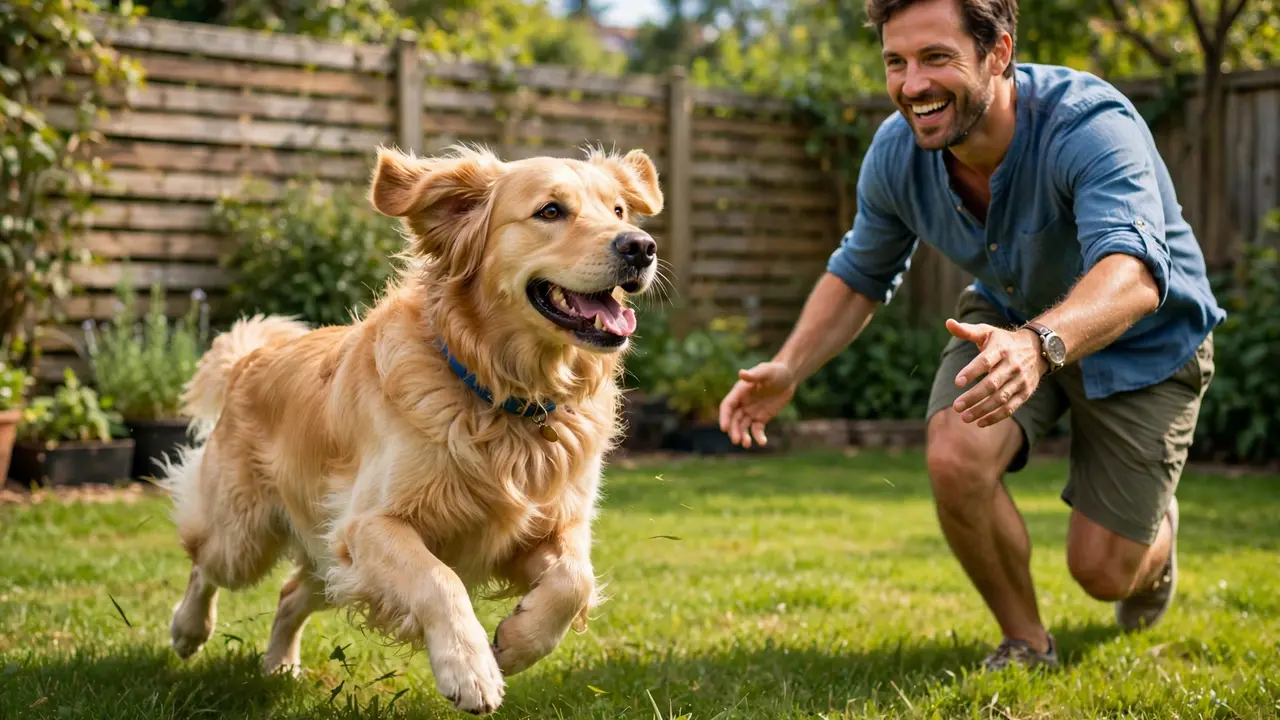
Run backward a few steps as your dog turns toward you. Movement away from your dog pulls most dogs in faster than standing still, and it turns the recall into a game your dog wants to win.
Call once, then wait for the turn
Repeating the word five times teaches your dog to wait for the fifth call, so say it once and give your dog 5 seconds to respond. Crouch low, open your arms, and look inviting while you wait. If nothing happens, walk calmly closer, show the treat, and try again from a shorter distance. One clear call, followed by patience, builds a dog that moves on the first word, because the first word has always been the one that mattered.
Reward every recall with a high-value treat
Ordinary kibble loses to a squirrel every time, so save a special reward for recall alone: small pieces of chicken, cheese, or hot dog work for most dogs. Give 3 to 5 pieces, one at a time, while your dog stays close, so coming to you feels like a jackpot, not a single coin. Keep this reward out of daily training for other skills. When recall pays better than anything else in your dog’s day, your dog starts choosing it.
Release your dog back to play after some recalls
Dogs that only get called when the walk ends learn to avoid the word, because it signals that fun is over. Call your dog halfway through play, reward warmly, then say “go play” and let your dog run off again. Do this 3 times in a session before the final recall home, so most recalls lead back to freedom. A dog that expects play after a recall has no reason to dodge the call, and the final call of the day stops feeling like a trap.
Heads up
Never scold, chase, or grab at your dog after a slow recall. A dog that gets punished for coming, even late, learns that coming is risky, and the next recall will be slower still. Reward the arrival you got, then make the next session easier.
Add one distraction at a time
A quiet garden and a busy park are different worlds, so bridge them with one change at a time. Practise first with a calm helper standing nearby, then with a ball on the ground, then with another dog at a distance. Keep the distance to the distraction long at first, and reward every success. If your dog fails twice in a row, the distraction is too close or too exciting, so move farther back and rebuild from the last level that worked.
Test recall in a safe open space on a long line
Choose a fenced field or a quiet stretch of open ground, clip on the long line, and let your dog roam slowly to the end of it. Call from 10 metres away, reward with the high-value treat, and release your dog again. Repeat 5 times, with a mix of short and long distances, so your dog cannot guess when the call will come. Success here, on the line, is the proof you need before any off-lead trial, and it is worth waiting for.


Paid Links - As an Amazon Associate, I earn from qualifying purchases.
Keep daily recall games short and frequent
Two sessions of 5 minutes beat one long session, because tired dogs stop learning and start guessing. Fold recall into daily life: call your dog from another room before meals, call from the garden gate before a walk, and call during play for a quick reward and release. Track progress by distance and distraction, not by calendar days. A recall that holds in the park after four weeks of short games is a skill you can trust, and one you can keep sharp with a few calls a week.
Troubleshooting
| If this happens | Try this |
| Your dog looks up but does not move | Step closer, crouch, and run backward a few steps. Raise the treat value and shorten the distance until your dog moves on the first call. |
| Your dog comes halfway, then veers off | Reward at halfway next time, then build the last few metres in small steps. Keep the final treat visible until your dog reaches you. |
| Recall works at home but fails outside | Drop back to the garden on a long line and add one distraction at a time. Outdoor success needs the same slow ladder as indoor success. |
| Your dog only comes when it sees a treat | Hide the treat in your pocket, call, and reward from the pouch after arrival. Fade the visible treat gradually, but keep rewarding most recalls for months. |
Frequently asked questions
How long does it take to teach a dog recall? Many dogs build a solid indoor and garden recall in about four weeks of short daily sessions. A reliable recall around strong distractions takes longer, and some dogs need two to three months before you can trust it in busy places.
Should I use my dog’s name as the recall word? A fresh word works better than a name your dog hears all day. Keep the name for attention and general talk, and reserve the recall word for one meaning only: come to me now.
What if my dog runs off and will not come back? Stay calm, crouch low, and avoid chasing, since chasing turns the run into a game. Call once in a bright voice, run away from your dog to spark a chase toward you, and reward warmly when your dog arrives. Use a long line in open areas until recall is solid.
Can an older dog learn recall? Yes. Older dogs often learn faster than puppies because they can focus longer, though they may need more repetitions to drop an old habit of ignoring calls. Short, rewarding sessions work at any age.
Quick Reference Card
You need: pea-size high-value treats, a treat pouch, a 10-metre long line, a harness or flat collar.
Steps: 1. Choose one recall word. 2. Teach recall indoors first. 3. Add distance indoors. 4. Practise on a long line in the garden. 5. Call once and wait. 6. Reward every recall. 7. Release back to play. 8. Add one distraction at a time. 9. Test in a safe open space. 10. Keep sessions short and frequent.
Routine: 5 minutes, twice a day, for about four weeks.
With one trusted word, a reward worth running for, and distance built a few metres at a time, you can teach your dog recall without shouting, chasing, or hoping. Keep sessions short, reward the arrival you get, and release your dog back to play often, so coming to you stays the best choice in your dog’s day. A natural next step is teaching a solid stay, so your dog waits calmly before you call. Save this guide on Pinterest and start indoors today, with 10 quiet repetitions and a treat your dog truly loves.