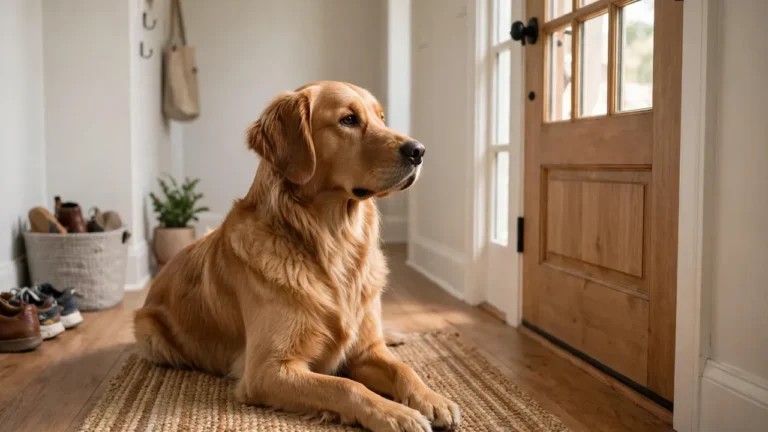
Walks should feel calm, but for many dog owners they feel like a tug-of-war from the front door to the corner. Your arm aches, your dog strains ahead, and every passing squirrel turns a short walk into a wrestling match. If you want to stop your dog from pulling on the leash, the fix starts with a change in what pulling gets your dog, not with a stronger arm or a harsher tool.
This guide shows a kind, steady method that works for most pet dogs: reward a slack lead, stop when the lead goes tight, and turn away when pulling repeats. Dogs learn fast when the same rule applies every time. Plan on about two weeks of short daily walks, starting indoors where distractions are low, then moving to quiet streets before busier paths. You need no special strength and no pain-based tools — a front-clip harness, a standard lead, and small treats will do.
Time and Difficulty
Total time: about 2 weeks of daily practice | Active time: 10 minutes a day | Difficulty: Beginner
Best for puppies over 16 weeks old and adult dogs who pull on walks. Keep sessions short and end while your dog is still keen.
What You Need
- A front-clip harness that fits snugly, with room for 2 fingers under each strap
- A standard, non-retractable lead, 6 feet long
- Small, soft treats your dog can swallow in 2 seconds — pea-sized pieces work well
- A treat pouch or a pocket that opens with one hand
- A quiet room or hallway for the first indoor sessions
- A poop bag and a calm, quiet street for the first outdoor walks
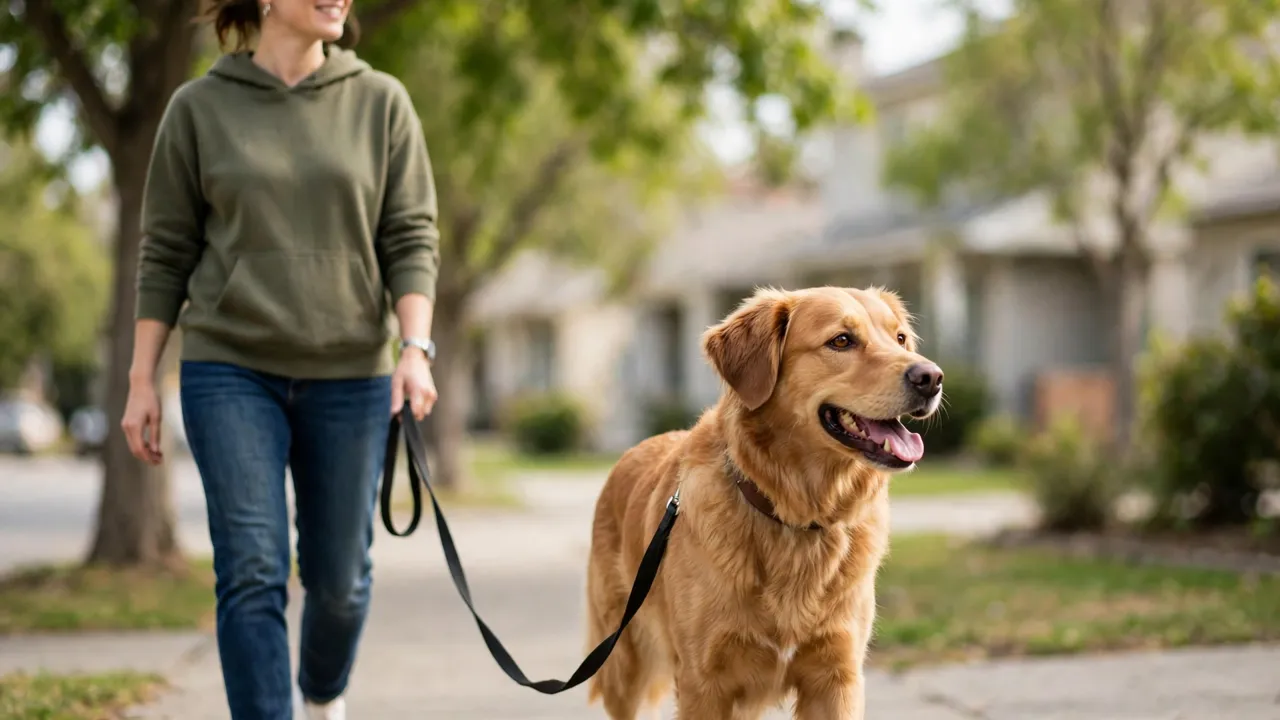
At a Glance
- Fit a front-clip harness and a short lead.
- Practise indoors on a slack lead.
- Reward slack lead at once.
- Stop when the lead goes tight.
- Turn around when pulling repeats.
- Walk busier paths step by step.
- Keep short daily walks for two weeks.
Fit a front-clip harness and a 6-foot lead
A harness that clips at the chest gives you steering help without pressure on the neck, and a 6-foot lead gives your dog room to walk beside you without room to build speed. Set each strap until you can slide 2 fingers flat underneath it, then watch your dog move around the room: the harness should stay put, and no strap should rub under the front legs. A retractable lead works against this method, because it teaches your dog that pressure on the lead makes the world get bigger.
Practise loose-lead walking inside your home
Three minutes indoors beats a chaotic outdoor walk for a first lesson, because your dog can hear you and think clearly. Walk slowly around a room or hallway with the lead loose, and praise your dog in a warm voice whenever your dog stays near your side. If your dog surges ahead, change direction inside the room and invite your dog to follow you. End the session while your dog is still keen, and repeat it twice a day before you try the garden.
Reward slack lead the second it appears
Dogs repeat what pays off, so the reward has to land while the lead is still loose, not after your dog has already surged ahead. Carry treats in your hand on the same side as your dog, and drop one at your dog’s mouth every few steps while the lead hangs in a soft curve. At first, reward every 3 to 4 steps of slack walking. As your dog gets the idea, stretch the gap to 8 to 10 steps, then to a whole room, before you ask for more.
Pro tip: In busy places, switch to a smellier treat, such as a tiny piece of cheese or cooked chicken. A treat your dog loves can hold attention when a plain biscuit cannot, and that extra focus is often the difference between a slack lead and a surge.
Stop walking the moment the lead goes tight
Plant your feet and stand still, like a tree, as soon as you feel the lead pull taut. Hold the lead steady at your waist and wait, without yanking it back or scolding your dog. Most dogs glance back within 10 to 20 seconds to check why the walk stopped, and that glance, or any slack in the lead, is your cue to move again. Pulling stops paying off the day forward motion stops rewarding it.
Heads up: Never yank the lead or drag your dog backwards to correct pulling. A sharp jerk can hurt the neck and can make a worried dog pull harder, and it teaches your dog nothing about what to do instead. Stopping calmly, every time, is the lesson.
Turn and walk the other way when pulling repeats
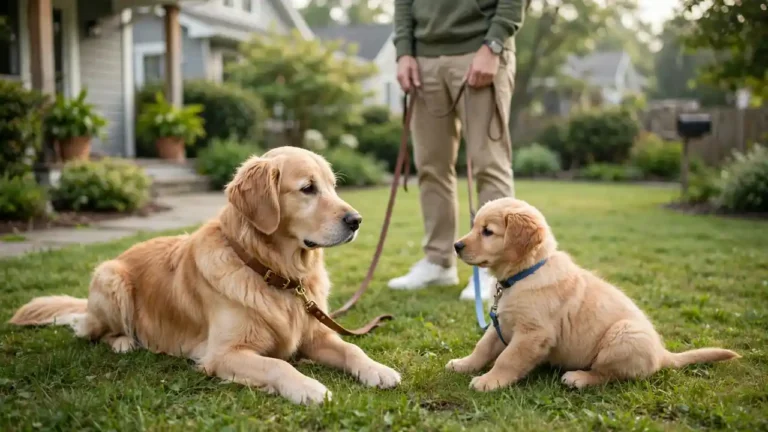
Some dogs treat a short stop as a pause before pulling again, so a calm turn adds a clear consequence without any force. When your dog pulls for a second time in the same walk, turn smoothly, walk 10 to 15 steps back the way you came, and reward your dog for falling in beside you. Your dog soon learns that pulling points the walk away from the exciting thing, while walking beside you points it forward. Keep your voice light, and do not spin in circles or rush the turn.
Stop Your Dog From Pulling on the Leash on busier paths
When a quiet street feels calm for 3 walks in a row, add one new distraction at a time, such as a passing person, a parked car with a dog inside, or a busier corner. Keep the first busier walk to 5 minutes, reward slack walking more often than you did on quiet streets, and step to one side if another dog passes close. If your dog surges, go back to stopping and turning, even if it feels slow — a short calm walk teaches more than a long pulling one.
Keep short daily walks for two weeks
Two weeks of steady practice builds a habit, and one perfect walk does not undo months of pulling, so keep the same rules on every walk. Practise for 10 minutes a day, in one or two short sessions, and reward slack walking at random once your dog is reliable, so your dog keeps checking in with you. Expect setbacks on rainy days, near parks, and with new visitors — those are harder tests, not proof that the method has failed. On a hard day, drop back to a quiet street and rebuild from there.
If This Happens, Try This
Your dog pulls hard toward other dogs: add distance first — cross the street or step behind a car — and reward your dog for looking at you before the other dog gets close.
Your dog walks well indoors but pulls outside: that is normal. Go back to 3-minute outdoor sessions on a quiet street, and reward every few steps until outdoor walking feels as calm as indoor walking.
Your dog lunges at squirrels or bikes: stop before the lunge builds, turn away early, and practise at a distance where your dog can still hear you and take a treat.


Paid Links - As an Amazon Associate, I earn from qualifying purchases.
Your dog stops caring about treats outside: try a smellier treat, train before a meal rather than after one, and shorten the walk so interest stays high.
Frequently asked questions
Why does my dog pull so hard on walks? Pulling usually pays off: your dog pulls, you follow, and your dog reaches the interesting smell or dog faster. The stop-and-turn method breaks that link, so walking beside you becomes the faster way forward.
How long will it take before walks feel calmer? Many dogs show a clear change within a week of short daily sessions, and most walks feel calmer within about two weeks. Busy places take longer, and setbacks on exciting days are a normal part of learning.
Should I use a retractable lead for this method? No. A retractable lead keeps a light pull on your dog all the time and rewards pulling with more length, which works against a slack lead. Use a standard 6-foot lead instead.
What if my dog coughs or chokes while pulling? Stop the walk, check the harness fit, and switch to a front-clip harness if you are using a collar. If coughing keeps happening, or your dog shows pain, breathing trouble, or a limp, ask your vet before you train further.
Quick Reference Card
You need: a front-clip harness, a 6-foot lead, small soft treats, a treat pouch.
Steps: 1. Fit the harness and lead. 2. Practise indoors. 3. Reward slack lead at once. 4. Stop on a tight lead. 5. Turn when pulling repeats. 6. Practise on busier paths. 7. Keep short daily walks for two weeks.
Practice: 10 minutes a day, for about two weeks.
With a slack lead rewarded and a tight lead stopped, you can stop your dog from pulling on the leash without force or frustration. Keep sessions short, keep the rule the same on every walk, and your walks will get calmer week by week. A natural next step is teaching a reliable recall on walks, so your dog checks in with you even off the lead. Save this guide on Pinterest and try one short session today — your next walk can already feel calmer.