Bringing home a puppy when an older dog already rules the house can feel like a big gamble. Your older dog has a routine, a favorite bed, and a clear idea of who owns the couch, and a bouncy puppy can turn that calm world upside down in one afternoon. The good news is that you can introduce a new puppy to an older dog in a way that keeps both dogs relaxed, and it starts before the two of them ever share a room.
This guide walks you through nine clear steps, from a scent swap the day before to a calm first week under one roof. You will learn where to hold the first meeting, how long each greeting should last, and which signs mean you should slow down. Nothing here needs special skill or fancy gear, and every step uses things you already have at home.
Plan for the first meeting to take about two hours, and give the pair a full week before you expect them to act like old friends. Older dogs need rest and space, and puppies need short, happy meetings that end before either dog gets tired. Follow the steps in order, watch both dogs closely, and you will set up a friendship that lasts for years.
Time and Difficulty
Total Time: 1 week (slow plan) | Active Time: 2 hours on day one | Difficulty: Beginner
What You Need
Gear: 2 leashes about 6 feet long, 2 collars or harnesses, 1 puppy blanket and 1 older-dog blanket, a baby gate or playpen, a crate or puppy pen, 2 food bowls and 2 water bowls, small soft treats, poop bags.
Help: a calm helper for the first meeting, so one person holds each dog, and a quiet outdoor spot such as a front yard or an empty stretch of sidewalk.
A six-foot leash gives you control without pulling either dog close to the other. A helper matters because one person per dog keeps both leashes loose, and loose leashes keep both dogs calm.
At a Glance
- Swap scents a day before they meet
- Introduce a new puppy to an older dog on neutral ground
- Walk side by side for 10 minutes
- Let them sniff on loose leashes
- Bring the puppy inside on a leash
- Set up a safe space for each dog
- Feed them in separate spots
- Watch play and step in early
- Keep the first week slow and steady
Swap scents a day before they meet
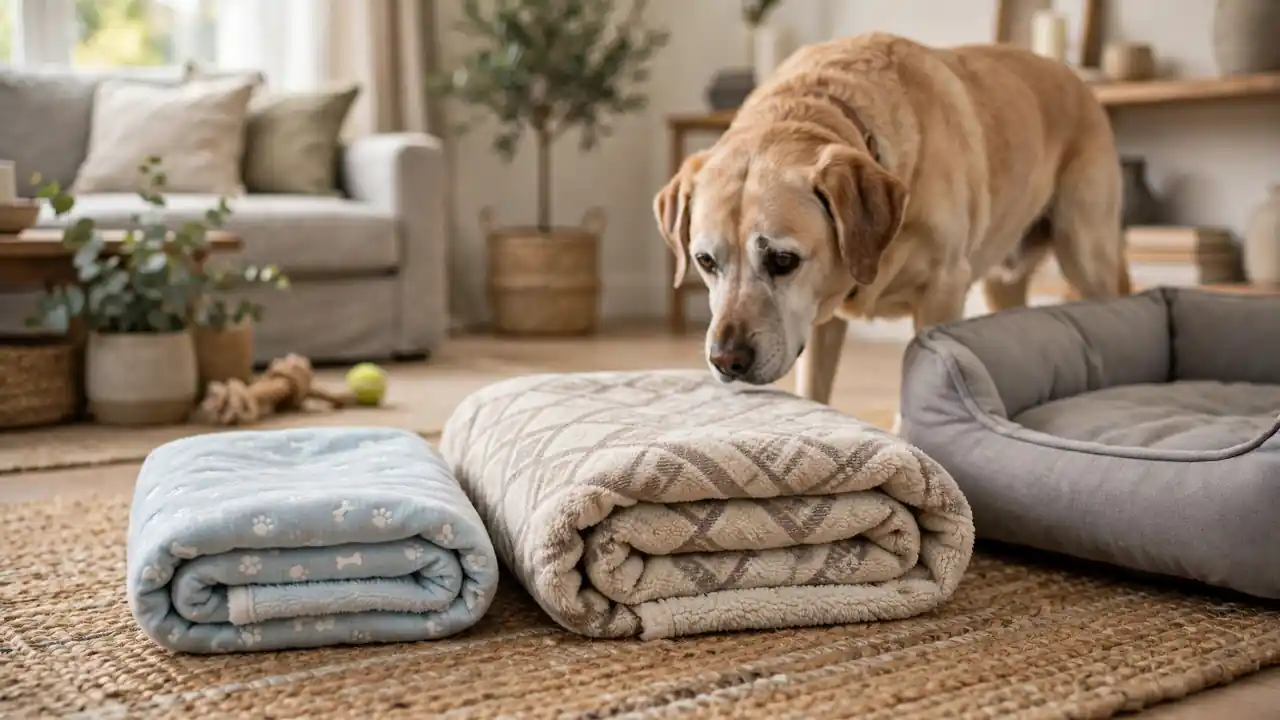
Dogs learn about each other through smell long before they meet face to face. Rub a soft cloth over the puppy’s cheeks and paws, then leave it near your older dog’s bed for a full 24 hours. Place the older dog’s blanket near the puppy’s sleeping spot for the same stretch of time.
Watch how your older dog reacts to the new smell. A calm sniff and a yawn mean the scent is no big deal. Growling or stiffening over the cloth means you should give it one more day before the meeting.
Introduce a new puppy to an older dog on neutral ground
Pick a spot neither dog owns, such as a quiet front yard, a friend’s yard, or an empty stretch of sidewalk. Keep both dogs on 6-foot leashes and let each handler hold one dog. Walk toward each other slowly, and stop while you are still about 10 feet apart.
Let the dogs see each other and sniff the air for a minute. Loose, wiggly bodies mean you can move closer, while stiff legs or a hard stare mean you should hold your distance.
Walk side by side for 10 minutes
Keep both dogs moving in the same direction, about 6 feet apart, with the puppy on the outside and the older dog closer to the curb. Keep a relaxed pace and let them glance at each other without stopping to stare. Ten minutes of side-by-side walking lets them get used to each other without any pressure to greet.
Hand out a small treat each time a dog looks at the other and stays calm. This links the other dog with good things in each dog’s mind. If either dog pulls hard, add a few feet of space and keep walking.
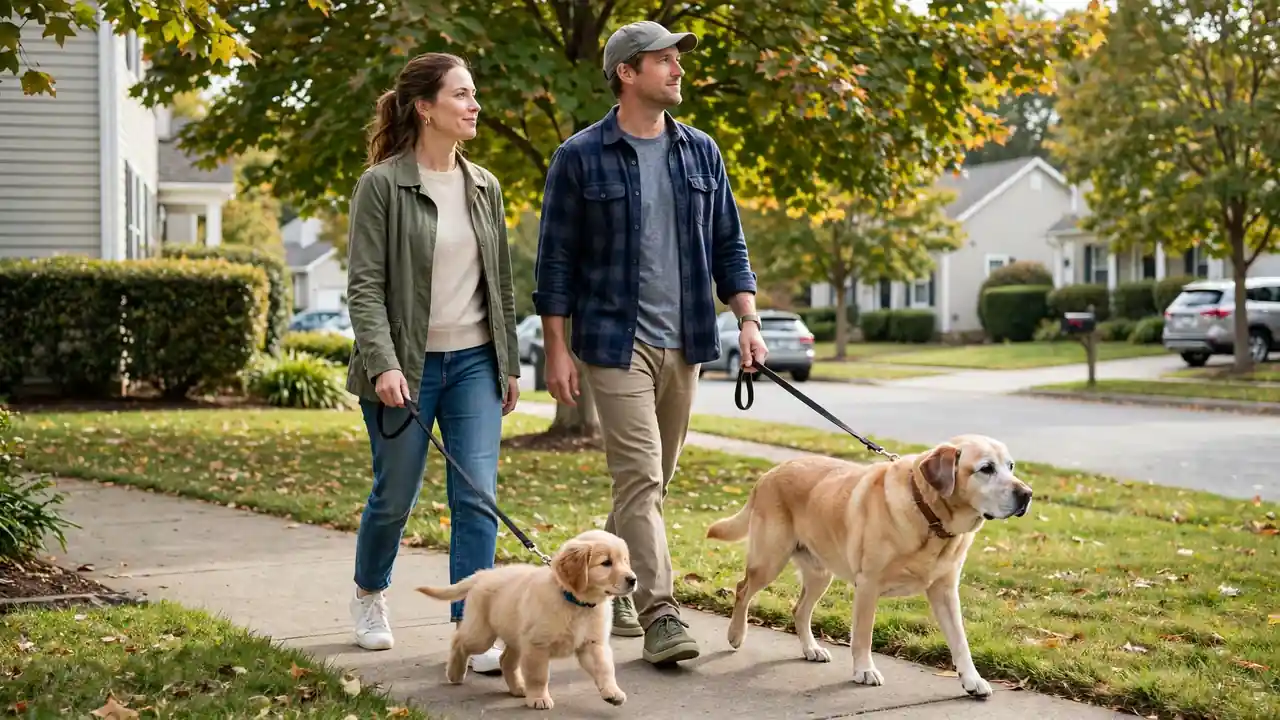
Let them sniff on loose leashes
Move closer until about 3 feet separate the dogs, then let them circle each other for a quick hello. Keep both leashes loose, with a clear curve in the line, so neither dog feels trapped.
Call both dogs away with a happy voice and a treat. Two or three short greetings beat one long one, so end while both dogs are still calm.
Bring the puppy inside on a leash
Let your older dog walk into the house first, then bring the puppy in on a leash a minute later. Keep the puppy on the leash for the first 30 minutes indoors, and walk the pair through the main rooms together. This keeps the puppy from rushing the older dog’s favorite spots.
Pick up bones, chews, and favorite toys before the puppy arrives. Put them away for the first week, so there is nothing worth guarding. Your older dog will relax much faster when nothing in the room feels under threat.


Paid Links - As an Amazon Associate, I earn from qualifying purchases.
Set up a safe space for each dog
Give the puppy a pen or a gated corner with a bed, water, and a chew. Give the older dog the rest of the room, with the usual bed and water bowl in the usual place. A baby gate between them lets both dogs see and smell each other without any pressure to share space.
Let the older dog walk away whenever the puppy gets too bouncy. A dog that can leave a situation will stay calm far longer than a dog that feels cornered. Keep the gate up for the first week, even when the two seem friendly.
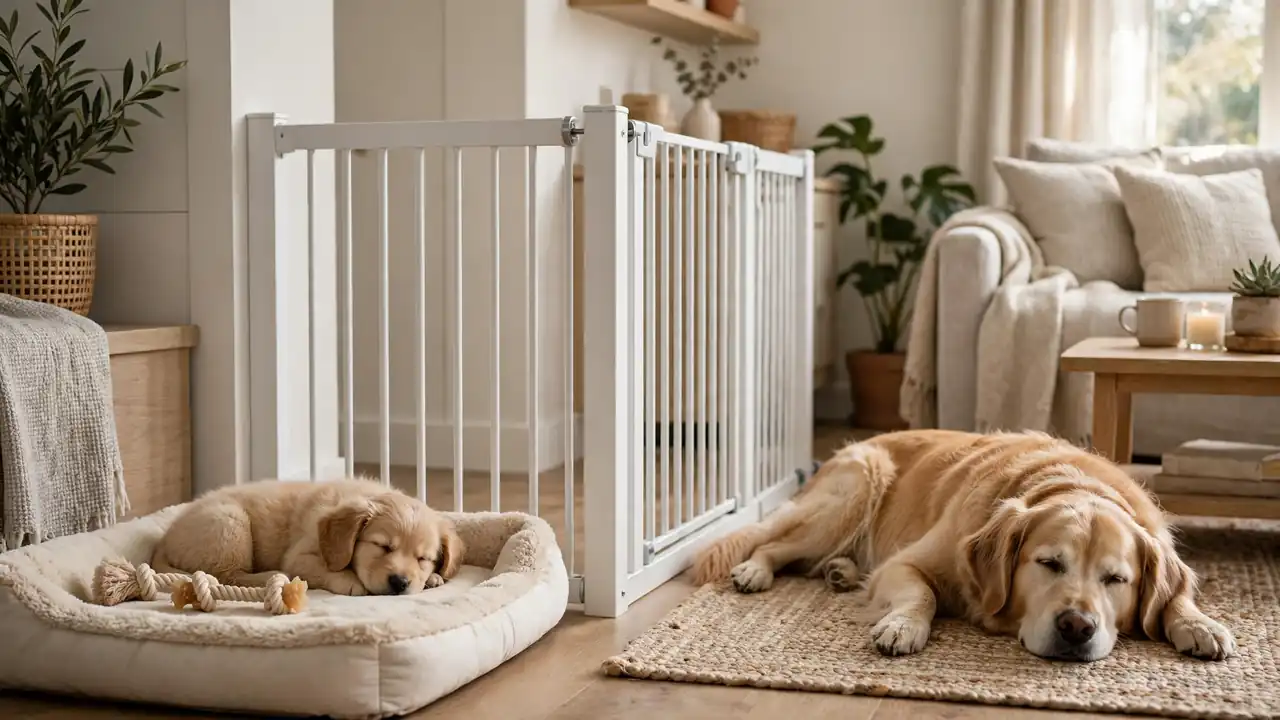
Feed them in separate spots
Put the bowls at least 10 feet apart, or in two different rooms, for the first week. Feed both dogs at the same time, so neither one finishes first and wanders over to the other’s bowl. Pick up both bowls when the meal ends.
Keep treats separate too, and hand them out one dog at a time. A puppy that crowds an older dog at the food bowl can spark a growl that sets the whole day back.
Pro Tip
Feed your older dog first at every meal for the first week. It costs you nothing, and it tells your older dog that the new arrival has not changed their place in the house.
Watch play and step in early
Cap the first play sessions at about 5 minutes, and stay in the room the whole time. Watch for loose bodies, play bows, and taking turns chasing. Those signs mean the play is fair and fun for both dogs.
Step in the moment you see stiff bodies, pinning, or one dog trying to hide. Clap once, call the puppy to you, and give both dogs a short break behind the gate. Short, happy play sessions build trust, while one bad scuffle can set you back days.
Heads Up
Never leave a puppy and an older dog alone together in the first week, even if the first day went well. A puppy can hurt an older dog by accident, and an older dog can snap when tired. Use the gate or crate every time you leave the room.
Keep the first week slow and steady
Add about 10 minutes of shared time each day, and keep the gate between them when you cannot watch. Let the older dog keep the old routine: same walk time, same bed, same cuddle spot on the couch. A steady routine tells your older dog that the puppy is an addition, not a takeover.
By day seven, most pairs can share a room for an hour or more without trouble. If yours still needs the gate, that is fine. Some older dogs take two weeks to warm up, and a slow start beats a rushed one every time.
Troubleshooting
| If This Happens | Try This |
|---|---|
| Older dog growls or stiffens at the puppy | Add distance at once, end the greeting, and try again the next day with more space |
| Puppy will not stop jumping on the older dog | Clip the puppy’s leash on, call the puppy to you, and give the older dog a break behind the gate |
| Older dog guards food or toys | Feed in separate rooms and put high-value toys away for the first week |
| Puppy cries at the gate | Keep visits short, offer a chew in the pen, and keep your voice low and calm |
| Both dogs get too excited | Move to a bigger space and walk them side by side until they settle |
Frequently Asked Questions
How long does it take for a puppy and an older dog to get along?
Most pairs settle into a calm routine within one to two weeks. Some older dogs take a full month, and that is normal.
What should I do if my older dog growls at the puppy?
Stay calm and move the puppy away at once. Growling is a warning, not bad behavior, and it means your older dog needs more space and a slower pace.
Can the puppy sleep with the older dog?
Not in the first week. Let the puppy sleep in a crate or pen in your room, and let the older dog keep the usual sleeping spot.
Should I introduce them inside the house first?
No, start outside on neutral ground. The house is your older dog’s territory, and a first meeting there can feel like an invasion.
What if my older dog is a senior with sore joints?
Keep greetings very short and on flat ground, and give the older dog a clear escape route. Ask your vet for advice if your older dog has pain or limited movement.
Quick Reference Card
What You Need: 2 six-foot leashes, 2 collars or harnesses, 2 blankets for the scent swap, baby gate or playpen, crate, 2 food bowls, 2 water bowls, small soft treats, a calm helper.
Steps:
- Swap scents a day before they meet
- Introduce a new puppy to an older dog on neutral ground
- Walk side by side for 10 minutes
- Let them sniff on loose leashes
- Bring the puppy inside on a leash
- Set up a safe space for each dog
- Feed them in separate spots
- Watch play and step in early
- Keep the first week slow and steady
You now know how to introduce a new puppy to an older dog without rushing either one of them. Your older dog kept their routine, your puppy learned the house rules, and both dogs got the space they needed to feel safe.
Keep the gate up for one more week, and watch for the small signs that tell you they are ready to share a room for good: relaxed bodies, shared naps, and a toy left on the floor between them.
Pin this guide for later, and share it with a friend who is about to bring a puppy home to an older dog.