A dog that chases the cat across the kitchen is not a small problem. It turns feeding time into a standoff, it keeps the cat hiding under the bed, and it leaves you refereeing two pets that should be able to share a home in peace.
The hard part is that breed lists alone do not tell the whole story. A calm adult dog with a low chase drive can settle beside a cat, while a restless young dog of a friendly breed can still cause trouble. Age, early socialisation, and the way you introduce them matter as much as the breed name.
The breeds below are known for a softer temper, a lower urge to chase, and an easy way with other animals. They are the dog breeds that get along best with cats for many families, and each entry explains what helps, what to watch, and how to give the cat a fair start.
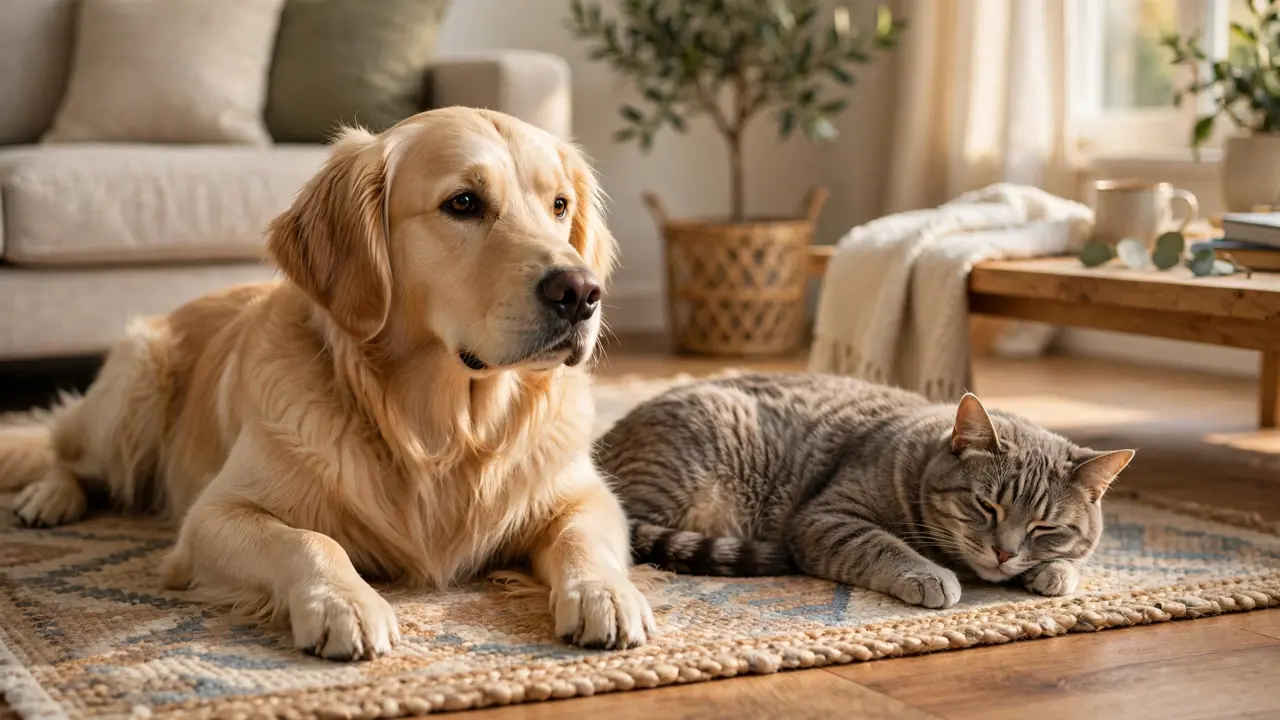
1. Golden Retriever: A Patient Friend Who Usually Takes the Cat’s Lead
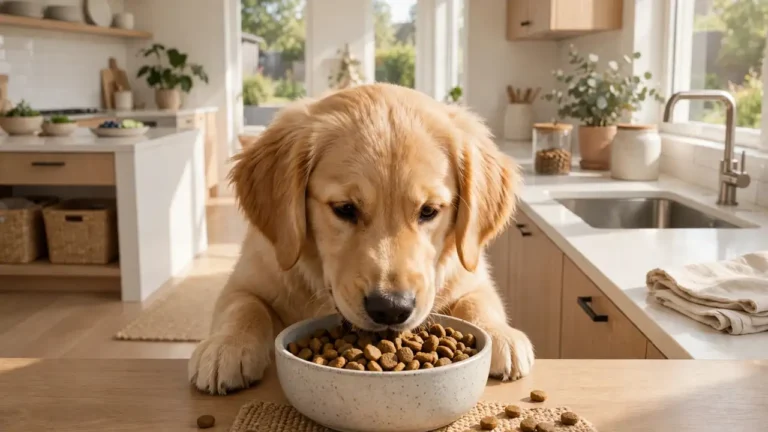
Goldens are famous for a soft mouth and a softer temper, and that carries over to cats. Most Goldens greet a cat with curiosity rather than a chase, then settle once the novelty wears off. They read a cat’s warning hiss better than many breeds, and they tend to back off instead of pushing a scared cat further.
- Introduce them through a baby gate first, so the cat can walk away at any time.
- Reward calm looks and still feet, not excited lunging toward the cat.
- Give the cat high perches and a room the dog cannot enter.
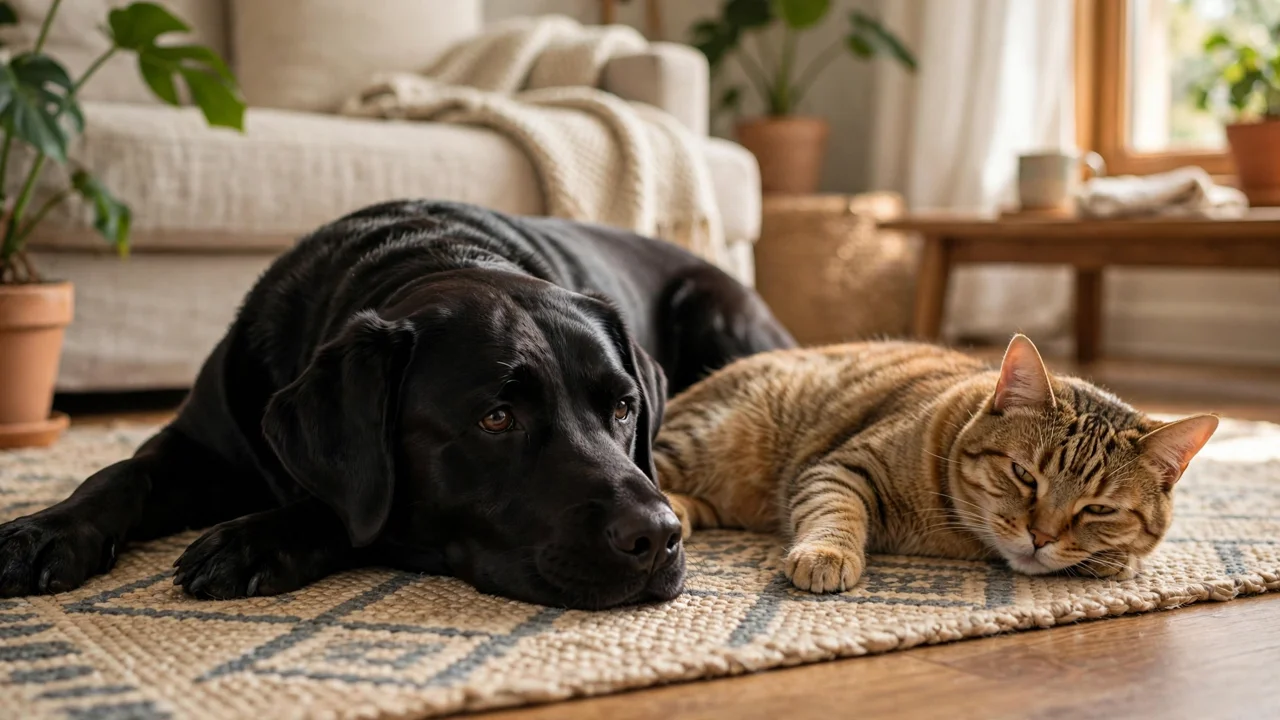
2. Labrador Retriever: A Steady Dog That Learns the House Rules Fast
Labradors want to be part of the family, and that includes the cat once they learn the cat is family too. A Labrador puppy can be bouncy, so the first meetings need a lead and a calm room. Adult Labradors are usually steadier, and they respond well to short training sessions built around food rewards.
- Feed the dog and the cat in separate spots, with a door or gate between them.
- Keep early meetings short, five minutes of calm beats twenty minutes of chaos.
- Teach a solid leave it cue before the dog meets the cat off lead.
💡 Quick Tip
Swap blankets between the dog bed and the cat bed for a few days before they meet, so each smell is already familiar.
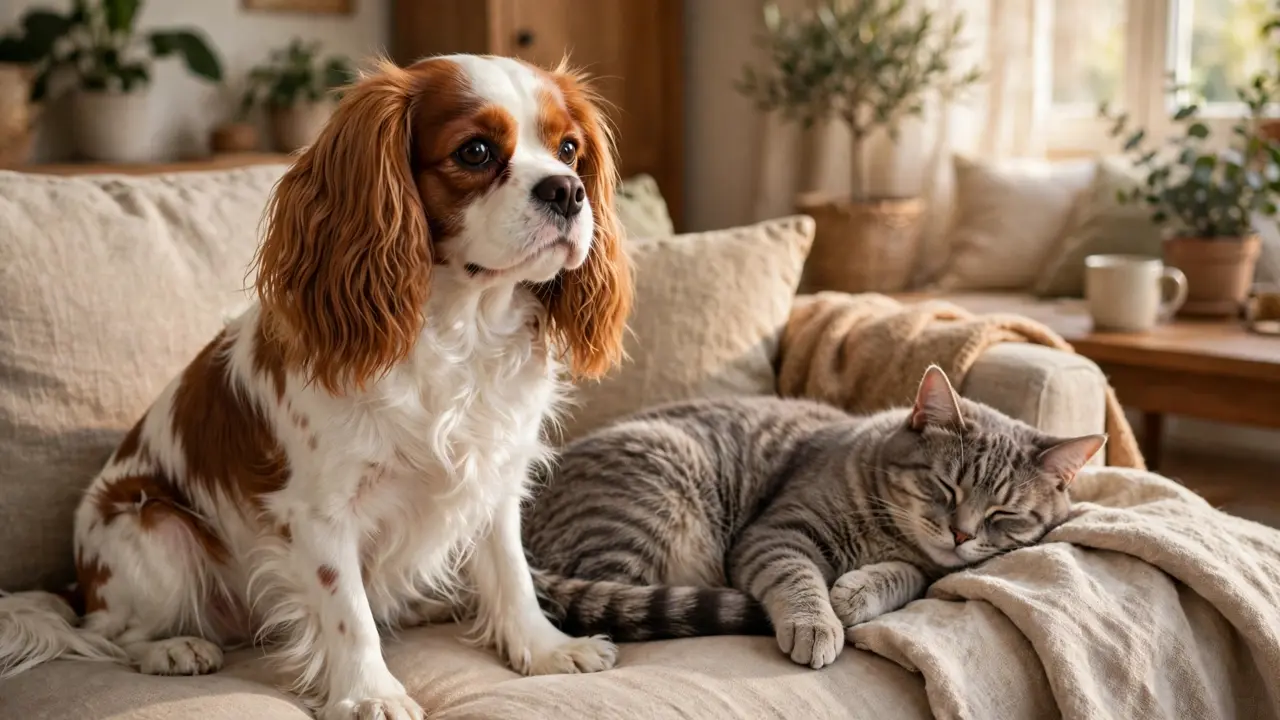
3. Cavalier King Charles Spaniel: A Small Lap Dog That Rarely Wants a Chase
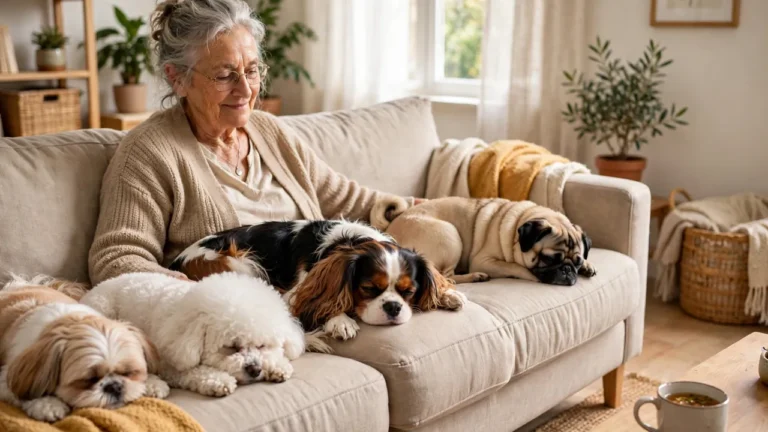
Cavaliers were bred to sit with people, not to hunt, and that shows around cats. This small spaniel is happy to share a sofa, and it rarely has the size or the drive to corner a cat. Many Cavaliers will simply watch a cat walk past, then go back to sleep.
Size helps here, but supervision still matters. A Cavalier puppy can still pester a cat with playful paws, so teach the puppy to settle on a mat while the cat moves around the room.
4. Basset Hound: A Slow, Nose-Led Dog That Lets Cats Set the Pace
Bassets move at their own speed, and that slow pace suits a nervous cat. A Basset is far more interested in a scent trail on the floor than in a cat crossing the room, and it rarely has the energy for a long chase. That laid back style can make a cat brave enough to come out sooner.
- Walk the Basset before a meeting, so stored energy does not turn into pestering.
- Keep the cat food bowl out of the dog’s reach, since Bassets will follow a smell anywhere.
- Let the cat approach the dog, and praise the dog for staying still.

What to grab first
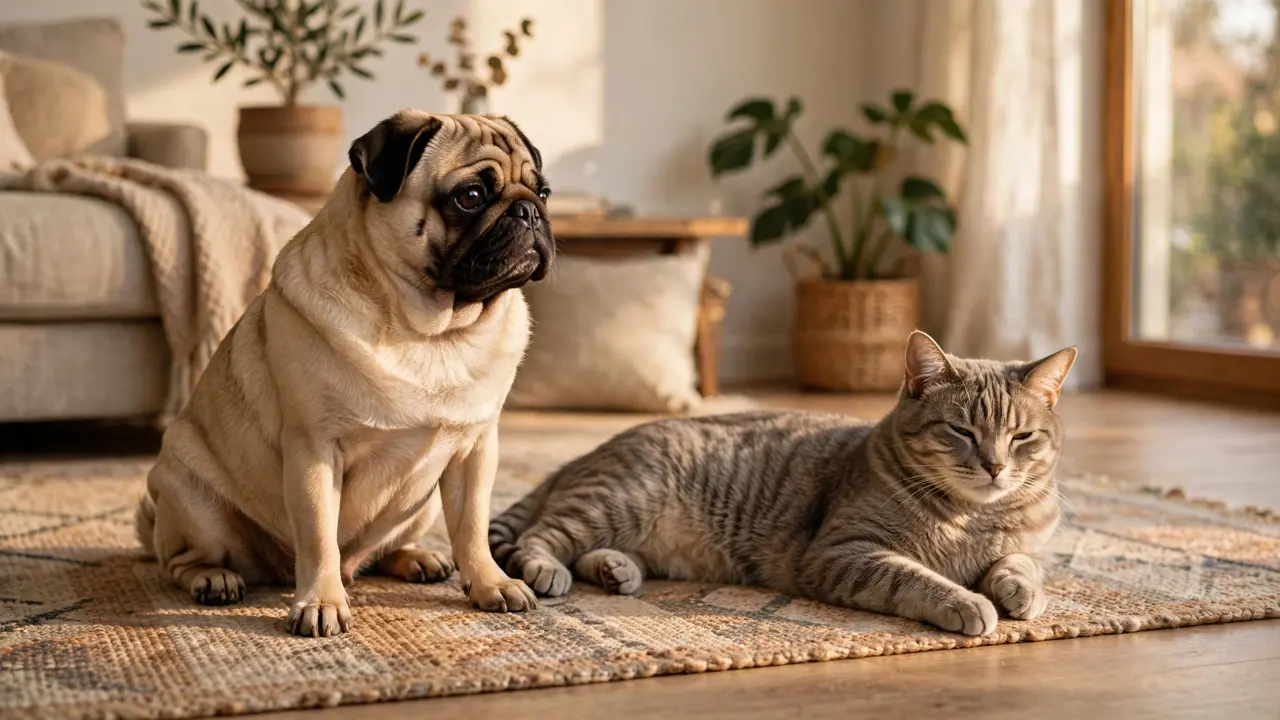
5. Pug: A Clownish Little Dog That Prefers Company to Conflict
Pugs love people, love food, and love a warm lap, and cats often fall into that same circle of affection. A Pug is small, it tires quickly, and it rarely sustains a chase. The main risk is over excitement in the first minute, when a snorting, wiggling Pug can startle a cat.
- Meet in a quiet room with the Pug on a lead and the cat free to leave.
- Stop the meeting while both animals are still calm, so calm becomes the habit.
- Watch breathing in warm rooms, since Pugs overheat faster than other dogs.
Reward four paws on the floor near the cat.
Keep greetings short and low key each day.
Letting the Pug corner the cat in a hallway.
Forcing a face to face greeting on day one.
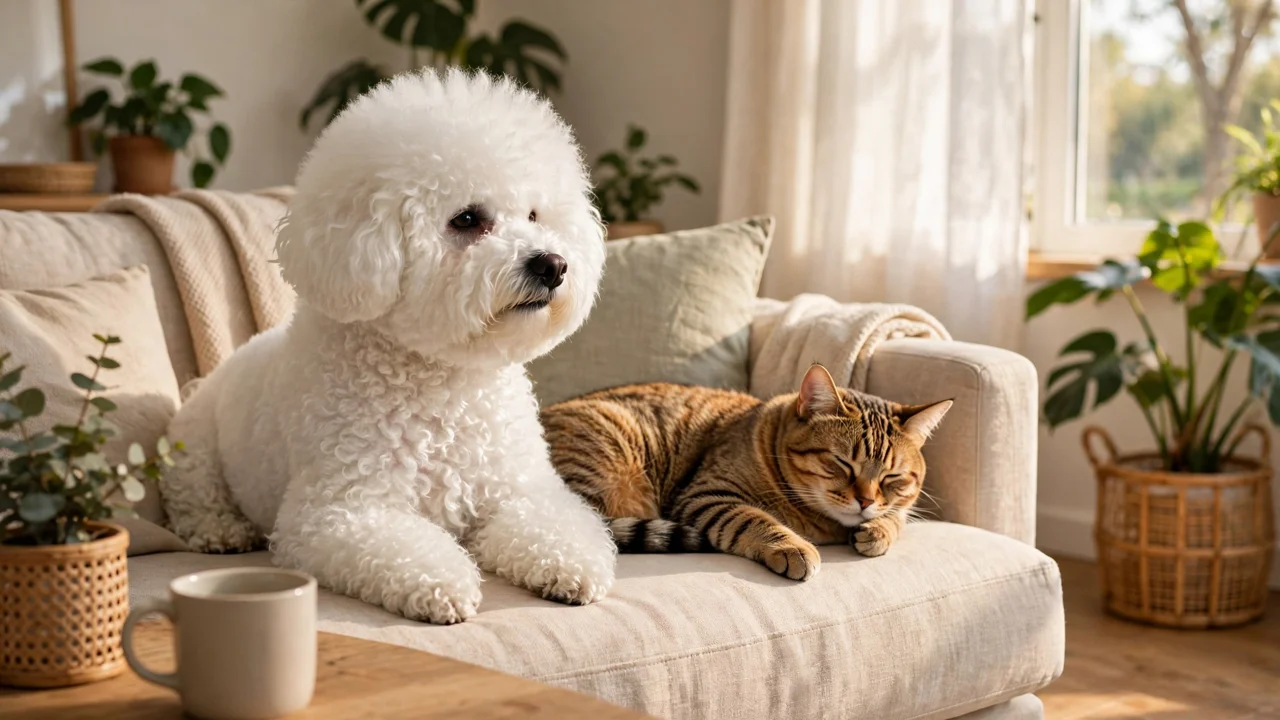
6. Bichon Frise: A Cheerful Small Dog That Treats the Cat as a Housemate
Bichons are social dogs that dislike being left out, and they tend to accept whatever animal already lives in the house. They are small, they play in short bursts, and they settle fast, which gives a cat room to move without feeling hunted.
Grooming is the bigger job with this breed. Brush the fluffy coat often, and keep the first meetings boring on purpose. A calm Bichon earns cat trust far faster than an excited one.
Let the cat explore the dog’s room while the dog is out on a walk.
Feed them on opposite sides of a closed door for a few days.


Paid Links - As an Amazon Associate, I earn from qualifying purchases.
Open the gate for short, supervised visits, then separate them again.
7. Papillon: A Tiny, Bright Dog That Often Ignores the Cat Entirely
Do not let the size fool you. Papillons are alert and clever, but they are not built for chasing, and many of them treat a cat as furniture once the first sniff is done. Their small size also means a cat does not feel towered over, which helps a shy cat relax.
- Give the Papillon a perch or a lap spot, so it does not follow the cat at floor level.
- Use puzzle toys to use up brain energy before a shared room session.
- Protect the Papillon from rough play too, since a swat from a large cat can hurt a tiny dog.
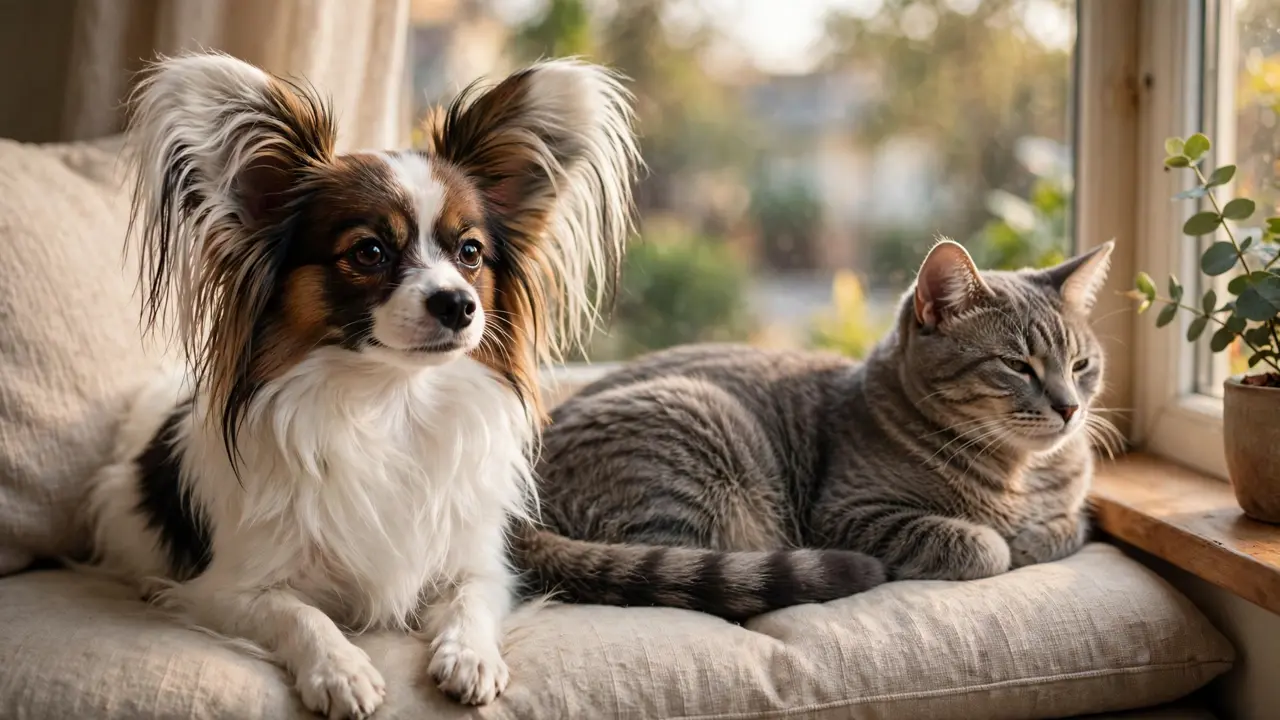
With a Papillon, the cat often decides the friendship. Give the cat space, and the dog will usually follow that lead.
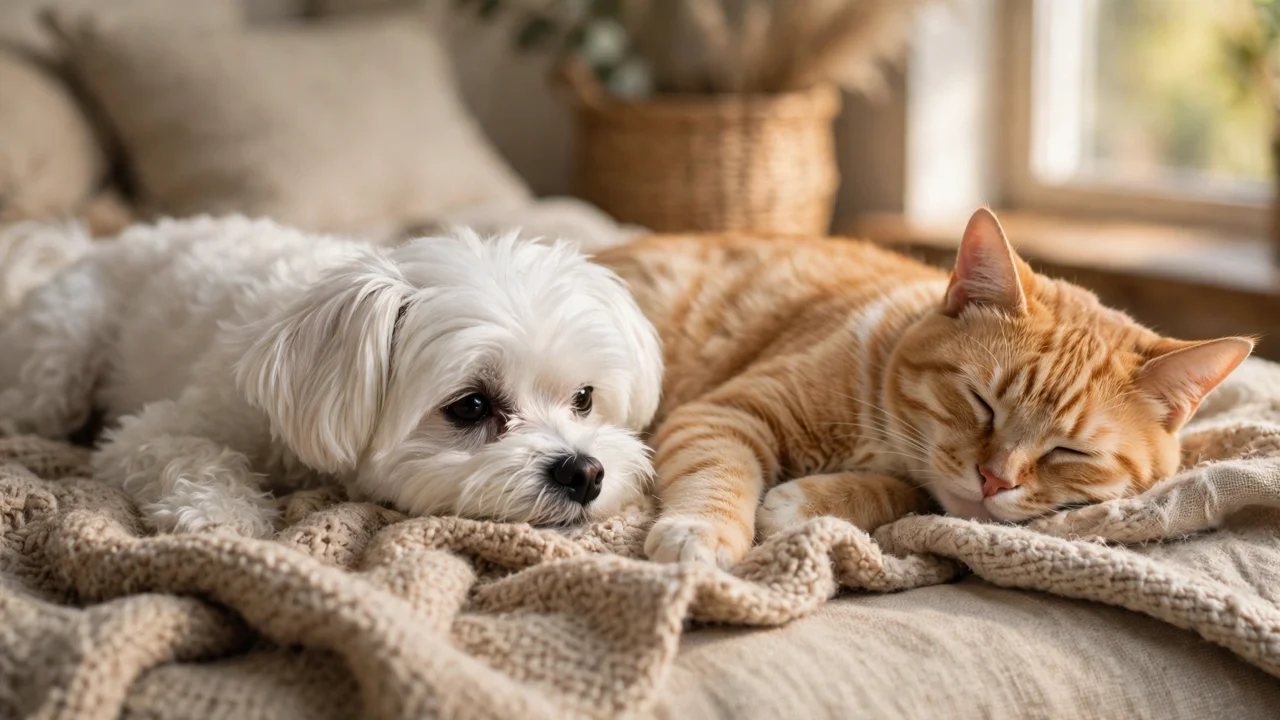
8. Maltese: A Gentle Lap Dog That Shares the Sofa Without a Fuss
A Maltese wants a lap, a blanket, and a quiet house, and a cat wants much the same. That shared wish makes sofa sharing common in homes with both animals. The Maltese is light, it moves slowly indoors, and it rarely barges into a cat’s hiding spot.
Keep grooming in mind. A long coat tangles fast, and a stressed dog that is being brushed may snap at a passing cat. Brush the Maltese away from the cat, and keep early meetings separate from grooming time.
| Daily life | What it means for the cat |
|---|---|
| Walks | Short walks, then long rests indoors. |
| Grooming | Brush away from the cat to keep peace. |
9. Shih Tzu: A Calm House Dog That Was Bred for Company, Not for Hunting
Shih Tzus were bred to sit beside people in palaces, and they still act like that is the job. They are not driven to chase small animals, and they are content to share a room as long as someone is nearby. A cat that walks past a sleeping Shih Tzu will usually get no reaction at all.
- Keep the face hair trimmed back, so the dog can see the cat coming.
- Offer the cat an escape route in every shared room, never a dead end.
- Reward the Shih Tzu for looking at the cat and then looking away.

A new Shih Tzu follows the cat from room to room, nosing at its tail and its food bowl.
Short gated meetings and separate feeding spots teach the dog that the cat is a housemate, not a toy.
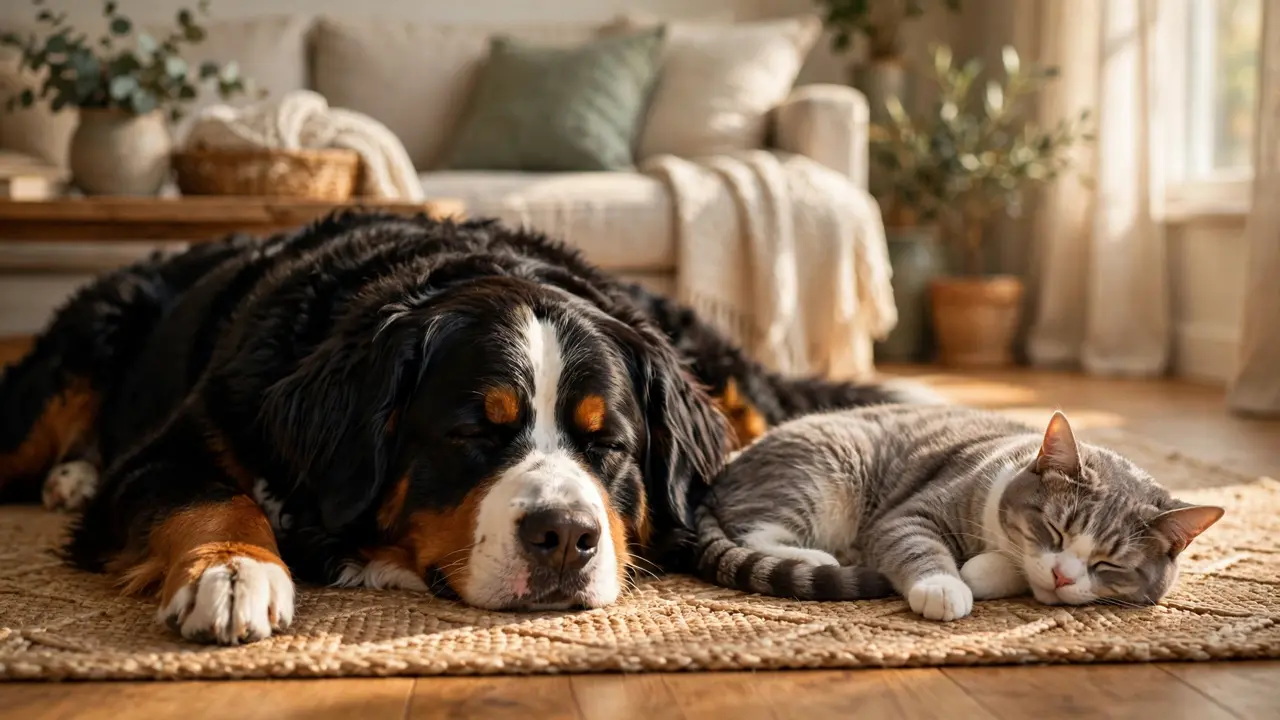
10. Bernese Mountain Dog: A Big, Slow Giant With a Soft Spot for Smaller Animals
Size can worry cat owners, but Bernese Mountain Dogs are slow, steady, and gentle by nature. They were farm dogs that lived alongside other animals, and many of them treat a house cat as part of the flock to watch over, not as prey to chase.
The main job is managing bulk. A happy Bernese can knock a cat over by accident, so teach the dog to lie down for greetings, and give the cat shelves and tall furniture it can reach in one jump.
- ▸Ask for a down stay before the cat enters the room.
- ▸Keep the cat litter box in a room the dog cannot enter.
- ▸Brush the thick coat outdoors, away from the cat’s resting spots.
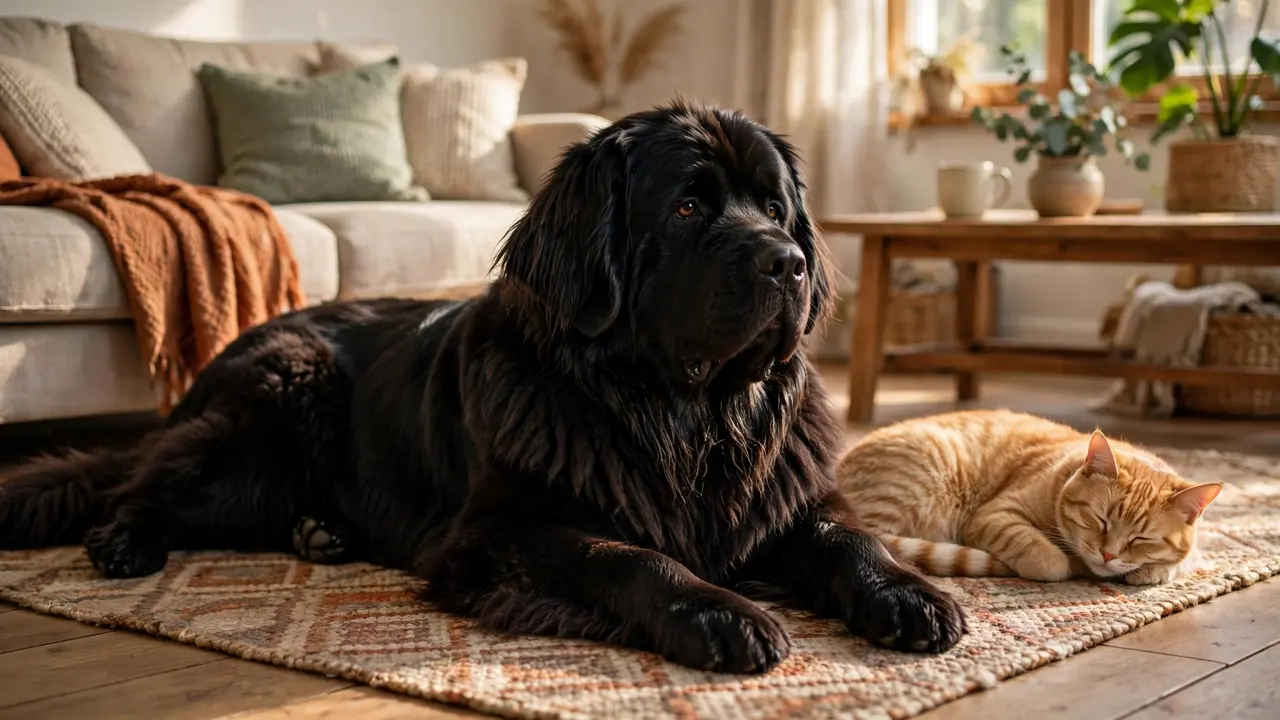
11. Newfoundland: A Gentle Giant That Moves Slowly and Watches Calmly
Newfoundlands are known for patience, and that patience shows around cats. They move slowly, they lie down often, and they seem unbothered by a cat walking across their paws. For a cat that fears big dogs, a slow giant can be less scary than a fast small dog.
- Introduce them outdoors first if the weather allows, with plenty of space between them.
- Keep the Newfoundland on a lead until it can ignore the cat for a full minute.
- Give the cat a room with a door the dog cannot push open.
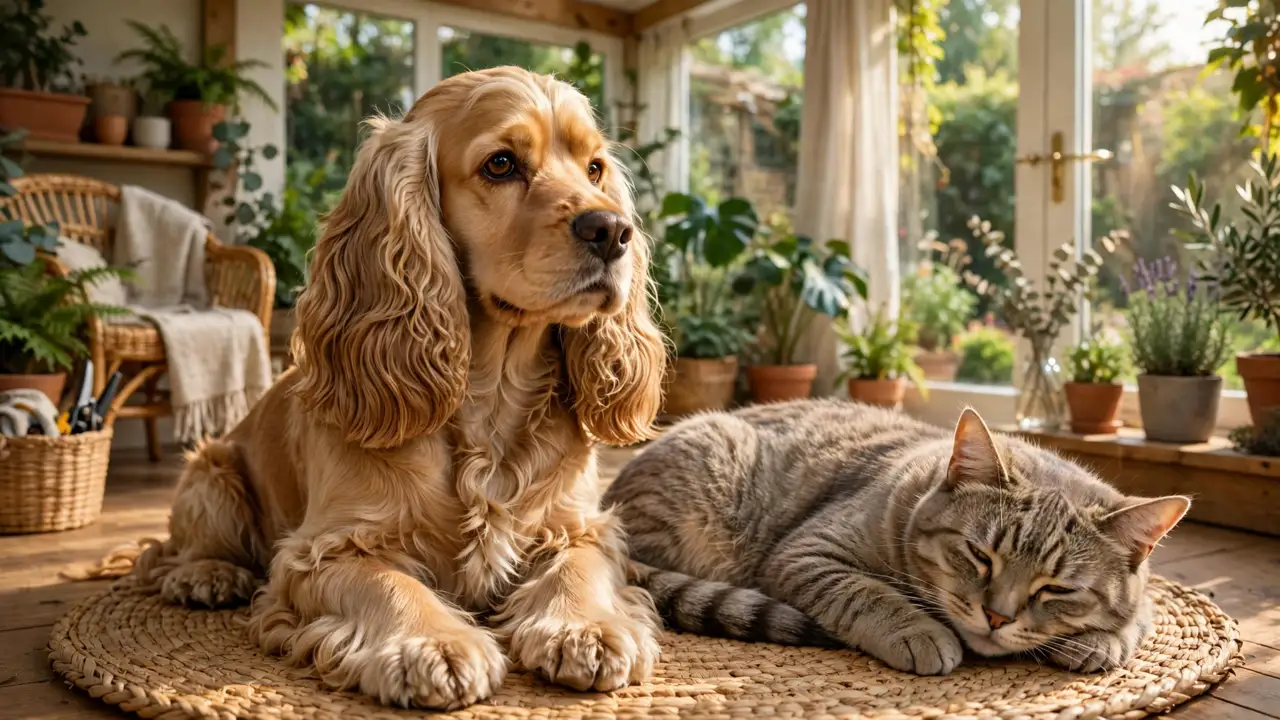
12. Cocker Spaniel: A Sweet-Natured Spaniel That Bonds With the Whole Household
Cocker Spaniels bond hard with their people, and that bond often stretches to the cat as well. They are playful without being rough, and they respond to gentle correction, so a cat’s hiss usually stops a Cocker in its tracks.
- Clean and dry the long ears after wet walks, and check them weekly.
- Use short play sessions with the dog before cat meetings, to take the edge off excitement.
- Keep the cat’s water bowl separate, since Cockers love to drink from any bowl they find.
📌 Good To Know
A Cocker that guards its food bowl needs separate feeding spots first. Food guarding is a training issue, not a reason to blame the cat.
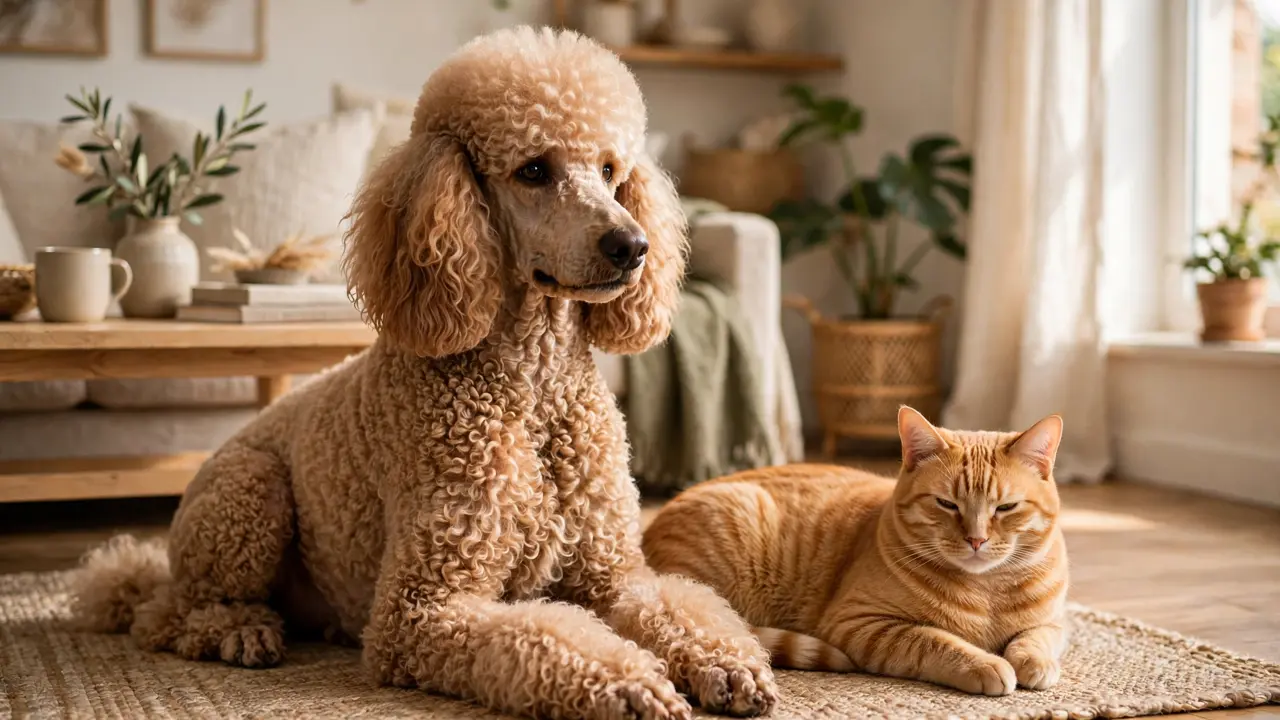
13. Standard Poodle: A Clever Dog That Learns Cat Manners in a Few Sessions
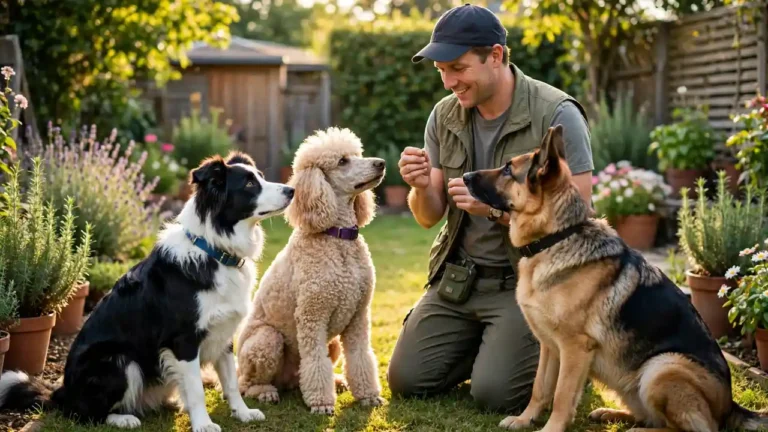
Poodles learn fast, and that speed helps with cats. A Standard Poodle can learn in a few sessions that the cat is off limits for chasing, and it can learn a place cue that sends it to a mat while the cat eats. That trainability makes up for the breed’s energy, which is higher than a Pug or a Shih Tzu.
Daily life needs a mix of a walk, a training game, and rest. A bored Poodle may pester the cat for fun, so a puzzle feeder or a short training session before shared time helps a lot.
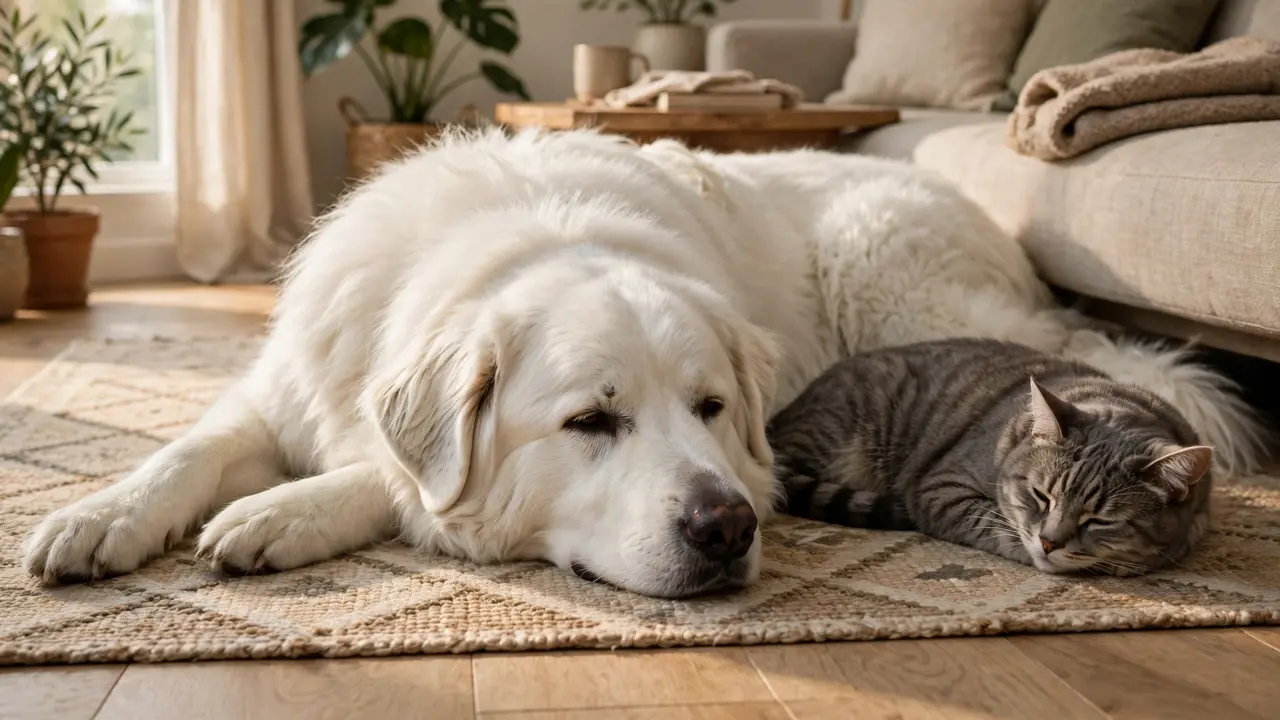
14. Great Pyrenees: A Calm Guardian That Treats the Cat as Part of the Flock
Great Pyrenees dogs were bred to guard livestock through the night, and that guardian instinct often extends to a house cat. They are calm, watchful, and slow to react, and they tend to lie near the animals they protect rather than chase them.
- Give this large dog a cool resting spot, since a thick coat overheats indoors.
- Introduce the cat while the dog is tired after a walk, not when it is full of energy.
- Keep night time separate at first, until both animals sleep calmly in shared rooms.
What to grab first
Start with the breed that fits your home, your energy, and your cat’s temper, not just the cutest photo. Meet adult dogs when you can, ask the rescue or breeder how that dog has lived with cats before, and give introductions days, not minutes. Dog breeds that get along best with cats still need slow meetings, separate feeding spots, and a safe room for the cat, and those small steps are what turn a list into a calm household.
Save this list for the next time you are choosing a dog for a home that already has a cat.