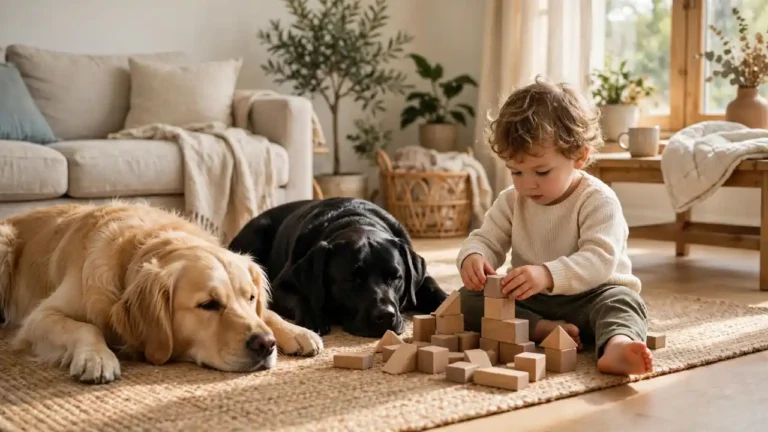
A big dog can be a wonderful friend for children, but size alone does not make a breed a good family dog. You need a dog that stays steady when the house gets loud, tolerates clumsy hugs, and still has an off switch after playtime ends. Pick the wrong large breed and daily life can feel like managing a very strong toddler.
This list focuses on the best large dog breeds for families with kids, chosen for patience, trainability, and a calm home manner rather than looks alone. Each breed still needs training, exercise, and adult supervision around small children, and no breed replaces good manners taught early.
Read the trade offs honestly, especially grooming, exercise, and space, and be realistic about vet costs for a bigger dog too. The right large dog will fit your routine, not just your wish list, and will grow into the steady companion your children remember for years.
1. Labrador Retriever
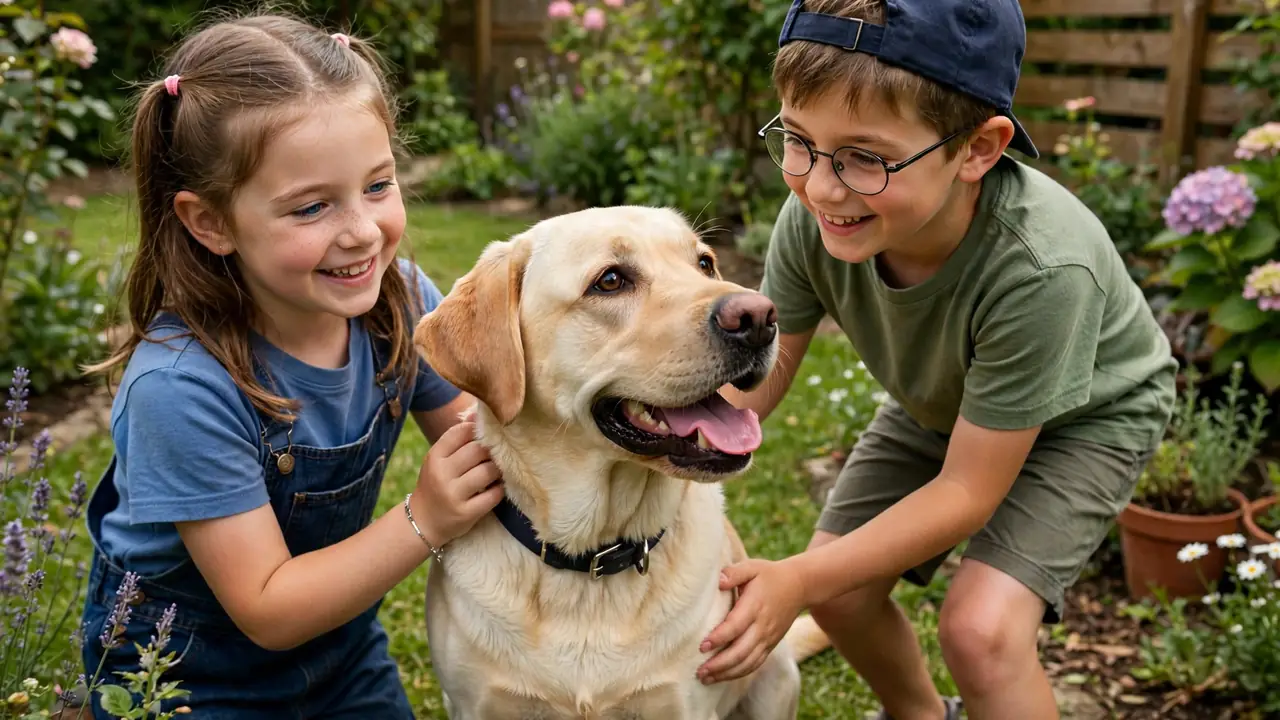
Labs earn their family reputation the hard way, by staying cheerful through noisy games, dropped food, and muddy shoes at the back door. They learn cues fast when training stays short and fun, and they usually greet visitors with a wagging tail instead of suspicion.
- Plan for at least an hour of walking, fetching, or swimming most days.
- Measure food carefully, since Labs gain weight quickly when treats add up.
- Teach children to trade a toy for a treat, so taking items stays calm and safe.
A bored Lab will chew shoes and counter surf, so daily play is not optional. Give that outlet and you get a patient dog who settles beside the sofa once the children settle too.
2. Golden Retriever
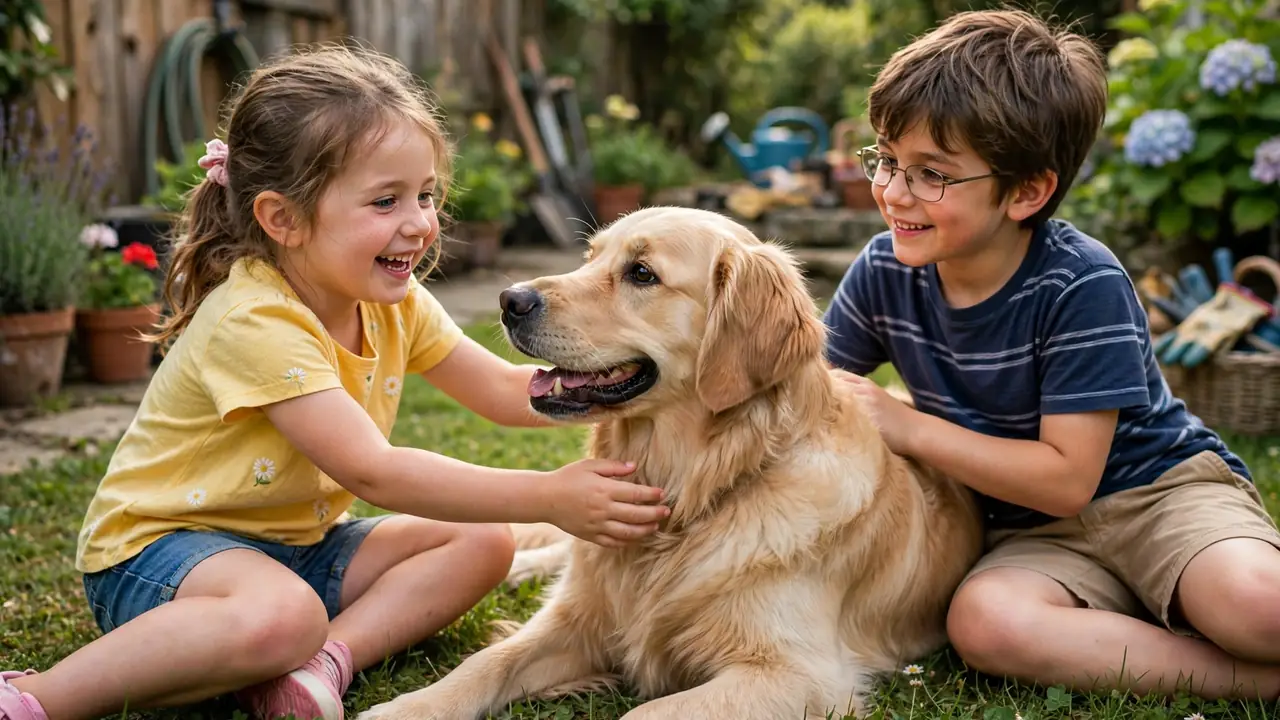
Goldens seem to read the mood of a room. When children are rowdy, they join in with a toy. When the house quiets down, they lie close by with a sigh, happy just to be near people.
Their soft mouth and gentle nature help with young children, but their coat needs regular brushing, and muddy paws are part of the deal after rain. Keep grooming sessions short and paired with praise, so brushing feels like attention rather than a chore.
💡 Quick Tip
Brush twice a week and check behind the ears, where tangles form first. Five calm minutes beats a long grooming battle.
3. Bernese Mountain Dog
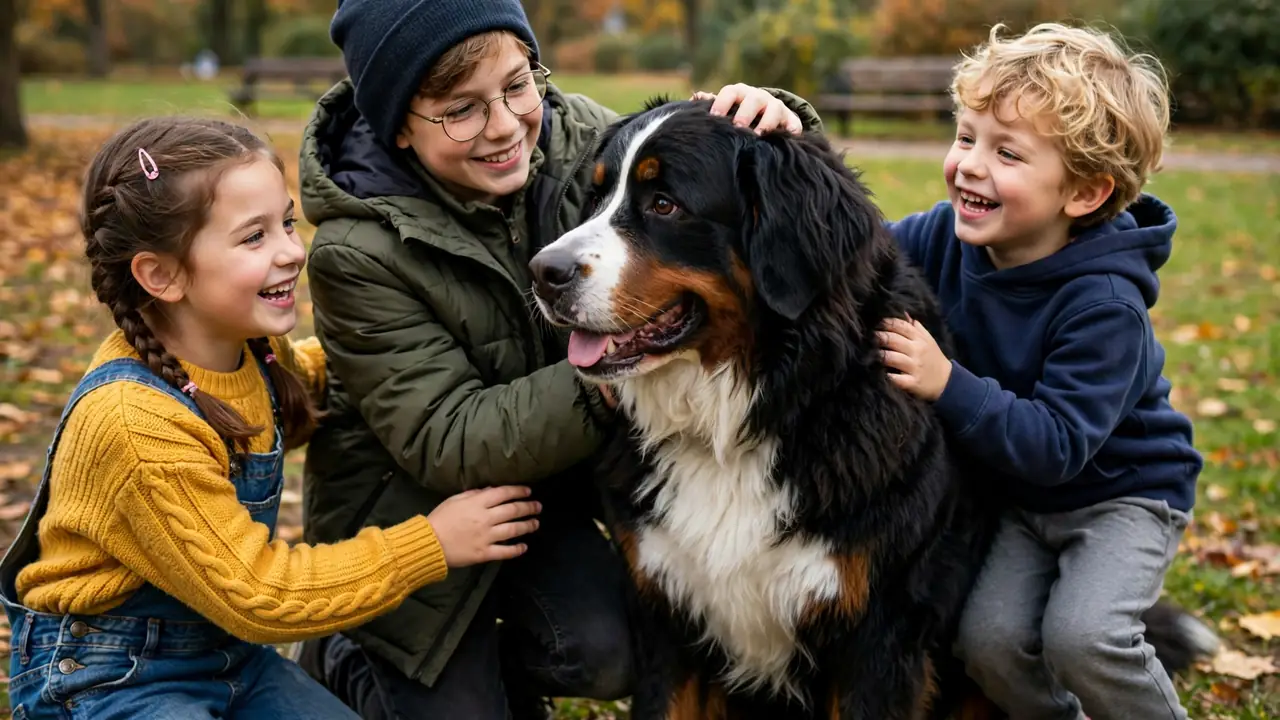
A Bernese brings a calm, watchful presence to a family home. These dogs love being part of the group, whether that means lying under the kitchen table or walking slowly beside a child learning to ride a bike.
- Keep walks steady and moderate, especially in warm weather.
- Brush the thick coat several times a week during shedding season.
- Teach children not to climb on the dog, even though a Bernese will often just sigh and stay put.
They mature slowly and stay puppyish longer than many large breeds, so patience in the first two years pays off in a deeply loyal adult dog.
4. Newfoundland
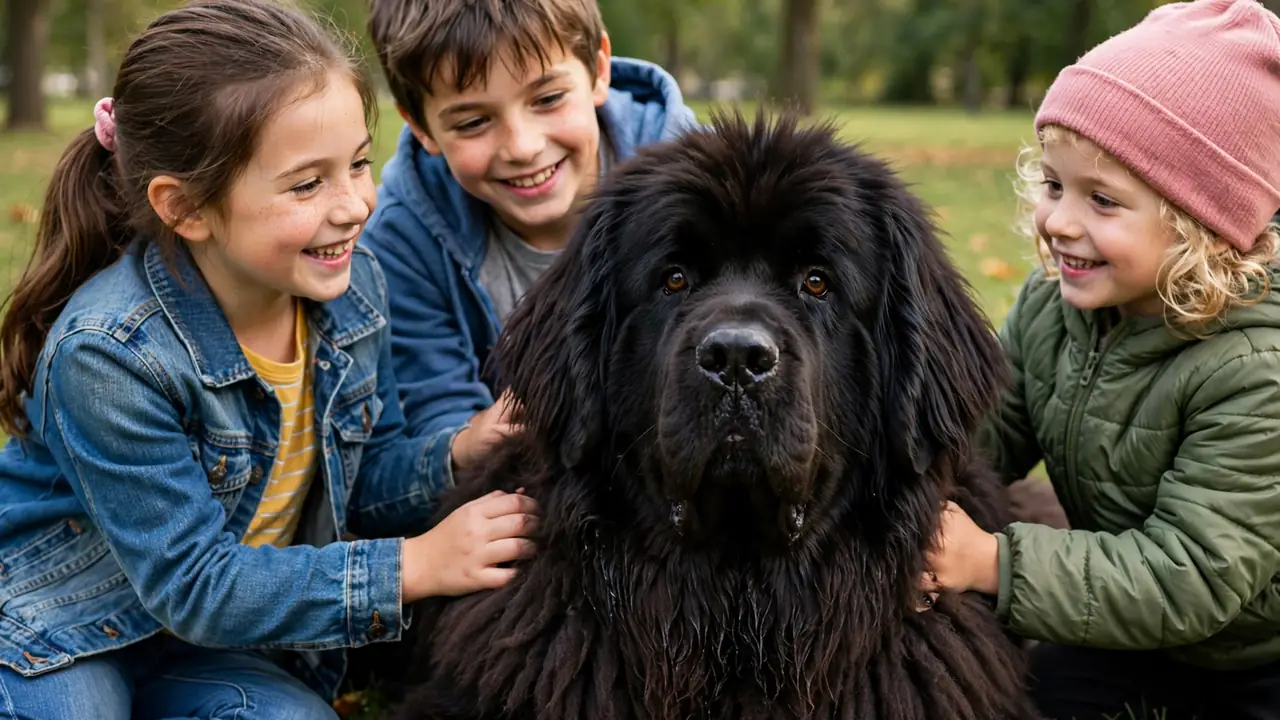
Newfoundlands are famous for patience, and in a busy family home that patience shows. They tend to stand still while children brush them, lean gently into a hug, and watch over younger family members with quiet interest.
Size is the real trade off here. A Newfoundland needs room to stretch out, a car that fits a very large dog, and a tolerance for drool and shedding. Daily brushing and a mop by the water bowl help, but they will not turn a giant breed into a small one.
Before you bring one home, check
5. Boxer
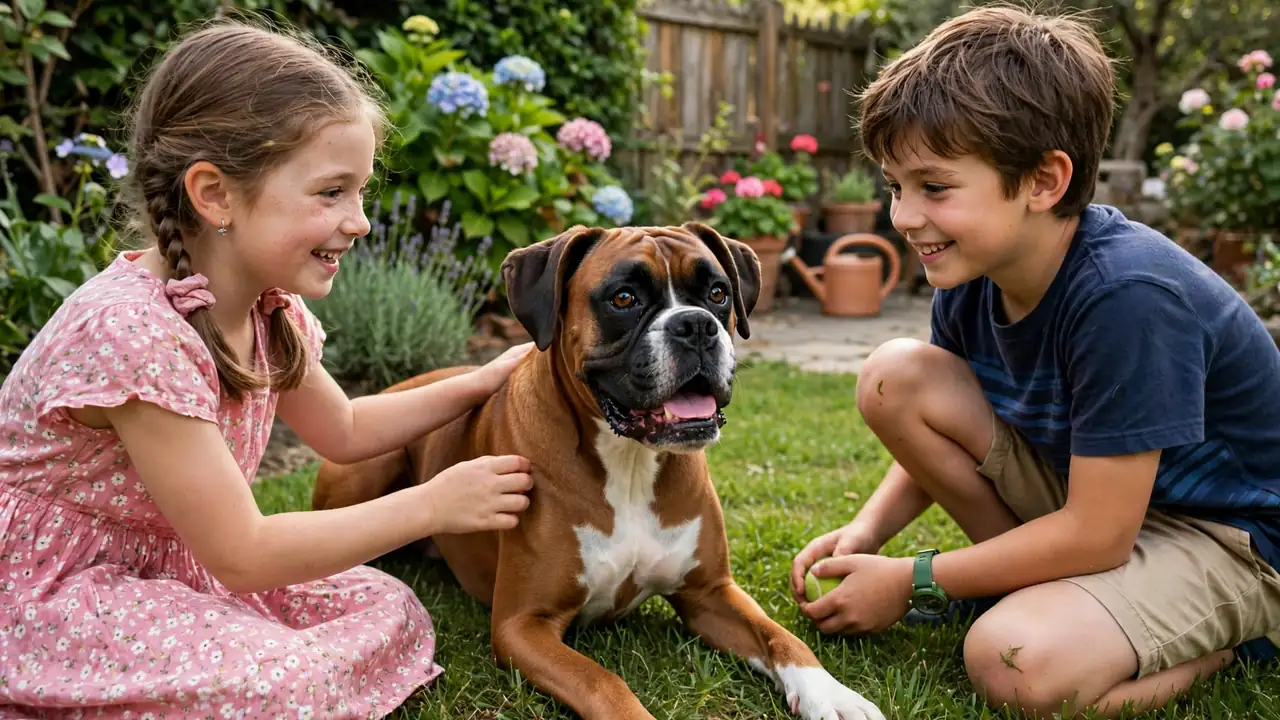
Boxers stay playful far longer than most large dogs, which children usually love. They bounce, they wiggle, and they turn a simple game of fetch into a full family event.
That energy needs a daily outlet, or it spills into jumping and mouthing. Teach a calm sit before greetings from puppyhood, and give a Boxer a job on walks, like carrying a toy or practising recalls in the park.
Train a settled greeting before visitors arrive.
Play fetch daily to burn off bounce.
Rough wrestling games that reward jumping up.
Leaving a young Boxer alone all day with no play.


Paid Links - As an Amazon Associate, I earn from qualifying purchases.
6. Standard Poodle
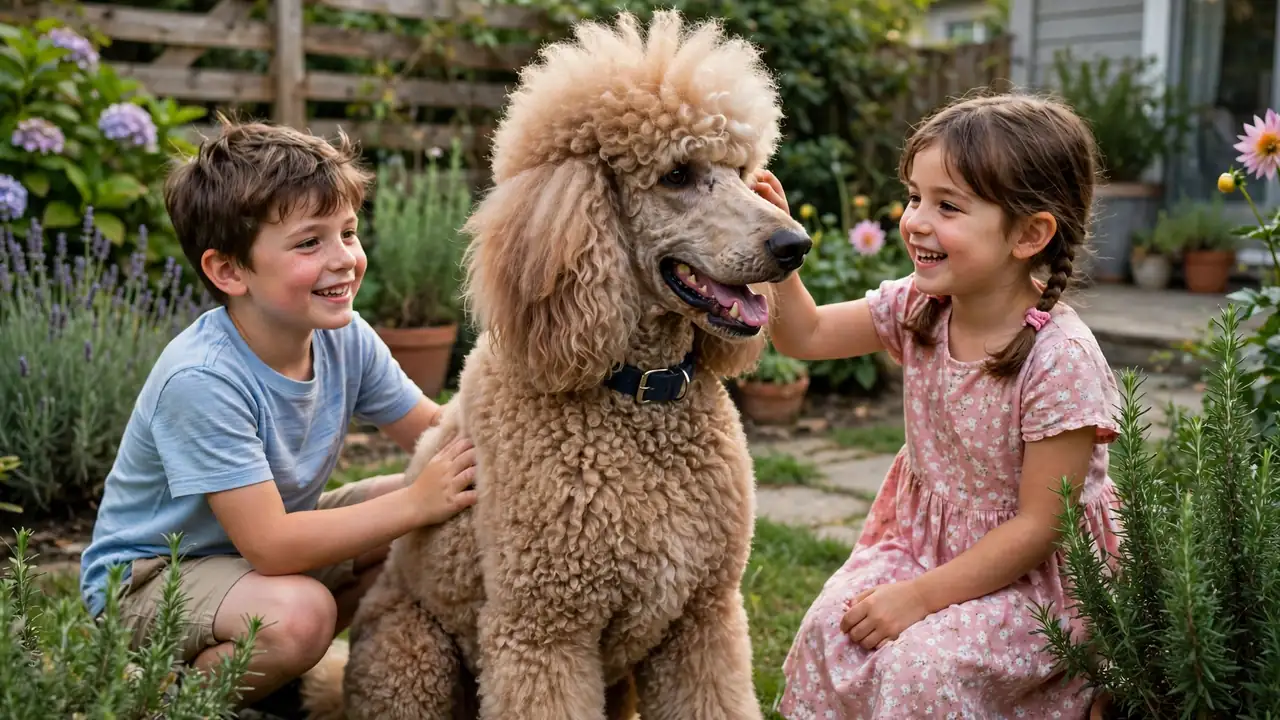
Do not let the fancy haircut fool you. Standard Poodles are athletic, clever dogs that pick up new cues in a few repeats and love learning tricks with children watching.
- Book grooming every six to eight weeks, and brush between visits to prevent mats.
- Give puzzle toys and short training games, since a bored Poodle invents its own fun.
- Let children join training with simple cues, so the dog learns to listen to the whole family.
Families who want a large dog that sheds less often choose a Poodle, but the coat still needs real upkeep. If grooming sounds like a burden, this is not the low effort choice it sometimes looks like.
A Standard Poodle is a working dog in a smart coat, not a decoration. Train the brain and the coat stays manageable.
7. Irish Setter
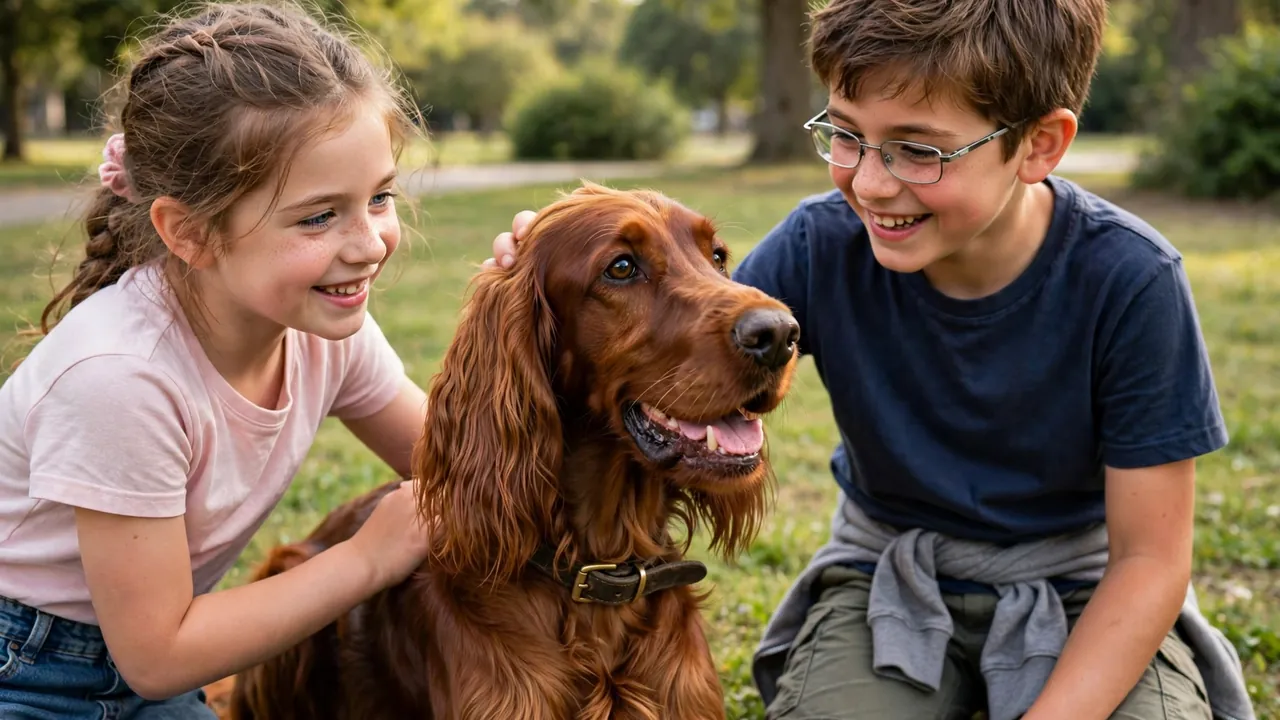
Irish Setters bring sunshine energy to a family. They run, they leap, and they greet every walk like it is the best walk of their life, which makes them a joy for active children.
They also need more exercise than their gentle looks suggest. A short garden stroll will not settle an Irish Setter, so plan for long walks, off lead runs where allowed, and games that use both body and brain.
📌 Good To Know
Irish Setters stay young at heart for years. Recall training in a safe enclosed space first makes off lead freedom much safer later.
8. Rough Collie
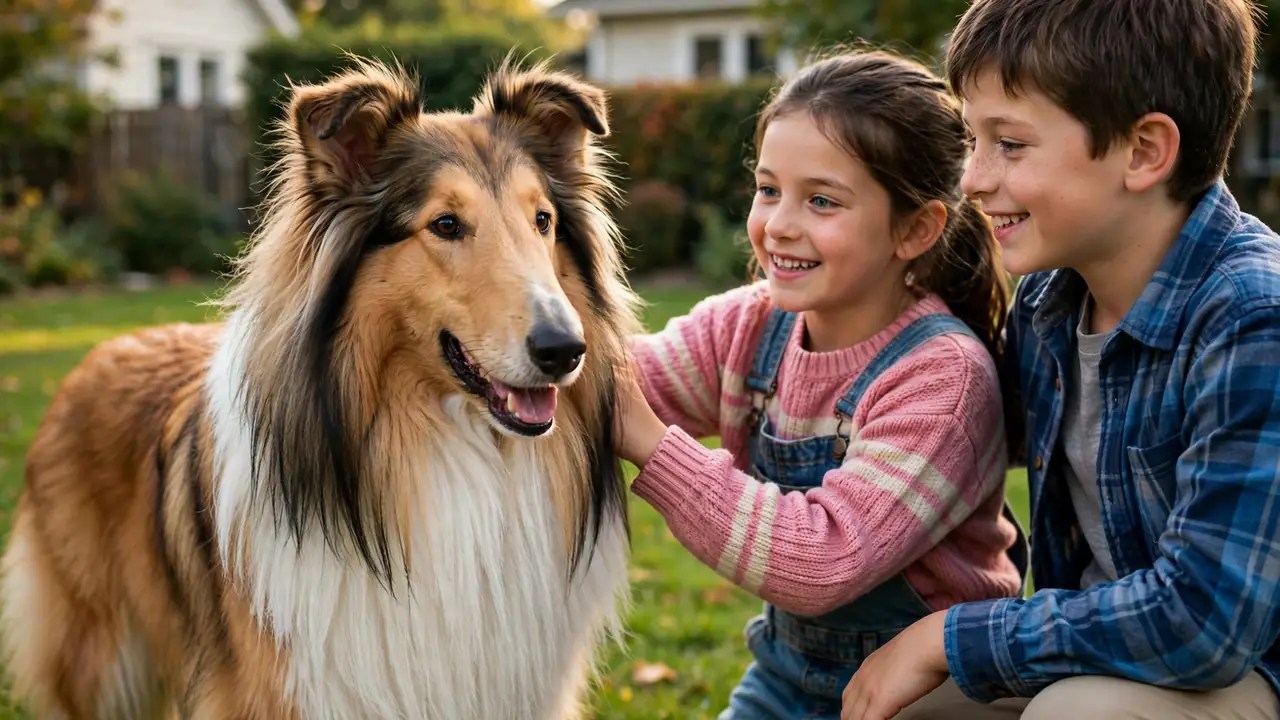
Collies watch over a family the way a kind older sibling might. They notice when a child is upset, they settle near the action, and they learn household routines faster than many owners expect.
- Brush the long coat twice a week, and check for mats behind the ears and legs.
- Give a daily walk plus a thinking game, like hiding treats around the garden.
- Keep herding games gentle, so nipping at heels never becomes a habit with running children.
A Collie that gets both exercise and a job, even a small one like carrying a lead to the door, tends to be calm, polite, and easy to live with.
| What Collies love | What to watch |
|---|---|
| Routine and family time | Herding running children |
| Gentle training and praise | Coat mats without brushing |
9. German Shepherd
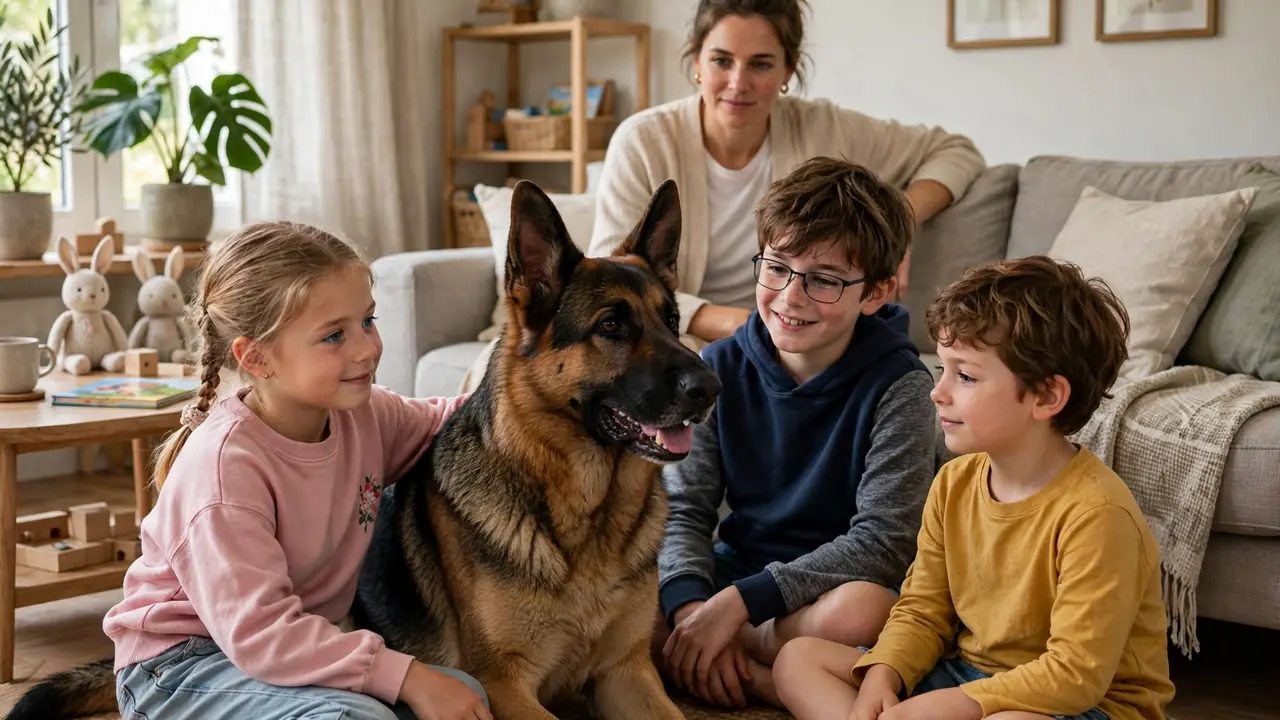
A well trained German Shepherd can be a devoted family guardian, loyal to children and calm in the home. The key word is trained, since this breed needs clear guidance, early socialising, and steady leadership from adults.
Without that structure, a German Shepherd may become overprotective or anxious around visitors. Families who enjoy training, set firm rules, and socialise widely from puppyhood get a confident dog that knows when to relax and when to watch.
A strong, unsure dog that barks at every new person and pulls hard on the lead.
A calm companion that greets visitors politely and settles on cue at home.
10. Saint Bernard
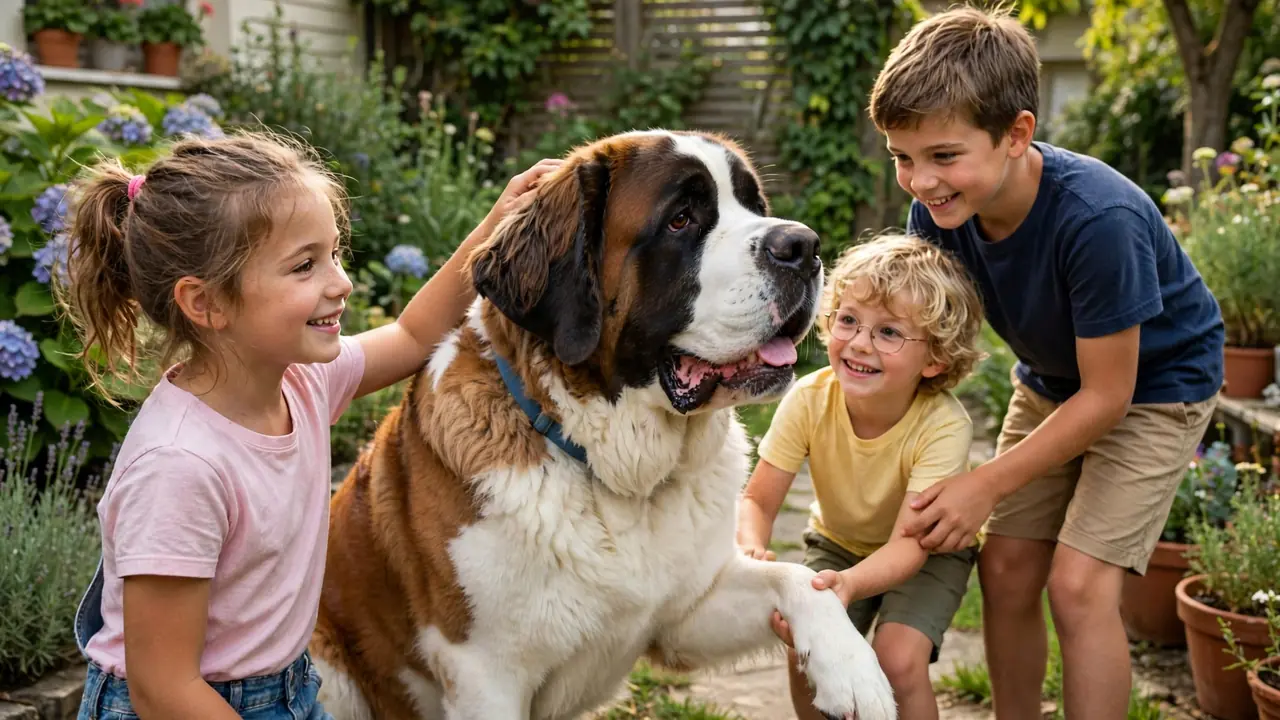
Saint Bernards are gentle giants in the truest sense. They move slowly, they tolerate noise and fuss, and they often choose to lie where the family gathers, close enough to be petted without asking.
- Keep exercise moderate, especially while a puppy is still growing.
- Start lead training early, since a full grown Saint Bernard can outweigh a small adult.
- Plan for drool, shedding, and a large food bill, and budget honestly for both.
Children should still learn to respect a Saint Bernard’s space, and adults should always supervise play. With that care, this breed gives back enormous calm and affection.
How to Choose From This List
Start with your daily life, not the breed that looks sweetest in photos. Count your walking time, your grooming budget, and the space your dog will have indoors. Then shortlist three breeds that fit those facts, and meet dogs of those breeds in person if you can.
Ask the breeder or rescue about energy, health checks, and how the dog behaves with children and visitors. A good match feels calm on both sides, not just exciting on yours. If you are unsure, talk to your vet before you commit, and ask what a large breed will need as it ages.
Training matters more than breed alone. Every dog on this list still needs consistent cues, early socialising, and patience in the first months. The breeds here simply make that learning curve kinder for a family with kids.
Choosing the best large dog breeds for families with kids comes down to honesty about your home and your time. Pick the breed whose daily needs you can meet with a smile, not the one that simply looks good in a photo, and you will set your family dog up for a happy life with you. Keep teaching calm manners, keep play supervised, and give your dog a quiet place to rest when the house gets busy. Done well, a large family dog becomes more than a pet. That dog becomes a steady friend who shares school runs, rainy weekends, and years of family memories.
Save this list on Pinterest to compare breeds with your family, and come back to it when you are ready to meet your new large companion.