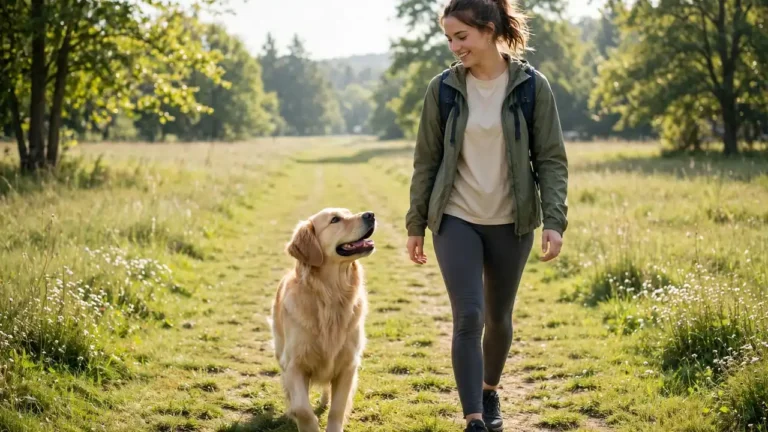
The first night with a new puppy often ends the same way: you close the crate door, the crying starts, and you lie awake wondering whether you should give in. Giving in feels kind in the moment, but it teaches your puppy that crying opens the door, and the crying tends to get louder the next night. The good news is that most puppies can learn to love their crate. You can crate train a puppy without the crying taking over your evenings if you build the habit in small, calm stages instead of shutting the door on night one and hoping for the best.
This guide gives you a 7-day plan that works for most puppies between 8 and 16 weeks old. You will introduce the crate as a safe den, feed meals inside it, close the door for seconds before minutes, and set up nights so your puppy can settle and sleep. Each session takes 5 to 10 minutes, and the whole plan asks for patience rather than long training blocks. If your puppy cries for more than a few nights in a row, or seems panicked rather than fussy, talk to your vet or a certified trainer before pushing on.
Time and Difficulty
Total time: about 7 days of short sessions | Active time: 5 to 10 minutes, 3 to 4 times a day | Difficulty: Beginner
Best for puppies 8 to 16 weeks old. Older dogs can follow the same stages, but they may need a few extra days on each step.
What You Need
- A wire or plastic crate with a divider panel, sized to your puppy
- A washable crate pad or folded blanket that fits flat inside
- Small, soft treats your puppy loves, cut to pea size
- Your puppy’s regular food bowl and daily meals
- A safe chew, such as a rubber toy stuffed with a little mashed banana
- An old T-shirt you have slept in, for scent comfort
- A light blanket to drape over the crate, leaving one side open for air
At a Glance
- Pick a crate that fits your puppy now.
- Set the crate up in a busy corner of your home.
- Feed every meal beside the crate door.
- Scatter treats inside the crate all day long.
- Close the door for 30 seconds while you stay beside it.
- Stretch closed-door time to 5 minutes with a chew.
- Leave the room for 1 minute, then come back calmly.
- Build up to a full nap inside the crate.
- Move the crate beside your bed for the first nights.
- Keep nights boring to crate train a puppy without the crying.
Pick a crate that fits your puppy now
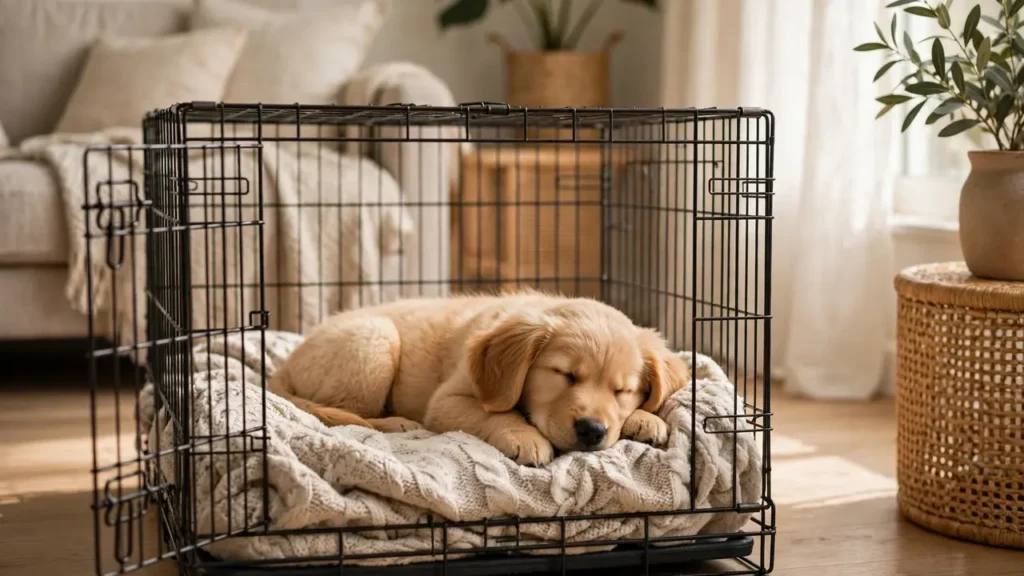
Measure your puppy standing up, then check the crate lets them stand, turn around, and stretch out on their side with room to spare. A crate that is too large invites toilet accidents in one corner and sleep in the other, so slide the divider panel in to leave only enough space for sleeping. Puppies grow fast, so move the divider out every couple of weeks as your puppy grows. A wire crate with a tray underneath makes cleaning quick when accidents happen.
Set the crate up in a busy corner of your home
A crate tucked away in a garage or spare room feels like exile to a puppy that wants to be near people. Put it in a corner of the living room where family life happens, with the door fixed open so it cannot swing shut and startle your puppy. Lay the pad flat inside, add your slept-in T-shirt, and drape the blanket over the top and two sides to make a den shape. Leave the front open and the room calm, then let your puppy wander over and sniff it in their own time.
Feed every meal beside the crate door
Food builds good feelings faster than any pep talk. For the first 2 days, put the bowl right beside the open crate door for every meal. On day 3, move the bowl a few inches inside the doorway, and over the next two meals, slide it to the back of the crate. Your puppy walks in, eats, and walks out freely, and the crate starts to smell like dinner. If your puppy hesitates at any stage, hold the bowl where they last ate happily for one more meal before moving it again.
Scatter treats inside the crate all day long
Between meals, drop 3 to 4 small treats inside the crate every hour or so while your puppy is in the room, without calling them over. Curiosity does the work here: your puppy trots in, finds a treat, and learns that good things appear in the crate for no reason at all. Keep the door open through this stage, and never shut it while your puppy is still deciding whether the crate is safe. Two days of this quiet treasure hunt usually turns a wary puppy into one that naps near the crate on its own.
Close the door for 30 seconds while you stay beside it
Wait for a moment when your puppy walks into the crate on their own, then swing the door shut and sit right beside it. Count to 30 in your head, then open the door before any whining starts and let your puppy out calmly, without a fuss. Repeat this 4 to 5 times across the day, always opening the door while your puppy is still quiet. Opening before the crying starts is the whole trick: your puppy learns that the door opens when they are calm, not when they cry.
Stretch closed-door time to 5 minutes with a chew
Over 2 days, build closed-door time from 30 seconds to 5 minutes, adding about a minute each session. Hand your puppy the stuffed rubber toy as you close the door, and sit nearby reading or scrolling so the crate feels like a normal part of the day. When the 5 minutes are up, open the door while your puppy is still busy with the chew. If whining starts before the time is up, wait for a 5-second pause in the noise, then open the door, and shorten the next session by a minute.
Pro tip
Freeze the stuffed toy overnight so it lasts longer, and save it only for crate time. A treat that appears nowhere else makes the crate the best seat in the house.
Leave the room for 1 minute, then come back calmly
Distance is a separate skill from door time, so train it on its own. With your puppy settled in the crate with a chew, step out of the room for 1 minute, then walk back in without a greeting speech and sit down nearby. Stretch the absence to 5 minutes over the next day, then to 15 minutes the day after. Coming back quietly matters as much as leaving quietly: big hellos teach your puppy that your return is an event, and events are worth crying for.
Build up to a full nap inside the crate
Watch for the heavy eyelids and slow blinks that say a nap is coming, then guide your puppy into the crate with a treat and close the door. Most puppies sleep for 45 to 90 minutes at a stretch, and a crate nap protects that sleep from footsteps, doorbells, and well-meaning visitors. Open the door as soon as your puppy wakes, carry them straight outside for a toilet break, and praise the toilet, not the crate exit. One crate nap a day, built up over a few days, becomes the backbone of your whole routine.
Move the crate beside your bed for the first nights
Night one in a new home is the hardest test. For the first 3 to 4 nights, keep the crate beside your bed where your puppy can hear you breathe and smell you nearby. A last toilet break 20 minutes before bed, a small chew in the crate, and lights low all signal sleep. If whining wakes you, a quiet hand near the crate bars or a soft shushing sound often settles a puppy without opening the door. After a few calm nights, slide the crate a foot farther from the bed each night.
Heads up
Never use the crate as punishment, and never leave a puppy shut in for hours on end. A rough rule is one hour per month of age, plus one, so a 3-month-old puppy tops out near 4 hours, and only once crate time feels safe. Crating all day, every day, causes distress, not good behaviour.


Paid Links - As an Amazon Associate, I earn from qualifying purchases.
Keep nights boring to crate train a puppy without the crying
Night toilet breaks are a fact of life for young puppies, but they should stay dull. When your puppy wakes and whines, carry them outside on a lead, wait up to 5 minutes for a toilet, then carry them straight back to the crate with no play, no lights, and no chat. Puppies under 12 weeks usually need one or two breaks a night, and most drop to one break by 14 to 16 weeks. Boring nights teach your puppy that night is for sleeping, and the crying fades as the bladder grows and the routine holds.
Troubleshooting: If This Happens, Try This
| Puppy cries the second the door closes | Go back to 30-second sessions with the door shut, and open it before crying starts. Build up by 30 seconds at a time. |
| Puppy toilets inside the crate | Check the divider: the sleeping space may be too large. Also add a toilet break right before crate time. |
| Puppy is calm by day but cries all night | Move the crate beside your bed for a few nights, and keep night breaks boring and dark. If panic continues, ask your vet. |
| Puppy chews the crate bars | Offer a safe chew inside, and check your puppy has had a walk and play before crate time. A tired puppy settles faster. |
Frequently Asked Questions
How long does crate training a puppy take? Most puppies settle into the routine within 7 to 14 days of short, daily sessions. Some puppies take a little longer, and that is normal, not a sign you have failed.
Should I let my puppy cry it out in the crate? No. Short fussing that fades in a minute or two is normal, but long, panicked crying should not be ignored. Go back a stage, shorten the session, and build up more slowly.
Can I crate my puppy while I am at work? Young puppies cannot hold their bladder all day, so full work days need a midday visit, a dog walker, or a pen with a toilet area. The crate suits naps and short absences, not whole days alone.
What if my puppy hates the crate after a week? Check the basics first: size, location, and whether crate time has ever felt like punishment. Then restart from the treat-scattering stage, and ask your vet or a certified trainer if the fear stays strong.
Quick Reference Card
You need: crate with divider, crate pad, small treats, food bowl, stuffed chew, slept-in T-shirt, light blanket.
- Size the crate to your puppy, divider in.
- Place it in a busy room, door open.
- Feed meals beside, then inside, the crate.
- Scatter treats in the crate through the day.
- Close the door for 30 seconds, staying beside it.
- Build to 5 minutes with a chew.
- Leave the room for 1 minute, return calmly.
- Build up to a full crate nap.
- Keep the crate beside your bed for the first nights.
- Keep night breaks boring and dark.
By the end of this week your puppy should walk into the crate on their own, settle with a chew, and sleep through the night with at most one quiet toilet break. That is a real win, for both of you. The next skill worth building is a calm morning routine, so your puppy learns that crate doors open to toilet breaks and breakfast, not chaos. If this guide helped your first nights feel calmer, save it to Pinterest so you can find the steps again when the next stage starts. You can crate train a puppy without the crying, one small, calm step at a time.