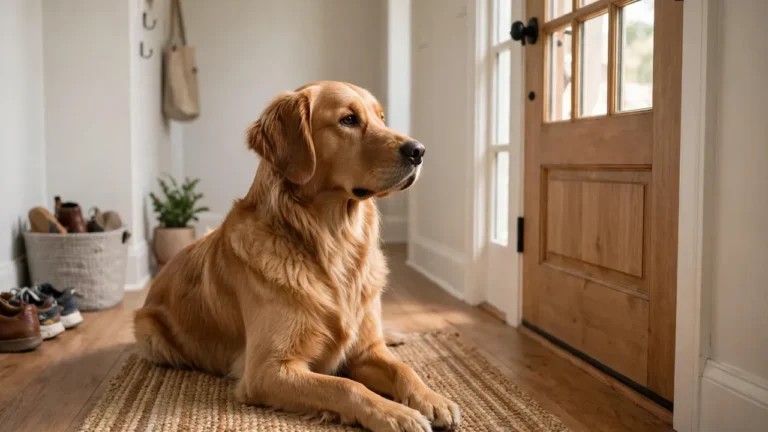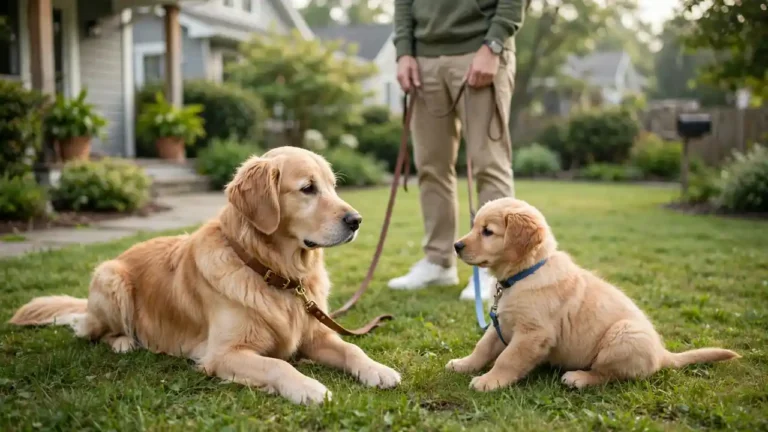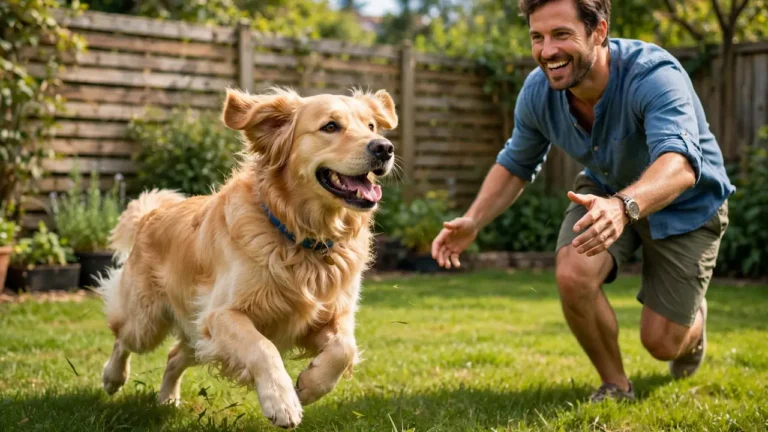
Your rescue dog walks through your front door for the first time. They do not know the sounds, the smells, or the people in this house. Everything feels new at once, and that is normal.
This guide shows you how to train a rescue dog in the first 30 days, one calm week at a time. You will set up a safe corner, build a routine your dog can trust, and teach the first skills every dog needs: name, house training, sit, and recall. No past training is needed, and no special tools are needed beyond a leash, a harness, and a pocket full of small treats.
The plan asks for about 15 to 20 minutes of training, twice a day, plus short walks and regular meals. Rescue dogs learn best with patience and treats, not pressure, so every step moves at your dog’s pace. If your dog shuts down or hides, that is a signal to slow down, not to push harder.
By day 30, your dog will know the house rules, trust your voice, and feel at home. Gather your supplies and let us begin.
What You Need
Gear
- Flat collar or harness that fits well
- 6-foot leash for walks and outings
- Long training leash, 15 to 30 feet (for recall practice)
- Crate or baby gate for a quiet corner
- Comfy bed and a soft blanket
Supplies
- Small, soft training treats
- Treat pouch or pocket for walks
- Food and water bowls
- Poop bags
- Enzyme cleaner for accidents
- Two or three chew toys
At a Glance
- Set up a calm corner before your dog comes home
- Give your dog three quiet days to decompress
- Feed, walk, and rest on the same schedule every day
- Teach your dog their name in short treat sessions
- Start house training with a fixed outdoor routine
- Train sit, down, and recall in five-minute sessions
- Introduce new people, sounds, and places one at a time
- Review the first 30 days and set your rescue dog’s next goals
Set up a calm corner before your dog comes home
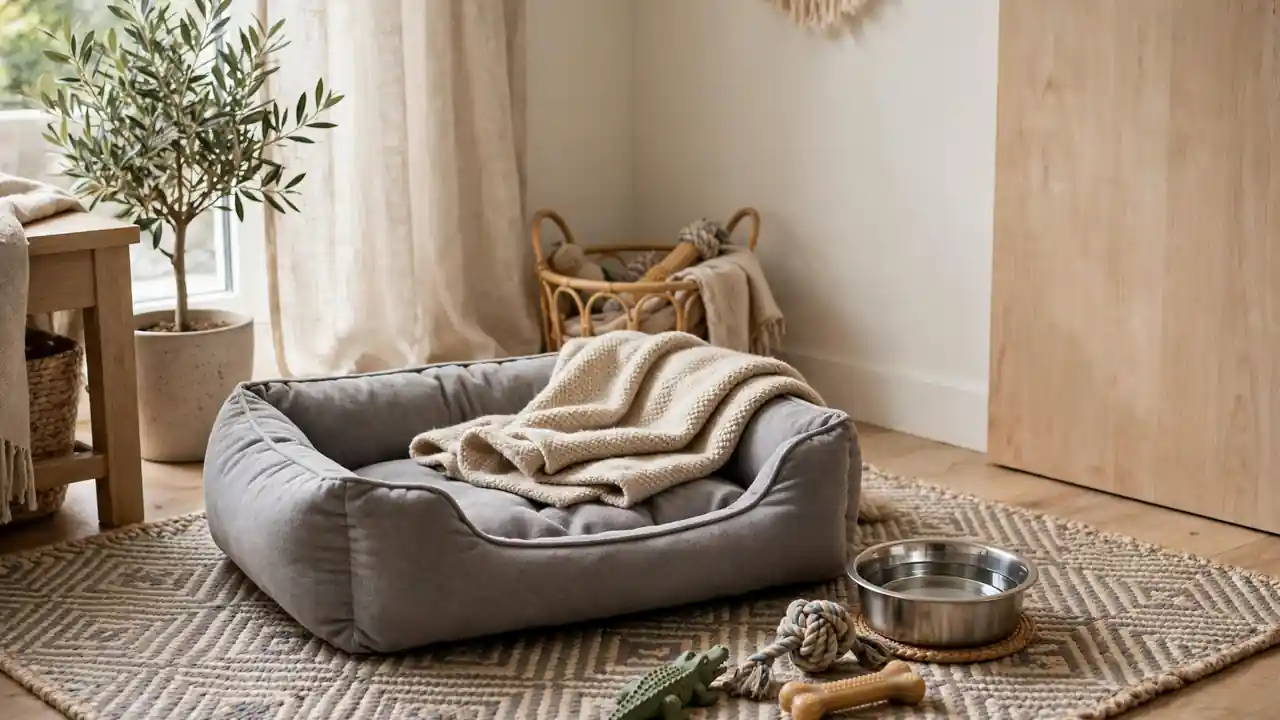
Pick the quietest corner of your home, away from the front door and the kitchen traffic. Put a bed, a water bowl, and one or two chew toys there. This corner becomes your dog’s safe place, the spot they can return to when the house feels loud.
Keep the door to that room open so your dog can choose to walk in and out. A dog that has a safe corner settles faster than a dog with nowhere to hide.
Give your dog three quiet days to decompress
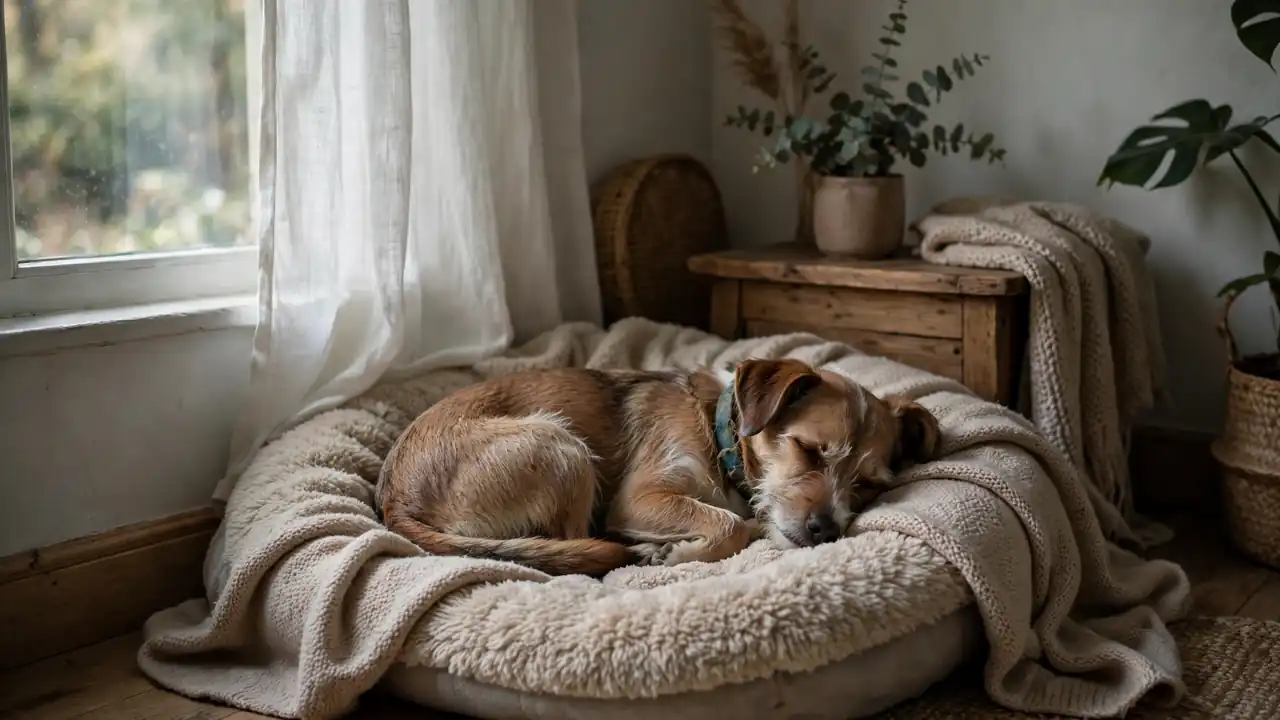
For the first three days, keep life small. Skip visitors, skip the dog park, and skip long car rides. Let your dog sniff the yard, sleep a lot, and watch the house from their corner.
Some rescue dogs eat little and sleep most of the day at first. That is normal after a shelter stay and a big move. Your job in these three days is to be calm, feed on time, and let your dog come to you.
Feed, walk, and rest on the same schedule every day
Dogs relax when they can predict what comes next. Feed breakfast and dinner at the same times each day, and take your dog out at the same times too.
A steady plan for week one looks like this: out at 7 in the morning, breakfast at 7:30, a short walk at noon, dinner at 6, and a last out at 10 at night. Keep the times within 30 minutes day to day. A dog that knows when food and walks come stops watching the door all day.

Teach your dog their name in short treat sessions
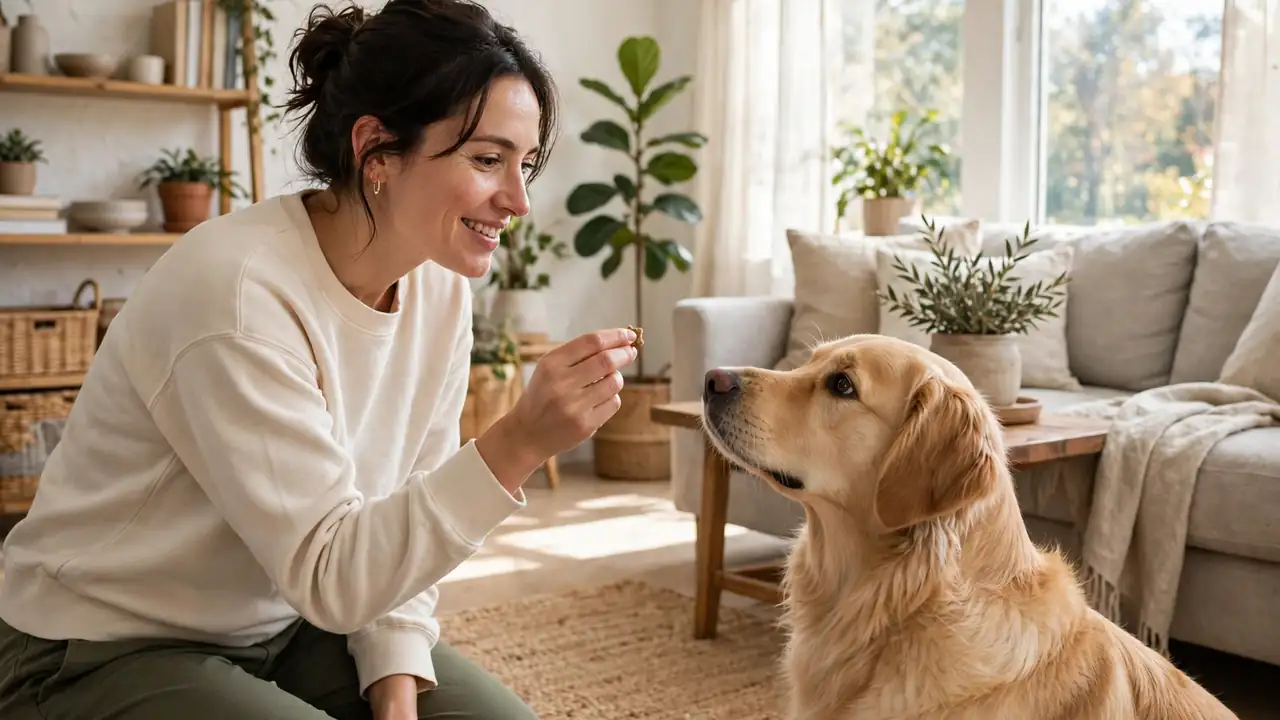
Say your dog’s name once, in a warm voice. The second your dog looks at you, give a small treat and say “Yes!” in a happy tone. Repeat this five times, then stop and play.
Run two of these short sessions a day, morning and evening. After a few days, most dogs turn their head at their name. That look is the base for every cue you teach later, so keep the sessions short and fun.
Start house training with a fixed outdoor routine
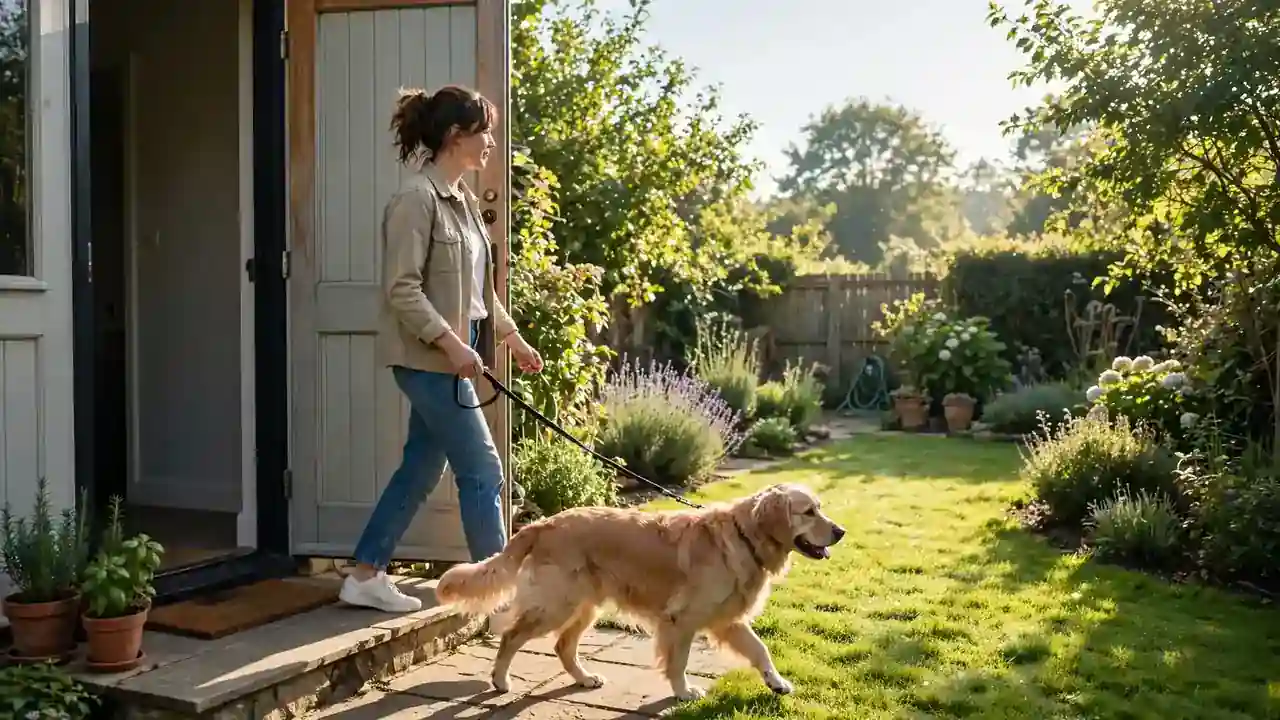
Take your dog out first thing in the morning, after every meal, after play, and right before bed. Walk to the same patch of grass each time and stand still.
Wait up to five minutes for your dog to go, then praise and treat the moment they finish. If your dog has an accident inside, clean it with an enzyme cleaner and say nothing. Scolding after the fact teaches your dog to hide from you, not to hold it in.
Train sit, down, and recall in five-minute sessions
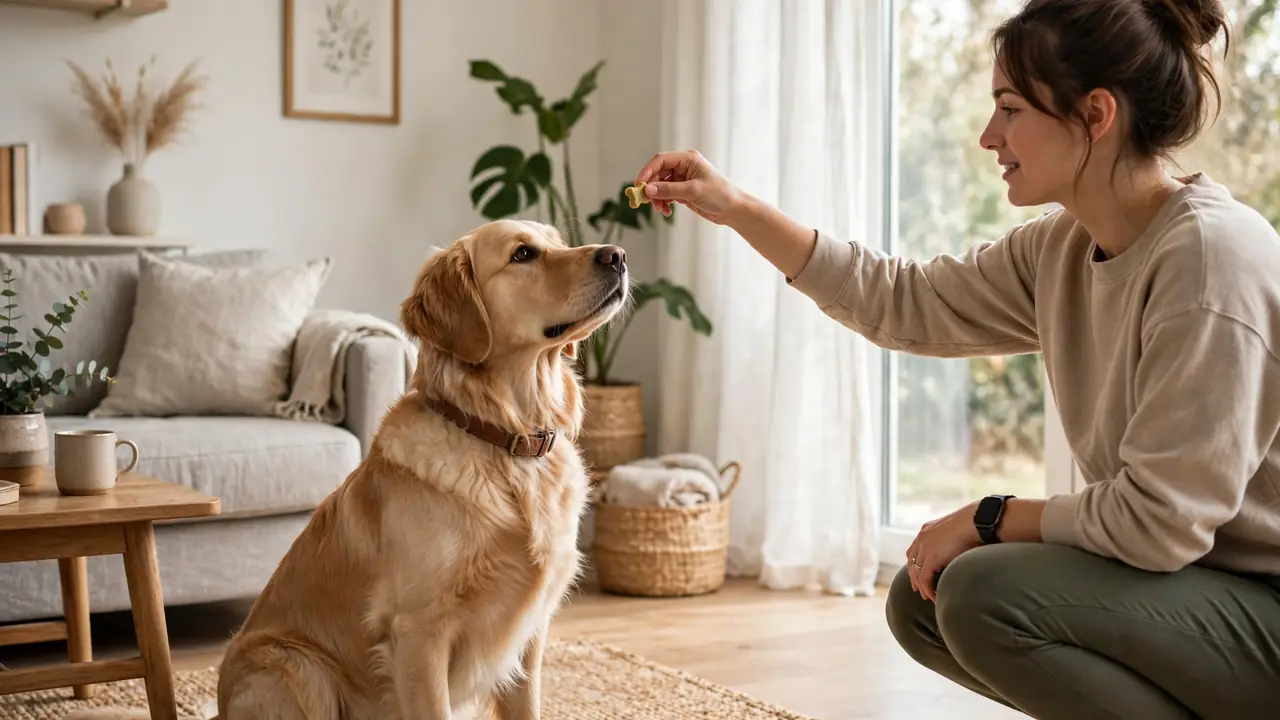
Hold a treat near your dog’s nose and lift it slowly over their head. Most dogs sit as their nose follows the treat up. Mark the sit with “Yes!” and give the treat.
For down, lure the treat from their nose to the floor between their paws. For recall, step back two feet, say “Come,” and reward the moment they reach you.
Work on one cue per session, for five minutes, twice a day. Short sessions beat long ones, because a tired dog stops learning.
Introduce new people, sounds, and places one at a time
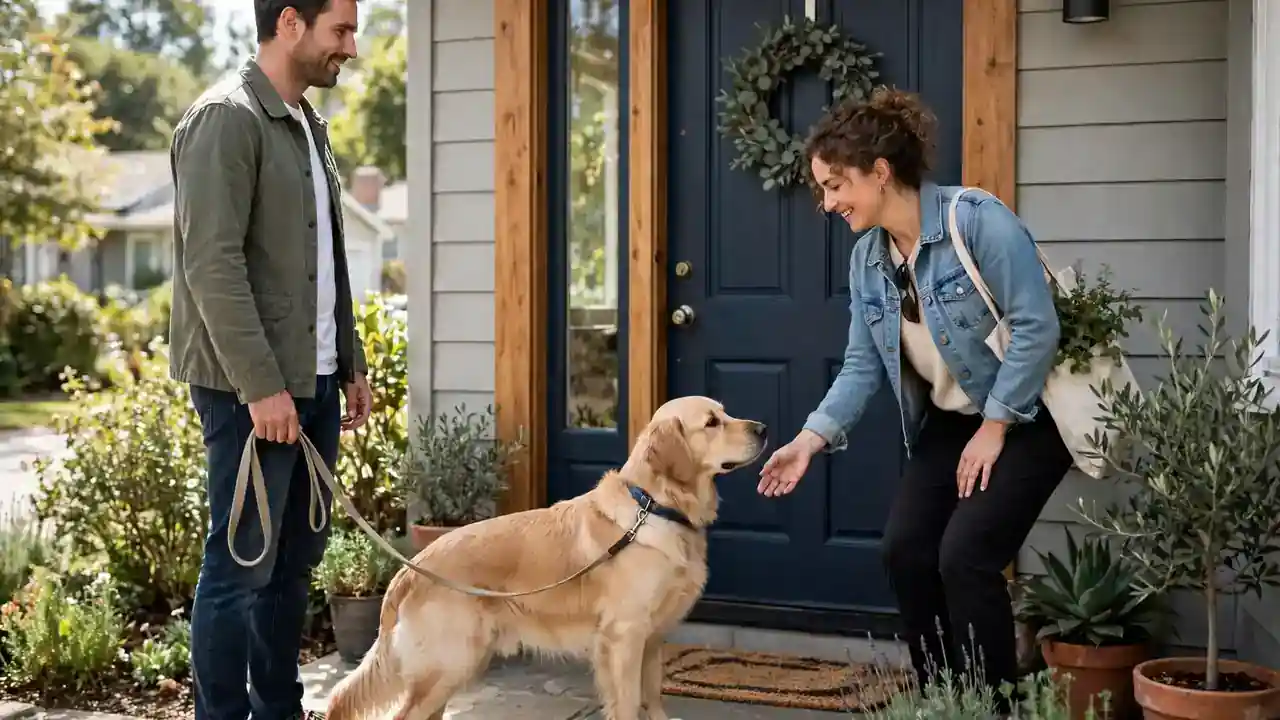
Start with one calm visitor at a time, in your own home, with your dog on a leash. Ask the visitor to ignore your dog and drop a treat on the floor nearby. Let your dog choose to walk closer.
New sounds work the same way: play a doorbell recording at low volume, treat, and raise the volume a little each day. One new thing per day is plenty. Stacking three new things in one afternoon can undo a week of calm.
Review the first 30 days and set your rescue dog’s next goals
On day 30, look back at your notes. Which cues does your dog know? Where do accidents still happen?


Paid Links - As an Amazon Associate, I earn from qualifying purchases.
What still scares them? Write down three wins and one thing to work on next.
Many owners see the biggest change in month two, once the routine feels normal. Keep the same schedule, add one new skill, and book a vet check if you have not yet had one.
Troubleshooting: Fix Common Rescue Dog Problems
| If This Happens | Try This |
|---|---|
| Dog hides all day | Give them space. Keep food and water near their corner, sit nearby and read, and let them approach you. |
| Dog has accidents indoors | Go back to the fixed outdoor routine and take them out more often. Clean every spot with an enzyme cleaner. |
| Dog barks at every sound | Stay calm and reward quiet moments. Do not shout, which sounds like barking to a dog. |
| Dog pulls on the leash | Stop walking when the leash goes tight. Wait for slack, then move on and reward walking beside you. |
| Dog will not eat | Offer food in their corner and try a little warm water on the kibble. Call your vet if they skip more than two meals. |
Frequently Asked Questions
How long does it take a rescue dog to settle in?
Many trainers talk about a 3-3-3 guide: 3 days to decompress, 3 weeks to learn the routine, and 3 months to feel at home. Every dog is different, so treat it as a rough guide, not a deadline.
Should I train my rescue dog right away?
Start with name and house training in week one, and keep sessions short. Save formal cues like stay and heel for week two or three, once your dog trusts you.
Can I leave my rescue dog alone in the first week?
Keep absences short, 30 minutes or less, and leave a chew toy. Build up slowly over the month, and use a camera to check how they cope.
What if my rescue dog is scared of men or children?
Keep your distance, let your dog watch from far away, and pair each sighting with a treat. Never force a meeting, and ask a trainer for help if fear grows.
My rescue dog does not listen to me. What now?
Check the basics first: short sessions, high-value treats, and a quiet room. If your dog still will not respond after two weeks, a certified trainer can spot what is getting in the way.
Quick Reference Card
What You Need: Collar or harness; 6-foot leash; long training leash; bed and blanket; small soft treats; treat pouch; food and water bowls; poop bags; enzyme cleaner; chew toys.
Steps: 1) Set up a calm corner. 2) Give three quiet days to decompress. 3) Feed, walk, and rest on a set schedule. 4) Teach their name with treats. 5) Start house training with a fixed outdoor routine. 6) Train sit, down, and recall in five-minute sessions. 7) Introduce new people, sounds, and places one at a time. 8) Review day 30 and set next goals.
You now know how to train a rescue dog in the first 30 days, one calm week at a time. Your dog knows your voice, your routine, and your home, and that trust grows stronger every week.
Keep the sessions short and kind, and your dog will keep surprising you. Pin this guide so you can check the steps again on day 7, day 14, and day 30.