Reviewed By: Medsdog Team
Last Updated: September 2026
Clonazepam for dogs sold under brand names including Klonopin®, Antelepsin®, Clonagin®, Clonapam®, Rivotril®, and Paxam® is a benzodiazepine anti-seizure medication. In dogs, Klonopin for dogs is prescribed by veterinarians as a supplemental (add-on) treatment for seizure disorders, and separately, on its own, as a short-term anxiety or sedative medication.
Disclaimer:All information in this guide is provided for educational purposes only and should never replace professional veterinary advice.
How Much Clonazepam Can a Dog Take?
Clonazepam dosage for dogs depends on the condition being treated. For anxiety caused by thunderstorms or fireworks, a commonly used dose is 0.05 mg/lb (0.1mg/kg). For its anticonvulsant effects, clonazepam may be used as an add-on treatment for seizures at 0.5 mg/kg by mouth twice daily (BID) for 3–6 weeks. For maintenance treatment of seizures when used as monotherapy, a dose of 0.5 mg/kg by mouth three times daily (TID) may be used.
Knowing the safe clonazepam dosage for dogs is essential because giving too much can lead to an overdose and toxicity, while giving too little may not provide the desired benefit. This guide provides a complete overview of clonazepam use in dogs, including an interactive clonazepam dosage calculator and a dosing chart based on your dog’s weight.


Paid Links - As an Amazon Associate, I earn from qualifying purchases.
Estimated Clonazepam Dose
Clonazepam For Dogs Overview
- The standard clonazepam dosage for dogs is 0.1-0.5 mg/kg, given by mouth 2–3 times daily, though the exact number depends on whether it's treating seizures or anxiety.
- Klonopin for dogs is always an off-label (extra-label) use it isn't FDA-approved for veterinary patients, but it's widely prescribed by vets anyway.
- Clonazepam is almost always an add-on seizure drug, paired with a primary anticonvulsant it's rarely used alone long-term.
- Never use quick-dissolve or wafer tablets; many contain xylitol, which is lethal to dogs.
- Common side effects are drowsiness and poor coordination (ataxia); rare but serious effects include respiratory depression and paradoxical excitement.
What is Clonazepam for Dogs?
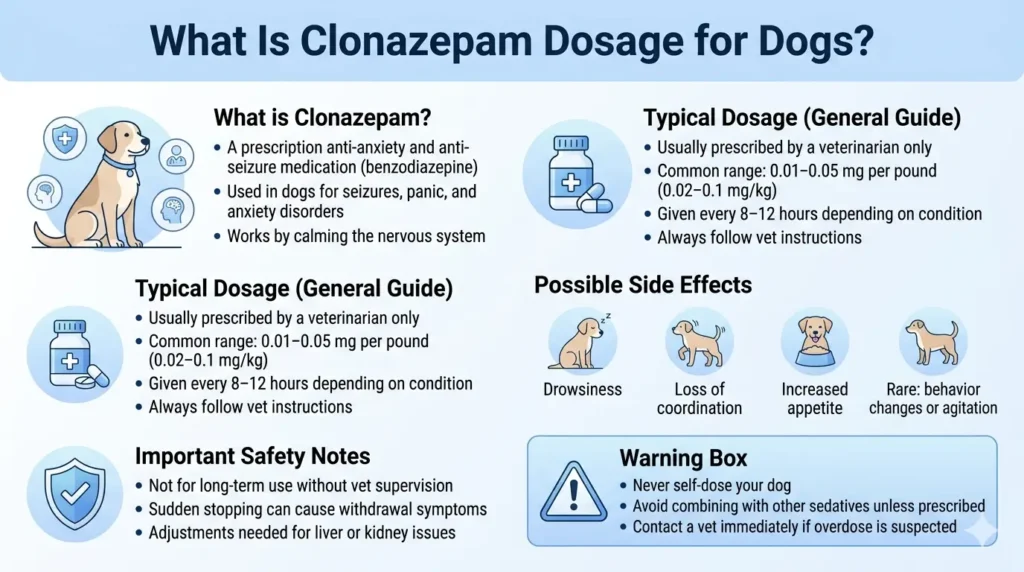
Clonazepam (brand names include Klonopin®, Antelepsin®, Clonagin®, Clonapam®, Clonex®, Diocam®, Epitril®, Iktorivil®, Kenoket®, Kriadex®, Neuryl®, Paxam®, Rivatril®, and Solfidin®) is an antiseizure benzodiazepine drug used as an adjunctive therapy for treating seizure disorders in dogs and cats. It can also be used to treat anxiety and as a muscle relaxant.
Clonazepam drug for dogs is often used in veterinary practice for treatment of seizures and behavioral disorders on an off-label (extra-label) basis, which means this medication has not been approved by the FDA or Health Canada for these indications in animals. As such, it should only be used under the guidance of a veterinarian, as it can be used at different dosages from those recommended on the label.
Can Dogs Take Clonazepam?
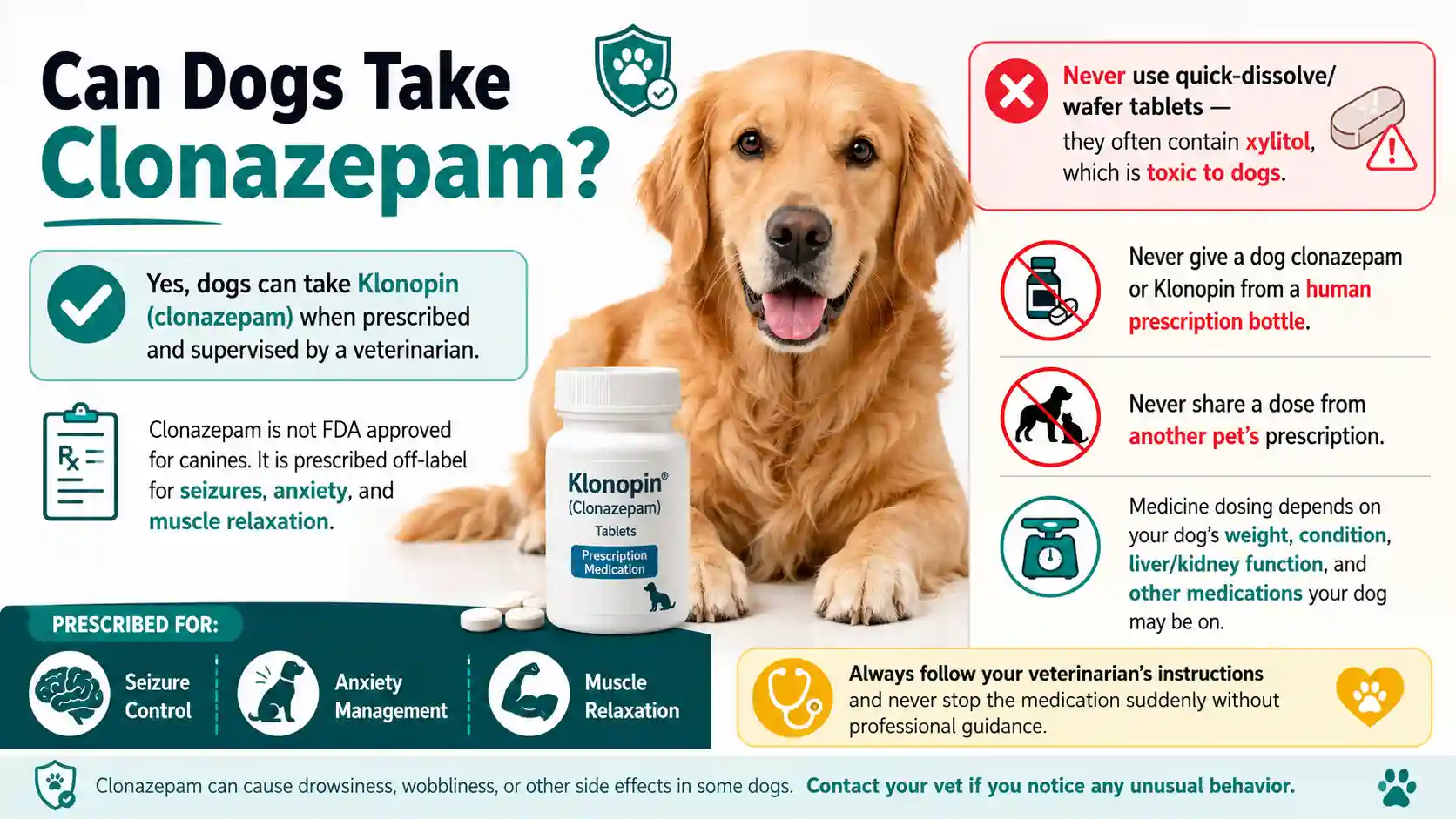
Can I give my dog clonazepam? Yes, dogs can take Klonopin (clonazepam) when prescribed and supervised by a veterinarian.Remember clonazepam is not FDA approved for canines, it is prescribed off-label for seizures, anxiety, and muscle relaxation. Never use quick-dissolve/wafer tablets — they often contain xylitol, which is toxic to dogs.
Never give a dog clonazepam or Klonopin from a human formulation prescription bottle, and never share a dose from another pet's prescription. Medicine dosing depends on pups' weight, condition, liver/kidney function, and other medications your dog may be on.
Is Clonazepam Safe For Dogs?
Klonopin Clonazepam is safe for dogs When prescribed and dosed correctly. The drug is considered a relatively safe, short-term option for treating canine and to certain types of seizures. However this doesn't mean its risk free completely.
A few things your vet will factor in before answering "can dogs have clonazepam" for your specific dog:
- Body weight: dosing is calculated per kilogram, not as a flat amount
- The condition being treated: seizure add-on therapy and anxiety use different dosing ranges
- Liver and kidney function: clonazepam is processed by the liver
- Other medications: see drug interactions below
- Age and health status: puppies, seniors, and pregnant or nursing dogs need extra caution
- Safety status and regulation.
- Not permitted by the U.S. FDA to be used in dogs.
- Widely employed off-label by veterinarians in animal care.
- Insufficient veterinary studies of long-term safety in dogs.
- Key risks and adverse effects.
- Possible physical dependence with continued use.
- Tolerance, which reduces the effectiveness of the drug with time.
- Potential withdrawal symptoms when abruptly stopped.
- Possibility of an overdose or abuse.
- Risks of misuse or abuse by the owner because it is a human drug.
- Unsafe to all dogs.
- It should not be administered to dogs that are allergic to clonazepam or other benzodiazepines.
- Should be used with caution in dogs with liver or kidney disease, myasthenia gravis, or glaucoma.
- Additional care needed in pregnant, lactating, sick, debilitated or aggressive dogs.
- Not often used in working dogs because of potential sedation and loss of performance.
| Safety factor | What to know |
|---|---|
| FDA/Health Canada approval | Not approved for dogs; used off-label |
| Long-term safety data | Limited veterinary studies exist |
| Dependence risk | Possible with continued use |
| Tolerance | Reduces effectiveness over time |
| Withdrawal risk | Can occur if stopped abruptly |
| Working dogs | Generally avoided — sedation impairs performance |
Can Dogs Take Clonazepam for Anxiety?
Yes. Separate from its seizure use, clonazepam for dogs' anxiety is sometimes prescribed as a sedative and anxiolytic to help dogs through specific stressful events thunderstorms, fireworks, separation anxiety, vet visits, or grooming appointments. Vets may also use it short-term alongside behavior modification training for issues like aggression or compulsive behaviors.
Clonazepam for dogs' dosage for anxiety is typically an as-needed or short-course tool, not a daily long-term anxiety medication. Dogs build tolerance to benzodiazepines fairly quickly, so vets generally reserve daily long-term anxiety management for non-benzodiazepine options.
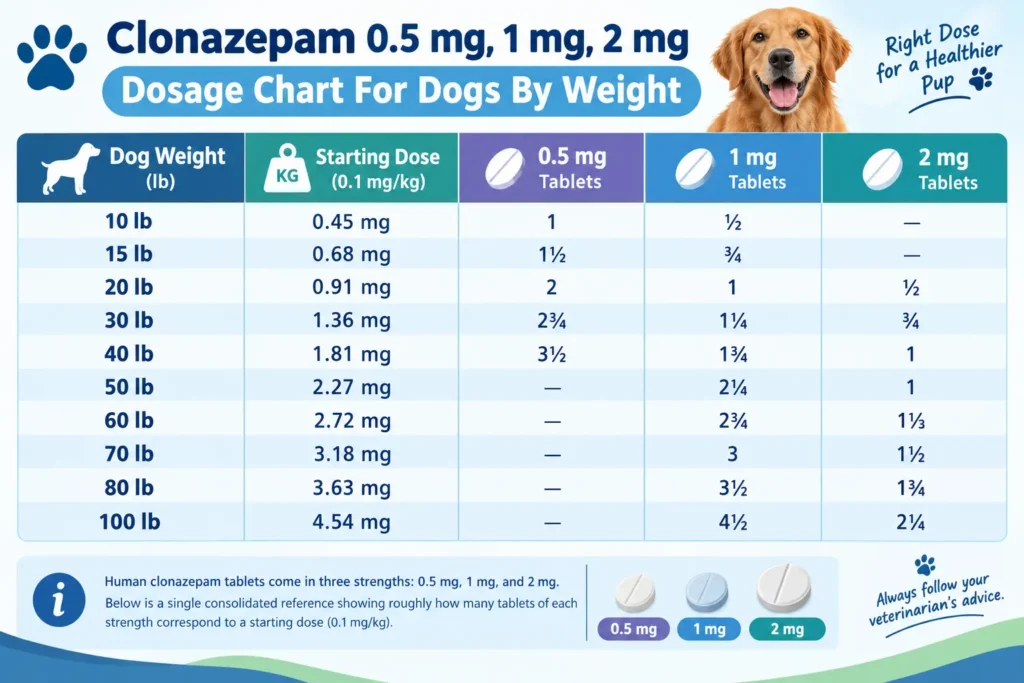
Clonazepam Dosage Chart for Dogs by Weight
| Dog Weight | Dog Weight (kg) | Low Dose (0.1 mg/kg) | High Dose (0.5 mg/kg) |
|---|---|---|---|
| 5 lb | 2.3 kg | 0.23 mg | 1.14 mg |
| 10 lb | 4.5 kg | 0.45 mg | 2.27 mg |
| 15 lb | 6.8 kg | 0.68 mg | 3.40 mg |
| 20 lb | 9.1 kg | 0.91 mg | 4.54 mg |
| 25 lb | 11.3 kg | 1.13 mg | 5.67 mg |
| 30 lb | 13.6 kg | 1.36 mg | 6.80 mg |
| 40 lb | 18.1 kg | 1.81 mg | 9.07 mg |
| 50 lb | 22.7 kg | 2.27 mg | 11.34 mg |
| 60 lb | 27.2 kg | 2.72 mg | 13.61 mg |
| 70 lb | 31.8 kg | 3.18 mg | 15.87 mg |
| 80 lb | 36.3 kg | 3.63 mg | 18.14 mg |
| 90 lb | 40.8 kg | 4.08 mg | 20.41 mg |
| 100 lb | 45.4 kg | 4.54 mg | 22.68 mg |
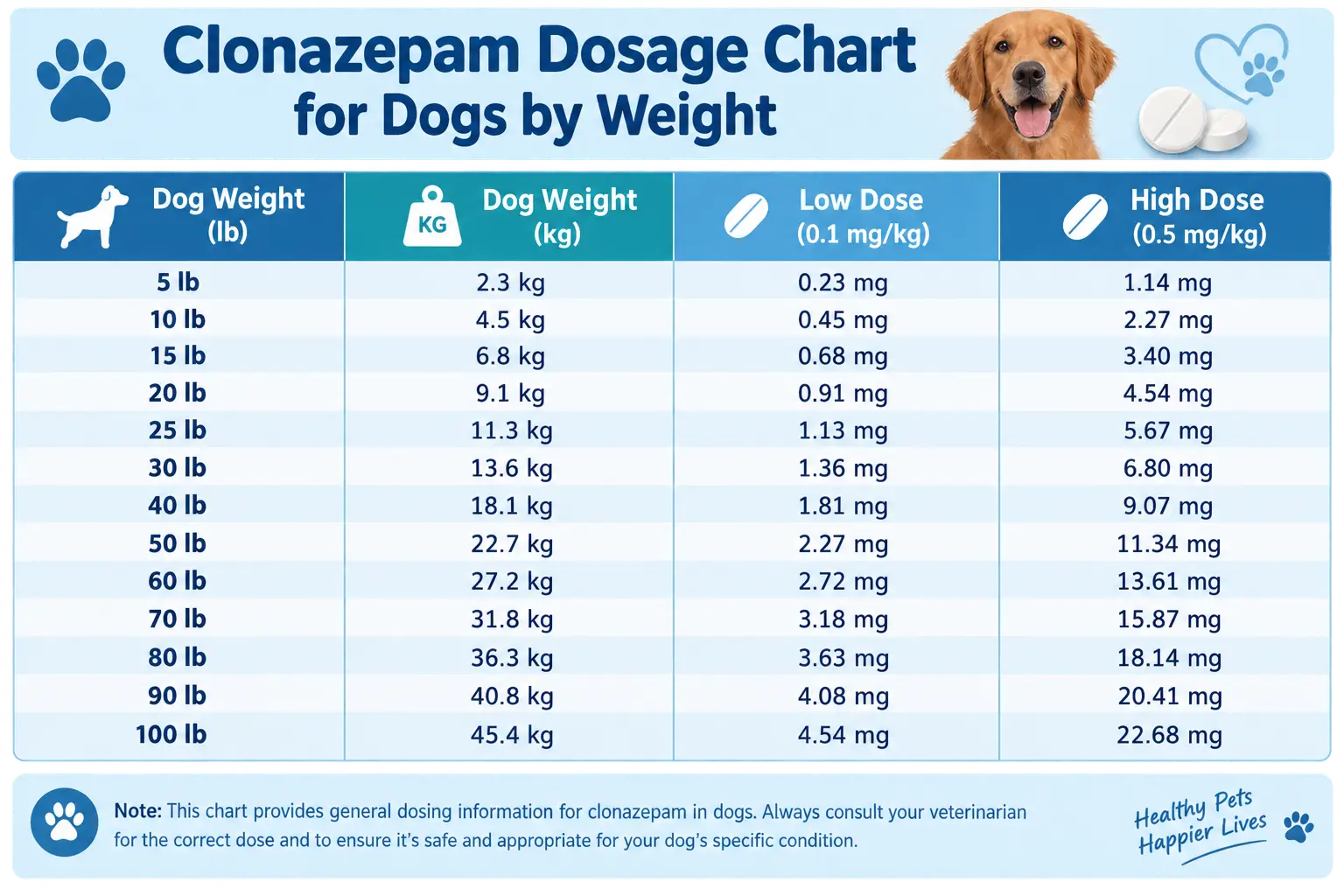
Clonazepam 0.5 mg, 1 mg, 2 mg Dosage Chart for Dogs by Weight
| Dog Weight | Starting Dose (0.1 mg/kg) | 0.5 mg Tablets | 1 mg Tablets | 2 mg Tablets |
|---|---|---|---|---|
| 10 lb | 0.45 mg | 1 | ½ | — |
| 15 lb | 0.68 mg | 1½ | ¾ | — |
| 20 lb | 0.91 mg | 2 | 1 | ½ |
| 30 lb | 1.36 mg | 2¾ | 1¼ | ¾ |
| 40 lb | 1.81 mg | 3½ | 1¾ | 1 |
| 50 lb | 2.27 mg | — | 2¼ | 1 |
| 60 lb | 2.72 mg | — | 2¾ | 1⅓ |
| 70 lb | 3.18 mg | — | 3 | 1½ |
| 80 lb | 3.63 mg | — | 3½ | 1¾ |
| 100 lb | 4.54 mg | — | 4½ | 2¼ |
Human clonazepam tablets come in three strengths: 0.5 mg, 1 mg, and 2 mg. Below is a single consolidated reference showing roughly how many tablets of each strength correspond to a starting dose (0.1 mg/kg).
The xylitol danger: Never use "quick-dissolve" or "orally disintegrating" clonazepam tablets in dogs. Many contain xylitol, a sweetener that's non-toxic to people but causes a dangerous insulin spike and potential liver failure in dogs.
Klonopin® (Clonazepam) 0.5 mg Dosage Chart for Dogs
| Dog Weight (lbs) | Dog Weight (kg) | 0.5 mg Tablets Dose |
|---|---|---|
| 5 lb | 2.3 kg | ½ Tablet |
| 10 lb | 4.5 kg | 1 Tablet |
| 15 lb | 6.8 kg | 1½ Tablet |
| 20 lb | 9.1 kg | 2 Tablet |
Klonopin® (Clonazepam) 2 mg Dosage Chart for Dogs
| Dog Weight (lbs) | Dog Weight (kg) | 2 mg Tablets Dose |
|---|---|---|
| 15 lb | 6.8 kg | ⅓ Tablet |
| 20 lb | 9.1 kg | ½ Tablet |
| 25 lb | 11.3 kg | ½ Tablet |
| 30 lb | 13.6 kg | ¾ Tablet |
| 40 lb | 18.1 kg | 1 Tablet |
| 50 lb | 22.7 kg | 1 Tablet |
| 60 lb | 27.2 kg | 1⅓ Tablet |
| 70 lb | 31.8 kg | 1½ Tablet |
| 80 lb | 36.3 kg | 1¾ Tablet |
| 90 lb | 40.8 kg | 2 Tablet |
| 100 lb | 45.4 kg | 2¼ Tablet |
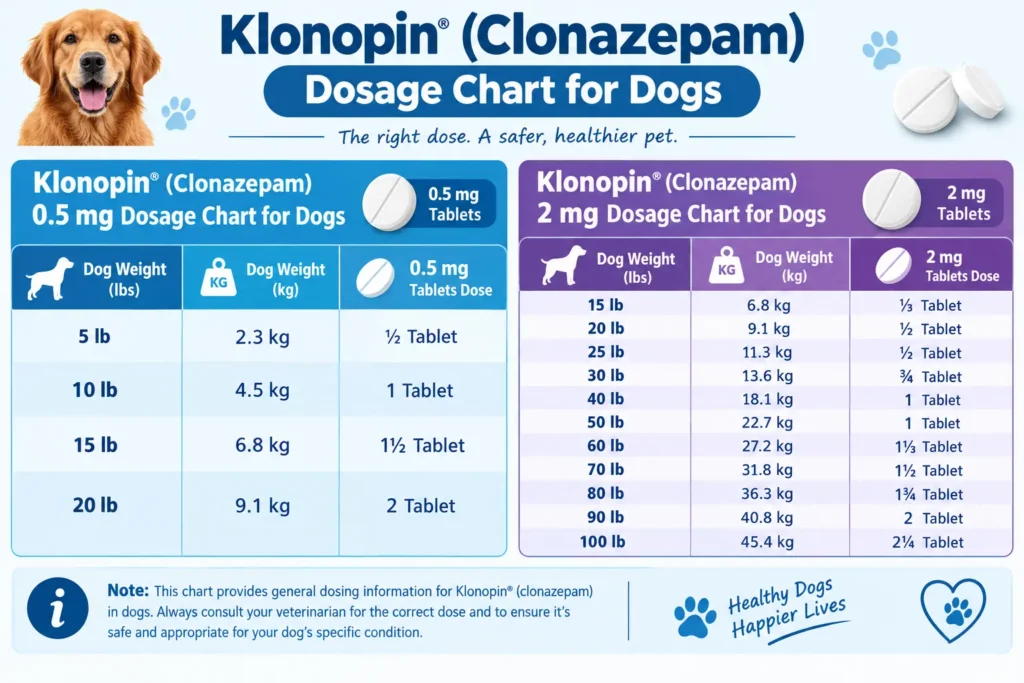
Clonazepam Dosage For Dogs Chart PDF
What is Clonazepam Used for in Dogs?
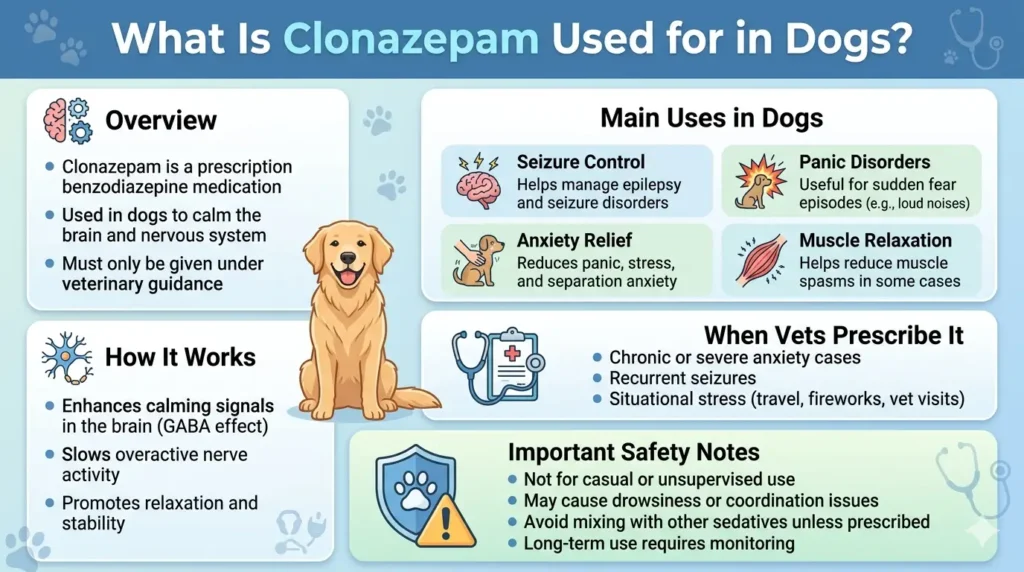
Clonazepam drug for pets is primarily used to treat seizures in dogs, but it's also used to treat anxiety and certain other neurological or behavioral conditions, under the supervision of a veterinarian.
- Antiseizure (main use)
It can be used as an adjunct anticonvulsant to treat seizures by calming over-stimulation of nerves within the brain. It is usually used in conjunction with long term epilepsy medications (such as phenobarbital or levetiracetam) and administered orally, rather than on its own for seizure control. - Anxiety and stress relief
Clonazepam dosage for dogs is a sedative and anxiolytic (anti-anxiety) drug which can help settle dogs during stressful events like thunderstorms, separation anxiety, veterinary appointments or other anxiety-inducing events. It can also complement other behaviour modification therapy for things such as aggression or compulsive behavior, oftentimes on an intermittent basis. - Neuromuscular and specific conditions
It can be used for hypertonicity (sitting or falling over), mainly Cavalier King Charles Spaniels. It has also been used in cats for anxiety and hyperaesthesia, but other antiepileptic medications are preferred.
In conclusion, dogs clonazepam is a multi-purpose benzodiazepine, primarily used as an adjunct medication for seizures and for anxiety in short-term or on-demand use.
Side Effects
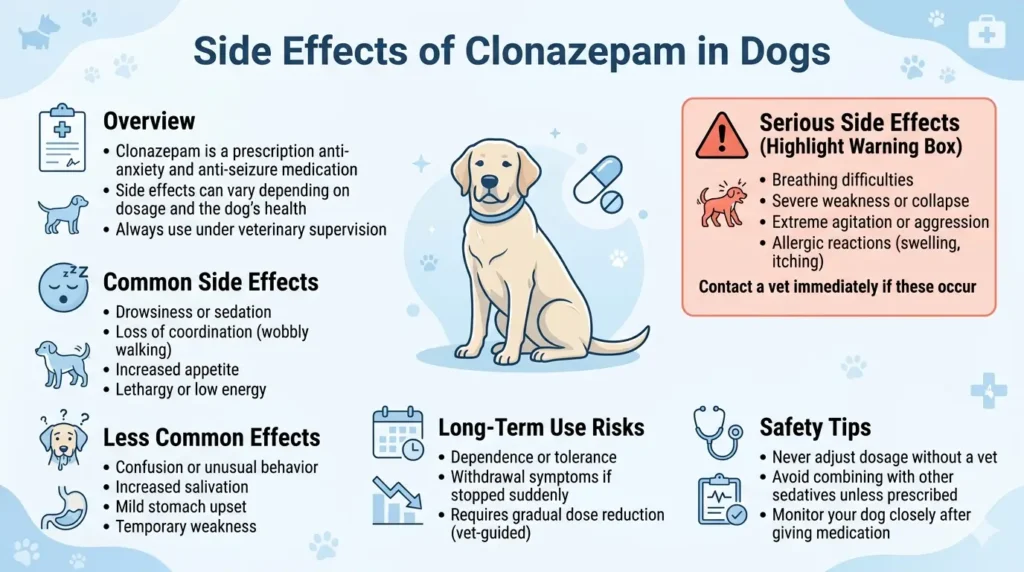
The primary side effects of clonazepam on dogs are mainly because of its calming effect on the central nervous system. The majority of the effects are mild, but some may be severe and necessitate immediate medical care.
Common side effects
Dogs can be drowsy, sleepy, have poor coordination (ataxia), clumsy, drool or sometimes excited.
Gastrointestinal and overall effects.
Certain dogs might exhibit vomiting, diarrhea, constipation, loss of appetite or excessive salivation. In other instances, there can be changes in appetite or even weight loss.


Paid Links - As an Amazon Associate, I earn from qualifying purchases.
Less prevalent but serious risks.
Overdoses or sensitive dogs can respiratory depress (slow or shallow breathing), increase liver enzymes, cause blood disorders (anemia or low platelets), cause confusion, or sleep disorders. In uncommon situations, extreme toxicity may result in coma.
Paradoxical reactions (contrasts)
Some dogs will act aggressively, fearful or abnormally excited instead of calming, thus necessitating emergency veterinary care.
Important safety notes
The effects can be persistent in liver or kidney-diseased dogs. Clonazepam is usually short- to moderate-acting; however, it is highly monitored because of possible sedation-related and organ-related risks.
Risk Factors for Clonazepam
In dogs, clonazepam must be administered with caution as some health issues and circumstances can greatly raise the chances of severe side effects or complications. In other instances, it should not be used at all.
Should NOT be used in dogs that:
- Allergic to clonazepam or other benzodiazepines?
- Severe or major liver disease.
- Suffers acute narrow-angle glaucoma.
- Has CNS (central nervous system) depression or respiratory depression.
- Is severely weak or hepatic impaired (has a risk of increasing hepatic encephalopathy)
- Are presented with dissolving tablets that have xylitol; xylitol is poisonous to dogs.
Should be used with great caution in dogs that:
- Suffers liver or kidney disease.
- Suffer from glaucoma
- Have myasthenia gravis
- Is ill, lame, or feeble.
- Are geriatric (elderly dogs)
- Pregnant or lactating.
- Show aggressive behavior
- Could they be working animals, because of potential sedation and poor performance.
In general, clonazepam drugs for dogs should be used with great caution in veterinary medicine, particularly in dogs with organ disease, neurological disorders, or hyperirritability to central nervous system-depressants.
Drug Interactions
Clonazepam may be incompatible with a number of drugs which impact the nervous system, liver metabolism or general level of sedation, risking the development of side effects or decreased efficacy. Supervision of veterinary is necessary when it is administered with other medications.
Medications that enhance CNS or sedation.
- Central nervous system (CNS) depressants drug.
- Anticholinergic agents
- Phenobarbital (can increase the sedation and CNS depression)
Drugs that have effects on metabolism or liver enzymes.
- Azole antifungals
- Cimetidine
- Erythromycin
- Diltiazem
Other important considerations
- Antihypertensive drugs must be cautiously administered as they may be additive.
- There should always be disclosure of all the existing medications like vitamins, supplements and even herbal products to the veterinarian.
before starting clonazepam
Due to these interactions, clonazepam must not be administered to dogs without veterinary recommendation especially when other drugs are being given.
What Happens If a Dog Overdoses on Clonazepam?
Signs of clonazepam overdose in dogs include heavy sedation, disorientation, loss of coordination, vocalizing, or paradoxically in some dog's hyperactivity. If you suspect your dog has taken more than their prescribed dose, or gotten into a bottle accidentally, this is an emergency:
- Call your veterinarian or an emergency animal hospital immediately.
- If they're unavailable, contact the ASPCA Animal Poison Control Center or the Pet Poison Helpline.
- Have your dog's weight, the medication strength, and an estimate of how much was ingested ready to report.
Clonazepam Alternatives for Dogs {#alternatives}
Clonazepam isn't the only option, and it's often not even the first choice. Depending on the condition, your vet may reach for:
For seizures: Diazepam is usually a veterinarian's first-line benzodiazepine for stopping an active seizure if you want the full breakdown, our diazepam dosing guidelines for dogs walk through how it's used differently from clonazepam.
Levetiracetam is another increasingly popular add-on anticonvulsant with a strong safety profile in dogs with liver concerns; see how to work out a safe levetiracetam dose for dogs by weight. Phenobarbital remains the most common long-term maintenance anticonvulsant that clonazepam is typically added on top of our phenobarbital dosing chart explains how the two are usually combined.
For anxiety: Lorazepam (Ativan) is chemically similar to clonazepam. Alprazolam (Xanax) is another benzodiazepine vets sometimes substitute for situational anxiety. For daily, long-term anxiety management, vets generally prefer non-benzodiazepine options SSRIs like fluoxetine (see our Prozac guide) or tricyclics like clomipramine (our Clomicalm dosage calculator for dogs has standard starting doses) paired with behavior modification training.
FAQs
Is it possible for dogs to overdose on clonazepam?
Overwhelming sedation, depression, ataxia, hyperactivity, disorientation, and vocalisation are symptoms. The highest dose recommended is 2 mg/kg every two hours. Veterinary care is needed in case of overdose.
Can I give my dog clonazepam dosage for dogs every day?
It is generally used in the short term. It is not for long-term daily use because this may lead to tolerance and dependence and sudden withdrawal may be accompanied by withdrawal symptoms. If used long-term it will need to be carefully weaned by a veterinarian.
How do I administer clonazepam to my dog?
Follow your veterinarian's directions. Administer the dose at the right time. For use for anxiety, give 30 minutes before the anxiety-provoking event. It may be given with or without food but food can be helpful if vomiting occurs.
What to do if I miss a dose?
As directed by your veterinarian. Do not give a double dose.
How to give clonazepam to dogs (tablets or liquid)?
Tablets can be swallowed or administered with a pill plunger. Liquid should be given with a syringe or dropper, and may require shaking.
Can clonazepam be used long term?
It's usually avoided for long term because of the risk of tolerance (decreased effect), dependence and withdrawal symptoms.
How do I store clonazepam drug?
Keep it at room temperature (59°F-86°F / 15°C-30°C), away from light and moisture, and store in a locked location out of the reach of children and pets.
What should I do if there's an emergency?
In case of an overdose or reaction, seek veterinary care right away. Have your dog's weight, symptoms and the drugs being used available.
Can I use something else instead of clonazepam?
Yes. Veterinarians can use diazepam, levetiracetam, alprazolam, midazolam, lorazepam or phenobarbital for dogs with seizures. SSRIs (selective serotonin reuptake inhibitors) such as fluoxetine (Reconcile), tricyclic antidepressants such as clomipramine (Clomicalm) and behaviour therapy are often the preferred treatments for anxiety and behavioural problems.
Final Thoughts
Clonazepam for dogs is a sedative drug that can be used to treat seizures, anxiety, and some behavioral issues in dogs. It's considered safe and effective but is not used alone on a long-term basis.
In dogs, clonazepam drug is used as an adjunct medication, alongside other medications (such as anticonvulsants) to treat seizures, or behavior modification programs for anxiety disorders. Clonazepam is best used temporarily or on an as-needed basis, particularly in cases where quick sedation is needed.
Although clonazepam can be useful when administered properly, long-term use can lead to tolerance, dependence, and ineffectiveness, so its use needs to be carefully monitored by a veterinarian.
Sources
- Plumb's Veterinary Drug Manual, 9th ed.
- Anticonvulsants for Emergency Treatment of Seizures in Dogs and Cats, MSD Veterinary Manual
- Clonazepam, VCA Animal Hospitals
- U.S. FDA, Regulation of Animal Drugs
- ASPCA Animal Poison Control Center