Diazepam Dosage Calculator for Dogs
Calculate the recommended diazepam dose based on body weight and treatment indication.
Recommended Dose
© medsdog.com
Diazepam, also marketed as Valium, is a drug prescribed by veterinarians to manage a number of medical issues in dogs, such as seizures, severe anxiety, muscle spasms and functional urethral obstruction (when dogs are unable to urinate due to a muscle contraction).
Diazepam for dogs is a benzodiazepine drug which acts rapidly to sedate or reduce muscle tone in emergency situations, and is one of the most successful emergency drugs in controlling an active seizure. Veterinarians can also use diazepam in combination with other drugs prior to anesthesia or some medical treatments, and in some cases, prescribe it for use at home under strict supervision.


Paid Links - As an Amazon Associate, I earn from qualifying purchases.
Diazepam is a safe medication when administered by a veterinarian but is not a medication that should be administered without professional guidance. Many medicines for humans are also used for pets, which can lead a pet owner to assume that a prescription from his or her own medicine cabinet will be okay for a pet.
But the proper dosage for Diazepam dosage for dogs will depend upon how much your dog weighs, what their medical condition is, how healthy they are, what other medication they may be taking (such as phenobarbital) and how it is being administered (oral, rectally or intravenously). If the dosage is not correct, or if the drug is administered to the wrong dog, Diazepam may be less effective, or may have unwanted, serious side effects.
Diazepam is the most frequent medication used for terminating cluster seizures and status epilepticus, both life-threatening neurologic emergencies that need rescue. It can also be used for situational anxiety, such as extreme noise phobias and travel-related stress, for relaxation of the muscles or for dogs with urinary issues that result from too much tension in their urethral muscles. Since diazepam is a quick-acting drug, the veterinarian will prescribe it for immediate use, usually not for long-term treatment of chronic anxiety and/or for prevention of seizures.
In this guide you will learn what is the correct dosage of diazepam for dogs based on their health condition and weight; how it is administered, frequency of doses, benefits to expect, side effects, important safety precautions and when you need emergency veterinary help.
Key Takeaways
- Diazepam (Valium) is a prescription benzodiazepine drug indicated for use in dogs for cluster and status epilepticus, for situational anxiety, muscle spasms, and functional urethral obstruction. It is also often used as a sedative prior to anesthesia or some veterinary procedures.
- The correct dose of diazepam for your dog depends on your dog’s medical condition, other medications (phenobarbital), weight and route of administration. Please follow your veterinarian’s instructions for doses.
- Diazepam medication for dogs works quickly and is usually not used long term, for example to treat anxiety or seizures.
- Side effects include drowsiness, unsteady gait, restlessness, increased appetite, vomiting and some changes in behaviour. Any serious side effects will need immediate veterinary care.
- Do NOT give human diazepam or change the dosage without consulting your veterinarian. If you decide to use Diazepam you should make sure that it is safe and effective for your dog’s condition, therefore, it is recommended to use under veterinary supervision.
Diazepam Dosage Chart for Dogs
| Indication | Dosage | Route | Frequency |
|---|---|---|---|
| Cluster Seizures | 0.5–1 mg/kg (or 2 mg/kg if the dog is receiving phenobarbital) | Rectal | Administer at the start of a seizure; may repeat up to 3 times within 24 hours. |
| Status Epilepticus (Long-lasting Seizure) | 0.5–1 mg/kg (or 2 mg/kg if the dog is receiving phenobarbital) | Rectal | May be administered up to 3 times within 24 hours as directed by a veterinarian. |
| Situational Anxiety | 0.5–2 mg/kg | Oral | Every 4–6 hours as needed. |
| Functional Urethral Obstruction | 2–10 mg/kg | Oral | Every 8 hours. |
Important Notes
- These dosages apply only to dogs.
- Intravenous (IV) diazepam should only be administered by a veterinary professional.
- Rectal diazepam is commonly used as emergency treatment for seizures at home when prescribed by a veterinarian.
- Always follow your veterinarian’s instructions, as the appropriate dose and frequency may vary depending on your dog’s medical condition, concurrent medications, and overall health.
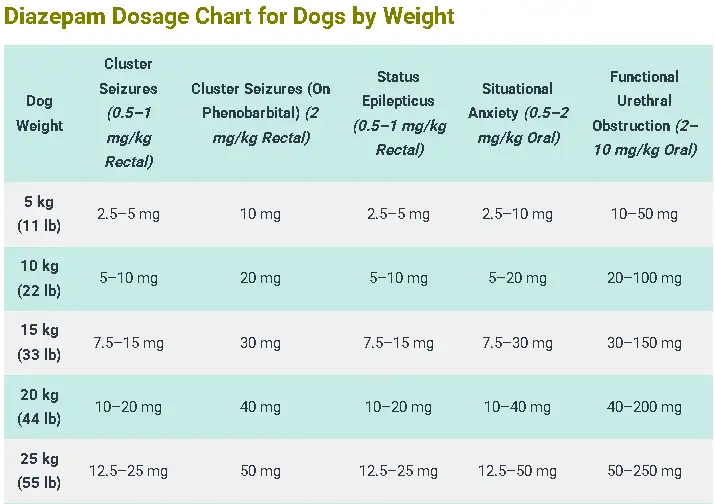
Diazepam Dosage Example Chart for Dogs by Weight
Here’s a more user-friendly example table with clear dosage titles instead of just mg/kg rates.
| Dog Weight | Cluster Seizures (0.5–1 mg/kg Rectal) | Cluster Seizures (On Phenobarbital) (2 mg/kg Rectal) | Status Epilepticus (0.5–1 mg/kg Rectal) | Situational Anxiety (0.5–2 mg/kg Oral) | Functional Urethral Obstruction (2–10 mg/kg Oral) |
|---|---|---|---|---|---|
| 5 kg (11 lb) | 2.5–5 mg | 10 mg | 2.5–5 mg | 2.5–10 mg | 10–50 mg |
| 10 kg (22 lb) | 5–10 mg | 20 mg | 5–10 mg | 5–20 mg | 20–100 mg |
| 15 kg (33 lb) | 7.5–15 mg | 30 mg | 7.5–15 mg | 7.5–30 mg | 30–150 mg |
| 20 kg (44 lb) | 10–20 mg | 40 mg | 10–20 mg | 10–40 mg | 40–200 mg |
| 25 kg (55 lb) | 12.5–25 mg | 50 mg | 12.5–25 mg | 12.5–50 mg | 50–250 mg |
| 30 kg (66 lb) | 15–30 mg | 60 mg | 15–30 mg | 15–60 mg | 60–300 mg |
| 35 kg (77 lb) | 17.5–35 mg | 70 mg | 17.5–35 mg | 17.5–70 mg | 70–350 mg |
| 40 kg (88 lb) | 20–40 mg | 80 mg | 20–40 mg | 20–80 mg | 80–400 mg |
| 45 kg (99 lb) | 22.5–45 mg | 90 mg | 22.5–45 mg | 22.5–90 mg | 90–450 mg |
| 50 kg (110 lb) | 25–50 mg | 100 mg | 25–50 mg | 25–100 mg | 100–500 mg |
Notes:
- Cluster Seizures: Administer rectally at the start of a seizure; may be repeated up to 3 times within 24 hours.
- Status Epilepticus: Administer rectally; may be given up to 3 times within 24 hours as directed by a veterinarian.
- Situational Anxiety: Administer orally every 4–6 hours as needed.
- Functional Urethral Obstruction: Administer orally every 8 hours.
- Intravenous diazepam should only be administered by a veterinary professional.
What Is Diazepam?
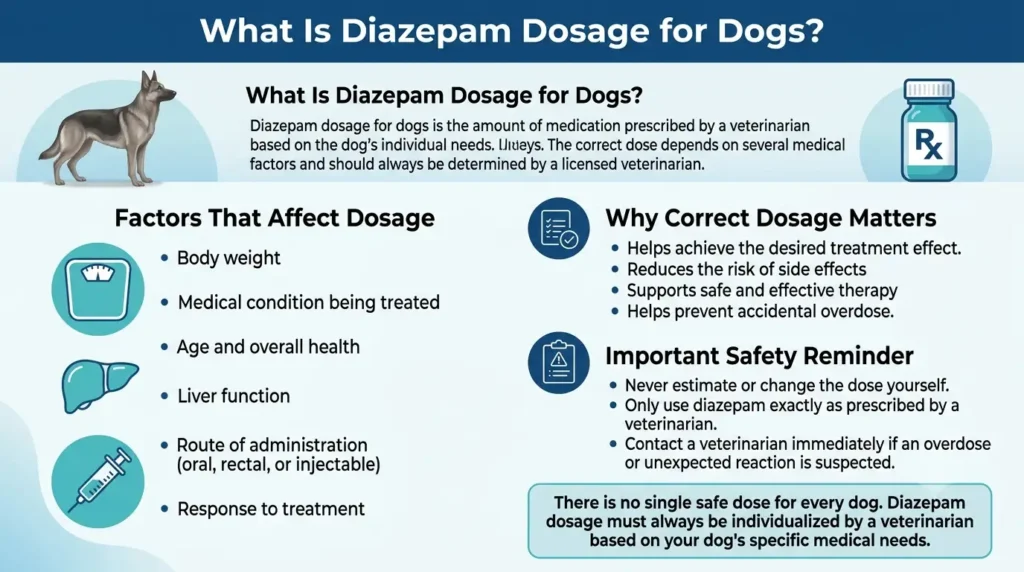
One of the benzodiazepine drugs, Diazepam (Valium®) is a medication that acts on the central nervous system by increasing the activity of a neurotransmitter (gamma-aminobutyric acid or GABA) which quiets the overactive nerves in the brain. Diazepam has been in use in veterinary medicine for many years, and is a well-established drug for emergency use, sedation and anaesthetic.
Diazepam (Valium dosage for dogs) is used in dogs to treat seizures; for anxiety; to relax muscles; for muscle spasms or tremors; to stimulate appetite; for sedation before anesthesia or some medical procedures. It is not a long-term treatment, but rather a short-term or emergency medication as dogs can become desensitized to it over time and the drug may not work as effectively to manage seizures. Other anticonvulsant drugs are often prescribed by veterinarians for the long-term control of seizures.
Diazepam dosage comes in a variety of formulations such as tablets, oral solution, injectable solution, or rectal gel/suppository. It can be taken orally, rectally or intravenously and can be used on its own or in combination with other drugs, depending on the condition being treated. The injectable version is used by a vet, and some oral and rectal versions might be ordered by a vet for use at home under supervision.
Diazepam is FDA approved for use in humans as a brand named Valium® or Diastat® but is not FDA approved in veterinary patients. When veterinarians feel it is the best medication for their dog or other animals, it is legally used as an extra-label (off-label) drug. Sometimes a veterinarian will even prescribe a compounded product when a commercially available product is not appropriate for a dog’s need of dosage or the dog’s sensitivity to certain ingredients or the difficulty of getting him to ingest the medication.
Diazepam is a federally and state-scheduled controlled substance listed as a Schedule IV drug, which means that it can only be prescribed, dispensed and refilled as allowed by federal and state law. Only use it as directed by a veterinarian and it is illegal to give, sell, or pass on your dog’s prescribed diazepam to other people.
How Diazepam Works
Diazepam is a member of the benzodiazepine family of drugs and acts by increasing the effects of gamma-aminobutyric acid (GABA), a key neurotransmitter in the brain. GABA normally inhibits and slows down the brain’s nerve transmission, soothing and calming the central nervous system.
Diazepam dose works by making the body’s own chemical (GABA) work more effectively, which slows down the overactive nervous system and brain. The action helps to control seizures, reduce anxiety, relax muscles and acts as a sedative, making it a useful drug for emergency seizure treatment, anxiety control, muscle relaxation and pre-anesthetic use in dogs.
What Is Diazepam Used for in Dogs?
Diazepam is a rapid acting benzodiazepine drug that has multiple applications in veterinary practice, mostly due to its sedative properties on the brain and nervous system of the dog. It is administered orally, intravenously (IV), rectally or intranasally and is not intended for long term therapy, except in emergencies.
Seizure Control
Diazepam dosage for dogs is mostly used to terminate active seizures, such as cluster seizures and status epilepticus (a life-threatening emergency in which seizures are too prolonged or occur again too quickly without full recovery between seizures). It does so by slowing down abnormal activity in the nerves and can frequently prevent seizures within several minutes.


Paid Links - As an Amazon Associate, I earn from qualifying purchases.
Diazepam is usually administered intravenously in veterinary hospitals, although dogs with a history of seizures may be prescribed a rectal gel, intranasal spray or injection to use at home in an emergency. However, dogs become tolerant to diazepam and it is not recommended for long term seizure prevention, and other anticonvulsants are typically used for the long term treatment of seizures.
Anxiety and Behavioral Disorders
Diazepam can be used by veterinarians for acute or situational anxiety (e.g., thunderstorms, fireworks, traveling, or separation anxiety). It’s sometimes also used for anxiety, associated with behavioral disorders, such as compulsive behaviour or aggression, but it’s not a first or long-term treatment. Diazepam can in some dogs paradoxically have the opposite effect, and make the dog more aggressive, and close supervision by the vet is essential.
Pre-Anesthetic Sedation
Diazepam drug is typically used as a sedative prior to surgery, diagnostic or anesthesia procedures. It relaxes the dog, lowers stress and makes it easier for the dog to be put to sleep. It can lead to relaxation of muscles and sedation, but it does not itself provide pain relief and is not enough to induce general anaesthetic, and is therefore often used in conjunction with other drugs.
Muscle Relaxation
As a muscle relaxant, diazepam may be used to treat spasticity, muscle spasms, tremors and severe muscle tension, helping to make the animal more comfortable and improve recovery.
Functional Urethral Obstruction
Diazepam can help dogs that have difficulty urinating due to functional urethral obstruction by relaxing the skeletal muscles surrounding the urethra, making it easier for urine to pass. It is generally administered in multiple doses during the day as directed by a veterinarian.
Appetite Stimulation
Diazepam may be given as a short-term appetite stimulant for a dog that will not eat due to stress or sickness. But it is not frequently used for this reason because of possible side effects.
Other Veterinary Uses
Diazepam is also the drug of choice for treating neurological signs associated with metronidazole, and is used by veterinarians in the treatment of metronidazole toxicity. Diazepam may interact with other drugs, supplements, vitamins and herbal products; therefore, before your dog begins receiving the medication, you should tell your veterinarian about any other medications, supplements, vitamins and herbal products your dog is taking.
Diazepam Possible Side Effects
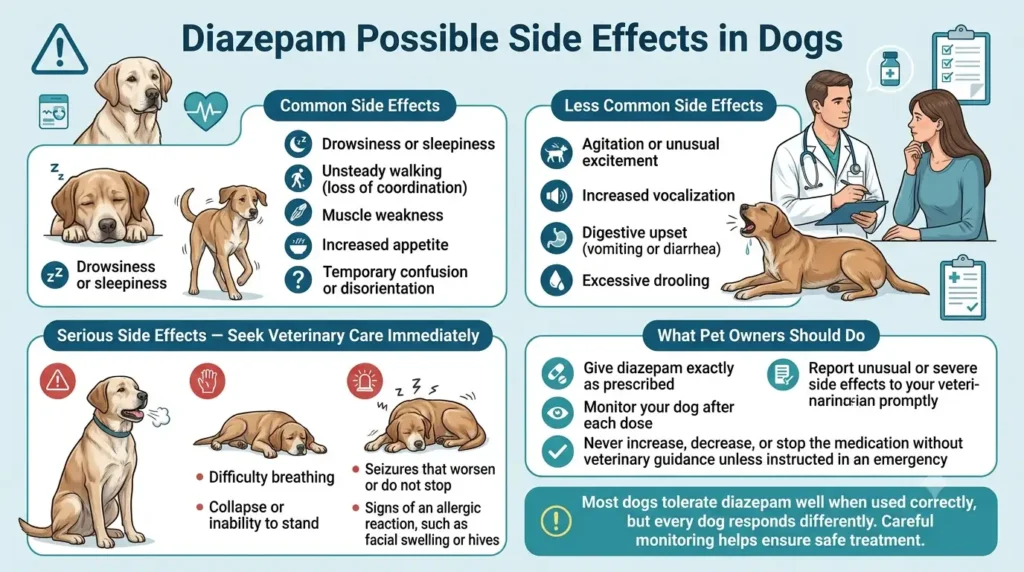
Dogs generally do not have any major issues with taking diazepam for short periods of time, however as with all medicines, there are potential side effects which are rare, but serious, and some which are mild, but temporary. Risks and side effects can vary depending on the dog’s condition, dose, duration of treatment and other factors. If your dog shows any abnormal signs after being administered diazepam, call your veterinarian.
Common Side Effects
Common side effects are:
- Sleepiness or sedation
- Grogginess or fatigue
- Balance and coordination problems (ataxia)
- Weakness
- Restlessness
- Increased appetite
- Light vomiting or diarrhea
- Drooling
- Some confusion or a bit of instability due to muscle relaxation.
These effects are temporary and pass as the drug is excreted from the body. Diazepam is a short acting drug and, in most dogs, its effects are only present for 24 hours or less, longer if a dog has liver or kidney disease.
Behavioral Changes
Some dogs seem to have an adverse reaction to the drug rather than calming down. These may include:
- Overexcitement/paradoxical excitement
- Agitation
- Over barking or whining
- The tendency to be aggressive, due to a decrease in inhibition.
- Other changes in behavior
If your dog’s behavior is abnormal or concerned after taking diazepam, get in touch with your vet right away.
Serious Side Effects
Though rare, diazepam may have serious side effects which need prompt veterinary attention these include:
- Very sleepy or very weak
- Loss of consciousness
- Coma
- Death (usually due to overdose or a serious underlying illness)
- Persistent vomiting
- Loss of appetite
- Gums, skin, or whites of eyes turn yellow (jaundice), which could be a sign of liver damage.
Dogs with liver disease will be at a higher risk because the liver plays a role in the metabolism of diazepam. Occasionally, liver levels may be monitored in dogs who need to be treated for a longer period of time or more often due to the potential of liver toxicity with repeated or prolonged use.
Tolerance and Withdrawal
Over time, dogs can get used to diazepam, and it will not be as effective. Diazepam should not be abruptly discontinued after long term use as this can precipitate withdrawal symptoms such as rebound seizures or anxiety. Never alter or discontinue treatment without consulting your veterinarian.
Dogs that Require Extra Caution
Diazepam is contraindicated in dogs with diazepam or benzodiazepine allergy and is not recommended for use in dogs with severe liver disease unless the benefits are outweighed by the risks. It also needs to be administered with caution in pets with:
- Disease of the liver or kidneys.
- Respiratory problems or disorders.
- Myasthenia gravis
- Glaucoma
- Aggressive behavior
- Pregnancy or nursing (unless otherwise recommended by the veterinarian)
- Older age, obesity, debilitation, shock, or being a working dog.
As overdose can be life-threatening, always follow your vet’s instructions when administering diazepam and never change the dose or frequency without veterinary guidance.
Does Diazepam Interact With Any Other Dog Medications?
Yes. Diazepam dosage for dogs may interact with other medicines, supplements and herbal products, and can impact its safety or effectiveness. If your dog is already taking other prescription or non-prescription medications, including over-the-counter, vitamins, supplements, or herbal remedies, be sure to tell your veterinarian before beginning diazepam.
Drugs that can interact with diazepam are:
- Antacids
- Other benzodiazepines, such as alprazolam and midazolam
- Other sedatives or central nervous system (CNS) depressants,
- Some antibiotics
- Some antifungal medications
- Antidepressants, including fluoxetine
- Digoxin (a heart medicine)
- Antihypertensive medications
- Propranolol
- Theophylline
- Melatonin
- Drugs that can induce or inhibit liver enzymes, thereby altering the metabolism of diazepam
Diazepam can also affect the result of urine glucose tests, which could lead to false negative results. If your dog is being tested in a laboratory, please let your vet know your dog is taking diazepam.
Never give diazepam in combination with another drug without the approval of your veterinarian as drug interactions may lead to more side effects or a decrease in treatment efficacy.
You May Also Like to Read:
- Vitamin E Dosage For Dogs: Calculator & Safe Dosage Guide
- Selegiline Dosage For Dogs: Calculator, Chart & Safe Guide
FAQs
Does Valium for humans (diazepam) work on dogs?
Yes. Valium® is a human medication that is generically Diazepam. It is NOT FDA approved for use in dogs, but it can be legally used in dogs as an extra label drug as appropriate, as approved by the veterinarian.
What is the duration of action of diazepam in dogs?
Diazepam is a short-acting drug. It typically only lasts for a few hours, but can vary based on the dog, its health, dosage, route of administration, and liver function.
Does diazepam put my dog to sleep?
Yes. Side effects of diazepam include sleepiness, grogginess, and loss of coordination. But others dogs have the reverse response as well and become restless, excited or unusually agitated.
If my dog misses a dose of diazepam what should I do?
If you forget a dose, take it as soon as you remember and then resume the normal dose schedule. Do not give a double dose to make up for a missed dose. If you’re unsure what to do, contact your veterinarian for advice.
Is it safe to give my own Valium prescription to my dog?
No. Never give your dog diazepam that was prescribed for a person. Human products can be formulated differently or dosed at different rates and can lead to side effects, drug interactions or missed treatments if applied without veterinary advice.
My veterinarian prescribed my dog some other drug to replace his diazepam.
Diazepam is generally intended to be used for a short time, or to be used during an emergency. Over time, dogs may become tolerant to this which may make it less effective for long-term management of seizures or anxiety. Other medications may be more appropriate for long-term use and might be suggested by your veterinarian.
Can all breeds of dogs take diazepam?
Prescribed by a veterinarian, Diazepam can be used in most dogs. But dogs with liver disease and certain breeds that may be more susceptible to liver disease may need more careful monitoring during treatment.
How to give Rectal Diazepam at home?
Rectal diazepam should only be given if your vet has advised. Get the medication ready; keep your dog as calm as possible; insert the applicator gently into the rectum, give the required dose and contact the vet immediately after, as Rectal Diazepam is for emergency control of seizures.
What are the signs of a diazepam overdose in dogs?
Common signs of an overdose involve the nervous system and include extreme drowsiness, confusion, diminished muscular reflexes, weakness, lack of co-ordination, loss of consciousness and coma. If you suspect an overdose, it is a veterinary emergency and needs to be treated immediately.
If my dog has overdosed on diazepam, what do I do?
Please see your veterinarian or the emergency veterinary clinic right away. In addition, you can call an animal poison control center for advice during an emergency. Have details on hand regarding your dog’s weight, the strength of the medication, the approximate amount consumed, and any symptoms.
What is the proper storage for Diazepam?
Diazepam medication must be kept at room temperature, as directed on the prescription label. Store the container securely and avoid excessive moisture, heat and direct light. Compounded medications must be stored as per the instructions from the compounding pharmacy. Do not store Diazepam (injection) in plastic syringes or bottles. As a controlled substance, always store diazepam securely, away from children and pets.
Final Thoughts
Diazepam has been found to be very useful for short-term or emergency therapy, but is not intended for long-term treatment of anxiety or a seizure disorder. With repeated use, dogs can become tolerant to it, which means that it becomes less effective and may be associated with dependency. Veterinarians may recommend other medications that are more suitable for long-term use in patients with ongoing seizure control or with chronic anxiety.
Diazepam is a central nervous system acting drug and can interact with other drugs, so it should only be administered as prescribed by a veterinarian. Do not change the dose, abruptly discontinue treatment, or administer human diazepam to your dog without your veterinarian’s advice.
When properly managed, diazepam can be a safe and effective drug when used correctly for the appropriate condition, dosage and length of time. Always consult your veterinarian carefully when deciding whether or not to use diazepam, and to make sure you are using the right treatment for your dog.