Phenobarbital Dosage Calculator For Dogs
Calculate safe standard baseline oral starting doses for dogs requiring Phenobarbital therapeutic treatment plans.
Calculated Starting Dosage Recommendations
0 mg total per day, divided into 0 mg orally **every 12 hours**.
* Total Daily Spectrum: 0 mg to 0 mg per day
* Individual Dose Spectrum (Every 12 hrs): 0 mg to 0 mg per dose
Commercial tablets are commonly available in fractions of 15 mg, 16.2 mg, 30 mg, 32.4 mg, 60 mg, 64.8 mg, and 100 mg. Vets regularly round these mathematical margins to the closest half or full tablet pill fraction to secure perfect tracking stability.
© medsdog.com
Phenobarbital Dosage For Dogs is a very commonly used anti-seizure drug in dogs, and is often used as a first line anti-seizure drug for epilepsy and seizures. A single, brief seizure is not necessarily a cause for alarm, but dogs having two or more seizures each month, cluster seizures (causing multiple seizures within 24 hours) or seizures that last longer than 5 minutes typically need long-term anticonvulsant treatment. In many of these instances, the vet will prescribe phenobarbital which can decrease the severity and frequency of seizures.
Since phenobarbital for dogs is frequently used for several months or even a dog's entire life, it's crucial to understand the right phenobarbital dose for dogs when using this medication. The correct dose depends on your dog's size, medical history, liver function, type of seizure and response to treatment. Continuous veterinary care is necessary which comprises regular blood tests to be sure that the drug levels are therapeutic without side effects.


Paid Links - As an Amazon Associate, I earn from qualifying purchases.
This comprehensive guide will teach you how phenobarbital works, dosage guidelines, a weight based dosage calculator and chart, the frequency at which it is administered, side effects, any potential drug interactions, monitoring parameters, and some important safety tips to help you use phenobarbital safely under the direction of your veterinarian.
Key Takeaways
- Phenobarbital medication for dogs is a primary anti-seizure drug that is frequently used to manage epilepsy and/or seizures in dogs. May be safely and effectively used under veterinary supervision.
- Phenobarbital doses for dogs depend on the dog's body weight and health. Your veterinarian may want to change this dose over time, based on how well your dog's seizures are controlled and blood test results.
- Monitoring phenobarbital levels and liver function is crucial through regular blood tests to ensure the drug's safety and effectiveness.
- Side effects like increased thirst, increased appetite, increased urination, mild sedation or slight wobbliness may occur and often improve in the first few weeks of treatment.
- Phenobarbital may interact with some other drugs, such as some antibiotics, antihistamines, anti-fungal drugs, and other anti-seizure drugs. Before starting phenobarbital, tell your veterinarian if your dog is taking any other drugs or supplements.
- Do NOT abruptly terminate phenobarbital. Previously, abrupt withdrawal can cause extreme or life threatening seizures, so any dose changes must be made under the direction of your veterinarian.
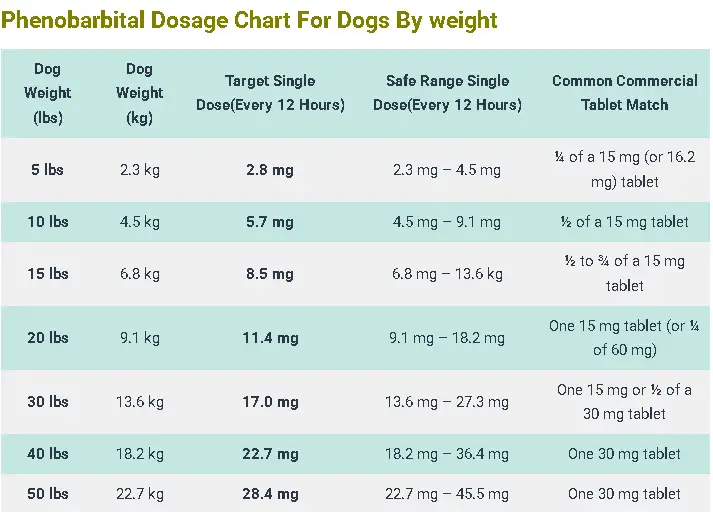
Phenobarbital Dosage Chart For Dogs By weight
Here is the standard veterinary baseline dosage chart for Canine Phenobarbital. It uses the routine starting target of 2.5 mg/kg divided into two daily treatments (every 12 hours), alongside the safe clinical window (2 to 4 mg/kg).
| Dog Weight (lbs) | Dog Weight (kg) | Target Single Dose(Every 12 Hours) | Safe Range Single Dose(Every 12 Hours) | Common Commercial Tablet Match |
| 5 lbs | 2.3 kg | 2.8 mg | 2.3 mg – 4.5 mg | ¼ of a 15 mg (or 16.2 mg) tablet |
| 10 lbs | 4.5 kg | 5.7 mg | 4.5 mg – 9.1 mg | ½ of a 15 mg tablet |
| 15 lbs | 6.8 kg | 8.5 mg | 6.8 mg – 13.6 kg | ½ to ¾ of a 15 mg tablet |
| 20 lbs | 9.1 kg | 11.4 mg | 9.1 mg – 18.2 mg | One 15 mg tablet (or ¼ of 60 mg) |
| 30 lbs | 13.6 kg | 17.0 mg | 13.6 mg – 27.3 mg | One 15 mg or ½ of a 30 mg tablet |
| 40 lbs | 18.2 kg | 22.7 mg | 18.2 mg – 36.4 mg | One 30 mg tablet |
| 50 lbs | 22.7 kg | 28.4 mg | 22.7 mg – 45.5 mg | One 30 mg tablet |
| 60 lbs | 27.3 kg | 34.1 mg | 27.3 mg – 54.5 mg | One 30 mg or ½ of a 60 mg tablet |
| 70 lbs | 31.8 kg | 39.8 mg | 31.8 mg – 63.6 mg | One and a half 30 mg tablets |
| 80 lbs | 36.4 kg | 45.5 mg | 36.4 mg – 72.7 mg | ¾ of a 60 mg tablet |
| 90 lbs | 40.9 kg | 51.1 mg | 40.9 mg – 81.8 mg | Three-quarters to one 60 mg tablet |
| 100 lbs | 45.5 kg | 56.8 mg | 45.5 mg – 90.9 mg | One 60 mg tablet |
Clinical Interpretation Notes:
- The 12-Hour Interval: Because Phenobarbital has a specific metabolic half-life in canines, keeping the dosing schedule exactly 12 hours apart is vital to maintain stable anticonvulsant levels in the bloodstream.
- The "Pill Fraction" Reality: Because math rarely lines up perfectly with manufactured pill sizes (15 mg, 30 mg, 60 mg, 100 mg), veterinarians will regularly round up or down to the nearest quarter, half, or full tablet to make administration practical for owners.
What Is Phenobarbital?
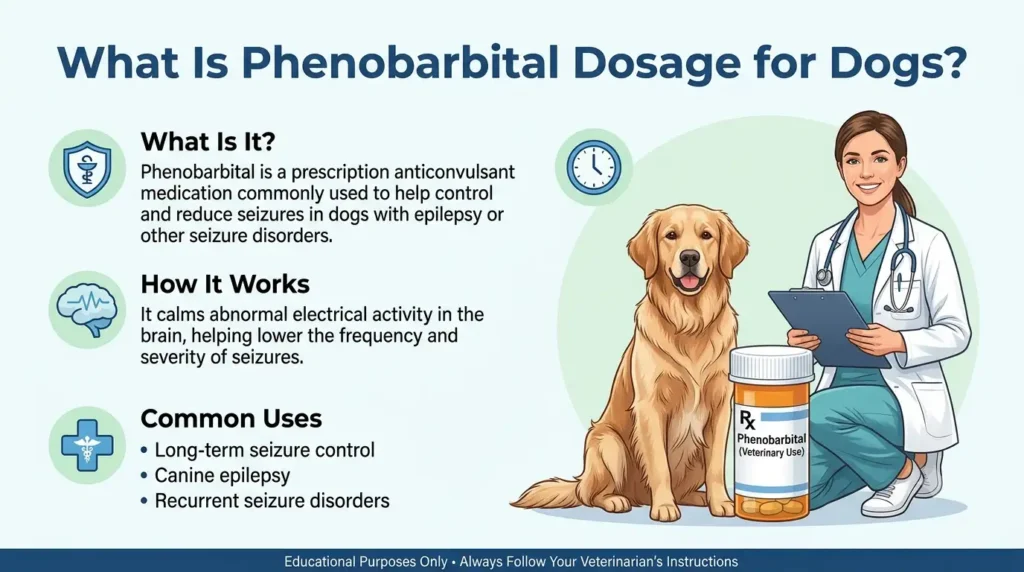
Phenobarbital Dosage For Dogs is a barbiturate anti-convulsant (anti-seizure) drug that is used to manage seizures in a dog. It is mainly used to control epilepsy, but sometimes it is also prescribed for seizures due to the presence of brain tumors, infectious diseases, poisons or other brain disorders. Sometimes phenobarbital is given on its own, and at other times it is prescribed with other anti-seizure drugs to get control over the seizures. In some cases it can also be used as a sedative.
Phenobarbital acts by calming down the nerves in the brain and lessening the abnormal electrical discharges that can bring on a seizure. It can lessen over-stimulation of the brain, which helps to prevent too many and/or severe seizures, allowing many dogs to enjoy a better quality of life.
Phenobarbital has not been FDA approved for use in animals but has been approved for human use. It can be legally used in dogs and other animals by veterinarians through extra-label (off-label) use when the veterinarian decides it is the best treatment option. This is a commonly used veterinary medicine and must always be used as directed by your veterinarian.
Phenobarbital dose for dogs is also a DEA Schedule IV controlled substance, and is subject to federal and state laws regarding its prescription, dispensing and refilling. Only use the medicine on the animal it was intended for and under no circumstances pass it on, sell or give it to another pet owner.
What Is Phenobarbital Used for in Dogs, and How Does It Work?
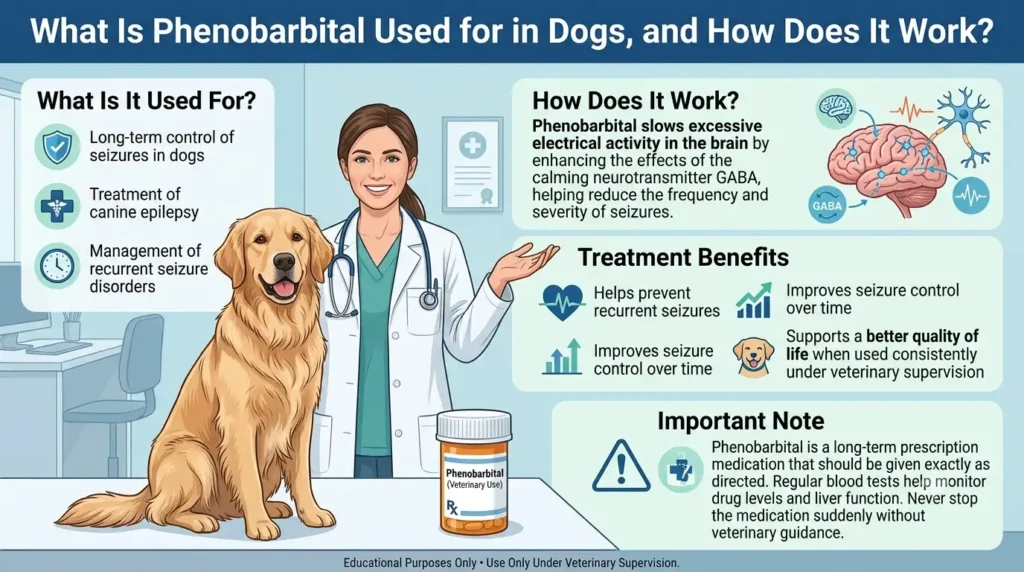
Phenobarbital dose for pets is a prescription anticonvulsant medication that is commonly used in the treatment of epilepsy and seizures in dogs and is a barbiturate. It is regarded as a first line anti-seizure drug due to its ease of use, low cost, and long track record of efficacy. Phenobarbital may also be used for epilepsy, but can also be used to help control seizures associated with brain tumors, infections, poisoning or other neurological problems. The medication can be administered as tablets, oral liquid or injectable so that the veterinarian can decide which is best for each individual dog.
Phenobarbital is effective in slowing and calming down irregular brain activity that leads to seizures. It helps to amplify the action of one of the brain's main inhibitory neurotransmitters called gamma-aminobutyric acid (GABA) that helps to dampen down overactive nerve cells. Phenobarbital enhances this inhibitory action, making it more difficult for the neurons to become activated and thereby diminishes the frequency and intensity of seizures.
Several studies have demonstrated that phenobarbital is very effective; about 82% of dogs treated with phenobarbital have at least a 50% decrease in the number of seizures. But some dogs will need other or extra anti-seizure drugs. Depending on the case, a veterinarian might consider using phenobarbital as a single drug or along with another drug like potassium bromide, levetiracetam (Keppra®), or primidone to aid in controlling seizures.
Phenobarbital dosage for pets is not FDA approved for use in dogs, but may be used as an off-label (extra-label) drug if it is appropriate. It is also a controlled substance, which means that its prescription may be subject to Federal and State laws that might limit the amount dispensed, prescription validity, and quantity of refills. Never exceed the recommended dose prescribed by your veterinarian and be sure to check your local pharmacy for prescription needs.
How Is Phenobarbital Given to Dogs?
Phenobarbital comes in tablets for the mouth, a liquid for the mouth, compounded (flavored liquid, paste or chewable tablet), or injectable. The drug is usually given to the dog orally, and it can be prescribed as a dog prescription that can be picked up from a human or a vet's pharmacy. For dogs that can't take tablets, compounded preparations might be suggested.
Phenobarbital dosage for dogs may be administered with or without food but should be taken at the same time and according to your veterinarian's instructions. It sometimes takes several weeks for the medicine to reach the correct level in the blood stream and to exert its full effect on reducing seizures.It can take several weeks for some dogs to reach stable levels in the blood stream and have the full effect of the medicine on seizure control.
Sometimes phenobarbital is the only drug prescribed, but for some dogs whose seizures are difficult to control, it can be combined with other anti-seizure medications and be part of a long term treatment plan. Veterinarians may give phenobarbital injection for fast control of seizures in emergencies or when hospitalized.
Discontinuing phenobarbital should never be done abruptly because it may cause withdrawal symptoms and the number and severity of seizures may greatly rise. Always dosage adjustments or stopping should be done slowly with vet supervision.


Paid Links - As an Amazon Associate, I earn from qualifying purchases.
What Are the Side Effects of Phenobarbital in Dogs?

Phenobarbital dose for animals appears to be quite safe and tolerated well by dogs, particularly once they become accustomed to it. Most mild side effects happen in the first 1-2 weeks of treatment and/or after a dose increase and usually get better by themselves. Some side effects do, however, require immediate veterinary care, especially if affecting the liver or significant changes in behavior.
Common Side Effects
- Sleepiness or sedation
- Reduced activity or poor energy level
- Co-ordination problems (ataxia) or clumsiness
- Increased appetite
- Increased thirst
- Increased urination
- Gain in weight (increased appetite)
- Diarrhea
- Vomiting
- Elevated liver enzymes
- Restlessness
- Hyperactivity
- Agitation
- Anxiety
- Excitability
- Pacing, panting, or whining
Serious side effects which occur less often
- Irritation of the liver or liver damage
- If used long-term, liver scarring or liver failure can occur.
- Inflammation of the pancreas (pancreatitis).
- Reduced blood counts (anemia)
- Aggression and/or changes in behavior
- Persistent severe lethargy
- Loss of appetite
- Yellowing of eyes, gums, or skin (jaundice)
- Small sores on the skin, particularly on the paws
- Facial itching
To monitor the liver to prevent damage
Phenobarbital is metabolized in the liver and regular blood tests are recommended to monitor:
- Blood phenobarbital levels
- Liver enzyme values
- Overall liver function
Monitoring commonly begins:
- About 2 weeks after starting treatment
- Again around 6 weeks
- Then, every 6 months or as recommended by your veterinarian.
Important Safety Notes
- Your dog will adjust to the drug, and mild drowsiness and poor coordination will usually become better in 1-2 weeks.
- If your dog continues to be extremely sleepy, weak or uncoordinated after this time has passed, contact your veterinarian. May require dosage adjustment.
- If your dog gets aggressive, lethargic or experiences other serious symptoms, such as severe vomiting or jaundice, contact your veterinarian immediately.
- Do not abruptly discontinue phenobarbital. If stopped suddenly, it can result in barbiturate withdrawal seizures. Any dosage changes should only be made gradually under veterinary supervision.
When Might Phenobarbital Not Be the Best Choice?
While phenobarbital is an effective anti-seizure drug for many dogs, it may not be the safest anti-seizure drug for every dog. Your veterinarian will evaluate the overall health of your dog, as well as other medical issues and medications your dog may be taking, before giving it to him.
There are some dogs that may not be a good choice:
- Dogs with pre-existing liver disease because of the greater risk for liver toxicity.
- Dogs with inflamed kidney or kidney infection.
- Dogs with severe breathing or respiratory problems.
Dogs that need to be treated with caution.
Phenobarbital should be used with caution in dogs that are:
- Anemic
- Dehydrated
- Heart disease life.
- Life with lung disease
- Poor function of adrenal glands diagnosed
- Pregnant or nursing
There are medical conditions that can be affected.
Phenobarbital can also make it difficult to diagnose or treat some hormonal problems, such as:
- Hypothyroidism, since it might affect the results of thyroid function tests.
- Cushing's disease can interfere with the testing of adrenal glands and decrease the action of a commonly used drug for treating the disease, called Lysodren (mitotane).
Veterinary Evaluation Is Very important
Your veterinarian will need to consider your dog's medical history, other health conditions and medications that they are on before starting phenobarbital, to determine if it is the safest and most appropriate treatment for your dog's seizures.
You May Also Like to Read:
- Griseofulvin Dosage For Dogs: Calculator, Chart & Safe Guide
- Rovera Dosage for Dogs: Calculator, Chart & Safe Guide
FAQs
If my dog misses a dose of phenobarbital what should I do?
If you forget to administer and it is near the time of the next dose, then give the dose early and slowly re-establish your dog's normal schedule. Never administer a double dose without your veterinarian's advice. If a dose is missed, there is a risk of seizures, so attempt and stick to a time of day when the medication is given.
Why is my dog still having seizures while taking phenobarbital?
It will take several weeks for phenobarbital dosage to be effective in the blood. If seizures persist for more than two weeks, or if seizures occur despite taking the med(s) regularly, contact your veterinarian. They might change the dose, try another anti-seizure drug, or prescribe an alternative treatment.
Is it legal to get phenobarbital for a dog without a prescription?
No. Phenobarbital dog dosage is a prescription only medicine and is classified as a Schedule IV controlled substance in the U.S. Must be prescribed by licensed veterinarian and dispensed under federal and state regulations.
Does phenobarbital put my dog to sleep or will it calm him?
dog Phenobarbital dosage has sedative effects and this may cause many dogs to be calmer, sleepier, or less anxious, particularly at the start of treatment. Some dogs, however, may react the other way round and become restless, hyperactive or aggressive. If you see any unusual changes in behavior, contact your veterinarian.
Do they use phenobarbital to put dogs to sleep?
Phenobarbital dosage for dogs is a medication used for seizure disorders and is not for the purpose of euthanasia. Occasionally, it is mistaken for pentobarbital, another barbiturate which veterinarians use for humane euthanasia.
Is phenobarbital an effective anti-epileptic drug for dogs?
Phenobarbital is known to be one of the most effective first-line anti-seizure drugs that are available for dogs. Studies have indicated that it has been able to decrease the frequency of seizures in 85% of dogs with idiopathic epilepsy when administered regularly at the correct dosage. Many dogs show great improvement, but not all are totally free of seizures.
Can you give phenobarbital to dogs?
Phenobarbital Dog medication is generally safe and well-tolerated as long as it's prescribed and monitored by a veterinarian. These common side effects typically improve with time but chronic use may have other possible side effects or impact on liver function. Blood tests are necessary to check drug levels regularly and to check the function of the liver.
What to do if you suspect your dog has overdosed on phenobarbital?
Phenobarbital overdose can be a medical emergency. Symptoms can be excessive drowsiness, incoordination, difficulty breathing, low body temperature, blue gums, irregular heartbeat, low blood pressure, and coma. If you think your dog may have been overdosed, contact your veterinarian right away.
When will my dog be able to stop taking phenobarbital?
A veterinarian may be able to reduce or eliminate phenobarbital for some dogs that have control of their seizures for a long time, but this decision should only be made by the veterinarian. Medication should be weaned off gradually at all times or withdrawal seizures may occur suddenly and intensely.
Final Thoughts
Phenobarbital Dosage For dogs is one of the most trusted and commonly prescribed anti-seizure medication for dogs, and it's effective in decreasing the number of seizures and their severity in many dogs. If administered correctly and monitored closely, it is very safe, effective and is often the first line of treatment for canine epilepsy and other seizure conditions.
Although most dogs tolerate phenobarbital well, it's important to watch for potential side effects such as sedation, lack of coordination, increased thirst, increased appetite, and possible liver-related complications. Always administer the drug as prescribed, never abruptly discontinue and go to all blood tests prescribed to help monitor the phenobarbital levels and liver function.
A seizure diary is useful to help your veterinarian assess how your dog is responding to treatment and adjust the dosage if necessary; it should include the date, length, severity, and any potential triggers of your dog's seizures. Many dogs taking phenobarbital can live longer, happier and more comfortable lives with the proper drugs, regular veterinary check-ups and quick treatment of any symptoms that do not seem normal.