Dogs can be anxious, and it happens more frequently than you might think. If your pet is fidgety, destructive when left alone, scared of thunderstorms, or often stressed, their anxiety may be the culprit. Vets have seen a dramatic increase in dog anxiety in recent years, such as separation anxiety, fear of loud noises, fear of strangers, and stress-related behavior issues.
Many veterinarians may prescribe Prozac for dogs (generic fluoxetine) as part of a holistic approach to treatment when training, lifestyle adjustments, and relaxation strategies have failed to make a difference.
Prozac Dosage For Dogs is a popular search among owners because it’s important to administer the right dose for safety and effectiveness. Fluoxetine is an antidepressant medication frequently prescribed by veterinarians to treat anxiety disorders, compulsive disorders and some forms of emotional stress in dogs. It helps regulate the neurotransmitter serotonin in the brain, which can make some dogs less anxious, depressed, and more trainable.
But don’t guess the dose. The ideal dose for your dog will depend on its weight, health history, age, other drugs being taken, and the condition being treated. The wrong dose could cause vomiting, lethargy, loss of appetite, panting, hyperactivity, irritability, or gastrointestinal upset. Special care should be taken for dogs with epilepsy and those on certain medications.


Paid Links - As an Amazon Associate, I earn from qualifying purchases.
In this comprehensive guide, we’ll explain everything you need to know about Prozac dosages for dogs by weight, including charts by weight, uses, side effects, precautions and more, including when it will start working and when you should contact your vet.
Disclaimer: This guide is for informational purposes only and is not a substitute for professional veterinary advice. Always consult your veterinarian before giving Prozac (Fluoxetine) or any medication to your dog.
Key Takeaways
- Prozac (fluoxetine) dosage for dogs is frequently recommended by veterinarians to treat dog anxiety, separation anxiety, fears and phobias, compulsive disorders, aggression and other anxiety-related disorders.
- The number of dogs diagnosed with anxiety has risen, so owners are looking for solutions like Prozac to treat their pets.
- The amount of Prozac dose to give your dog should be prescribed by a veterinarian depending on your dog's size, health and behavioral issues.
- Prozac for dogs can be administered orally in tablet, capsule or liquid form, usually once a day for long-term treatment.
- It is important to combine Prozac medication treatment with behavior modification to teach dogs appropriate coping mechanisms and eliminate stressors.
- Side effects include vomiting, diarrhea, loss of appetite, lethargy, restlessness or aggression in some dogs.
- Severe side effects, such as serotonin syndrome, can indicate an overdose or potentially harmful medication interaction, and should be addressed with veterinary treatment.
- Drugs are not always sufficient - training and/or veterinary behaviorist support can help improve outcomes.
What is the Ideal Prozac Dosage For Dogs?
The safe and recommended prozac dosage for dogs is 0.5 mg to 0.9 mg per pound (1 to 2 mg per kg) orally once daily.
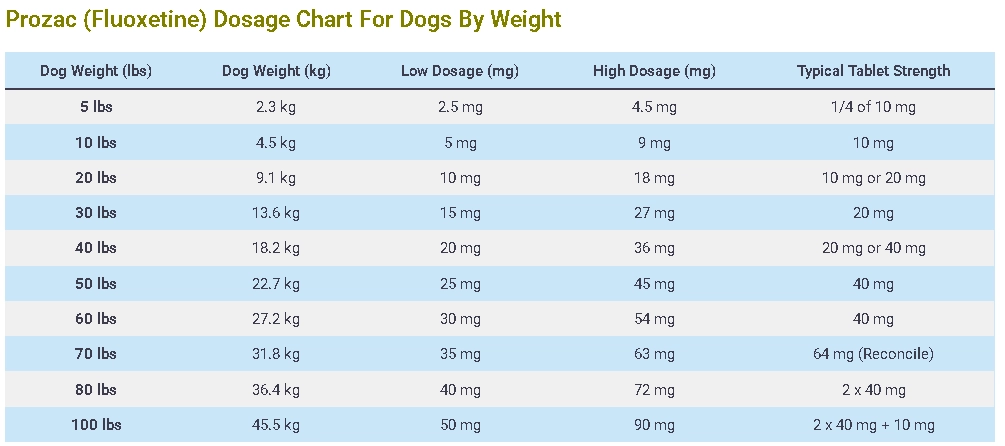
Prozac (Fluoxetine) Dosage Chart For Dogs By Weight
Based on standard veterinary guidelines, the following table provides the daily dosage for Prozac dosage for dogs by weight based on a dog's weight. These figures are calculated using the standard therapeutic range of 0.5 mg to 0.9 mg per pound (roughly 1 to 2 mg per kg).
| Dog Weight (lbs) | Dog Weight (kg) | Low Dosage (mg) | High Dosage (mg) | Typical Tablet Strength |
| 5 lbs | 2.3 kg | 2.5 mg | 4.5 mg | 1/4 of 10 mg |
| 10 lbs | 4.5 kg | 5 mg | 9 mg | 10 mg |
| 20 lbs | 9.1 kg | 10 mg | 18 mg | 10 mg or 20 mg |
| 30 lbs | 13.6 kg | 15 mg | 27 mg | 20 mg |
| 40 lbs | 18.2 kg | 20 mg | 36 mg | 20 mg or 40 mg |
| 50 lbs | 22.7 kg | 25 mg | 45 mg | 40 mg |
| 60 lbs | 27.2 kg | 30 mg | 54 mg | 40 mg |
| 70 lbs | 31.8 kg | 35 mg | 63 mg | 64 mg (Reconcile) |
| 80 lbs | 36.4 kg | 40 mg | 72 mg | 2 x 40 mg |
| 100 lbs | 45.5 kg | 50 mg | 90 mg | 2 x 40 mg + 10 mg |
Important Administration Rules
- Frequency: Administer once daily at the same time every morning.
- Forms: Often supplied as 10 mg, 20 mg, and 40 mg tablets/capsules, or as veterinary-specific chewable tablets (Reconcile®) in 8, 16, 32, and 64 mg strengths.
- Timeline: It typically takes 4 to 8 weeks of consistent daily use to observe a significant change in behavior.
- Tapering: Never stop giving Prozac abruptly; doing so can cause adverse reactions. Always follow a veterinarian's schedule to gradually reduce the dose.
Notice: This table is for informational purposes. Your veterinarian will determine the precise dose based on your dog's specific health profile, history of seizures, and the severity of the behavior being treated.
What Is Prozac (Fluoxetine) for Dogs?
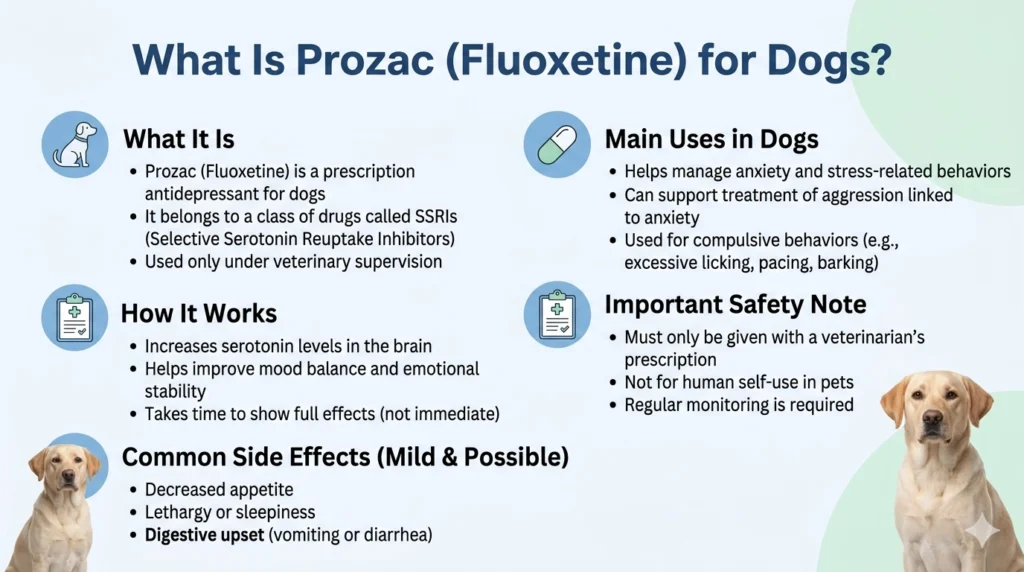
Prozac (fluoxetine) medication for dogs is an antidepressant drug that is part of the selective serotonin reuptake inhibitors (SSRIs) group. It increases the amount of serotonin in the brain, which can improve mood, decrease anxiety, and promote more relaxed behavior in dogs.
Fluoxetine is widely used in veterinary practice as a behavior-modifying drug for treating separation anxiety, anxiety disorders, compulsive disorders, phobias and other anxiety-related conditions. It's one of the most commonly used medications for dog behavior problems.
Fluoxetine dosage for dogs per pound or kg can be purchased under the brand names Prozac® (for humans), Reconcile® (for dogs), and generic fluoxetine. Reconcile® was approved by the FDA for use in dogs in 2007 and is labeled for the treatment of separation anxiety, along with behavior modification training. It comes in a flavored, chewable tablet, which could be more palatable for dogs.
Prozac (fluoxetine) or generic fluoxetine can also be prescribed by veterinarians for dogs, off-label (extra-label). This is a common practice in veterinary medicine and refers to the safe use of a drug in a way that is beyond the label.
Fluoxetine dose is typically best used in conjunction with a behavior modification program under the supervision of a veterinarian or pet trainer. Some veterinarians may prescribe compounded fluoxetine to dogs when special strengths, formulations or ingredient changes are needed.
Doses and safety differ for individual pets, so never use human Prozac or antidepressants for your dog without consulting a veterinarian.
What Is Prozac Dosage Used For in Dogs?
Veterinarians will often prescribe a dose of Prozac for dogs to treat anxiety and behavior problems. Prozac contains the active ingredient fluoxetine, which helps regulate serotonin levels in the brain, which can help with emotional stability, stress levels and improve behavior.
The most common approved use is separation anxiety with the drug Reconcile® (Prozac specifically for dogs) FDA-approved for this indication in conjunction with behavior modification training. Prozac can also be used off-label for other behavioural issues, as determined by the veterinarian.
Common Uses of Prozac for Dogs
- Anxiety Disorders - anxiety, situational anxiety, anxiety from changes in routine, moving to a new home, separation anxiety.
- Other Phobias and Fears - fear of loud noises, thunderstorms, fireworks, strangers or another fear.
- Aggression – fear aggression, territorial aggression, dominance aggression, aggression toward people and/or other pets, and certain aggression exhibited due to stress.
- Compulsive Behaviors - obsessive-compulsive disorders (OCD), compulsive pacing, tail chasing, constant barking, or fixations.
- Self-Soothing and Licking - stress-induced licking, chewing or self-soothing.
Prozac is best used in combination with a behavior modification program, environmental enrichment and veterinary consultation.
Prozac Dosage and Administration for Dogs
The dose of Prozac (fluoxetine) for dogs is best determined by the veterinarian, taking into account the dog's weight, medical history, response to the medication, and the health condition being treated. Do not give your dog Prozac without advice from a veterinarian.
Typical Dosage of Prozac for Dogs
Fluoxetine for pets is often prescribed at 1 to 2 mg/kg (approximately 0.5 to 0.9 mg per pound) once a day, by mouth. Some veterinarians will start with a lower dose (occasionally 0.5 mg/kg once daily) for the first few weeks to minimise side effects and then increase the dose if required.


Paid Links - As an Amazon Associate, I earn from qualifying purchases.
Approximate Dosage Guide
- 5 lb dog: 2.5 mg
- 10 lb dog: 5–10 mg
- 20 lb dog: 10 mg
- 30 lb dog: 15 mg
- 40 lb dog: 20 mg
- 50 lb dog: 20–40 mg
- 90 lb dog: 40–80 mg
Available Forms of Fluoxetine
- Tablets: 10 mg, 15 mg, 20 mg
- Capsules: 10 mg, 20 mg, 40 mg
- Reconcile® chewable tablets: 8 mg, 16 mg, 32 mg, 64 mg
- Oral liquids may be compounded with flavoring on an individual basis.
How to Give Prozac to Dogs
- Typically once a day, orally.
- Sometimes recommended to be given in the morning, as it can cause sleepiness.
- Can be given with or without food. May need to be given with food or treats in the future if stomach upset occurs.
- When using liquid forms, be sure to follow label directions.
Important Administration Tips
- Don't suddenly stop Prozac without first consulting your veterinarian.
- Do not double up if missed. Give it as soon as possible, unless it is time for the next dose.
- Do not use alongside aged cheeses (cheddar, parmesan, gouda or swiss), as tyramine may cause a rise in heart rate and blood pressure.
- Avoid using with some products and medications unless directed by your vet.
When Will It Start Working?
Prozac may take a few weeks for the effects to be noticeable. Progress can be slow so regular monitoring and follow-up visits are necessary.
What Are the Side Effects of Prozac (Fluoxetine) for Dogs?
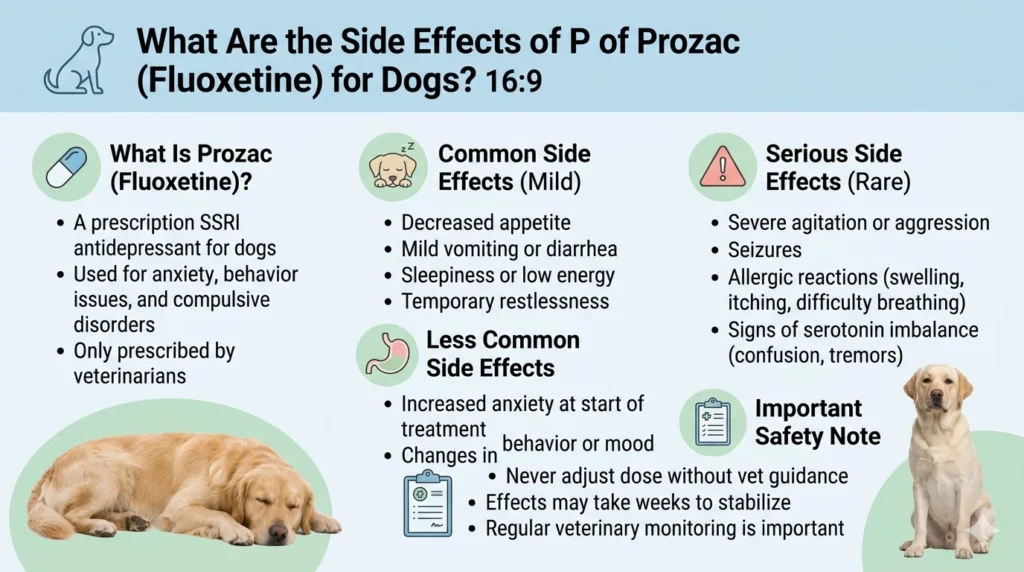
Prozac doasge for dogs is often used to treat anxiety and other behavioural problems in dogs, but can cause side effects. Some are transitory, particularly during the initial few weeks, while others require immediate veterinary treatment.
Common Side Effects
- Reduced appetite
- Weight loss
- Vomiting or diarrhea
- Sleepiness or low energy
- Shaking or tremors
- Restlessness
- Panting
- Whining or extra vocalizing
- Drooling
- Difficulty walking or uncoordinated
These side effects may wear off as your pet gets used to the drug. Stomach upset, but you may be able to avoid this by giving Prozac with food.
Behavioral Changes
Some dogs may show:
- Increased anxiety
- Irritability
- Hyperactivity
- Trouble sleeping
- Aggression or more aggression
Severe Side Effects (Please Call Your Vet)
- Seizures
- Severe or ongoing vomiting or diarrhea
- Not eating or losing weight
- Trouble breathing
- Confusion or disorientation
- Serious weakness or ataxia
- Changes in behavior
Serotonin Syndrome (Emergency)
A serious but rare side effect of an overdose or drug combinations. This condition may cause a fast heartbeat, muscle twitching, stiff muscles, restlessness, pacing, panting, confusion or convulsions. Immediate veterinary treatment is needed.
Extra Caution Needed
Use with caution in dogs with history of seizures, diabetes, liver or kidney disease, or pregnancy, or when taking other drugs.
Important Note
Don't discontinue Prozac abruptly. Your veterinarian may need to gradually wean you off Prozac.
What Are the Most Serious Risks of Prozac for Dogs?
Prozac (fluoxetine) can be safely used in dogs with veterinary supervision, but there are potential serious side effects. While rare, there are serious side effects that require veterinary care.
Seizures are a major concern, particularly in dogs with a history of seizures or on drugs that increase the possibility of seizures. Other dogs can have rapid onset of aggression, excessive agitation or unusual excitement. Disorientation, weakness, stumbling or difficulty walking are also signs to be aware of.
A very rare but severe side effect is serotonin syndrome. This may occur if the drug is used with other serotonin-modulating drugs. This can cause vomiting, diarrhoea, lack of appetite, fever, fast heartbeat, muscle twitches, dilated pupils, restlessness, confusion, agitation and seizures. This is a veterinary emergency and must be treated immediately.
Some dogs may be at increased risk, including those younger than six months, with seizures, allergic to fluoxetine or taking MAO inhibitors or other medications. Additional care is required for dogs with diabetes, severe liver disease, pregnant dogs or nursing mothers.
To avoid complications, follow your veterinarian's instructions for giving Prozac and tell your veterinarian about any medications, supplements, and flea or tick products your dog is receiving.
Are There Any Drug Interactions I Should Be Aware Of?
Prozac (fluoxetine) drug for dogs can interact with medications, dietary supplements and herbs. This can increase the risk of side effects, decrease the effectiveness, or increase the risk of a serious adverse event, including serotonin syndrome, bleeding, sedation or altered blood sugar.
Make sure to inform your veterinarian of all your dog's medications before using fluoxetine.
Caution is required when using fluoxetine with drugs such as alprazolam (Xanax), diazepam (Valium), amitriptyline, clomipramine, buspirone (Buspar), tramadol and trazodone, as mixing drugs that alter mood or serotonin levels can lead to increased side effects.
Caution is also advised with anticoagulants (such as heparin or warfarin), aspirin and NSAIDs (such as carprofen or meloxicam) because these may increase the risk of bleeding or gastrointesinal irritation. Patients receiving insulin may require extra monitoring as fluoxetine may alter blood glucose.
Other potential drug interactions include diuretics, flea/tick collars, monoamine oxidase inhibitors (MAOIs) and St. John’s wort. MAOIs are particularly important as they can have dangerous interactions with fluoxetine.
To avoid problems, never add or stop any drugs or vitamins, supplements or herbs without consulting your veterinarian.
Pros and Cons of Prozac for Dogsa
Prozac Dosage for dogs per kg or pound is often used to treat anxiety and behavioural disorders in dogs, but there are pros and cons to consider before beginning treatment.
Pros of Prozac for Dogs
A key advantage is its efficacy in treating separation anxiety, compulsive disorders and other forms of stress, leading to long-term reduction in anxiety and improved stability. It is relatively safe when used properly and as directed by a veterinarian.
It is also available in convenient formulations like chewable tablets, which may help ease the process of administering medication.
Cons of Prozac for Dogs
It can take time for Prozac to take effect, with potential delays of 4 to 6 weeks before effects are felt. It can also cause side effects like gastrointestinal disturbances, appetite loss or hyperactivity.
There is also a risk of severe side effects, such as serotonin syndrome or overdose. Moreover, some pet parents might be concerned about administering a drug that is also used for humans, despite it being approved for use in dogs and widely used.
You May Also Like to Read:
- Clonazepam Dosage For Dogs Calculator: Chart & Safe Guide
- Piriton Dosage For Dogs Calculator, Chart & Safe Guide
FAQs
Who should not take Prozac dosage for dogs?
Prozac should not be given to dogs with a history of seizures or seizures disorders, but it may also be contraindicated in dogs with diabetes and liver disease. It is important to be cautious with dogs that have recently used or are going to use a flea and tick collar as this can cause a reaction.
When will dog Prozac work?
The drug generally takes 3 to 4 weeks to start to work, but may take as long as 4 to 8 weeks (60 days) for full effectiveness. Prozac for dogs dosage has a slow build up in the body, and so is used for chronic issues such as anxiety and compulsive disorders, but not for one-off events like fireworks and thunderstorms.
How do I know if my dog needs fluoxetine?
Dogs that might benefit from Prozac may be aggressive, destructive, urinate inappropriately, hide, bark or whine excessively, pace, shake, be restless or have compulsive behaviors such as licking or chewing. Always check with a veterinarian before starting medication.
Will Prozac dose help with dog reactivity?
Indeed, if the dog is reactive due to anxiety or fear, Prozac may help. But it works best in conjunction with training.
Will Prozac dosage make my dog hungry?
Yes, a few dogs may lose their appetite or have vomiting and diarrhea with fluoxetine.
What if I miss a dose?
If you forget to give a dose, give it as soon as you remember, unless it's near the time for the next dose. Do not double dose.
Do I need to monitor the treatment?
Lab monitoring may not be necessary but veterinarians will usually monitor progress to make sure the drug is having an effect and to check for side effects. The owner should also keep an eye on their dog for any changes.
How should I store fluoxetine dose?
Keep it at room temperature between 68°F and 77°F (20°C and 25°C) in a tightly sealed container, away from moisture and light.
What should I do in an emergency?
In case of overdose or severe reaction, call your vet or take your pet to an emergency clinic.
Final Thoughts
Prozac Dosage for dogs (fluoxetine) is an oral antidepressant drug that is sometimes used in dogs to treat certain types of anxiety disorders and occasionally aggression. This drug is available in tablet, capsule and liquid form, and is generally given once a day under the supervision of a veterinarian.
Side effects, such as vomiting, diarrhea and weight loss, are the most common in dogs, although these may be reduced if the medication is administered with food. It is well tolerated by many dogs, but care should be taken during the first few weeks.
It's worth noting that Prozac does not work overnight. It can take two months for its full effect to be observed due to a build-up in the system. But, under veterinary supervision and with regular administration, many dogs do respond well over time to this medication for the treatment of anxiety.