Disclaimer: This guide is for informational purposes only and is not a substitute for professional veterinary advice. Always consult your veterinarian before giving Vitamin K1 or any medication to your dog.
Vitamin K1 Dosage Calculator For Dogs
Therapeutic guideline for anticoagulant rodenticide poisoning (Dogs Only)
Converted Weight
Total Daily Vitamin K1 Dose
Dose Every 12 Hours (Twice Daily)
Weight in kg = Weight in lbs ÷ 2.2
Total Daily Dose = Weight (kg) × 2.5–5.0 mg/kg/day
Dose Every 12 Hours = Total Daily Dose ÷ 2
Vitamin K1 is fat-soluble and should always be given with a fatty meal (such as canned food or another veterinarian-approved fatty food) to improve absorption.
This calculator provides veterinary dosing guidelines (2.5–5.0 mg/kg/day) commonly used for anticoagulant rodenticide poisoning in dogs. Treatment duration and exact dosage should always be determined by your veterinarian based on the specific toxin, clotting test results, and your dog’s clinical condition.
© medsdog.com
The most frequent use Vitamin K1 for dogs as prescribed by a veterinarian is to treat or prevent life-threatening bleeding due to anticoagulant rodenticide (rat poison) poisoning or some diseases which affect normal vitamin K metabolism.
Vitamin K1, also called phytonadione, is a fat-soluble vitamin that is essential in blood clotting, helping the liver to synthesize prothrombin and other blood coagulation factors that prevent bleeding. Inadequate levels of Vitamin K1 for dogs can cause hypoprothrombinemia, which is a reduced ability for blood to clot and can result in severe internal or external bleeding.
Vitamin K1 therapy is usually not started until after emergency care or Vitamin K1 injections are given after the dog has been exposed to coumarin- or warfarin-type rodenticides, but may also be given if other drugs are the cause of a dog's Vitamin K deficiency which interfere with vitamin K metabolism.
Oral Vitamin K1 tablets or chewable tablets often are used for follow-up treatment after you are no longer hospitalized. Vitamin K1 is fat soluble and should always be administered with a fatty meal to increase absorption, and therefore effectiveness.
We'll tell you how much Vitamin K1 dosage for pets to give your dog per weight in this guide, how to determine dosage, dosage tables for pounds and kilograms, Vitamin K1 dosage frequency, Vitamin K1 dog side effects, safety precautions, and answer frequently asked questions. While the information contained in this guide is evidence-based, Vitamin K1 should only be administered under a veterinarian's supervision, because the correct dosage and length of treatment will vary depending on the type of poisoning or underlying disease.
Key Takeaways
- Vitamin K1 (phytonadione) promotes the formation of clotting factors in the liver, which are required to prevent bleeding.
- It's most frequently used for dogs that have eaten anticoagulant rodenticides (rat poison) or when a disease is present that affects vitamin K metabolism.
- The usual therapeutic dose is 2.5–5.0 mg/kg of body weight every 12 hours unless otherwise prescribed by your veterinarian.
- Vitamin K1 dosage for dogs is always given with a fatty meal to aid absorption.
- Oral Vitamin K1 is usually prescribed as a follow-on treatment after initial emergency care or Vitamin K1 injections.
- Dosage and duration of treatment depends on the type of poisoning, condition of your dog and follow up clotting test results.
- Never stop treatment early, even if your dog seems fine, unless directed to by your veterinarian.
- If your dog shows any of these symptoms, including abnormal bleeding, pale gums, weakness, collapse, difficulty breathing, bloody urine or bloody stool, take them to the vet right away.
- Vitamin K1 must be administered under veterinary care and if doses or the length of the treatment is incorrect, the risk of re-bleeding may be increased.
How Much Vitamin K1 Can I Give My Dog?
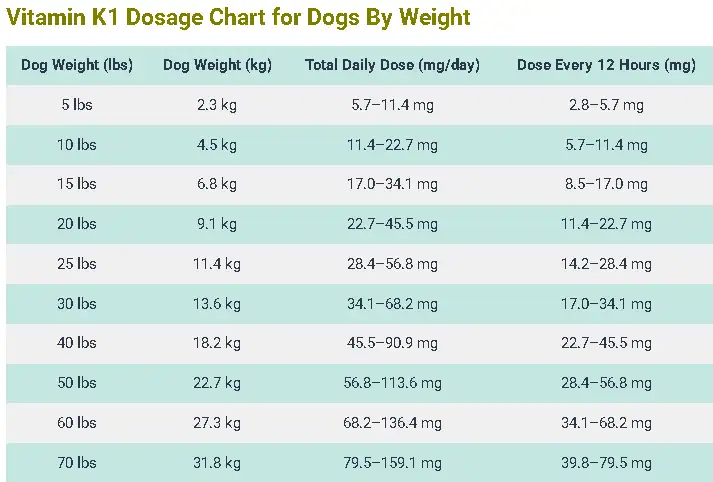
The Standard Vitamin K1 dosage for dogs is 2.5–5.0 mg/kg (1 to 3 mg/lb), once daily or divided into 2 equal doses every 12 hours.
Vitamin K1 Dosage Chart for Dogs By Weight
| Dog Weight (lbs) | Dog Weight (kg) | Total Daily Dose (mg/day) | Dose Every 12 Hours (mg) |
|---|---|---|---|
| 5 lbs | 2.3 kg | 5.7–11.4 mg | 2.8–5.7 mg |
| 10 lbs | 4.5 kg | 11.4–22.7 mg | 5.7–11.4 mg |
| 15 lbs | 6.8 kg | 17.0–34.1 mg | 8.5–17.0 mg |
| 20 lbs | 9.1 kg | 22.7–45.5 mg | 11.4–22.7 mg |
| 25 lbs | 11.4 kg | 28.4–56.8 mg | 14.2–28.4 mg |
| 30 lbs | 13.6 kg | 34.1–68.2 mg | 17.0–34.1 mg |
| 40 lbs | 18.2 kg | 45.5–90.9 mg | 22.7–45.5 mg |
| 50 lbs | 22.7 kg | 56.8–113.6 mg | 28.4–56.8 mg |
| 60 lbs | 27.3 kg | 68.2–136.4 mg | 34.1–68.2 mg |
| 70 lbs | 31.8 kg | 79.5–159.1 mg | 39.8–79.5 mg |
| 80 lbs | 36.4 kg | 90.9–181.8 mg | 45.5–90.9 mg |
| 90 lbs | 40.9 kg | 102.3–204.5 mg | 51.1–102.3 mg |
| 100 lbs | 45.5 kg | 113.6–227.3 mg | 56.8–113.6 mg |
Note: This chart is intended for dogs receiving Vitamin K1 therapy for anticoagulant rodenticide poisoning. The daily dose is typically divided into two equal doses given every 12 hours, and Vitamin K1 should always be administered with a fatty meal to improve absorption. The exact dose and treatment duration should be determined by a veterinarian based on the type of rodenticide, clotting test results, and the dog's clinical condition.
What Is Vitamin K1 for Dogs?
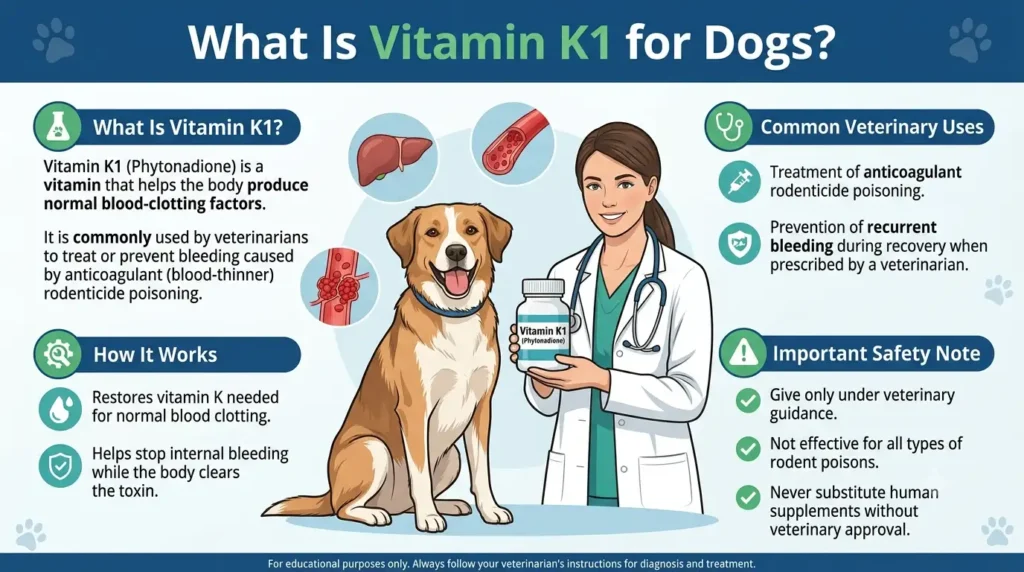
Phytonadione (vitamin K1) is a prescription drug that can be used in veterinary medicine for vitamin K deficiency, which is caused more often than not by anticoagulant rodenticide (rat poisons) poisoning in dogs. Vitamin K plays an important role in blood clotting and is necessary for the production of clotting factors to prevent bleeding.
Anticoagulant rodenticides are poisonous to dogs: When a dog eats some of these poisons, the dog's blood doesn't clot properly because the poison interferes with the ability of the dog's body to recycle vitamin K, which is needed for clotting.
While the most common indication for Vitamin K1 dosage for dogs is to treat poisoning caused by ingesting rat poison, veterinarians may also use Vitamin K1 for other diseases that can result in severe vitamin K deficiency, such as liver disease (intrahepatic cholestasis), bile duct obstruction, intestinal malabsorption disorders, and prolonged administration of some oral antibiotics that disrupt vitamin K metabolism.
Dogs with active bleeding usually are treated initially with injectable Vitamin K1 (under the skin) by a veterinarian as this form is more rapidly absorbed than the oral form.
Treatment typically continues with oral Vitamin K1 tablets or capsules for several weeks after the dog's condition has stabilized and he is no longer hospitalized. Veterinarians frequently run blood clotting tests during this time to keep track of the recovery, and to decide on the length of treatment.
Vitamin K1 medication is FDA approved for human use (Mephyton® and generic phytonadione) but not approved for veterinary use. But it is used off-label (extra-label) by veterinarians in a medical situation when it is appropriate.
A compounded Vitamin K1 formulation may be recommended in some cases where a dog is unable to receive standard tablets, needs a specific strength or has a reaction to one of the ingredients in the commercially available compound.
Compounded medications are specially formulated to fit the needs of a particular patient by a licensed pharmacist or veterinarian, but have not been approved by the FDA.
How Vitamin K1 Works in Dogs
Vitamin K1 (phytonadione) can help restore a dog's normal blood-clotting function by assisting the liver in the production of blood-clotting factors needed to stop the bleeding. It is the only antidote known to be effective in the treatment of poisoning from many of the long-acting anticoagulant rodenticides LAARs found in rat and mouse poisons.
These rodenticides inhibit the recycling of vitamin K and thus cause a shortage of active vitamin K. Thus the liver is unable to make adequate quantities of clotting factors, which leads to hypoprothrombinemia and makes it easier to sustain severe internal or external bleeding.
Vitamin K1 acts by replacing the vitamin K in the body, so that normal clotting factor production can resume. This assists in reversing the anticoagulant effects of the poison, and decreases the possibility of life-threatening hemorrhage as the toxin is slowly excreted from the body.


Paid Links - As an Amazon Associate, I earn from qualifying purchases.
Key Points
- Promotes the synthesis of clotting factors and thus aids in restoring blood clotting.
- Reverses the effects of anticoagulant rodenticides and is the mainstay of therapy for this type of poisoning.
- Aids in avoiding severe complications such as heavy bleeding, loss of blood and anemia.
- Promotes recovery until the poison is out of the dog's body.
In normal circumstances, a dog's diet and natural production in the intestine provide sufficient vitamin K and supplementation is seldom necessary. But, if a dog eats an anticoagulant rodenticide by accident, vitamin K metabolism can be disrupted very quickly and life-threatening bleeding can occur unless it is treated promptly with Vitamin K1 by a veterinarian.
Possible Side Effects of Vitamin K1 for Dogs
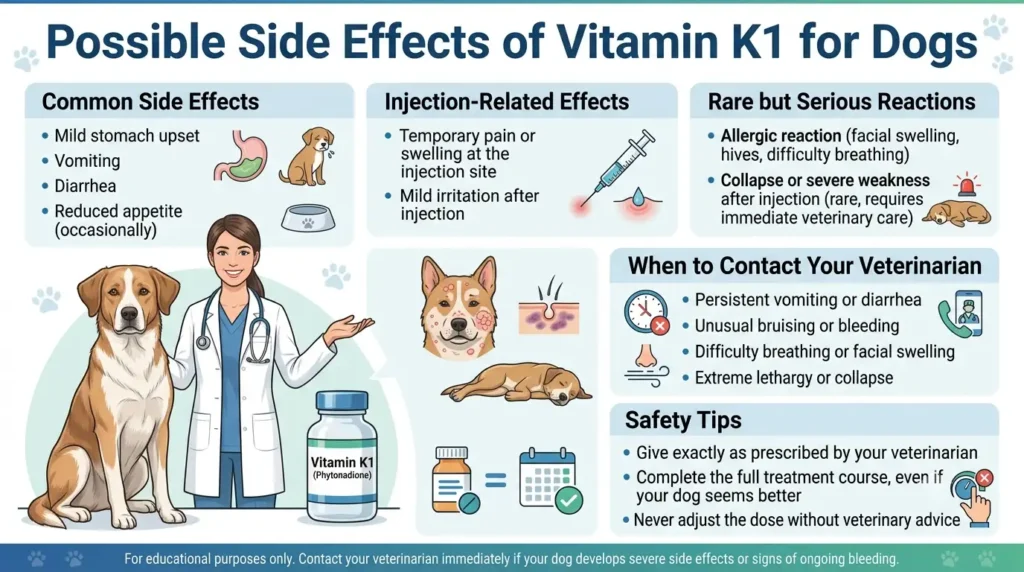
Vitamin K1 Dosage For Animals is considered safe for dogs, particular when administered orally under the supervision of a veterinarian. There are generally few or no side effects that are seen during treatment. As with all medications however, there can be side effects of Vitamin K1 in some instances, especially if it is injected into the body.
Possible Side Effects
- Redness, swelling or pain at the site where a shot was given under the skin.
- Allergic reactions are very uncommon but can happen and should be treated immediately by a vet.
After hospitalization, chewable tablets or tablets given by mouth are more often used, since they tend to have fewer side effects than the injectable form.
Important Precautions
- Oral Vitamin K1 is not fast acting. It is not necessarily expected to restore a normal blood clotting function immediately after administration; thus, in emergency situations, injectable Vitamin K1 is usually used first.
- Vitamin K1 is used as follow up treatment after Vitamin K1 injections and hospitalization when the dog's condition stabilizes.
- Using vitamin K1 to correct bleeding induced by the use of heparin should not be relied upon because it does not reverse the effects of heparin.
- If a dog doesn't respond to Vitamin K1 therapy, this might be because they are not responding to the treatment and further veterinary assessment is required.
- Certain anticoagulant drugs can be temporarily inactive when high or repeated doses are given, due to temporary resistance.
Vitamin K1 should always be used under veterinary supervision. Keep out of direct sunlight and away from children and other animals; store at room temperature.
Vitamin K1 Overdose Information for Dogs
Dogs are not likely to become toxic or have serious symptoms from an overdose of Vitamin K1. But any suspected overdose should still be treated as a medical matter: if your dog is suffering from an ongoing health issue or has been administered another medication.
In case of an overdose
- Call your vet right away for advice.
- If your usual vet is not available, take your pet to the closest animal emergency clinic or emergency animal hospital.
- An animal poison control center can also be called for advice (fees may apply).
Your veterinarian may want to monitor your dog, however, while Vitamin K1 is a very safe medication, to make sure that it is taken safely and your dog's underlying problem is being properly addressed.
You May Also Like to Read:
- (MSM) Methylsulfonylmethane Dosage For Dogs: Calculator & Safe Guide
- Simparica Trio Dosage For Dogs: Calculator & Safe Guide
FAQs
Can dogs buy Vitamin K1 dose over the counter?
No. The Vitamin K1 used to treat anticoagulant rodenticide poisoning in dogs comes in the form of a prescription drug and can only be prescribed by a veterinarian.
How long it takes Vitamin K1 to work in dogs?
The vitamin K1 dose usually begins to reverse the effect of the blood thinning poison use in 24 to 48 hours after treatment is initiated. But, it takes ongoing treatment, as prescribed by your vet, to achieve complete recovery.
What is the typical length of time for dogs to take Vitamin K1?
Many dogs need about 30 days of treatment because the long acting anticoagulant rodenticides can persist for several weeks in the dog's body. Your veterinarian might have blood clotting tests performed prior to discontinuing the medication.
What are the storage requirements for Vitamin K1?
Vitamin K1 tablets/capsules should be stored in a tightly closed container at 59–86°F (15–30°C) out of direct moisture and light. Follow the instructions for storage on the prescription label; store prescription products as directed by the compounding pharmacy.
How will you know if your dog has been poisoned by rats?
Clinical signs may not be apparent for 5 to 7 days after ingestion. Bloody feces, pale gums, weakness, lethargy, coughing, vomiting, difficulty breathing, depression and collapse are all possible symptoms. If poisoning is suspected, immediate veterinary treatment is necessary.
Will Vitamin K1 cure rat poison poisoning?
Yes. The usual treatment for anticoagulant rodenticide (superwarfarin) poisoning is Vitamin K1 dosage. When given at the right time and for the correct length of time it restores normal blood clotting, and prevents life-threatening internal bleeding.
Is Vitamin K1 poisonous to dogs?
Vitamin K1 is relatively nontoxic and overdoses are not usually linked to serious toxicity. However, if your dog is fed more than the recommended dose, please call your veterinarian or the nearest emergency animal hospital for suggestions.
Do I need to continue to administer Vitamin K1 after my dog appears to be getting better?
No, because even if your dog looks 100% better, you should never end Vitamin K1 early unless your Vet has told you otherwise. Discontinuing treatment prematurely can lead to the return of the bleeding because there might still be the anticoagulant toxin in the person's system.
Final Thoughts
Vitamin K1 for dogs is a lifesaving medication for any dog with anticoagulant rodenticide (rat poison) poisoning and any severe vitamin K deficiency condition. If used at the appropriate dose and for the entire duration of treatment, it can improve blood clotting and greatly lower the risk of serious and life-threatening internal bleeding.
Vitamin K1 should only be used under a veterinarian's supervision due to the need for an appropriate dose and treatment duration that depends on your dog's weight, type of poison, and results of follow-up blood clotting tests. Don't stop treatment prematurely if your dog looks better, even if your veterinarian says it's OK to do so.
If you think your dog has eaten rat poison or is exhibiting unusual bleeding, see a veterinarian ASAP. With prompt diagnosis and treatment with Vitamin K1, the difference between full recovery and a life-threatening emergency can be a matter of just a few moments.