Pedialyte Dosage Calculator For Dogs
For Mild Dehydration • Diluted Pedialyte Only
Recommended Diluted Pedialyte Volume
Minimum Dose (2 mL/lb):
Maximum Dose (4 mL/lb):
Administration:
Offer this amount of the diluted mixture every 1–2 hours if advised by your veterinarian.


Paid Links - As an Amazon Associate, I earn from qualifying purchases.
Prepare the Mixture
Mix 1 part Clear, Unflavored Pedialyte with 1 equal part plain water (50:50 ratio).
Example:
50 mL Pedialyte + 50 mL Water = 100 mL diluted solution.
Approximate Kitchen Conversions
Reference:
5 mL = 1 teaspoon (tsp)
15 mL = 1 tablespoon (tbsp)
30 mL = 1 fluid ounce (oz)
- Use only clear, unflavored Pedialyte.
- Do not force-feed liquids to a lethargic or unresponsive dog because aspiration can occur.
- Do not use this guideline if your dog has diabetes, heart disease, kidney disease, or is actively vomiting unless directed by a veterinarian.
- This calculator is intended only for dogs with mild dehydration and is not a substitute for veterinary care.
How This Calculator Works
The calculator estimates the hourly volume of a 50:50 diluted Pedialyte solution using the commonly referenced guideline of 2–4 mL per pound (4.4–8.8 mL/kg) of body weight every 1–2 hours for dogs with mild dehydration. Always consult your veterinarian before administering any home rehydration therapy.
© medsdog.com
Dehydration is a relatively common issue that can occur in dogs after vomiting, diarrhea, illness or from not drinking enough water. As a dog continues to lose fluid faster than it can replace it, they are also losing sodium, potassium, and chloride, which are all vital electrolytes that help maintain proper nerve function, muscle movement and fluid balance. Mild dehydration results in lethargy, dry gums and weakness and severe dehydration can cause shock or kidney failure and may be life-threatening if not treated promptly by a veterinarian.
Pedialyte Dosage For Dogs is a known oral electrolyte solution for people, and many pet owners will ask if it’s OK to use to rehydrate the dog. The answer is yes—but only in certain situations. Some otherwise healthy dogs may benefit from small quantities of a clear, unflavoured, diluted version of Pedialyte – especially if advised by a vet if they are mildly dehydrated. Pedialyte, however, is designed for people, not dogs, and the amount of sodium and sugar in Pedialyte may not agree with all pets. Pedialyte should never be given to dogs that have diabetes, heart disease, kidney disease, persistent vomiting or severe dehydration without veterinary guidance.
In this article, you’ll learn all about Pedialyte dosage for the canine, when it might be appropriate, how to dilute and administer it safely, dosage by weight, potential side effects, when the use of Pedialyte should be avoided, and safer alternatives to help your dog recover and prevent dehydration from becoming a medical emergency.
Key Takeaways
- Some dogs may benefit from Pedialyte, but it needs to be administered under a veterinarian’s supervision.
- Only use clear, unflavored Pedialyte and add an equal amount of plain water (50:50).
- A rule of thumb for mild dehydration is to provide 2–4 mL of the diluted mixture for each 1 lb (4.4–8.8 mL/kg) of body weight every 1–2 hours.
- Dogs sweat very little through the panting process and fresh water is typically all that is needed after activity or hot weather.
- Pedialyte dosage for dogs is not made specifically for dogs, and shouldn’t be used in lieu of veterinary care.
- Pedialyte is not a treatment for the cause of dehydration (e.g., vomiting, diarrhea, or illness).
- Do not administer Pedialyte to dogs with diabetes, heart disease, kidney disease, severe dehydration or continuous vomiting, unless recommended by the veterinarian.
- Do not force liquid into a weak, lethargic or unresponsive dog’s mouth as this can cause aspiration.
- If your dog continues to vomit and is unable to keep fluid down, or if it experiences severe or prolonged vomiting and/or diarrhea, or if it is moderately to severely dehydrated, contact your veterinarian immediately.
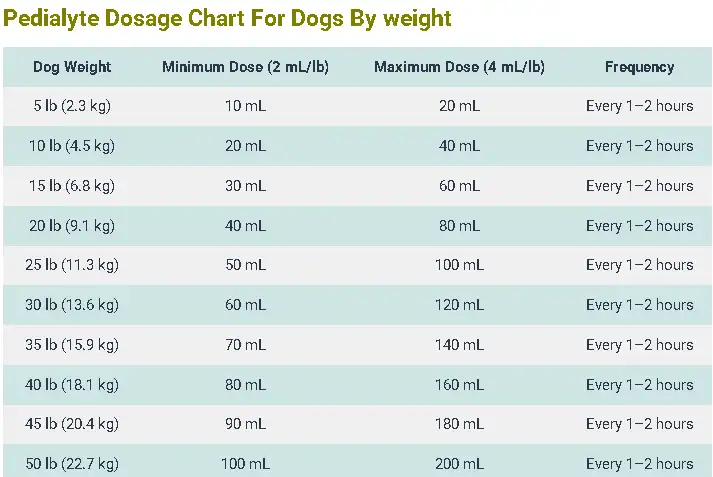
Pedialyte Dosage Chart For Dogs By weight
| Dog Weight | Minimum Dose (2 mL/lb) | Maximum Dose (4 mL/lb) | Frequency |
|---|---|---|---|
| 5 lb (2.3 kg) | 10 mL | 20 mL | Every 1–2 hours |
| 10 lb (4.5 kg) | 20 mL | 40 mL | Every 1–2 hours |
| 15 lb (6.8 kg) | 30 mL | 60 mL | Every 1–2 hours |
| 20 lb (9.1 kg) | 40 mL | 80 mL | Every 1–2 hours |
| 25 lb (11.3 kg) | 50 mL | 100 mL | Every 1–2 hours |
| 30 lb (13.6 kg) | 60 mL | 120 mL | Every 1–2 hours |
| 35 lb (15.9 kg) | 70 mL | 140 mL | Every 1–2 hours |
| 40 lb (18.1 kg) | 80 mL | 160 mL | Every 1–2 hours |
| 45 lb (20.4 kg) | 90 mL | 180 mL | Every 1–2 hours |
| 50 lb (22.7 kg) | 100 mL | 200 mL | Every 1–2 hours |
| 60 lb (27.2 kg) | 120 mL | 240 mL | Every 1–2 hours |
| 70 lb (31.8 kg) | 140 mL | 280 mL | Every 1–2 hours |
| 80 lb (36.3 kg) | 160 mL | 320 mL | Every 1–2 hours |
| 90 lb (40.8 kg) | 180 mL | 360 mL | Every 1–2 hours |
| 100 lb (45.4 kg) | 200 mL | 400 mL | Every 1–2 hours |
Note: These amounts refer to the diluted mixture only, prepared by mixing 1 part clear, unflavored Pedialyte with 1 part plain water (50:50 ratio). This guideline is intended for dogs with mild dehydration and should only be used after consulting your veterinarian. Do not administer Pedialyte to dogs with diabetes, heart disease, kidney disease, or persistent vomiting unless specifically instructed by a veterinarian.
What Is Pedialyte?
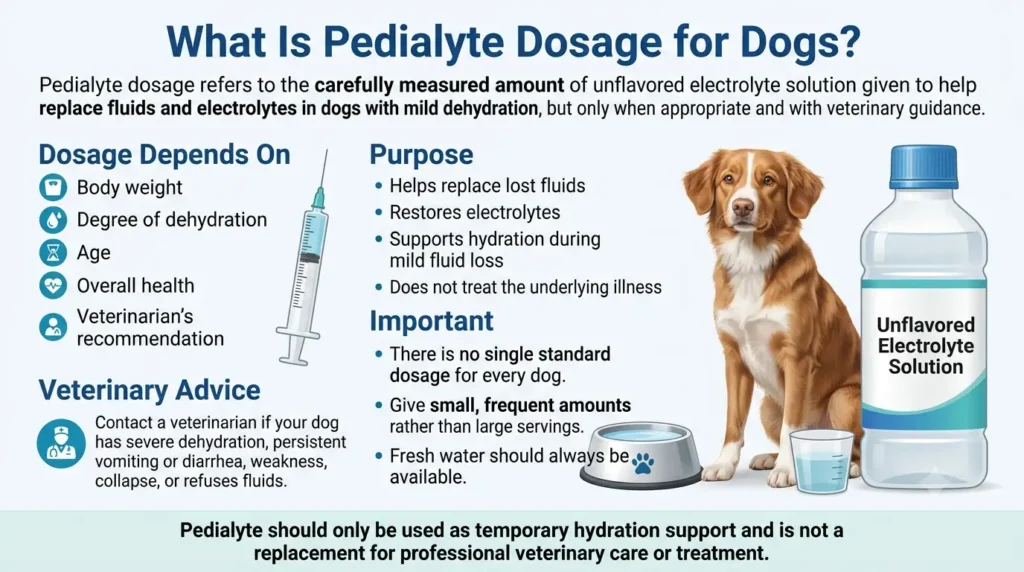
Pedialyte Dosage For dogs is an over the counter oral electrolyte solution designed for humans, to help prevent and treat mild dehydration when the body has lost fluids and essential electrolytes due to vomiting, diarrhea, poor appetite, exercise, heavy sweating or other fluid loss. Used for infants, children and adults to replace fluid and maintain normal fluid and electrolyte balance.
Pedialyte Medication For dogs provides important electrolytes such as sodium, potassium, chloride and dextrose (glucose) which help the body absorb fluids and fuel cells. Other formulations may also include other minerals such as zinc, magnesium and calcium. Pedialyte has more electrolytes than plain water, so it is good for replacing electrolyte losses due to sickness.
Pedialyte dose is one of the most recognized hydration solutions that was originally developed from research into oral rehydration therapy (ORT) and was introduced to the U.S. in the ’60s. Nowadays, it comes in a variety of versions and flavors, such as ready-to-drink, powder, freezer pops and special formulas.
Pedialyte is intended for human bodies and not for canine bodies, but many pet owners wonder about using Pedialyte for canine dehydration. Only the basic clear, unflavored Pedialyte should be used if it is recommended by a veterinarian for a dog. Flavored products can also include artificial sweeteners (such as sucralose), flavorings and other additives which are not good for dogs and can lead to health issues. Always read the ingredients carefully and talk to your veterinarian before giving your dog Pedialyte for this reason.


Paid Links - As an Amazon Associate, I earn from qualifying purchases.
Side Effects of Pedialyte for Dogs
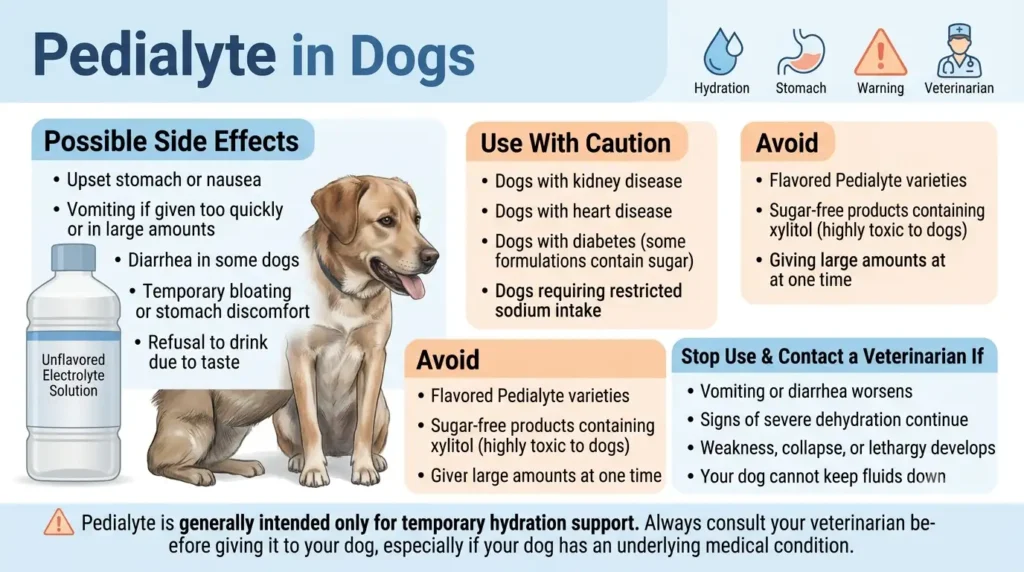
Side effects are rare in healthy dogs when used at those small doses of diluted (no flavour) Pedialyte under veterinary supervision. Pedialyte is however a human electrolyte and is not suited for all dogs and can cause issues if administered incorrectly.
Side effects and risks may include:
- Increased gastrointestinal distress, particularly if the dog is unable to retain fluids – Some dogs may have increased gastrointestinal upset, particularly if they cannot retain fluids.
- Electrolyte imbalance: Too much Pedialyte can cause high levels of sodium or potassium.
- Hypernatremia (high sodium): Can help cause high blood pressure (hypertension) and loss of fluid from the brain.
- Hyperkalemia (high potassium): May result in a slow heart rate (bradycardia), abnormal heart rhythms (arrhythmias) and in extreme cases, cardiac arrest.
- High blood sugar: Blood sugar levels can be elevated due to the glucose in the solution, which can make Pedialyte not an ideal choice for many dogs with diabetes.
- Fluid balance issues: Dogs with heart disease or congestive heart failure (CHF) or those on blood pressure drugs may have some fluid balance problems caused by the sodium.
- Allergic reactions: Do not use Pedialyte in a dog that is allergic to any of the ingredients. Other varieties such as flavoured ones can also agitate the digestive tract or alter normal gut flora.
- Flavored products risks: There are some flavored formulas out there that have artificial sweeteners like sucralose and others that are not recommended for dogs.
Pedialyte, however, should not be used when:
Avoid giving Pedialyte to dogs that:
- Have frequent or severe vomiting or diarrhea.
- Is unable to keep food and water down.
- Demonstrate moderate to severe symptoms of dehydration and/or lethargy.
- Be diagnosed with diabetes, heart disease, congestive heart failure, kidney disease, or high blood pressure (unless prescribed by a veterinarian).
- Have a sensitivity to any ingredient in the product.
Important Safety Reminder
- If your veterinarian suggests using Pedialyte, be sure it is clear and free from flavor.
- Mix it with the same amount of water (50:50) before giving it to your dog.
- Pedialyte is not a substitute for veterinary treatment and does not treat the underlying cause of dehydration.
- If you feel your dog is very sick or very dehydrated, go to the veterinarian’s office right away. IV fluids and professional treatment are so much safer and more effective, in moderate to severe cases, than home electrolyte therapy.
How to Rehydrate Your Dog Safely
When a veterinarian suggests Pedialyte for your dog, it’s important to be cautious in giving it and to do so in moderation to help prevent further stomach upset. The best option is to use clear, plain Pedialyte and mix with an equal amount of plain water (50:50) before giving it to your dog. Undiluted Pedialyte can lead to too much electrolyte and lead to diarrhea.
Don’t set a full bowl of diluted Pedialyte in front of your dog or it could lead to vomiting or stomach cramps. A dehydrated dog can drink too much too fast resulting in further vomiting or tummy upset. Rather, provide small quantities at a time and let your dog slowly work up to its normal water intake.
Also, Pedialyte dose for dogs can be diluted and frozen into ice cubes as a helpful way. Ice cubes are a good way for your dog to get water when he is thirsty, but they do not quench his thirst as quickly as a bowl or water dish, so he is less likely to vomit after drinking ice cubes. The frozen cubes can be placed in a freezer bag and provided when required.
Tips for Safe Rehydration
- Only clear, unflavored Pedialyte.
- Just before use, dilute with plain water (50:50).
- Do not use pedialyte undiluted; too much electrolytes can make diarrhea worse.
- Instead, small amounts regularly are better than enabling your dog to drink a lot at once.
- If necessary, freeze the solution in ice cubes for gradual hydration.
- If your dog continues to vomit or decline fluids or becomes more dehydrated, stop home treatment and call your veterinarian.
When Should You Give Pedialyte to Dogs?
Pedialyte should be administered to dogs under a veterinarian’s supervision and only in a few circumstances where there is mild dehydration. Can be administered as a supportive treatment to replace fluids and electrolytes post a few vomiting episodes or if mild diarrhoea occurs, or as a precaution against dehydration as advised by your veterinarian. Pedialyte is not a treatment for the underlying cause, however, and should not be given in place of proper veterinary treatment.
Pedialyte is designed for human electrolyte balance and, due to the electrolyte balance, is not an optimum first line treatment, but rather a supportive treatment. Depending on the circumstance, in some veterinary care situations, like stable puppies recovering from parvo, small amounts of pedialyte can be part of a whole package of treatment along with intravenous or subcutaneous fluid, anti-nausea drugs, antibiotics, and other supportive therapy. Does not cure Parvo.
When using Pedialyte, always choose clear, unflavored Pedialyte. The flavored varieties contain artificial sweeteners and other additives which can include ingredients that are bad for dogs. General advice is to mix Pedialyte with plain water so that the sodium and sugar content is half as concentrated as normal (50:50 mix) to reduce the risk of stomach upset.
Have Pedialyte available to add to their meals or snacks over time, rather than giving it all at once since it might cause vomiting. A rule of thumb to remember is to use 2-4 mL per pound (or 4.4-8.8 mL/kg) of body weight every 1-2 hours unless otherwise directed by your veterinarian for mild dehydration. Some dogs will also accept the dilute solution as ice or poured on the top of an acceptable bland meal.
Pedialyte May Be Appropriate When:
- Your dog has had some bouts of vomiting but that has subsided.
- Your dog has mild diarrhea but there is no blood or mucous.
- It has been prescribed along with a treatment plan for mild dehydration by your veterinarian.
- Your dog is alert, stable and able to drink water without you.
Important Guidelines
- Don’t use flavored Pedialyte.
- Mix with an equal amount of water (50:50) unless directed otherwise by your veterinarian.
- Give small amounts more frequently, every 1-2 hours, and not a bowl.
- The diluted solution can be frozen in ice cube trays and/or fed over a bland food, as long as it is approved by your veterinarian, to ensure fluid intake.
- Do NOT syringe a weak, lethargic or unwilling dog with Pedialyte, as this will raise the dog’s risk of aspiration.
If you notice your dog is showing any of these signs, it’s time to stop and call your veterinarian.
Discontinue Pedialyte and seek veterinary care immediately if your dog:
- Continues to vomit or vomiting returns.
- Is unable to keep liquids down.
- Has ongoing or severe diarrhea.
- Is weak or lethargic or has increased dehydration.
- Needs syringe feeding or is too sick to want to drink.
When Should Your Dog See the Vet?
Pedialyte for dogs is not meant to replace or postpone professional veterinary treatment, however sometimes mild dehydration may be treated at home with your veterinarian’s guidance. If the dog has symptoms that suggest he is sick or dehydrated, do not try to treat him at home before consulting with the veterinarian to identify the proper course of action. Your vet will be able to tell you what is the cause of your dog’s symptoms and will be able to advise you on the safest and most effective treatment.
There is no universal rule as to when a dog needs veterinary care. Many things will determine how much of a risk your dog poses, including their size, age, overall health, and how often and how severe they vomit and/or have diarrhea. Even a few vomiting bouts or diarrhea can be serious for small dogs as they dehydrate faster than large dogs. Older dogs and dogs with underlying medical issues are also more prone to hearing loss, and should be tested earlier.
Call Your Veterinarian Right Away if Your Dog:
- Repeatedly or persistently vomits or has diarrhea.
- Vomit all the time after eating or drinking.
- Is experiencing both vomiting and diarrhea, which greatly increases fluid loss.
- Is lethargic or weak, collapses or cannot drink water.
- Demonstrates signs of dehydration such as sunken eyes, tacky/dry gums, or a decreased skin elasticity (slowness of skin tent test).
- Has blood in vomit and/or stool.
- May suffer from heatstroke or poison.
- If a small breed puppy, a senior dog or has medical conditions and gets ill with vomiting and/or diarrhea.
If the dog is moderately or severely affected, your vet may recommend staying in the clinic, intravenous (IV) fluids, diagnostic tests and medication to correct dehydration and treat the cause of the illness.
Even if only a little yellow bile is vomited occasionally it is best to contact your vet for advice, particularly if it is more regular or if there are additional signs.
The most important rule is this: If you think your dog’s sick enough to treat with Pedialyte, he or she’s sick enough to be evaluated by a veterinarian. By treating your dog early, you can avoid further dehydration and the right treatment will be provided to treat the cause, not just the symptoms.
You may Also Like to Read:
- Vitamin K1 Dosage For Dogs Calculator: Safe Guide & Chart
- (MSM) Methylsulfonylmethane Dosage For Dogs: Calculator & Safe Guide
FAQs
Is it safe for dogs to drink Pedialyte?
Yes, healthy dogs with mild dehydration may be able to drink small amounts of clear, unflavored, diluted Pedialyte if recommended by a veterinarian. Only to be used as supportive care and not in place of veterinary care.
Can dogs have flavored Pedialyte?
No. Flavored Pedialyte can have artificial sweeteners, flavored, or additives that aren’t safe for dogs. If Pedialyte is recommended, make sure you get the clear, plain variety.
What is the proper recipe for doggy Pedialyte?
The general rule of thumb is to dilute Pedialyte 1:1 (clear:water) before giving it to your dog. Be sure to follow the veterinarian’s specific directions.
Can Pedialyte dose treat vomiting or diarrhea in dogs?
Pedialyte is meant to replace the loss of fluids and electrolytes, but not to treat what is causing the vomiting, diarrhea, or dehydration. However, if your dog’s symptoms do not improve or continue, it is recommended to see the veterinarian.
Is Pedialyte a good way to cover up a serious illness?
Yes. Pedialyte can help your dog get hydrated, but can also make you feel better and put off getting a diagnosis or treatment for the condition that is making your dog feel sick. If your dog is ill, always check with your veterinarian.
How much water should a healthy dog drink a day?
The average amount of water that a healthy adult dog requires daily is approximately 1 ounce (30 mL) per pound of body weight. Dogs may need more fluid if they are vomiting, having diarrhea, in hot weather or are more active.
When is it time to cease administering Pedialyte and call the vet?
If your pooch can’t keep fluids down, continues to vomit, continues to have diarrhea, becomes lethargic, is moderately to severely dehydrated, or has blood in their vomit or stool, stop the Pedialyte and call your veterinarian right away.
Are Pedialyte and water equally good for a dog that is dehydrated?
Not always. Fresh water is typically the best option for mildly dehydrated dogs who have become dehydrated from warm weather or exercise. Pedialyte is useful only in some instances of mild dehydration, and should only be administered under veterinary advice, with regard to illness.
Final Thoughts
Pedialyte Dosage For dogs can help some dogs with mild dehydration as a short-term hydration treatment, but is not a cure for the underlying disease that is causing dehydration. If your veterinarian says it’s OK, use only clear, unflavored Pedialyte, diluted with equal parts of water (50:50), and give it in small amounts slowly in order to avoid stomach upset.
Keep in mind Pedialyte is not meant for dogs. It can be used to replace lost fluids and electrolytes, but it does not address the underlying causes of vomiting, diarrhea and dehydration. In many cases your veterinarian may recommend a veterinary prescribed oral electrolyte fluid or other treatment best suited for your dog.
If your dog continues to vomit or diarrhea and will not drink water, is lethargic or moderately to severely dehydrated, get medical attention as soon as possible. The sooner you can diagnose and treat your dog, the better chance he or she has of making it through without complications.