Disclaimer: All information in this guide is provided for educational purposes only and should never replace professional veterinary advice.
Banamine® Dosage Calculator for Dogs
Enter your dog’s weight and choose a schedule to see the dose range for flunixin meglumine (IV).
Standard dose: 0.5–2.2 mg/kg IV every 24 hours for no more than 3 days, or 0.25–0.5 mg/kg IV every 12 hours for 1–3 treatments. This tool is for information only. Banamine® should be given only under the direction of a veterinarian, who will confirm the correct dose for your dog.


Paid Links - As an Amazon Associate, I earn from qualifying purchases.
Banamine for dogs (flunixin meglumine) is a non-steroidal anti-inflammatory drug (NSAID) which acts by blocking the production of inflammatory chemicals within the body, thereby reducing the pain, inflammation and fever.
Although it can be used in horses and cattle, veterinarians may prescribe this off-label for dogs in very limited situations, such as when a dog has severe musculoskeletal pain, specific inflammatory disorders or fever for which the potential benefits outweigh the risks.
Banamine for dogs is not regarded as a “routine” NSAID for dogs as there are safer canine NSAIDs that are sometimes preferred, and veterinary supervision is necessary.
Banamine dosage for dogs by weight is discussed in this guide, which includes information on how it works, dosage forms (50 mg/mL injectable solution), dosage calculations, potential benefits, side effects, drug interactions, monitoring requirements, and important safety information to help owners understand when it may be appropriate and how to use it as safely as possible.
Key Takeaways
- Banamine® (flunixin meglumine) is a non-steroidal anti-inflammatory drug (NSAID) that decreases pain, inflammation and fever.
- It is approved for horses and cattle but is being used off-label in dogs and should only be directed by a veterinarian.
- However, Banamine is not the first choice NSAID for dogs because there are medications that are specifically approved for dogs which are generally safer.
- The dose and formulation of the medication is left to the discretion of the veterinarian who may use a solution containing 50 mg/mL.
- Never dose or dose adjust independently. The proper dosage will vary based on your dog’s condition, its weight, overall health and any other medications being administered.
- Side effects include vomiting, diarrhea, loss of appetite, lethargy and stomach irritation, and severe side effects include stomach ulcers, kidney damage or liver problems.
- Banamine should not be administered with other NSAIDs or corticosteroids unless directed by a veterinarian as this may increase the risk of severe side effects.
- A dog using Banamine may need veterinary check-ups, which might involve blood tests and physical examinations to monitor kidney and liver function.
- If your dog gets bloody stools, black tarry stools, ongoing vomiting, very weak or has loss of appetite while on Banamine dose, please contact your veterinarian immediately.
- Veterinarians will always give you exact instructions to follow and they will want you to continue follow-up visits as recommended to ensure safe and effective treatment.
How Much Banamine® Can I Give My Dog?
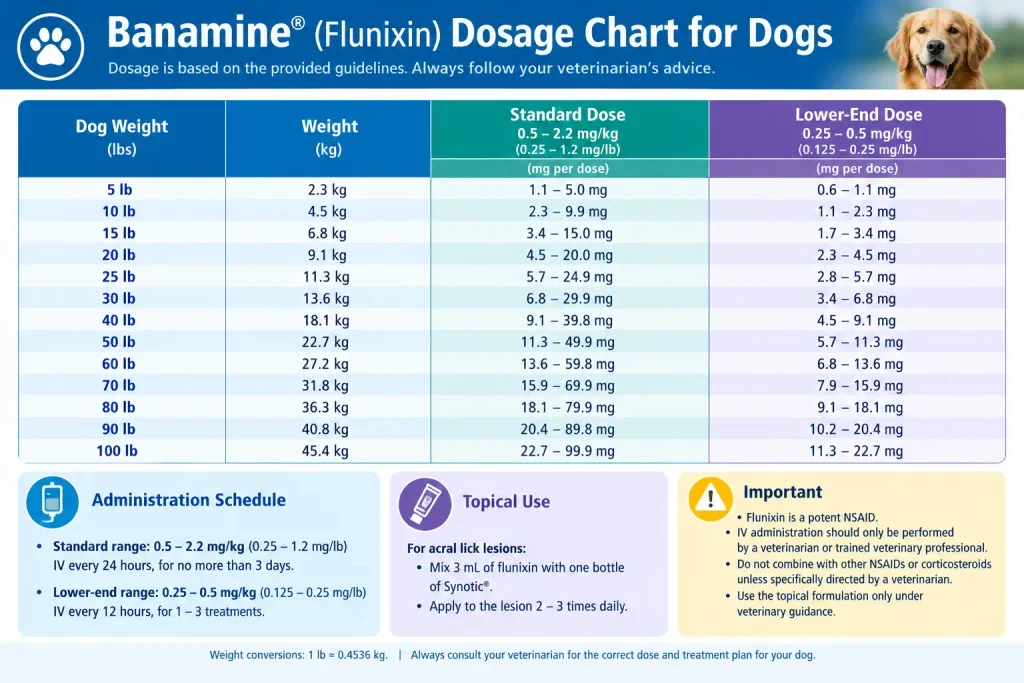
The standard Banamine® dosage for dogs is 0.5-2.2 mg/kg (0.25 to 1.2 mg/lb) IV every 24 hours for no more than 3 days. Flunixin can also be administered at the lower end of this range 0.25-0.5 mg/kg (0.125 to 0.25 mg/lb) IV every 12 hours for 1 – 3 treatments.
For topical dog use on acral lick lesions, 3 ml of flunixin can be mixed one bottle of Synotic® and applied to the lesion two to three times daily.
Banamine® Dosage Chart For Dogs By Weight
Critical Medical Notice: Flunixin meglumine has an exceptionally narrow margin of safety in dogs. Modern canine-specific alternatives are strongly preferred due to the high risk of severe gastrointestinal ulceration, stomach perforation, and acute kidney failure associated with flunixin in canines. Use this data only under direct veterinary supervision.
| Dog Weight | Weight (kg) | Standard Dose: 0.5–2.2 mg/kg | Lower-End Dose: 0.25–0.5 mg/kg |
|---|---|---|---|
| 5 lb | 2.3 kg | 1.1–5.0 mg | 0.6–1.1 mg |
| 10 lb | 4.5 kg | 2.3–9.9 mg | 1.1–2.3 mg |
| 15 lb | 6.8 kg | 3.4–15.0 mg | 1.7–3.4 mg |
| 20 lb | 9.1 kg | 4.5–20.0 mg | 2.3–4.5 mg |
| 25 lb | 11.3 kg | 5.7–24.9 mg | 2.8–5.7 mg |
| 30 lb | 13.6 kg | 6.8–29.9 mg | 3.4–6.8 mg |
| 40 lb | 18.1 kg | 9.1–39.8 mg | 4.5–9.1 mg |
| 50 lb | 22.7 kg | 11.3–49.9 mg | 5.7–11.3 mg |
| 60 lb | 27.2 kg | 13.6–59.8 mg | 6.8–13.6 mg |
| 70 lb | 31.8 kg | 15.9–69.9 mg | 7.9–15.9 mg |
| 80 lb | 36.3 kg | 18.1–79.9 mg | 9.1–18.1 mg |
| 90 lb | 40.8 kg | 20.4–89.8 mg | 10.2–20.4 mg |
| 100 lb | 45.4 kg | 22.7–99.9 mg | 11.3–22.7 mg |
What Is Banamine® (Flunixin Meglumine)?
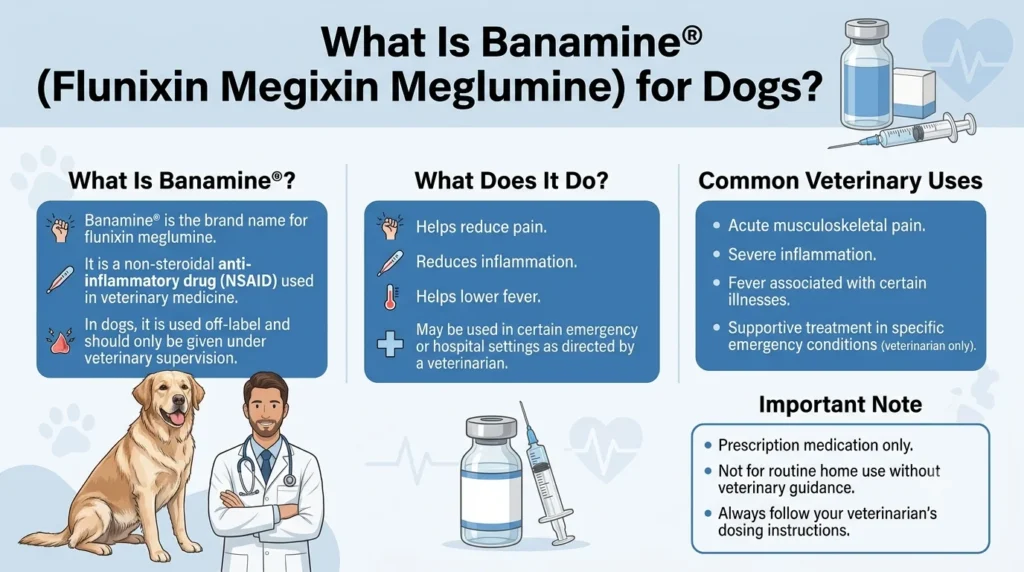
The brand name Banamine® refers to the drug flunixin meglumine for dogs which is a non-selective non-steroidal anti-inflammatory drug (NSAID) that inhibits the enzymes COX-1 and COX-2 that produce the substances which cause pain, inflammation and fever. It is anti-inflammatory, sedative, analgetic and antagonizes some endotoxin effects, as well as reducing fever.
Banamine Dosage For Dogs is generally utilized for the administration of pain and swelling due to arthritis and other musculoskeletal conditions. It may be used off label in dogs and cats, but most vets will only use it in selected instances since it is generally not considered a first choice for dogs and cats, given that there are safer NSAID medications specifically for dogs.
Banamine medication is a member of the same group of drugs as aspirin, ibuprofen, ketoprofen and naproxen. It is also known as 2-(2-methyl-3-trifluoromethylanilino) nicotinic acid, chemically.
How Does Banamine® Work?
Banamine® (flunixin meglumine) is effective due to the inhibition of prostaglandin formation, which are chemicals in the body that cause pain, inflammation, fever and other inflammatory reactions. This NSAID inhibits the synthesis of prostaglandins which helps to minimise redness, swelling, heat and pain caused by tissue injury and be in addition is antipyretic (fever reducing).
It usually takes about 15 minutes after the injection into the vein (intravenous or IV) or 1-2 hours after the injection into the muscle (intramuscular or IM) to take effect after it is given.
Uses of Banamine® for Dogs
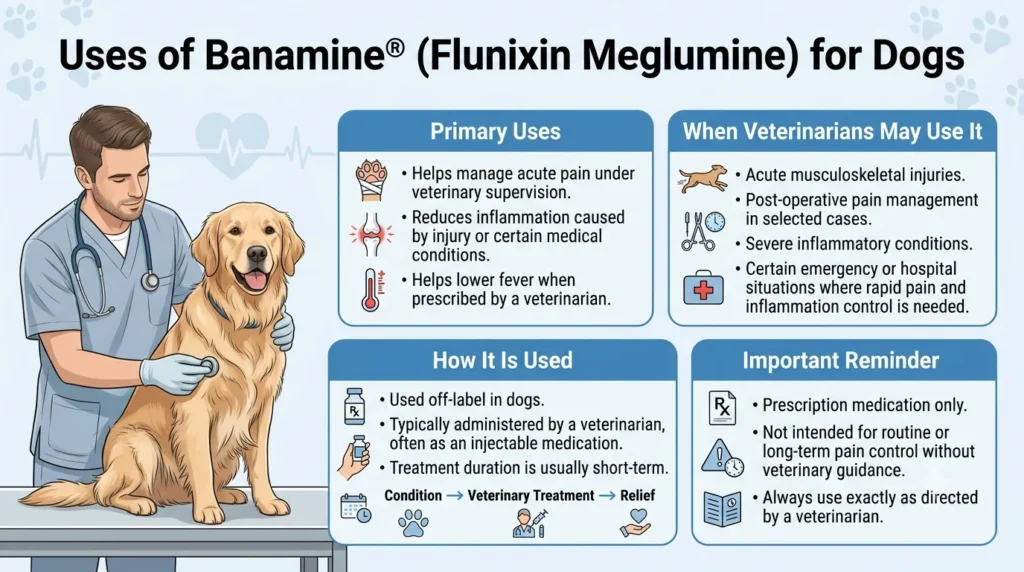
Banamine® (flunixin meglumine) is an NSAID drug that is used off-label in dogs to treat pain, inflammation, and fever that occur in various diseases. Its mode of action is to decrease inflammatory processes and can be used by a veterinarian if the risk to benefit ratio is acceptable.
Some common dog Banamine off label uses are:


Paid Links - As an Amazon Associate, I earn from qualifying purchases.
- Acute musculoskeletal pain: relieves the pain and inflammation associated with injuries, muscle conditions and other movement-related conditions.
- Arthritis-related discomfort: Can be used to help reduce pain and inflammation related to arthritis and musculoskeletal conditions.
- Fever reducing: Reduces high body temperature due to some inflammatory or medical issues.
- Pre- and post-operative pain control: Can be used to alleviate pain during or after surgery.
- Ophthalmic surgery support: Helps to reduce the release of prostaglandins in the eye before and after ophthalmic surgery.
- Endotoxic or septic shock management: May be part of a veterinarian prescribed treatment protocol for the management of shock, especially endotoxic shock.
- Acral lick dermatitis: Can use topical flunixin as anti-inflammatory to manage this condition.
Because Banamine Dosage is not a normal doggie medicine, using it, how much to use and for how long should always be decided by a veterinarian.
Banamine® Side Effects & Precautions in Dogs
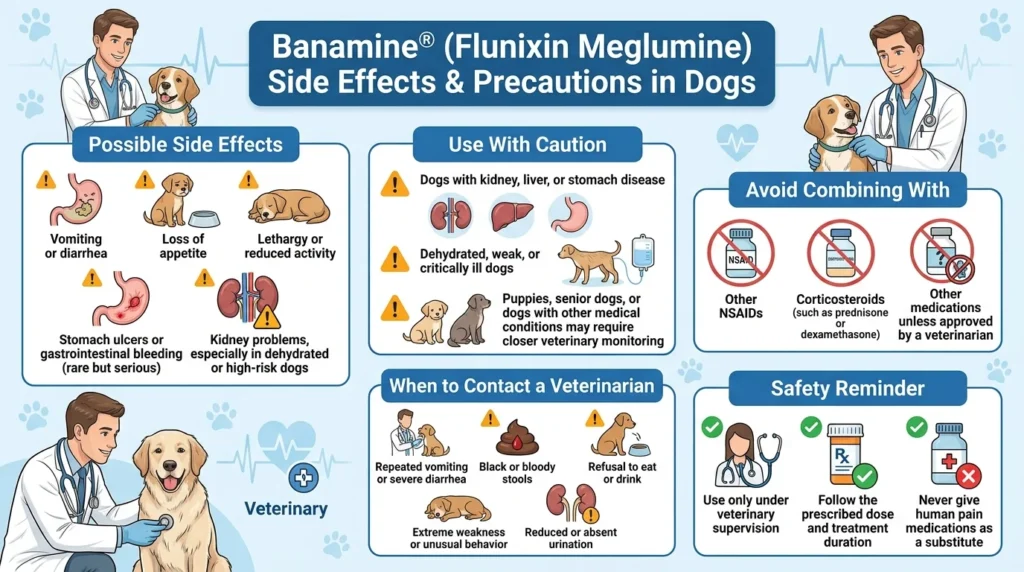
When used under a vet’s directions, Banamine® (flunixin meglumine) has been shown to be effective; however, it can have side effects, and must be used carefully, because it is an NSAID.
The digestive system is the most frequently reported side effect in both dogs and cats, but more severe side effects can happen and are more likely to occur if the medication is used for longer than intended, if the animal gets dehydrated, or if it has underlying health issues.
Common Side Effects:
- Vomiting
- Diarrhea
- Lack of drive; low energy
- Poor appetite, loss of interest in food (anorexia)
- Ulcers, irritation of the gastrointestinal tract or colonic ulcers, particularly when used for longer periods.
- Damage to the kidneys, especially in dehydrated animals and/or other risk factors present
Serious side effects or life-threatening side effects:
- Gastrointestinal perforation
- Acute kidney injury
- Severe gastrointestinal lesions have been reported with higher risk dosing situations in adult cats
- Severe allergic type reactions (anaphylactoid reactions)
Important Precautions:
- Do not use in animals that have been previously known to be allergic or hypersensitive to flunixin.
- Extra precaution is to be taken in pets that had previously had any reaction to other NSAID’s.
- Should not be used or used with care in animals that have kidney disease, liver disease, blood disorders, gastrointestinal disorders or heart disease.
- Always let your veterinarian know if your pet is on any other medications as there may be interactions.
Possible Drug Interactions:
Banamine should NOT be used with any of the following medications:
- Aspirin
- Other NSAIDs
- Corticosteroids
- Warfarin
- Heparin
- Antibiotics that are effective against the bacteria that cause infection, such as gentamicin or amikacin (aminoglycoside antibiotics);
Residue Warnings (Livestock use):
Withdrawal precautions for food-producing animals are listed on banamine product labels. Don’t slaughter any cattle for human food for 4 days after the last treatment, and milk from treated cattle should not be used for feeding humans during treatment or within 36 hours after the last treatment.
It is not allowed for dry dairy cows, food-producing horses, or calves for veal production. Intravenous injection in cattle may cause unacceptable residues of the product in edible tissues.
Banamine® Drug Interactions in Dogs
The use of Banamine® (flunixin meglumine) with certain other drugs may lead to serious side effects, including gastrointestinal ulcers, bleeding or kidney disease. Make certain that your veterinarian knows what medications and supplements your dog is taking before giving Banamine.
Here are some of the common drug interactions and precautions:
- Other NSAIDs: Don’t give Banamine Medicine together with other non-steroidal anti-inflammatory medications, as this could lead to gastrointestinal ulcers and renal damage.
- Corticosteroids: Avoid when combined with corticosteroids unless directed by a veterinarian, as there may be a higher risk for digestive tract problems.
- ACE inhibitor medications: Be careful of giving Banamine with ACE inhibitor medications because they may affect kidney function.
- Diuretics: May require careful monitoring when taking diuretics due to potential kidney stress.
- Antibiotics (aminoglycoside): Drugs like gentamicin can make kidney side effects more of a concern when given with Banamine.
- Warfarin: May need veterinary supervision due to possible interaction.
To minimize risk of interaction with other drugs, veterinary advice should be sought when Banamine is used with other medications.
You May Also Like to Read:
- Cardalis Dosage For Dogs: Calculator, Chart & Safe Guide
- Barrier® Dosage For Dogs: Calculator, Chart and Safe Guide
FAQs
Is Banamine® Medicine safe for dogs?
Yes, Banamine® (flunixin meglumine) can be administered to dogs, but only with a veterinarian’s supervision. It is an off-label drug for dogs, and typically used only for short periods of time given the fact that other NSAIDs are safer for dogs.
How quickly does Banamine start working in dogs?
The action of Banamine Dosage for dogs is quick. Once injected intravenously (IV), it usually starts working in about 15 minutes. If it is injected into the muscle (IM), it normally starts to work in 1-2 hours.
May I administer Banamine (prescribed for horses/cows) to my dog?
No. Livestock formulations are also very concentrated, but are formulated for much larger animals. Don’t give equine, or bovine, Banamine products to dogs, unless directed by a veterinarian.
If I forget to give my dog his Banamine, what should I do?
If you forget a dose, take the next dose on time. Never double doses and never double-up the dose to compensate. If you don’t know what to do, contact your vet.
What are the symptoms of Banamine overdose in dogs?
Symptoms of an overdose include vomiting, loss of appetite, diarrhea, black tarry stools (melena), lethargy, collapse and other symptoms of gastrointestinal bleeding or kidney injury. If you think your dog has overdosed, it is a medical emergency and you should seek veterinary help right away!
Is Banamine suitable for chronic pain in dogs?
Banamine Dose for dogs is usually administered for only a few days, typically for a period of 3 days. Veterinarians will generally prescribe dog-safe NSAIDs for chronic conditions like arthritis because it can lead to stomach ulcers and kidney damage if used for too long a time.
What must be done to store Banamine Dose?
Do not freeze Banamine multi-dose vials and keep them at or below 25°C (77°F). Store tightly closed and away from children and pets.
Final Thoughts
Banamine® (flunixin meglumine) is a powerful non-steroidal anti-inflammatory drug (NSAID) that can be used off-label in dogs for the short-term alleviation of pain, inflammation, and/or fever, or for treating other conditions like endotoxic shock.
Though it may be very effective in certain carefully selected cases, it is not a first-line NSAID for dogs and should always be prescribed by a veterinarian, due to potentially serious gastrointestinal and renal side effects.
Treatment is successful only when the correct dosage is used, therapy is limited to the shortest effective period (usually no more than three days), it is not combined with another NSAID or corticosteroids and monitored by watching your dog’s appetite, hydration, stool and overall condition. When long term pain control is desired, your veterinarian will typically prescribe a NSAID that is safe for dogs.
Do not administer Banamine dosage for dogs without veterinary advice or to a livestock product. As long as it is used responsibly and under professional supervision, Banamine can be a part of the solution to treating acute pain and inflammation, without causing complications.