Disclaimer: All information in this guide is provided for educational purposes only and should never replace professional veterinary advice.
Palladia® (toceranib phosphate) Dosage Calculator For Dogs
Calculates exact milligram requirements for dogs based on body weight guidelines.
Calculation Results
- Do NOT split or crush tablets. Palladia must be administered using combinations of whole intact commercial tablet strengths (10 mg, 15 mg, 50 mg) to approximate the calculated dose safely.
- Adjust the ongoing dosage regimen strictly based on regular veterinary reassessments (approximately weekly for the first 6 weeks, and every 6 weeks thereafter).
- Always provide the formal Client Information Sheet to the caregiver alongside the prescription.
© medsdog.com
When it comes to treating some dog cancers safely and effectively, palladia dosage for dogs is a vital factor. The first FDA-approved oral anticancer drug specifically for dogs, Palladia® (toceranib phosphate) was approved in 2009. It is from a group of drugs known as receptor tyrosine kinase (RTK) inhibitors that block the growth of cancer cells and the formation of new blood vessels (angiogenesis) required for the survival and spread of cancer cells.
Palladia Dosage is used in the treatment of recurrent cutaneous mast cell tumors in Patnaik grade II or III, with or without involvement of regional lymph nodes, though veterinarians may make other uses of Palladia depending on their clinical judgment. The appropriate dosage of Palladia for dogs will always be determined by your dog’s body weight, general health status, type of cancer, and how he or she responds to the treatment, so great care should be taken when it comes to dosage.
This guide will cover the math for determining your dog’s Palladia dosage For Dogs By Weight, dosing guidelines, tablet concentrations, possible side effects, monitoring guidelines, and safety precautions. If your dog has just been diagnosed with cancer, or your vet has prescribed Palladia for your pet, this article will help you understand how Palladia works, what to expect during treatment, and how to use it as safely as possible. This information is designed for educational purposes only and should not be a substitute for the advice or instructions from your veterinarian.
What is Palladia Dosage For Dogs?
Palladia dosage for dogs is carefully calculated based on your dog’s body weight and should only be determined by a veterinarian. The standard starting dose of Palladia is 3.25 mg/kg (1.48 mg/lb) given orally every other day (EOD). If side effects occur, veterinarians may reduce the dose to 2.75 mg/kg (1.25 mg/lb), with 2.2 mg/kg (1.0 mg/lb) being the lowest recommended dosage.
Palladia tablets must never be split, crushed, or broken and should be administered using whole 10 mg, 15 mg, or 50 mg tablets. Regular veterinary monitoring is essential during treatment to ensure the dosage remains both safe and effective treatment.
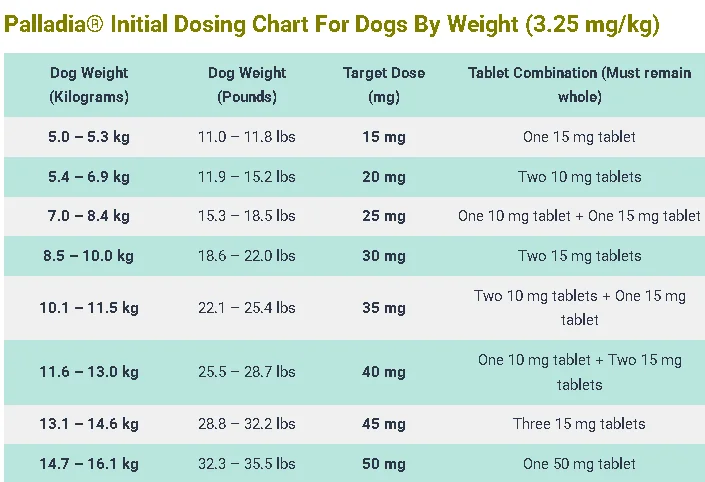
Palladia® Initial Dosing Chart For Dogs By Weight (3.25 mg/kg)
| Dog Weight (Kilograms) | Dog Weight (Pounds) | Target Dose (mg) | Tablet Combination (Must remain whole) |
| 5.0 – 5.3 kg | 11.0 – 11.8 lbs | 15 mg | One 15 mg tablet |
| 5.4 – 6.9 kg | 11.9 – 15.2 lbs | 20 mg | Two 10 mg tablets |
| 7.0 – 8.4 kg | 15.3 – 18.5 lbs | 25 mg | One 10 mg tablet + One 15 mg tablet |
| 8.5 – 10.0 kg | 18.6 – 22.0 lbs | 30 mg | Two 15 mg tablets |
| 10.1 – 11.5 kg | 22.1 – 25.4 lbs | 35 mg | Two 10 mg tablets + One 15 mg tablet |
| 11.6 – 13.0 kg | 25.5 – 28.7 lbs | 40 mg | One 10 mg tablet + Two 15 mg tablets |
| 13.1 – 14.6 kg | 28.8 – 32.2 lbs | 45 mg | Three 15 mg tablets |
| 14.7 – 16.1 kg | 32.3 – 35.5 lbs | 50 mg | One 50 mg tablet |
| 16.2 – 17.6 kg | 35.6 – 38.8 lbs | 55 mg | One 10 mg tablet + Three 15 mg tablets |
| 17.7 – 19.2 kg | 38.9 – 42.3 lbs | 60 mg | One 10 mg tablet + One 50 mg tablet |
| 19.3 – 20.7 kg | 42.4 – 45.6 lbs | 65 mg | One 15 mg tablet + One 50 mg tablet |
| 20.8 – 23.0 kg | 45.7 – 50.7 lbs | 70 mg | Two 10 mg tablets + One 50 mg tablet |
| 23.1 – 26.9 kg | 50.8 – 59.3 lbs | 80 mg | Two 15 mg tablets + One 50 mg tablet |
| 27.0 – 29.9 kg | 59.4 – 65.9 lbs | 95 mg | Three 15 mg tablets + One 50 mg tablet |
| 30.0 – 32.3 kg | 66.0 – 71.2 lbs | 100 mg | Two 50 mg tablets |
| 32.4 – 34.6 kg | 71.3 – 76.3 lbs | 110 mg | One 10 mg tablet + Two 50 mg tablets |
| 34.7 – 36.1 kg | 76.4 – 79.6 lbs | 115 mg | One 15 mg tablet + Two 50 mg tablets |
| 36.2 – 38.4 kg | 79.7 – 84.7 lbs | 120 mg | Two 10 mg tablets + Two 50 mg tablets |
| 38.5 – 43.0 kg | 84.8 – 94.8 lbs | 130 mg | Two 15 mg tablets + Two 50 mg tablets |
| 43.1 – 47.6 kg | 94.9 – 105.0 lbs | 150 mg | Three 50 mg tablets |
| 47.7 – 49.9 kg | 105.1 – 110.0 lbs | 160 mg | One 10 mg tablet + Three 50 mg tablets |
| 50.0 – 51.5 kg | 110.1 – 113.5 lbs | 165 mg | One 15 mg tablet + Three 50 mg tablets |
Crucial Rule Reminder: For any dog above 51.5 kg (113.5 lbs), calculate the raw value directly with the 3.25 mg/kg baseline formula and configure the closest possible dose using whole tablets. Do not split tablets.
What Is Palladia?
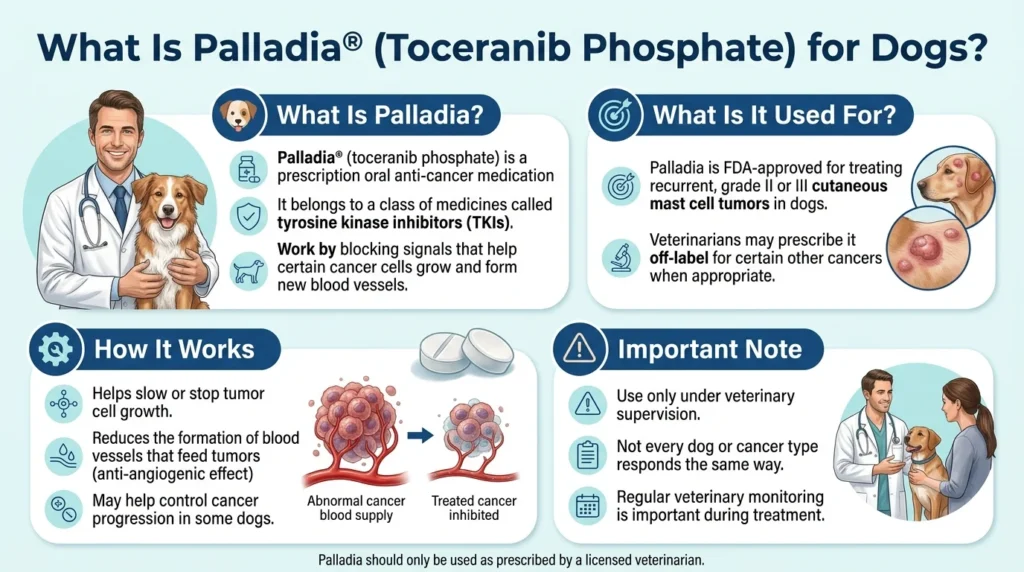
Palladia® (toceranib phosphate) is the first of its kind, FDA-approved cancer treatment dosage for dogs, which was developed specifically for dogs, and is a prescription oral anti-cancer medicine. Palladia drug was developed specifically for veterinary use, while many other veterinary chemotherapy drugs are originally from humans.
Palladia is in a group of drugs called tyrosine kinase inhibitors (TKIs). These medications target hyperactive proteins called tyrosine kinases that contribute to the growth, multiplication and spread of cancer cells. Palladia medication works by interfering with these signaling pathways, which slow the growth of the tumors, help the body’s immune system fight cancer and decrease the generation of new blood vessels (angiogenesis) that provide oxygen and nutrients for the tumors. It can also directly affect tumour cells and even seek to block off its blood supply, which helps to prevent further tumour development.
Palladia treats patnaik grade II or III recurrent cutaneous (skin) mast cell tumors (MCTs) with or without involvement of the regional lymph nodes. It was first used for mast cell tumors but veterinary research has demonstrated other types of canine cancers can also benefit from its use, if advised by a veterinarian.
Since cancer treatments are often multimodal, Palladia dose might be used in combination with surgery, radiotherapy or other drugs as part of a comprehensive treatment plan. Available by prescription only and to be used as directed by the veterinarian. Palladia is for dogs 24 months of age and older weighing 11 lbs (5kg) or more.
How Palladia Works and What It Is Used For
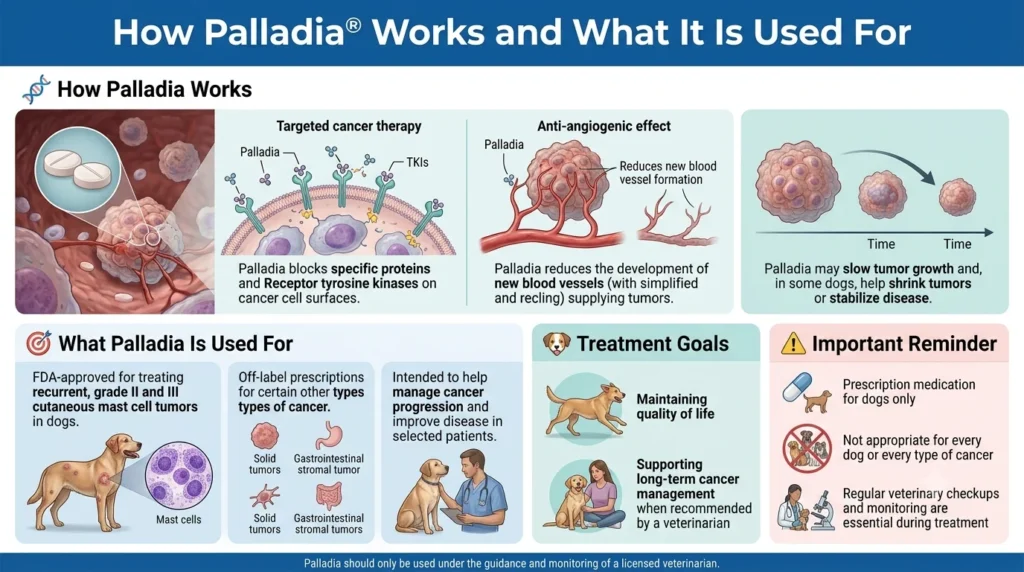
Palladia® (toceranib phosphate) blocks the activity of the tyrosine kinase enzymes, which are important to the growth, survival and spread of cancer cells. Palladia Dosage For dogs works by blocking these enzymes, which helps to slow or stop the growth of tumors, prevent new blood vessels from forming that feed tumors (anti-angiogenesis), and prevent cancer cells from spreading (metastasis). It also acts directly on the tumour cells, helping to reduce the size of the tumour and slow the progress of the disease by depriving the tumour cells of blood.
FDA-Approved Use
Palladia is FDA labelled to treat Patnaik grade II (intermediate-grade) cutaneous mast cell tumors (MCTs) or Patnaik grade III (high-grade) cutaneous mast cell tumors (MCTs) in dogs with or without regional lymph node involvement that are unresectable. Should only be used under veterinary supervision and using prescribed information.
Other Potential Uses
Palladia drug is FDA-approved for mast cell tumors, but veterinary research indicates a veterinarian may also consider using Palladia for several other canine cancers. Research has shown a positive outcome in dogs suffering from:
- Heart base tumors: 90% of dogs in a 2019 study had improved clinical signs, with 81% having complete resolution of clinical signs and 10% having remission of the tumors.
- Gastrointestinal stromal tumors (GIST): A small study indicated that 71% of dogs responded to Palladia.
- Pheochromocytoma: There was a partial response in one dog, and the other dogs had stable disease for 11–36 weeks.
- Other solid tumours: In the early studies with dogs that had apocrine gland anal sac adenocarcinoma, head and neck carcinoma, metastatic osteosarcoma, nasal carcinoma, and thyroid carcinoma, 74% showed a clinical response, which included just one or more of tumor shrinkage, stable disease and complete tumour response.
These findings are encouraging, but many of these applications are from early or small studies, and further research is required. Your veterinarian will help you decide if Palladia is a good choice depending on the type of cancer your dog has and his/her overall health.
What Cancers Can Palladia® Be Used For?
Palladia® (toceranib phosphate) is FDA approved for treatment of Patnaik grade II or III recurrent cutaneous (skin) mast cell tumors (MCTs) in dogs with or without involvement of regional lymph nodes. It is particularly suggested in tumours which are not completely removed by surgery or which, having been treated, have come back.
Palladia Dosage For Dogs is a tyrosine kinase inhibitor (TKI), which means it inhibits the activity of several pathways that are necessary for cancer cells to grow and survive. It inhibits key receptor tyrosine kinases such as KIT on cancer cells to decrease their proliferation, VEGFR-2 to reduce the formation of new blood vessels (anti-angiogenesis) and PDGFR-β to inhibit the formation of new blood vessels. Palladia blocks both pathways and slows the growth of the tumor, decreases blood supply to the tumor, and may cause shrinkage or stabilization of the cancer.
While it is approved for use in mast cell tumors, Palladia treatment may be used off-label by veterinarians for other types of cancer when other drugs are not an appropriate choice, when the cancer has spread (metastasized), for other reasons, or when an at-home oral administration is desired. Based on research and clinical experience.
There may be benefits in dogs with:
- Gastrointestinal stromal tumors (GISTs)
- Anal sac carcinoma (apocrine gland anal sac adenocarcinoma)
- Squamous cell carcinoma
- Thyroid carcinoma
- Nasal carcinoma
- Bladder carcinoma
- Osteosarcoma that has spread to the lungs (metastatic osteosarcoma)
- Insulinoma
- Heart tumors
- Adrenal tumors
- Liver cancer
- Inflammatory mammary gland carcinoma
In cats, Palladia dose has also been administered for mast cell tumors, squamous cell carcinoma and in individual cases of gastrointestinal stromal tumors (GISTs) and pancreatic cancer, but these uses are not FDA-approved.


Paid Links - As an Amazon Associate, I earn from qualifying purchases.
When recommended by a veterinarian, Palladia can also be combined with other cancer treatments such as other chemotherapy drugs, surgery or radiation therapy in a comprehensive treatment plan.
Safety and Side Effects of Palladia for dogs
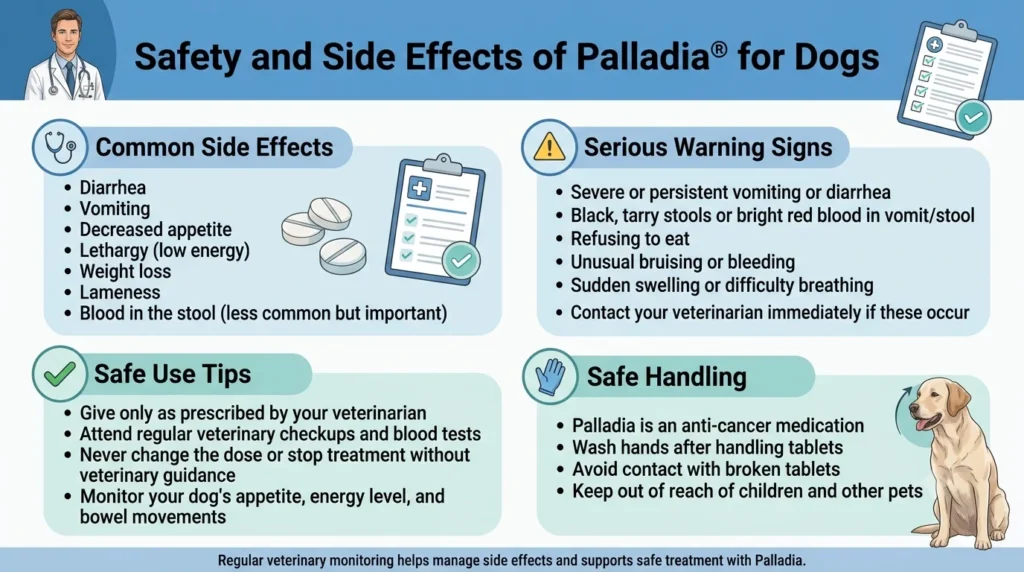
As with any anti-cancer drug, Palladia® (toceranib phosphate) may have side effects, even if it is used at the recommended dose. Reactions are generally mild and easy to treat, but some can be serious or even life-threatening if not treated promptly. Your dog must be monitored closely during treatment and if any of these unwanted symptoms occur, contact your vet immediately.
Common Side Effects
Common side effects of Palladia are:
- Diarrhea / watery diarrhea
- Blood in stools or bloody diarrhoea
- Vomiting
- Loss of appetite or a lack of appetite
- Lethargy (low energy)
- Lameness
- Weight loss
- Colour (coat or skin) changes (pigment)
Your vet might suggest stopping or lowering the dosage if side effects are seen. Do not alter or stop Palladia without a veterinarian’s advice.
Severe Side Effects that May Need Immediate Veterinary Care
Stop giving Palladia and contact your veterinarian right away if your dog develops:
- Refusal to eat
- Persistent vomiting
- Diarrhea with watery feces that is happening more than 2 times in a 24 hour period.
- Black, tarry stools
- Blood that is bright red in vomit or stool.
- Bruising or bleeding that isn’t caused by an injury
- Severe signs of gastrointestinal bleeding or ulceration
- Any other abrupt and worrisome changes in your dog’s condition
Gastrointestinal ulceration, bleeding and gastrointestinal perforation have been reported and are serious complications that need prompt action.
Contraindications and Precautions
Do not take Palladia if you are:
- Pregnant or lactating females, and breeding dogs.
- Dogs that have signs of gut bleeding
The safety of Palladia has not been established in dogs under 24 months of age and less than 5 kg (11 lb).
Prior to initiating therapy, it is recommended that dogs with systemic mast cell tumors (mastocytosis) may be more prone to severe mast cell degranulation and systemic reactions and require careful evaluation.
Palladia treatment can also cause problems with the vascular system, which can result in edema (fluid swelling) or a thromboembolism (a blood clot in a blood vessel), including pulmonary thromboembolism. Treatment should be stopped if these complications arise, until your dog’s clinical condition and laboratory values become normal again. For the three days prior to surgery, the drug is to be discontinued, due to its effect on the healing of the blood vessels.
NSAIDs should be used with caution during Palladia treatment as there may be additional risks for gastrointestinal ulcers or gastrointestinal perforation. Palladia dosage for dogs is metabolized in the liver, and some macrolide antibiotic and azole antifungal drugs that are potent inhibitors of the CYP3A system of enzymes may increase toceranib levels. If the dog is taking other drugs, all drugs should be carefully monitored to avoid interactions. The safety of Palladia has also not been assessed in dogs given concurrent chemotherapy.
Your veterinarian might choose to temporarily withhold treatment and do additional testing if laboratory abnormalities, including azotemia, hypoalbuminemia, hyperphosphatemia, and anemia are concurrent.
Safe Handling Instructions
Palladia is not for human use and should always be kept out of reach of children. After handling the tablets, wash your hands well with soap and water. Palladia medication may be harmful to an unborn baby and women who are pregnant or may become pregnant and women who are breastfeeding should avoid handling Palladia, if possible.
Do not split, crush or break Palladia tablets as the coating protects against accidental exposure. Wear protective gloves when handling tablets if they are broken or wet. If your dog is in the habit of hiding the tablet in food, make sure that your dog eats it all.
The drug may also be excreted in a treated dog’s urine, stool and vomit. Avoid washing contaminated materials with other household laundry to minimize accidental exposure, wear disposable gloves when cleaning up these materials, and put waste and used cleaning materials into a sealed plastic bag before disposing of them.
How to Give Palladia to Dogs
Palladia® (toceranib phosphate) is a prescription drug that is usually given by mouth at home under the supervision of your vet. The recommended dosage for Palladia is every other day or three times per week (every third day); however, this may change depending on your dog’s type of cancer, health status and response to Palladia.
Palladia tablets can be administered with food to ease administration. The tablets should not, however, be broken, split or crushed as this may damage the protective coating and result in a greater chance of accidental exposure.
Monitoring During Treatment
Your veterinarian will check your dog regularly while the dog is on Palladia. Most veterinarians will suggest you check in with your dog once a week for the first six weeks and re-check about every six weeks or as necessary for your dog’s condition.
At these visits, your vet might check:
- Red and white blood cell counts
- Kidney function
- Blood phosphorus levels
- Serum protein levels
- Blood pressure
- Thyroid function
- Complete blood chemistry
- Urine protein-to-creatinine ratio
These tests are useful to help gauge the success of your dog’s response to the drug and if any adjustments to the dose or temporary stoppage of the drug is required.
If Problems Occur
If your dog experiences gastrointestinal bleeding, continuing diarrhea, abnormal lab results, or other major side effects, your veterinarian will temporarily stop giving the medication and/or lower the dosage until your dog’s condition improves. Please, do not adjust your dog’s dose of Palladia without veterinary supervision.
You May Also Like to Read:
- Anxitane Dosage For Dogs: Calculator, Chart & Safe Guide
- Activyl Dosage For Dogs: Calculator & Safe Dosage Guide
FAQs
If I forget to give Palladia to my child, what should I do?
To make up for a missed dose, don’t double up. Administer the next scheduled dose as prescribed and call your veterinarian if you have any questions.
How long will I have to give Palladia dosage to my dog?
Treatment length varies based on type of cancer and how your dog reacts to the treatment. However, some dogs may be on Palladia for 6-12 months, with others possibly receiving the drug for their entire lives. Your veterinarian will decide on the treatment to be used.
How often should I have checkups for my dog on Palladia?
Most dogs are reevaluated at around 2 weeks, 4 weeks, 8 weeks and 12 weeks after treatment is initiated. Following this, follow-up visits are typically every 2-3 months depending on your dog and the results of their treatment.
Which tests are checked while taking Palladia?
Your veterinarian may conduct physical exams, complete blood counts (CBC), blood chemistry, urinalysis, and blood pressure readings. These tests are useful in tracking your dog’s response to therapy and identify any side effects that may occur in the blood, kidneys, liver or urinary system.
What are appropriate conditions and precautions for the safe storage and handling of Palladia?
Keep Palladia at room temperature out of the reach of children and pets. Never crush or split the tablets. Always wear gloves when administering the medicine or cleaning up after the dog’s defecation, urine, or vomiting and wash contaminated laundry separately.
Are other people in my family at risk of being affected by Palladia?
Palladia dosage for dogs is an anti cancer drug, therefore additional care needs to be taken when handling it. Those who are pregnant or nursing mothers, children and individuals with impaired immune systems should not handle the tablets or contaminated waste if at all possible.
How will I know if my dog takes too much Palladia?
It is serious for someone to overdose on Palladia. If you think your dog has been given more than the correct dose, call your veterinarian or emergency veterinary clinic right away.
Does Palladia medication have any drug interactions?
Yes. Some drugs, such as non-steroidal anti-inflammatory drugs (NSAIDs), can be dangerous when used with Palladia because they can lead to gastrointestinal problems. Before beginning treatment, always inform your veterinarian if your dog is taking any prescription drugs, over-the-counter medications or supplements.
Key Takeaways
- Palladia® (toceranib phosphate) is the first FDA approved oral anti-cancer drug specifically indicated for dogs, and is most commonly used to treat Palladin grade II and III recurrent cutaneous mast cell tumors.
- Palladia dose acts by inhibiting enzymes known as tyrosine kinases, which slow the growth of tumors, limit the growth of blood vessels and prevent cancer cells from spreading.
- Veterinary studies show that Palladia may help some dogs with gastrointestinal stromal tumors (GISTs), heart base tumors, pheochromocytoma and some other solid tumors when prescribed by their veterinarian.
- Palladia cannot be regarded as a cure for cancer, but it could help you to shrink the tumors, slow down the progress of the disease, stabilize cancer and improve or prolong your dog’s quality of life.
- Veterinary supervision is important during therapy, with regular monitoring of blood tests, physical examinations etc., to maintain the safety of the medicine.
- Symptoms are diarrhea, bloody stools, vomiting, loss of appetite, lethargy, lameness, weight loss, and pigment changes. It’s crucial to seek veterinary care if severe side effects occur.
- Treatment is tailored to each person and occasionally the dose might be adjusted or treatment temporarily stopped if the side effects or laboratory results are abnormal.
- Always administer Palladia as your veterinarian directs, observe all precautions for its safe use, and do not alter or discontinue treatment without your veterinarian’s advice.
Final Thoughts
Palladia® (toceranib phosphate) has proven to be a valuable treatment for mast cell tumors in dogs and some other cancers. Although it is not a cure, it can help slow the growth of the tumors, slow the progression of cancer and enhance the quality of life for many dogs when combined with a treatment strategy under the guidance of a veterinarian.
The success of Palladia for dogs is dependent on using the proper dosage, regular follow-up appointments, and monitoring for side effects. If your dog has been prescribed Palladia, be sure to follow your veterinarian’s instructions carefully and report any unusual symptoms immediately. Many dogs are able to safely enjoy Palladia therapy for months or longer, with the proper dosing, monitoring, and supportive care.