Pantoprazole Dosage Calculator for Dogs By Weight
Calculate custom canine dosages based on veterinary guidelines
Calculation Results
⚠️ Critical Safety Criteria
- Do not crush, chew, or split enteric-coated pantoprazole tablets. They must be given completely whole to survive stomach acids.
- Always round down to the nearest safe whole tablet dose if calculations result in a fraction, ensuring your dog is never overdosed.
- Administer pantoprazole exactly 30 minutes before a meal on an empty stomach for maximum drug efficiency.
- Off-Label Notice: Pantoprazole use in dogs is off-label (not FDA-approved for animals). If your target dose falls below a whole tablet strength, consult your veterinarian for a custom compounded liquid formulation.
- Always have a licensed veterinarian verify your math before administering any medication to your pet.
© medsdog.com
Pantoprazole Dosage For Dogs is a prescription medication that is a proton pump inhibitor (PPI) which vets use to help decrease stomach acid production. It is used to prevent and treat stomach ulcers, gastric erosions, acid reflux and other acid-related gastrointestinal disorders that can result in the deterioration of the stomach or the lining of the esophagus. Pantoprazole significantly reduces the amount of acid produced in the stomach, which helps to relieve discomfort, protect irritated tissues and aids in the healing process.
The stomach acid is a normal part of digestion. But some medical problems, medications or injuries can lead to over-exposure to acid that wears down the protective liner of the stomach and esophagus. This can cause gastrointestinal symptoms, ulcers, inflammation, or erosions. Nonsteroidal anti-inflammatory drugs (NSAIDs) like aspirin may also increase a dog’s risk for stomach ulcers, so acid controlling drugs may be necessary in some instances.


Paid Links - As an Amazon Associate, I earn from qualifying purchases.
Pantoprazole for dogs is sold under human brand names Protonix® and Pantoloc® and has been widely used in human medicine for many years and is becoming more popular in veterinary medicine. Its action in dogs is by inhibiting the proton pumps in the stomach that are involved in the production of acid, leading to an extended period of stomach acid suppression. Pantoprazole may also help to maintain good blood flow to the gastrointestinal tissues and protect the stomach lining.
While pantoprazole medication for dogs is a safe and effective drug with few side effects, it is not a first-line stomach acid inhibitor of choice for veterinarians. Medications will vary depending on the condition, medical history, and treatment plan for the dog. Pantoprazole is a prescription-only drug and should not be administered without the guidance of a vet. This product is not approved by the U.S. Food and Drug Administration (FDA) for use in animals, but it can be used as an extra-label medication under the permission of a veterinarians.
To ensure a dog’s safety and effective treatment, this guide provides comprehensive information on pantoprazole dosage for dogs, covering recommended dosage guidelines, uses, benefits, potential side effects, safety precautions and frequently asked questions.
Key Takeaways
- Pantoprazole is a prescription proton pump inhibitor (PPI) that treats and prevents stomach ulcers, acid reflux, gastritis and other stomach acid-related conditions in dogs.
- The standard dose of pantoprazole in dogs is between 0.7–1 mg/kg by mouth or intravenous injection once daily, but your veterinarian may prescribe a different dose for your dog depending on the condition and how well it responds to the drug.
- Pantoprazole does this by greatly decreasing the amount of acid produced in your stomach, which will make it easier for you to feel better and for the lining to heal.
- Side effects are rare and mild, but diarrhea is the most commonly reported side effect in dogs.
- Pantoprazole dosage for dogs therapy may be beneficial to dogs on NSAID drugs or for those with a predisposition to stomach ulcers under veterinary supervision.
- When used under veterinarian prescription, Pantoprazole is deemed safe and effective for most dogs when used appropriately.
- Pantoprazole is effective, but is generally not the first line PPI used in dogs. Omeprazole (Prilosec®) is commonly used first by many veterinarians to treat stomach acid problems.
- Pantoprazole is used only under veterinary orders and the dosage and duration of treatment will depend on the condition being treated.
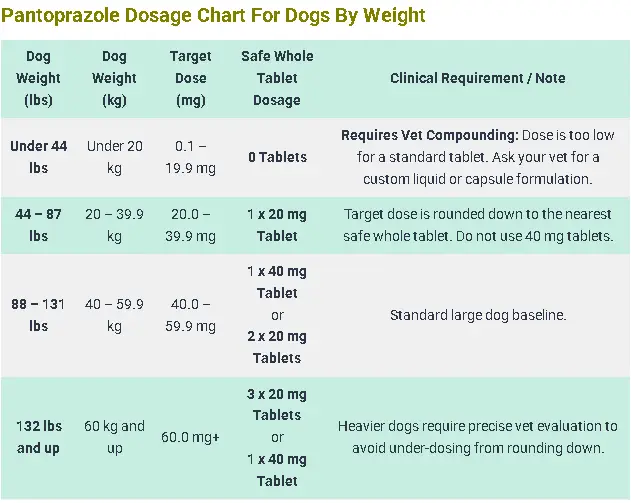
Pantoprazole Dosage Chart For Dogs By Weight
This weight-based reference table uses the standard clinical baseline dosage of 1.0 mg/kg given once daily.
Because human pantoprazole tablets are enteric-coated, they cannot be crushed, chewed, split, or broken. Doing so destroys the protective coating, making the medication useless against stomach acid. Consequently, calculations must always be rounded down to the nearest whole tablet.
| Dog Weight (lbs) | Dog Weight (kg) | Target Dose (mg) | Safe Whole Tablet Dosage | Clinical Requirement / Note |
| Under 44 lbs | Under 20 kg | 0.1 – 19.9 mg | 0 Tablets | Requires Vet Compounding: Dose is too low for a standard tablet. Ask your vet for a custom liquid or capsule formulation. |
| 44 – 87 lbs | 20 – 39.9 kg | 20.0 – 39.9 mg | 1 x 20 mg Tablet | Target dose is rounded down to the nearest safe whole tablet. Do not use 40 mg tablets. |
| 88 – 131 lbs | 40 – 59.9 kg | 40.0 – 59.9 mg | 1 x 40 mg Tablet or 2 x 20 mg Tablets | Standard large dog baseline. |
| 132 lbs and up | 60 kg and up | 60.0 mg+ | 3 x 20 mg Tablets or 1 x 40 mg Tablet | Heavier dogs require precise vet evaluation to avoid under-dosing from rounding down. |
⚠️ Critical Administration Rules
- Empty Stomach Only: Pantoprazole must be administered exactly 30 minutes before the dog’s first meal of the day.
- The “Round Down” Rule: If your dog weighs 70 lbs, their exact mathematical dose is 31.7 mg. Because you cannot cut a tablet, they must receive a single 20 mg tablet (rounded down), never a 40 mg tablet (rounded up). Overdosing on proton-pump inhibitors can cause adverse GI effects.
- Off-Label Usage: Pantoprazole Dosage is not FDA-approved for use in animals. Human commercial tablets (20 mg and 40 mg) are highly restrictive for smaller dog breeds. Always have your licensed veterinarian confirm the final dosage and form before administration.
What Is Pantoprazole?
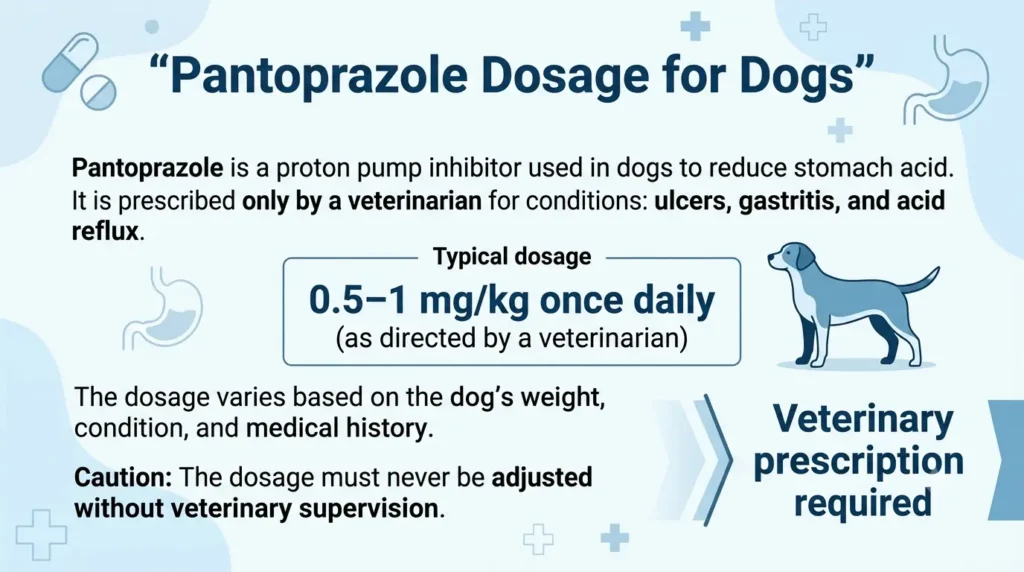
Pantoprazole (Protonix®) is a class of drugs known as proton pump inhibitors (PPI) which decreases the amount of acid your dog or cat’s stomach creates. Uses include the treatment and prevention of stomach ulcers, esophagitis, acid reflux, gastric reflux and other acid related digestive diseases. Pantoprazole decreases stomach acid to prevent damage to tissues and aid in the healing of ulcers in the esophagus (food pipe), throat, stomach and intestines.
However, pantoprazole Dosage For Dogs By Weight is generally more effective in preventing ulcers than H2 blockers like famotidine (Pepcid®) especially with long-term use. It may also be prescribed by a veterinarian for use in combination with other drugs for the treatment of Helicobacter infections, which are a type of stomach bacteria that may help the formation of ulcers. For some, pantoprazole is used prior to surgery, in order to try to minimise the risk of acid reflux.
Pantoprazole is an off-label (extra-label) medication in veterinary medicine; that is, it is not specifically labeled for dogs or cats by the FDA. It’s generally used, though, off the basis of evidence that suggests it is safe and effective for animals. There are no veterinary-specific formulations, so pantoprazole is usually given as a human-approved formulation in the form of an oral tablet, granules or injectable solution to pets. It is prescribed by a veterinarian and pet owners are advised to follow their veterinarian’s dosage directions so as to administer it in a safe and effective way.
How Is Pantoprazole Used in Pets?
Pantoprazole is a proton pump inhibitor (PPI) medication that is used in dogs and other animals to treat and prevent stomach ulcers, acid reflux, esophagitis and other stomach acid problems. It does this by inhibiting the production of stomach acid, allowing damaged tissues to heal and protecting stomach lining and promoting healthy blood flow to gastrointestinal tissues.
Pantoprazole is used in pets for the following reasons:
Pantoprazole is a prescription medication for:
- Gastric erosions and stomach ulcers.
- Swelling of the food pipe (esophagus) (esophagitis).
- Gastroesophageal reflux (acid reflux)
- Stop ulcers in at-risk animals.
- Helicobacter pylori associated ulcer treatment in combination therapy
- Minimising the risk of reflux during some surgical procedures.
- Pantoprazole for Stomach Ulcers.
The most common use of pantoprazole in dogs is stomach ulcers.
Ulcers may occur as a result of:
- Stress
- Intense exercise
- NSAID medications
- Corticosteroid therapy
- Kidney disease
- Liver disorders
- Other gastrointestinal conditions
Pantoprazole reduces the amount of stomach acid by a dramatic amount, giving any ulcerated or irritated tissues a chance to heal and prevents more tissue from becoming damaged.
Pantoprazole for Esophagitis and Acid Reflux.


Paid Links - As an Amazon Associate, I earn from qualifying purchases.
Pantoprazole can also be used to treat esophagitis, irritation, inflammation, or damage of the esophagus. It is most often caused by gastroesophageal reflux but can also be caused by foreign bodies or chemical irritants. Reducing stomach acids reduces the irritation and promotes healing of the oesophagus lining.
Symptoms of Ulcers or Esophagitis in Dogs
The symptoms can be non-specific and include:
- Vomiting or regurgitation
- Reduced appetite
- Abdominal discomfort
- Weight loss
- Problem with eating or drinking
- Black, tarry stools
- Blood in the vomit
Many conditions can have these symptoms so veterinarians use endoscopy to help confirm the diagnosis.
Pantoprazole is given in the following way:
Pantoprazole Dosage for dogs per pound or kg is typically given orally once or twice a day as directed by a veterinarian. It’s usually best taken on an empty stomach, at least half an hour before eating. If it does vomit, a vet may suggest to give it with a little food.
The medication comes in a few different forms:
- Oral tablets
- Oral granules
- Injectable solution
Veterinary professionals use pantoprazole injectable in a hospital setting.
While pantoprazole is safe and effective, it is not often used as the first line of treatment for a dog’s PPI. Omeprazole is often the first choice among many vets due to its longer lasting effect and extensive clinical experience. To be safe, pet owners should always follow any veterinarian’s advice and be sure to let their vet know if their pet is taking any other medications, supplements, vitamins or herbal remedies.
What Are the Benefits of Pantoprazole in Pets?
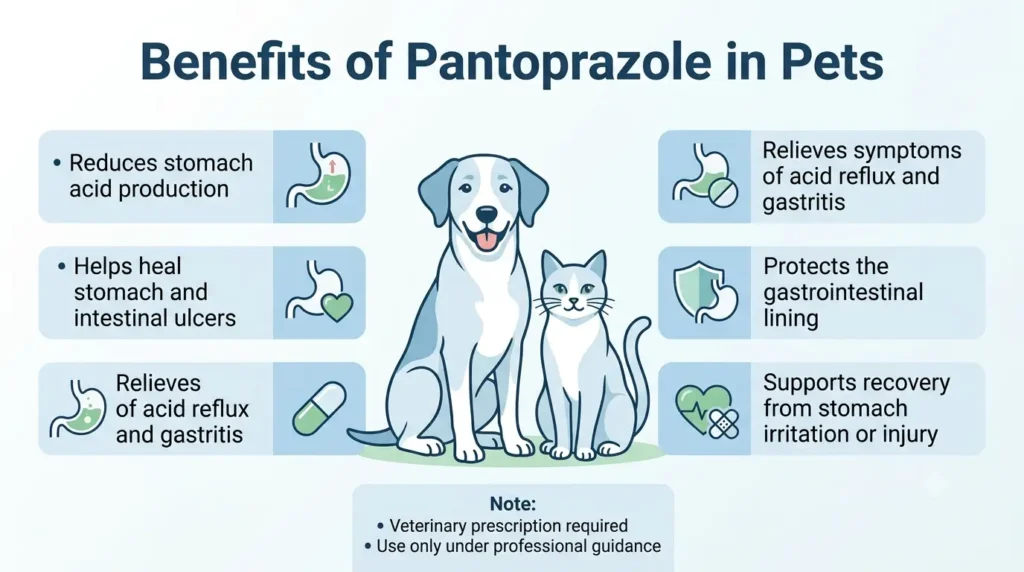
Pantoprazole has a number of advantages for dogs and cats with stomach acid problems. It is a proton pump inhibitor (PPI) that is effective at reducing stomach acid production, and is beneficial for protecting the digestive tract and promoting the healing process.
Key Benefits of Pantoprazole
- Aids the treatment and prevention of stomach ulcers and stomach related conditions that are caused by acid.
- Helps the stomach and esophagus heal after the damage to the tissues caused by too much stomach acid.
- Well tolerated by dogs and cats when used as directed by your veterinarian.
- For pets who need chronic acid suppression, provides effective long-term acid suppression.
- May be more effective than H2 blockers (famotidine) in maintaining stomach acid disorders.
- Helps to relieve discomfort due to excess stomach acid.
When prescribed and monitored by a veterinarian, pantoprazole is a great treatment option for pets that have chronic or recurrent gastric acid issues due to its powerful and long-lasting acid reducing properties.
Does Pantoprazole Have Warnings or Side Effects in Pets?
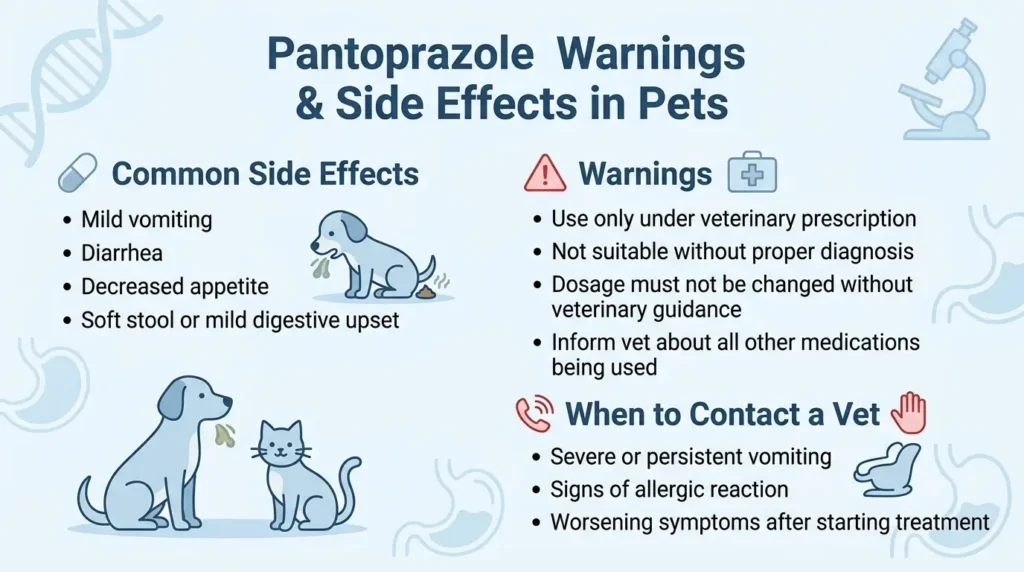
Pantoprazole is generally safe, and well-tolerated in dogs and cats when used by a veterinarian. As with any medicine, it may have side effects and interact with some medicines. Owners should closely supervise their pets while they are being treated and inform the veterinarian of any unusual symptoms that are noticed.
Pantoprazole common side effects include
Side effects usually are mild and digestively related. Diarrhea is the most common side effect seen in dogs.
Other possible side effects include:
- Decreased appetite
- Nausea
- Vomiting
- Gas (flatulence)
- Headache
- Diarrhea
If these effects do not improve or last for several days, consult your veterinarian for advice.
Potentially severe reactions to monitor:
There have been no well-documented serious side-effects in dogs, but serious adverse reactions occur. Discontinue use of Pantoprazole and contact your veterinarian right away if your pet develops symptoms of an allergic reaction, including:
- Trouble breathing or irregular breathing.
- Skin rash
- Fever
- Swelling or puffiness of the face.
- Other allergic reactions
Even if your pet has been fed a medication without any problems, over time your pet can become sensitive to it. Continued monitoring throughout treatment is important.
Warnings and Precautions
Pantoprazole should not be used in:
- Pets known to be allergic or hypersensitive to pantoprazole
- Pets with allergies to the similar proton pump inhibitors (PPIs) like omeprazole
Pantoprazole is not known to be safe in pregnant or nursing animals; therefore, caution should be exercised when using it in these animals under veterinary supervision.
Also, the drug can have a longer effect in pets that have kidney disease or liver disease.
Potential Drug Interactions
Pantoprazole may interact with several medicines and supplements since decreased stomach acid levels can impact absorption and/or metabolism of certain medicines.
Important interactions include:
- Antifungal drugs like ketoconazole, itraconazole
- Ampicillin
- Cyclosporine
- Iron supplements
- Thyroid supplements
- Sucralfate
- Warfarin
Some medicines may not work as well, or you may have side effects, if you have these interactions. Always let your veterinarian know if your pet is taking any prescription drugs, over-the-counter medicines, or supplements or herbs.
You should contact your veterinarian as soon as possible if you notice the following:
If you notice:
- Side effects are serious or last long.
- Your pet shows symptoms of an allergic reaction
- An overdose has been suspected
- You experience any unusual symptoms while taking the treatment.
If side effects occur, your vet might recommend decreasing the dosage or stopping pantoprazole use and trying a different medication.
Does Pantoprazole Interact With Other Medicines?
Pantoprazole medication may interact with a number of medicines, supplements, and herbal products. Pantoprazole also lowers stomach acid levels and can affect the absorption of some medicines, or make them more effective. Please tell your veterinarian what all of your pet’s prescription and over-the-counter medications, vitamins, mineral supplements and herbal remedies are before beginning pantoprazole.
Additive effects may occur with Pantoprazole when used with the following medications.
The following drugs should be administered with caution if administered with Pantoprazole:
- Antifungals such as azole antifungals (fluconazole, itraconazole, ketoconazole).
- Antibiotics called cephalosporins (cefpodoxime, cefuroxime, cephalexin)
- Levothyroxine
- Warfarin
- Iron supplements
- Bisphosphonates (e.g., alendronate)
- Doxycycline
- H2 receptor antagonists (e.g. famotidine)
- Methotrexate
- Mycophenolate
Important Interaction Details
Azole Antifungals and Cephalosporins
The stomach needs to be acid for these medications to be absorbed. They may not work as well when taking pantoprazole. Oral doses should not be given within 2 hours of each other, if it can be avoided.
Levothyroxine
Pantoprazole may decrease the absorption of levothyroxine. Dose separation alone may not be enough to negate this interaction so dosage adjustments may be needed, under veterinary supervision.
Warfarin
There is a potential for increased bleeding when pantoprazole is used with warfarin, so close monitoring by the veterinarian is important.
Iron Supplements
A decrease in stomach acid may reduce the absorption of iron, and thus make iron supplements less effective.
The importance of Veterinary Guidance
This is not a complete list of drug interactions and not all drug interactions can be foreseen. The likelihood and intensity of an interaction will depend on the health status, dosage and other medications your pet is taking. To help ensure safe and effective therapy, always check with your veterinarian before starting, stopping or combination with other treatments and then using pantoprazole.
You May Also Like to Read:
- Sucralfate Dosage For Dogs: Calculator, Chart & Safe Guide
- Spinosad Dosage For Dogs: Calculator, Chart & Safe Guide
FAQs
If my dog misses a dose of pantoprazole, what should I do?
In the event of forgetting the dose just before the time it was due, the dose should be administered at the earliest opportunity. If it is near the time for the next dose, however, skip the dose and resume the usual dose schedule. Never give twice as much as the dose at once, or try to double up the dose to compensate for a missed dose.
If my dog receives too much pantoprazole, what will happen?
If you think your dog may have taken more than his or her recommended dosage of pantoprazole, please call your veterinarian or an emergency veterinary center right away. Have information on hand regarding the medication, your dog’s weight, and symptoms you’ve noticed.
What is the recommended storage for pantoprazole?
Pantoprazole should be stored at room temperature, between 68°F (20°C) and 77°F (25°C). Store in cool, dry place, protected from light. When compounding, store according to label directions.
Should my dog be monitored while taking Pantoprazole Dose?
Yes. Your veterinarian may want to periodically check your cat to see if it is effective and if it isn’t causing side effects. If your dog starts to show signs of being unusual at home, or if there are changes in his behavior, contact your veterinarian if you have concerns.
Are there any pet owner safety measures?
Pantoprazole should be dropped into the pet’s mouth and the pet owner should wash his or her hands afterwards; if the person administering pantoprazole is allergic to it, he or she should not handle the medication. Medication should never be left out for children and pets to ingest.
Are there any pantoprazole dog allergy reports?
Yes. Dogs with known hypersensitivity or allergy to pantoprazole, any other component of the formulation or to any other medication in the same drug class as pantoprazole (substituted benzimidazoles) should not be treated with pantoprazole. If there are signs of an allergic reaction, seek veterinary care immediately.
Should I call my veterinarian when my dog is taking pantoprazole?
If your dog has any long-lasting side effects, unusual symptoms, signs of an allergic reaction, or if you feel the medicine isn’t working as intended, contact your vet. If overdose or serious adverse reaction is suspected, immediate veterinary attention is suggested.
Final Thoughts
Pantoprazole Dosage For Dogs is a prescription proton pump inhibitor (PPI) that is able to decrease stomach acid production in dogs with ulcers, acid reflux, esophagitis and other stomach conditions. Generally well tolerated and effective, when used under veterinary supervision.
By adhering to the recommended dosage, keeping track of any side effects, and staying informed about your dog’s condition and treatment progress, you can help ensure that your furry friend receives the best care possible.