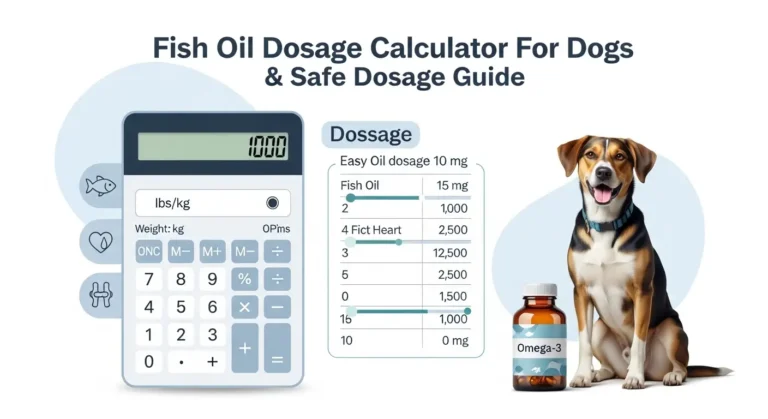
Nordic Naturals® Fish Oil Dosage Calculator for Dogs
Enter your dog’s weight to get a general liquid fish oil dosage guide.
Dosage Results
If you’ve searched three different sites and gotten three different dosage charts for Nordic Naturals fish oil Dosage For Dogs, you’re not imagining it.There are still some older charts that are in circulation that don’t fit the current bottle on the shelves. Below is the dosage directly from Nordic Naturals’ current product label, the math behind the dosage, and everything else you need to dose safely.
Quick facts: Nordic Naturals Omega-3 Pet is available in soft gel and liquid, has a dosage based on your dog’s body weight, and is designed to be one time a day pet food supplement.
What is Nordic Naturals Fish Oil For Dogs
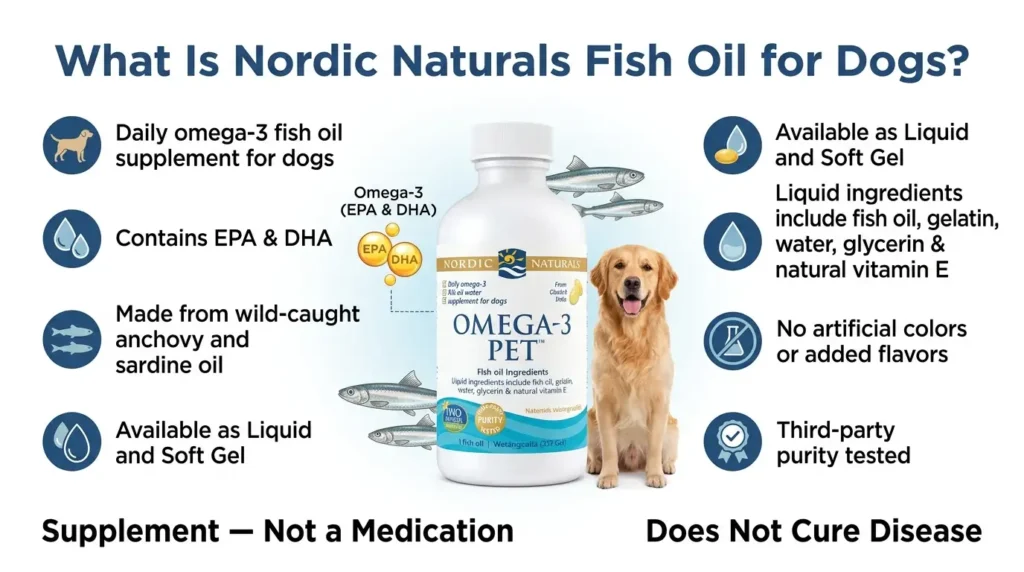
Nordic Naturals Fish Oil for Dogs (sold as Omega-3 Pet™), is a daily supplement of omega 3 fish oils from wild-caught, sustainably sourced fish (anchovy and sardine oil). It’s designed to give dogs (and cats) the EPA and DHA fatty acids they typically don’t get enough of from commercial pet food.
What it is
- It’s not a medication, it’s a fish oil supplement designed to supplement a deficiency, rather than cure a disease.
- Available in two types: Soft Gel and Liquid
- Ingredients (liquid): anchovy oil, sardine oil, gelatin, water, glycerin and d-alpha tocopherol (natural vitamin E which is used as a preservative).
- No flavours added or artificial colours.
- Nordic Naturals – purity tested by third party
Why dogs need it
Dogs are not very good at converting plant based omega-3s (such as flaxseed) into EPA and DHA, which are the omega-3s that can be used in the body. The majority of commercial dog food is also higher in inflammatory omega 6s and lower in omega 3s. Thus, this supplement can be a direct source of EPA and DHA from marine sources.
What it’s used for
- Health of skin and coat (shine, reduced dryness/shedding)
- Ease of movement and comfort of the joints
- Heart health
- Health of the brain and eyes/cognitive function
- Generally, supporting the normal inflammatory response includes:
Although it is a supplement that vets often recommend, it can cause some mild intestinal upset if given in large enough doses, and should be discussed with your vet before administering if your dog is on any blood thinners or has an upcoming surgery.
Nordic Naturals Dosage Chart by Weight
Nordic Naturals fish oil for dogs dosage current label instructs you to dose Omega-3 Pet daily, according to your dog’s weight, in either soft gel or liquid form.
Soft Gel Dosage Chart
| Dog’s Weight | Daily Dose |
| 2–10 lbs | Use the Omega-3 Pet 2 oz. liquid formula instead |
| 10–19 lbs | 1 soft gel |
| 20–39 lbs | 2 soft gels |
| 40–59 lbs | 3 soft gels |
| 60–79 lbs | 4 soft gels |
| 80–110 lbs | 5 soft gels |
| 111–130 lbs | 6 soft gels |
| Over 130 lbs | Consult your veterinarian |
If your dog is 10-19 lbs, open the gel and pour the oil on the food, as the whole soft gel may be difficult for some smaller dogs to chew or swallow. Larger dogs can take the soft gel whole, as a treat, or camouflaged in food.
Liquid Dosage Chart
| Dog’s Weight | Daily Dose (teaspoons) | Daily Dose (mL) |
| 10–19 lbs | 0.25 tsp | ~1.25 mL |
| 20–39 lbs | 0.5 tsp | ~2.5 mL |
| 40–59 lbs | 1.0 tsp | ~5.0 mL |
| 60–79 lbs | 1.5 tsp | ~7.5 mL |
| 80–110 lbs | 2.0 tsp | ~10 mL |
| 111–130 lbs | 2.5 tsp | ~12.5 mL |
| Over 130 lbs | Consult your veterinarian | — |
Nordic Naturals recommends its 2 oz. liquid formula for dogs 2-10 lbs, which includes its own smaller scale dropper, as opposed to a teaspoon measurement.
Note on outdated charts: A few pet-health websites have an outdated liquid dosage chart (e.g., 2-5 lbs is 0.5 mL and 60-79 lbs is 1.5 tsp of an earlier label change). Nordic Naturals has publicly updated its label and the above chart is the current one. Bottle labels are subject to change; before you dose, check with the actual bottle that you have, it is your most up-to-date resource.
Dosage Calculator: Find Your Dog’s Exact Dose
To approximate your dog’s EPA+DHA goal according to veterinary and National Research Council (NRC) recommendations, use this formula:
Daily EPA+DHA (mg) = Dog's weight (kg) × 50 to 75 mgTo convert pounds to kilograms, divide by 2.2.
Worked example: A 44 lb dog weighs 20 kg, and therefore with the recommended dose of 50-75 mg/kg per day, the combined EPA+DHA levels in the diet should be 1,000-1,500 mg per day.
After understanding your desired range, in milligrams, equate it to the actual milligrams in Nordic Naturals Omega-3 Pet:


Paid Links - As an Amazon Associate, I earn from qualifying purchases.
- Liquid: 1 teaspoon (5 mL) is approximately 31% total Omega-3s by weight, with a minimum of 17% EPA and 10% DHA (4,600mg total liquid weight per teaspoon).
- This equates to a full teaspoon providing somewhere between 1200 and 1400+ mg of combined EPA+DHA – hence the lower dose label for most doggie weights unless they are in a higher category.
Key takeaway: If using for regular skin, coat and joint care, use the label weight chart. If a diagnosis is made for which the recommended dose is higher than the label dose, it is your veterinarian’s choice and you should not adjust the dose.
Soft Gel vs. Liquid: Which Should You Choose?
| Factor | Soft Gel | Liquid |
| Best for | Medium-large dogs, dogs that take treats easily | Small dogs, picky eaters, dogs who refuse pills |
| Dosing precision | Fixed per-capsule amount | Adjustable to the exact mL |
| Mess | Minimal | Some spillage risk; several reviewers note the pour spout on larger bottles is imprecise |
| Shelf life once opened | Comparable | Comparable; refrigerate either way |
| Taste masking | Good — can hide in a treat | Good — mixes into wet food easily |
Our take: If your dog isn’t an objector to taking soft chewies or pill pockets, soft gels are the mess-free alternative. The liquid is more controllable if your dog is under 20 lbs, is picky, or you want to adjust its dose in small increments, for instance when a veterinarian prescribes a dose that falls between the two boundaries listed on the label.
What Nordic Naturals Fish Oil Is Used For
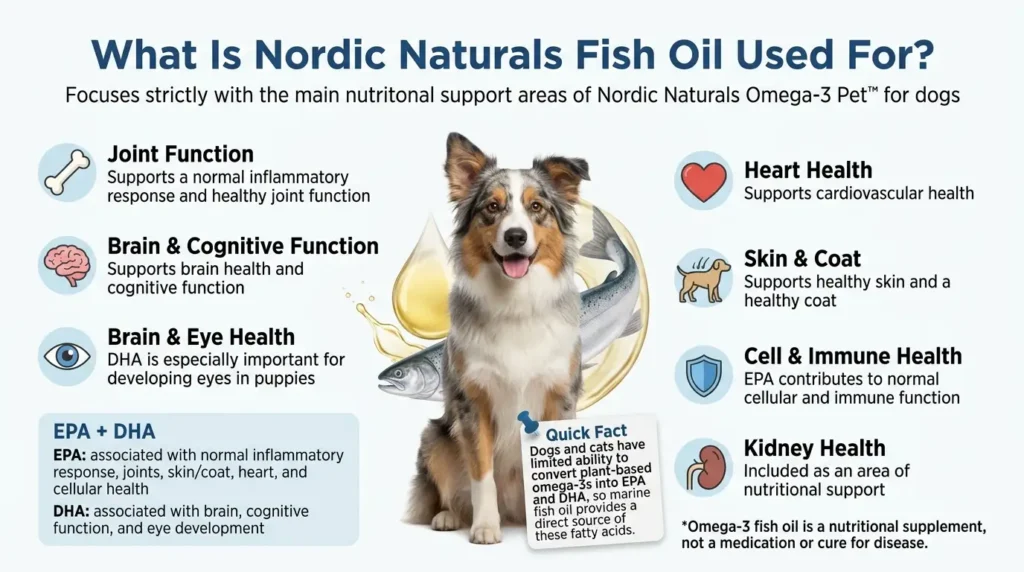
Nordic Naturals Omega-3 for dogs is not meant to be a drug and is designed to fill a nutritional deficiency: the omega-3s that can be found in commercial pet food are not readily converted to usable EPA and DHA in dogs, so a direct source from the oceans is more beneficial.
EPA (eicosapentaenoic acid) is best known as:
- Helps support a normal inflammatory response, hence the popularity for joint support.
- Health and wellness of cells and the immune system
- Heart health
- Kidney health
- The condition of the skin and coat.
DHA or docosahexaenoic acid is known for being mostly linked to:
- Brain health and cognitive function.
- Development of the eyes (particularly in puppies)
- Growing dog behavioral health and trainability
Nordic Naturals’ own product page includes five areas of support for Omega-3 Pet – skin and coat health, cognitive function, healthy brain and eyes, heart health and healthy joint function.
Callout – Quick Fact: Cats and dogs are not able to produce easily enough EPA and DHA fatty acids from plant sources of omega 3 (such as flax-seed) and therefore vets generally tend to favour a marine source of these two fatty acids, fish oil.
How Long Until You See Results?
Since there is no designated study period that has been studied exclusively for this product, it’s best to be straightforward about what is known and what is not: users report coat and skin changes in 3-6 weeks of daily use, and joint-comfort and mobility changes in a longer time frame of 6-12 weeks, consistent with how long omega-3s take to accumulate in cell membranes.
These are general trends that pet owners and veterinarians have observed, and are not lab confirmed timelines of this product – if there is no improvement after 8-12 weeks, consult your veterinarian about increasing the dosage or an alternative cause.
Side Effects and Warning Signs
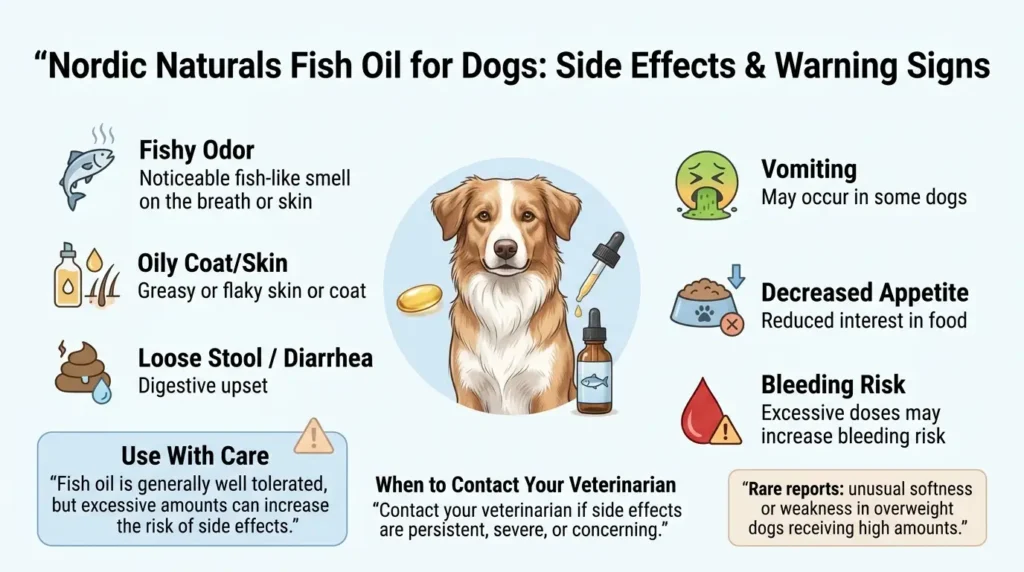
While fish oil is relatively safe, it can still be problematic like any other supplement, particularly if taken in excess of the recommended dose. Reported side effects are:
- Fish like odor or aroma on breath or skin
- Oily or flaky skin, or greasy coat
- Loose stool, diarrhea
- Vomiting or decreased appetite.
- Increased risk of bleeding with high doses.
- can be observed in rare instances, with overweight dogs receiving high doses of the supplement developing a soft or “lame” feel.
Call the veterinarian right away if your pet’s bruising is unexplained, bleeding is not stopping as usual, the stool is black and tarry, or your pet is vomiting repeatedly.
Another reason for adding d-alpha tocopherol (a natural source of vitamin E) into some fish oil products (such as some Nordic Naturals formulations) as a preservative and nutritional protection is that long-term high doses of fish oil can actually have an impact on vitamin E levels.
Drug Interactions and Health Conditions to Flag With Your Vet
Fish oil medication doesn’t interact with many medications, but be sure to advise your veterinarian if your dog is taking or has:
- Fish oil dog dosage may add to the blood thinning effects of certain medications (called antiplatelet or anticoagulant drugs) when taken in large dosages.
- Future surgery – some vets suggest to stop fish oil for the days prior to a surgery.
- A bleeding disorder
- History of pancreatitis – high fat supplements should be given sparingly
- Diabetes – not a contraindication, but new supplements should be monitored in conjunction with glucose monitoring
According to Nordic Naturals’ own literature, and several animal health vet sites, it is generally safe to combine fish oil with most other medications, however “generally safe” is not “no need to mention,” so it is important to note any new supplement to your veterinarian just like you would do for a new medication.
Common Dosing Mistakes to Avoid
- Using a ‘guesstimate’ to measure liquid doses. Eye leveling may be 30-50% off using a teaspoon. Use dropper or measuring spoon.
- Using an old bottle’s chart with a new bottle. Labels are updated; do not trust a screenshot from a forum.
- Doubling up soft gels and liquid “just to be safe. Do not mix the two formats, choose one.
- Giving human fish oil instead. Human formulas are dosed differently and sometimes flavored differently (and may contain ingredients not intended for pets); use a formula designed for pets.
- Not taking the time to talk to the vet about dogs that are taking medication or have been diagnosed with a condition. Label dose is designed for the healthy dog to maintain him, not for a therapeutic protocol.
Storage of Nordic Naturals Fish Oil
Fish oil is a perishable product and is susceptible to oxidation (rancidity) that decreases its effectiveness and palatability.
- Refrigerate after opening.
- To be used within three months of opening.
- Store tightly capped and out of direct light and heat.
- If the oil smells really “off” (more than the normal fish oil smell), or the color is obviously different, do not serve it, but throw it out.
Where to Buy Nordic Naturals Omega-3 Pet (and What It Costs)
Nordic Naturals Omega-3 for Pet is available directly from nordic.com, through veterinary channels at nordicpro.com, and major pet retailers, including Petco, Chewy, and independent retailers like HolisticPetInfo.
| Format | Approx. Size | Typical Price Range |
| Soft gels | 90 count | ~$22–$23 (subscribe & save pricing typically knocks off ~10%) |
| Liquid | 2 oz | Lower price point, best for very small dogs and cats |
| Liquid | 8 oz | Mid-size households/dogs |
| Liquid | 16 oz | ~$40–$44 list price; frequently discounted with autoship |
The pricing and package sizes listed above vary from time to time in various stores, use the above as a reference only and check the actual price at the point of sale.
Myth vs. Fact
| Myth | Fact |
| “More fish oil means faster results.” | Excess omega-3s don’t speed benefits — they raise the risk of GI upset and delayed clotting. Stick to the labeled dose unless a vet advises otherwise. |
| “Any fish oil dose works the same for every dog.” | Dose is weight-based and formulation-specific; a 15 lb dog and a 90 lb dog need very different amounts, and human fish oil isn’t formulated the same way. |
| “Fish oil is a cure for joint disease.” | It supports a normal inflammatory response and comfort, but it’s a supplement, not a treatment for diagnosed arthritis or joint disease on its own. |
| “You can skip the vet conversation because it’s ‘just a supplement.'” | Fish oil can interact with blood-thinning medication and needs caution around surgery or bleeding disorders. |
You May Also Like to Read:
- Nutracalm Dosage For Dogs: Calculator, Chart & Safe Guide
- Nux Vomica Dosage For Dogs: Calculator, Chart & Safe Guide
FAQs
Can Nordic Naturals fish oil be given daily to dogs?
Yes, it is formulated for daily use in a maintenance program, following the dosage guide on the label, based on the weight of your animal.
Is it safe for my dog to take Nordic Naturals fish oil for cats?
Nordic Naturals’ Omega-3 Pet formula is for dogs and cats; the amounts vary depending on the size of your pet, so please use the dog dosage chart which is based on your dog’s weight, not the cat dosage chart.
Is it okay to use human Nordic Naturals fish oil on my dog instead of the dog one?
It is recommended to use the formula specific for the pet. Human fish oil products may have various flavorings and additives that are not suitable for pets and are often dosed for human body weight.
Is it possible for my dog to consume too much fish oil?
GI upset (vomiting, diarrhea), greasy coat, and delayed blood clotting are associated with overdose. If you think that your pet may have overdosed, check with your veterinarian, particularly if you see abnormal bruising or bleeding.
How much time it will take to see results from fish oil?
Typically, with skin and coat improvements, this can be noted in only 3-6 weeks, whereas improvements in joint comfort can be reported in a wider range of 6-12 weeks. Individual results vary.
Can puppies take Nordic Naturals fish oil?
While it’s standard practice to give puppies fish oil to support brain and eye development, you should always dose based on the puppy’s current weight and time and dose should be checked with your veterinarian as puppies grow rapidly.
Is it better to take fish oil before or after meals?
With food. Easy to give when mixed into a meal and minimises risk of tummy upsets.
Will Nordic Naturals fish oil affect my dog’s medication?
It’s pretty nonreactive, but if your dog is taking blood thinners, is scheduled for surgery, or has a bleeding disorder, be sure to let your veterinarian know if your dog will be taking high doses of omega 3s, as they can interfere with blood clotting.
Why are the dosages for Nordic Naturals fish oil different on various sites?
The labels are updated occasionally, and old copies of the chart continue to be found on third party sites. Double check dosage with the label in your possession.
So which is better for my dog – soft gel or liquid?
There’s no such thing as “better” per se. Soft gels are less messy than liquids, and are suitable for dogs that take treats well, whereas liquids have finer dose control but can be given to small and picky dogs.
I opened my Nordic Naturals fish oil, what should I do with it?
Store in the refrigerator and use within 3 months after opening to prevent rancidity.
Is Nordic Naturals fish oil 3rd party tested?
Nordic Naturals claims their products are purity tested and third party tested with certificates of analysis made available by Nordic Naturals upon request.
What are really in the liquid formula?
The liquid contains only anchovy oil, sardine oil, gelatin, water, glycerin and d-alpha tocopherol, a natural vitamin E preservative, according to the product label.
Is Nordic Naturals fish oil safe for older dogs?
Yes, it’s usually prescribed by the veterinarian for older dogs, especially for keeping joints comfortable and maintaining mobility, given based on the dog’s current weight.
Final Thoughts
The safest way to dose Nordic Naturals fish oil for dogs is simple: Consult your pet’s current weight on the chart and select soft gel or liquid depending on which your pet will take without a fight, measure it out instead of “handing it out,” and if your pet is not just on a general maintenance dose, you’re managing a diagnosed condition, or your pet is recovering from surgery or on medication, check with your veterinarian before you begin.
If you’re not sure, the number on the bottle you are holding trumps any chart you will see online, including this one.