Mullein is one of the most recommended herbs in natural dog care, but the information on the Internet for how much to use is all over the place, with teaspoons, millilitres and drops disagreeing with each other. It’s all in one place in this guide: a weight-based chart, an interactive calculator, and safety information that most articles neglect to include.


Paid Links - As an Amazon Associate, I earn from qualifying purchases.
Quick answer: Dogs under 30 lbs typically get 1 drop of mullein dosage for dogs tincture per 2 lbs of body weight, given twice daily. Dogs 30 lbs and over are usually dosed in milliliters on a fixed scale – from 0.75 ml at 30 lbs up to 2 ml at 100+ lbs, also twice daily. The exact number depends on the product’s concentration, so always check your label and use the calculator above to double-check the calculation.
What Is Mullein?
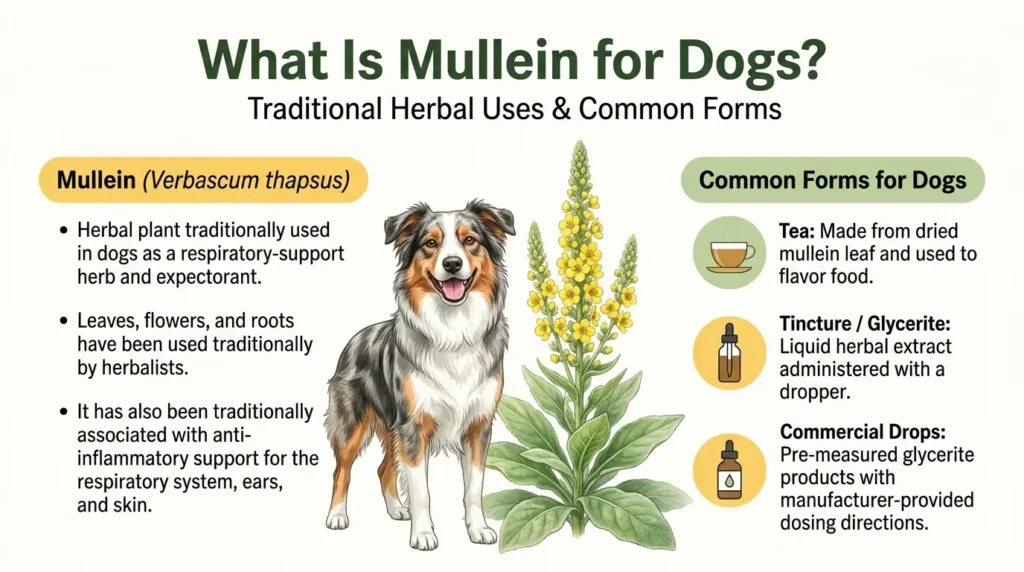
Mullein (Verbascum thapsus) is a large, downy flower with yellow blooms, found growing wild along roadways and in gardens in North America and Europe. Its leaves, flowers and roots have been used for generations by herbalists and most commonly in dogs as a herbal expectorant and anti-inflammatory for the respiratory system, ears and skin.
It’s sold for dogs in three main forms:
- Tea: made from dried leaf and used to flavour foods.
- Tincture/glycerite: an alcohol – or glycerin-based liquid extract, given by dropper
- Commercial drops: a pre-measured glycerite product (such as mullein leaf drops) with a printed weight based dosing chart.
Is Mullein Safe for Dogs?
Mullein for dogs dosage is used with great success in veterinary herbal medicine, and is well tolerated by healthy adult dogs when given properly. However, the term “herbal” does not imply “without risks. Before you begin, here are a few things to know:
- Although mullein is known to be toxic to fish and amphibians, therefore avoid using any mullein product in aquariums or reptile/amphibian enclosures.
- Mild upset of the digestive tract is experienced by some dogs.
- When applied topically, mullein may be irritating to some dogs – be sure to patch test first.
- There is no definitive, controlled veterinary research on mullein dosages or safety in dogs; most information (this article included) is derived from reading about herbal medicine, or from the label of a product. Use mullein medication as a supportive treatment, not a substitute for veterinary diagnosis or treatment!
Always check the new supplement with your veterinarian, particularly if your dog is a puppy, pregnant or nursing, a senior dog, or on medication.
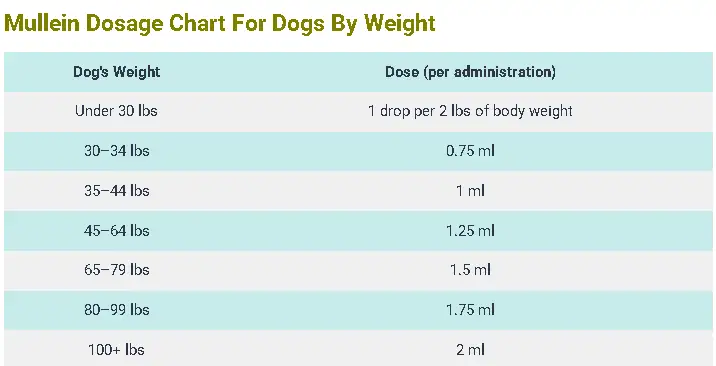
Mullein Dosage Chart For Dogs By Weight
The following is the standard dose chart for the most popular mullein leaf drop products (glycerite tinctures) and is administered twice a day:
| Dog’s Weight | Dose (per administration) |
| Under 30 lbs | 1 drop per 2 lbs of body weight |
| 30–34 lbs | 0.75 ml |
| 35–44 lbs | 1 ml |
| 45–64 lbs | 1.25 ml |
| 65–79 lbs | 1.5 ml |
| 80–99 lbs | 1.75 ml |
| 100+ lbs | 2 ml |
Key takeaway: Small dogs are dosed according to the number of drops, while medium and large dogs are dosed in millilitres once they reach 30 lb. Shake the bottle before use and do not use if safety seal is broken or missing.
Mullein Tea Dosage for Dogs
One guideline for home-brewed mullein leaf tea, as mentioned in the herbal reference Herbs for Pets by Gregory L. Tilford and Mary L. Wulff, is:
- 10 ml of tea per 30 lbs of body weight, twice daily, added to food or given orally.
Mullein Tincture Dosage for Dogs
According to the same source, here is a guideline for a standard glycerin tincture (not the one in the drop chart above because different brands have different concentrations):
- 1–2 ml per 20 lbs of body weight, twice daily.
Why the numbers don’t match across sources: Tea, tincture and commercial drops are not equivalent milliliter for milliliter, but rather extracted to varying strengths. Do not use one dosing chart for a different product type. If in any doubt, please refer to the dosage on the label of the particular product or seek clarification from a holistic veterinarian.
How to Give Mullein to Your Dog
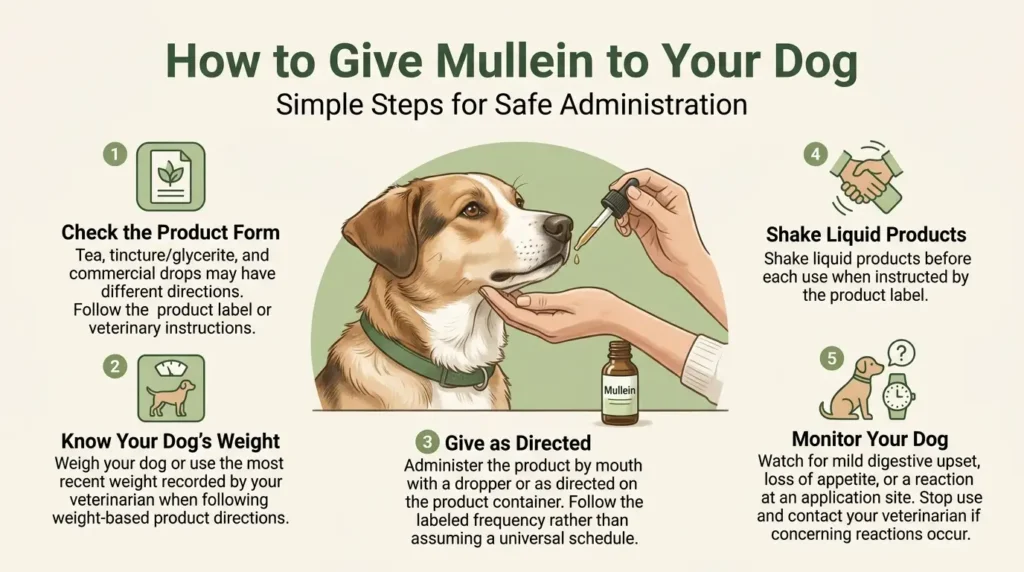
- Review the form you are using: teak, tincture or commercial drops have their own chart above them.
- weigh your dog or use the most recent weight from your vet visit.
- Give twice a day either in the mouth using a dropper or as directed in the container.
- Shake liquid products before each use.
- Keep an eye out for changes – if there is any sign of mild GI upset, loss of appetite or any reactiveness near an application, discontinue and contact your vet.
What Is Mullein Used For in Dogs? (Benefits)

Respiratory Support
Mullein leaf is most commonly known as a natural expectorant and anti-inflammatory to the airways. It is often used to relieve kennel cough, cough and mild bronchitis or asthma symptoms by breaking up mucus and soothing inflamed tissues in the airway.
Ear Health
Mullein flower possesses antibacterial and antiparasitic properties and is used traditionally along with garlic oil as topical treatment for earaches, mild ear infections and ear mites. The topical ear application is a separate product and dosage procedure from oral tea/tincture/drops as mentioned in this guide – please check with your vet before applying anything to your dog’s ear canal, especially if the integrity of the eardrum is not known.
Skin Soothing
Mullein leaf is a poultice or infused in oil and has been used to soothe minor wounds, burns, bug bites and general skin irritations. Mullein Dosage for dogs can cause irritation in some skin types, try a small patch and monitor skin for any redness or additional itching before increasing the use.
Side Effects and Risks of Mullein for Dogs
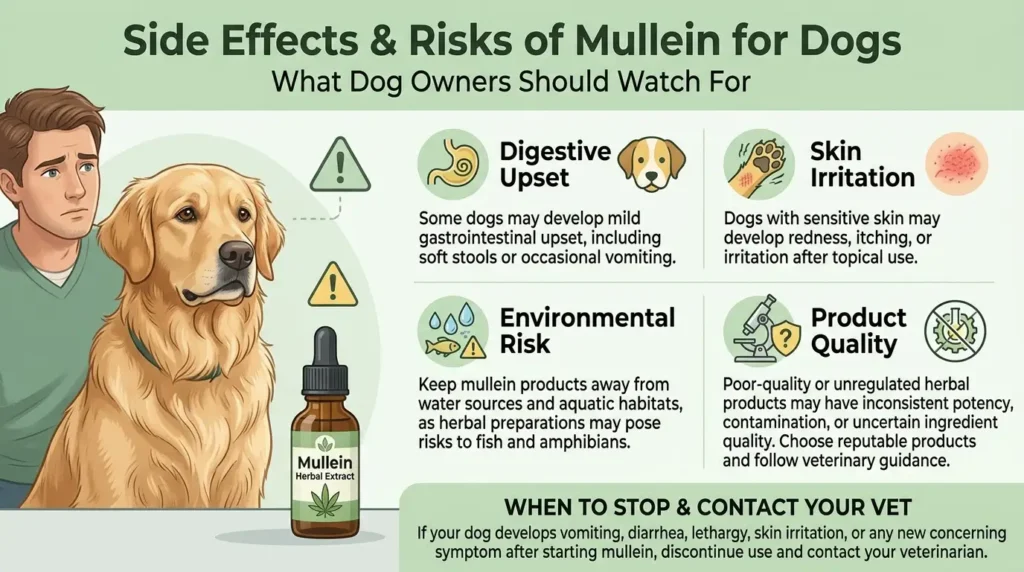
Occasional problems have been reported, such as:


Paid Links - As an Amazon Associate, I earn from qualifying purchases.
- Gastroenteritis (mild upset stomach with soft stools, occasional vomiting)
- Sensitive dogs: skin irritation when using topically.
- If the product comes in contact with water or habitat, toxicity to fish and amphibians
- Herbal products sourced from poor quality or not regulated, result in reduced effectiveness or unknown quality.
If vomiting, diarrhea, lethargy or any new symptom occurs after beginning to give mullein, discontinue and consult veterinarian.
Mullein Drug Interactions in Dogs
At this time there are no significant veterinary studies on any drug interactions with mullein drug and prescription medications in dogs. That is quite a lack of information, not an automatic stamp of approval to mix with other therapies. As a general rule:
- Before you put your pet on a new prescription, inform your veterinarian if your pet is taking any type of herbal supplement, particularly liver medications.
- Caution should be exercised when using mullein in combination with other herbal or over-the-counter respiratory, sedative or anti-inflammatory remedies; combined effects have not been studied.
- Before adding an herb supplement, be sure to obtain veterinary clearance if your dog has a chronic condition (liver, kidney, or heart disease).
Mullein for Puppies, Senior Dogs, and Pregnant Dogs
- Puppies: There are a few commercial mullein dose drop products that are for dogs 12 weeks or older. Make sure of the minimum age of your particular product before using.
- Senior dogs: They may be pretty laid-back, but seniors are more likely to be taking other medications – let your vet know.
- Pregnant or lactating dogs: Safety not yet determined. Do not use unless otherwise directed by a veterinarian.
Myth vs. Fact
| Myth | Fact |
| “It’s an herb, so it’s completely harmless.” | Herbal ≠ risk-free. Mullein can cause mild GI or skin reactions and hasn’t been studied for drug interactions. |
| “Mullein cures kennel cough.” | Mullein may help ease symptoms like coughing and mucus, but it isn’t a proven cure and doesn’t replace veterinary treatment for a diagnosed infection. |
| “Any mullein dosage chart works for any product.” | Tea, tincture, and commercial drops are dosed differently because their concentrations differ. Match the chart to your product. |
| “More mullein works faster.” | There’s no evidence that exceeding the labeled dose improves results, and it increases the chance of an upset stomach. |
Common Mistakes When Dosing Mullein
- Using a dosage chart for a tincture when making and using a tea (or the other way round)
- Using an estimated weight rather than an actual reading on the scale
- Not following the instruction to shake before use – doses may be inconsistent.
- Administering mullein to a dog who has a pre-existing respiratory diagnosis rather than seeking a veterinary diagnosis first
- Allowing mullein products to come into contact with fish tanks or amphibian habitats
How to Store Mullein Products
Most liquid mullein tinctures and drops:
- Do not need refrigeration
- Should be kept out of direct light and heat.
- Must never use if safety seal is broken or missing
When to Call Your Veterinarian Instead
Mullein drug for dogs is a supportive herb to use, not an emergency herb. If your dog experiences: Please consult your veterinarian immediately:
- Laboured or fast breathing
- A cough that doesn’t go away or that is getting worse
- Nose or ear discharge that is green/yellow in color.
- Lethargy, fever or loss of appetite
- Any reaction from the beginning of the mullein
You May Also Like to Read:
- Nitrofurantoin Dosage For Dogs: Calculator, Chart and Guide
- Nordic Naturals Fish Oil Dosage For Dogs: Calculator & Guide
FAQs
What are the uses of mullein medication for dogs?
The antimicrobial, expectorant and anti-inflammatory properties of mullein make it most commonly used to support the respiratory system (coughing, kennel cough, mild bronchitis), ear health (earaches, mild infections, ear mites) and skin healing.
How much can I give my dog of mullein?
That varies for each product. Mullein leaf drops are used commercially at about 1 drop for every 2 lbs of body weight for dogs under 30 lbs and then according to a fixed ml chart (0.75 – 2 ml) for dogs 30 lbs and over and are administered twice a day. The ratio is different for use as tea or tincture, refer to chart above which corresponds to your product.
Is Mullein drug safe for puppies?
Some commercial mullein products are recommended for use from 12 weeks, but always check the minimum age on your product and with your vet!
Can I give my dog mullein every day?
The majority of products with a label require twice-day doses consistently over the time period suggested on the label or by your vet. If using on a daily basis, consult your veterinarian.
Is mullein good for kennel cough in dogs?
Mullein dosage for dogs is one popular natural remedy for coughing and mucous when suffering from kennel cough, but should only be used as part of a more comprehensive strategy that is managed by your veterinarian and not used as a substitute for diagnosis and treatment.
How long does it take mullein to work in dogs?
No clinical evidence of what the timelines should be. Some owners report a decrease in coughing within days, while others do not report noticeable effects. If symptoms are not improving after a few days, consult your veterinarian.
Are there any mullein side effects on dogs?
Mullein is well-tolerated by most dogs. Common side effects include mild gastrointestinal upset and (with topical application) skin irritation.
Is it possible to use mullein as a tea for my dog?
Yes – steep dried mullein leaf in hot water, then strain and add to food with the dosage guidelines for tea above. Only use dried mullein that is human/pet grade and from a reputable supplier.
Is mullein oil safe for dogs’ ears?
Mullein-infused oil is a traditional topical remedy for ear problems, but is only to be used if the ear drum is intact and preferably under veterinary supervision as underlying ear infections should be diagnosed appropriately.
Are there any drugs that do not get along with mullein?
This has not yet been investigated in dogs. Prior to beginning a new prescription drug, be sure to inform your veterinarian about any herbal supplement.
Where can I keep my mullein dose drops?
Protect from heat and light, shake before use and do not use if the seal is broken. Usually do not need refrigeration – see label.
Mullein tea, tincture and drops, what’s the difference?
Tea is a water base extraction and tincture is an alcohol or glycerin extraction, which is more concentrated; commercial “drops” are a pre-measured glycerite tincture with a dosing chart. They are dosed differently and aren’t interchangeable.
Can cats or other pets have mullein?
The information in this guide applies to dogs only. Dosing for other species (such as cats) is different and not addressed here, please consult your veterinarian for dosing directions.
How can I get mullein for my dogs?
Buy mullein in dried leaf, teas, tinctures or commercial drops from pet supplement retailers, health food stores and online; seek out products that have been third party-tested and have an easy-to-understand label with clear ingredients and dosages.
When do I need to take my pet to the vet and not use mullein dog medication?
If your dog experiences any of the following symptoms after beginning mullein – take them to see a vet immediately: labored breathing, worsening or prolonged cough, colored ear or nasal discharge, lethargy or fever.
Final Thoughts
However, mullein for dogs dosage is a well-advised, gentle natural remedy used in dog health care in the treatment of respiratory, ear and skin wellness – and “natural” does not imply “dose it incorrectly.
The best advice is always to follow it to the letter: use the same dosing chart as the product you are administering (tea, tincture, or commercial drops), never guess the weight of your dog, always follow the instructions for frequency, and consult your veterinarian before using mullein or if something doesn’t seem right. When applied judiciously, it can be a valuable addition to your dog’s health program.
This article is for informational purposes only and is not a substitute for professional veterinary advice, diagnosis, or treatment.