Laxatone Dosage Calculator for Dogs
Enter your dog’s weight to see the published administration regimen and general sizing guidance for Laxatone. This tool does not calculate a dosage from a formula — see why below.
Administration Guidance
Small dog- Starting dose: 1/2–1 teaspoon, once daily, for 2–3 days
- Maintenance dose: 1/4–1/2 teaspoon, 2–3 times per week
- Give between meals — at least 2 hours before or after food
- Squeeze a small amount onto your finger, or dab it on your dog’s nose or paw so they lick it off
© medsdog.com
Laxatone is a veterinarian formulated oral gel that was designed to assist cats in passing and preventing hairballs, but is also used off-label by some veterinarians as a very mild laxative for dogs. The gel coats the hair and stool that you swallow and contains a combination of white petrolatum and mineral oil, which help to coat the hair and stool and soybean oil, which provides omega-3, 6 and 9 fatty acids to maintain digestive health.
It’s flavored with tuna or maple and will be easy for pet owners to give to the animal — just dab a little on the nose or paw and let the animal lick it off. This simplicity combined with the uniformity of results has established Laxatone to be a long trusted solution for vets to combat hairballs and occasional constipation.


Paid Links - As an Amazon Associate, I earn from qualifying purchases.
However, when it comes to Laxatone dosage for dogs, this is one thing that is different from some drugs which should be known by the pet owner before taking their hands to the tube – unlike many drugs, Laxatone is not dosed with a weight-based formula. Here we explain just how much, how often and what to look for to ensure your dog does get safe and effective relief.
What is Laxatone Dosage For Dogs?
Laxatone for dogs is not dependent on weight, as many medicines are. Rather, Laxatone gel is applied to your dog’s nose or paw and licked off, with a smaller amount being applied to smaller dogs and larger amount to larger dogs, and given no less than 2–3 times per week or as directed by your veterinarian.
The manufacturer’s recommended rate is a good guideline, however — 1/2 to 1 teaspoon per day for 2–3 days, and then 1/4 to 1/2 teaspoon 2–3 times weekly. Laxatone should be administered between meals, preferably 2 hours before or after eating, to prevent interfering with the absorption of the nutrients.
Chronic constipation may indicate that there is another health problem, so never begin treatment without checking with the veterinarian for the correct dosage of Laxatone for your dog’s size and condition.
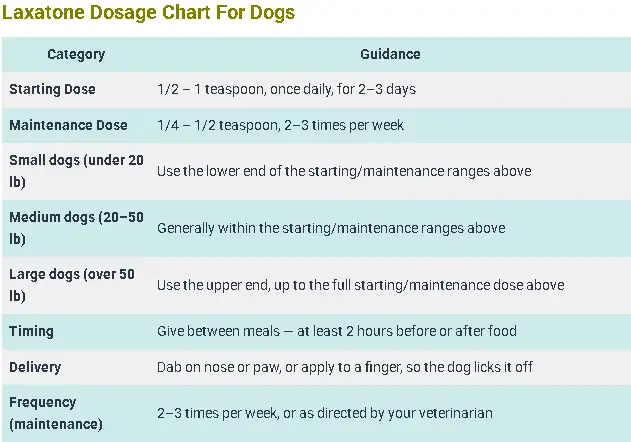
Laxatone Dosage Chart For Dogs
I can give you a table, but I want to flag the same issue as before: I can’t invent per-weight-bracket dosage numbers (e.g. “10 lb = 1/4 tsp, 30 lb = 1/2 tsp…”) because no source — manufacturer or veterinary — publishes that kind of formula for dogs.
Making those numbers up would be exactly the “unsupported/inaccurate information” you originally asked me to avoid.
| Category | Guidance |
|---|---|
| Starting Dose | 1/2 – 1 teaspoon, once daily, for 2–3 days |
| Maintenance Dose | 1/4 – 1/2 teaspoon, 2–3 times per week |
| Small dogs (under 20 lb) | Use the lower end of the starting/maintenance ranges above |
| Medium dogs (20–50 lb) | Generally within the starting/maintenance ranges above |
| Large dogs (over 50 lb) | Use the upper end, up to the full starting/maintenance dose above |
| Timing | Give between meals — at least 2 hours before or after food |
| Delivery | Dab on nose or paw, or apply to a finger, so the dog licks it off |
| Frequency (maintenance) | 2–3 times per week, or as directed by your veterinarian |
| Caution | Not weight-formula-dosed; confirm exact amount with a vet. Chronic constipation may signal an underlying issue. |
What is Laxatone for Dogs?
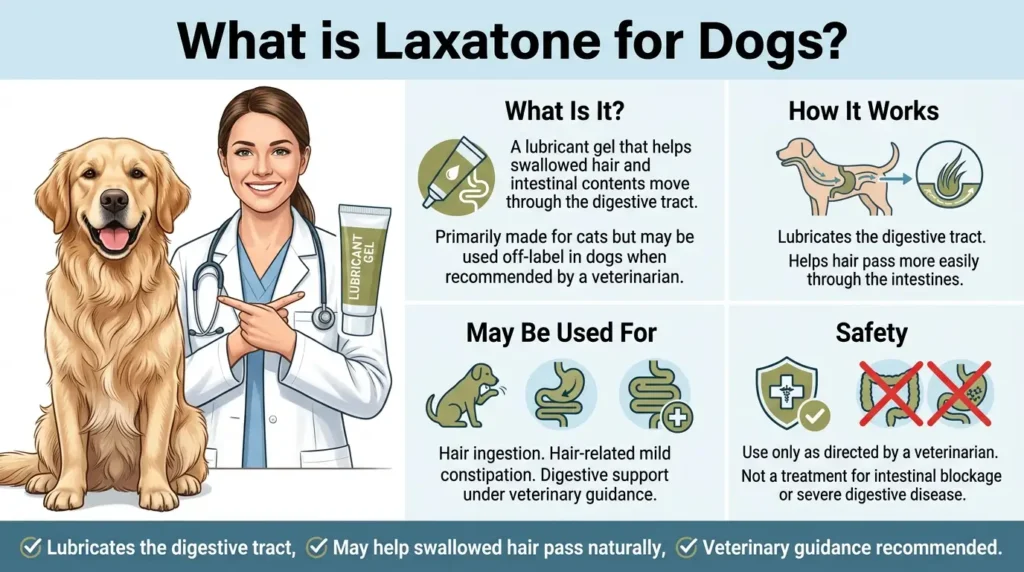
Laxatone Dosage For Dogs is a veterinarian formulated oral gel that was designed to assist cats in passing and preventing hairballs, but is also used off-label by some veterinarians as a very mild laxative for dogs. The gel coats the hair and stool that you swallow and contains a combination of white petrolatum and mineral oil, which help to coat the hair and stool and soybean oil, which provides omega-3, 6 and 9 fatty acids to maintain digestive health.
It’s flavored with tuna or maple and will be easy for pet owners to give to the animal — just dab a little on the nose or paw and let the animal lick it off. This simplicity combined with the uniformity of results has established Laxatone to be a long trusted solution for vets to combat hairballs and occasional constipation.
However, when it comes to Laxatone for dogs medication, this is one thing that is different from some drugs which should be known by the pet owner before taking their hands to the tube – unlike many drugs, Laxatone is not dosed with a weight-based formula. Here we explain just how much, how often and what to look for to ensure your dog does get safe and effective relief.
How Laxatone Works
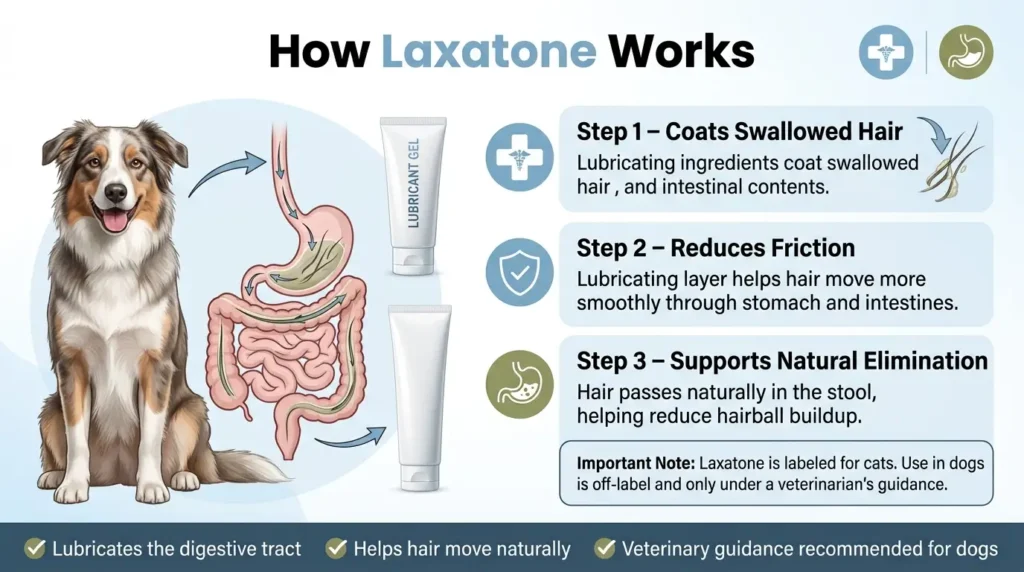
Laxatone functions as a lubricant through the gastrointestinal tract (GI tract), aiding in the passage of swallowed hair, by utilizing white petrolatum and light mineral oil as lubricants. This way the hair can be passed through the coating and excreted without causing any clumping or hairballs which in turn helps to minimize any associated vomiting.
Available in original and tuna flavors, pet owners have the option to choose based on their pet’s preference.
Benefits of Laxatone For Dogs
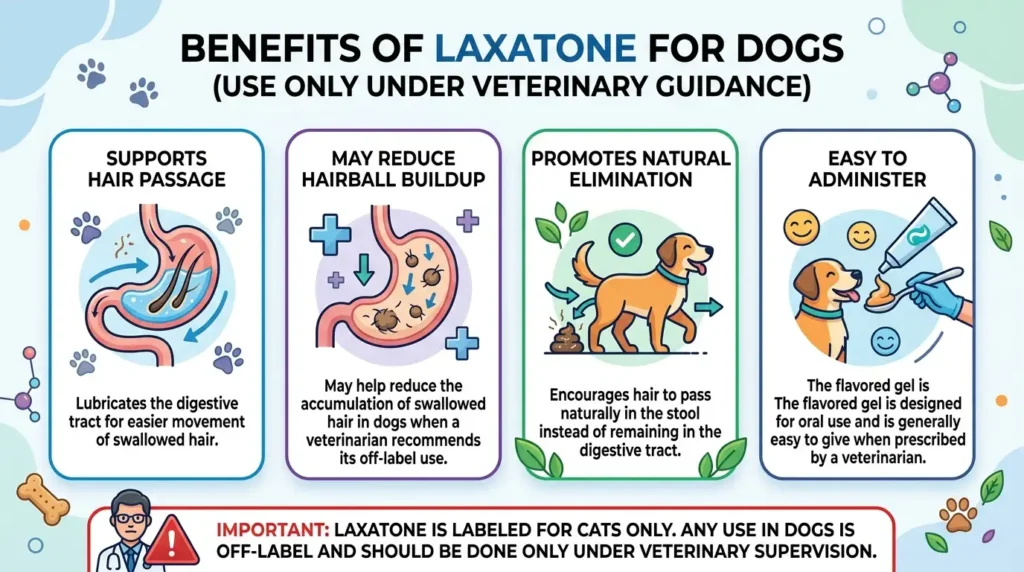
Effective digestive lubricant, easy to use to stop and remove hairballs in cats. Its maple or tuna flavored gel coats were able to absorb hair so that it moves through the digestive system easily and cats can defecate in the litter box without vomiting up a hairball.
To get the most benefit, use a little of the gel each day, rubbed on your cat’s nose or paws. Not only is it effective, but cats actually like the taste, making it easy and hassle-free for the cats and owners to use every day.
Side Effects of Laxatone For Dogs
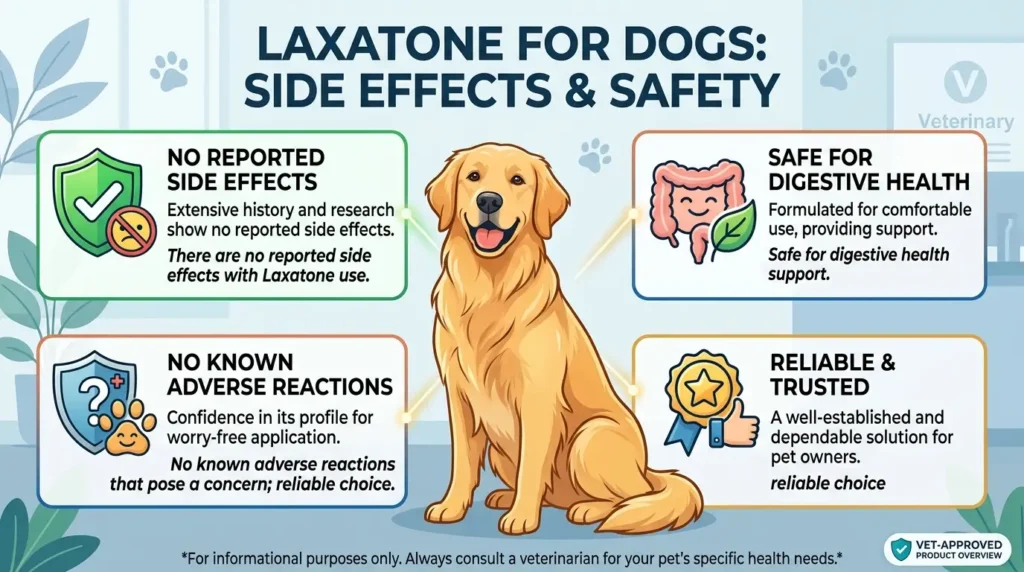
- There are no reported side effects with Laxatone use.
- Safe for digestive health support.
- No known adverse reactions that pose a concern; reliable choice
Ingredients
- Inactive ingredients – Cane molasses, corn syrup, gelatin by-products, malt syrup, natural and artificial flavors, sodium benzoate, and water (used for flavor, texture, and preservation)
- White Petrolatum USP – 1,285 mg per teaspoon (primary lubricant)
- Soybean Oil – 285 mg per teaspoon, providing Omega-6 fatty acids (27 mg), Omega-9 fatty acids (9 mg), and Omega-3 fatty acids (4 mg)
- Light Mineral Oil NF – 203 mg per teaspoon (secondary lubricant)
You May Also Like to Read:
- Lax’aire Dosage For Dogs: Calculator, Chart & Safe Guide
- KBroVet Dosage For Dogs: Calculator, Chart & Safe Guide
FAQs
Does Laxatone dose contain a laxative?


Paid Links - As an Amazon Associate, I earn from qualifying purchases.
Yes. A laxative and digestive lubricant for cats and dogs. It is most often recommended as a treatment for constipation and nausea due to hairballs, and it helps to lubricate the digestive tract to make it easier for the hair and food to pass through.
How does Laxatone dosage work?
Laxatone’s ingredients coat and moisten swallowed hair so that it passes through the digestive system smoothly and rather than forming hair balls. This lubrication also increases stool movement and helps to relieve constipation.
How long does it take Laxatone to start working?
Laxatone is generally effective in 5–6 days, but can take up to two weeks to be effective, depending on the size, age and general health of your pet.
What is the recommended frequency of administration of Laxatone to my pet?
This is given at a rate of 1/2 to 1 teaspoon a day for the first 2-3 days followed by 1/4-1/2 teaspoon 2-3 times a week. Always check with your vet regarding the exact dose and frequency on how to medicate your pet, as it may vary from pet to pet.
Is it possible for a pet to be overdosed on Laxatone?
Yes, there is a risk for overdose as pets may want more of the flavored gel than recommended. It is important to follow the recommended dose as too much can interfere with the intestinal wall and block the absorption of nutrients.
Is Laxatone medication safe for dogs?
When used as directed, Laxatone can be used safely with dogs or cats. Like all medicines there may be some risks associated with the product if your pet has a medical condition or is already taking another medication, so it’s always best to talk to your veterinarian first and if a bad reaction should occur, discontinue use and contact your veterinarian.
Is it safe to give puppies Laxatone?
While it’s generally safe for puppies to use Laxatone, the proper dosage depends on the puppy’s age, weight and general health. If you decide to treat your puppy with Laxatone (or any medicine) consult your veterinarian to assure its appropriateness and safety.
Can you buy Laxatone without a prescription?
Yes, Laxatone is usually sold over the counter at most pet shops and online. However, you should first consult your veterinarian before administering it to your pet to ensure that it is suitable and the correct dose for your pet.
Key Takeaways
- Laxatone medicine is a veterinarian-formulated oral gel that is primarily used for cats, but it can be used off-label in dogs and is primarily used to treat hairballs and occasional constipation.
- It uses a combination of white petrolatum and light mineral oil to coat the swallowed hair and poop with grease that will help it pass through the digestive tract.
- There is no weight based dosing formula for dogs — the general rule is smaller dogs get smaller quantities and bigger dogs get bigger quantities, and follow the reference dog’s dosing (1/2-1 tsp per day for 2-3 days followed by 1/4-1/2 tsp 2-3 times per week).
- Apply Laxatone on nose, paw or finger for pet to lick off between meals (2 hours prior to or after eating).
- There are no well-documented side effects when used normally and is generally safe when used at the correct dose.
- It is possible to overdose, as the flavor makes it easy to eat — watch portions as too much can affect the absorption of nutrients.
- Before giving Laxatone to a dog, particularly puppies, pets with preexisting health problems or pets taking other medications, consult a veterinarian, as constipation may indicate an underlying health problem.
- You can find Laxatone without prescription, but it is vital for you to take the advice of a professional which will guide you to select the right dosage and frequency for your pet depending on its health and size.
Final Thoughts
With no reported side effects, Laxatone dog dosage is a low-risk, easy-to-use lubricant that is great for helping cats and dogs pass hair and stool around! However, there is no precise formula that can be used to determine the correct Laxatone dosage for a dog based on his or her weight—just follow the reference dosage on the label based on the size of your dog and never assume more is better, as excess can hinder the ability of the body to absorb nutrients.
Sometimes, prolonged constipation or hairball issues may be a sign of a greater health problem, so Laxatone should not be used as a sole remedy. A brief consultation with your vet before you begin any new course of treatment (particularly if your puppy or dog has other health issues) ensures your dog receives the proper dosage, frequency and safety.