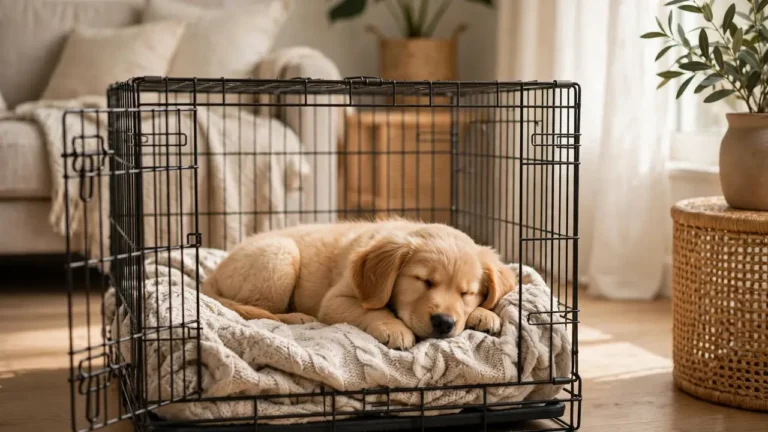
Fireworks turn a fun night into a scary one for many dogs, and you can desensitize your dog to fireworks and loud noises with patient, small steps. This guide shows you a calm plan that works over a few weeks, not in one night.
The method is plain in shape. You play the sound very softly, give a treat after each boom, and raise the volume only when your dog stays relaxed. Your dog learns that booms predict good things, so the fear fades a little each day.
Plan for about 3 to 4 weeks of short sessions before the big night. Each session takes 5 minutes, and you need a phone, a speaker, and treats your dog loves. Start now, while the sky is quiet, and your dog can face the next fireworks night with far less fear.

- Phone or tablet with a speaker
- Firework sound recording, from a free app or video
- High-value treats, cut into pea-size bits
- Treat pouch or a small bowl
- Dog bed or crate with a blanket
- Fan or a white-noise app
- Notebook and pen for tracking progress
- Leash and harness
- Collar with a current ID tag
- Watch how your dog reacts to sudden noise
- Build a safe den your dog can choose
- Play a firework recording at a whisper
- Give a treat right after every boom
- Raise the volume one notch at a time
- Mix in thunder, sirens, and door slams
- Practice in different rooms and at different times
- Set up your fireworks-night plan
Watch how your dog reacts to sudden noise
Before you play any sound, learn what fear looks like in your dog. Watch for a tucked tail, flat ears, yawning, lip licking, pacing, panting, or hiding.
Spend 5 minutes on a normal day watching your dog when a truck passes or a door slams. Write down what you see in your notebook. This list is your baseline, and you will compare it with later sessions to see real progress.

Build a safe den your dog can choose
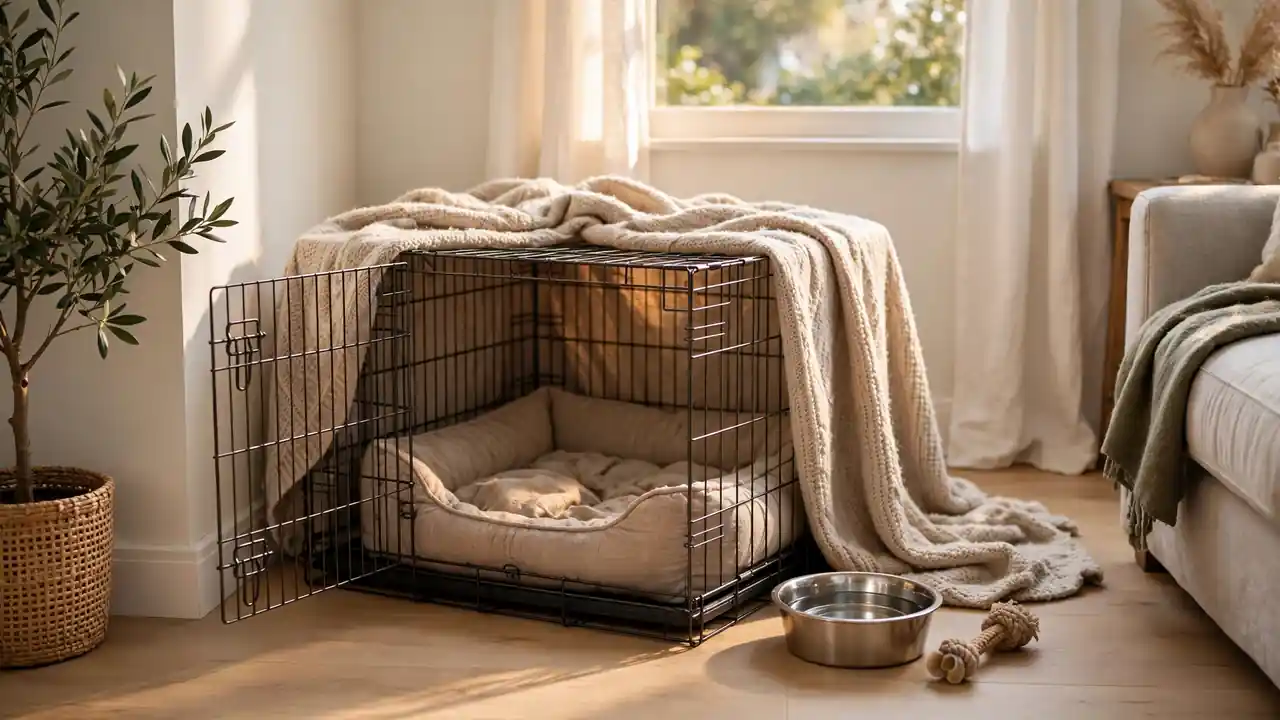
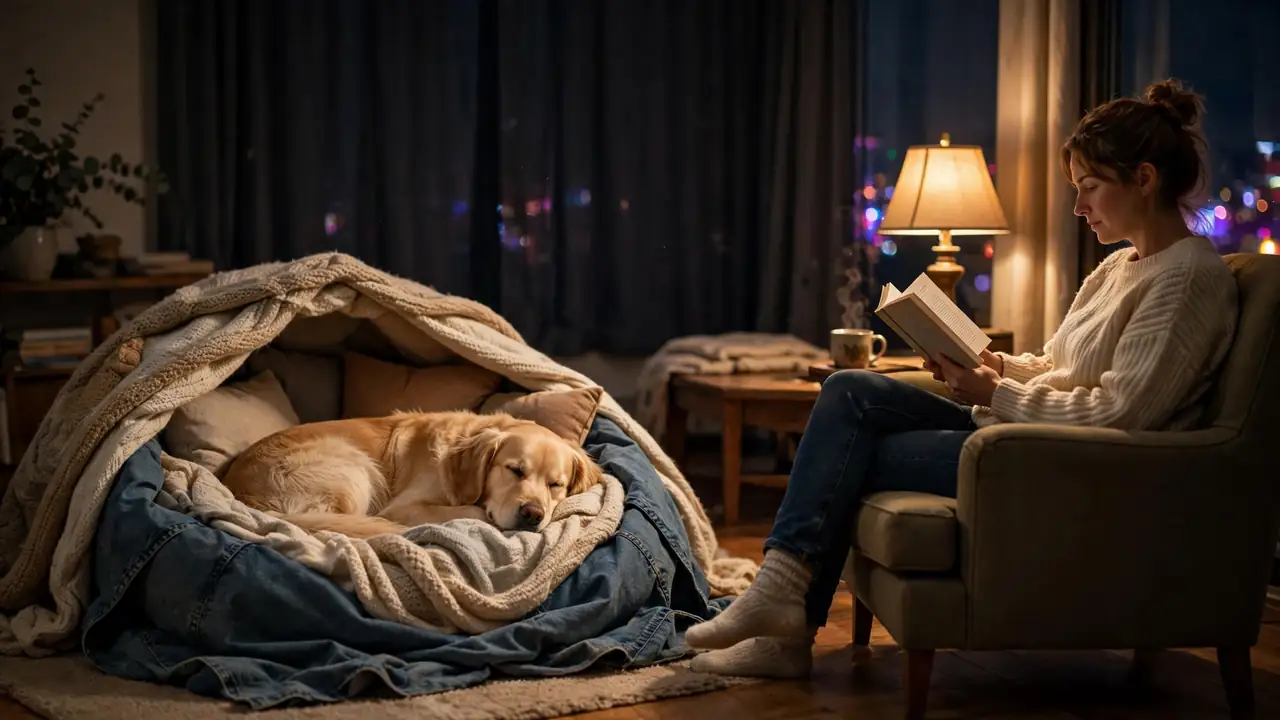
Pick the quietest room in your home, away from windows that face the street. Set your dog’s bed or crate there, drape a blanket over the top and sides, and leave the door open so your dog can walk in and out.
Add a water bowl and a chew toy. Run a fan or white-noise app to soften outside sounds. Let your dog explore the den for 3 days with treats inside, so the spot feels safe before any sound training starts.
Play a firework recording at a whisper
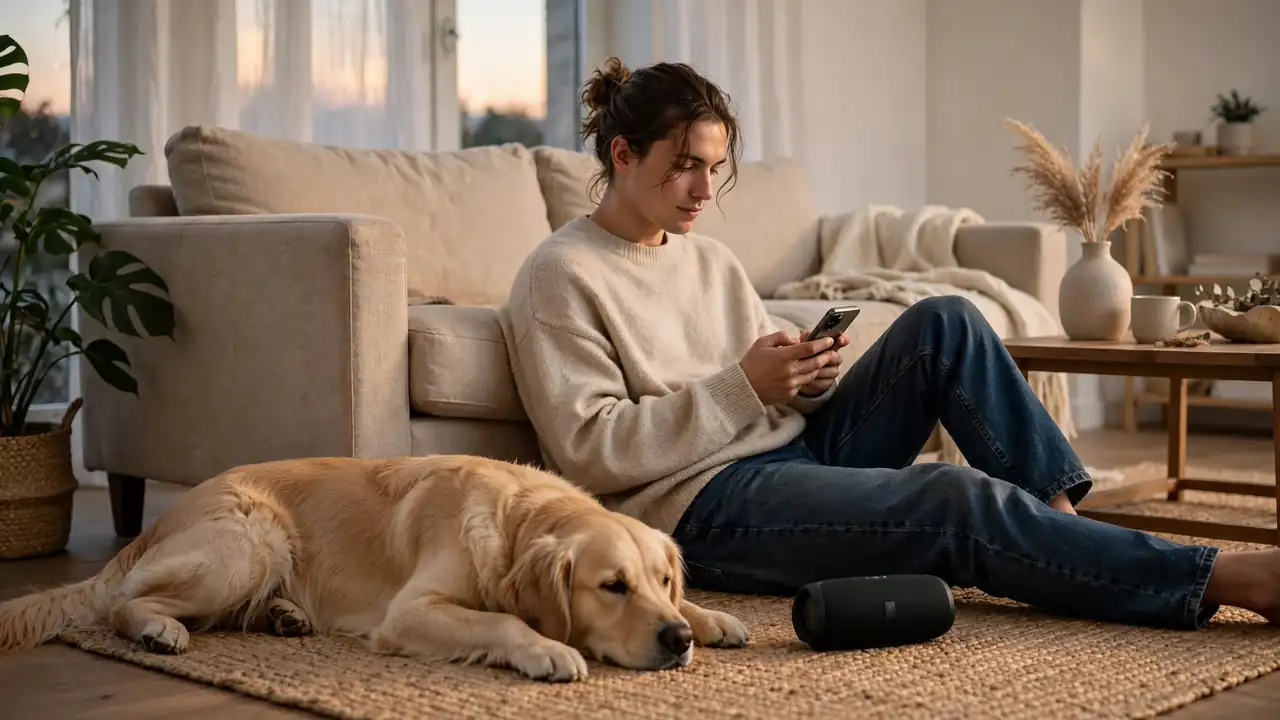
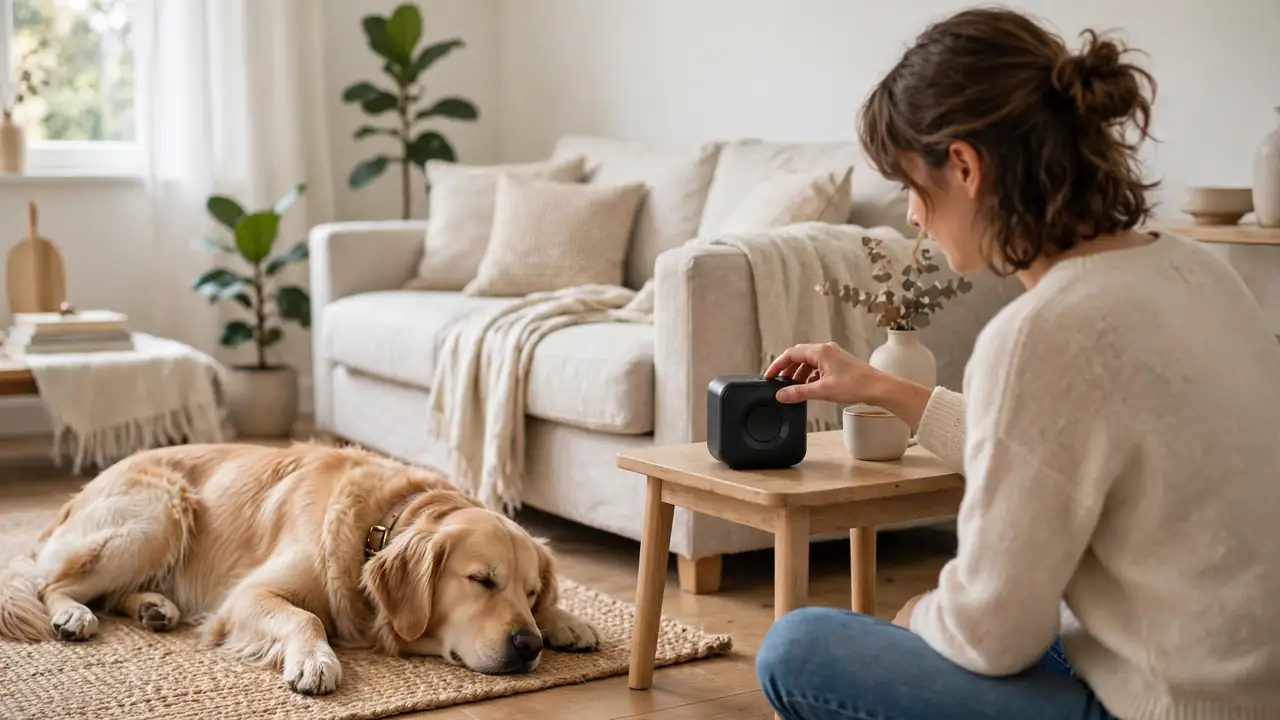
Find a firework sound recording on your phone and connect a small speaker. Set the volume to 1 or 2 out of 10, so low you can barely hear it across the room.
Play it for 2 to 3 minutes while your dog rests nearby. Your dog should stay relaxed, with soft ears and a loose body.
If your dog startles, turn the volume down a notch and try again tomorrow. The sound must stay so quiet that it barely registers.
Give a treat right after every boom
This is the heart of the plan. Play the recording at the same low volume.
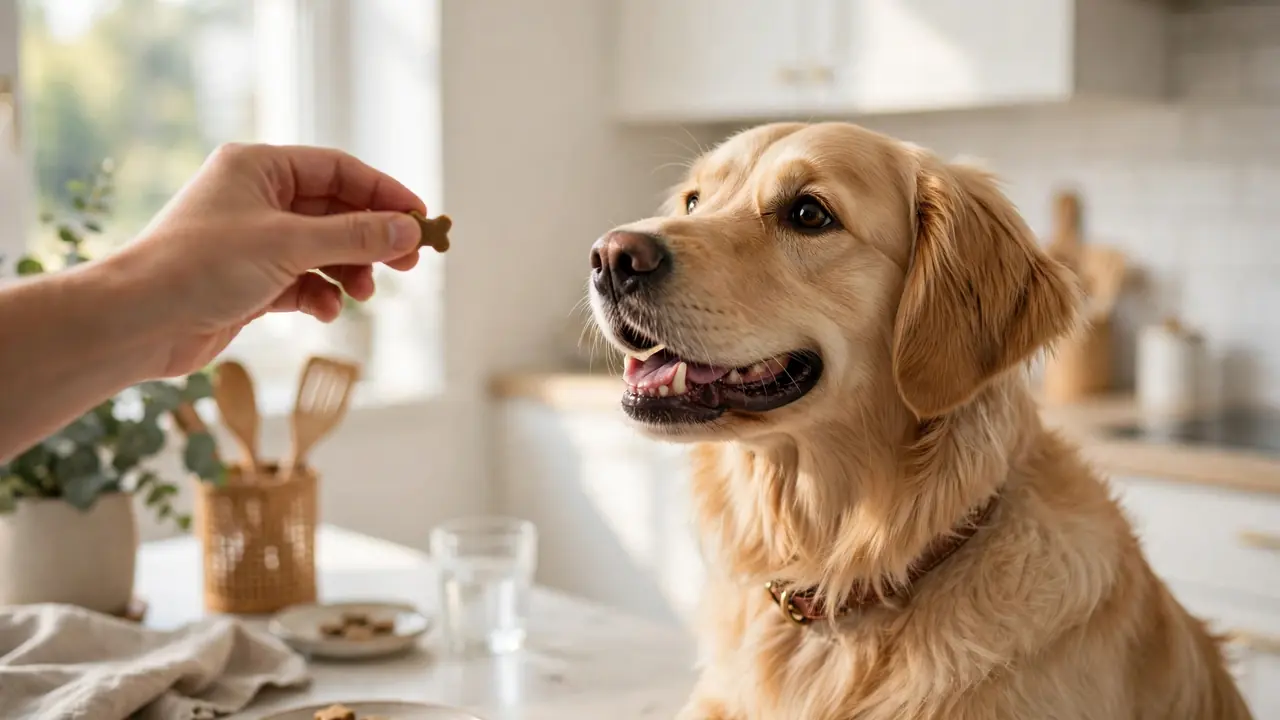
Each time a boom sounds, hand your dog a small treat within 1 to 2 seconds. The boom must come first, then the treat, every time.
Do 10 to 15 booms in one session, then stop while your dog is still calm and happy. Short sessions that end well teach faster than long ones that end in stress.
Raise the volume one notch at a time
When your dog stays relaxed for two sessions in a row at one volume, move the speaker up by a single notch. That is the whole rule. One notch, then two calm sessions, then one more notch.
If ears flatten, panting starts, or your dog walks away, drop back to the last calm volume and stay there for a few days. Slow progress that holds is real progress.
Mix in thunder, sirens, and door slams
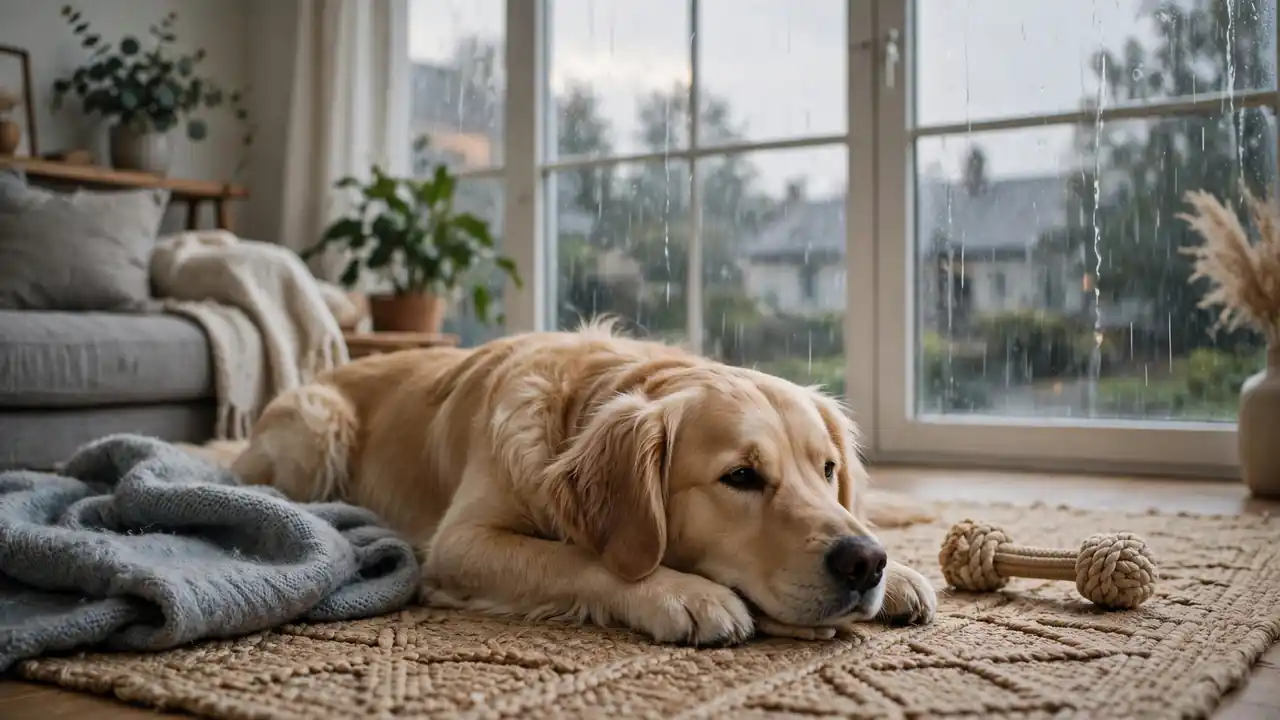
Fireworks are not the only scary sound, and a dog that copes with one boom may still panic at thunder. Play short recordings of thunder, sirens, a vacuum, and a door slam at the same low volume you use for fireworks.
Pair each sound with a treat, the same way. Two or three sounds per session is plenty. Your dog learns a wider lesson: sudden noise means treats, not danger.
Practice in different rooms and at different times
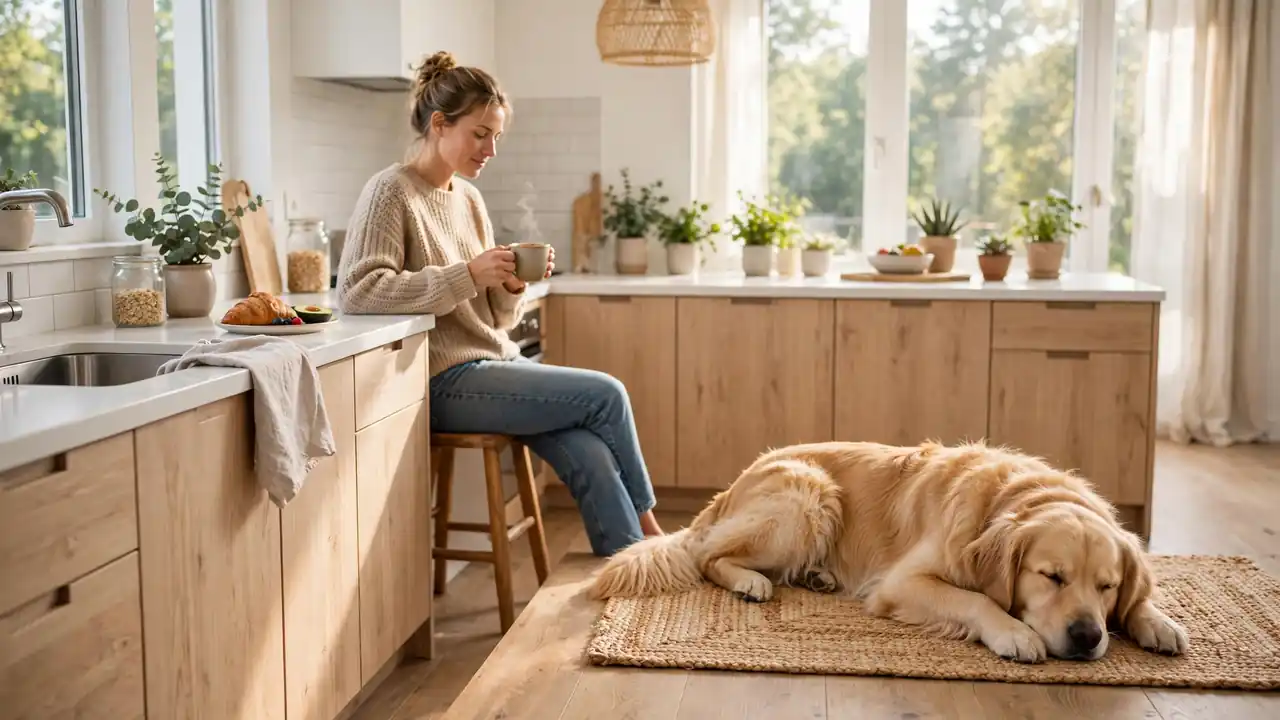
Dogs learn in places, not in general. A dog that stays calm in the living room may still panic in the kitchen. Move your short sessions around the house: the bedroom in the morning, the kitchen in the evening, the hallway after a walk.
Keep the volume low each time you change rooms. Three or four new spots over a week make the calm stick wherever the sound finds your dog.
Set up your fireworks-night plan
On the big night, walk your dog early, feed dinner 2 hours before dark, and settle your dog in the den with the fan on. Close the curtains, turn on the TV or music at a normal volume, and stay home with your dog.


Paid Links - As an Amazon Associate, I earn from qualifying purchases.
Check that the collar and ID tag are on and the doors are shut. If your dog still panics badly, talk to your vet before the next event about calming support. Your calm presence is the last piece of the plan.
| If This Happens | Try This |
|---|---|
| Your dog freezes or runs away at the lowest volume | Stop the sound. Play it even softer, or from another room, and pair it with treats. Start again tomorrow. |
| Your dog takes the treat but still looks tense | The volume is a touch too high. Drop one notch and stay there for three calm sessions. |
| Your dog is calm with recordings but panics at real fireworks | Real booms are louder and shake the house. Add a speaker with more bass, keep the den ready, and stay close on the night. |
| Progress stalls for a week | Shorten sessions to 2 minutes and use better treats. A plateau often means the sessions got too long. |
| Your dog refuses treats during a session | Stress has taken over. End the session, offer water, and try again tomorrow at a lower volume. |
Frequently Asked Questions
- Watch how your dog reacts to sudden noise.
- Build a safe den your dog can choose.
- Play a firework recording at a whisper.
- Give a treat right after every boom.
- Raise the volume one notch at a time.
- Mix in thunder, sirens, and door slams.
- Practice in different rooms and at different times.
- Set up your fireworks-night plan.
Your dog can learn that booms mean treats, not danger. Start tonight at a whisper, keep the sessions short, and let the calm build a little each day.
When the next fireworks night comes, you will both be ready. Save this guide to your dog training board on Pinterest so you can find it before the big night.