Most dog owners check the food bowl, the water bowl, and the leash before a walk. The paws get skipped. Yet paws are the part that touches the ground every single day.
Hot pavement, road salt, sharp stones, and wet grass all leave their mark. Small cracks turn into sore spots, and sore spots turn into limps. By the time a dog starts favoring one foot, the problem has been building for days.
Dogs rarely complain until it hurts to walk. A quick look after every walk catches most of it. These dog paw care tips take about five minutes a week, cost almost nothing, and catch trouble early.
A cloth, a pair of clippers, and a small tin of balm are all you need to start. Work through the tips in order, and your dog will have soft, clean paws that are ready for the next walk. Your dog will thank you with every step, even if it never says so out loud.
Check Your Dog’s Pads Every Week for Cracks and Cuts
Pads look tough, but they crack. Dry air, rough ground, and road salt dry them out, and a small split can open wider with every step.
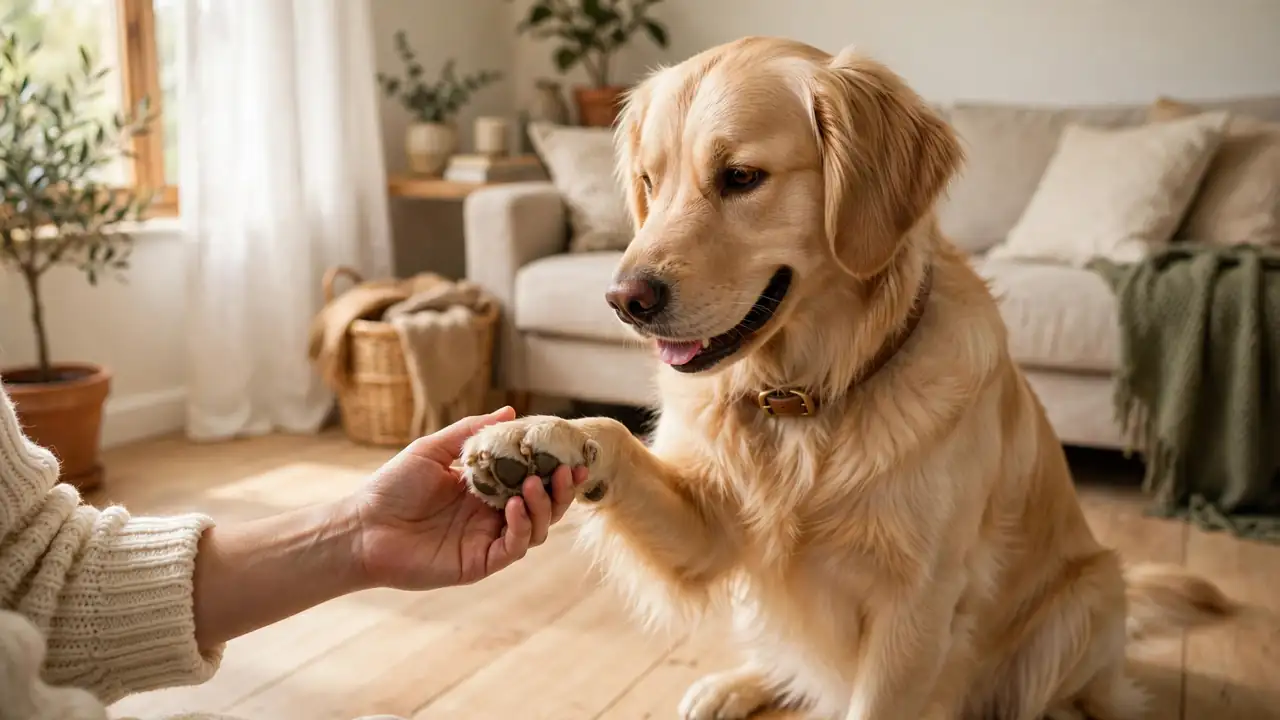
Once a week, sit with your dog and lift each paw. Spread the toes gently and look at the pads in good light. Feel for rough patches, splits, and anything stuck between the pads.
- Run a thumb over each pad and note rough or flaky spots.
- Look for small cuts, redness, or swelling around the edges.
- Check between the toes for burrs, thorns, or small stones.
If you find a shallow crack, keep the paw clean and dry and watch it for two days. A deep cut, swelling, or a paw your dog will not stand on needs a vet call, not a home fix.
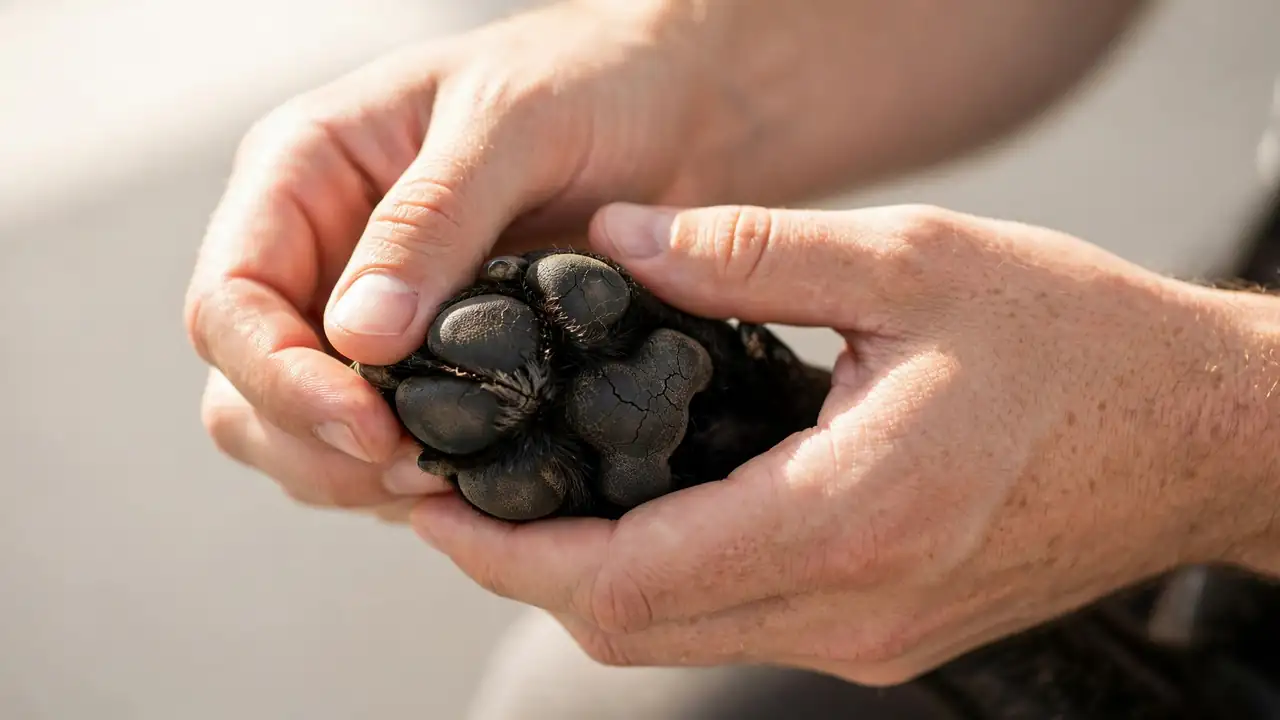
Weekly pad check
Wipe Between the Toes After Every Walk
Mud, salt, and grit hide between the toes. Left there, they rub the skin raw and cause the licking that keeps owners up at night.
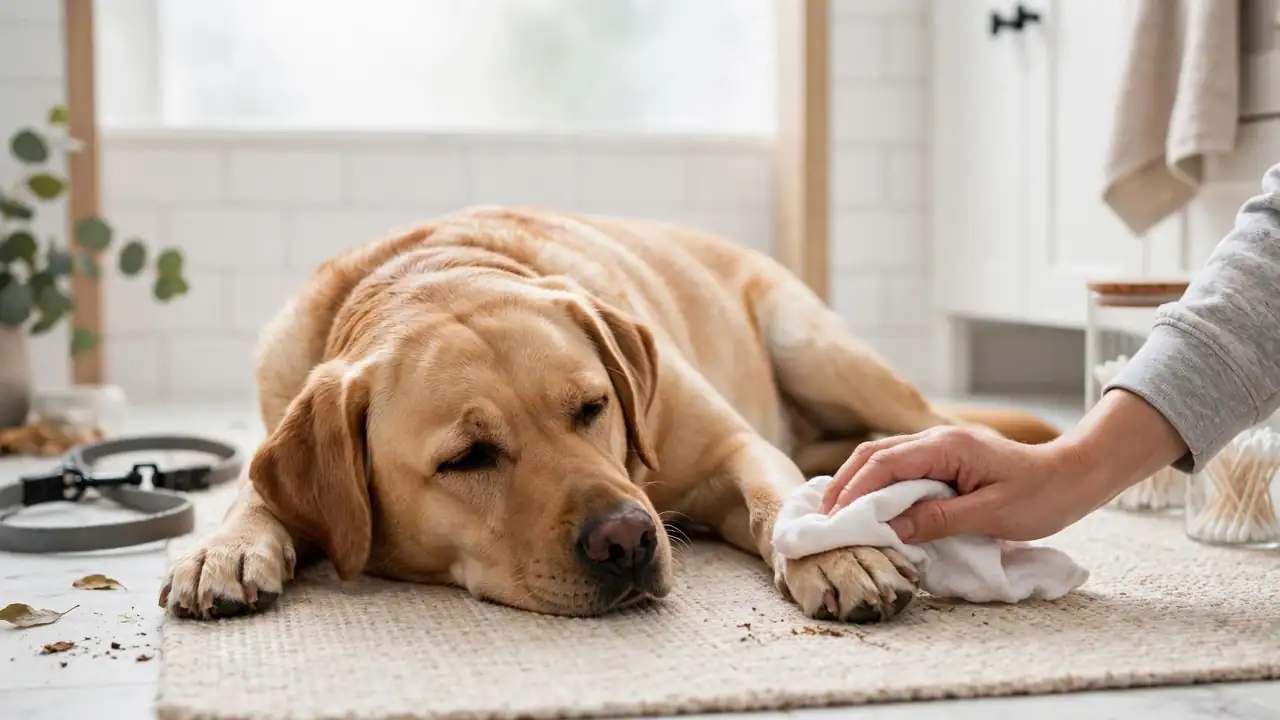
After every walk, wipe each paw with a damp cloth. Push the cloth gently between the toes and dry the paw after. It takes under a minute per paw, and it stops most winter salt burns before they start.
- Wet a soft cloth with warm water.
- Wipe the top of the paw, then between each toe.
- Dry with a towel so damp skin does not chafe.
Dogs that walk on salted roads need this every single time. A quick rinse at the door beats a vet visit later, and it pairs well with a simple wash routine after muddy walks.
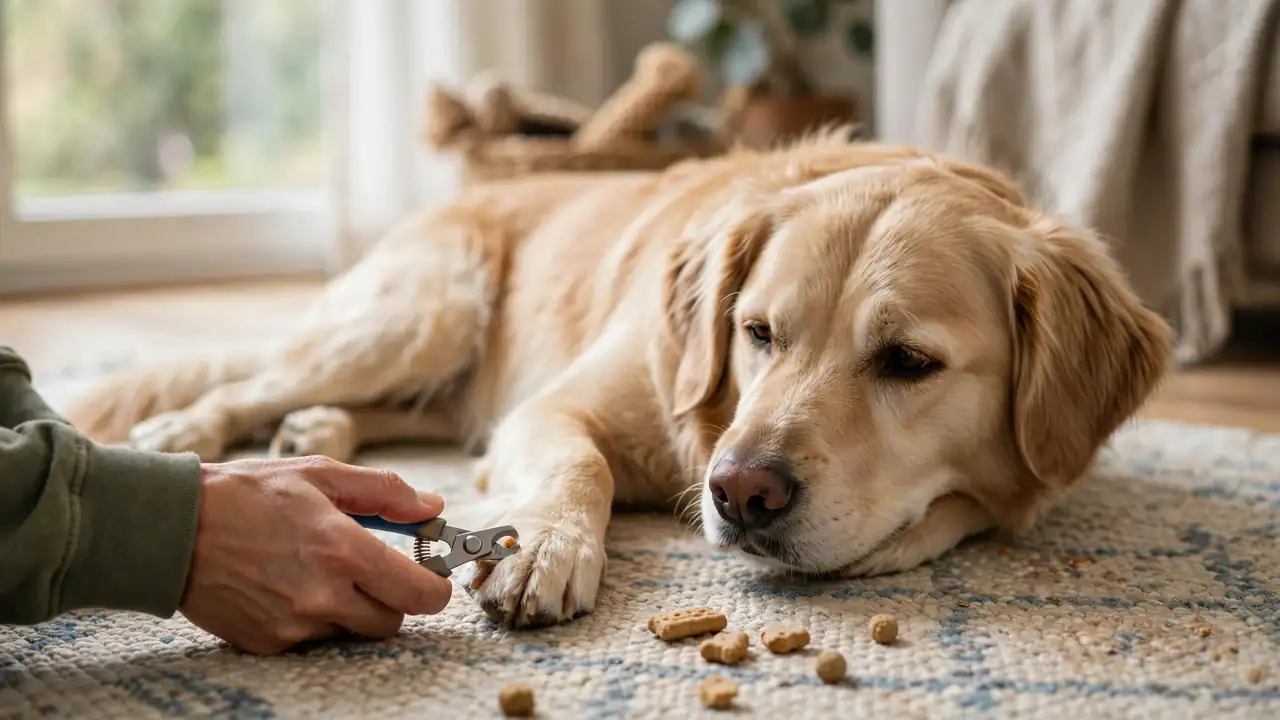
Trim Nails a Little at a Time, and Never Rush It
The most common nail mistake is cutting too much at once. One nick of the quick, and the next trim becomes a wrestling match.
Trim a little at a time. Take off the sharp tip only, then check the cut end.
On light nails you can see the pink quick through the nail. On dark nails, stop when you see a dark dot in the center of the cut.
- Trim one or two nails per session if your dog is nervous.
- Keep styptic powder close by in case of a small nick.
- Reward each paw so the next trim starts calm.
Nails that click on hard floors are too long. Trim every two to three weeks, and the quick slowly moves back, which makes each trim easier.
| Too long | Just right |
|---|---|
| Clicks on hard floors | Silent on hard floors |
| Curls toward the pad | Straight with a small gap |
| Catches on rugs and blankets | Glides over fabric |
Rub Paw Balm Into Dry Pads Before Bed
Dry pads feel like sandpaper, and they crack faster. A thin coat of balm before bed keeps them soft through the night.
Warm a pea-sized dab between your fingers, rub it into each pad, and let your dog settle. Night is the best time, because the balm soaks in while your dog sleeps instead of wearing off on the floor.
Pick a balm made for dogs, with no scents or oils that are unsafe if licked. If your dog licks its paws a lot after balm, use less, and ask your vet about skin allergy care if the licking does not stop.
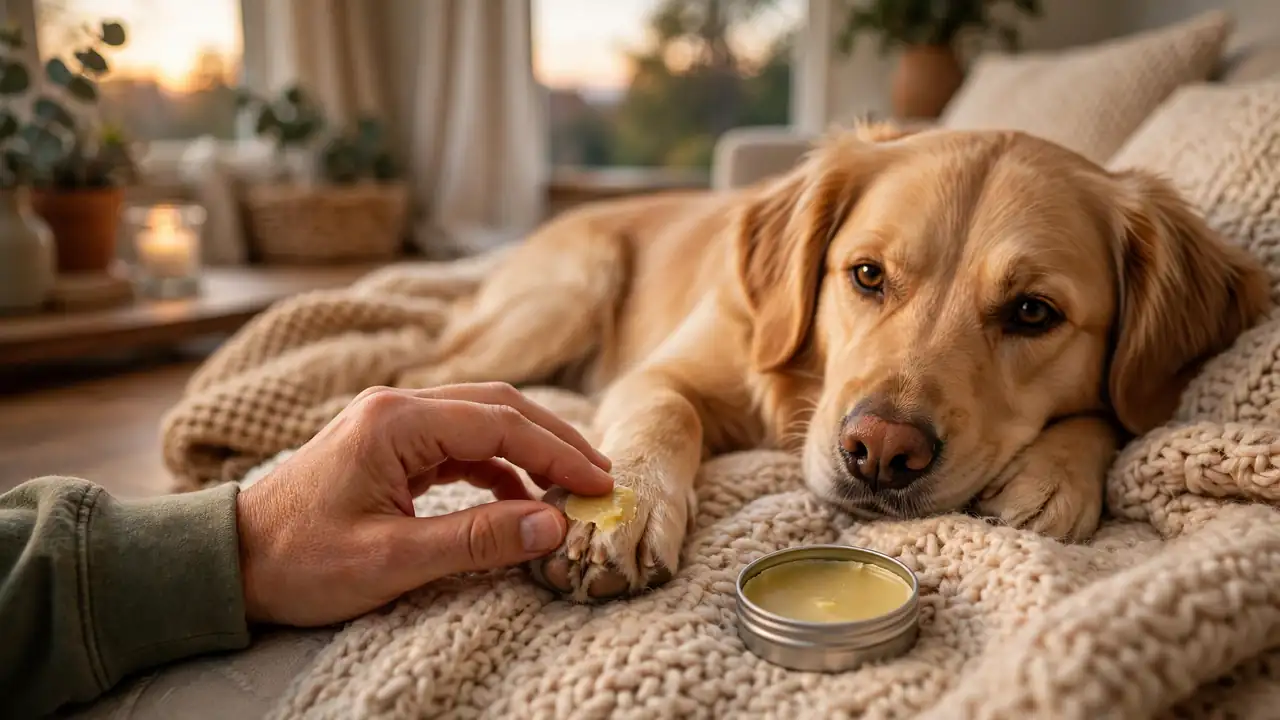
Balm at a glance
How much: a pea-sized dab per paw.


Paid Links - As an Amazon Associate, I earn from qualifying purchases.
When: at night, after the last walk.
How often: two to three times a week, daily in winter.
Test Hot and Cold Pavement Before Your Dog Walks On It
Here is the rule: if the ground is too hot or too cold for your bare hand, it is too hot or too cold for your dog’s paws.
Press the back of your hand on the pavement for seven seconds. If you pull away, walk on the grass instead, or wait until evening. In winter, road salt and ice melt can burn pads too, so rinse paws after walks on treated roads.
- Walk early or late on hot days, and stick to grass and shade.
- Use dog booties on long walks over hot asphalt or icy sidewalks.
- Watch for limping, licking, or lifted paws, which mean the ground hurts.
Summer burns and winter salt cracks are both easy to miss until your dog starts limping. The seven-second test takes no gear and no time, and it saves your dog a painful walk.
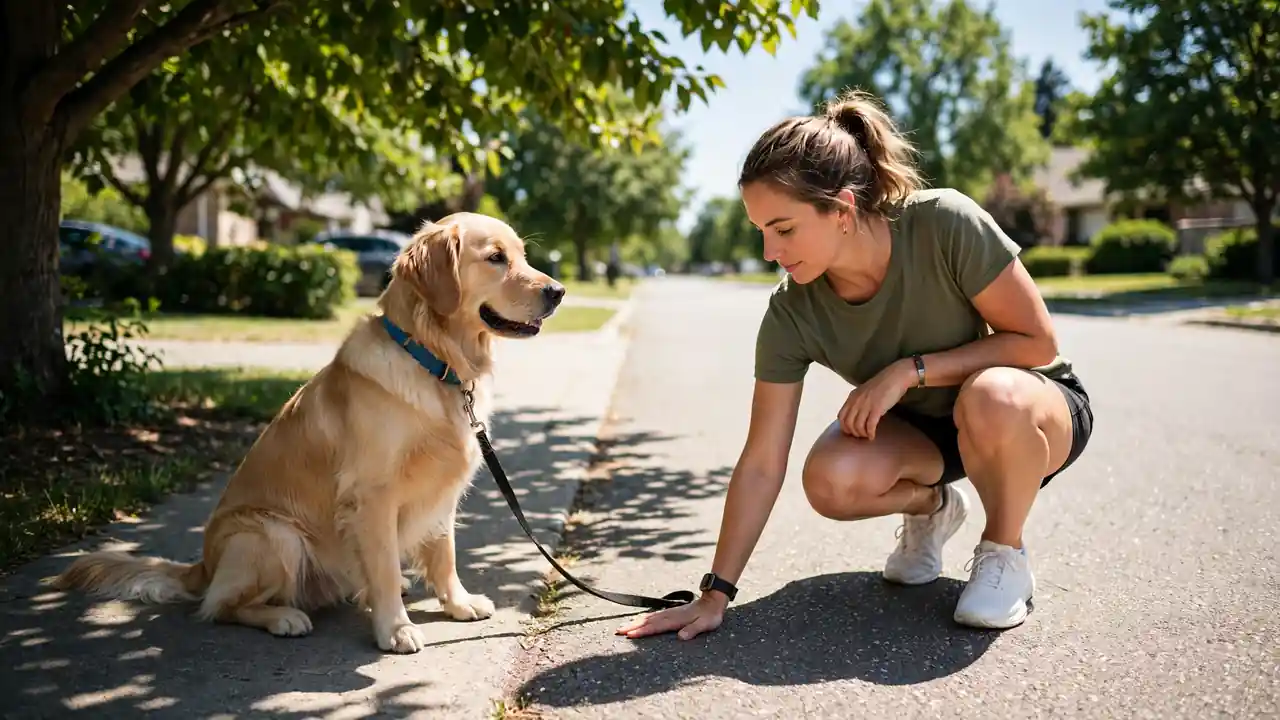
Five minutes a week is all it takes. Check the pads, wipe the toes, trim a little, rub in balm, and test the ground before you walk.
Small habits now save your dog sore paws later. Dogs walk on their paws every day of their lives, and they never ask for new shoes. Pick one tip, start tonight, and add the next one when the first feels easy.
Save this list to your dog care board on Pinterest so it is there before your next walk. Your dog’s paws do the walking, so give them a little care back.