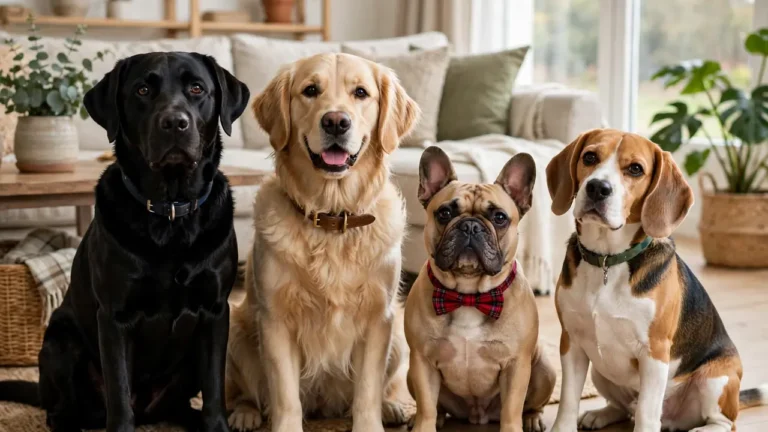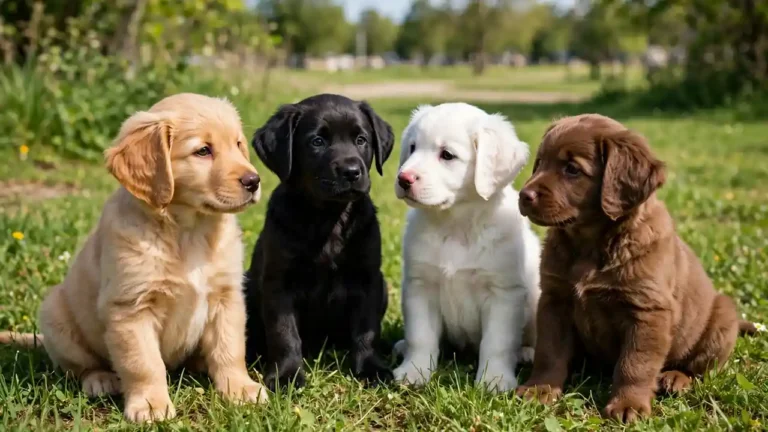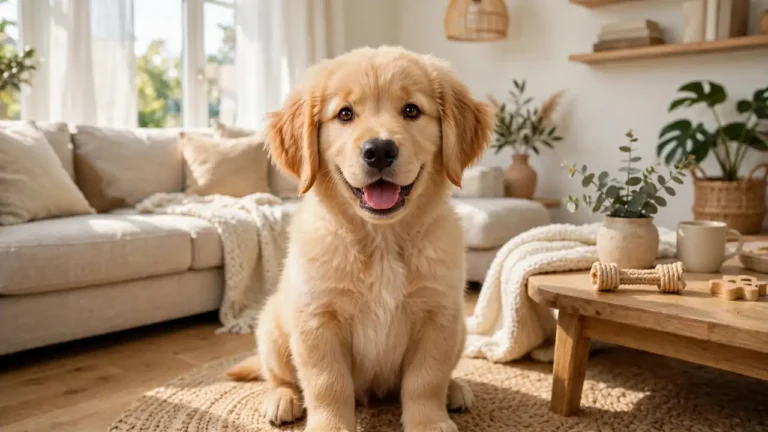
Your laptop is open, your coffee is still warm, and a dog is asleep under your desk. That quiet picture is what draws many remote workers to a dog that likes company, because a workday is long when the house feels empty and a short walk at lunch is better with a friend.
The catch is that not every friendly breed fits a home office. Some dogs bark at every delivery van, some need two hours of running before they can settle, and some follow you so closely that a closed office door turns into a howling session. A good home office dog is calm indoors, happy with short breaks, and content to rest near you while you work.
Below are the best companion breeds for people who work from home, with honest notes on noise, energy, grooming, and the kind of workday each breed suits best. Pick the dog that fits your calls, your space, and your break routine, not just the cutest face on the list.
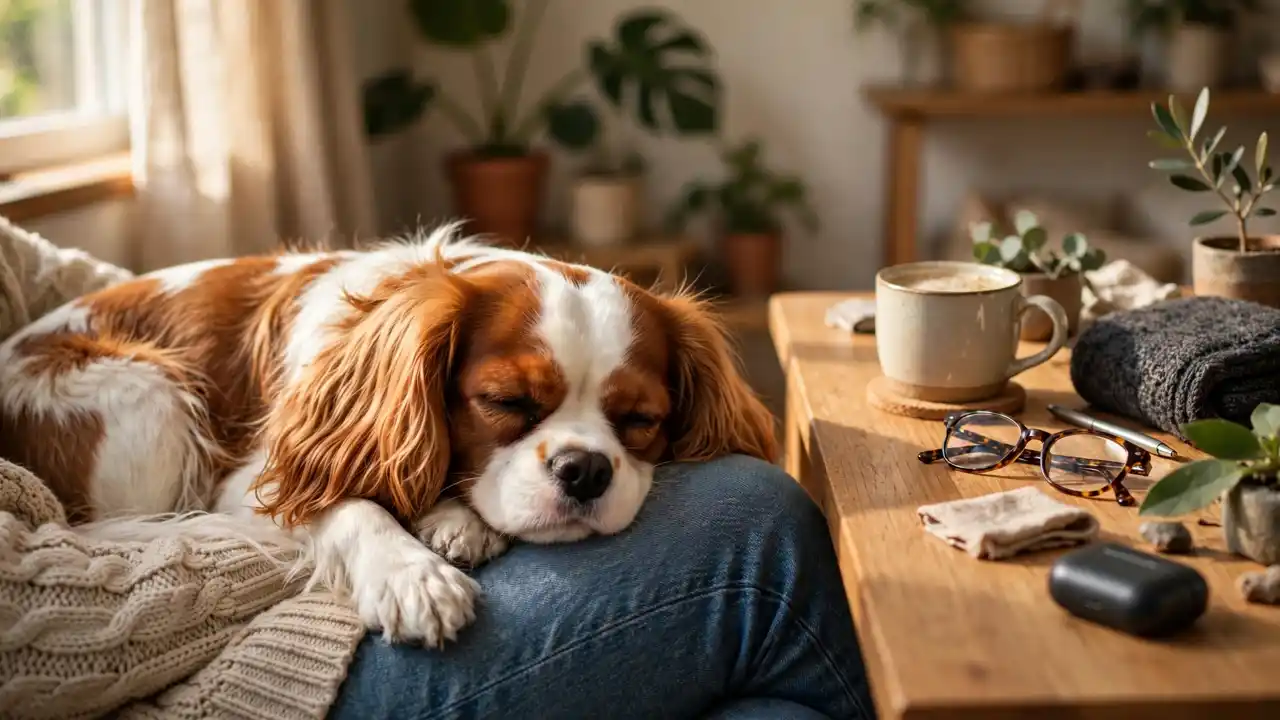
1. Cavalier King Charles Spaniel: A Lap Dog Made For Quiet Workdays
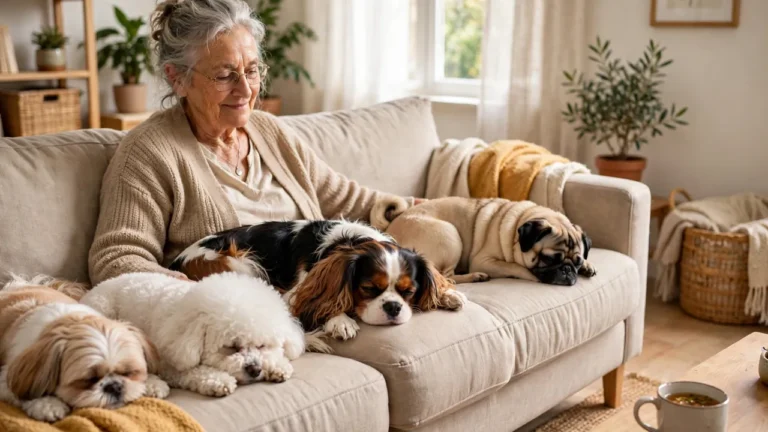
A Cavalier settles fast, and that is the whole point. This small spaniel is happy on a lap, on a dog bed by your feet, or on the sofa within sight of your desk, and it rarely paces the house looking for a job to do.
- Keep a soft bed beside your desk so the dog has a set spot during calls.
- Plan one short walk in the morning and one at lunch to use up gentle energy.
- Brush the feathered ears a few times a week to stop tangles forming.
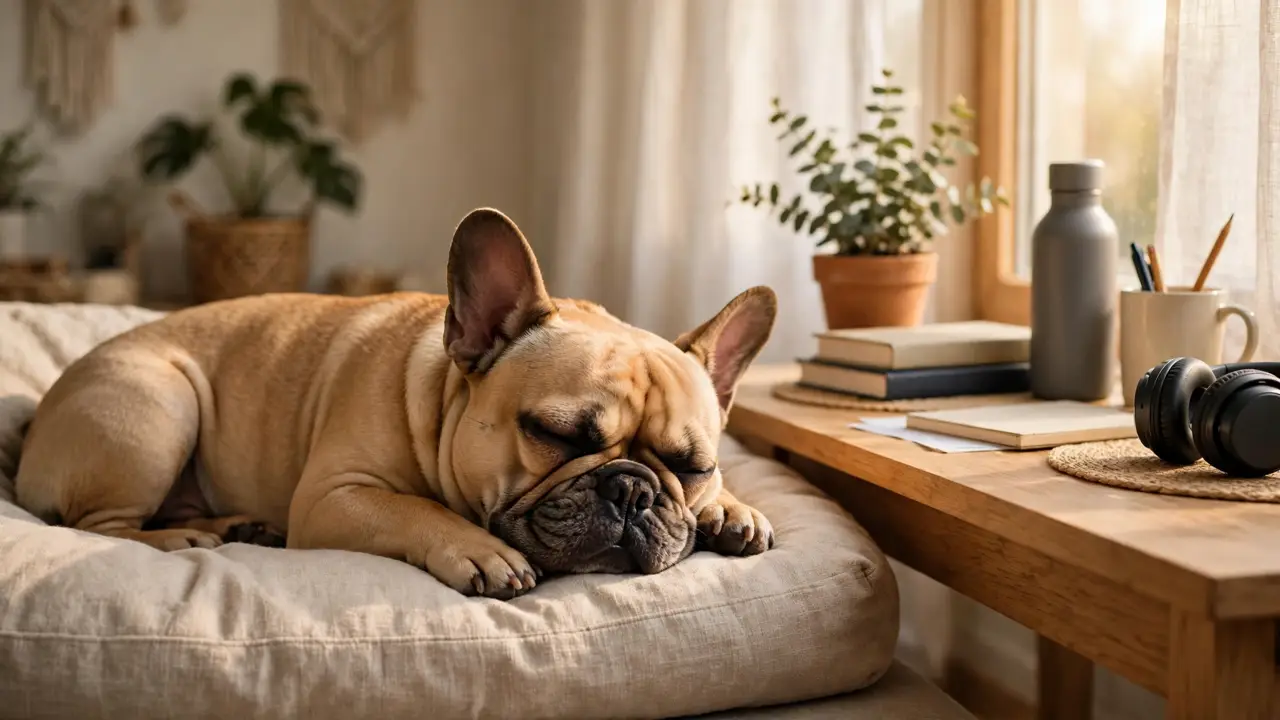
2. French Bulldog: A Small Clown Who Sleeps Through Meetings
On a video call, a French Bulldog is usually the dog snoring softly just out of frame. Frenchies love people, play in short bursts, and then nap hard, which suits a workday broken up by a few short play sessions rather than long runs.
Watch the heat, though. Flat faces make hot rooms and long summer walks hard work, so keep the office cool, keep walks short on warm days, and give the dog a cool floor or mat to lie on.
💡 Quick Tip
Clean the face folds with a soft, damp cloth a few times a week, and dry them well after. It takes two minutes and keeps the skin folds healthy.
3. Pug: A Cheerful Shadow With A Short Daily Battery
Pugs run on a simple rhythm: a burst of comedy, a snack, a nap, then repeat. That rhythm fits a home worker well, because a Pug is content to be near you and does not need a big garden or a long hike to feel settled.
- Use food puzzles at lunch to slow down eating and give the brain a job.
- Keep walks short and gentle, especially in warm or humid weather.
- Watch the weight, since extra kilos make breathing and joints harder.

| Pug workday | What it means |
|---|---|
| Energy | Low to moderate, with short play bursts |
| Noise | Snorts and snores more than barking |
| Grooming | Short coat, plus face fold care |
| Space | Small homes and flats suit this breed |
4. Havanese: A Gentle Follower Who Loves A Lap Break
A Havanese will trail you from desk to kitchen to sofa, then settle the moment you sit down. That people focused nature is a gift on a quiet workday, and it also means this breed does best when someone is home most of the day.
Teach a calm settle early. Reward the dog for lying on its bed while you type, keep greetings low key when you come back from another room, and build up short alone time in small steps so a closed door never feels like a shock.

5. Shih Tzu: A Calm Lap Dog For Slow, Steady Days
Many people get this breed wrong and expect a fussy dog. A well settled Shih Tzu is actually a calm indoor companion that naps through long stretches of the day, wakes up for a short walk and a cuddle, and then naps again.
- Keep the face hair trimmed or tied back so eyes stay clear and clean.
- Brush a few times a week, or keep a short puppy clip for an easier routine.
- Use a ramp or step for sofas and beds to protect a small back and legs.
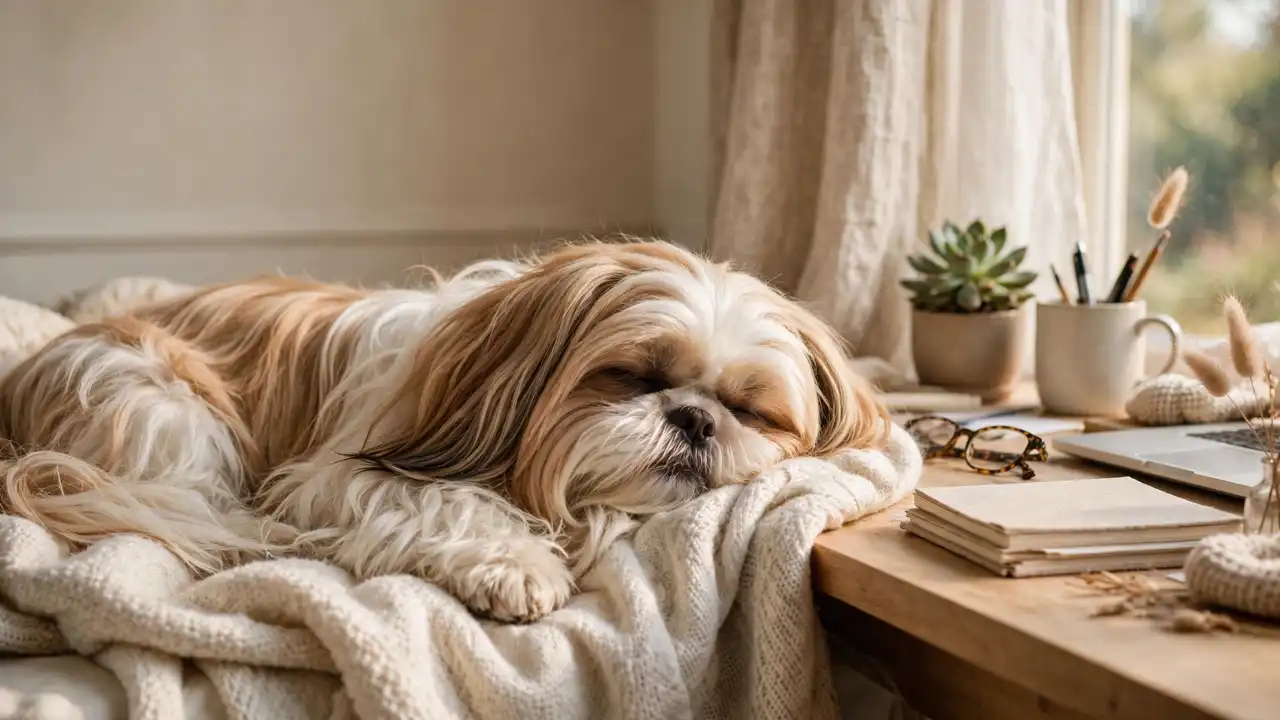
Shih Tzu workday checklist
6. Greyhound: The Big Couch Potato Nobody Warns You About
It sounds wrong, but a retired racing Greyhound is one of the calmest home office dogs you can find. These tall, slim dogs sprint in short bursts, then sleep for hours, and a home worker gets the best of that deal: a dignified dog on the sofa all afternoon.
Give the dog a real sofa of its own, or at least a thick bed. Greyhounds have little body fat and bony joints, so a thin mat on a hard floor is a poor bed for a dog that sleeps most of the day.
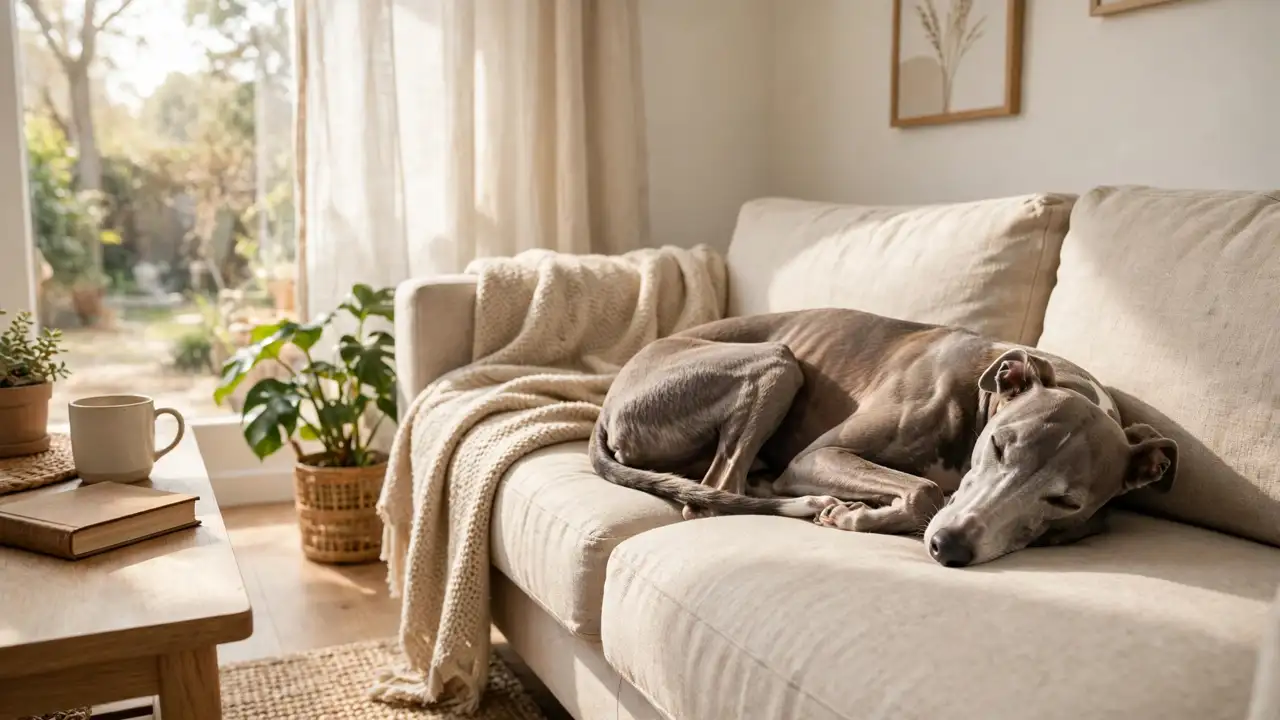
You expect a racing dog to need hours of running, so you rule the breed out for a desk job.
One good walk and a short sprint in a safe space, and the dog sleeps beside your desk until dinner.
7. Basset Hound: A Slow, Loyal Dog Who Takes Calls In Stride
A Basset Hound moves at its own pace, and that pace suits a home office. Short legs, a long body, and a nose that loves a sniff walk mean this breed is happy with gentle exercise and long rests, as long as the food bowl is not left within reach.
- 1. Walk at a sniffing pace in the morning, and let the dog stop and smell.
- 2. Feed measured meals, since this breed gains weight fast.
- 3. Use a ramp for cars and high beds to protect a long back.
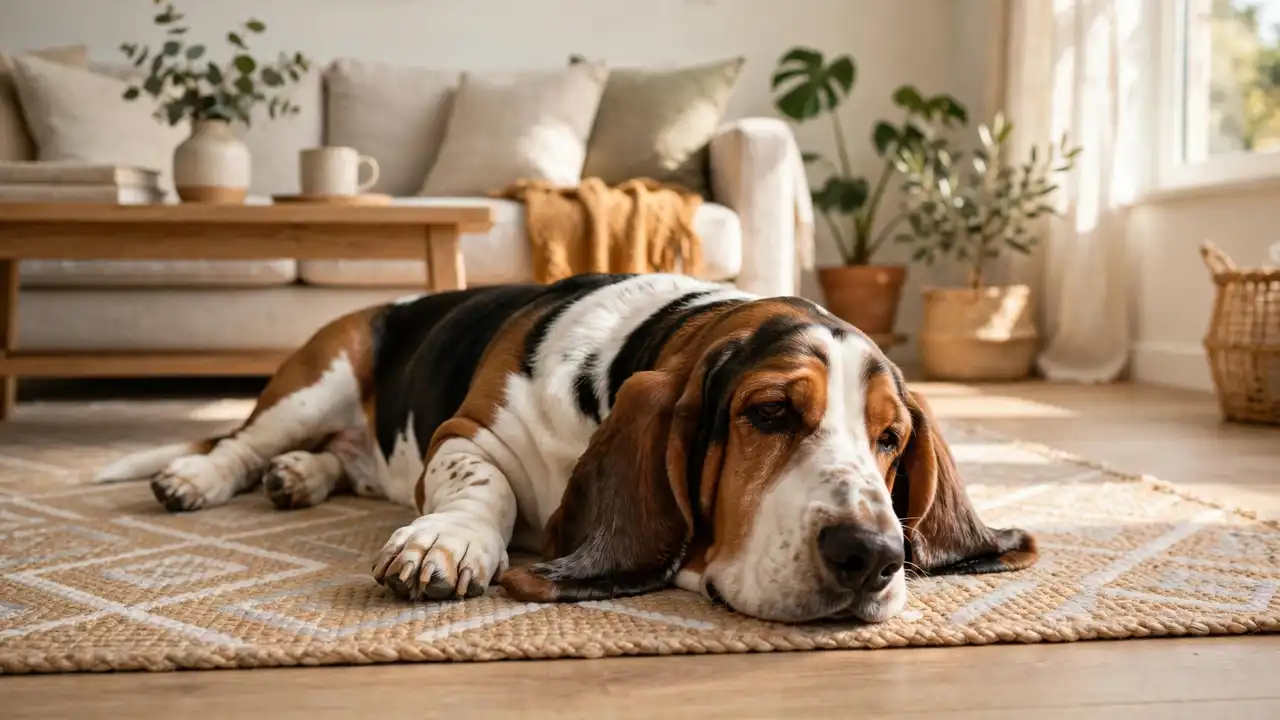
Set a fixed feeding time so begging does not fill your workday.
Clean the long ears weekly and check for redness or smell.


Paid Links - As an Amazon Associate, I earn from qualifying purchases.
End the day with a calm sniff walk, not a fast run.
8. Labrador Retriever: A Steady Friend Who Earns A Lunch Break
A Labrador will not settle all day on its own. This breed needs a real morning walk, training games, and a lunch break that actually moves, and in return you get a calm, friendly dog under your desk for the afternoon.
That trade is worth it for active home workers. A tired Labrador is a quiet Labrador, while a bored Labrador finds its own work, and that work usually involves your shoes, your post, or your garden.
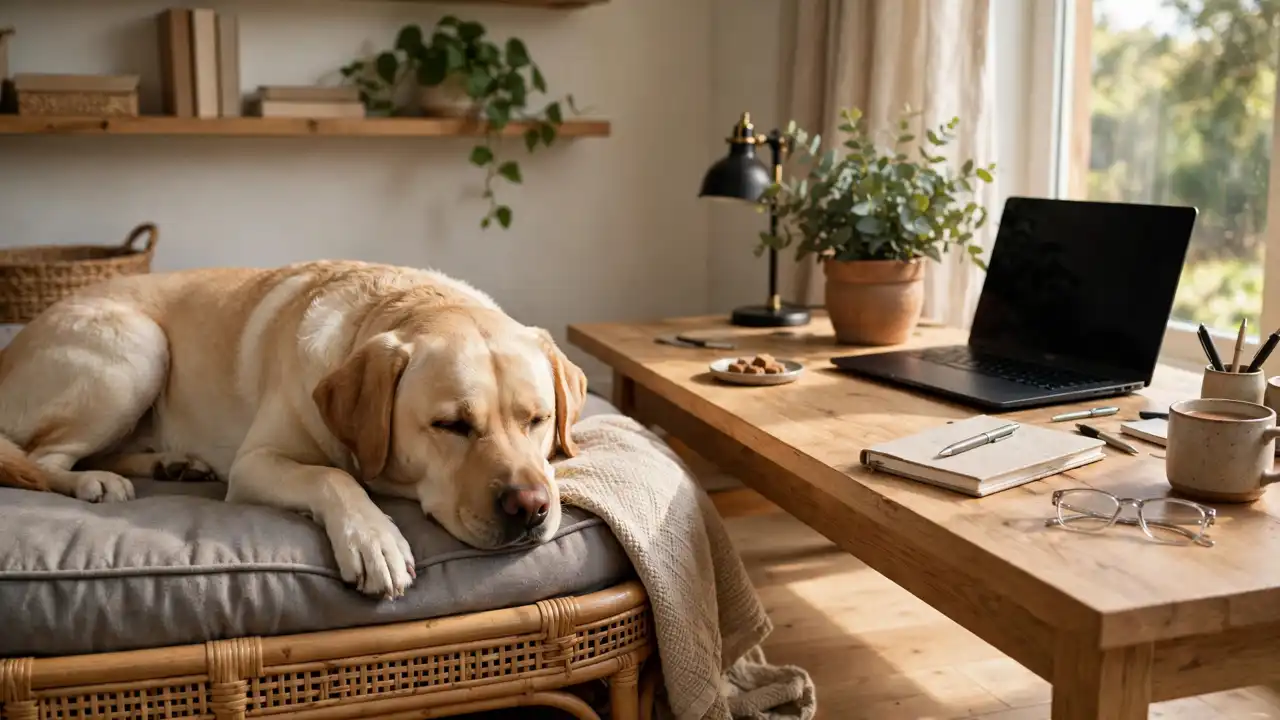
Walk and train first, then work. A Labrador that has moved in the morning is a different dog by lunch.
9. Golden Retriever: A People Dog Who Learns Your Routine Fast
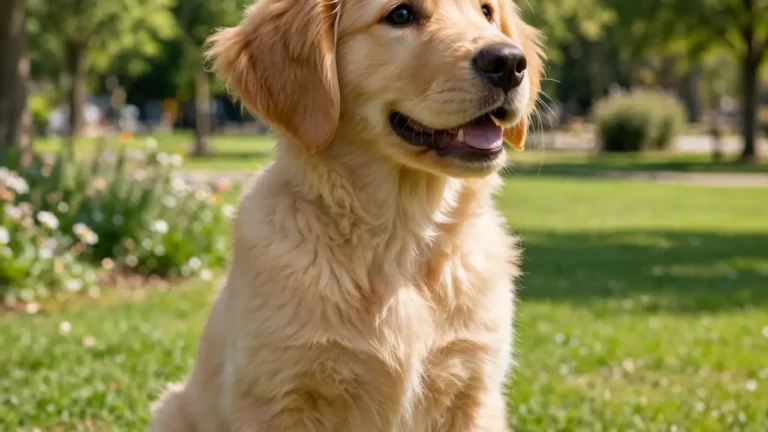
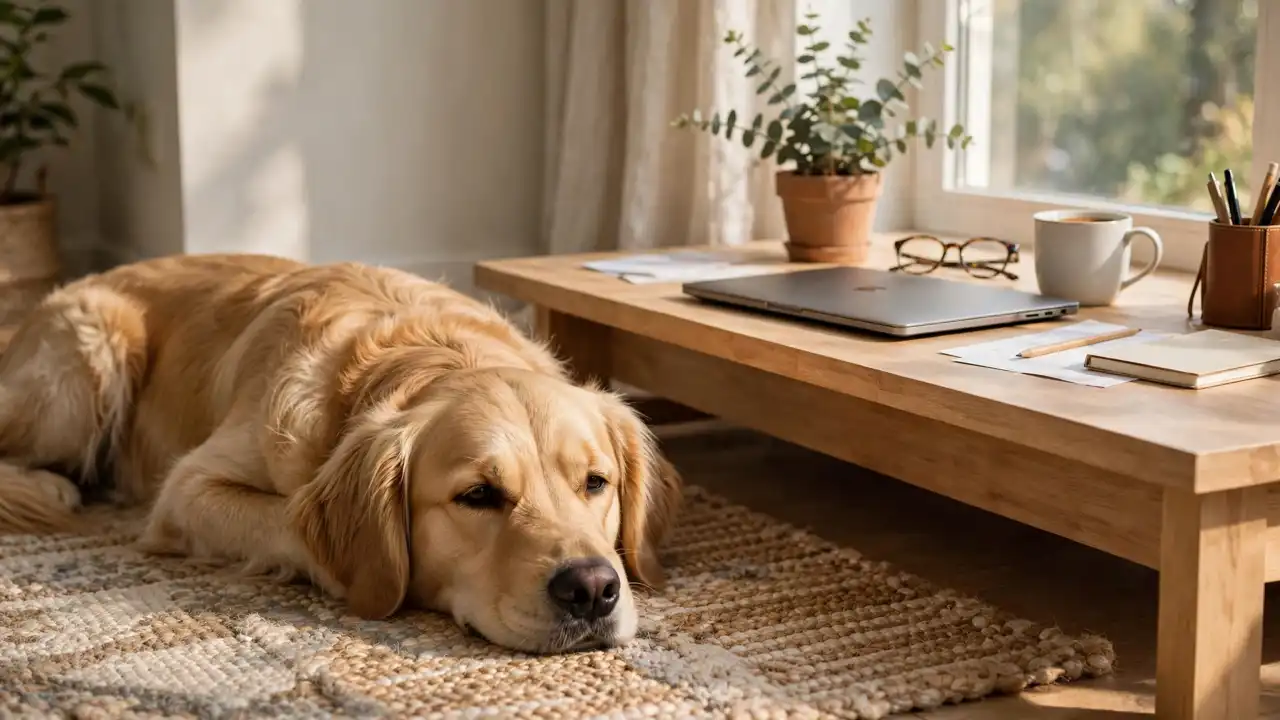
Goldens read a household fast. Within a week, most Goldens know when you start work, when lunch happens, and when the last call of the day ends, and they shape their day around yours.
That people sense comes with a grooming cost. A Golden sheds all year, blows coat in spring and autumn, and brings mud home on wet days, so a brush by the door and a washable throw on the sofa save a lot of cleaning later.
- ▸Brush two or three times a week to cut loose hair on clothes and floors.
- ▸Teach a solid settle on a mat before your first long call.
- ▸Keep a towel by the door for muddy paws after rain.
10. Cocker Spaniel: A Gentle, Close Companion For Small Teams At Home
Cocker Spaniels like to be in the middle of family life, not watching it from another room. They are gentle with children, keen to learn, and happy to curl up at your feet once they have had a walk and a game.
- Check and clean the long, floppy ears often, since they trap moisture.
- Give the dog a sniffy walk each day, not just a quick toilet trip.
- Keep training sessions short and cheerful to hold a soft nature.

Brush the feathered coat a few times a week.
Reward calm lying near your desk.
Long hours alone with no walk or play.
Harsh corrections that shut down a soft dog.
11. Whippet: A Quiet Sleeper Who Fits A Small Flat
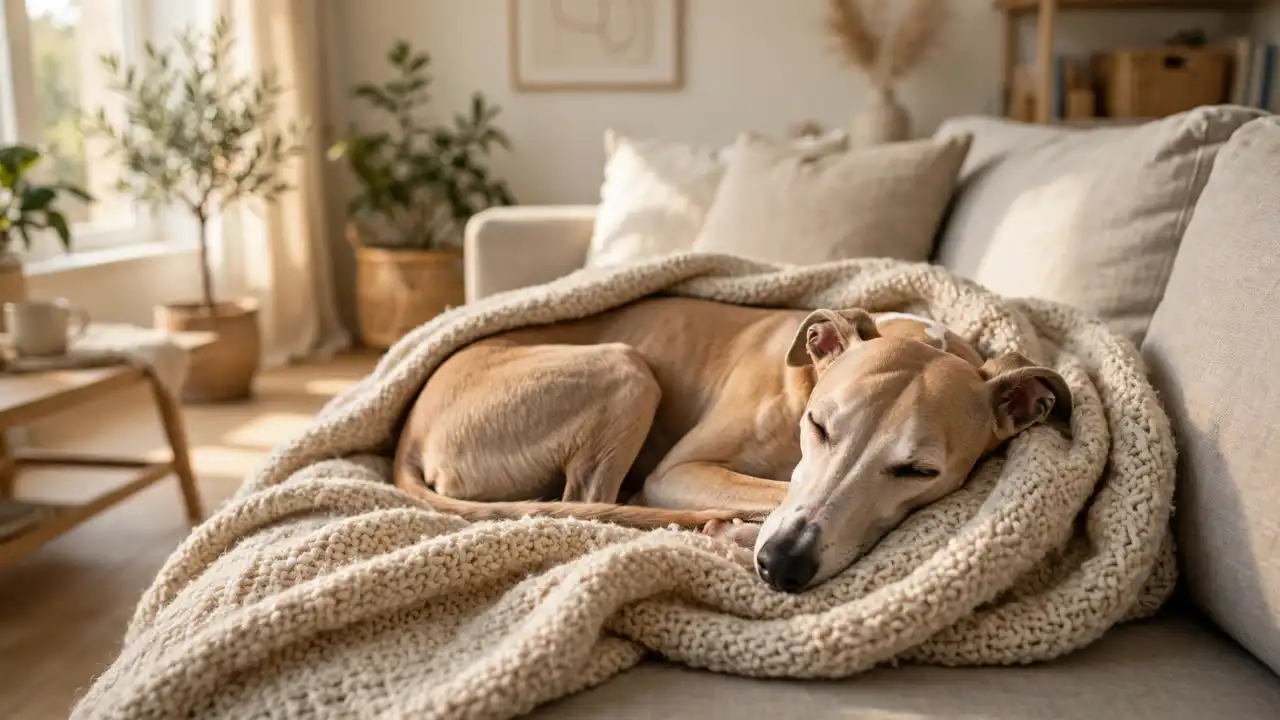
Do not let the racing shape fool you. A Whippet is a quiet, gentle dog that sleeps for most of the day, wakes up for a short sprint and a cuddle, and then goes straight back to sleep.
Cold is the main issue. Whippets have short coats and little body fat, so a warm jumper on winter walks and a cosy blanket on the sofa are not extras, they are part of daily care.
⚠️ Watch Out
Never let a Whippet off lead near a road. The chase instinct is instant, and a sprinting Whippet covers ground faster than you can call it back.
12. Boston Terrier: A Compact, Cheerful Dog For Busy Home Offices
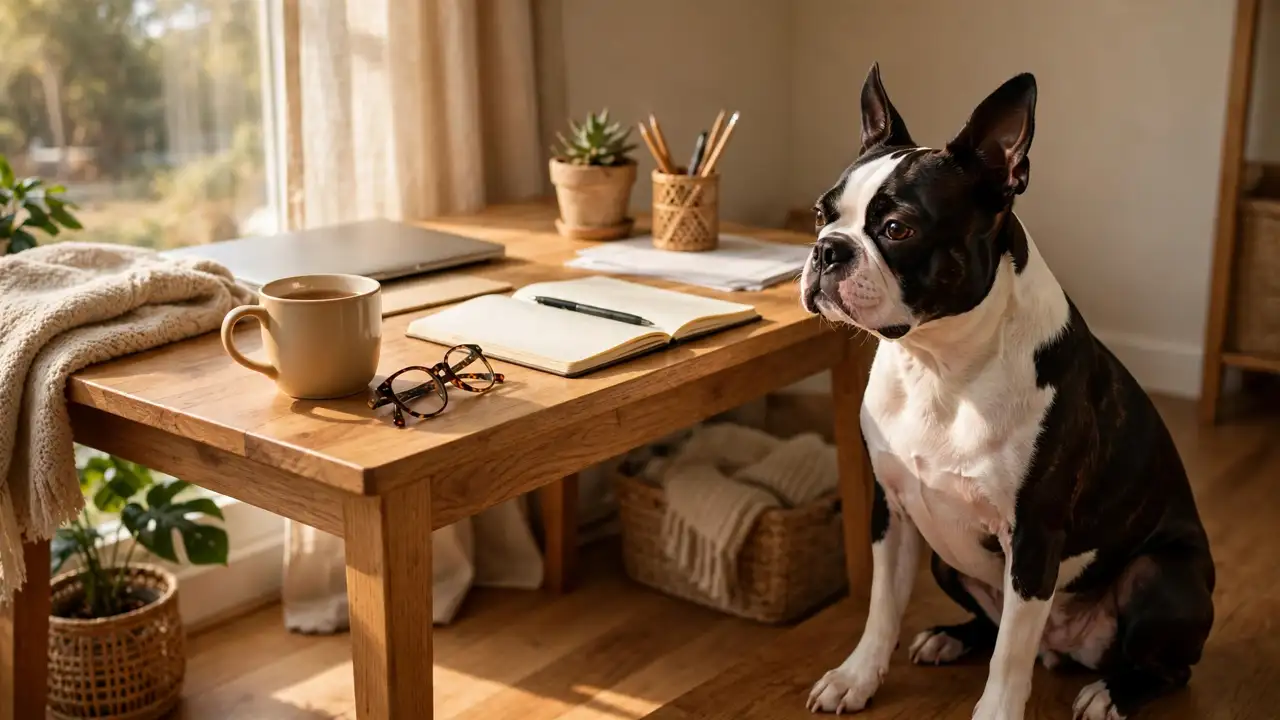
Boston Terriers bring a lot of charm in a small frame. They are lively without being frantic, friendly with visitors, and small enough to fit a flat, a spare room office, or a cosy corner by your desk.
- Keep play sessions short and fun, with rest breaks in between.
- Watch breathing in heat, and keep summer walks early or late.
- Teach a calm greeting so visitors do not get jumped on.
The right home office dog is not the quietest dog on paper or the lowest energy dog in a breed book. It is the dog whose rest rhythm matches yours, whose noise level fits your calls, and whose exercise needs fit the breaks you can really take.
Meet the breed in person if you can, ask the breeder or rescue about noise and alone time, and plan the first two weeks around short training sessions and a set bed spot. The best companion breeds for people who work from home are the ones that make your workday calmer, not louder, and a little warmer at the end of it.
Save this list on Pinterest so you can compare breeds side by side when you are ready to choose, and share it with anyone who works from home and dreams of a dog under the desk.