You bring your new puppy home, and the first puddle shows up before the bags are unpacked. You mop it up, take your puppy outside, and ten minutes later there is another one on the rug. This guide shows you how to potty train a puppy in 2 weeks with a plan that fits real life, not a perfect schedule.
The plan works because puppies learn through routine, not lectures. The same spot, the same times, and the same reward teach your puppy where to go faster than any correction ever will.
Two weeks will not make your puppy perfect. Most puppies still have the odd accident after two weeks, and that is normal. What two weeks will give you is a puppy that knows the routine, asks to go out most of the time, and has far fewer accidents than on day one.
Plan for about 2 hours a day, spread across 8 to 10 short outings. All you need is a pocket of small treats, a leash, and an enzyme cleaner. Grab your supplies and let us start.
What You Need
- Small soft treats, pea-sized
- Treat pouch or a pocket you can reach fast
- 6-foot leash
- Enzyme cleaner
- Paper towels
- Crate with a divider panel
- Puppy pads (optional backup)
- Phone timer or alarm
- Potty bell (optional)
At a Glance
- Choose one outdoor potty spot
- Take your puppy out on a fixed schedule
- Watch for sniffing, circling, and squatting
- Praise and treat the second your puppy finishes
- Supervise your puppy indoors at all times
- Crate your puppy when you cannot watch
- Clean every accident with an enzyme cleaner
- Stretch the gaps to finish potty training in 2 weeks
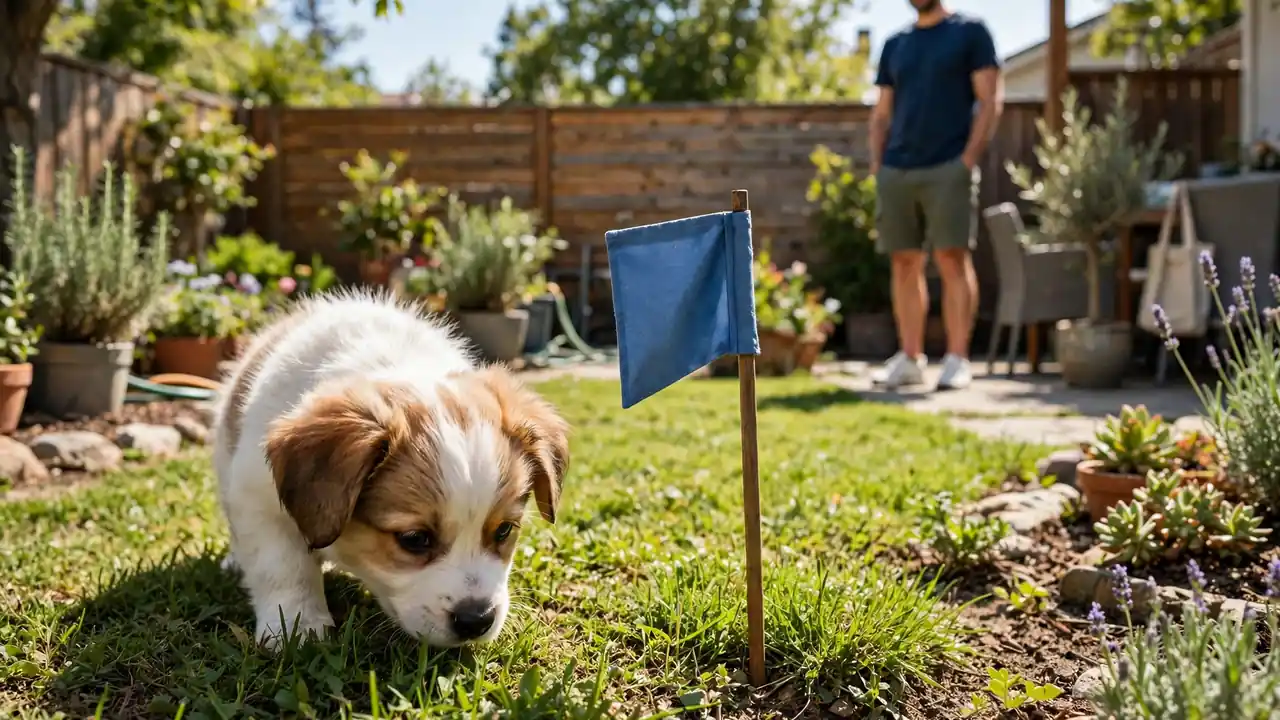
Choose one outdoor potty spot
Pick one patch of grass close to your door and use it every single time. The old scent tells your puppy what this spot is for, so the message lands faster than a new spot each trip.
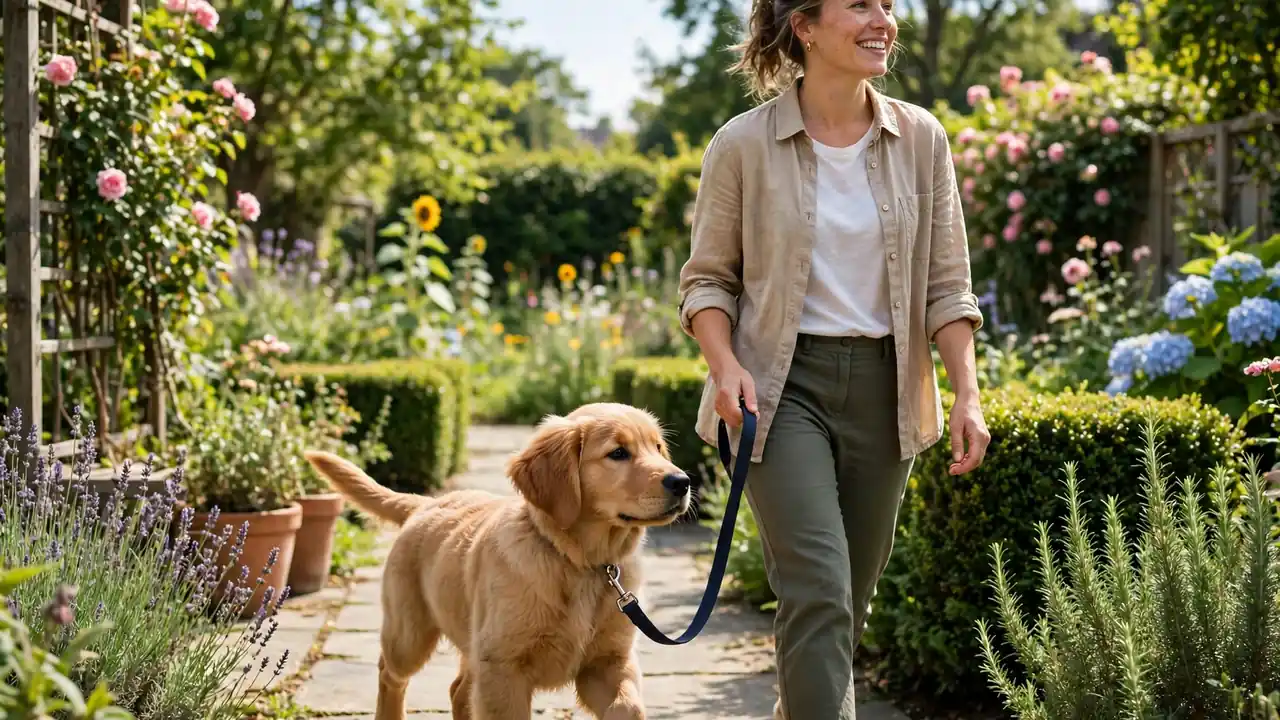
Walk your puppy to that spot on a leash, even if you have a fenced yard. Stand still and wait. Give your puppy up to five minutes to sniff around and pick their place.
Take your puppy out on a fixed schedule
Puppies need to go out after every sleep, every meal, every play session, and every drink of water. That adds up to 8 to 10 trips a day for a young puppy, and the clock matters more than your puppy asking.
Set a timer for every two hours during the day. Take your puppy out even when they look settled.
A puppy that goes out on schedule has fewer chances to go wrong indoors. The schedule does the remembering, so you can relax between trips.
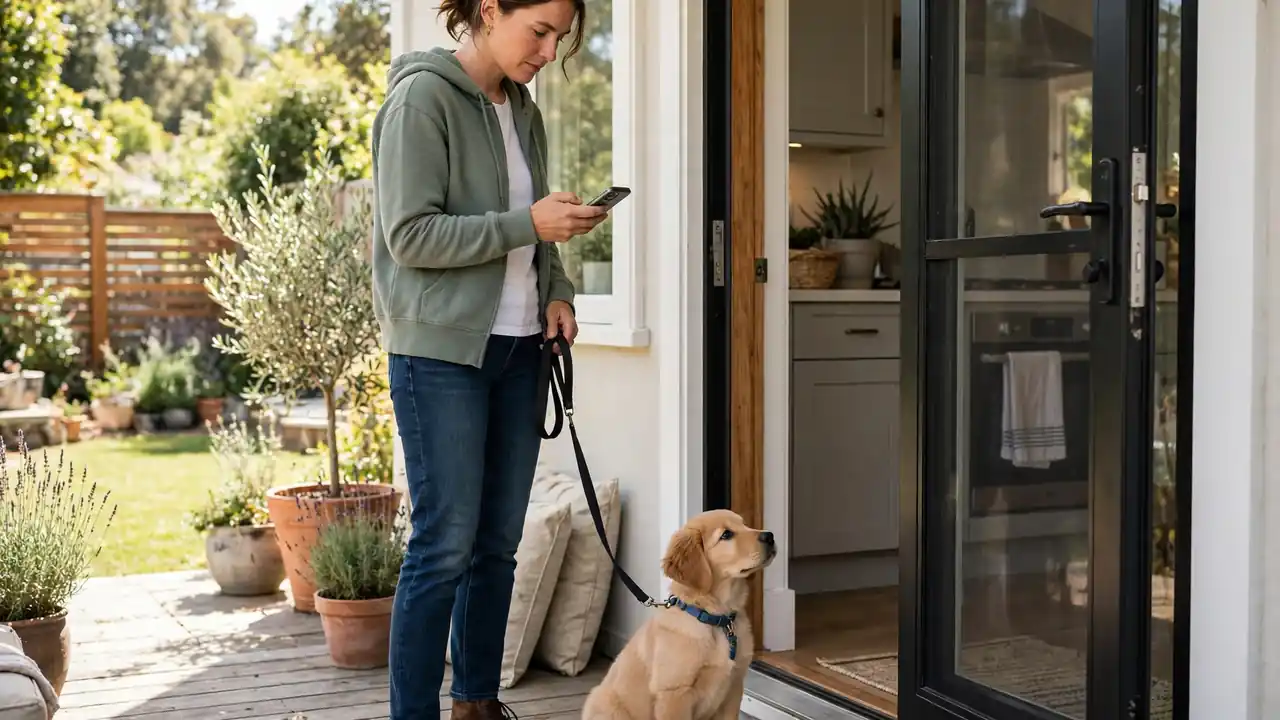
Watch for sniffing, circling, and squatting
Puppies give clear signs before they go. Sniffing the floor in tight circles, pacing to a corner, or a sudden squat all mean the same thing: outside, right now.
Scoop your puppy up calmly and carry them to the potty spot. Do not scold on the way. A puppy that gets rushed outside learns to ask sooner, and that is exactly what you want.
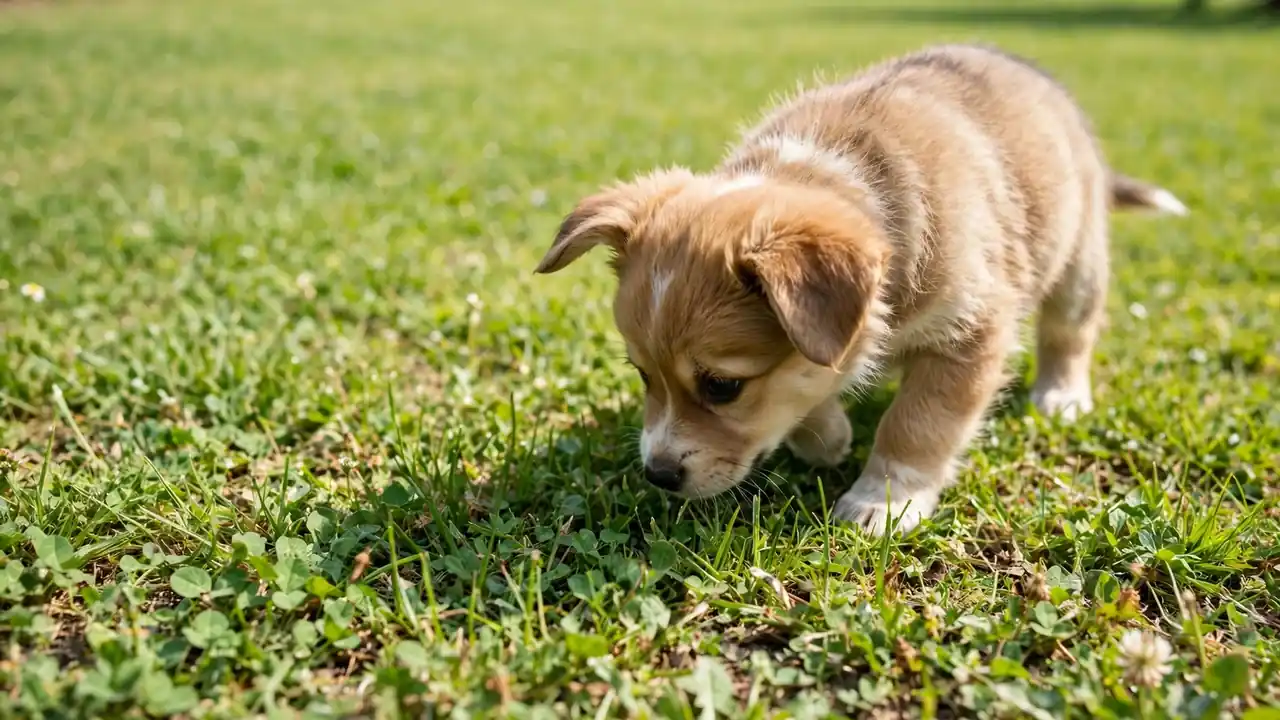
Praise and treat the second your puppy finishes
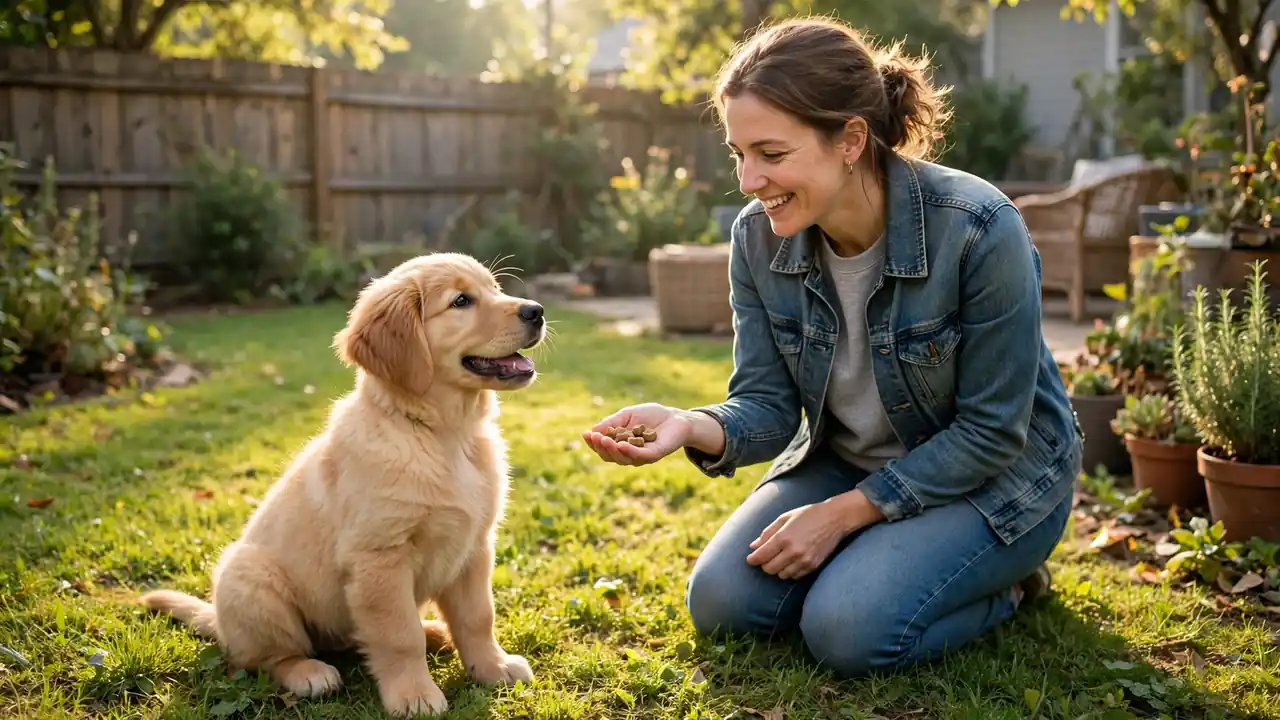
Wait for your puppy to finish, then praise and treat within three seconds. The reward has to land while the act is still fresh, or your puppy will link the treat to walking back inside instead.
Use a small soft treat and a happy voice. Three pea-sized treats beat one big biscuit, because your puppy stays focused on you and the spot, not on chewing.
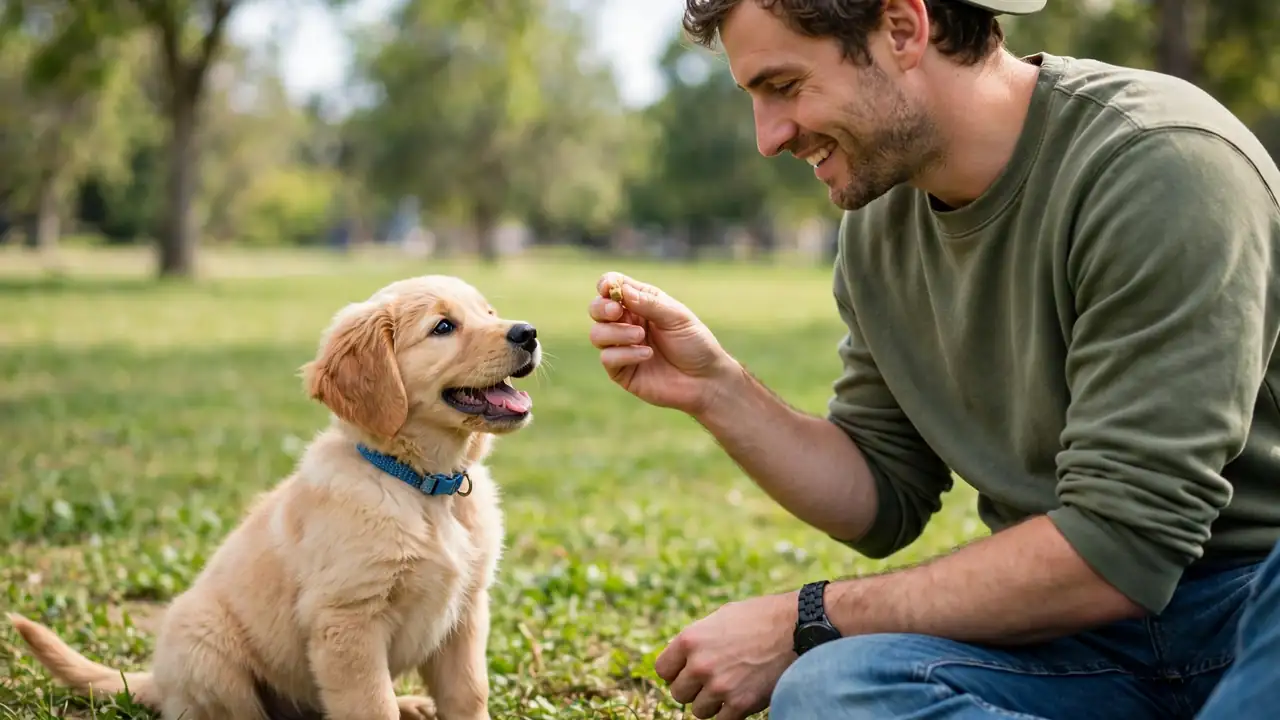
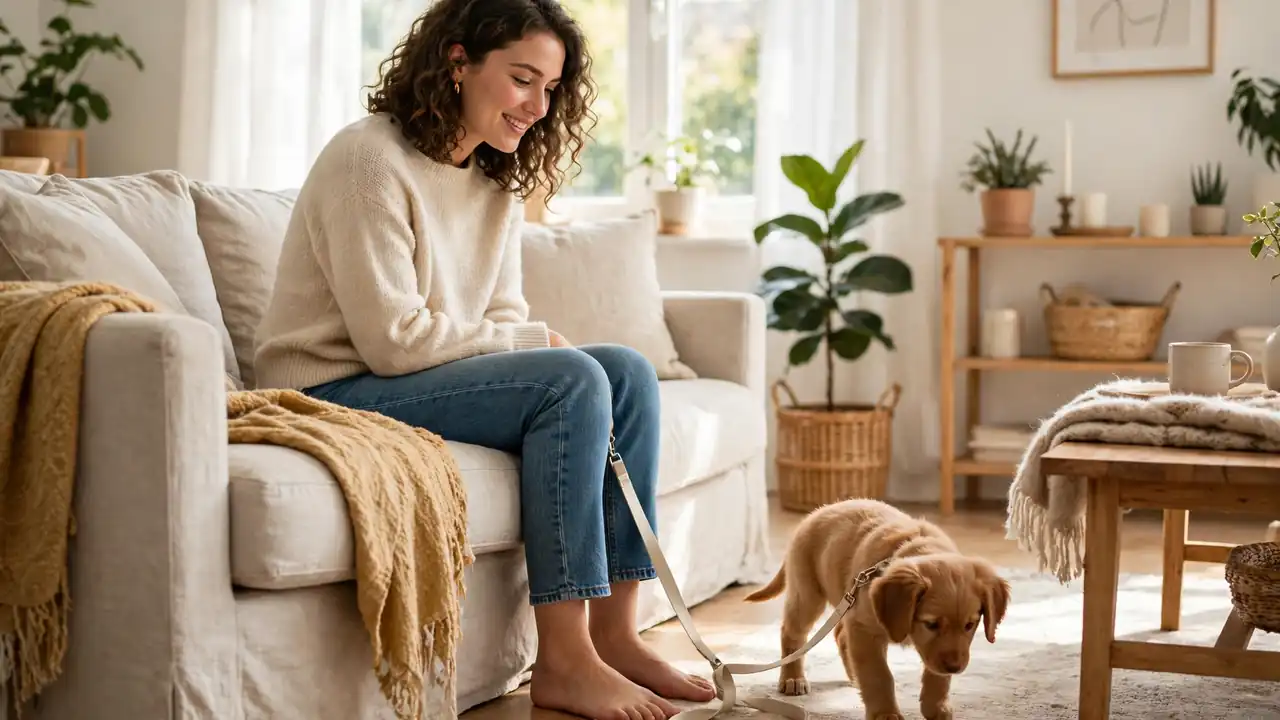
Supervise your puppy indoors at all times
A puppy with free run of the house will find a quiet corner to use. Keep your puppy in the same room as you, on a light indoor leash or behind a baby gate, so you can see the signs from step 3.
Tether the leash to your belt or a heavy chair leg while you cook or watch TV. Your puppy stays near you, you stay near your puppy, and accidents get caught before they happen.
Crate your puppy when you cannot watch
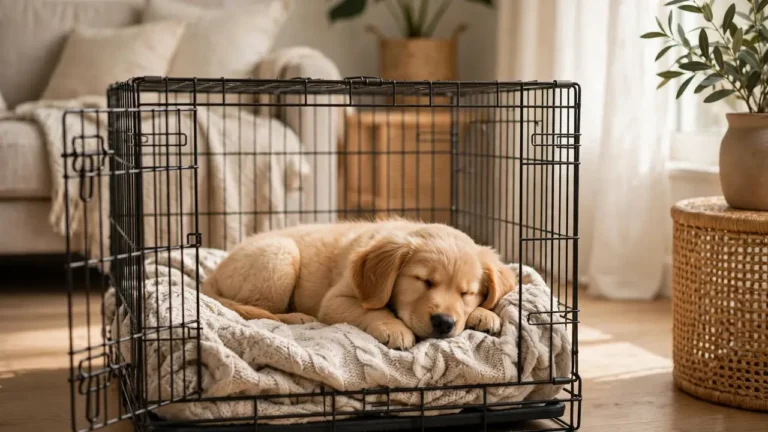
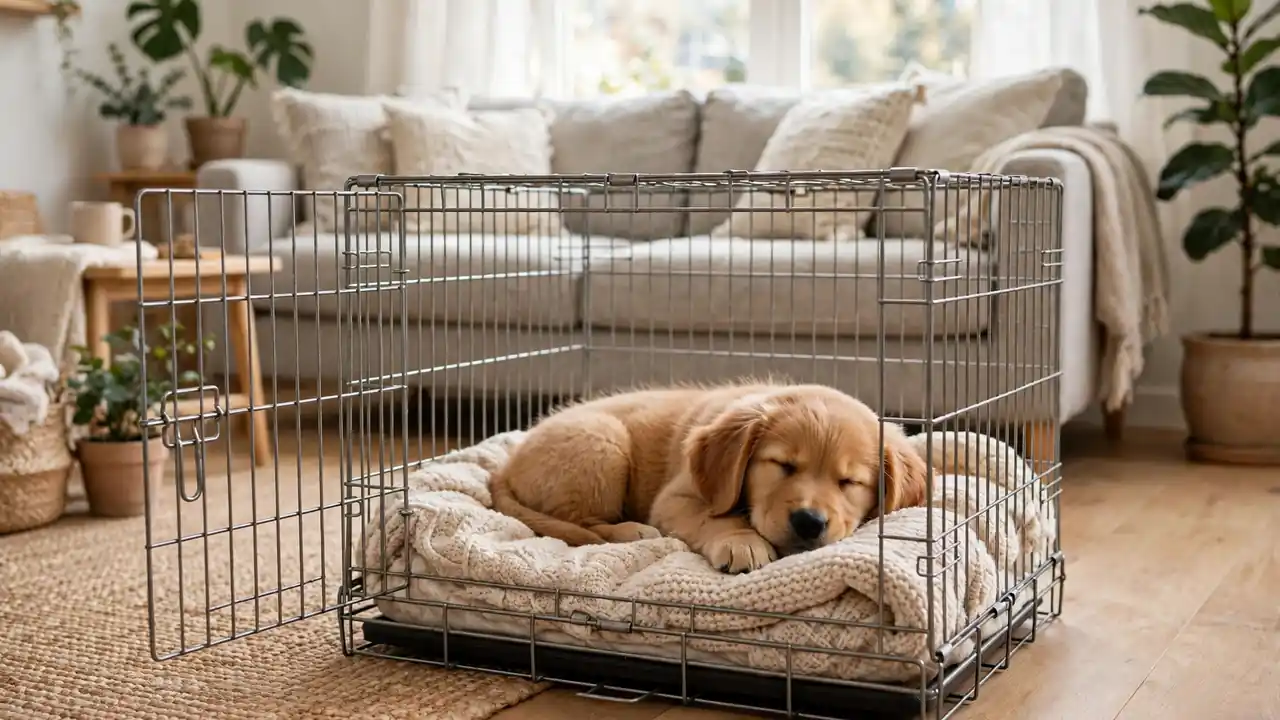
A crate is your puppy’s bedroom, not a punishment. Dogs avoid soiling where they sleep, so a crate sized so your puppy can stand, turn, and lie down teaches bladder control while you are busy or asleep.
Take your puppy out right before crating and right after letting them out. Keep nights short by setting one alarm: most young puppies need one trip out around 2 a.m.
Clean every accident with an enzyme cleaner
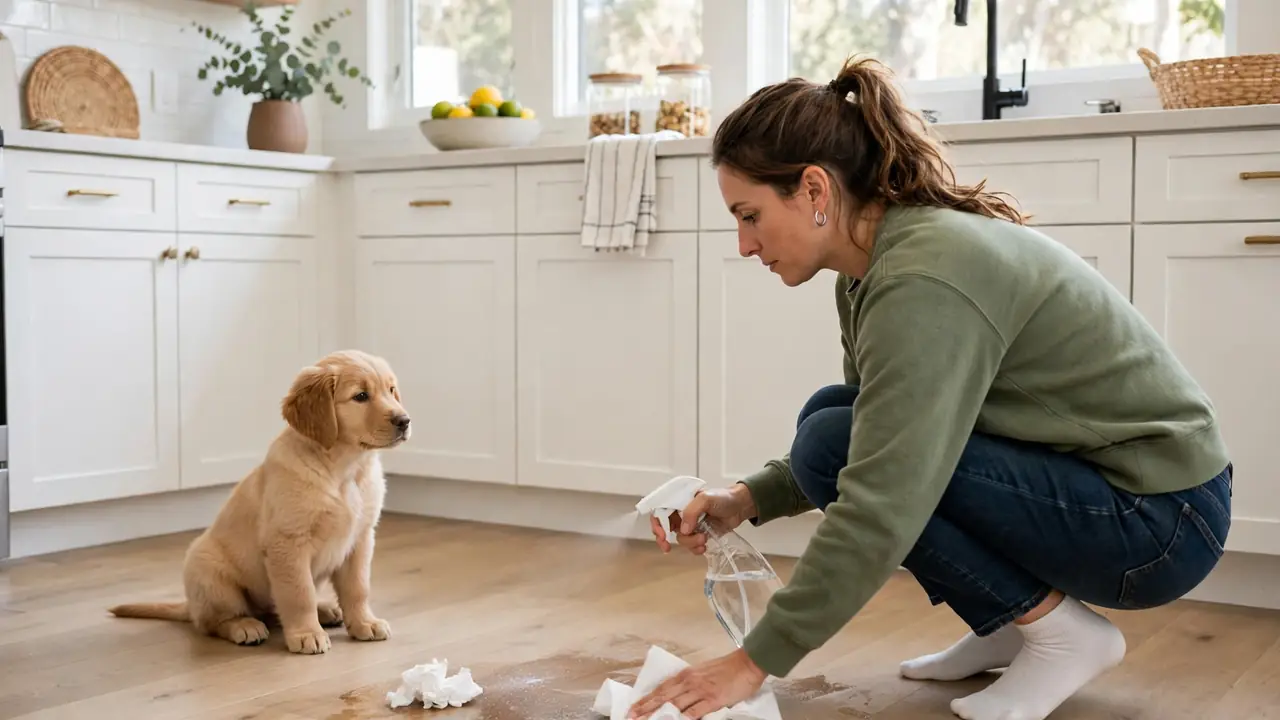
Regular cleaners leave a scent humans cannot smell but puppies can. That scent says this is a toilet, and your puppy will return to the same spot again and again.
Blot the mess with paper towels, spray the enzyme cleaner until the area is damp, and let it sit for 10 minutes before blotting again. Skip vinegar and ammonia cleaners: ammonia smells like urine to a dog.
Stretch the gaps to finish potty training in 2 weeks
In week two, add 30 minutes between outings every two days. A puppy that held it for two hours in week one can often hold it for three hours by day 10, and that is real progress.


Paid Links - As an Amazon Associate, I earn from qualifying purchases.
Keep the morning, after-meal, and bedtime trips on the same clock even as the gaps grow. If accidents return, drop back to the shorter gap for two days and try again. Progress is rarely a straight line.
Troubleshooting: Fix Common Potty Training Problems
| If This Happens | Try This |
|---|---|
| Puppy pees right after coming inside | Stay outside five minutes longer and wait for a second pee. Many puppies empty only half their bladder on the first try. |
| Puppy only goes on pads | Move the pad closer to the door each day, then outside to the potty spot. Reward outdoor pees more than pad pees. |
| Accidents at night | Cut off water two hours before bed and set one alarm for a night trip. Most puppies outgrow night trips by 16 weeks. |
| Puppy refuses to go in rain or cold | Carry your puppy to the spot, hold an umbrella over them, and keep the trip short. A quick treat after builds a brave habit. |
| Puppy pees in the crate | Check the crate size first. A crate that is too big lets your puppy sleep at one end and pee at the other. Add a divider panel to shrink it. |
Frequently Asked Questions
Can you really potty train a puppy in 2 weeks?
You can build a solid routine in 2 weeks, and most puppies have far fewer accidents by day 14. Full reliability takes longer, often until 4 to 6 months old, because young bladders are still growing.
What age should I start potty training?
Start the day your puppy comes home, usually at 8 weeks old. Puppies can learn the routine from day one, even though bladder control is still weak.
How long can my puppy hold it?
A rough guide is one hour per month of age, up to about 8 hours. A 2-month-old puppy needs a trip out every 2 hours, and a 3-month-old every 3 hours.
What if my puppy has an accident?
Stay calm, clean it with an enzyme cleaner, and review the schedule. Accidents are a sign the gap was too long or the signs were missed, not a reason to scold.
Do puppy pads help or hurt?
Pads help in apartments and bad weather, but they can slow outdoor training if your puppy learns pads are the toilet. Use them as a backup, and move them toward the door over time.
Quick Reference Card
What You Need: Small soft treats; treat pouch; 6-foot leash; enzyme cleaner; paper towels; crate with divider; puppy pads (optional); phone timer; potty bell (optional).
Steps: 1) Choose one outdoor potty spot. 2) Take your puppy out on a fixed schedule. 3) Watch for sniffing, circling, and squatting. 4) Praise and treat the second your puppy finishes. 5) Supervise your puppy indoors at all times. 6) Crate your puppy when you cannot watch. 7) Clean every accident with an enzyme cleaner. 8) Stretch the gaps to finish potty training in 2 weeks.
You now know how to potty train a puppy in 2 weeks, step by step. Your puppy has one spot, one schedule, and a reward that makes going outside worth it.
Keep the routine going for a few more weeks, and the accidents will fade. Pin this guide so you can check the steps again when week two starts.