Medically Reviewed By: Medsdog Team
Last Updated: August 2026
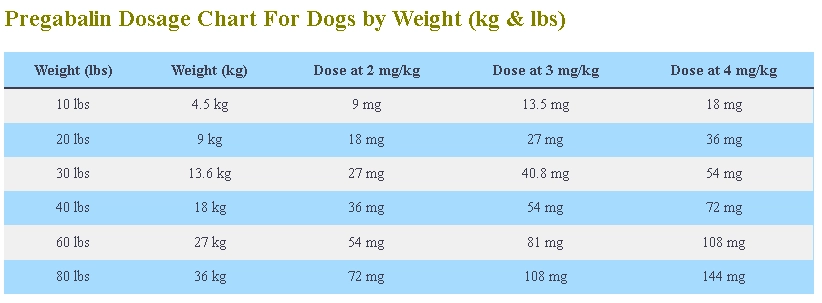
Pregabalin for dogs sold under the popular brand name Lyrica for humans is prescribed off label by veterinarians for canines with nerve pain, seizures, and occasionally situational anxiety. Because dosing is calculated by body weight, most pet owners searching for a pregabalin for dog’s dosage chart by weight just want a fast, accurate number before their next vet visit or refill.
Pregabalin For Dogs Dosage: The recommended Pregabalin dosage for treating seizure and neuropathic pain secondary to cervical intervertebral disc disease is 4mg/kg, given by mouth every 8–12 hours.
With the exact rate depending on whether it’s being used for pain, seizures, or anxiety. Use the calculator and chart below to find your dog’s dose, then read on for the full breakdown by condition.


Paid Links - As an Amazon Associate, I earn from qualifying purchases.
Disclaimer: The guide is educative and not a replacement of a professional veterinary advice. Always seek the advice of a registered veterinarian when giving or modifying the dosage of any medication for your dog.
Pregabalin Dosage Calculator for Dogs
Estimate a pregabalin dose based on your dog’s weight and condition
Disclaimer: This calculator is for general educational purposes only and does not replace professional veterinary advice. Pregabalin dosing depends on your dog’s overall health, kidney function, and specific diagnosis. Always consult your veterinarian before giving or adjusting any medication.
Pregabalin For Dogs Overview
- Pregabalin (Lyrica) is used off label in dogs for neuropathic pain, add-on seizure control, and occasionally anxiety.
- Typical dosing is 4mg/kg PO every 8–12 hours, but the right number depends on why it's prescribed pain protocols often run lower than seizure protocols.
- A pharmacokinetic study in canines found that 4 mg/kg produces effective blood levels for about 11 hours, supporting twice-daily dosing.
- Never overdose, adjust or stop pregabalin without your veterinarian sudden withdrawal of the medicine can trigger rebound seizures.
What Is Pregabalin for Dogs?
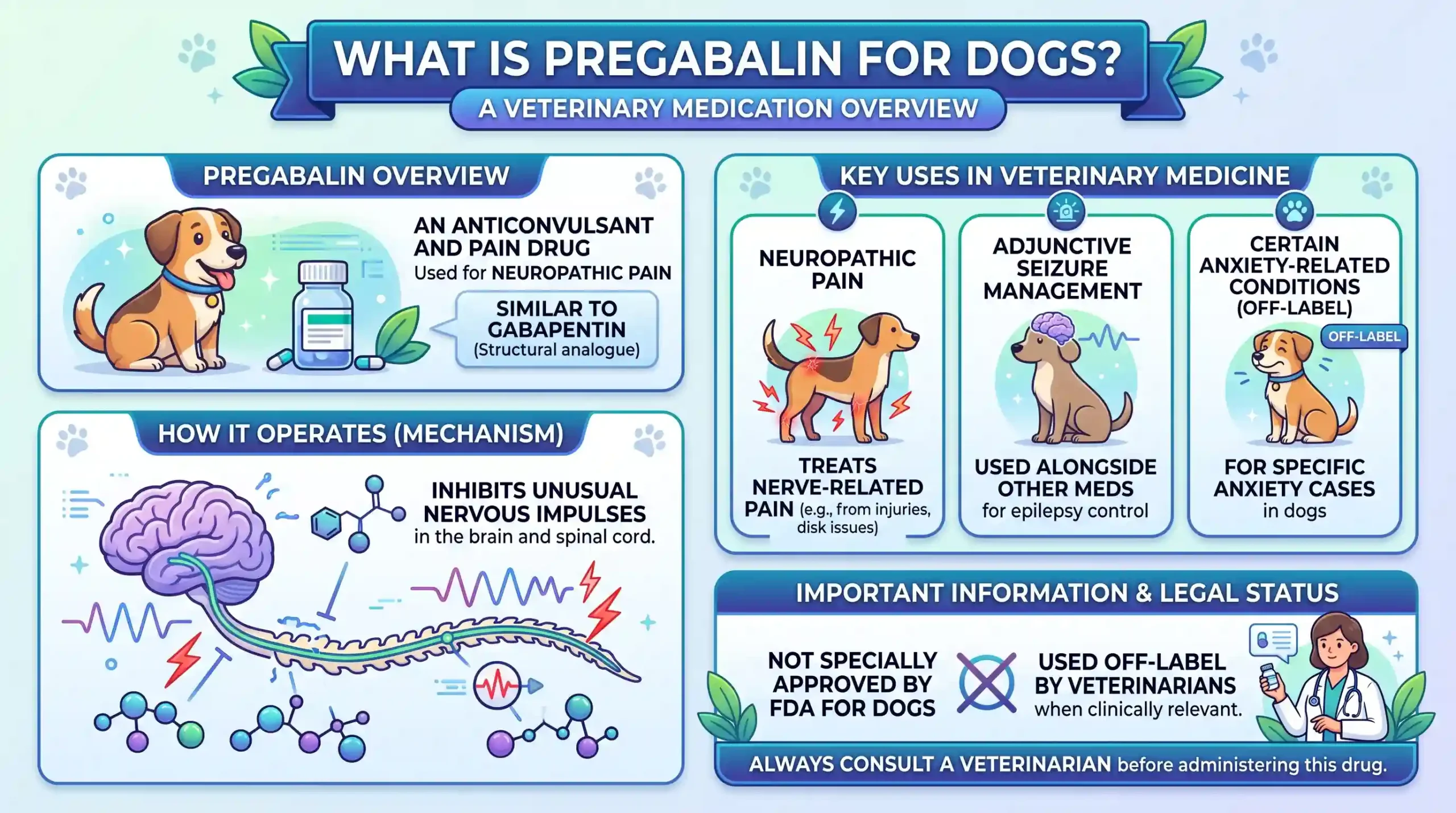
Pregabalin for Dogs dosage is an anticonvulsant and pain drug used as neuropathic pain.
It is very much similar to Gabapentin and operates by inhibiting unusual nervous impulses in the brain and the spinal cord.
It can be used in veterinary medicine as it can be prescribed to treat:
- Neuropathic (nerve-related) pain
- Adjunctive seizure management
- Certain anxiety-related conditions (off-label)
It is not specially approved by FDA to be used in dogs, however, it is used off-label by veterinarians in cases where it is clinically relevant.
Is Pregabalin Safe for Dogs?
Pregablain is not FDA approved for use in dogs; however, it is prescribed off label by veterinarians for canines with nerve pain, seizures, and occasionally situational anxiety.
Pregabalin is not considered to be 100% safe for canines. Veterinarians use the medicine with caution in furry friends with caution that are pregnant, nursing, or having other medical issues.
What is the safe Pregabalin Dosage For Dogs?
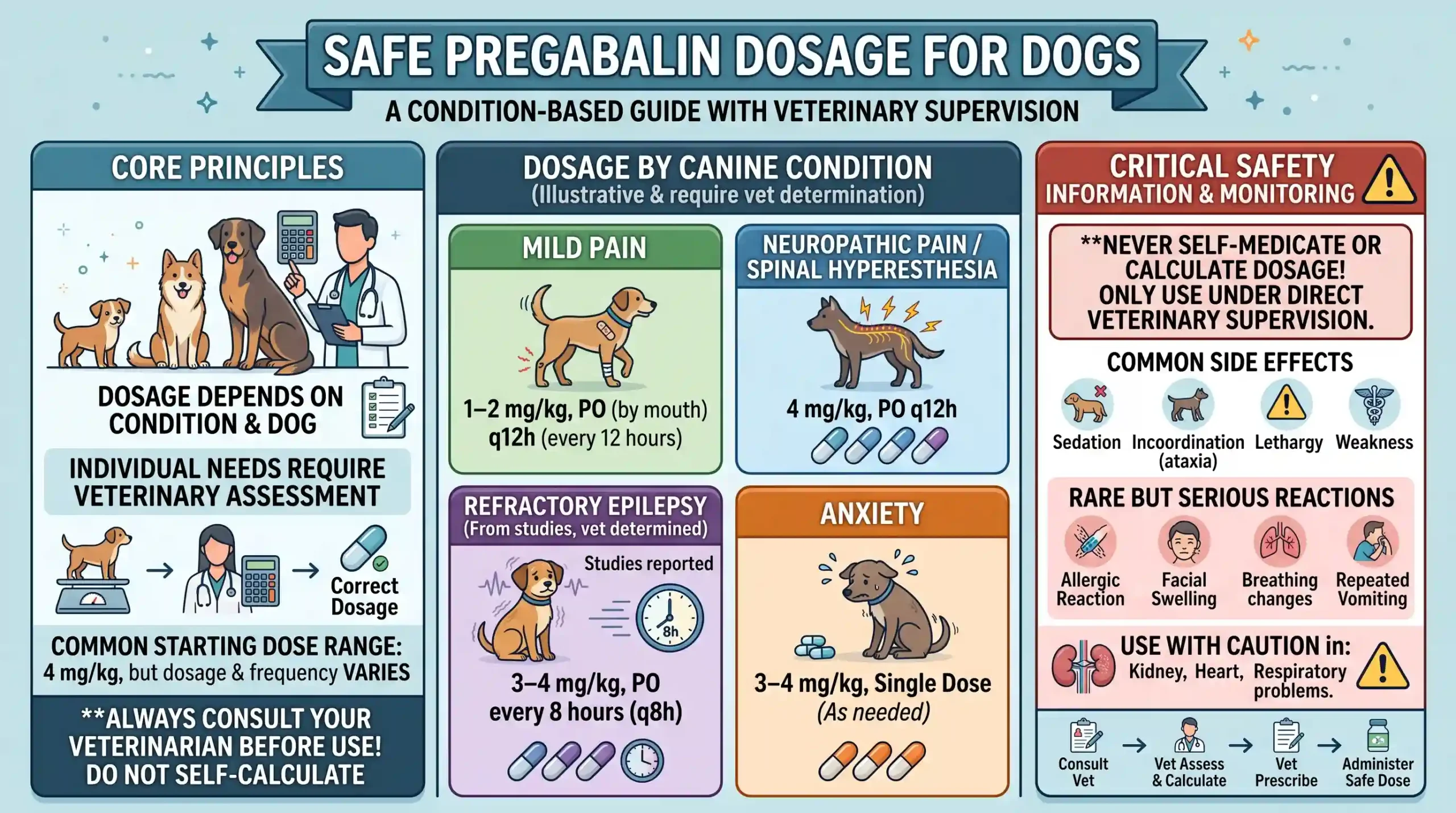
The appropriate pregabalin dosage for dogs depends on the condition being treated and the individual dog's needs. A commonly recommended dosage is 4 mg/kg given orally every 8–12 hours. However, the dosage and frequency may vary depending on the type and severity of the canine health condition.
- For mild pain: Pregabalin may be administered at a dosage of 1–2 mg/kg by mouth (PO) every 12 hours (q12h).
- For neuropathic pain and spinal hyperesthesia: A dosage of 4 mg/kg by mouth every 12 hours may be used.
- For refractory epilepsy: Studies have reported pregabalin dosages of 3–4 mg/kg by mouth every 8 hours.
- For Anxiety: 3–4 mg/kg single dose as needed.
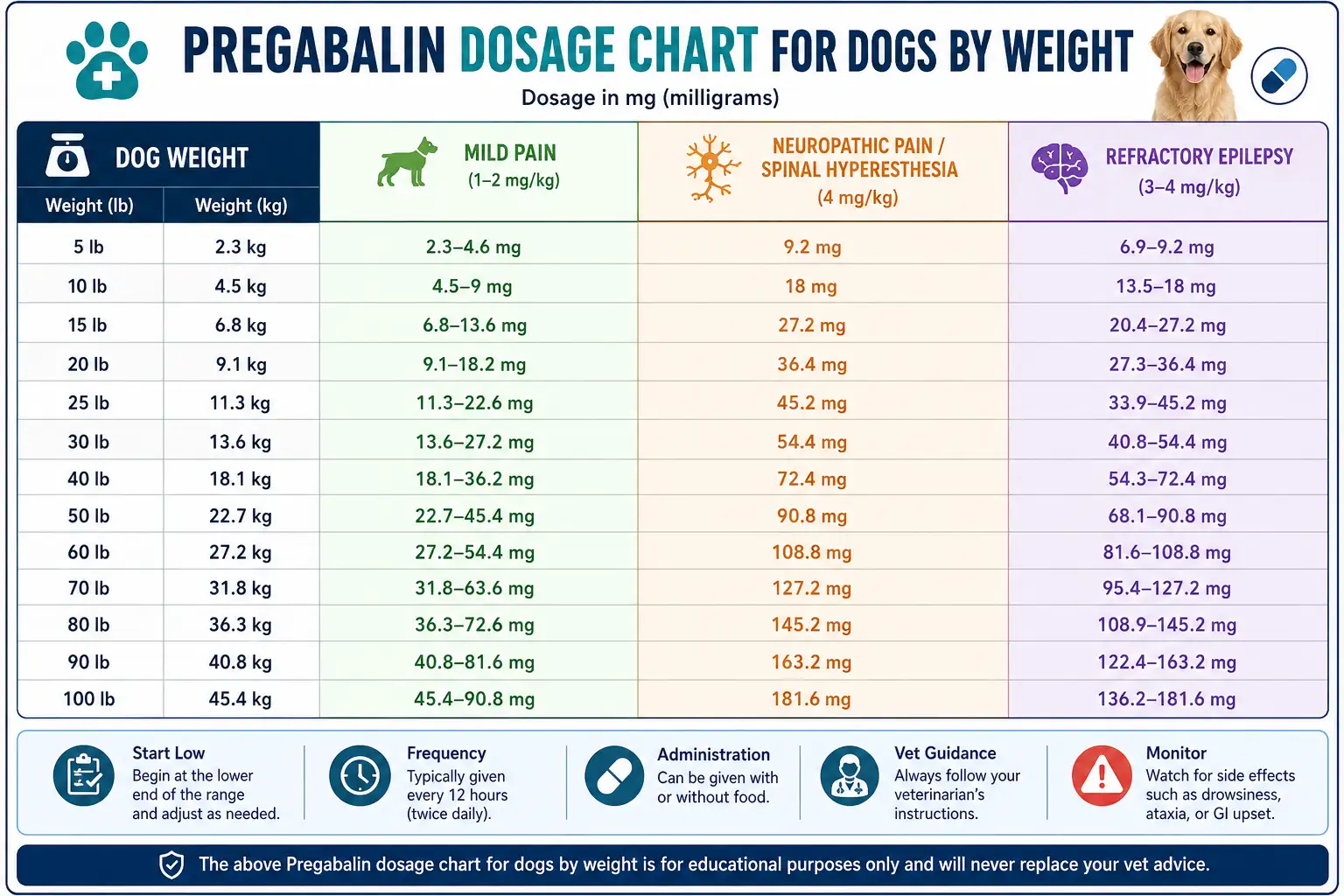
Pregabalin Dosage Chart for Dogs by Weight
| Dog Weight | Weight (kg) | Mild Pain (1–2 mg/kg) | Neuropathic Pain / Spinal Hyperesthesia (4 mg/kg) | Refractory Epilepsy (3–4 mg/kg) |
|---|---|---|---|---|
| 5 lb | 2.3 kg | 2.3–4.6 mg | 9.2 mg | 6.9–9.2 mg |
| 10 lb | 4.5 kg | 4.5–9 mg | 18 mg | 13.5–18 mg |
| 15 lb | 6.8 kg | 6.8–13.6 mg | 27.2 mg | 20.4–27.2 mg |
| 20 lb | 9.1 kg | 9.1–18.2 mg | 36.4 mg | 27.3–36.4 mg |
| 25 lb | 11.3 kg | 11.3–22.6 mg | 45.2 mg | 33.9–45.2 mg |
| 30 lb | 13.6 kg | 13.6–27.2 mg | 54.4 mg | 40.8–54.4 mg |
| 40 lb | 18.1 kg | 18.1–36.2 mg | 72.4 mg | 54.3–72.4 mg |
| 50 lb | 22.7 kg | 22.7–45.4 mg | 90.8 mg | 68.1–90.8 mg |
| 60 lb | 27.2 kg | 27.2–54.4 mg | 108.8 mg | 81.6–108.8 mg |
| 70 lb | 31.8 kg | 31.8–63.6 mg | 127.2 mg | 95.4–127.2 mg |
| 80 lb | 36.3 kg | 36.3–72.6 mg | 145.2 mg | 108.9–145.2 mg |
| 90 lb | 40.8 kg | 40.8–81.6 mg | 163.2 mg | 122.4–163.2 mg |
| 100 lb | 45.4 kg | 45.4–90.8 mg | 181.6 mg | 136.2–181.6 mg |
The above Pregabalin dosage chart for dogs by weight is for educational purposes only and will never replace your vet advice.
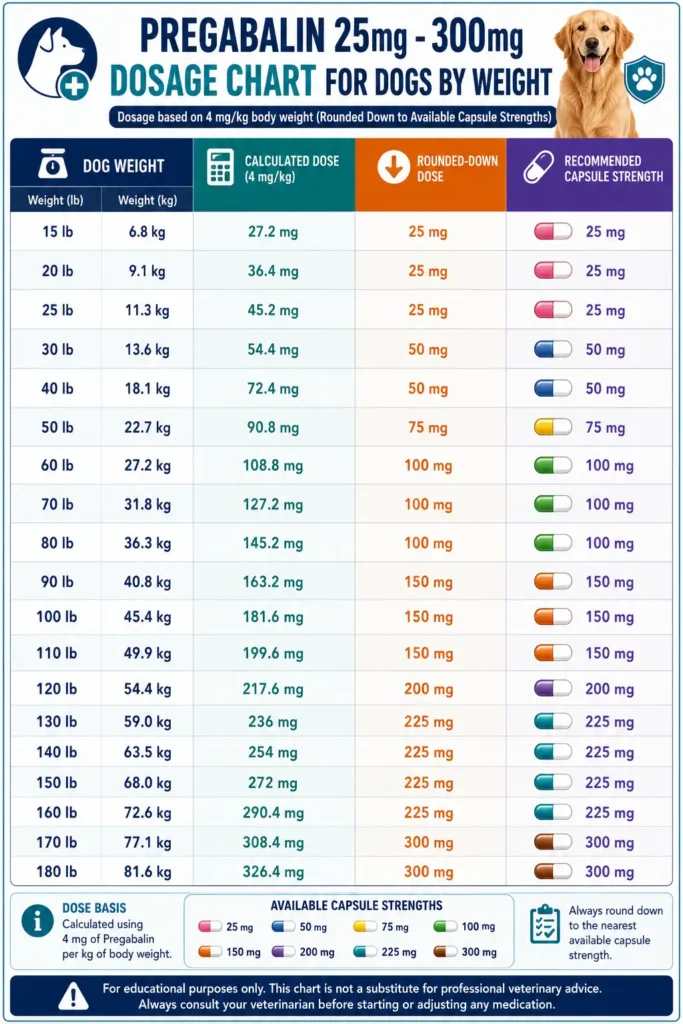
Pregabalin 25mg - 300mg Dosage Chart for Dogs by Weight
| Dog Weight | Weight (kg) | Calculated Dose (4 mg/kg) | Rounded-Down Dose | Recommended Capsule Strength |
|---|---|---|---|---|
| 15 lb | 6.8 kg | 27.2 mg | 25 mg | 25 mg |
| 20 lb | 9.1 kg | 36.4 mg | 25 mg | 25 mg |
| 25 lb | 11.3 kg | 45.2 mg | 25 mg | 25 mg |
| 30 lb | 13.6 kg | 54.4 mg | 50 mg | 50 mg |
| 40 lb | 18.1 kg | 72.4 mg | 50 mg | 50 mg |
| 50 lb | 22.7 kg | 90.8 mg | 75 mg | 75 mg |
| 60 lb | 27.2 kg | 108.8 mg | 100 mg | 100 mg |
| 70 lb | 31.8 kg | 127.2 mg | 100 mg | 100 mg |
| 80 lb | 36.3 kg | 145.2 mg | 100 mg | 100 mg |
| 90 lb | 40.8 kg | 163.2 mg | 150 mg | 150 mg |
| 100 lb | 45.4 kg | 181.6 mg | 150 mg | 150 mg |
| 110 lb | 49.9 kg | 199.6 mg | 150 mg | 150 mg |
| 120 lb | 54.4 kg | 217.6 mg | 200 mg | 200 mg |
| 130 lb | 59.0 kg | 236 mg | 225 mg | 225 mg |
| 140 lb | 63.5 kg | 254 mg | 225 mg | 225 mg |
| 150 lb | 68.0 kg | 272 mg | 225 mg | 225 mg |
| 160 lb | 72.6 kg | 290.4 mg | 225 mg | 225 mg |
| 170 lb | 77.1 kg | 308.4 mg | 300 mg | 300 mg |
| 180 lb | 81.6 kg | 326.4 mg | 300 mg | 300 mg |
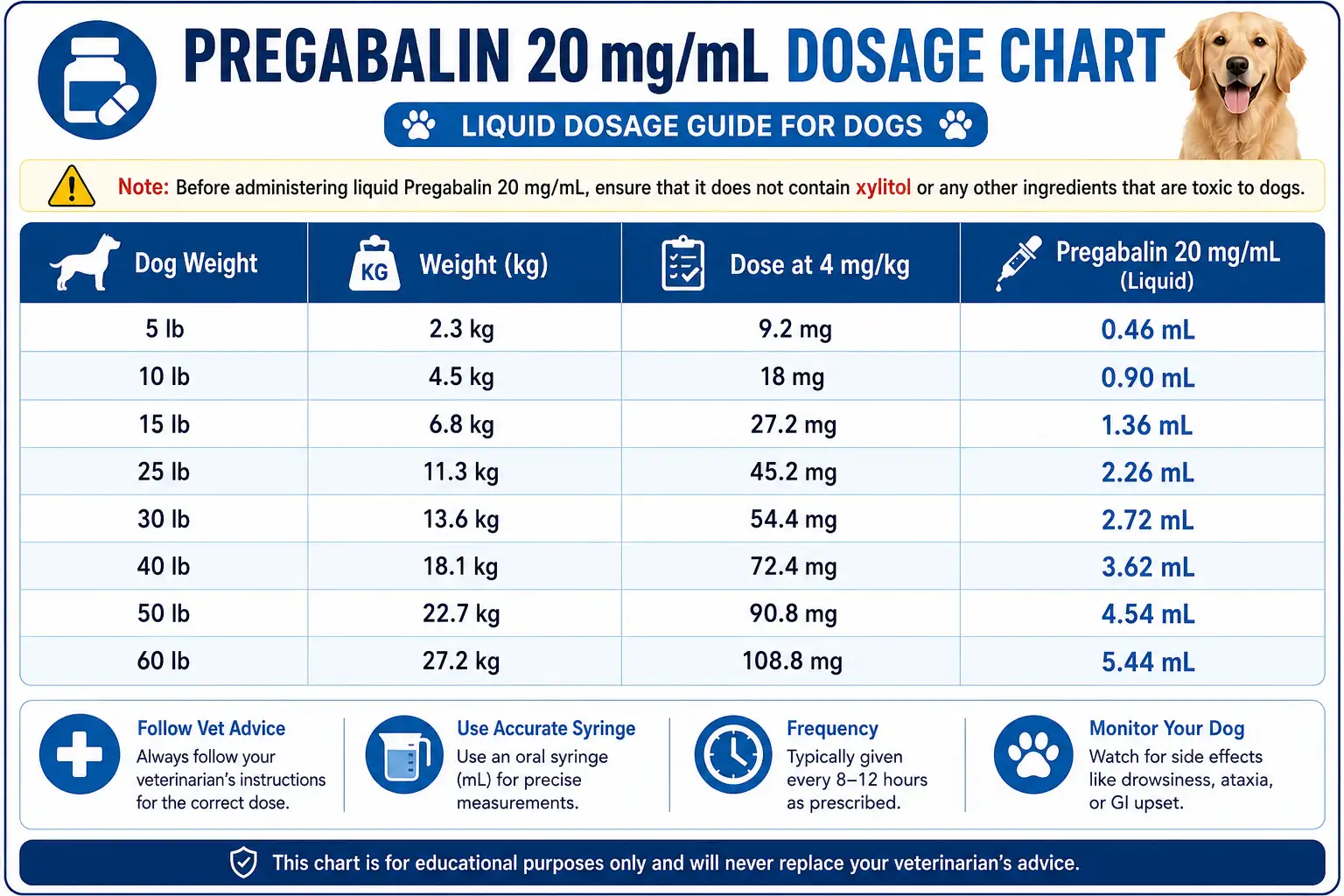
Pregabalin 20 mg/mL Dosage Chart
Note: Before administering liquid Pregabalin 20 mg/mL, ensure that it does not contain xylitol or any other ingredients that are toxic to dogs.
| Dog Weight | Weight (kg) | Dose at 4 mg/kg | Pregabalin 20 mg/mL |
|---|---|---|---|
| 5 lb | 2.3 kg | 9.2 mg | 0.46 mL |
| 10 lb | 4.5 kg | 18 mg | 0.90 mL |
| 15 lb | 6.8 kg | 27.2 mg | 1.36 mL |
| 25 lb | 11.3 kg | 45.2 mg | 2.26 mL |
| 30 lb | 13.6 kg | 54.4 mg | 2.72 mL |
| 40 lb | 18.1 kg | 72.4 mg | 3.62 mL |
| 50 lb | 22.7 kg | 90.8 mg | 4.54 mL |
| 60 lb | 27.2 kg | 108.8 mg | 5.44 mL |
Pregabalin Dose for Pain in Dogs (Per Kg)
For mild to chronic nerve-related pain including spinal disease, disc disease, and pain that hasn't responded well to first-line drugs published veterinary sources report two somewhat different ranges:
- 1–2 mg/kg PO every 12 hours, per a 2023 peer-reviewed pharmacology review in Today's Veterinary Practice
- 2–5 mg/kg PO every 8–12 hours, per the MSD Veterinary Manual's analgesics reference table
In practice, most vets start low (around 1–2 mg/kg) and titrate upward if pain control is insufficient and the dog tolerates the drug well.


Paid Links - As an Amazon Associate, I earn from qualifying purchases.
Pregabalin for pain is almost always used as an add-on, not a stand-alone treatment it's typically layered on top of a first-line NSAID such as carprofen for dogs or meloxicam.
For dogs whose pain doesn't respond well even with an NSAID and pregabalin on board, some veterinarians add amantadine for dogs as a third agent to block NMDA receptors and reduce central sensitization.
Pregabalin Dosage for Dogs with Seizures
For seizure disorders, pregabalin is used as an add-on (adjunct) drug, not a first choice. A 2009 pharmacokinetic study in six dogs found that a single 4 mg/kg oral dose kept plasma concentrations above the presumed effective threshold for roughly 11 hours, which is the main evidence supporting a twice-daily (every 12 hours) dosing schedule for seizure management.
Other sources report a starting dose around 2 mg/kg, titrated up to 3–4 mg/kg given two to three times daily for dogs with poorly controlled epilepsy.
Veterinarians almost always try phenobarbital or levetiracetam dogs as first-line anticonvulsants before adding pregabalin to the protocol.
Never stop or lower a seizure dose on your own. Abruptly discontinuing pregabalin can trigger rebound (withdrawal) seizures any dose changes should be tapered gradually under veterinary supervision.
Pregabalin Dosage for Dog Anxiety
Using pregabalin for dog anxiety is an off-label use with meaningfully less research behind it than its use for pain or seizures. When vets do prescribe it for situational anxiety (vet visits, thunderstorms, travel), reported single doses generally fall around 3–5 mg/kg, given once, roughly 1–2 hours before the anxiety-provoking event.
Because the evidence base here is thin, pregabalin is not typically a first-choice anxiety medication — trazodone dosage calculator for dogs and diazepam dosage guide for dogs are more established options your vet may consider instead, or alongside it.
Why Do Pregabalin Dosage Ranges Vary So Much?
If you've searched around and noticed different numbers on different sites, you're not imagining it this is a genuinely under-researched drug in veterinary medicine, and the "right" dose depends heavily on what it's being used for:
| Purpose | Typical Reported Range | Frequency |
|---|---|---|
| Chronic/neuropathic pain | 1–2 mg/kg | Every 8–12 hours |
| Seizure management (add-on) | 3–4 mg/kg | Every 8–12 hours |
| Situational anxiety (off-label) | 3–4 mg/kg | Single dose, as needed |
How Much Pregabalin Can You Give a Dog Per Kg?
The math behind every pregabalin dosage chart for dogs by weight is the same simple formula:
Dose (mg) = Dog's weight (kg) × Prescribed rate (mg/kg)
Example: A veterinarian prescribes 3 mg/kg for a 10 kg (22 lb) dog. Dose = 10 kg × 3 mg/kg = 30 mg per dose
To convert your dog's weight from pounds to kilograms first, divide the weight in lbs by 2.2046. So a 22-lb dog is 22 ÷ 2.2046 ≈ 10 kg.
Once you know the total mg needed, your vet or pharmacist will help you match that to the nearest safe tablet strength (25 mg, 50 mg, 75 mg, or 100 mg) or a compounded liquid concentration, since doses rarely land on a perfectly round tablet size.
Side Effects of Pregabalin in Dogs
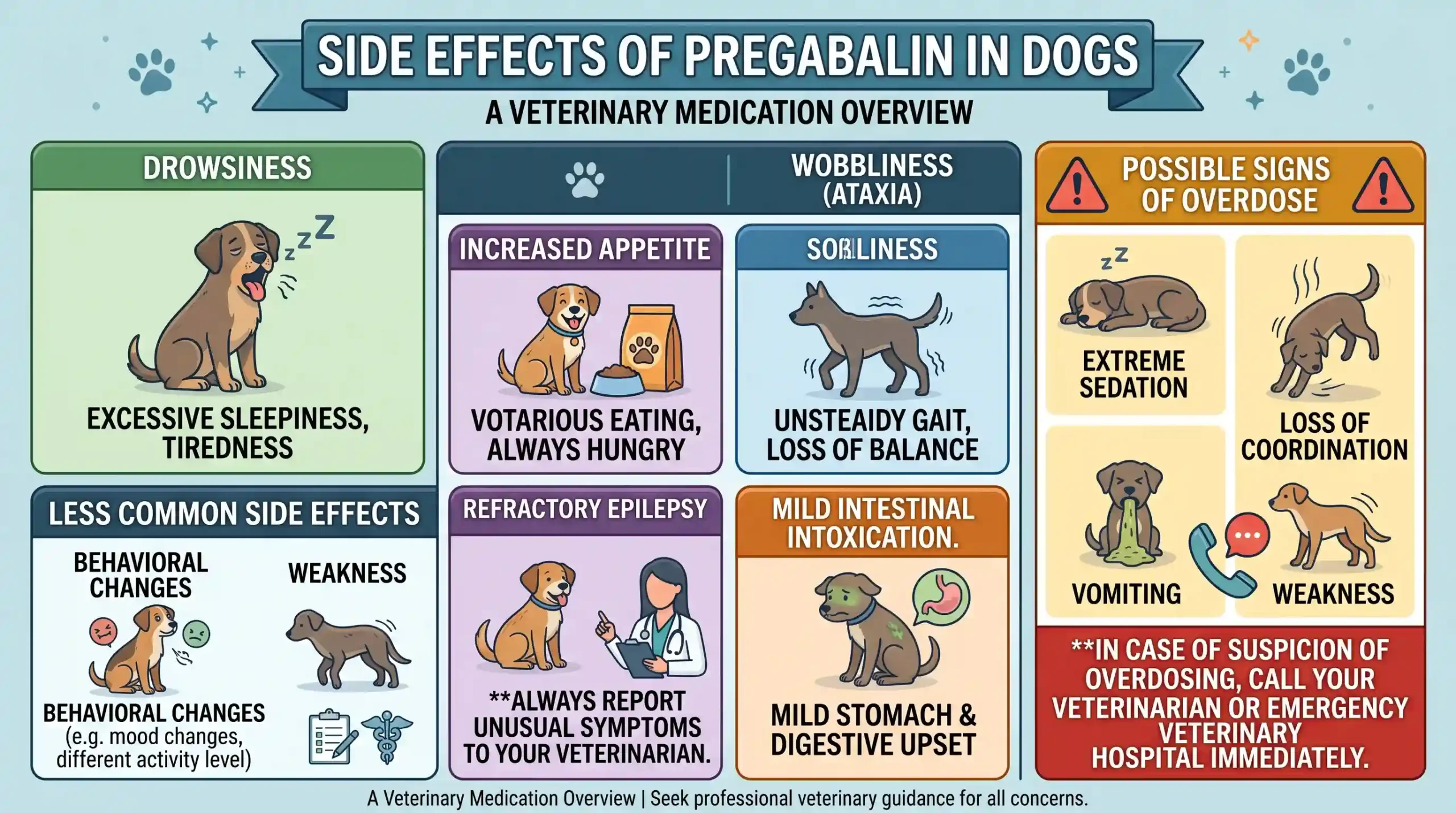
The side effects that are reported are:
- Drowsiness
- Wobbliness (ataxia)
- Increased appetite
- Mild intestinal intoxication.
Less commonly:
- Behavioral changes
- Weakness
Always report unusual symptoms to your veterinarian.
Possible Signs of Overdose
- Extreme sedation
- Loss of coordination
- Vomiting
- Weakness
In case of the suspicion of overdosing, call your veterinarian or emergency veterinary hospital.
Safety Considerations
It is important to take into consideration the following before administering any Pregabalin For Dogs Dosage Calculator:
- Kidney disease can demand an increase or decrease of dose.
- Discussion should be made on liver conditions.
- It should not be discontinued suddenly.
- Should not be used together with other sedatives.
Do not administer any human medicine that you have left over unless prescribed especially to your dog.
Drug Interactions to Watch For
Tell your veterinarian about every medication, supplement, and herbal product your dog is currently taking. Pregabalin's most notable interactions include:
- Other sedating medications: antihistamines, benzodiazepines, opioids, and CBD products can compound drowsiness
- NSAIDs (like carprofen): some evidence in humans suggests NSAIDs may reduce pregabalin's effectiveness, though this hasn't been well studied in dogs
- Other anticonvulsants: combination seizure protocols require careful dose coordination, which is exactly why these are managed by a veterinarian rather than adjusted at home
Pregabalin vs. Gabapentin for Dogs
Both drugs work on the same calcium-channel mechanism and are often compared, since gabapentin is the more commonly used of the two.
| Pregabalin (Lyrica) | Gabapentin | |
|---|---|---|
| Typical dose | 1–4 mg/kg PO q8–12h | 10–20 mg/kg PO q8h (up to 40 mg/kg for pain) |
| Absorption | More predictable, linear pharmacokinetics | Can be less predictable, especially at high doses |
| Potency | Greater receptor affinity — may work at lower doses | Requires higher doses for similar effect |
| Dosing frequency | Often twice daily | Often three times daily |
| Common use | Add-on for pain or seizures; second choice after gabapentin fails | First-choice add-on for pain or seizures |
| Controlled substance status | Schedule V (federal) | Not federally controlled; regulated in some states |
Neither drug is FDA-approved for dogs, and the choice between them comes down to your dog's individual response, cost, and your veterinarian's clinical experience pregabalin is often tried specifically when gabapentin hasn't worked well enough.
How the Pregabalin Calculator Works
A majority of the doses are based on a weight formula. Veterinarians usually use milligrams per kilogram (mg/kg) as a dosage calculation.
The formula (which is commonly used in most of the pregabalin dosage chart calculators for dogs by weight) is as follows:
Dose (mg) = 2 = kg × Prescribed mg/kg.
This equation assists in the calculation of the total number of milligrams per dose.
Example:
Assuming a 3mg/kg prescription by a veterinarian and a dog of 10kg weight:
Dose = 10 × 3 = 30 mg per dose
This multiplication is merely automated in the calculator.
Strengths & Capsule Calculations
The common strengths of Pregabalin are:
Oral Capsules (Immediate-Release)
- 25 mg
- 50 mg
- 75 mg
- 100 mg
- 150 mg
- 200 mg
- 225 mg
- 300 mg
Oral Solution (Liquid)
- 20 mg/mL concentration
Since the doses can really lie in the middle between the strength of the capsule, veterinarians can:
- Change to the nearest safe capsule size
- Order compounded liquid preparations.
- Combine capsule strengths
Never break capsules unless your veterinarian has told you to do so.
FAQs
How much pregabalin can I give my dog?
Only the amount that your veterinarian prescribes. The usual ranges are 2-4 mg/kg although the cases are different.
Can I give my dog human pregabalin capsules?
It is only in case of the prescription by your veterinarian of the specific medication and strength. Self-dosing is unsafe.
Is pregabalin dosage safe for dogs?
One can generally consider it to be safe when taken properly and with control. The side effects are mild, and they need to be monitored.
How do I determine mg per kg for my dog?
You can then use the calculation of your dog’s weight in pounds divided by 2.2 to calculate the amount of kilograms and then multiply by the amount of mg/kg required.
Is it possible to use pregabalin on a long-term basis?
There are those dogs that stay in it over the long term under the supervision of a veterinarian, especially in cases of chronic neuropathic pain, or in case of a seizure disorder.
Final Thoughts
A Pregabalin For Dogs Dosage Calculator by Weight is a resourceful educational resource on the determination of dosing by veterinarians.
Different weights do not just determine accurate dosing though. Professional supervision, medical diagnosis and medical history are necessitated.
When your dog has been diagnosed with the use of pregabalin, then you have to use weight-based calculations to see how the prescription works, but you are expected to obey your veterinarian precisely.