Disclaimer: All information in this guide is provided for educational purposes only and should never replace professional veterinary advice.
Phenylbutazone Dosage Calculator For Dogs
For educational use only. Always use Phenylbutazone under direct veterinary supervision.
Dosage Results
• Give orally with food to help protect the stomach.
• Duration of therapy depends on the condition, clinical response, and any adverse effects.
• Continue treatment exactly as directed by your veterinarian unless instructed otherwise.
© medsdog.com
Phenylbutazone, commonly referred to as “Bute” (trade names include Butazolidin® and Butatron®), is a prescription nonsteroidal anti-inflammatory drug (NSAID) that helps relieve pain, inflammation and fever by blocking the production of prostaglandins and other inflammatory chemicals in the body.


Paid Links - As an Amazon Associate, I earn from qualifying purchases.
It is often used in horses but is not commonly used in dogs as newer veterinary NSAIDs have a broader safety margin. Nevertheless, there are still some instances where an affected veterinarian may decide that Phenylbutazone is the right choice for treatment, especially if you have chronic OA or severe musculoskeletal pain, muscle soreness, soft-tissue injuries, bone and joint disorders or post-operative pain.
Since Phenylbutazone is a narrow margin of safety drug in dogs, correct dosage is important. The recommended dose depends on your dog’s body weight, medical condition, treatment stage, and overall health, and should only be determined by a veterinarian.
To understand Phenylbutazone dosages, this guide will contain a dosage calculator, dosage chart and weight based dosage guidelines, how to administer the medicine, side effects, safety precautions and frequently asked questions.
Phenylbutazone for dogs is an effective pain reliever (usually within 1-2 hours after oral administration), but should always be used under veterinary supervision. Serious side effects such as stomach ulcers, vomiting, bloody diarrhoea, neurological effects, abnormal blood cells and kidneys or liver damage can occur following overdose or accidental ingestion, particularly of products used in horses.
With veterinarian prescribes dosage guidelines and close supervision during treatment, you can help ensure the maximum benefit from Phenylbutazone while reducing the risk of potentially serious side effects.
What is Phenylbutazone Dosage For Dogs?
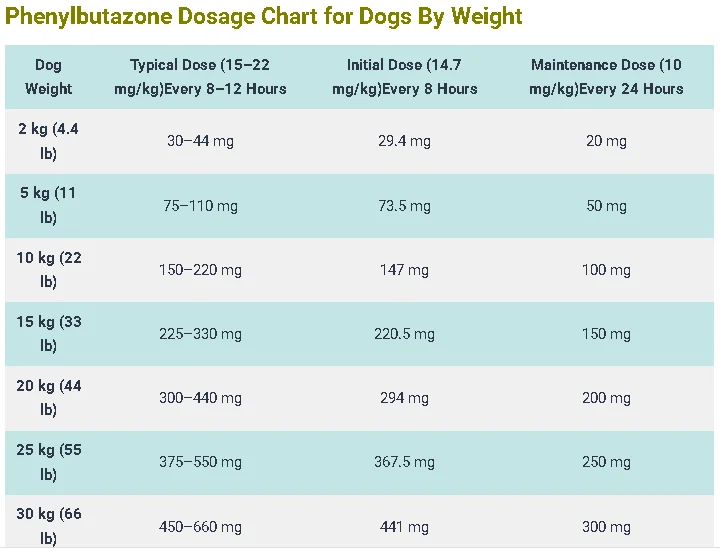
Phenylbutazone dosing for dogs By Weight refers to the veterinarian-directed amount of medication given to manage pain and inflammation. The typical oral dose is 7–10 mg per pound (15–22 mg/kg) every 8–12 hours. Some treatment plans may begin with 14.7 mg/kg every 8 hours or use a loading dose of 15–22 mg/kg for up to 7 days, followed by a maintenance dose of 10 mg/kg once daily, depending on the dog’s condition and response to treatment.
Phenylbutazone Medication should always be given with food and only under veterinary supervision to help minimize the risk of adverse effects.
Phenylbutazone Dosage Chart for Dogs By Weight
| Dog Weight | Typical Dose (15–22 mg/kg)Every 8–12 Hours | Initial Dose (14.7 mg/kg)Every 8 Hours | Maintenance Dose (10 mg/kg)Every 24 Hours |
|---|---|---|---|
| 2 kg (4.4 lb) | 30–44 mg | 29.4 mg | 20 mg |
| 5 kg (11 lb) | 75–110 mg | 73.5 mg | 50 mg |
| 10 kg (22 lb) | 150–220 mg | 147 mg | 100 mg |
| 15 kg (33 lb) | 225–330 mg | 220.5 mg | 150 mg |
| 20 kg (44 lb) | 300–440 mg | 294 mg | 200 mg |
| 25 kg (55 lb) | 375–550 mg | 367.5 mg | 250 mg |
| 30 kg (66 lb) | 450–660 mg | 441 mg | 300 mg |
| 35 kg (77 lb) | 525–770 mg | 514.5 mg | 350 mg |
| 40 kg (88 lb) | 600–880 mg | 588 mg | 400 mg |
| 45 kg (99 lb) | 675–990 mg | 661.5 mg | 450 mg |
| 50 kg (110 lb) | 750–1,100 mg | 735 mg | 500 mg |
| 55 kg (121 lb) | 825–1,210 mg | 808.5 mg | 550 mg |
| 60 kg (132 lb) | 900–1,320 mg | 882 mg | 600 mg |
Important Notes:
- These Dosages values are calculated directly from the provided dosing guidelines and represent the amount per administration unless otherwise stated.
- Typical dose: 15–22 mg/kg (approximately 7–10 mg/lb) given every 8–12 hours.
- Initial dose: 14.7 mg/kg given every 8 hours, then titrate to the lowest effective dose.
- Maintenance dose: 10 mg/kg given once every 24 hours with careful veterinary monitoring.
- Always administer with food to help reduce the risk of stomach irritation.
- Phenylbutazone should only be used under the direction of a veterinarian and is not recommended for cats.
What is Phenylbutazone?
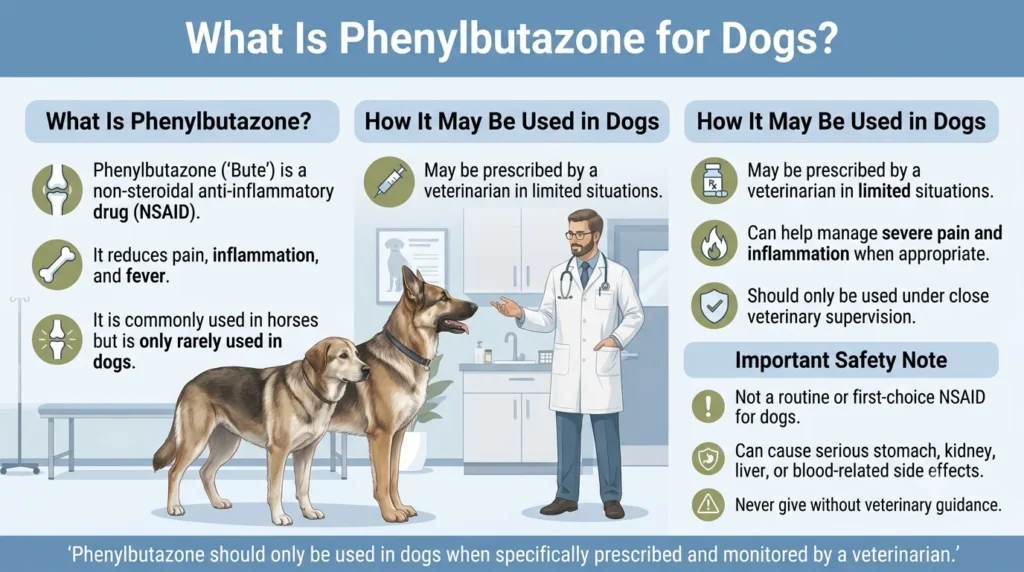
A prescription nonsteroidal anti-inflammatory drug (NSAID) and cyclooxygenase (COX-1 and COX-2) inhibitor is a drug commonly known as “Bute” and sold in veterinary medicine under the brands Butazolidin® and Butatron® as a drug to treat pain, inflammation, and fever. This inhibits the formation of prostaglandins, thromboxane and other inflammatory mediators that primarily help diminish swelling, discomfort and fever related to musculoskeletal conditions. For this reason, Phenylbutazone dose has 3 main therapeutic actions, anti-inflammatory, analgesic (pain relieving) and anti-pyretic (fever reducing).
Phenylbutazone Dosage For Dogs has been a long-term therapy for arthritis and soft tissue injuries, muscle soreness, bone and joint diseases, and other musculoskeletal conditions. It is still commonly used in horses and laminitis and occasionally used in dogs, but newer NSAIDs are generally safer. However, it can still be prescribed by a veterinarian for a dog that has arthritis or chronic musculoskeletal pain, where other treatments are not appropriate.
The drug can be given by mouth or as an injection into a vein, and the effect of the drug on pain relief and reducing fever starts to appear within 1-2 hours of giving the medicine. Phenylbutazone drug is more likely to have side effects than many of the newer veterinary NSAID drugs and should be used with caution in cats, only under the direction of a licensed veterinarian.
Uses of Phenylbutazone for Dogs
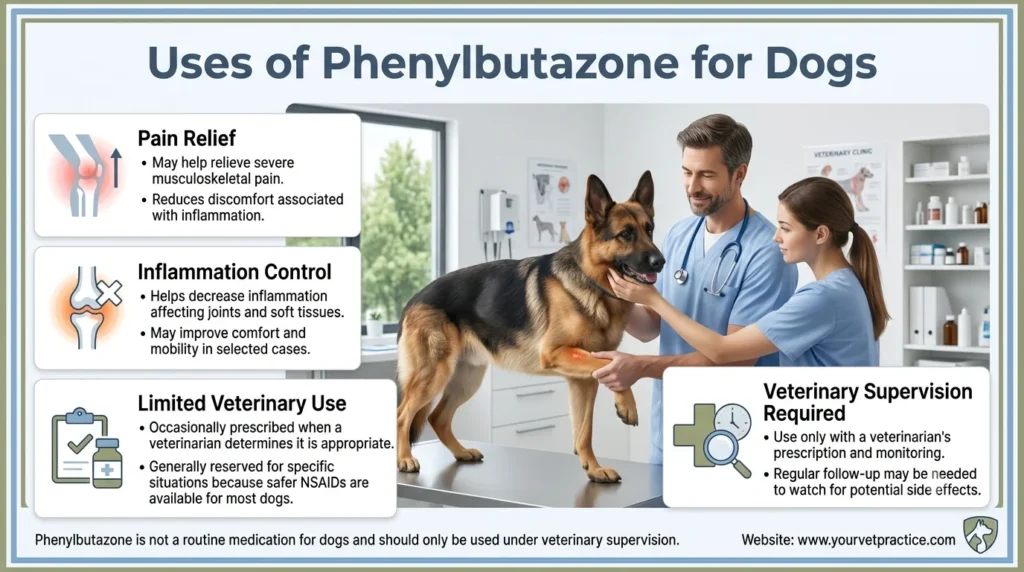
Phenylbutazone dose is an older nonsteroidal anti-inflammatory drug (NSAID) that is occasionally prescribed for dogs to relieve pain and inflammation. Newer NSAIDs tend to have a better safety profile and are generally the first line treatment used; Phenylbutazone is usually reserved for when first-line drugs are not effective, or not appropriate. Always to be used under strict veterinary supervision.
Phenylbutazone is a prescription drug that may be used for:
- Osteoarthritis and chronic joint pain
- Uncontrolled or resistant osteoarthritis that is resistant to other NSAIDs.
- Soft-tissue injuries and musculoskeletal pain are the most common injuries.
- Post-operative pain particularly following complex orthopaedic surgery.
- Other acute inflammatory conditions that may need a short-term dose of pain relief
Due to its narrow safety margin, dogs receiving Phenylbutazone particularly for long-term treatment—should undergo regular blood work and kidney monitoring. Additional medications to help minimize stomach irritation and ulcers may also be recommended, such as gastroprotective drugs like omeprazole, sucralfate, misoprostol, cimetidine or ranitidine, depending on the veterinarian’s recommendation. Do not deviate from your veterinarian’s instructions, such as dosage and duration of treatment.
Precautions and Side Effects of Phenylbutazone for Dogs
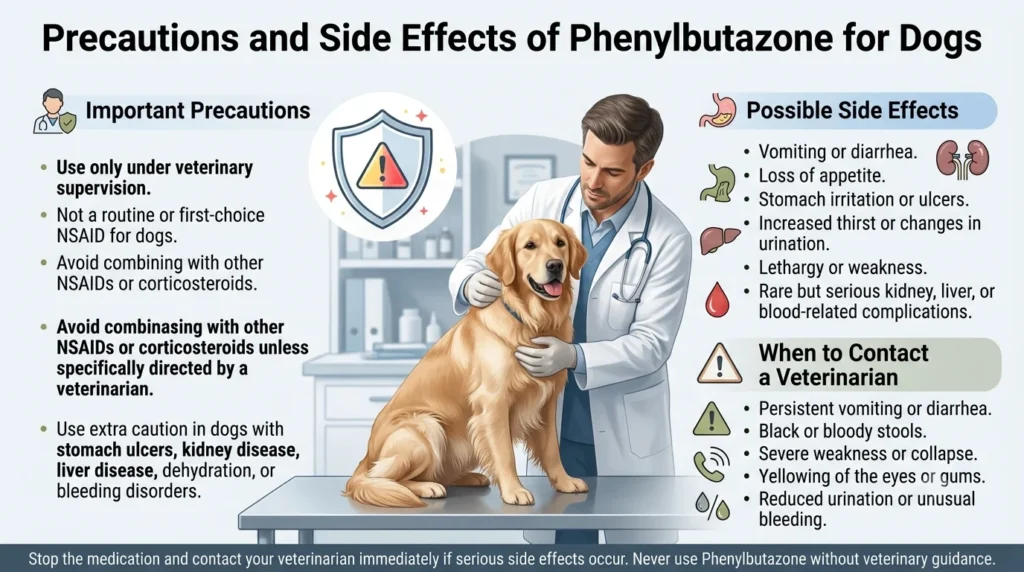
Although Phenylbutazone may be effective in treating pain and inflammation, it does carry a greater risk of side effects than many of the newer veterinary NSAIDs. Due to its small safety window it should only be administered under veterinary supervision and dogs should be closely monitored during treatment.


Paid Links - As an Amazon Associate, I earn from qualifying purchases.
Common Side Effects
The common side effects are:
- Vomiting and diarrhea
- Loss of appetite
- Lethargy or weakness
- Blood in the stool
- Gastritis, stomach irritation, stomach ulcers or gastrointestinal bleeding
- Skin rashes
- Blood flow to the kidneys is decreased.
Rare But Serious Side Effects
While rare, Phenylbutazone can cause serious problems, such as:
- Suppression of bone marrow, which can cause anemia, decreased white blood cell counts or other blood disorders
- Liver or kidney injury (particularly if dehydrated or used for a long period of time)
- Colour changes in skin or eyes (jaundice)
- Vomit that contains blood (very serious and must be treated by a vet right away)
Signs of Overdose
Overdose of Phenylbutazone may be a veterinary emergency and can result in:
- Seizures
- Shaking or wobbling (ataxia)
- Rapid breathing or panting
- Over heating the body (hyperthermia)
- Organ failure
Precautions
These are important precautions to remember before using Phenylbutazone medication:
- Avoid in dogs that have liver disease, kidney disease, gastrointestinal conditions that might be exacerbated by the drug, a history of seizures or known allergy to Phenylbutazone.
- Exercise heightened precautions when administering to pregnant or lactating animals; drug crosses the placenta and is excreted in milk.
- Never use Phenylbutazone drugs with other NSAIDs (Non-Steroidal Anti-Inflammatory Drugs) such as aspirin, carprofen, etodolac or steroids as these will significantly add to the risk of serious stomach and intestinal ulcers.
- Other drugs, such as barbiturates, antihistamines, vitamins, supplements, herbal products, and other medications may also react to phenylbutazone, so be sure to let your veterinarian know about anything your dog is taking.
- If your dog gets sick (vomits, has diarrhea, won’t eat, is depressed, has mouth ulcers, weakness, blood in vomit or stools, or other abnormal symptoms), stop treatment immediately and contact your veterinarian.
- Dogs on long-term therapy should also have regular blood tests and measurement of kidney values, and gastroprotective drugs (omeprazole, cimetidine or sucralfate) should be prescribed to minimise stomach ulcer risk.
Safer alternatives to NSAIDs are now available for most dogs, and Phenylbutazone is used for carefully selected cases where the benefits are likely to outweigh the risks.
Drug Interactions of Phenylbutazone for Dogs
Phenylbutazone Dosage may interact with other drugs, which can lead to stomach ulcers, bleeding, kidney damage, liver damage and/or the effectiveness of the drugs can change. Always inform your veterinarian of any prescription or nonprescription drugs, vitamins, supplements, or herbal products that your dog is taking before beginning treatment.
Do not use in combination with:
- Other NSAIDs (e.g. aspirin, carprofen or other nonsteroidal anti-inflammatory drugs)
- The combination is very likely to lead to serious gastrointestinal ulcers and bleeding, especially with the use of corticosteriods.
- Anticoagulants, especially of the coumarin type (warfarin), because of a greater risk for bleeding
- Medications that can be hepatotoxic (damage the liver)
Use With Caution
Phenylbutazone can sometimes make other drugs more effective or cause more side effects, such as:
- Diuretics
- ACE inhibitors
- Aminoglycoside antibiotics
- Phenytoin
- Valproic acid
- Sulfonamides
- Sulfonylurea antidiabetic medications
- Barbiturates
- Promethazine
- Rifampin
- Chlorpheniramine
- Diphenhydramine
- Penicillin G
While your dog is taking Phenylbutazone, never change dosage, or add or remove medications without consulting your veterinarian.
Missed Dose & Overdose Management for Phenylbutazone in Dogs
Administer the dose as soon as possible if the dog misses his/her dose (except if it is near the time of the next dose) If it’s almost time for the next dose, skip the missed dose and resume the next dose as scheduled. Do not use the same dose twice or give a double dose at the next scheduled dose time as this may increase the risk of serious side effects.
Signs of a Phenylbutazone Overdose
An overdose of Phenylbutazone is a veterinary emergency and requires immediate medical attention. Symptoms of toxicity that may occur early are:
- Loss of appetite
- Lethargy or depression
- Vomiting
- Tremors
- Severe gastrointestinal upset
- Seizures
An overdose can cause:
- Gastric ulcers or stomach perforation
- Bone marrow suppression
- Kidney failure
- Damage to the liver or failure of the liver function
If you think your dog has been given too much Phenylbutazone dose, or if you think he or she is having an overdose, call your veterinarian or an emergency veterinary clinic right away. The chances of a successful recovery are improved with early treatment.
You May Also Like to Read:
- Cyclavance Dosage For Dogs: Calculator & Safe Guide
- Palladia Dosage For Dogs: Calculator and Safe Guide
FAQs
How long does Phenylbutazone take to work in dogs?
The onset of action of Phenylbutazone dosage is between 1–3 hours after the initial dose, and the onset of clinical response is usually about 2–10 hours after the first dose, depending on the condition of the dog.
How should I monitor my dog while giving him Phenylbutazone?
Complete blood count (CBC), kidney function and liver function tests should be performed at baseline and periodically in dogs treated with Phenylbutazone, particularly if it is used long-term. Your veterinarian will decide on the frequency of these tests.
What can I do at home to monitor the treatment?
Watch for changes in your dog’s appetite, stool, water and urine production, energy level and behavior. Notify your veterinarian immediately if of any unusual changes.
Are stomach protecting drugs compatible with Phenylbutazone?
Yes. To prevent gastrointestinal irritation or ulcers during treatment, veterinarians may prescribe omeprazole, cimetidine or sucralfate to protect the stomach.
How should Phenylbutazone tablets be stored?
Store tablets where they will not get direct sunlight, store in a dry place and follow the label directions on the prescription.
What is the proper storage of injectable Phenylbutazone?
Phenylbutazone injectable should be refrigerated and disposed of as directed by your veterinarian.
What is Phenylbutazone’s mechanism of action?
Phenylbutazone’s mechanism of action involves the inhibition of the synthesis of prostaglandins that contribute to inflammation, thus helping to diminish pain, inflammation and fever in musculoskeletal conditions.
If my dog gets better during treatment, will he or she be discharged?
Your vet might also want to try decreasing the dose instead of stopping the meds altogether if your dog’s pain improves. Do not change the dose without veterinary advice.
Key Takeaways
- Phenylbutazone is an occasionally used prescription NSAID medication for pain and inflammation in dogs, especially in severe musculoskeletal disease and osteoarthritis.
- The dosage is 15-22 mg/kg (7-10 mg/lb) every 8-12 hours, and some dogs may switch to a maintenance dose of 10 mg/kg once a day under veterinary supervision.
- Phenylbutazone Dosage For Dogs has a small margin of safety and should only be used when directed by a veterinarian and when other more safe NSAIDs are not suitable.
- Phenylbutazone drug must always be administered with feed to lessen the incidence of stomach irritation and gastrointestinal ulcers.
- If used for long-term treatment, blood tests should be done regularly to check kidney and liver function and close monitoring is needed for changes in appetite, stools, thirst, urination, and energy level.
- The most common symptoms are lethargy, loss of appetite, vomiting and diarrhea, and more serious responses will need veterinary care.
- Do not use Phenylbutazone medication with other NSAIDs or steroids unless supervised by your veterinarian as this significantly raises the risk of complications.
- Do not double up on a dose if it is missed; and if an overdose is suspected, or your dog shows signs of toxicity, contact a veterinarian immediately.
Final Thoughts
Phenylbutazone medication can be an effective option for managing pain and inflammation in your dogs when used in carefully selected cases under veterinary supervision. Because it has a higher risk of side effects than many newer NSAIDs, accurate dosing, regular monitoring, and prompt attention to any unusual symptoms are essential for safe treatment.
Never dose Phenylbutazone on your own or mix it with other drugs, always give with food, follow up visits as advised by your veterinarian, and always follow his or her dosing instructions. With proper usage and careful supervision, Phenylbutazone can be a valuable tool in enhancing your dog’s comfort and mobility while reducing the risk of serious complications.