Lidocaine 2% Dosage Calculator for Dogs
Enter your dog’s weight to calculate the recommended volume of 2% lidocaine.
Recommended dose
The recommended lidocaine 2% dosage for dogs is 1 mL per 10 pounds of body weight. This calculator is a guide only and is not a substitute for veterinary advice. Lidocaine should only be given under the direction of a veterinarian. Never use lidocaine products that contain epinephrine unless your vet instructs you to, and contact your vet or an emergency clinic right away if your dog shows vomiting, tremors, weakness or a change in breathing or heart rate.
Lidocaine for dogs always needs to be calculated carefully, as it is a relatively narrow safety margin, and varies according to the reason the medication is being given. Veterinarians may use lidocaine as a prescription, local anesthetic to numb specific areas prior to minor surgery, wound treatment, laceration removal, skin biopsy and other possibly painful procedures.


Paid Links - As an Amazon Associate, I earn from qualifying purchases.
When used properly, it can help to relieve pain quickly and help the patient feel better, and reduce discomfort during treatment.
There are multiple lidocaine formulations that can be used as indicated by the veterinarian. The most commonly used is lidocaine hydrochloride solution 2% (20 mg/mL), which is used to provide local anesthesia.
A second is lidocaine-prilocaine cream (2.5% lidocaine, 2.5% prilocaine) that can be used extra-label as a topical analgesic prior to some dermal and epidermal procedures. They come in various strengths, with varying indications and methods of administration, and should therefore not be used interchangeably without veterinary advice.
When Lidocaine Dosage overdosed or used improperly, can lead to serious toxicity, and should never be administered by pet owners without veterinary approval, including in combination products, creams, gels, sprays or patches. These products can be licky by dogs, and the dog ends up eating them and can be very poisonous.
This guide outlines the safe dosage of lidocaine for dogs when used as a local anesthetic, providing dosage calculations, a dosage chart, administering tips, safety precautions, potential side effects, signs of toxicity, and important precautions to ensure this drug is administered safely and effectively.
What is Lidocaine Dosage For Dogs?
Knowing the correct dosage of lidocaine is very important to ensure a safe local anesthesia and pain management in dogs. The standard safe dosage range for local infiltration in dogs is 2–4 mg/kg (0.1–0.2 mL/kg of a standard 2% veterinary lidocaine solution).
The absolute maximum dose is 5 mg/kg, which can lead to serious systemic toxicity and muscle tremors, seizures and cardiac arrest if exceeded, so it is very important to calculate dose amounts as per your dog’s exact weight. Please ask your vet before giving and don’t give human lidocaine topicals – they’re harmful if ingested by pets.
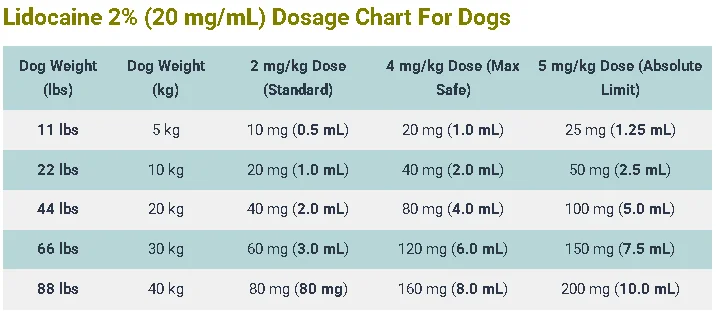
Lidocaine 2% (20 mg/mL) Dosage Chart For Dogs
The recommended Lidocaine 2% dosage for dogs is 1 mL per 10 pounds of body weight.
Lidocaine 2% (20 mg/mL) Dosage Chart For Dogs
Here is the quick reference dosage table for a standard 2% Veterinary Lidocaine Solution (20 mg/mL) based on your specific guidelines.
This table covers the recommended safe range (2 mg/kg to 4 mg/kg) as well as the absolute maximum safe limit (5 mg/kg).
| Dog Weight (lbs) | Dog Weight (kg) | 2 mg/kg Dose (Standard) | 4 mg/kg Dose (Max Safe) | 5 mg/kg Dose (Absolute Limit) |
| 11 lbs | 5 kg | 10 mg (0.5 mL) | 20 mg (1.0 mL) | 25 mg (1.25 mL) |
| 22 lbs | 10 kg | 20 mg (1.0 mL) | 40 mg (2.0 mL) | 50 mg (2.5 mL) |
| 44 lbs | 20 kg | 40 mg (2.0 mL) | 80 mg (4.0 mL) | 100 mg (5.0 mL) |
| 66 lbs | 30 kg | 60 mg (3.0 mL) | 120 mg (6.0 mL) | 150 mg (7.5 mL) |
| 88 lbs | 40 kg | 80 mg (80 mg) | 160 mg (8.0 mL) | 200 mg (10.0 mL) |
Critical Reminders
- Volume Basis: All fluid volume measurements (mL) above are calculated strictly using a 2% lidocaine concentration (20 mg/mL).
- Application: These doses are strictly for local infiltration/numbing.
- Safety: Never exceed the absolute maximum limit of 5 mg/kg.
What Is Lidocaine for Dogs?
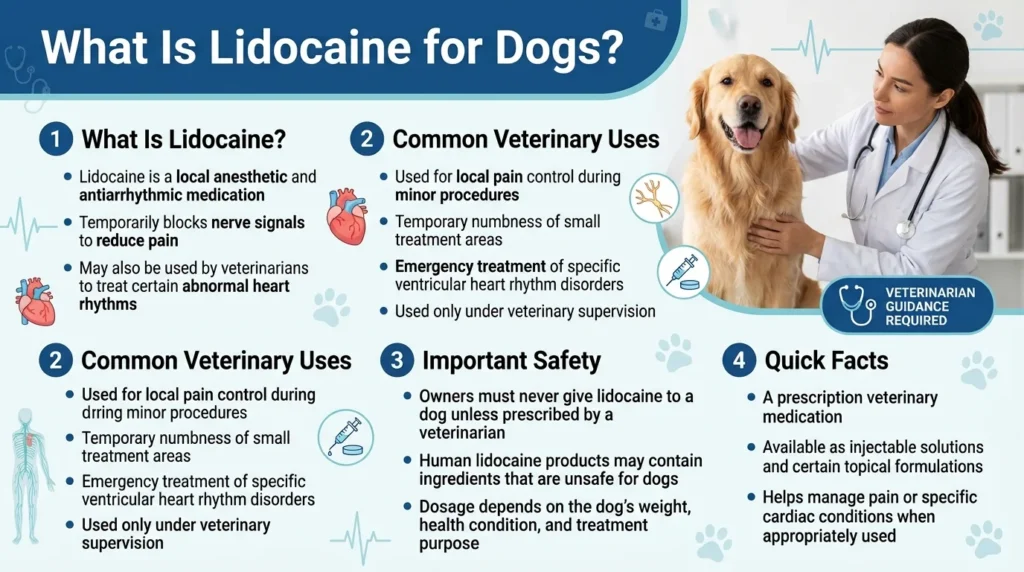
Lidocaine is a local anesthetic medication for dogs that has the ability to block nerve signal transmission and temporarily numb tissue and relieve pain in dogs, cats, and other animals. It is generally found as an injection or a topical spray; combination products may also include other local anesthetics, antibiotics or antimicrobials, corticosteroids, antihistamines or cleaning agents depending on how it is used. Some Lidocaine products are used “extra-label” (off-label) in veterinary medicine. If off-label use, it is important to always follow the veterinarian’s directions (product use and dose may vary from product label).
A popular one is 2% Lidocaine HCl Oral Topical Solution, which is intended to offer quick, brief pain relief for oral pain, dental irritation and small injuries. It can be used on dogs of all ages, breeds, and sizes, is easy to use, and is designed to provide comfort and support to your pet. Lidocaine medication can be prescribed alone or in combination with other drugs to treat a variety of painful skin or mouth conditions, depending on the product.
Lidocaine dosage for dogs is not only used as a local anesthetic, but it is also used specifically in veterinary medicine. It can be used by the veterinarian as a part of euthanasia procedures in strictly controlled clinical situations when the animal is completely anaesthetized. Large amounts of lidocaine shut down the voltage gated sodium channels and prevent the action potential from moving down the nerve and into the normal nervous system until the body stops functioning. While a study in 2025 showed that lidocaine can satisfy many of the AVMA Guidelines for the Euthanasia of Animals, it should only be used by a veterinarian, and not by pet owners.
Lidocaine Administration for Dogs
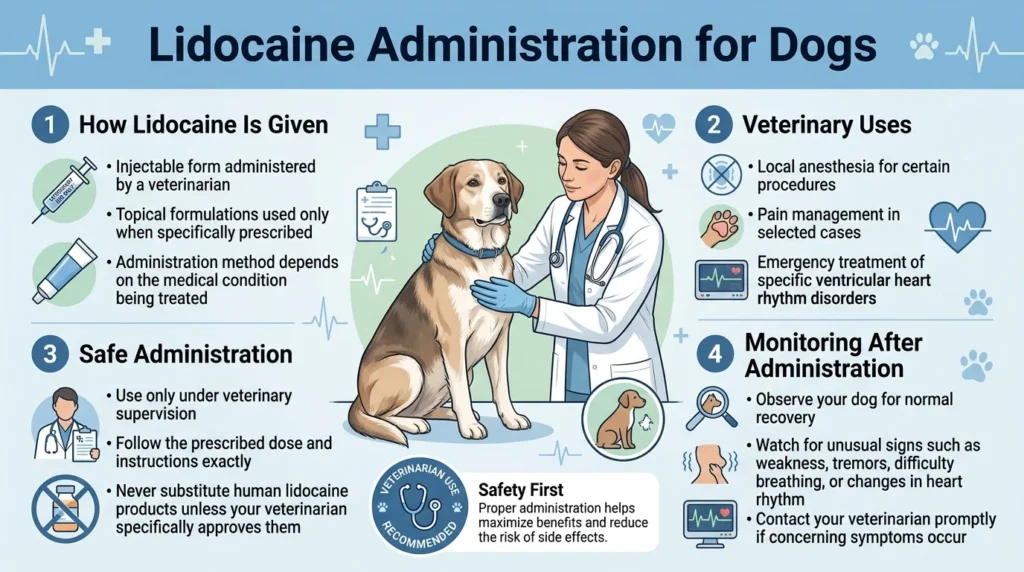
Always use lidocaine dosage as directed by your veterinarian – the correct formulation and route of administration will vary depending on your dog’s condition. These topical lidocaine products come in the form of creams, gels, ointments, liquid solutions and sprays, and some are compounded with the combination of other medications for individual needs. If your veterinarian suggests using a topical treatment, clean the affected area gently prior to applying this treatment. Use directly on the skin, wear gloves when using the medication, wash hands, and do not get into contact with your dog’s eyes.


Paid Links - As an Amazon Associate, I earn from qualifying purchases.
Shake the bottle well before using to ensure an even lidocaine solution if lidocaine solution 2% HCl (oral topical solution) is being used. Use the applicator or dropper provided with the product to carefully measure the correct dosage before putting it into your pet’s mouth for quick absorption. Sometimes, it may be necessary to mix the dose prescribed by the veterinarian with the pet’s food if the pet is refusing to take the medication orally.
Topical lidocaine should be applied and then your dog should be prevented from licking or grooming the treated area for at least 30 minutes as ingestion may increase the risk of toxicity and reduce the effectiveness of the medication. Do not stop giving the medication until it has been used for the prescribed period of time even if the dog seems to feel better. Lidocaine dog dosage is effective very rapidly, usually within one hour, although results are not always apparent upon visual inspection.
Are There Any Side Effects Of Lidocaine For Dogs?
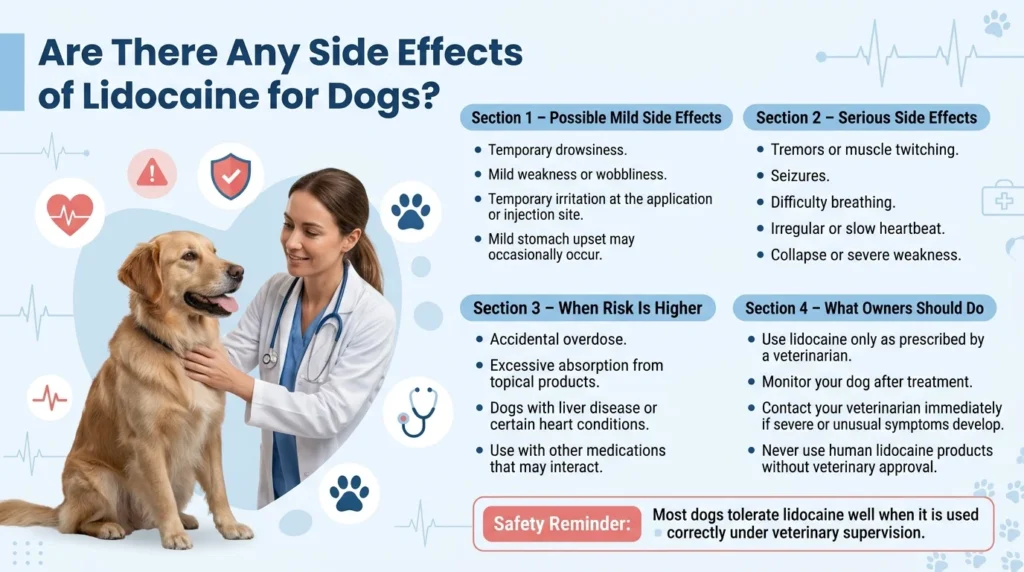
When used according to a veterinarian’s instructions, Lidocaine is a relatively safe drug, although some dogs may have side effects. The majority of reactions are mild and short-lived, and serious reactions are rare but must be treated by a vet immediately. If your dog is taking a lidocaine combination product, there may be other side effects depending on what other ingredients were combined with the lidocaine.
Side effects may include:
- Low-level irritation at the application site including, but not limited to, temporary redness or discomfort.
- Side effects from other ingredients in combination products (e.g. antibiotics, antimicrobials, corticosteroids or antihistamines).
Some very rare side effects which need veterinary attention are:
- Irregular breathing.
- Skin rash.
- Fever.
- Swelling or puffiness around the face/muzzle.
- Other allergic reaction symptoms.
Drug sensitivities may be acquired over time, and therefore, a dog might not be affected by lidocaine the first time, but might be sensitized to it the next time they are exposed to it. Do not stop watching your pet after the first couple of treatments.
Lidocaine is a short acting drug and typically only lasts a few hours. But the drug can be effective longer in dogs with kidney or liver disease, as well as in some combination products. If you notice any unusual symptoms or unexpected reactions, contact your veterinarian as soon as possible.
Lidocaine for dogs should be stored in the following manner:
To preserve the safety and efficacy of lidocaine, it is crucial to store it properly. Medications must be in their original container and kept at room temperature out of direct sunlight and out of extreme temperatures and humidity. To help keep the medication fresh, keep container or bottle tightly closed when not in use.
However, if a compounded lidocaine drug formulation has been prepared by your veterinarian or pharmacist, use the compounded product in accordance with the manufacturer’s instructions and expiration date which may differ from those of the standard product.
Storage tips:
- Keep in original container.
- Store at room temperature in cool, dry area.
- Keep out of direct light and out of the sun.
- When not being used, keep the cap or bottle tightly shut.
- Adhere to storage instructions and expiration date of compounded products.
- Store lidocaine products where children and pets cannot reach them.
You May Also Like to Read:
- Thiamine Dosage For Dogs: Calculator, Chart & Safe Guide
- DL-Methionine Dosage For Dogs: Calculator & Safe Guide
FAQs
Do your dog require monitoring during the use of lidocaine drugs?
Yes. Your veterinarian may suggest a follow-up examination after treatment to ensure your dog is better or to take more tests if necessary. Check your dog at home for any unusual symptoms or reactions. Discontinue any use of the product if any abnormalities are observed and consult the veterinarian.
If I forget to take lidocaine dosage, what should I do?
Take missed dose when it is remembered. If it is near the next scheduled dose time, then it is best to skip the missed dose and move on to the next dose. Do not double up dosages to compensate for a missed dosage.
If my dog has ingested too much lidocaine what should I do?
If you suspect an overdose, or if your dog has an adverse reaction, contact your veterinarian right away. If your regular vet isn’t available, go by the directions they give you for the nearest emergency veterinary hospital.
What is the onset of action of lidocaine in dogs?
Depending on the condition being treated, you might not see any improvement in your condition right away once you take lidocaine, but it usually starts to work within about one hour.
Is it safe for my dog to lick after lidocaine treatment?
Dogs should not be permitted to lick or groom the treated area for at least 30 minutes after application, since licking or grooming the treated area may decrease the effectiveness of the medication and increase the risk for toxicity.
May I give my dog human medicines containing lidocaine?
Never use an over-the-counter human lidocaine cream, gel, spray, patch or combination product unless your veterinarian has specifically recommended it.Never use any OTC human lidocaine cream, gel, spray, patch or combination product unless instructed to do so by your veterinarian, they may not be safe for dogs.
Are there medications that can interact with lidocaine dosage?
Yes. Certain medicines, such as other topical anesthetic medicines and oral antiarrhythmic medicines, may interact with lidocaine. Be sure to inform your veterinarian of any medications, vitamins, supplements, and/or herbal products that your dog is already taking before beginning treatment with lidocaine.
What’s the best way to store lidocaine for my dog?
Keep lidocaine in the original container at room temperature in a cool, dry area out of direct sunlight. Store out of the reach of children and pets, and keep tightly closed. Use any special storage instructions provided for compounded formulations.
Key Takeaways
- Lidocaine dosage for dogs is a prescription local anesthetic that temporarily numbs tissues in order to help decrease pain in some veterinary procedures.
- The standard dose of local anesthesia for dogs is 2 – 4 mg/kg, and the maximum dose is 5 mg/kg per dog (unless otherwise directed by your veterinarian).
- Local anesthetic injections are usually done with a 2% lidocaine solution (20 mg/mL) and the amount should always be determined by your dog’s weight.
- Avoid giving your dog over-the-counter human lidocaine products — even in small amounts — without your vet’s consent, because they can be toxic to dogs.
- After your dog has been treated with the topical medication, you must supervise him or her so that he does not lick the treatment area for at least 30 minutes.
- The most common side effect of mild application-site irritation, and allergic reactions or overdose are treated immediately by a vet.
- Notify your veterinarian about any medications, supplements or herbal remedies your dog is taking before beginning lidocaine treatment to prevent possible interactions.
- Keep lidocaine drug in its original container, away from light and direct sunlight and out of reach of children and pets, at room temperature, and always tightly closed.
Final Thoughts
When administered by a veterinarian and in the proper dosage, lidocaine for dogs is a safe and effective drug for dogs. Understanding weight-based dosing and how to apply it is important either for local anaesthetic or topical pain relief, to ensure the risk of side effect and toxicity is minimised. Do not use human lidocaine products for veterinary use and never use more than the recommended dose without professional advice.
Please contact your veterinarian immediately if you have any questions about the dosage of lidocaine for dogs, or if you notice any unusual symptoms while your dog is receiving the treatment, so that your dog can get the safest and best treatment possible.