Disclaimer: All information in this guide is provided for educational purposes only and should never replace professional veterinary advice.
Rovera Dosage Calculator For Dogs
Calculate the estimated daily Rovera (Carprofen) dose based on your dog’s body weight.
Estimated Rovera Dosage
• Standard Rovera (Carprofen) dosage is approximately 2 mg per lb (or 4.4 mg/kg) once daily.
• If prescribed twice daily, the total daily dose is divided into two equal doses.
• Give Rovera with food whenever possible to reduce stomach irritation.
• Always use your dog’s current, accurate body weight.
• Tablet splitting should only be done if approved by your veterinarian. When rounding a dose, veterinarians often recommend rounding down rather than exceeding the calculated dose.
• This calculator provides an educational estimate only and should never replace veterinary advice.
© medsdog.com
Rovera® (carprofen) for dogs is prescribed to help relieve pain and inflammation in dogs. It is commonly used for the management of the discomfort caused by osteoarthritis, for reducing swelling in painful joints and for controlling postoperative pain following soft tissue and orthopedic surgery (such as spays, neuters, etc.).


Paid Links - As an Amazon Associate, I earn from qualifying purchases.
Rovera helps to decrease the amount of inflammatory substances in the body, ensuring comfort, mobility and overall quality of life for many dogs, enabling them to return to their normal daily activities.
Carprofen is a NSAID – a drug class that includes ibuprofen, naproxen, and ketoprofen – but Rovera is a NSAID approved for use in dogs and should never be substituted for human medication unless prescribed by the veterinarian. Rovera is a veterinary brand that contains carprofen and comes in flavored chewable tablet form, which is great for most dogs.
It is important to use the proper Rovera dosage for dogs to ensure that dogs get the most pain relief possible with the least side effects. Dosage is based on your dog's body weight at the time of treatment, the condition to be treated, and your veterinarian's instructions.
To make this medication safe and effective, here you'll find an easy-to-use Rovera dosage calculator, dosage charts, tablet strength recommendations, administration tips, possible side effects, safety precautions, and answers to frequently asked questions.
Key Takeaways
- Rovera® (carprofen) is a prescription NSAID medication that relieves pain and inflammation in dogs associated with soft tissue and orthopedic surgery or osteoarthritis.
- The usual dose is 2 mg per lb (4.4 mg/kg) of body weight, given once a day or in two equal doses, as directed by your veterinarian.
- Always work out the dose based on your dog's actual body weight (when you are giving it) and the strength of the tablets.
- Rovera dosage for dogs comes in flavored chewable tablets so it's easier for most dogs to take.
- Feeding Rovera with food can help minimise risk of stomach upset.
- Never give Rovera with other NSAIDs or corticosteroids unless specifically instructed by your veterinarian.
- Be vigilant for any adverse reactions like vomiting, diarrhea, loss of appetite, lethargy, or urine or drinking habits and reach out to your veterinarian if any of these occurs.
- The Rovera dosage calculator and dosage chart are provided for educational purposes only; always refer to your veterinarian for instructions on how to dose your dog for any particular condition.
How Much Rovera Can Dogs Take?
The standard Rovera® (carprofen) dosage for pain and inflammation in dogs is 2 mg/lb (4.4 mg/kg) once daily. Your veterinarian may adjust the dosage based on your dog’s condition and response to treatment. Always follow your veterinarian’s instructions.
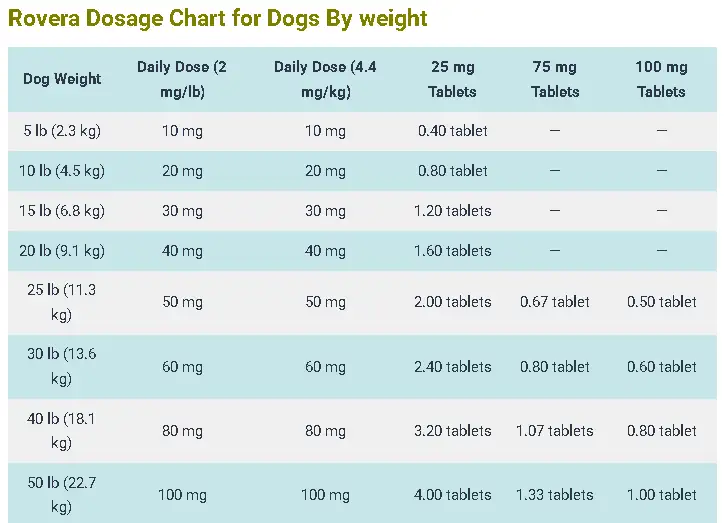
Rovera Dosage Chart for Dogs By weight
| Dog Weight | Daily Dose (2 mg/lb) | Daily Dose (4.4 mg/kg) | 25 mg Tablets | 75 mg Tablets | 100 mg Tablets |
|---|---|---|---|---|---|
| 5 lb (2.3 kg) | 10 mg | 10 mg | 0.40 tablet | — | — |
| 10 lb (4.5 kg) | 20 mg | 20 mg | 0.80 tablet | — | — |
| 15 lb (6.8 kg) | 30 mg | 30 mg | 1.20 tablets | — | — |
| 20 lb (9.1 kg) | 40 mg | 40 mg | 1.60 tablets | — | — |
| 25 lb (11.3 kg) | 50 mg | 50 mg | 2.00 tablets | 0.67 tablet | 0.50 tablet |
| 30 lb (13.6 kg) | 60 mg | 60 mg | 2.40 tablets | 0.80 tablet | 0.60 tablet |
| 40 lb (18.1 kg) | 80 mg | 80 mg | 3.20 tablets | 1.07 tablets | 0.80 tablet |
| 50 lb (22.7 kg) | 100 mg | 100 mg | 4.00 tablets | 1.33 tablets | 1.00 tablet |
| 60 lb (27.2 kg) | 120 mg | 120 mg | 4.80 tablets | 1.60 tablets | 1.20 tablets |
| 70 lb (31.8 kg) | 140 mg | 140 mg | 5.60 tablets | 1.87 tablets | 1.40 tablets |
| 80 lb (36.3 kg) | 160 mg | 160 mg | 6.40 tablets | 2.13 tablets | 1.60 tablets |
| 90 lb (40.8 kg) | 180 mg | 180 mg | 7.20 tablets | 2.40 tablets | 1.80 tablets |
| 100 lb (45.4 kg) | 200 mg | 200 mg | 8.00 tablets | 2.67 tablets | 2.00 tablets |
Note:
This chart is based on the standard recommended dosage of 2 mg per pound (4.4 mg/kg) of body weight per day. Your veterinarian may recommend giving the total daily dose once daily or dividing it into two equal doses depending on your dog's condition. Always follow your veterinarian's prescribed dose and use the tablet strength they recommend. When tablet splitting is necessary, consult your veterinarian, as rounding down may be preferred to avoid overdosing.
What Is Rovera for Dogs?
Rovera® medication for dogs contains an active ingredient called carprofen and is a prescription non-steroidal anti-inflammatory drug (NSAID). It is approved by the FDA for use in dogs as a pain reliever, anti-inflammatory and antipyretic. Rovera is frequently used by veterinarians to treat OA, provide musculoskeletal pain relief and postoperative pain/inflammation after soft tissue and orthopedic surgery.
Rovera inhibits the enzyme cyclooxygenase (COX) which slows down the production of prostaglandins, the chemicals that cause pain and inflammation. This reduces swelling, helps relieve pain, which can start to happen within 1-3 hours of taking an oral dose, and enhances comfort and mobility.
Rovera is chewable, flavored with different tastes, is easily palatable to the majority of dogs, and may be utilized for brief term use following surgery to aid in recovery or for extended term use in the treatment of osteoarthritis. A Rovera can help a dog that may be experiencing joint pain, which may manifest as limping, stiff gait, trouble standing or jumping, unwillingness to play or exercise or changes in mood or behaviour.
Carprofen dosage for dogs is safer than human NSAIDs like ibuprofen and naproxen when used and supervised by a veterinarian, and it is usually less likely to cause side effects than are the corticosteroids.
But, as with any NSAIDs, Rovera can occasionally cause severe stomach, liver, or kidney problems. Monitoring by a vet is advised during treatment, and owners should stop the treatment and inform their veterinary professional if any adverse reactions occur.
Potential Side Effects of Rovera (Carprofen) in Dogs
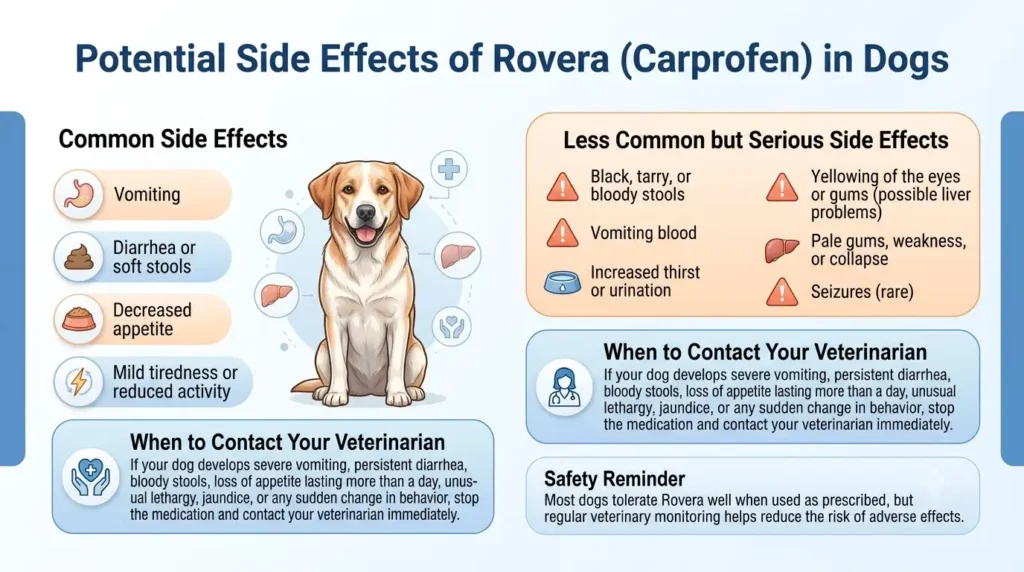
Rovera® (carprofen) is well tolerated by most dogs when used as directed. But, as with any non-steroidal anti-inflammatory drug (NSAID) it also has some side effects that can be mild or serious, but rare. Be sure to supervise your dog during treatment and inform your veterinarian if your pet exhibits any unusual signs or symptoms, to prevent worse health complications.
Common Side Effects
Side effects are typically mild and most commonly reported are digestive issues, which should not be discounted. Side effects can include:
- Vomiting
- Diarrhea or constipation
- Decreased appetite
- Lethargy or weakness
- More thirsty or urinating more
Serious Side Effects
Rovera is rare but may affect the stomach, liver, kidneys, nervous system or blood clotting. If your dog gets, call your vet right away:


Paid Links - As an Amazon Associate, I earn from qualifying purchases.
- Stools that are black, tarry or bloody
- If vomiting or diarrhea is severe or lasts for a long time
- Yellow gums, skin, or eyes (jaundice)
- Pale gums
- Lack of coordination, weakness, paralysis or seizures.
- Changes in behavior like restlessness, aggression or disorientation
- Reactions to the skin such as itching, redness, scabs, hives or facial swelling
- Any problems with urination or hydration
Serious adverse reactions can happen even though no warning signs have appeared and, in rare cases, can be life-threatening.
Dogs at Higher Risk
Rovera should be used with extra caution in dogs that:
- Suffer from liver disease, kidney disease, heart disease or gastrointestinal disease
- Have bleeding disorders or low platelet counts
- Are dehydrated
- Are younger than 6 weeks of age.
- Are senior, pregnant or nursing
- Have an allergy to carprofen or other NSAID
- Using other NSAIDs or Corticosteroids
Monitoring and Safety
Dogs treated with Rovera long-term should have periodic blood tests to check liver enzymes, kidney function, blood cell counts, etc. Rovera chewable tablets should always be stored out of sight and reach of children because as a flavoured tablet they may be of interest to them and result in accidental overdose which is likely to lead to severe damage to the stomach, liver and kidneys.
Dogs should not take Rovera if they experience any unusual symptoms, stop Rovera immediately and contact your veterinarian. Many medication-related side effects go away once the veterinary supervisees the end of the medication, and prompt treatment can help improve the outcome.
Does Rovera (Carprofen) Interact With Other Medicines?
Yes. Rovera® (carprofen) may interact with other medicines, dietary supplements, and/or herbal products, which may increase the risk of side effects or decrease the effectiveness of Rovera® (carprofen).
When you first bring Rovera to your veterinarian, be sure to let your vet know of any and all medications, over-the-counter (OTC) drugs, vitamins, minerals, herbal remedies, and supplements that your dog takes.
Medications that are contraindicated with Rovera:
Avoid giving Rovera together with:
- Other NSAIDs (e.g., aspirin, meloxicam) as this will significantly increase the risk of stomach ulcers, gastrointestinal bleeding and other complications.
- Corticosteroids (prednisone or dexamethasone) as they can interact with Rovera to greatly increase the risk of damage to the digestive tract and bleeding.
Veterinarians generally recommend a washout period of about 3-10 days (usually 7 days) between NSAID and corticosteroid (or between two different NSAID) so that the first drug is eliminated from the system before the second is administered.
Some other drugs may interfere with Astelin.
Rovera must be used carefully in combination with other drugs including:
- ACE inhibitors (such as benazepril and enalapril)
- Medications that inhibit blood coagulation (e.g., heparin, warfarin, and clopidogrel).
- Diuretics (such as furosemide, torsemide)
- Kidney damaging drugs, such as cyclosporine
- Insulin
- Aminoglycoside antibiotics (such as gentamicin, amikacin)
- Amphotericin B
- Angiotensin receptor blockers (ARBs) (e.g., telmisartan)
- Medications for blood pressure (such as amlodipine, sildenafil)
- Pepto-Bismol®
- Bisphosphonates (e.g., alendronate)
- Cholestyramine
- Dacarbazine
- Desmopressin
- Digoxin
- Dinoprost
- Omega 3 fatty acid supplements
- Librela® (frunevetmab)
- Methotrexate
- Selective serotonin reuptake inhibitors (SSRIs) include fluoxetine.
- Tigilanol tiglate
- Toceranib
Some of these drugs can make Rovera more likely to cause stomach ulcers, kidney damage, bleeding or other side effects, and some can make Rovera less effective, or make Rovera less effective on the other drug.
The list is not exhaustive of all potential drug interactions; please check with your veterinarian before giving Rovera with any other drug or supplement. Do not start, stop, or change your dog's medications without veterinary advice.
You May Also Like to Read:
- Librela Dosage For dogs Calculator, Chart & Safe Dosage Guide
- Amitriptyline Dosage For Dogs: Calculator & Safe Guide
FAQs
What is the average amount of Rovera that a dog should take?
For dogs, the recommended dosage for Rovera (carprofen) is 2 mg per lb of body weight daily. Depending on the condition of your dog and how it reacts to the treatment, your veterinarian may prescribe giving the total daily dosage all at once or be divided into two doses per day.
Does Rovera (carprofen) put dogs to sleep?
Yes, Rovera dosage for dogs can make some dogs sleepy or lethargic, though digestive issues are more prevalent. If your dog is getting more and more tired or getting less and less energetic, see your veterinarian. However, dogs with arthritis and chronic pain tend to become active after beginning Rovera, due to the decrease in pain and inflammation.
If your dog misses a dose of Rovera, what should you do?
In the event of a missed dose, administer as soon as possible if it is still near the time of the missed dose. If next dose is due very soon, skip dose and resume as usual. Do not administer two doses simultaneously or double a dose to "catch up".
If Rovera is consumed in excessive amounts, what will happen to my dog?
A Rovera overdose can result in serious damage to the stomach, intestines, liver or kidneys. Contact your veterinarian or a 24-hour emergency veterinary clinic if you think your dog has consumed more Rovera than is recommended. Treatment must be started early, since the flavored chewable tablets can be tempting for accidental ingestion.
How do you store Rovera?
Keep Rovera in its original prescription bottle at room temperature (59°F to 86°F or 15°C to 30°C), out of direct sunlight. Store in a safe place where children and pets cannot get to the medication, since the flavored tablets can entice a dog to chew through the bottle.
Do I need to monitor my dog when he/she is taking Rovera?
Yes. Your veterinarian might do preliminary blood tests and a urinalysis before you begin Rovera. Liver and kidney function should generally be checked within 2-4 weeks from the onset of therapy and at regular intervals thereafter (3-6 months) for dogs on long term treatment. Regular checkups can also make sure that the medication is giving the appropriate pain relief without causing side effects.
How long will Rovera last?
Use Rovera before the "exp" date on the prescription bottle. Medications might not work as well or might be dangerous if they have passed their mark for expiration. If your dog's prescription runs out, obtain a new one from your veterinarian, don't use leftover tablets.
Are there any safety precautions for pet owners?
Yes. After handling Rovera, wash your hands and do not touch the medication, if you are allergic to carprofen, and do not allow children to touch the medication. Always keep chewable tablets out of the way of pets as they are very palatable.
Final Thoughts
Rovera® (carprofen) is a well-known NSAID that has proven to be effective to relieve pain, inflammation and osteoarthritis and can help dogs recover more comfortably after soft tissue or orthopedic surgery. When used at the correct dosage based on your dog's body weight and under veterinary supervision, it can significantly improve your dog's mobility, comfort, and overall quality of life.
Rovera medication is generally well tolerated, but it is important that you follow your vet's instructions regarding the dose of the medication to give your dog, administer the medication as directed, watch your dog closely for any unusual side effects, and follow up examinations as recommended.
A Rovera dosage calculator and dosage chart can assist you with calculating the right dosage, however, should not be used as a substitute for a professional veterinary opinion. Should you ever have any questions about how Rovera affects your dog, be sure to reach out to your vet to make sure it's safe and effective.