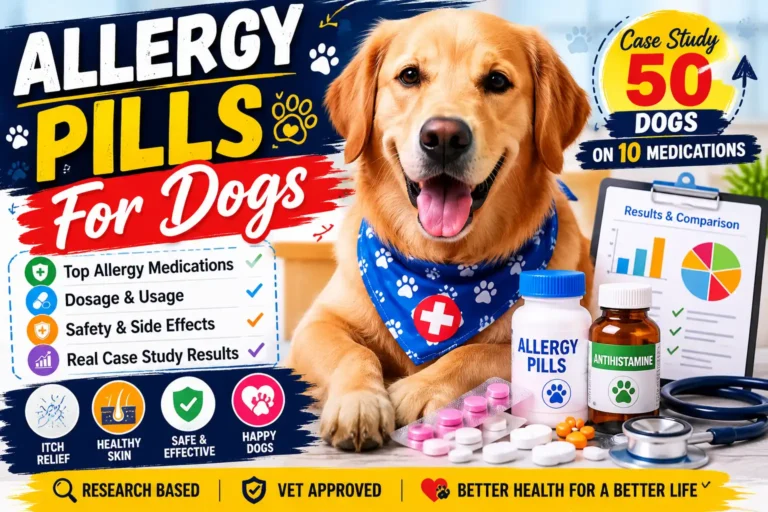
Canine atopic dermatitis, the most common allergic skin condition in dogs, affects an estimated 10% of dogs in the developed world, though researchers note the true prevalence is hard to pin down precisely because good epidemiological data is limited one large practice-based study of over 31,000 dogs found it in about 4.7% of dogs seen for skin problems. In other words: your dog is far from alone.
If your furry friend has spent the last week scratching, chewing their paws, or rubbing their face along the carpet, you already know how miserable and hard to watch allergy season can be.
The good news: dog allergies are one of the most treatable chronic conditions in veterinary medicine, and there are more options today than ever.
This detailed guide about safe allergy meds for dogs guide breaks down the 11 most effective allergy medications for dogs what each one does, who it’s best for, and what to ask your vet before you start.
Quick answer: The best allergy medicine for your dog depends on what kind of allergy they have. Environmental and atopic allergies usually respond best to Apoquel, Cytopoint, or cyclosporine; mild seasonal flare-ups often respond to OTC antihistamines like cetirizine or loratadine; and food allergies aren’t treated with medication at all they’re managed through diet.
A vet visit (even a telehealth one) is the fastest way to know which category your dog is in.
Disclaimer: All information in this guide is provided for educational purposes only and should never replace professional veterinary advice.
How to Tell If Your Dog Actually Has Allergies

Before reaching for any canine allergy medication, it helps to confirm what you’re dealing with. Common signs of allergies in dogs include:
Allergies in dogs generally fall into three buckets, and this matters because it changes which medication actually helps:
| Allergy Type | Common Triggers | Best-Suited Treatment Category |
|---|---|---|
| Environmental (atopic) | Pollen, dust mites, mold, grass | Apoquel, Cytopoint, antihistamines, cyclosporine |
| Food | Protein sources (beef, chicken, dairy), grains | Diet elimination trial — medication doesn’t fix this |
| Flea allergy dermatitis | Flea saliva | Flea prevention + short-term anti-itch medication |
The 11 Best Allergy Meds for Dogs

1. Apoquel (Oclacitinib)
Apoquel is an FDA-approved prescription tablet that works by blocking a signaling pathway involved in itching and inflammation, and it’s neither a steroid nor an antihistamine.
It’s become one of the most widely prescribed allergy medications in veterinary dermatology it’s been used in more than 15 million dogs and starts relieving itch in as little as four hours in some studies, with control typically achieved within 24 hours.
Best for: Dogs with moderate-to-severe environmental or atopic allergies who need fast relief.
Watch for: Not labeled for dogs under 12 months old, and it hasn’t been evaluated in combination with other systemic immunosuppressants like corticosteroids or cyclosporine, so your vet will manage any medication switch carefully.
2. Cytopoint (Lokivetmab)
Cytopoint is an injectable, FDA-approved monoclonal antibody given every 4–8 weeks at the vet’s office. Instead of a daily pill, it neutralizes a specific itch-signaling protein.
Best for: Dogs whose owners struggle with daily pilling, or dogs with health conditions that make Apoquel or steroids risky.
Watch for: It has to be administered by a vet, so it’s not a “give at home” option but many owners find the monthly visit worth the convenience.
3. Cetirizine (Zyrtec)
Cetirizine is a second-generation, non-drowsy antihistamine commonly used off-label in dogs for mild seasonal itching. Use our cetirizine dosage guide for dogs to see weight-based starting points to discuss with your vet.
Best for: Mild, seasonal environmental allergies.
Watch for: Skip any formulation combined with pseudoephedrine or other decongestants — those combination products are not safe for dogs.
4. Loratadine (Claritin)
Loratadine is another non-drowsy human antihistamine sometimes recommended by vets for dogs with mild hives or seasonal itch. See the loratadine guidelines for dogs for a general weight-based reference.
Best for: Dogs who get drowsy or agitated on diphenhydramine and need a gentler alternative.


Paid Links - As an Amazon Associate, I earn from qualifying purchases.
Watch for: Plain loratadine only never the “-D” decongestant versions.
5. Diphenhydramine (Benadryl)
Benadryl is the most recognizable OTC option and is often used for acute reactions (insect stings, mild hives) as much as chronic allergies. Check our Benadryl dosage chart for dogs before giving any, since it’s easy to overdose a small dog on human-strength tablets.
Best for: Short-term, acute allergic reactions (vet-approved use).
Watch for: Causes noticeable drowsiness in most dogs, and as noted above only about 30% of dogs with environmental allergies respond meaningfully to antihistamines at all, according to veterinary dermatologists.
6. Hydroxyzine
Hydroxyzine is a prescription-strength antihistamine that’s often more effective than OTC options for dogs with intense itching, and it’s sometimes used alongside other allergy medications.
Best for: Moderate itching where OTC antihistamines aren’t cutting it, but a vet wants to avoid steroids.
Watch for: More sedating than cetirizine or loratadine often best given in the evening.
7. Prednisone / Prednisolone
Corticosteroids like prednisone are fast, powerful, and inexpensive which is why they’ve been a mainstay of allergy treatment for decades.
You can reference the prednisone effectiveness and dosage guides for general weight-based starting ranges your vet may adjust.
Best for: Short-term flare-ups or as a bridge while a longer-term plan (like Apoquel or an elimination diet) kicks in.
Watch for: Long-term steroid use carries real risks increased thirst/urination, weight gain, and suppressed immune function so vets typically avoid it as a permanent solution.
8. Cyclosporine (Atopica)
Cyclosporine is an immunosuppressant used for chronic atopic dermatitis when other medications haven’t worked well enough.
Best for: Long-term, severe cases that need a maintenance medication.
Watch for: Takes 4–6 weeks to reach full effect, so it’s not useful for a sudden flare-up, and it requires monitoring for GI upset.
9. Medicated Shampoos and Topicals
Shampoos and sprays with ingredients like hydrocortisone, oatmeal, or chlorhexidine won’t cure an allergy, but they calm inflamed skin and reduce secondary infections that make itching worse.
Best for: Supporting any of the medications above not a standalone fix for moderate-to-severe allergies.
Watch for: Overbathing can dry out skin further; ask your vet how often is appropriate for your dog’s specific skin condition.
10. Omega-3 Fatty Acid Supplements (Fish Oil)
Omega-3s support the skin barrier and have modest anti-inflammatory effects. They’re rarely enough on their own for moderate-to-severe allergies but are commonly recommended alongside other treatments.
Best for: Long-term skin and coat support in combination with a primary treatment.
Watch for: Give with food to reduce the chance of loose stool, and choose a product made specifically for pets.
11. Allergen-Specific Immunotherapy (Allergy Shots/Drops)
Unlike everything else on this list, immunotherapy doesn’t just mask symptoms it’s designed to gradually desensitize your dog’s immune system to specific allergens identified through allergy testing.
Best for: Dogs with confirmed environmental allergies who need a long-term, non-drug-dependent solution.
Watch for: Requires allergy testing first (blood or intradermal) and takes months to show full benefit, so it’s a commitment rather than a quick fix.
Comparison Table: OTC vs. Prescription Options
| Medication | Type | Prescription Needed? | Onset | Best For |
|---|---|---|---|---|
| Apoquel | JAK inhibitor | Yes | Hours to 1 day | Moderate–severe |
| Cytopoint | Injectable antibody | Yes (vet-administered) | 1–3 days | Moderate–severe |
| Cetirizine | Antihistamine | No | Days | Mild |
| Loratadine | Antihistamine | No | Days | Mild |
| Diphenhydramine | Antihistamine | No | Hours | Acute/short-term |
| Hydroxyzine | Antihistamine | Yes | Hours–days | Moderate |
| Prednisone | Corticosteroid | Yes | Hours–days | Flare-ups |
| Cyclosporine | Immunosuppressant | Yes | 4–6 weeks | Chronic, severe |
| Fish oil | Supplement | No | Weeks | Supportive |
| Immunotherapy | Biologic/allergen-based | Yes | Months | Long-term management |
What Allergy Medicines Should You Not Give a Dog?
Some of the biggest medication dangers to dogs come from products marketed for allergies — not because the core antihistamine is unsafe, but because of what’s mixed in with it.
Here’s what to keep out of your dog’s medicine cabinet.
Decongestant Combination Products
Anything labeled “-D” (Claritin-D, Zyrtec-D, Allegra-D) or containing pseudoephedrine or phenylephrine should never be given to a dog.
According to the Merck Veterinary Manual, decongestants absorb rapidly and can cause vomiting, an abnormal heart rhythm, dangerously high or low blood pressure, tremors, and agitation within 30 minutes to 4 hours of exposure.
This is one of the most common accidental-poisoning categories vets see, precisely because these products sit right next to the “safe” versions on the shelf.
Decongestant Nasal Sprays and Eye Drops
Products like Afrin or “redness relief” eye drops contain imidazoline-derivative decongestants (oxymetazoline, xylometazoline, tetrahydrozoline, naphazoline).
The ASPCA notes these are rapidly absorbed and can cause serious changes to heart rate and blood pressure even in very small amounts a dog doesn’t have to swallow much of a bottle to be in trouble.
Anything Containing Xylitol
Some liquid or chewable allergy formulations, and many cough drops, are sweetened with xylitol. It’s one of the most dangerous substances dogs commonly encounter, capable of causing a rapid drop in blood sugar and, in some cases, liver damage.
Always check the inactive-ingredient list, not just the active ingredient, before giving a human product to your dog.
Combination Cold-and-Allergy Products with Acetaminophen
Multi-symptom formulas that pair an antihistamine with a pain reliever or cough suppressant often contain acetaminophen (Tylenol, Excedrin).
Dogs metabolize acetaminophen very differently than people do, and an overdose can cause liver damage and impair red blood cells’ ability to carry oxygen.
NSAIDs Used for Allergy-Related Discomfort
Ibuprofen, naproxen, and aspirin are sometimes reached for to calm allergy-related inflammation or discomfort, but human NSAIDs are one of the most frequently reported causes of poisoning in dogs and can cause stomach ulcers, kidney injury, and liver failure even at doses that seem small.
Extended-Release or Multi-Symptom Formulations
Time-release capsules and “multi-symptom” combination tablets are formulated for a human dosing schedule and often bundle in ingredients (decongestants, pain relievers, sleep aids) that have nothing to do with allergies and aren’t dog-safe.
Stick to single-ingredient, plain formulations when a vet does recommend an OTC antihistamine.
Quick Reference: Ingredients to Screen For
| Ingredient to Avoid | Found In | Risk |
|---|---|---|
| Pseudoephedrine / phenylephrine | “-D” allergy tablets, Sudafed | Elevated heart rate, blood pressure, seizures |
| Oxymetazoline, xylometazoline, naphazoline | Nasal sprays, eye drops | Vomiting, abnormal heart rhythm, weakness |
| Xylitol | Liquid meds, chewables, cough drops | Low blood sugar, liver damage |
| Acetaminophen | Tylenol, Excedrin, combo cold meds | Liver damage, impaired oxygen transport |
| Ibuprofen, naproxen, aspirin | Advil, Motrin, Aleve | Ulcers, kidney/liver injury |
Bottom line: The core antihistamines on this list cetirizine, loratadine, diphenhydramine are generally considered safe for dogs at the right dose, but only in their plain, single-ingredient form.
Always read the full ingredient panel, not just the front label, and confirm any human medication with your vet before giving it especially for dogs that are pregnant, have glaucoma, low blood pressure, or liver or kidney disease, since several of these antihistamines carry extra precautions in those cases.
If your dog has gotten into any of the products above, contact your vet or the ASPCA Animal Poison Control Center right away rather than waiting to see if symptoms appear.
What to Avoid (Quick Summary)
- Decongestant combination antihistamines: (“-D” versions of Claritin, Zyrtec, etc.) — the decongestant ingredient can be dangerous for dogs.
- Ibuprofen or naproxen for itch/pain: These human NSAIDs are toxic to dogs even at small doses.
- Guessing on human-medication dosage: Always calculate by your dog’s actual weight, not “what worked for a similar-sized dog.”
- Long-term steroid use without vet oversight: Effective short-term, but risky as a permanent plan.
Common Mistakes Pet Owners Make
- Starting a human antihistamine without confirming the dose against their dog’s actual weight.
- Assuming year-round itching is “just their skin type” instead of an allergy worth treating.
- Stopping medication as soon as symptoms improve, which often triggers a rebound flare-up.
- Not treating secondary skin infections that develop from constant scratching.
FAQs
What can I give my dog for allergies at home?
For mild, occasional itching, vets sometimes approve OTC antihistamines like cetirizine or loratadine but confirm the dose and product (plain formula, no decongestant) with your vet first.
What human allergy medicine is safe for dogs?
Plain cetirizine, loratadine, and diphenhydramine are commonly used off-label in dogs at vet-approved doses. Avoid any “-D” decongestant combination product.
Is Benadryl safe for dogs every day?
It can be used short-term under veterinary guidance, but daily long-term use isn’t typically recommended without a vet’s input, especially since it tends to be the least effective antihistamine for chronic allergies.
What’s the difference between Apoquel and Cytopoint?
Apoquel is a daily oral tablet; Cytopoint is an injection given at the vet’s office every 4–8 weeks. Both target the itch pathway, but Cytopoint avoids daily pilling.
How do I know if my dog has environmental or food allergies?
Environmental allergies are often seasonal and worsen with pollen or dust exposure; food allergies tend to be year-round and may come with GI symptoms. A formal elimination diet trial is the only reliable way to confirm a food allergy.
Can I give my dog Zyrtec every day?
Many vets do approve daily cetirizine for chronic mild allergies, but the right long-term dose should come from your vet, not a general online chart.
Are natural remedies effective for dog allergies?
Omega-3 supplements and oatmeal-based shampoos can support skin health, but they’re rarely enough alone for moderate-to-severe allergic dogs.
How fast does Apoquel work?
Some studies show itch relief in as little as four hours, with itching typically controlled within 24 hours.
Does pet insurance cover allergy medication?
Coverage varies by provider and plan check whether your policy treats chronic allergies as a pre-existing condition, especially if your dog was diagnosed before you enrolled.
When should I see a vet instead of trying OTC options first?
If your dog has facial swelling, hives, difficulty breathing, or symptoms that don’t improve within a few days of an OTC antihistamine, it’s time for a vet visit rather than trying another home remedy.
Can puppies take allergy medication?
Most prescription options, including Apoquel, are labeled for dogs 12 months and older, younger dogs need a vet’s guidance on safer alternatives.
Why isn’t my dog responding to antihistamines?
Veterinary dermatologists note that only about 30% of dogs with environmental allergies respond meaningfully to antihistamines, which is why vets often move to Apoquel, Cytopoint, or cyclosporine for moderate-to-severe cases.