Cestex® Dosage Calculator For Dogs
Accurate oral epsiprantel dosing calculator exclusively for dogs
© medsdog.com
Tapeworm infections are a common intestinal parasite problem in dogs, and using the correct Cestex dosage for dogs is essential for safe and effective treatment. Cestex® (epsiprantel) dosage is a prescription oral dewormer medication that removes common canine tapeworms, including Dipylidium caninum and Taenia pisiformis, by disrupting the parasites’ metabolism.
It is approved for puppies 7 weeks of age and older as well as adult dogs and is typically administered as a single oral dose of 2.5 mg per pound (5.5 mg/kg) by the dog body weight. The film-coated tablets are available in multiple strengths doses to simplify accurate dosing, and fasting is not required before treatment. While a single dose is usually effective, dogs can become reinfected by swallowing infected fleas or other intermediate hosts, so a comprehensive flea control program is recommended, particularly for D. caninum infections.


Paid Links - As an Amazon Associate, I earn from qualifying purchases.
In this guide, you’ll find a Cestex dosage calculator for dogs by weight, a weight-based dosage chart, tablet recommendations, administration instructions, safety precautions, possible side effects, and expert answers to common questions to help you treat your dog safely and effectively.
What is Cestex Dosage For Dogs?
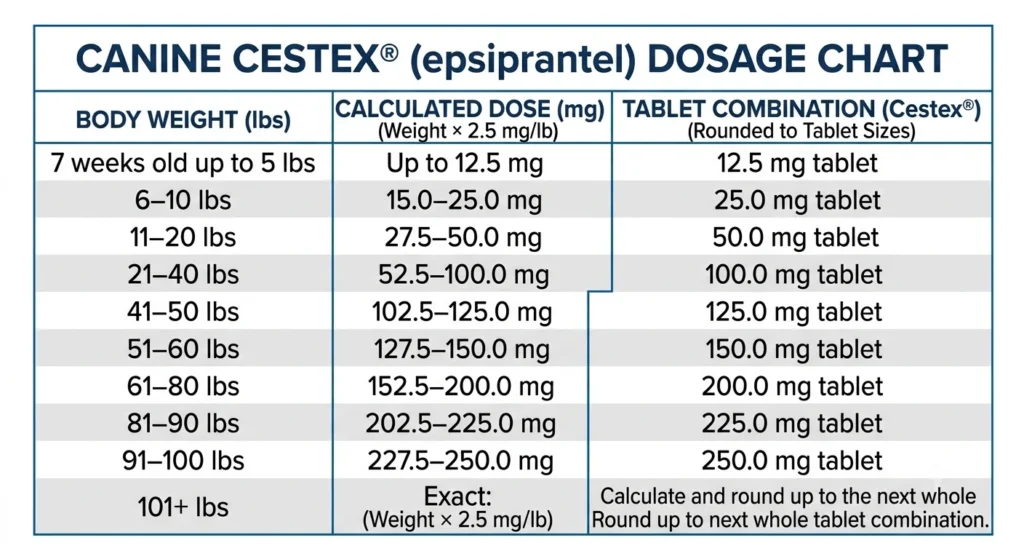
Cestex dosage for dogs is the recommended dose of epsiprantel which is an oral dewormer for common tapeworm infection in your dogs. The common dose is 2.5 mg per lb (5.5 mg/kg) of your dog body weight and is usually administered orally as a single dose. The exact strength of the tablet will vary according to your dog’s weight and larger dogs may need a combination of tablets. Always follow veterinarian’s guidelines; retreatment may be required if re-infected.
Cestex (Epsiprantel) Dosage Chart for Dogs By Weight
| Dog Weight | Recommended Dose | Equivalent Dosage |
|---|---|---|
| Up to 5 lb (2.3 kg) | 12.5 mg | 2.5 mg/lb (5.5 mg/kg) |
| 6–10 lb (2.7–4.5 kg) | 25 mg | 2.5 mg/lb (5.5 mg/kg) |
| 11–20 lb (5.0–9.1 kg) | 50 mg | 2.5 mg/lb (5.5 mg/kg) |
| 21–40 lb (9.5–18.1 kg) | 100 mg | 2.5 mg/lb (5.5 mg/kg) |
| 41–50 lb (18.6–22.7 kg) | 125 mg | 2.5 mg/lb (5.5 mg/kg) |
| 51–60 lb (23.1–27.2 kg) | 150 mg | 2.5 mg/lb (5.5 mg/kg) |
| 61–80 lb (27.7–36.3 kg) | 200 mg | 2.5 mg/lb (5.5 mg/kg) |
| 81–90 lb (36.7–40.8 kg) | 225 mg | 2.5 mg/lb (5.5 mg/kg) |
| 91–100 lb (41.3–45.4 kg) | 250 mg | 2.5 mg/lb (5.5 mg/kg) |
| Over 100 lb (45.4+ kg) | 2.5 mg/lb (5.5 mg/kg), rounded up to the next whole tablet combination | Individualized based on body weight |
Administration Notes
- Administer Cestex (epsiprantel) tablets orally.
- The recommended canine dosage is 2.5 mg per lb (5.5 mg/kg) of body weight.
- Fasting is not necessary or recommended before treatment.
- Dogs can become reinfected if exposed to tapeworm intermediate hosts, so retreatment may be required.
- For Dipylidium caninum infections, an effective flea control program should be used to help prevent reinfection.
What Is Cestex?
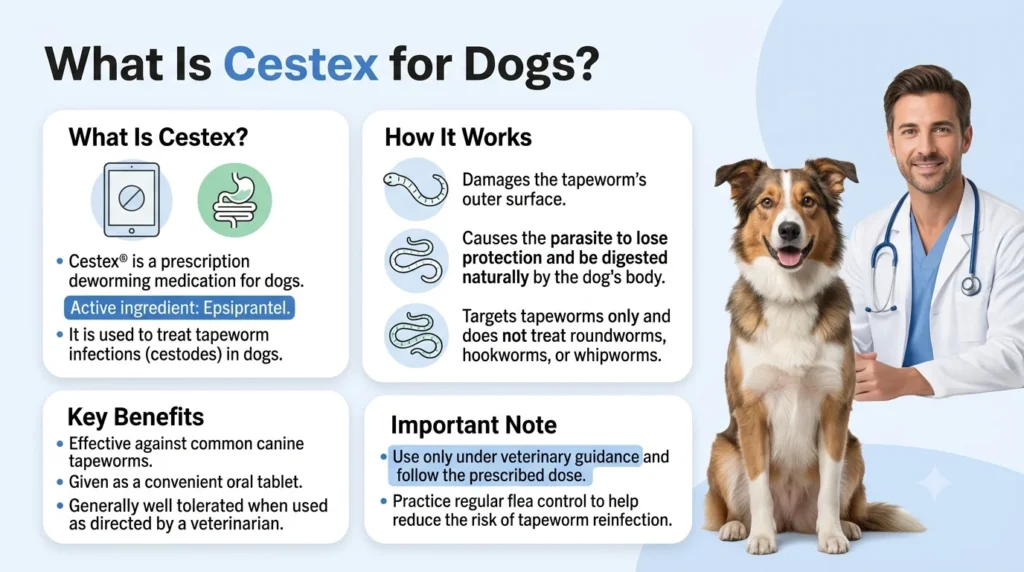
Cestex® (epsiprantel) is a prescription oral deworming treatment (anthelmintic) that treats tapeworm infections safely and effectively in dogs and cats. It is formulated with epsiprantel dosage for dogs, which is a cestocidal anthelmintic that acts by interfering with the metabolism of the tapeworms and is effective against common tapeworm species. Cestex medication is used to treat Dipylidium caninum and Taenia pisiformis in dogs and Dipylidium caninum and Taenia taeniaeformis in cats.
Cestex can be used on puppies and kittens 7 weeks old and older and adult dogs and cats. It’s given as a one-time oral dose and the film-coated tablet makes it easier to dose and decreases the bitter taste. The medication can be prescribed by your veterinarian in tablet form for 12.5 mg, 25 mg, 50 mg, and 100 mg, depending on the size of your pet.
Another benefit of Cestex is that pets and owners do not have to fast prior to treatment. When used according to your veterinarian’s instructions, Cestex provides a safe and effective way to remove tapeworm infections in eligible dogs and cats.
Benefits of Cestex for Dogs

Cestex® (epsiprantel) is an oral dewormer that is safe and effective against common tapeworm infections in dogs. It is a single dose medication, does not need to be fasted before it can be given and is mainly effective against tapeworms in the gastrointestinal tract. Its film-coated tablets are easy to administer, the drug has very little side effects and no known drug interactions or contraindications.
Key Benefits of Cestex
- Effectively eliminates the common tapeworm in dogs.
- Effective in a single one-time oral dose.
- Includes epsiprantel which works by interfering with the metabolism of tapeworms.
- Safe and effective if used as directed by a veterinarian.
- Before the treatment, it is not recommended or necessary to fast.
- Very little absorbed into the bloodstream, most of it stays in the gastrointestinal tract where the infection is.
- Does not produce side effects in treated dogs to a large extent.
- No interaction with other drugs is known.
- There are no known contraindications so it can be given by a vet with confidence when it is appropriate.
- The film-coated tablets are more easy to swallow and less likely to have an unpleasant taste.
- Four tablet strengths are available and the tablets and bottles are color coded for convenient dispensing and correct dosage.
- Conveniently packaged in tablets for easy dispensing of the correct number of tablets per dog.
How Does Cestex Work?
Cestex® (epsiprantel) dewormer is an anthelmintic (dewormer) which acts by paralyzing tapeworms in your dog’s intestine. The tapeworm is paralysed and so it drops free from the intestinal wall. Once the tapeworm becomes detached it is broken down in the digestive tract and is not usually visible in the stools following treatment. This specific activity enables Cestex to safely and efficiently remove tapeworm infections in dogs.
Possible Side Effects of Cestex for Dogs
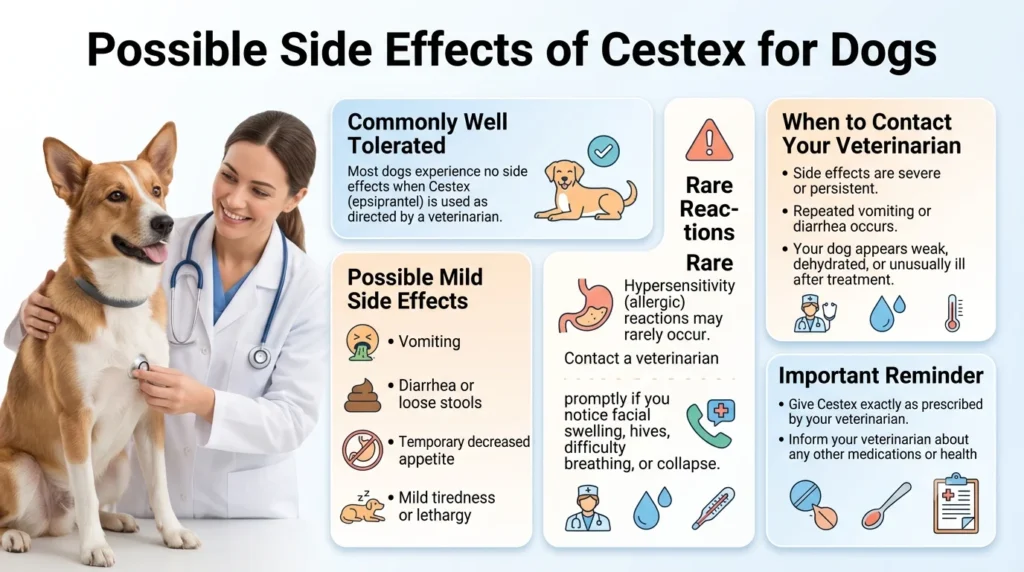
No side effects were seen during the clinical field trials, and Cestex® (epsiprantel) is generally well tolerated by dogs. Some dogs may however have mild side effects as with all medications. Side effects that have been reported include diarrhea (not very common) and vomiting (rare). The majority of dogs do not have any apparent issues during treatment.
Even though it is rare, dog sensitivities and allergies can occur over time even if your dog took the drug before without any problems. During treatment, watch your pet closely for signs or changes that are out of the ordinary. The medication is believed to be moderately active and generally to be stopped within a few days, however, if a dog is suffering from liver or kidney disease the effects may be longer.
Possible Side Effects
- So far no side effects have been noticed in the clinical field trials.
- Vomiting (rare).
- Diarrhea (rare).
- Some of these may cause allergic reactions or drug sensitivities after repeated exposure.
- Dogs may have other atypical side effects.
If your dog’s symptoms persist, or begin to cause an allergic reaction, diarrhea, or some other unusual or bothersome symptom, be sure to call your veterinarian right away for advice.
Precautions for Using Cestex in Dogs
Cestex® (epsiprantel) should be used only in dogs and cats and is not intended for human use. Do not give to puppies under 7 weeks of age or to dogs which are known to be allergic to or have had a bad reaction to epsiprantel. The safety of Cestex in pregnant or breeding animals has not been determined, therefore consult your veterinarian before using in these animals.
Tapeworms can be passed on from pets to people, so good personal hygiene is important when dealing with pet tapeworms or when cleaning up after pets. Reduce the risk of reinfection by picking up and disposing of your dog’s poop every day and taking proper parasite precautions. Always keep Cestex out of the reach of children.
Important Precautions
- For canine & feline use only.
- Avoid use in puppies less than 7 wks of age.
- Avoid giving to dogs known to be allergic to epsiprantel or if they have previously shown sensitivity to it.
- The safety in pregnant or breeding animals has not been determined.
- Not for human use.
- Do not allow children to come near.
- Practice good personal hygiene: some tapeworm infections are acquired from pets.
- Pick up your dog’s poop every day to reduce the chance of re-infection.
Are There Any Drug Interactions with Cestex?
Cestex® (epsiprantel) has no known drug interactions. But there can still be some interactions with certain medications and so it is crucial to let your veterinarian know if your dog is taking any other medications or products before you begin this treatment.
This includes prescription, over-the-counter medicines, vitamins, nutrition supplements, or herbal treatments. If you can give your veterinarian a full record of all your dog’s medications, it will help the veterinarian determine that Cestex can be used safely and effectively along with your dog’s other medications.


Paid Links - As an Amazon Associate, I earn from qualifying purchases.
What Should I Avoid While Giving Cestex to My Dog?
During the time your dog is being treated with Cestex® (epsiprantel), there are a few precautions you should take to ensure it is effective and to minimize the risk of reassurance. Don’t use Cestex on puppies under 7 weeks old. Some tapeworms may pass from pets to people, so maintaining good personal hygiene – particularly after handling your dog and after cleaning up feces – is important.
Fleas are typical intermediate hosts for tapeworms; get rid of fleas on your dog and in your house to help prevent reinfection. Also, do not feed raw or undercooked meat, fish, or rodents which can contain tapeworm larvae. Also, wipe up your dog’s poop every day, to minimize pollution in the environment and to reduce the risk of re-infection.
What to Avoid
- Cestex is not for use in puppies under 7 weeks old.
- Don’t have poor personal hygiene after handling dog or dog poop.
- Don’t allow flea infestations to go untreated.
- Never feed rodents, raw meat or uncooked fish.
- Avoid leaving dog poop behind; clean stools every day to prevent re-infection.
You May Also Like to Read:
- Phenylbutazone Dosage For Dogs: Calculator & Safe Guide
- Cyclavance Dosage For Dogs: Calculator & Safe Guide
FAQs
What are the indications of canine Cestex?
Cestex® is a prescription oral deworming drug that contains epsiprantel. It is FDA approved for use in dogs, and treats common tapeworm infection. Single oral dose of 2.5 mg per pound (5.5 mg/kg) is recommended. It is not necessary to fast before administering treatment.
How should I give Cestex to my dog?
Administer Cestex dewormer according to the veterinarian’s directions. It is usually taken once a day, either with or without food. If you aren’t sure how to give the med, ask your vet or pharmacist for instructions.
Before you use Cestex, be sure to discuss any of the following with your veterinarian:
Be sure to let your veterinarian know if your dog is on any other medications, particularly other deworming products, prior to administering Cestex. Also note if your dog is meant for breeding, nursing or pregnant, and if this is the case, please inform your vet, since the safety of Cestex in these animals is not established.
What are some potential side effects of Cestex?
Clinical field trials found no side effects and Cestex has an overall good tolerance. Dogs can, in rare instances, have diarrhea or vomit. If you see any persistent, unusual or severe symptoms after the treatment, call your veterinarian immediately.
If I forget to take a dose of Cestex, what should I do?
Cestex dosage for dogs is typically used once, so there are no missed doses. In case you forget to administer the medicine, call your veterinarian for instructions. Do not give two doses at the same time. Dogs that become reinfected with tapeworms may require retreatment.
What if my dog gets too much Cestex?
Overdose is not likely to cause any serious problems, but extremely high doses may cause vomiting. If you think that your dog has overdosed or has an adverse reaction, contact your veterinarian or veterinary emergency immediately for advice.
What is the proper storage of Cestex?
Cestex tablets should be kept in a close container at room temperature (between 20° and 25°C / 68° and 77°F). Temperatures of 15°C – 30°C (59°F – 86°F) for a short period are acceptable. Store the medicine where children and pets can’t reach it.
Do I need to monitor anything after Cestex administration?
Your veterinarian may suggest periodic fecal testing to ensure that the tapeworm infection is gone and that a re-infection didn’t occur. Watch your dog closely after treatment at home for any unusual reactions and reach out to your vet if there are any signs that are of concern.
Key Takeaways
- Cestex® (epsiprantel) is a prescription oral dewormer for dogs, indicated for the treatment of a tapeworm infection.
- Dogs are recommended to receive a dose of 2.5 mg/lb (5.5 mg/kg) of body weight administered orally once.
- Cestex works for puppies 7 weeks old and adults.
- Effective against common tapeworms of dogs such as Dipylidium caninum and Taenia pisiformis.
- Before and after giving Cestex, it is not necessary to fast.
- Film-coated tablets come in 12.5 mg, 25 mg, 50 mg or 100 mg strength for precise weight-based dosing.
- Generally Cestex dosage for dogs is well tolerated and although vomiting and diarrhoea may occur this is uncommon.
- Avoid use of Cestex in puppies less than 7 weeks of age or in any dog known to be hypersensitive to epsiprantel.
- Reinfection can occur, and it is important to have good flea control, avoid raw meat/rodents, and clear up stools daily.
- If your dog has a reaction that is not typical, if he has overdosed or if you feel that he needs to be treated again because he may be re-infected, your veterinarian can help.
Final Thoughts
When applied as directed by a veterinarian, Cestex® drug is a safe and effective single dose prescription dewormer for common tapeworm infections in dogs. The correct weight-based dose is crucial for effectiveness of the drug and to reduce the risk of treatment failure. Most dogs only need one dose, but re-infection may occur if no flea control or other measures are taken to prevent tapeworm exposure.
Always use Cestex treatment in conjunction with a regular flea control program, good hygiene and regular veterinary checks for optimum results. Always refer to the Cestex Dosage Calculator for Dogs and dosage chart above and consult your veterinarian before beginning or resuming treatment if you are not certain of the correct dosage based on the weight of your dog.