
Disclaimer: This guide is for informational purposes only and is not a substitute for professional veterinary advice. Always consult your veterinarian before giving Spirulina or any medication to your dog.
Spirulina Dosage Calculator for Dogs
Enter your dog’s weight to find the daily spirulina amount.
Your dog’s daily dose will appear here.
Recommended dose


Paid Links - As an Amazon Associate, I earn from qualifying purchases.
Once daily, mixed into food
- Dog’s weight
- Exact amount
- Approx. in millilitres
- Approx. in grams
Guideline: 1/8 tsp of spirulina per 10 lbs of body weight, once daily in food. Spirulina is a highly concentrated tonic, so do not exceed the recommended amount unless advised by your veterinarian.
The right spirulina dosage for dogs is currently a hot topic among pet parents seeking natural health supplements for their dogs. Spirulina is a type of blue-green algae (cyanobacterium), also called Arthrospira platensis, and it’s considered a superfood due to its high nutritional content.
It’s an easily digested protein, as well as chlorophyll, vitamins B1, B2, and B3, beta carotene, iron, trace minerals, omega fatty acids, and gamma-linolenic acid (GLA), making it an effective daily supplement for dogs.
At the right dosage, spirulina can help to support immune system, skin and coat, natural energy, antioxidants and overall well-being. Other dog owners have reported additional benefits from using spirulina to treat itchy skin, seasonal allergies, and as a minor dietary supplement for home-cooked and restricted diets. Preliminary research and anecdotal reports indicate dogs tolerate spirulina well when given in appropriate amounts.
But spirulina supplements are not created equal. Contaminated or poor-quality spirulina may contain toxins, heavy metals, fillers or other contaminants. So it’s important to opt for pure, high-quality and tested spirulina before you start giving it to your dog. It may also have a taste, so blending it into their meal can help.
Here, we outline the optimal spirulina dose for dogs weighing 50 and 100 lbs, major health benefits, potential side effects, safety considerations and how to select the best product for your dog. Like all supplements, it’s always best to ask your veterinarian first, particularly if your puppy, older dog or has an underlying medical condition.
Key Takeaways
- Spirulina Dosage For Dogs is a superfood blue-green microalgae that is high in protein, vitamins, minerals, chlorophyll, antioxidants, and essential fatty acids.
- The amount of spirulina for dogs varies based on size, age and health conditions, so begin with a low dose.
- When administered properly, spirulina can help with immune function, healthy skin and coat, stamina, and overall health.
- Pet parents may use spirulina for dogs with itchy skin or allergies, or to supplement dogs fed a home-cooked diet.
- Start with small amounts to prevent upset stomach and allow your dog to get used to the taste.
- Only use high-quality, pure and tested spirulina with no contaminants, fillers or additives.
- It’s generally well-tolerated, but some dogs may experience minor side effects, such as stomach upset.
- Always consult your veterinarian before using it, particularly in puppies, older dogs, pregnant dogs, or those with health issues.
How Much Spirulina Can I Give My Dog?
The recommended Spirulina dosage for dogs is 1/8 tsp per 10 lbs once daily in food. Remember that Spirulina is highly concentrated tonic so do not exceed recommended amounts unless advised by your veterinarian.
Spirulina Dosage Chart For Dogs By Weight
| Dog Weight | Spirulina Dosage | Frequency |
|---|---|---|
| 5 lbs | 1/16 tsp | Once daily |
| 10 lbs | 1/8 tsp | Once daily |
| 15 lbs | 3/16 tsp | Once daily |
| 20 lbs | 1/4 tsp | Once daily |
| 30 lbs | 3/8 tsp | Once daily |
| 40 lbs | 1/2 tsp | Once daily |
| 50 lbs | 5/8 tsp | Once daily |
| 60 lbs | 3/4 tsp | Once daily |
| 70 lbs | 7/8 tsp | Once daily |
| 80 lbs | 1 tsp | Once daily |
| 90 lbs | 1 1/8 tsp | Once daily |
| 100 lbs | 1 1/4 tsp | Once daily |
Key Usage Guidelines
- Start Slow: Always begin with the Maintenance/Low Dose and monitor your dog for 48 hours for any digestive upset before increasing to a therapeutic dose.
- Heavy Metals: Ensure your Spirulina is sourced from a reputable brand that tests for heavy metals and toxins (like microcystins), as low-quality Spirulina can be harmful to canine livers.
- Mixing: Powder is best served mixed into wet food or a small amount of plain yogurt to prevent the dog from inhaling the fine dust.
What Is Spirulina Dosage For Dogs And How Does It Work?
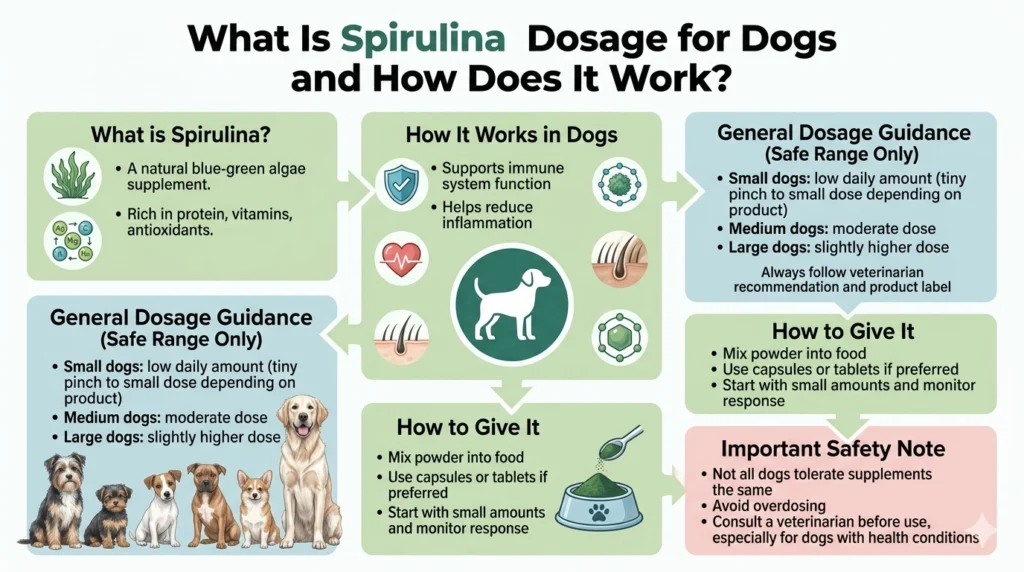
Spirulina Dose is a blue-green microalgae (more properly known as a cyanobacterium) that can produce its own food through the process of photosynthesis, like plants. Arthrospira platensis is the scientific name of the free-floating, filamentous blue-green algae found in tropical and subtropical waters; it is named after the spiral shape of the filaments. Spirulina is found in both fresh and saltwater.
Spirulina for pets is a superfood, rich in nutrients that can positively affect dogs. It has more than 50-60% protein, essential amino acids, carbohydrates, vitamins, minerals, iron, chlorophyll, omega-3 fatty acids and the necessary fatty acid GLA (gamma-linolenic acid). These play a role in muscle growth, tissue repair, organ function, healthy skin and coat, immune function, and overall health.
The most important element in spirulina is the pigment phycocyanin, which gives it its blue-green colour. Phycocyanin has potent antioxidant and anti-inflammatory properties, which can help prevent damage to cells, and promote normal inflammation.
In dogs, spirulina may help strengthen the immune system, provide a nutritional boost, support digestive health, improve skin and coat health and enhance energy levels.
It is also said to have anti-allergic effects due to its ability to minimise the release of histamine from mast cells, reducing allergic reactions. Additionally, spirulina can help boost IgA antibodies, which may help the primary immune defense against allergens.


Paid Links - As an Amazon Associate, I earn from qualifying purchases.
Other reports indicate spirulina may also be useful for yeast infections, bacterial infections and reducing oxidative stress. Research and anecdotal reports suggest spirulina is well tolerated in dogs if given correctly.
Due to spirulina’s ability to trap metals and other contaminants through the water it is grown in, it is best to source high-quality spirulina grown in controlled environments and preferably recommended by a veterinarian.
Is Spirulina Safe For Dogs?
Spirulina Dosage For Dogs is safe if they are given quality spirulina from a reputable company in the correct dosage. Spirulina is a blue-green algae that grows in hot, sunny areas, and is usually grown in outdoor ponds, with cultivation conditions influencing safety.
The main concern with spirulina is contamination. If spirulina is grown in contaminated or uncontrolled environments, it can pick up contaminants like microcystins, metals and other toxins. Impure products can also contain neurotoxins and hemotoxins, which can damage the liver, nerves and red blood cells.
For dog safety, use spirulina supplements grown in controlled, non-polluted environments, and products that undergo quality assurance testing for purity and contaminants. When your spirulina is of high quality, you’re more likely to benefit from its health and nutritional properties without the risks.
For maximum safety, only purchase spirulina products from reputable manufacturers and consult with your veterinarian before giving it to your dog, particularly if your dog has any health conditions.
How Much Spirulina Can Dogs Have?
Dogs’ individual needs will determine the correct spirulina dose. Spirulina is very potent, so it does not require large doses. It’s important to start with small amounts and increase slowly to allow your dog’s body to get used to it and avoid stomach upset.
One recommendation is to start at 1/8 teaspoon per 10 pounds of body weight per day, and another recommendation is 50 mg to 100 mg per kilogram of body weight per day. It’s best to start low and go higher if necessary.
Spirulina dosage by weight for dogs is sometimes administered in short bursts (such as 21 days) but some owners use it all year with a small break (such as a week) in between.
When feeding spirulina, regularity is key. Keep an eye on your dog’s stool, appetite and energy levels. If your dog experiences diarrhea, vomiting or loss of appetite, reduce or withhold for a time. Large doses may be used occasionally for support, but only with the approval of a veterinarian or holistic veterinarian.
Possible Side Effects of Spirulina for Dogs
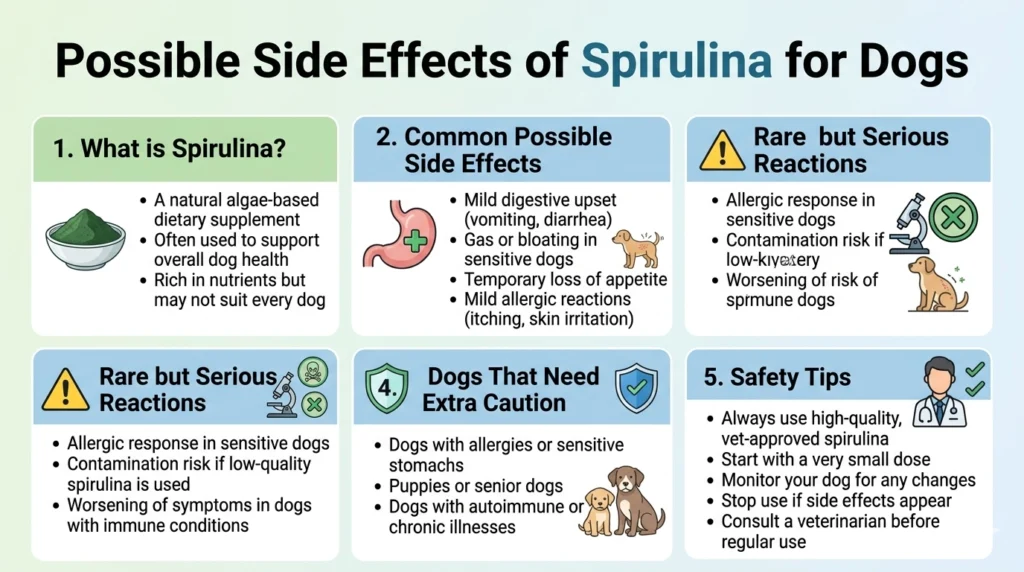
Spirulina is safe for dogs, but some animals may experience side effects, particularly if they are just starting to take the supplement, are taking too much, or have a sensitive stomach. Slowly starting spirulina can help minimise side effects.
The most common potential side effects are:
- Gastrointestinal issues: Nausea, gas, soft stools, diarrhea, or temporary stomach discomfort may occur after the first few doses of spirulina. It’s best to start with a low dose and build up to the desired amount to allow the body time to adapt.
- Allergies: While not common, some dogs can develop an allergy to spirulina. This may cause itching, swelling, hives, or difficulty breathing. If these occur, discontinue use and seek veterinary advice.
- Contaminant-related illness: Poor-quality spirulina grown in polluted or uncontrolled water can be contaminated with heavy metals, toxins or microcystins. This can lead to severe illness, such as liver disease.
To minimise risks, be sure to use a high-quality spirulina supplement, and follow the recommended dose, as well as closely monitoring your dog for the first time.
Benefits of Spirulina for Dogs
Spirulina for dogs dosage is a superfood that may provide dogs with a number of health bonuses when included in their diet. Spirulina is a nutritional supplement rich in antioxidants, protein, vitamins, minerals and healthy fatty acids, often used to promote good health.
Helps Relieve Allergies
Spirulina may help dogs with seasonal or environmental allergies by decreasing the amount of histamine released by mast cells, which can reduce allergic symptoms like itchy skin. It can also support the production of IgA antibodies, which can protect against allergens.
Boosts Immune System
Spirulina medication is rich in antioxidant and immune-boosting nutrients that can help build your dog’s immune system. These compounds can help to shield cells from damage, and support normal immune response.
Reduces Inflammation
Spirulina contains GLA (gamma-linolenic acid), a type of omega-6 fatty acid that has anti-inflammatory properties. It also has phycocyanin, a pigment that may help promote proper inflammatory response within the body.
Supports Digestion and Gut Health
Spirulina could help promote healthy gut bacteria and digestion. Since it doesn’t have a hard cellulose cell wall, it’s easy for the body to digest.
May Offer Antioxidant Protection
Preliminary studies indicate that spirulina’s antioxidants may help protect against free radical damage. However, more research is required to confirm these effects, which may have long-term benefits.
How To Choose Safe Spirulina For Dogs
When it comes to giving dogs spirulina, it’s important to ensure you’re getting safe, high-quality spirulina. Spirulina is easily contaminated by the environment it grows in, so quality is vital for your dog’s safety.
Opt for companies that disclose details about their growing methods, such as the location, water quality, and controls. Reputable brands may also provide information on how they grow and harvest.
Look for a Certificate of Analysis (COA) demonstrating purity and testing for contaminants. Independent testing and certifications like NSF and USP may provide additional assurance of quality.
Always check the ingredient label. Look for pure spirulina, without fillers, preservatives, artificial colours and other additional ingredients. If purchasing online, check the label.
Watch out for spirulina products mixed with other blue-green algae, particularly those from uncontrollable environments. Poorer quality spirulina may contain contaminants like microcystins, heavy metals and other toxins, which can be toxic to dogs.
Spirulina Dosage for dogs per pound cultivated in a clean environment, away from pollutants and with proper water quality, is best. Supplies from areas with high environmental and farming standards are preferred.
When you examine the product, high-quality spirulina is typically a dark matte green color, fresh (seawed-like) aroma, and dry (feels like flour). Be wary of shiny, odd-smelling, moist or clumpy products, which may signify low quality or storage issues.
You May Also Like to Read:
- Allegra Dosage For Dogs Calculator: Safe Dosage Chart & Guide
- Hydroxyzine Dosage For Dogs Calculator, Chart & Safe Guide
FAQs
What is spirulina good for in dogs?
Spirulina is a highly nutritious blue-green algae that can potentially help boost your dog’s immune system, vitality, skin and coat condition, digestion and more. It contains protein, essential amino acids, vitamins, minerals, chlorophyll and antioxidants that may help make up for nutritional deficiencies and help maintain good health.
How much spirulina should I give my dog?
It is often recommended that dogs be given 1/8 teaspoon for every 10 lbs. or 50 mg per kg each day. Other recommendations include 1/4 teaspoon per pound of food. The amount will depend on your dog’s diet, size and health, so start with a low dose and ask your vet for advice.
Which is better kelp or spirulina for dogs?
Both supplements offer benefits. Kelp is commonly used to supplement iodine for thyroid function, and spirulina is higher in protein, amino acids, antioxidants and nutrients supportive of the immune system. Spirulina may be preferred for general health.
Can dogs have Hawaiian spirulina?
Dogs can eat Hawaiian spirulina if it is from a trusted manufacturer that assesses for purity and contaminants. Hawaiian spirulina is known for being grown in a pristine environment and having superior nutrition.
Is spirulina good for dogs’ digestion?
Spirulina can help improve digestion and gut health by promoting healthy gut flora such as lactobacillus and bifidobacteria and reducing the growth of harmful bacteria and yeast, such as E. coli. Good gut health may enhance nutrient absorption and the immune system.
Does spirulina medication help with detoxification?
Spirulina has chlorophyll, phycocyanin, and polysaccharides that can help support the body’s natural detoxification processes and help to address environmental toxins and oxidative damage.
Can spirulina be used to treat dog allergies?
Spirulina may support a healthy immune response to help combat allergic reactions. It has been shown to reduce inflammation and enhance immune responses to allergens.
Will spirulina prevent cancer?
Preliminary lab and animal studies show that the antioxidant substances in spirulina, such as phycocyanin and chlorophyll, may prevent cell damage. We need more research, and spirulina is not a substitute for cancer treatment.
How do I administer spirulina to my dog?
Most spirulina supplements are available in powder, tablet or capsule form. You can mix powder into your dog’s food or give tablets whole or in food. Use only a small amount at first to avoid stomach upset.
Are there any side effects for dogs after eating spirulina?
Spirulina is safe, but can cause diarrhea, flatulence and stomach upset if given in excess as it is highly nutritious. Start slowly and purchase a high-quality and uncontaminated product.
Final Thoughts
This superfood can provide a range of benefits for dogs, such as aiding digestion, boosting immunity, improving energy, promoting healthy skin and coat, and providing essential nutrients. It’s packed with protein, vitamins, minerals, antioxidants and healthy fatty acids, and can be a beneficial supplement for some dogs when used appropriately.
But although preliminary research and anecdotal evidence are positive, further studies are needed to more fully understand all the benefits, optimal doses and any potential contraindications.
You can incorporate spirulina dosage for dogs into your pet’s diet in various formats, including powder, tablets, capsules, and treats. It can be mixed with food for better palatability.
Finally, always use a quality, contaminant-free spirulina product formulated for pets or veterinarian-approved. Always consult your veterinarian before supplementing, particularly if your dog has medical conditions, is on medication or on a special diet.
Overall, spirulina can be a great supplement, if used in the right product and dose.