Apple Cider Vinegar Dosage Calculator For Dogs
Estimate a commonly referenced daily amount of apple cider vinegar (ACV) based on your dog’s weight. Start with small amounts and increase gradually if tolerated.
Estimated Daily Amount
How This Estimate Is Calculated
This calculator uses a commonly cited guideline of approximately 1 teaspoon per 15 pounds of body weight (about 1 tablespoon per 50 pounds).
- Add to food or dilute into water.
- Introduce gradually over several days.
- Provide fresh plain water separately.
- Monitor for digestive upset or refusal.
- Discontinue if your dog does not tolerate it.
Important Safety Note
Research supporting apple cider vinegar benefits in dogs is limited. It should not be used as a substitute for veterinary treatment. Apple cider vinegar is not proven to cure infections, arthritis, cancer, urinary problems, or other medical conditions. Consult your veterinarian before starting any supplement, especially for puppies, senior dogs, or dogs with health conditions.
© medsdog.com


Paid Links - As an Amazon Associate, I earn from qualifying purchases.
Apple Cider Vinegar Dosage for Dogs has gained traction among dog owners who seek to provide a natural remedy that helps their dog’s health. Apple cider vinegar (ACV) has been used traditionally for human and animal health for centuries and some dog owners believe it can benefit their pet’s digestion, skin and coat, itchy paws, yeast problems, odor control and health. Some also apply diluted ACV to their grooming routine, or as a natural cleaner for bedding, toys and ears.
Apple cider vinegar Medication is made from fermented apples, where the natural sugars are turned into alcohol and then acetic acid is the main compound for producing the unique properties of vinegar. Many people like to use raw, unfiltered, organic apple cider vinegar with the “mother” – this is the cloudy material consisting of beneficial bacteria, enzymes and natural compounds.
However, it’s crucial to recognize that many of the attributed benefits of using apple cider vinegar for dogs are rooted in anecdotal evidence and lack robust scientific backing. Some dogs may be able to ingest small quantities of the proper, diluted ACV and still reap benefits, but there are few veterinary studies documenting the effectiveness of ACV for treating flea infestations, ear infections, urinary tract disorders, arthritis or other ailments. Because of its acidic content, it can lead to stomach irritation, upset, and/or complications if used in excess and/or diluted incorrectly.
With these potential risks and benefits in mind, it is crucial to find the right dosage. The consumption of too much apple cider vinegar can be detrimental, so it is best to begin with small and properly diluted amounts, as this can lessen the risk of side effects. You’ll discover the right apple cider vinegar dosage for dogs according to their weight, possible benefits, side effects, safe ways to administer it, dilution guidelines, and when to avoid giving ACV all together, so you can make an informed decision when it comes to your dog’s health.
Key Takeaways
- The short answer is that, when properly diluted and given in small quantities, apple cider vinegar (ACV) is safe to use for dogs.
- ACV Dosage For Dogs is popular among pet owners for its digestive aid, skin and coat health, odor control, and overall well-being.
- The studies conducted on apple cider vinegar for dogs are rather scarce and most of the purported benefits are anecdotal.
- ACV has not been proven to kill fleas, cure yeast infections, treat ear infections, prevent urinary tract infections or treat serious medical conditions.
- The high concentrations or wrong usage of the ACV can lead to stomach sickness, vomiting, diarrhea, loss of appetite or irritation because of the acidity of the ACV.
- If topical applications are to be used, they should be diluted and discounted if skin is inflamed or open wounds or irritated ears are present.
- The most popular version of apple cider vinegar recommended by natural pet care advocates is raw, organic and unfiltered with the “mother” as it is understood to contain nutrients.
- Begin with a small amount and slowly build up the dose if it is well tolerated and avoid if your dog reacts negatively at any time.
- Apple cider vinegar is to be considered a supplement for general health, not a replacement for veterinary attention.
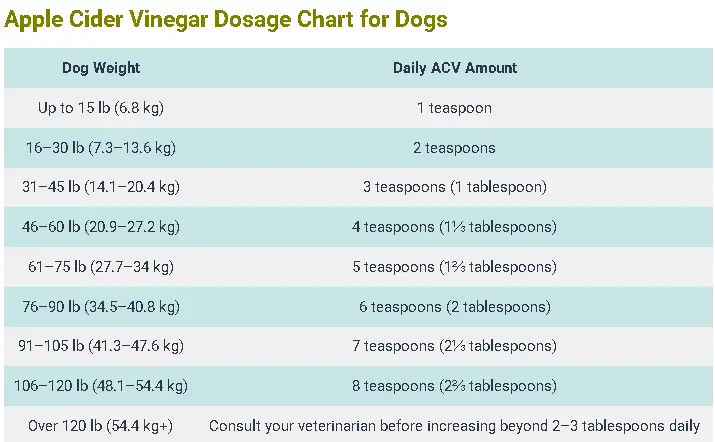
Apple Cider Vinegar Dosage Chart for Dogs By Weight
| Dog Weight | Daily ACV Amount |
|---|---|
| Up to 15 lb (6.8 kg) | 1 teaspoon |
| 16–30 lb (7.3–13.6 kg) | 2 teaspoons |
| 31–45 lb (14.1–20.4 kg) | 3 teaspoons (1 tablespoon) |
| 46–60 lb (20.9–27.2 kg) | 4 teaspoons (1⅓ tablespoons) |
| 61–75 lb (27.7–34 kg) | 5 teaspoons (1⅔ tablespoons) |
| 76–90 lb (34.5–40.8 kg) | 6 teaspoons (2 tablespoons) |
| 91–105 lb (41.3–47.6 kg) | 7 teaspoons (2⅓ tablespoons) |
| 106–120 lb (48.1–54.4 kg) | 8 teaspoons (2⅔ tablespoons) |
| Over 120 lb (54.4 kg+) | Consult your veterinarian before increasing beyond 2–3 tablespoons daily |
Notes
- This chart follows the commonly cited guideline of approximately 1 teaspoon of apple cider vinegar per 15 pounds (6.8 kg) of body weight per day.
- Start with ¼ to ½ of the suggested amount and gradually increase over several days if your dog tolerates it well.
- Apple cider vinegar should be mixed with food or diluted in water rather than given directly.
- If your dog experiences vomiting, diarrhea, reduced appetite, or refuses food/water, discontinue use and consult your veterinarian.
- Apple cider vinegar is not a substitute for veterinary treatment and has limited scientific research supporting its use in dogs.
What Is Apple Cider Vinegar?
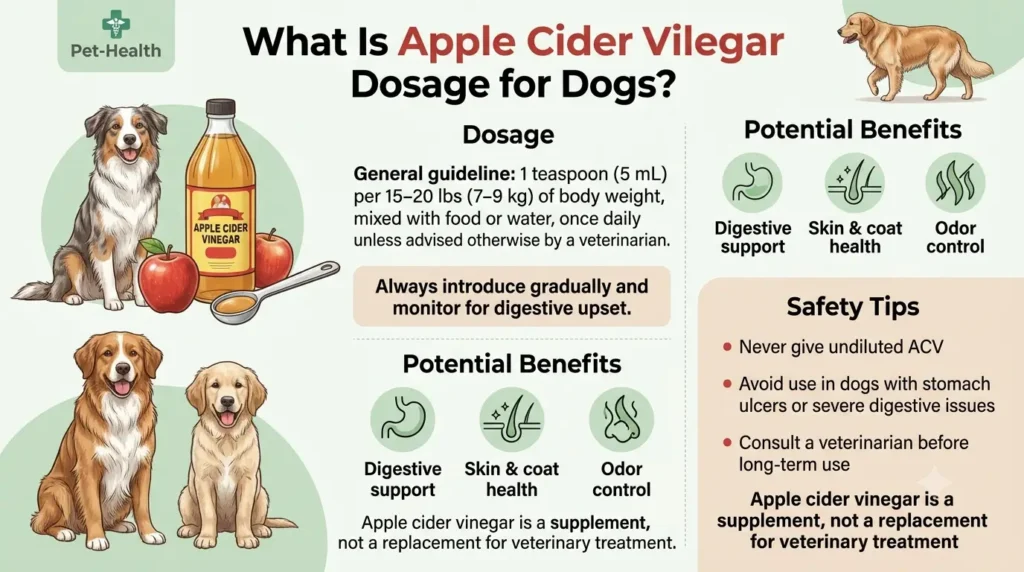
Apple cider vinegar (ACV) dosage is a special kind of vinegar that is derived from crushed apples, apple juice or apple pectin and is produced through a two-step fermentation process. The natural sugars in apples are first turned into alcohol by yeast. Acetic acid bacteria then convert the alcohol to acetic acid, which is the main compound that gives vinegar its sour taste, pungent smell and properties.
The term “vinegar” is derived from Latin words that mean “sour wine” and indicates the fermentation process used in the production of vinegar from sugars to alcohol and to vinegar. Apple cider vinegar is a product that has been around for thousands of years and is utilized in cooking, food preservation, drinks and traditional remedies.
Many raw apple cider vinegars have a ‘mother’ – a web-like substance, referred to as ‘the mother,’ which is produced during the fermentation process. The mother is a blend of beneficial bacteria, enzymes, proteins and naturally occurring acetic acid bacteria. It is typically in the raw, organic, unfiltered and unpasteurized apple cider vinegar options. Some prefer apple cider vinegar with the mother as it is less processed and could contain higher levels of naturally occurring compounds. Mother can be distributed throughout the liquid by shaking the bottle before use, as the mother may settle at the bottom.
Apple cider vinegar dosage for dogs is often unpasteurized and raw, while distilled white vinegar is more commonly used to cook and for household cleaning; it is frequently a dietary supplement and natural health product. It is popular among people and pet owners due to its unique production process, and the presence of natural acetic acid.
Is Apple Cider Vinegar Safe for Dogs and Puppies?
When used correctly, in moderation, and diluted, Apple Cider Vinegar (ACV) is safe for both dogs and puppies. But safe does not mean “no risk. Although apple cider vinegar is a popular supplement by many pet owners and holistic practitioners, there is a lack of scientific evidence of health benefits for dogs, and in some cases it can actually have negative effects if not used properly.
Raw, organic, unfiltered and unpasteurized apple cider vinegar for dogs are the preferred types. These products have the “mother,” a cloudy substance which consists of beneficial bacteria, yeast, enzymes and fermentation by-products. The mother tends to settle at the bottom of the bottle, so shake the bottle prior to using to evenly distribute these components.
Acetic acid, the main active ingredient in apple cider vinegar, is a weak acid that can be used to help lower LDL cholesterol levels. Acetic acid is a natural disinfectant, antibacterial & antifungal and can also be used for cleaning, but it can be a problem for a dog if it’s not used properly. Prolonged contact with undiluted ACV can result in vomiting, diarrhea, drooling, loss of appetite, stomach upset, or skin irritation. Dogs who lick ACV treated areas may experience gastrointestinal upset and topical applications may be especially irritating on sensitive, inflamed or damaged skin.
Puppies should be handled with extra care as they tend to have a more sensitive tummy and skin than grown-up dogs. When using ACV with puppies it should always be diluted and slowly added, watching for any adverse reactions.
Apple cider vinegar is said to help maintain pH levels, immune function, skin health, coat health, gut health and digestion in proper amounts. May also apply as a dilute topical rinse or spray due to its cleansing effect. But apple cider vinegar is not a scientifically valid treatment for itchy skin, digestive problems, ear infections, pH imbalance or any other medical condition, nor is it a proven flea treatment. Only give ACV to dogs under veterinary supervision if they have a chronic health issue, like diabetes.
Each dog is different so it is recommended that you start with small doses, dilute properly and if any ill effects are seen, stop use. When introducing apple cider vinegar to your dog’s diet or care routine, always consult your veterinarian about the suitability of the product for your pet’s specific health needs.


Paid Links - As an Amazon Associate, I earn from qualifying purchases.
What Are the Benefits of Apple Cider Vinegar for Dogs?

Dog owners often use apple cider vinegar (ACV) as a natural supplement to help promote well-being and a healthy lifestyle, and as a topical treatment. While most of its uses are anecdotal and not scientifically proven, Apple Cider Vinegar for Dogs (Benefits) can be used safely in moderate amounts to aid in digestive health, skin care, as an ear cleaner and well-being when it’s diluted properly.
The most popular advantages of apple cider vinegar for dogs are:
- Promoting good digestion and assimilation
- Helps maintain healthy skin and a shiny coat
- Helping to remove itchy skin, paws and dandruff
- Maintaining a clean ear and minimizing the growth of yeast
- As a natural tick and flea repellent
- Maintaining the urinary tract’s health
- Helping maintain joint comfort and mobility
- Helping to maintain good oral health and clean breath
Supports Healthy Digestion
One of the most common applications of apple cider vinegar for dogs is to promote digestion. ACV for dogs can help to increase the production of digestive enzymes and stimulate stomach acid, which can help with the digestion of food. Some dog owners say they have noticed a decrease in bloating, gas, burping and mild digestive upset and even some diarrhea when they have added small amounts of ACV to their dog’s diet.
Promotes Skin and Coat Health
Apple cider vinegar is often a remedy to keep skin and fur healthy. Diluted ACV can help to restore the natural pH balance in the skin, as well as to lessen the skin irritation caused by allergies, hot spots, insect bites and yeast overgrowth. Additionally, many owners have decided to use ACV rinses during baths to promote shinier hair and minimize dandruff.
Helps Maintain Ear Health
If your dog is susceptible to itchy ears or yeast ear infections, then using ear-cleaning solution with proper diluted apple cider vinegar can help. ACV is frequently employed to help maintain cleanliness of the ears and to deter the growth of yeast, but should only be applied to non-irritated, non-inflamed and undamaged ears under veterinary supervision.
May Repel Fleas and Ticks
Diluted apple cider vinegar sprays are an alternative natural way some pet owners use to repel mosquitoes. The potent smell of ACV is thought to repel fleas and ticks from a dog’s skin and fur. But, the scientific proof that it works as a flea and tick repellent/removal product is still lacking.
Helps maintain healthy urination
Apple cider vinegar can be occasionally utilized to keep up a solid urinary condition. Some supporters feel that it can contribute to lessen the production of specific urine crystals and also make urine tract troubles not reoccur, but more research is required.
May Improve Joint Comfort
Some dog owners claim that the acetic acid and antioxidant properties in apple cider vinegar can help to relieve inflammation that is linked to arthritis and joint discomfort as a result of aging. For this reason, ACV is sometimes employed to assist mobility, versatility and overall joint well-being.
Contains Antioxidants and Nutritional Support.
Fermented apple cider vinegar is low in B vitamins and antioxidants. These nutrients are important in playing a number of roles in the body such as:
- Converting food into energy
- Promoting well hydrated skin and coat.
- Using protein, fat and carbohydrates for energy
- Helps maintain good cell function
- Aiding in blood production
- Strengthening the immune system
- Antioxidant – protects cells from free radical damage
May help control blood sugar levels.
In humans, some studies indicate that acetic acid can improve insulin sensitivity and aid in maintaining healthy blood sugar levels. For this reason, some owners think that ACV can help their dog maintain good metabolic health and healthy weight management. But apple cider vinegar should only be given to dogs with diabetes or dogs that are on insulin with the guidance of a veterinarian.
Designed for more than just health benefits.
Apple cider vinegar is not only used for the wellness but also can be used as a natural cleaner and deodorizer around the house. Many dog lovers use diluted ACV to clean their dog beds, pet toys, grooming equipment and more, without resorting to damaging chemicals.
Although apple cider vinegar can have a number of possible benefits for dogs, it should be considered a supplement to promote wellness rather than a medical solution. Each dog may have different outcomes and a veterinarian is always advised before adding ACV to your dog’s diet.
Risks and Safe Uses of Apple Cider Vinegar for Dogs
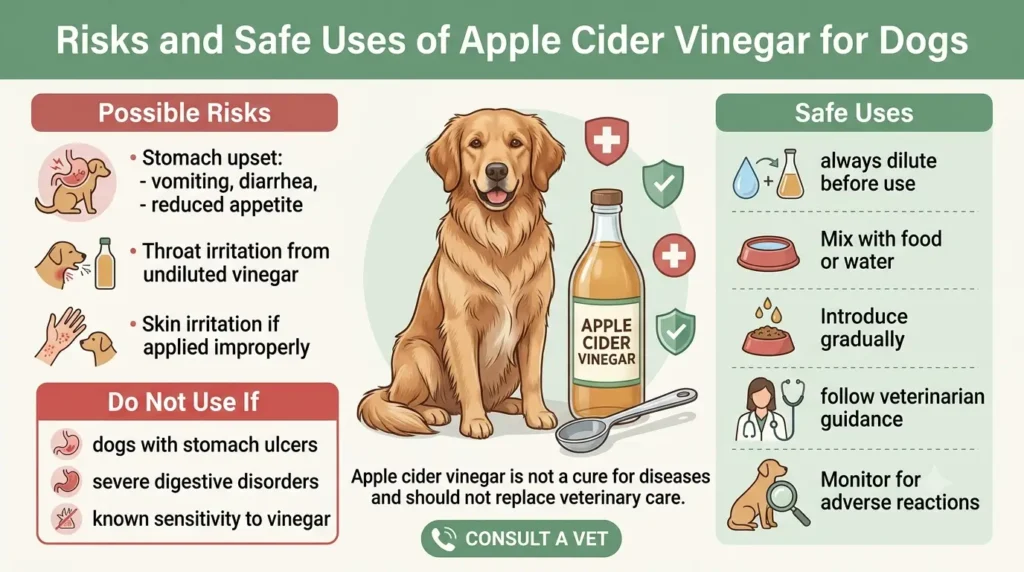
Although apple cider vinegar (ACV) is commonly used as a natural remedy for dogs, it is not completely risk-free. ACV, when used incorrectly particularly in undiluted form, can lead to discomfort and can aggravate certain conditions. Before incorporating apple cider vinegar into your dog’s routine, it’s crucial to be aware of its potential benefits as well as the precautions to take.
There are a few potential risks of using apple cider vinegar for dogs.There are some potential dangers of using apple cider vinegar for dogs.
Most of the side effects of apple cider vinegar are due to its acidic content.
Common risks include:
- Gastrointestinal upset – vomiting, diarrhea, drooling, stomach upset, decreased appetite.
- Topical use causing skin irritation, dryness, redness and inflammation.
- If applied to skin that is irritated, damaged or inflamed, risk of worsening of the skin infection.
- In severe cases, stomach ulcers can develop, especially if the ACV is taken in its pure form.
- Dogs that lick ACV off their skin or coat may have upset stomachs.
- Dogs with sensitive skin or a pre-existing medical condition may be more likely to have a negative response.
Due to these risks, undiluted apple cider vinegar should NOT be administered orally or directly to a dog’s skin.
Yes, Apple Cider Vinegar is safe to use on a dog’s paws.Apple Cider Vinegar is safe for a dog’s paws.
It can be applied to itchy, irritated or inflamed paws with diluted apple cider vinegar. It also has antimicrobial activity, which helps eliminate germs on the skin and gives temporary relief of itching. A popular way is to mix equal parts ACV and water and use that as a bath or rinse instead of soaking the paws in ACV.
To use topically in a safer manner:
- Dilute the ACV with water (in a 2:1 ratio).
- Do not apply more than twice a week.
Before using, check for cuts, sores or open wounds. - Do not get in eyes.
Rinse the solution off after 2-3 minutes.
Whenever possible, use raw, organic, unfiltered apple cider vinegar.
Is it OK to put Apple Cider Vinegar in a dog’s ear?
A dog’s ears or ear canals should NOT be used to place apple cider vinegar. When applied to the ears, ACV can cause ear dryness, irritation, inflammation and could damage the sensitive ear structures. It can also make ear infections worse.
Your dog may be suffering from some of the following symptoms:
- Ear redness
- Discharge
- Unpleasant odor
Scratching or head shaking - Pain or sensitivity
Check with a vet for correct diagnosis and treatment.
Does apple cider vinegar kill fleas?Can Apple Cider Vinegar Kill Fleas?
At this time there is no scientific research that proves that apple cider vinegar is effective in killing fleas. Some pet owners also think that the strong smell has a deterrent effect on flea and tick infestations, but ACV has not yet been demonstrated to control infestations. Flea and tick preventatives approved by a veterinarian are the most effective and safest methods of prevention.
Can Apple Cider Vinegar cure a yeast infection?Is Apple cider vinegar good for yeast infection?
At present, there is no proof that apple cider vinegar will cure a yeast infection in dogs. ACV does not treat most yeast infections because they are related to other problems like skin conditions or allergies. In some instances, it may be applied topically and cause irritation, odor and itching, especially if applied without dilution.
Apple Cider Vinegar: A Natural Antibiotic?
Apple cider vinegar has some antimicrobial properties, according to laboratory studies. But there is little evidence to demonstrate that it is an effective antibiotic for dogs. If the infection is caused by bacteria, your dog needs to be diagnosed and treated by a veterinarian.
There are various common uses of apple cider vinegar for dogs.
Apple cider vinegar when diluted and used responsibly, is used for a number of non-medical purposes:
Dietary Supplement
Some pet owners may feed their pets diluted amounts of ACV in food or water. It’s used for supporting:
- Digestive health
- Blood sugar regulation
- General wellness
- Inflammation management
Keep skin and coat in good condition.Maintain good skin and coat.
Diluted ACV is frequently used after bathing to:
- aid in the maintenance of pH balance of the skin
- Relieve light itching and irritation
- Improve coat condition
- Minimize odors
Dental Hygiene
There are owners that are applying the apple cider vinegar diluted in their dog’s oral care routine. With proper usage, it can aid in maintaining a fresher breath and may help lower the amount of bacteria that may be present in the mouth.
Natural Household Cleaner
Apple cider vinegar can also be utilized in household cleaning that is safe for the pet. A diluted mixture can be used to clean:
- Dog toys
- Bedding
- Water bottles and cups
- Floors and other pet areas
Its natural deodorizing and cleaning properties make it a popular alternative to some chemical-based cleaners.
Apple cider vinegar can be used in many ways, but do not rely on it as a substitute for veterinary attention, prescribed medication or effective treatment of infections, parasites or chronic medical conditions. Safe use requires proper dilution, moderation and veterinary guidance.
Side Effects of Apple Cider Vinegar for Dogs
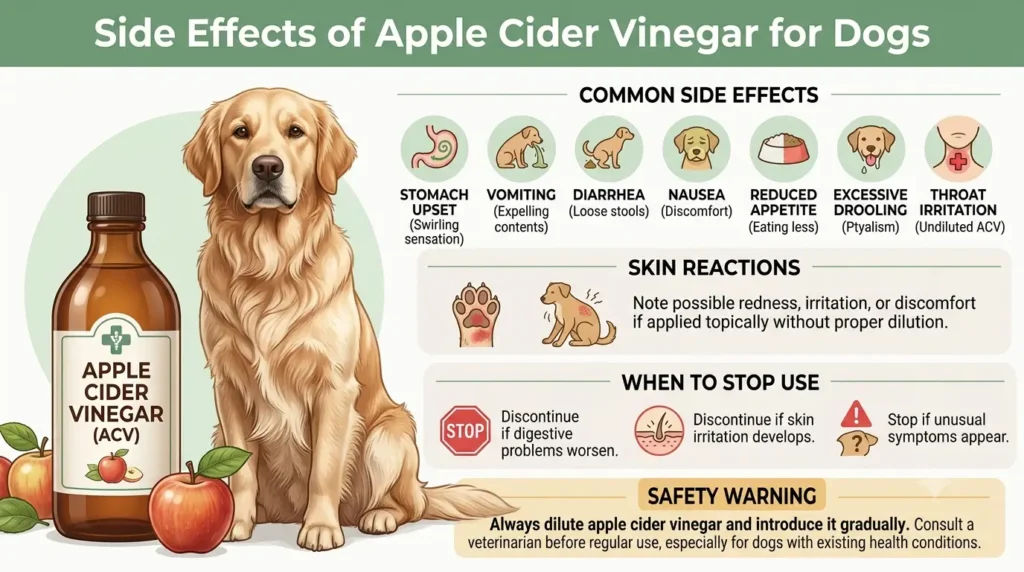
Apple cider vinegar (ACV) is safe when used in the proper concentration and quantity, but it may have side effects on dogs. Adverse reactions are more likely to occur if ACV is administered in high doses, too often, undiluted, or if a dog has some underlying health issues.
Digestive Upset
Apple cider vinegar is acidic and it is the most frequent side effects experienced by most people in the digestive system. Some dogs may experience:
- Vomiting
- Diarrhea
- Constipation
- Stomach irritation
- General gastrointestinal discomfort
It is possible that dogs with naturally low body pH (less than 6) might be more prone to these reactions. Discontinue use and seek veterinary attention if digestive symptoms occur after introducing ACV.
Worsen Certain Health Conditions: May be exacerbated by higher temperatures.
As apple cider vinegar is an acid type of vinegar, it can irritate conditions relating to an already acid body. Dogs suffering from kidney disease or other health problems which can impact pH balance might be more susceptible to any negative effects of oral ACV supplementation.
Your veterinarian can test your dog’s pH levels in the urine, or with other diagnostics tests, if you are unsure if ACV is appropriate for your dog.
Irritation of the skin and dryness.
Apple cider vinegar when applied topically can lead to:
- Skin irritation
- Redness
- Dry skin
- Increased sensitivity
ACV can be used too often and cause drying out that can lead to increased irritation, especially in sensitive dogs.
Burns on Open Wounds
Never use Apple Cider Vinegar on:
- Open wounds
- Cuts
- Scrapes
- Sores
- Any broken or irritated skin.
Due to its acidity, ACV can cause a painful burning sensation and may further irritate injured tissue.
Eye Irritation
If a dog gets apple cider vinegar in his eyes, it can be very irritating. No matter how any of these medications is used topically, care should always be taken to avoid accidental exposure.
Steps to Minimize Side Effects.
To help minimize adverse reactions:
- Be sure to dilute the apple cider vinegar prior to application.
- Never give undiluted ACV orally.
- Don’t apply ACV to open wounds or damaged skin.
- Do not overuse topical treatments as this can cause the skin to become dry.
- Closely watch your dog when initially introducing ACV.
- If your dog has an underlying and long-term health problem, such as chronic kidney disease, check with your vet before using ACV.
Should your dog get vomiting, diarrhea, any type of skin irritation or other strange symptoms after the application of apple cider vinegar, stop using and consult your vet.
You May Also Like to Read:
- Kaopectate Dosage For Dogs: Calculator, Chart & Safe Guide
- Interceptor Dosage For Dogs: Calculator & Safe Dosage Guide
FAQs
Is it safe for dogs to drink apple cider vinegar dose?
Yes, apple cider vinegar is safe for most dogs to consume if it is diluted and used appropriately. Some may get tummy upsets though and best to start slowly and watch for tummy upset.
So what’s the best apple cider vinegar dose for dogs?
It is usually best to use raw, organic, unfiltered and unpasteurized apple cider vinegar with the “mother. The bacteria, enzymes and fermentation compounds present in this form are naturally occurring and are lost during processing.
What is the proper dosage of apple cider vinegar for dogs?
Apple cider vinegar can be added to food or can be diluted in drinking water. Can also dilute and apply topically for some skin and coat uses. Dogs should never be fed undiluted apple cider vinegar.
Does apple cider vinegar work for itchy skin?
Diluted apple cider vinegar has been used to treat mild itching, skin irritation and dandruff, some say. It is not to be used on open wounds, on irritated or inflamed skin and on severely irritated areas.
Can you kill a dog’s fleas with apple cider vinegar?
No. At this time there is no scientific evidence that apple cider vinegar is effective at killing fleas. Some believe that its smell can be effective in repelling parasites but it is not regarded as a main flea-control approach.
Does apple cider vinegar cure dog’s ear infections?
No. Apple cider vinegar is not an effective treatment for ear infections, and can make things worse if it is put in the ear canal. If your dog is exhibiting any of these symptoms of an ear infection, it’s time to see the vet.
Is there any side effects of apple cider vinegar for dogs?
Side effects may include vomiting, diarrhea, constipation, salivation, reduced appetite, stomach upset, dry skin and redness. These effects are more likely if ACV is used without dilution, or is used in excess.
Can puppies drink apple cider vinegar?
Puppies can be safely treated with apple cider vinegar if it is used sparingly and diluted. Since puppies’ digestive systems and skin are more sensitive, veterinary advice should be sought before using.
Does apple cider vinegar help dogs digest food?
Some owners and holistic practitioners think that apple cider vinegar can help with digestion, stimulate the production of stomach acids and enhance nutrient absorption. But, there is still not enough scientific data on this benefit for dogs.
At what age do you stop giving apple cider vinegar to a dog?
If your dog starts to vomit, has diarrhea, won’t eat or drink, starts to drool a lot, or has skin irritation or other strange reactions, you should stop using it. If symptoms persist or worsen, contact your veterinarian for advice.
Final Thoughts
A popular natural supplement by dog owners is apple cider vinegar dosage for dogs, which is used to aid their pet’s overall health. It can be diluted and used as needed to benefit stomach and bowel function, skin and coat condition, ear care, joint health and overall health. Some owners also use it to clean things naturally, or for the grooming of their dog.
But, it is vital to remember that you should not have unrealistic expectations. Although many benefits have been seen anecdotally, there is limited scientific evidence to support many of the claims regarding dogs. It’s important to note that Apple Cider Vinegar does not cure fleas or ear infections, or yeast infections, or urinary problems or any medical issues, or even take the place of veterinary assistance when your dog is sick.
Whenever you decide to use apple cider vinegar for your dog, select a high-quality raw, organic, and unfiltered apple cider vinegar, add it slowly and be sure to dilute it properly. Always watch your dog closely for any stomach upset, skin irritation or other reactions, and stop using if issues arise.
In conclusion, while apple cider vinegar can be a valuable addition to certain dogs’ diets, it should be used with care, and it’s best to consult with your veterinarian before incorporating it into your dog’s health regimen. Apple cider vinegar can be used to assist your dog in being happy and healthy, but it should be combined with proper nutrition, veterinary care, regular exercise and a healthy lifestyle.