Disclaimer: All information in this guide is provided for educational purposes only and should never replace professional veterinary advice.
Amitriptyline Dosage Calculator For Dogs
Educational calculator based on common veterinary dosage guidelines.
Estimated Amitriptyline Dose
• 10 mg
• 25 mg
• 50 mg
Your veterinarian may prescribe the closest tablet strength or a compounded formulation for accurate dosing.
✔ Give with food to reduce stomach upset.
✔ Full improvement often takes 2–4 weeks.
✔ Anxiety cases are commonly treated every 12 hours, while some conditions may require once-daily dosing.
✔ Never stop amitriptyline suddenly. It should be tapered gradually under veterinary supervision.
This calculator provides an educational estimate only and is intended for dogs. The correct dose depends on your dog’s medical condition, age, other medications, liver function, and your veterinarian’s treatment plan.
© medsdog.com
Amitriptyline for dogs is a tricyclic antidepressant (TCA) drug that is commonly used off-label for anxiety-related and some chronic medical problems in the dog. It was initially created to treat depression in human beings, however, dogs are not treated in the same manner for clinical depression.


Paid Links - As an Amazon Associate, I earn from qualifying purchases.
Rather, amitriptyline is used by vets to treat dogs with separation anxiety, generalized anxiety, compulsive behaviors, excessive grooming, some forms of chronic itch, nerve pain, and, in some cases, urinary problems. Its sedative, anti-allergic, sedative and pain modulating properties make it useful in a limited number of canine patients.
Amitriptyline is not FDA approved for use in dogs, however, licensed veterinarians may legally use it as an extra-label (off-label) medication when it is determined to be the most beneficial therapy. The drug’s mechanism of action is thought to increase the availability of important neurotransmitters, mainly serotonin and noradrenaline, as well as the effect of drugs on histamine and acetylcholine receptors.
The activities assist in mood regulation, decreasing anxiety, easing some pains and reducing itching and allow for calmer behaviour. But each dog is an individual, so amitriptyline isn’t the initial drug of choice for dog behavior issues.
Amitriptyline medication may be recommended by your veterinarian as part of an overall treatment program for destructive behavior, self harm, severe anxiety, excessive licking/grooming, and chronic nerve discomfort, in addition to behavior modification and environmental management. It typically takes 2-4 weeks for the medication to take effect so it is important to be patient and to take the medication consistently.
Amitriptyline dosage for dogs: complete guide, dosage chart, calculator, administration tips, benefits, side effects, precautions, drug interactions and when it is or isn’t appropriate. Knowing the mechanism of action and how to use amitriptyline safely will help you to maximize the benefit to your dog while reducing the risk of adverse action.
Key Takeaways
- Amitriptyline is a tricyclic antidepressant (TCA), and is used in dogs off label to treat separation anxiety, generalized anxiety, compulsive behaviors, chronic itching, nerve pain, and some urinary diseases.
- The usual dose for dogs is 1-2 mg/kg (0.5-1mg/lb) every 12-24 hours, although under veterinary supervision, some dogs may be given up to 3mg/kg.
- Amitriptyline comes in tablet form, and can also be compounded into a liquid, which helps to dose dogs of all sizes.
- The drug can have mild effects in just 30 minutes to a few hours, but its full therapeutic effect requires 2-4 weeks of consistent use.
- Sedation (sleepiness), dry mouth, constipation, urine retention, reduced food and water intake, vomiting, diarrhea, incoordination and occasional hyperexcitability are common side effects. Side effects are usually mild but if they don’t subside or are severe, veterinary attention is required.
- More serious but less common side effects include overdose toxicity, particularly when the drug is administered incorrectly, abnormal heart rhythms (arrhythmias), seizures and severe urinary retention.
- Amitriptyline should be given with food, if possible, to decrease stomach upset and to make it easier to tolerate.
- Do not abruptly discontinue Amitriptyline. If a dog is being treated for a long period of time, the dosage should be gradually reduced (tapered) under veterinary supervision to avoid withdrawal symptoms.
- Amitriptyline may have interactions with numerous other drugs and should be used with care in dogs with heart disorders, liver disease, glaucoma, seizure disorders, diabetes, thyroid disease, urinary retention, and adrenal disorders.
- Do not use any prescription drugs on a dog without a veterinarian’s knowledge or give the correct medicine at the wrong dose. However, it is important to always follow your veterinarian’s instructions since the safe dose depends on the medical condition, other medications, and the weight of your dog.
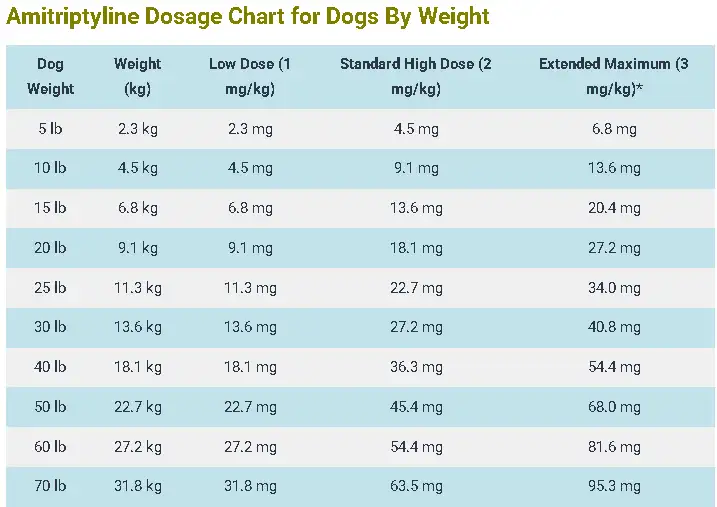
Amitriptyline Dosage Chart for Dogs By Weight
Standard veterinary dosage: 1–2 mg/kg of body weight every 12–24 hours (some veterinarians may prescribe 1–3 mg/kg depending on the condition and individual patient).
| Dog Weight | Weight (kg) | Low Dose (1 mg/kg) | Standard High Dose (2 mg/kg) | Extended Maximum (3 mg/kg)* |
|---|---|---|---|---|
| 5 lb | 2.3 kg | 2.3 mg | 4.5 mg | 6.8 mg |
| 10 lb | 4.5 kg | 4.5 mg | 9.1 mg | 13.6 mg |
| 15 lb | 6.8 kg | 6.8 mg | 13.6 mg | 20.4 mg |
| 20 lb | 9.1 kg | 9.1 mg | 18.1 mg | 27.2 mg |
| 25 lb | 11.3 kg | 11.3 mg | 22.7 mg | 34.0 mg |
| 30 lb | 13.6 kg | 13.6 mg | 27.2 mg | 40.8 mg |
| 40 lb | 18.1 kg | 18.1 mg | 36.3 mg | 54.4 mg |
| 50 lb | 22.7 kg | 22.7 mg | 45.4 mg | 68.0 mg |
| 60 lb | 27.2 kg | 27.2 mg | 54.4 mg | 81.6 mg |
| 70 lb | 31.8 kg | 31.8 mg | 63.5 mg | 95.3 mg |
| 80 lb | 36.3 kg | 36.3 mg | 72.6 mg | 108.9 mg |
| 90 lb | 40.8 kg | 40.8 mg | 81.6 mg | 122.5 mg |
| 100 lb | 45.4 kg | 45.4 mg | 90.7 mg | 136.1 mg |
Notes:
- The commonly recommended dosage for dogs is 1–2 mg/kg every 12–24 hours.
- The 3 mg/kg column represents an upper end of the broader veterinary dosing range used in selected cases under veterinary supervision.
- Give amitriptyline with food to help reduce stomach upset.
- Improvement may take 2–4 weeks before full effects are seen.
- Do not stop amitriptyline suddenly; it should be tapered gradually as directed by your veterinarian.
- Tablet strengths commonly available include 10 mg, 25 mg, and 50 mg, though compounded formulations may be used for more precise dosing.
What Is Amitriptyline, and How Does It Work?
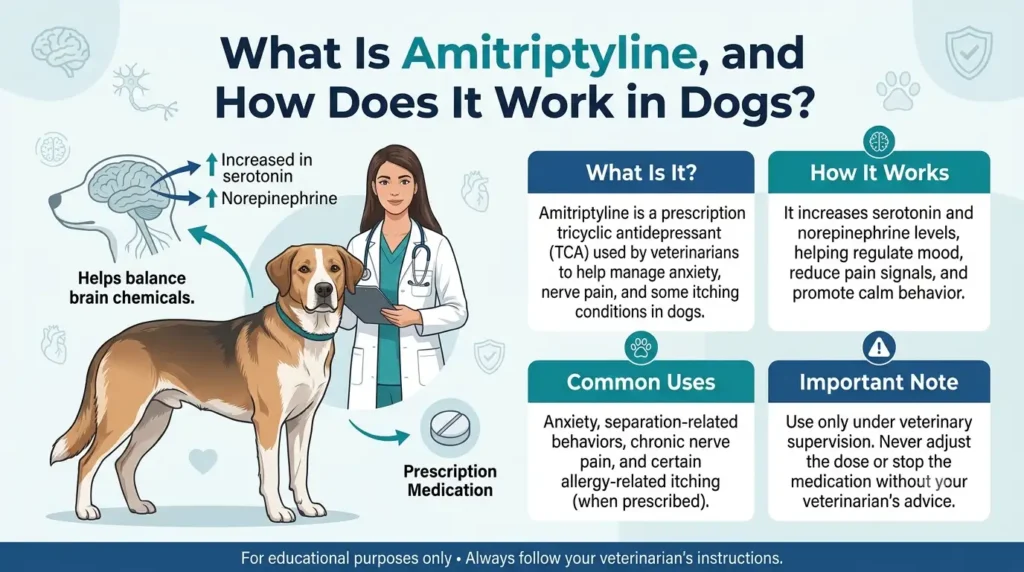
Amitriptyline (Elavil®, Levate®) is a tricyclic antidepressant (TCA) drug that was originally designed for use in humans and approved by the FDA in 1961. It has been utilized in veterinary medicine for over two decades for the management of a range of ailments in dogs such as generalized anxiety, separation anxiety, behavioural disorders, chronic nerve pain, itchiness and some urinary disorders. It is not FDA approved for use in pets but is a popular off-label (extra label) prescription due to its availability, low cost and established efficacy in a number of health ailments in dogs.
Amitriptyline dosage for dogs acts by blocking the re-uptake of two important chemical messengers (neurotransmitters) serotonin and norepinephrine, so that they stay longer in the brain. Rising levels of serotonin and norepinephrine help regulate mood, emotions, pain perception and some physiological functions, making the medication effective with anxiety, chronic pain, and some urinary issues. Furthermore, amitriptyline also affects dopamine, which may further help to stabilize mood and lessen the perception of pain.
Amitriptyline dose for dogs also inhibits alpha-1 adrenergic receptors that may contribute to decreasing fear and anxiety behaviors. It is also an antihistamine which means it blocks the effects of histamine to help with secondary calming and anti-itch effects, but is not a primary allergen treatment.
These various modes of action allow amitriptyline to be used to enhance behavior and some physical issues in a canine under veterinarian guidance.
Amitriptyline comes in oral tablets in different strengths from 10mg to 150mg. A dose is based on your dog’s weight, and they can take it with or without food. Tablets are to be kept at room temperature, out of direct sunlight. Veterinary dosing practices may vary from that of the human product label, therefore follow veterinarian’s instructions carefully.
What Is Amitriptyline Used for in Dogs?
Amitriptyline is a tricyclic antidepressant (TCA) drug that veterinarians use off-label for a variety of behavior and medical problems in dogs. It is most popular for generalized anxiety and separation anxiety, but also can be beneficial in managing some forms of chronic pain, itching, compulsive behavior, and urinary issues. Amitriptyline has multiple mechanisms of action and it is an anti-histamine which can make a dog feel better on many levels.
Amitriptyline can be prescribed by a veterinarian for the management of:
- Generalized anxiety, Separation anxiety
- Fear-related behaviors, such as noise phobias to thunderstorms or fireworks and travel anxiety
- Obsessive compulsive behaviors (excessive licking, tail chasing, overgrooming and other repetitive behavior)
- Become aggressive and dominant with others in specific instances
- Pain due to nerve damage (neuropathic pain), such as pain due to osteoarthritis and intervertebral disc disease (IVDD)
- As an adjunct to treat chronic itching (pruritus) due to its antihistamine activity
- Some urinary issues such as some dogs house soiling
Dogs can show signs of anxiety in a variety of ways, which isn’t always the same as in humans. They might be restless, pace, bark a lot, destroy furniture, be aggressive or lick themselves a lot rather than look “depressed. Amitriptyline may be useful in decreasing these behaviors and making dogs less uptight and uncomfortable.


Paid Links - As an Amazon Associate, I earn from qualifying purchases.
Amitriptyline medication for dogs may work, but it is not the first drug that veterinarians would consider to treat behavioral issues. It is most effective when coupled with a long-term plan of behavior modification that can include:
- Positive reinforcement training
- Mentally stimulating activities and physical activity
- Stress reduction strategies
- Elements of desensitization and counter-conditioning for fears and phobias.
In addition to amitriptyline, some veterinarians might also suggest using dog-appealing pheromones or melatonin to help manage anxiety. For most dogs, a combination of medication and behavior therapy is likely to work best in the long term.
What Are the Common Side Effects of Amitriptyline in Dogs?
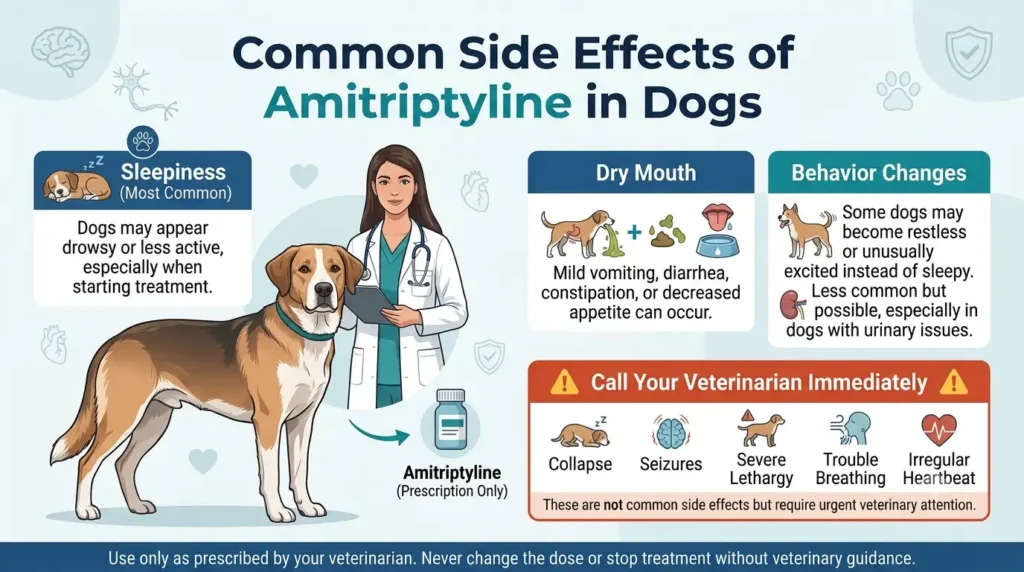
Amitriptyline is usually well tolerated in dogs, but as with all drugs, may have side effects. Most reactions are mild and transient, particularly if the treatment is started, and some will need a dose adjustment or veterinary intervention. However, since dogs have different reactions to the medicine, your veterinarian may want to check your dog every 6-12 months if it is taking this medication long term to make sure it is safe and effective for your dog.
Amitriptyline side effects in dogs are most frequently:
- Sedation, drowsiness (most common side effect)
- Constipation
- Dry mouth
- Urinary retention (holding or passing urine is difficult)
Additional side effects may be:
- Vomiting or diarrhea
- Decreased appetite
- Increased thirst
- Dry eyes that have mucous discharge
- Dilated pupils
- Poor co-ordination (ataxia) or disorientation
- Some dogs are not sleepy, but become more active, excited or shivering.
- Weight gain
- Abnormal, fast or irregular heartbeats (arrhythmias).
- A low level of white blood cells and platelets (rare).
- Suppression of bone marrow (rare)
- Hormonal (endocrine) changes
- This is rare and causes confusion or change of the color of the tongue.
- Rare but serious seizures (fits or convulsions).
One of the most frequent side effects noted is constipation. Constipation or urinary retention can be mild and occur from time to time, but if it occurs too often it can cause complications like urinary tract infections (UTIs) or discomfort. Similarly, if your dog vomits slightly, has diarrhea or refuses to eat, this could get better but if they become dehydrated, lose weight or the symptoms get worse, call your veterinarian right away.
Amitriptyline typically stays in a dog’s system for 12–24 hours and the effects typically dissipate within a few days of discontinuing the drug. But, this drug can have a prolonged effect in dogs with liver or kidney disease.
Amitriptyline alters the levels of the chemicals in the brain, so it is not to be stopped suddenly. To minimize withdrawal symptoms and a smooth transition, your veterinarian should slowly decrease the dosage.
Drug Interactions and Precautions
Amitriptyline may interact with a number of medicines and cause some complications including serotonin syndrome, which is a potentially life-threatening condition, if too much serotonin is produced. Use caution when used in combination with, or avoid using, the following:
- Antidepressants (SSRIs, for example, fluoxetine/Prozac®)
- Monoamine oxidase inhibitors (MAOIs)
- Trazodone
- Clonidine
- Antihistamines
- Barbiturates
- Opioids, including tramadol
This drug should also be used with caution in dogs with:
- Heart disease or heart arrhythmias.
- Seizure disorders
- Disease of liver or kidneys
- Hyperthyroidism, or dogs that are on thyroid hormone replacement therapy
- Diabetes
- Glaucoma
- Dry eye
- Urinary retention
Use of amitriptyline is usually not recommended for puppies, pregnant or lactating dogs, or for older dogs unless the veterinarian considers the risks to be less than the benefits. Tell your veterinarian if your dog is already taking any other medications, vitamins, supplements or herbal products before you begin taking amitriptyline.
What Are the Most Serious Risks of Amitriptyline for Dogs?
When used and supervised by a veterinarian, amoxyclav is generally safe, but it has some serious side effects and complications for some dogs. The risk increases if the dosage is incorrect, the medication is used with other drugs, and/or if the dog has other health problems. If your dog has any serious or unusual symptoms while taking amitriptyline, contact your vet right away.
Out-of-the-ordinary side effects to be wary of
The most severe side effects, although rare, are:
- Rapid heartbeat or irregular heartbeat (cardiac arrhythmias)
- Seizures or tremors
- Lower levels of blood cells
- Continued vomiting or diarrhea.
- Hormonal (endocrine) imbalances
If you think your dog has been taking too much amitriptyline (overdose), get emergency veterinary attention or contact a pet poison hotline right away.
Dogs that may be at higher risk are:
Dogs with the following should not be given amitriptyline:
- A history of an allergy or sensitivity to tricyclic antidepressants (TCAs)
- Hyperthyroidism
Should be used with extreme caution or only if the benefit outweighs the risk in dogs with:
- Epilepsy (drug may lower seizure threshold).
- Heart disease or cardiac arrhythmias.
- Liver disease or decreased liver function.
- Kidney disease
- Diabetes or other endocrine disorders (may increase blood glucose)
- Glaucoma, dry eye (keratoconjunctivitis sicca)
- Urinary retention
- Thyroid disease
- Adrenal gland tumors
- Dogs that are very young or are senior dogs.
Drugs during pregnancy and nursing
dog amitriptyline dose is not recommended in pregnancy or lactation because it has been linked to foetal abnormalities; however, it is possible that the benefits of using it in these situations may outweigh the risks. It should also be avoided when breeding animals.
The drug may interact with numerous other drugs. Especially, monoamine oxidase inhibitors (MAOIs) should not be combined with amitriptyline. Some flea collars contain MAOIs, so these should be avoided while your dog is taking this medicine.
Important Precautions
amitriptyline dog dosage by weight isn’t a quick-acting drug. The therapeutic effects may take 7-10 days to show, and 2-6 weeks for the complete behavioral effects to be noticed. However, do not interpret early sedation, due to the antihistamine effects of the drug, as treatment success; this is a side effect, and not the complete therapeutic response. Diabetic dogs, dogs with liver disease and other dogs with chronic conditions may need more veterinary oversight during treatment to help minimize the risk of complications.
Does Amitriptyline Interact With Any Other Dog Medications?
Yes. In addition, it may interact with hundreds of other medications, supplements, and herbs; please be sure to inform your veterinarian about all of the medicines and supplements that your dog is taking prior to beginning treatment. Certain interactions may make certain problems more likely, such as serotonin syndrome, heart problems, too much sleepiness, or toxicity to amitriptyline and some interactions may make it less effective.
Medications that can interact with Amitriptyline are listed below:
The most significant drug interactions are:
- Monoamine oxidase inhibitors (MAOIs) like selegiline, amitraz and some flea collars (may lead to serotonin syndrome)
- Selective serotonin reuptake inhibitors (SSRIs), such as fluoxetine and sertraline.
- Other tricyclic antidepressants (TCAs), like clomipramine
- Tramadol and trazodone
- Medications such as alprazolam and diazepam, which are part of the class of drugs known as benzodiazepines
- Opioids, including buprenorphine
- Nonsteroidal anti-inflammatory drugs (NSAIDs) including carprofen, meloxicam, aspirin and ibuprofen
- Antifungal agents such as azole antifungals, ketoconazole and itraconazole
- Cimetidine
- Antiplatelet drugs such as warfarin.
- Thyroid drugs and anti-thyroid drugs
- Medications for the heart, such as diltiazem, antiarrhythmics and cardiac stimulants
- Anticholinergic medications
- Clonidine and guanabenz
- Phenobarbital and other barbiturates
- Rifampin
- Other drugs for seizures such as Levetiracetam and zonisamide
- Metronidazole, azithromycin, enrofloxacin and other antibiotics.
- Ondansetron, buspirone, cetirizine, cisapride, amantadine and many other prescription drugs
The importance of these interactions
When used in combination with amitriptyline, the use of certain medications can make you more likely to experience:
- A condition called serotonin syndrome (too much serotonin) can result in a life threatening situation
- Side effects on the heart, such as irregular heartbeats
- Over-sedation or central nervous system (CNS) depression
- When combined with anticholinergic drugs, hyperthermia and decreased intestinal movement (ileus)
- Increased levels of amitriptyline in the blood, putting one at greater risk for toxicity.
Veterinary Monitoring
Dogs treated with amitriptyline may need frequent veterinary check-ups to monitor heart function, urination, behavior and response to the medication, particularly if it is used in combination with other drugs or in long-term therapy. Sometimes, more monitoring or dose adjustments may be suggested to ensure the safety and effectiveness.
Always tell your veterinarian about any prescription or nonprescription medications, vitamins, supplements, herbal products, or flea and tick products your dog is taking before starting amitriptyline to avoid any possible interactions and for the safest treatment plan.
You May Also Like to Read:
- Diazepam Dosage For Dogs: Calculator, Chart & Safe Guide
- Vitamin E Dosage For Dogs: Calculator & Safe Dosage Guide
FAQs
So how long does it take amitriptyline for a dog?
Amitriptyline Dosage is not rapid acting. Some dogs will experience mild improvement within the first few days, and full therapeutic effect will be experienced 2-4 weeks later. Do not stop giving the medicine if there is no immediate improvement.
If my pet’s dose of amitriptyline is missed, what should I do?
Take missed doses as soon as you remember, unless it is almost time for the next dose. If it’s time for the next dose, skip and go back to the regular schedule. Never give two doses at the same time or less than 12 hours apart.
Is there a need to wean my dog off of amitriptyline?
Yes. Because of the effects of amitriptyline on brain neurotransmitters, the drug should never be discontinued abruptly. Your veterinarian will give you the instructions to do a gradual wean of the drug.
My dog is sleepy after taking amitriptyline – is this normal?
Yes. One of the most common side effects is drowsiness or the feeling of being a little sleepy, particularly in the first few weeks of treatment. As your dog gets used to the medication, he will sleep less. If severe or prolonged, contact your veterinarian.
Should I monitor my dog when he or she is taking amitriptyline?
Yes. Your veterinarian might want to perform blood tests, a complete blood count (CBC), or ECG or blood glucose monitoring before or during treatment, especially if your dog is undergoing long-term treatment or has existing health issues.
If the dog’s behavior indicates an overdose of amitriptyline, what should I do?
If an overdose is suspected, it is a veterinary emergency. Call the veterinarian or closest emergency animal hospital ASAP. Overdose of amitriptyline may result in severe cardiac arrhythmias, convulsions, and cardiorespiratory events.
Is there a possibility of an allergic reaction in dogs to amitriptyline?
Yes but it is rare. Amitriptyline should not be used in dogs that have been diagnosed with an allergy to tricyclic antidepressants (TCAs). If your dog develops hives, swelling of the face or trouble breathing after taking the medication, call your veterinarian immediately for emergency care.
Can amitriptyline help a dog that suffers from separation anxiety?
Yes. One of the common off-label uses of amitriptyline is to help control separation anxiety and generalized anxiety in dogs. It generally works best with behavior modification, positive reinforcement training and environmental management.
Final Thoughts
Tricyclic antidepressant medications are versatile drugs used for a variety of things, and amoxyclopromide is frequently used “off label” by veterinarians to treat anxiety, compulsive behaviors, nerve pain, chronic itching, and some urinary problems in dogs. It can be a valuable part of a complete treatment program that incorporates behavior modification, positive reinforcement training, environmental management and help your dog be more comfortable, more confident and enjoy a better quality of life.
Amitriptyline Dosage For Dogs is generally safe in many dogs, but is to be given under veterinary supervision. The proper dosage depends on your dog’s weight, condition, and other meds being administered. Safe and effective treatment depends on the careful attention of proper administration of the drug as prescribed by the veterinarian or the owner, and on the regularity of administration; it is important never to withdraw a drug treatment abruptly.
Regular physical examinations, blood tests, and/or heart monitoring may be recommended by your vet as amitriptyline may have side effects and interact with many medications, particularly in long term use. Amitriptyline can be a valuable tool for enhancing your dog’s overall health and well-being when used appropriately, with proper monitoring, and under veterinary supervision.