The only FDA-approved medication for the control of the clinical signs of canine cognitive dysfunction is selegiline, which is also sold as Anipryl® and is approved for the treatment of pituitary-dependent Cushing’s disease in dogs. It is a member of a group of drugs known as monoamine oxidase-B (MAO-B) inhibitors that act by enhancing the levels of dopamine in the brain.
Selegiline works by improving neurotransmitter function, which can help some older dogs be more alert, responsive and active while minimizing many of the behavioral changes associated with cognitive loss. It is not, however, a cure for dementia, it may not work for all dogs and should be used only with veterinary supervision as it may interact with some medicines and may not be suitable for all patients.
It is crucial to use the correct selegiline dosage for dogs to ensure its safety and effectiveness. The dosage will vary based on the condition being treated, your dog’s body weight, and your veterinarian’s assessment. Too little won’t be enough to be effective, and too much can carry additional risks.
This comprehensive guide includes a veterinarian-informed Selegiline Dosage for Dogs Calculator, a dosing chart by weight, administration tips, expected timeline for improvement, common side effects, drug interaction information, precautions, storage information, frequently asked questions, and important tips and advice to help you use this drug safely and confidently.


Paid Links - As an Amazon Associate, I earn from qualifying purchases.
Disclaimer: All information in this guide is provided for educational purposes only and should never replace professional veterinary advice.
Selegiline Dosage Calculator for Dogs
Starting dose for Canine Cognitive Dysfunction and hyperadrenocorticism
Estimated starting dose
Typical starting course: 2 to 4 weeks, or as directed by your veterinarian.
This calculator gives general guidance only and is not a substitute for veterinary advice. Always confirm the dose, product strength and duration with your veterinarian before giving selegiline to your dog.
Key Takeaways
- Selegiline (Anipryl®) is a prescription drug that is approved by the FDA for the treatment of canine cognitive dysfunction (dog dementia) and pituitary-dependent Cushing’s disease in dogs.
- It is a selective MAO-B inhibitor that increases the activity of dopamine in the brain, which can help to improve alertness, awareness and cognition in many senior dogs.
- The correct dosage of selegiline for dogs is determined by your dog’s body weight, medical condition and veterinarian recommendation; never change the dosing without veterinary advice.
- Selegeline dosage for dogs can take some time to begin to work and not all dogs will respond to it.
- Side effects are vomiting, diarrhea, restlessness, decreased appetite, and changes in sleep patterns; serious reactions need immediate veterinary attention.
- Your veterinarian should take into account all of your dog’s medications before prescribing selegiline, as it may interact with other drugs, such as certain antidepressants, opioids, and other MAO inhibitors.
- Follow your vet’s instructions for administering medication, keep an eye on your dog, and schedule follow-up visits to keep treatment safe and effective.
- To use Selegiline responsibly, this guide provides a Selegiline Dosage for Dogs Calculator, a dosage chart by weight, dosing instructions, safety precautions, side effects and FAQs.
How Much Selegiline Can I Give My Dog?
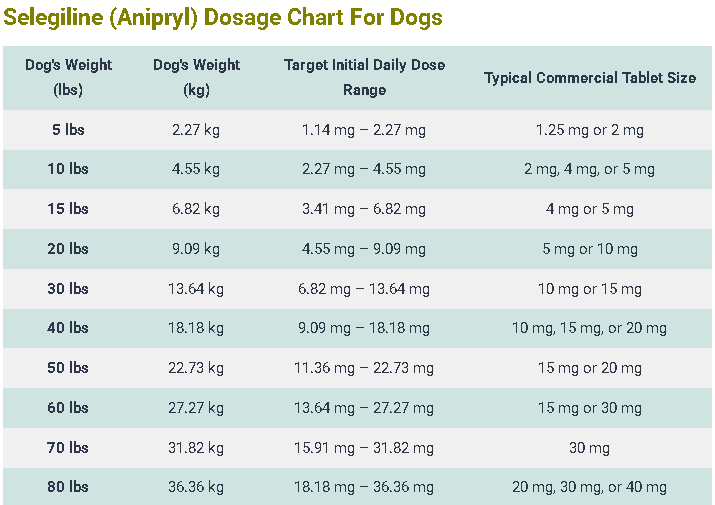
For the treatment of Canine Cognitive Dysfunction and hyperadrenocorticism the starting Selegiline dosage for dogs is 0.25 to 0.5 mg/lb (0.5 to 1 mg/kg) once daily in the morning for 2 to 4 weeks therapy or as directed by your veterinarian.
Selegiline (Anipryl) Dosage Chart For Dogs
| Dog’s Weight (lbs) | Dog’s Weight (kg) | Target Initial Daily Dose Range | Typical Commercial Tablet Size |
| 5 lbs | 2.27 kg | 1.14 mg – 2.27 mg | 1.25 mg or 2 mg |
| 10 lbs | 4.55 kg | 2.27 mg – 4.55 mg | 2 mg, 4 mg, or 5 mg |
| 15 lbs | 6.82 kg | 3.41 mg – 6.82 mg | 4 mg or 5 mg |
| 20 lbs | 9.09 kg | 4.55 mg – 9.09 mg | 5 mg or 10 mg |
| 30 lbs | 13.64 kg | 6.82 mg – 13.64 mg | 10 mg or 15 mg |
| 40 lbs | 18.18 kg | 9.09 mg – 18.18 mg | 10 mg, 15 mg, or 20 mg |
| 50 lbs | 22.73 kg | 11.36 mg – 22.73 mg | 15 mg or 20 mg |
| 60 lbs | 27.27 kg | 13.64 mg – 27.27 mg | 15 mg or 30 mg |
| 70 lbs | 31.82 kg | 15.91 mg – 31.82 mg | 30 mg |
| 80 lbs | 36.36 kg | 18.18 mg – 36.36 mg | 20 mg, 30 mg, or 40 mg |
| 90 lbs | 40.91 kg | 20.45 mg – 40.91 mg | 30 mg or 40 mg |
| 100 lbs | 45.45 kg | 22.73 mg – 45.45 mg | 30 mg, 40 mg, or compounded liquid |
Administration Tip: Always give Selegiline once daily in the morning to prevent nighttime wakefulness. Never combine this medication with aged cheeses, as it can cause a severe spike in blood pressure.
What Is Selegiline, and How Does It Work?
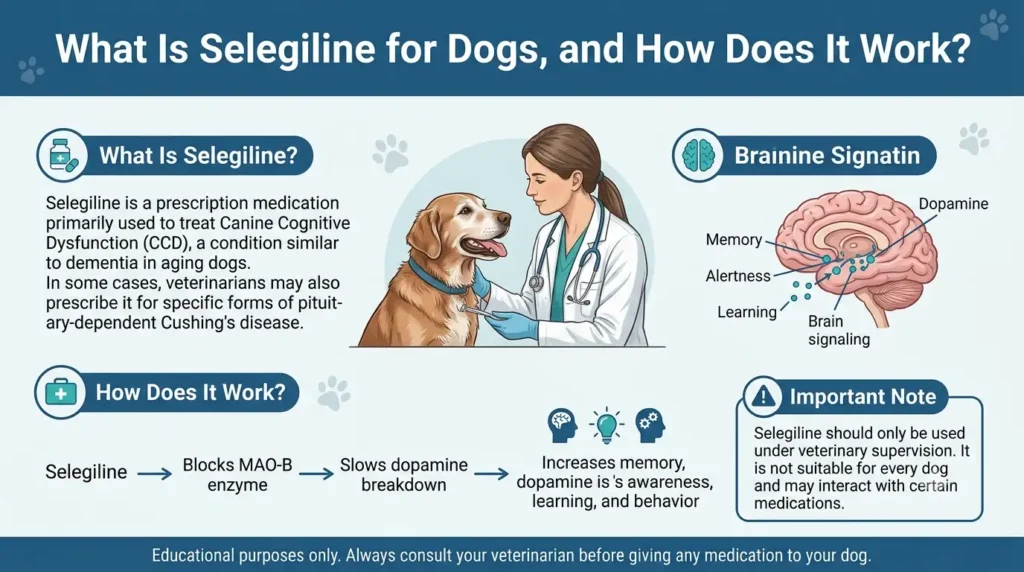
Selegiline, brand names Anipryl®, Eldepryl®, l-deprenyl®, Selgian®, Carbex® and Zelapar®, is a prescription medication in the MAOI (monoamine oxidase inhibitor) drug class that’s approved by the FDA to treat canine cognitive dysfunction, also known as dog dementia, and pituitary-dependent Cushing’s disease in dogs. It is the only FDA approved drug to treat clinical signs of cognitive dysfunction in dogs.
It can also be used for the treatment of Cushing’s disease, but is less effective than other treatments like trilostane or mitotane. Selegiline also is used off-label in veterinary medicine, under a veterinarian’s guidance, for anxiety, phobias and cognitive dysfunction in cats.
Selegiline’s action is to inhibit the enzyme known as monoamine oxidase-B (MAO-B) which normally degrades dopamine, another important chemical in the brain that is involved in memory, learning, alertness and normal nerve communication.
Selegiline blocks the breakdown of dopamine, which allows more dopamine to stay in the brain and helps to alleviate many of the behavioral changes that occur with age-related cognitive decline and to improve cognitive function.
In dogs with pituitary-dependent Cushing’s disease, increased dopamine also helps to suppress Adrenocorticotropic hormone (ACTH), which the pituitary released to get the adrenal glands to produce cortisol. Selegiline may help to lower the excess production of cortisol, by lowering ACTH activity, and may improve some clinical signs of the disease.
Selegiline dosage for dogs may also benefit the aging brain by limiting oxidative stress in addition to increasing levels of dopamine. It increases the activity of protective antioxidant enzymes such as superoxide dismutase and superoxide catalase, which neutralize the harmful free radicals that may play a role in damaging brain cells.
This neuroprotective effect may help to reduce some of the oxidative damage, promote healthier brain function, and enhance alertness, engagement and quality of life in some elderly dogs. Typically, selegiline is given as an oral tablet once daily as directed by a veterinarian.
What Is Selegiline Used for in Dogs?
Selegiline medication for dogs is a prescription drug that has been approved by the FDA for two main purposes in dogs: canine cognitive dysfunction (CCD) and pituitary-dependent Cushing’s disease. These are its primary veterinary applications in North America, with some of the applications in Europe also approved for some chronic emotional conditions.


Paid Links - As an Amazon Associate, I earn from qualifying purchases.
Canine Cognitive Dysfunction also known as Dog Dementia.
The most common use of selegiline is for the treatment of canine cognitive dysfunction, an age-related brain disease in dogs that is similar to dementia in humans. It is the only FDA-approved drug for managing clinical signs of canine cognitive dysfunction and may help improve a dog’s alertness, memory, learning ability and quality of life.
Some symptoms of canine cognitive dysfunction are:
- Disorientation or confusion
- Restlessness and pacing
- Alterations in sleep patterns.
- House-soiling (urinating or defecating indoors)
- Modification in family member interactions, or other pet interactions
Pituitary-Dependent Cushing’s Disease
Selegiline is also used to treat a hormonal disorder that involves too much cortisol being made (Cushing’s disease caused by a pituitary tumor). While other drugs may be the preferred ones for treatment of Cushing’s disease, selegiline may be recommended in certain cases as determined by the veterinarian.
Symptoms of Cushing’s disease are:
- Increased thirst
- Increased urination
- Excessive panting
- Restlessness
- Hair loss
- Pot-bellied appearance
- A higher risk for getting infections.
Selegiline must only be used under veterinary supervision and your vet will decide if it is the right drug for your dog’s needs.
What Are the Common Side Effects of Selegiline in Dogs?
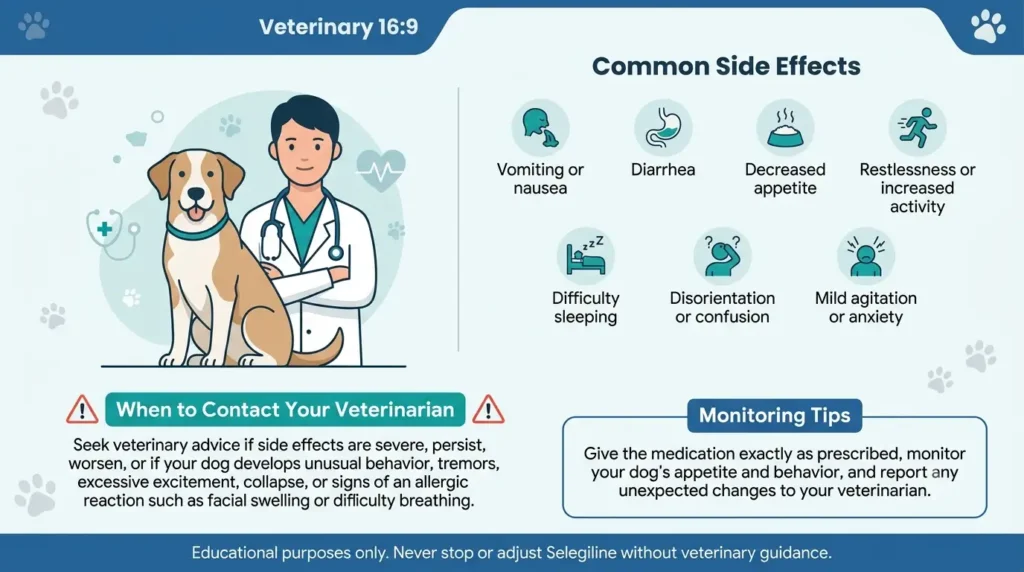
Selegiline (Anipryl®) is generally well tolerated by most dogs, however as with all drugs side effects are possible. Most common side effects are gastrointestinal (digestive) issues and changes in behaviors or the nervous system, particularly when beginning treatment.
Many side effects are minor and short-lived, and may be reduced if your veterinarian suggests administering selegiline with food if digestive upset occurs.
Common Side Effects
The most common side effects are:
- Vomiting
- Diarrhea
- Nausea
- Loss of appetite (poor appetite or anorexia)
- Producing more saliva or drooling
- Restlessness, agitation or hyperactivity
- Lethargy or tiredness
- Panting
- Disorientation or confusion
- Increased aggression
- Repeating or compulsion (e.g. circling)
- Excessive licking
- Itching (pruritus)
- Trembling or shivering
Diarrhea, decreased appetite, vomiting, and salivation have been some of the most common clinical side effects reported, however most dogs will have few or mild symptoms.
They may have less common but serious side effects.
Severe reactions are rare and must be treated by a veterinarian. These may include:
- Seizures
- Lack of coordination or balance
- Weakness
- Pale gums or anemia
- Loss of hearing/sensitivity to sound
- Excessive panting
- Heart or breathing problems (such as increased heart rate, heart murmurs, or difficulty breathing)
- Weight loss
- UTI (urinary tract infections)
It may be hard to tell whether the medication or underlying condition is causing signs like restlessness, confusion, or disorientation, which can also occur with canine cognitive dysfunction. If you do notice any unusual changes after starting treatment, please consult your veterinarian.
Serotonin Syndrome: A Medical Emergency.Serotonin Syndrome: A Medical Emergency.
The most important side effect risk of selegiline is serotonin syndrome, which can happen if it is taken with some antidepressant medications or other drugs which increase the levels of serotonin. This is a life-threatening and emergency situation that needs veterinary care.
Symptoms of serotonin syndrome are:
- Shaking, or heavy shaking.
- Increased heart rate
- High blood pressure
- Elevated body temperature
- Dilated pupils
If your dog shows any of these symptoms, take him to an emergency vet.
Risks and precautions
Selegiline should not be used in dogs that:
- Have allergies to the drug
- Be extremely aggressive, possibly exacerbated by treatment
- Using other MAO inhibitors, some tick collars or tick treatment, meperidine, tramadol, tricyclic antidepressants, selective serotonin reuptake inhibitors (SSRIs) or alpha-2 agonists
Caution should be exercised in dogs that:
- Have debilitating illnesses
- Are pregnant or nursing (safety has not been determined)
- Be suffering from liver or kidney disease, as the effects of the drug can be more prolonged.
When prescribing selegiline to treat Cushing’s disease, it is important to first diagnose that the cause is pituitary-dependent and not an adrenal tumor.
To avoid possible medication reactions, make sure your veterinarian is aware of any other medications, supplements, vitamins, herbals or treatments for parasites that your dog is taking. In case of persistent or progressive side effects such as vomiting, diarrhea, inappetence, see a veterinarian early.
Does Selegiline Interact With Any Other Dog Medications?
Yes. Selegeline (Anipryl®) may interact with numerous drugs, so be sure to inform your veterinarian of all drugs your dogs is taking before beginning treatment. This covers prescription drugs, over the counter products, vitamins and supplements, herbal remedies, flea and tick treatments, and any planned sedations or anesthetics. Certain drug combinations are completely contraindicated, and others may necessitate careful monitoring, dosage adjustments or washout periods between drugs.
Selegiline may interact with other medications.
These drugs may interact with each other:
- Amitraz is an ingredient in some flea and tick products.
- Acepromazine
- Amitriptyline
- Bupropion
- Buprenorphine
- Butorphanol
- Chlorpromazine
- Clomipramine
- Clonidine
- Cyclobenzaprine
- Fluoxetine
- Metoclopramide
- Morphine
- Paroxetine
- Phenylpropanolamine
- Pseudoephedrine
- Trazodone
- Tramadol
- Selective serotonin reuptake inhibitors (SSRIs)
- Tricyclics and tetracyclics are used as antidepressants.
- Opioids, especially meperidine
- Ephedrine
Important Interaction Risks
Serotonin syndrome is the biggest worry and may be seen when selegiline is used with other drugs that affect the level of serotonin, such as SSRIs, trazodone, tramadol, fluoxetine, clomipramine, amitriptyline, and other antidepressant drugs.
Selegiline should be used with caution when taken with ephedrine, pseudoephedrine or phenylpropanolamine, as these drugs can cause high blood pressure (hypertension) and dangerously high body temperature (hyperpyrexia).
Selegiline should not be combined with another monoamine oxidase inhibitor (MAOI) called Amitraz due to the risk of side effects being increased.
A washout period might be suggested when changing between selegiline and some of the medications that interact with it. Your veterinarian will decide when to administer the two products, but in some cases it is recommended that it be about two weeks apart to minimize the risk of severe drug interactions.
Prior to use of selegiline:Your Dog Starts Selegiline:
Your veterinarian should always be given a complete list of all your dog’s medications and supplements, and if your dog will be sedated or anesthetized, you should make any veterinary clinic aware if your dog is on selegiline. Selegiline is used safely by careful medication review which prevents potentially harmful drug interactions.
You May Also Like to Read:
- Pedialyte Dosage For Dogs: Calculator, Chart & Safe Guide
- Vitamin K1 Dosage For Dogs Calculator: Safe Guide & Chart
FAQs
How long will it take selegiline to be effective for a dog?
It takes about 1-2 months for selegiline to reach its full effect in dogs with canine cognitive dysfunction or pituitary dependent Cushing’s disease. Some dogs may improve earlier, others later or may not improve as well. Your veterinarian will be able to tell you what to expect, depending on your dog’s condition.
Is Selegiline beneficial for anxiety in dogs?
Selegeline dose for dogs is not a medication that is mainly used for the treatment of anxiety. It is primarily used for treating Cushing’s disease in some instances and cognitive dysfunction in dogs. However, as some cognitive impairments can lead to anxiety, confusion, and restlessness, some dogs will see their anxiety levels improve as the cognitive symptoms improve with treatment.
If my dog missed a dose of selegiline, what should I do?
If you forget a dose, make up for it as soon as you remember. If it is almost time for the next scheduled dose, skip the missed dose and continue with the regular dosing schedule. Don’t double dose or give an additional dose to compensate for a missed dose.
Do I need to monitor my dog when he or she is on selegiline?
Yes. Your vet will follow up with your dog to see how they respond to therapy and to observe for any adverse effects. At home, monitor for vomiting, diarrhea, appetite changes, strange behavior or other symptoms of concern. Only cease treatment on the veterinarian’s advice and call your veterinarian as soon as you observe any problems.
What are some important storage instructions for selegiline?
Veterinary selegiline tablets must be stored at 68° F to 77° F (20° C to 25° C) and human-labeled tablets and capsules at 59° F to 86° F (15° C to 30° C). Store away from light and store compounded liquid formulations as per the pharmacy label.
If my dog takes an overdose of selegiline, what should I do?
If you suspect that your dog has been over dosed, or is having a severe reaction, contact your vet or local emergency veterinary center promptly. Have your dog’s weight, strength of the medicine, how much your dog took, and any symptoms. If the overdose is detected early, your veterinarian may suggest treatment to help clear the medication from your pet’s stomach.
Is it OK for selegiline to be administered with food?
Yes. If your dog gets stomach upset (nausea, vomiting, or diarrhea), then you can administer selegiline with food. Administer with food to minimize GI side effects. When it comes to getting the most out of your vet’s advice, follow these guidelines:
If there is improvement in the symptoms, can I stop giving my dog selegiline?
No. Don’t discontinue or alter selegeline dosage without veterinarian’s guidance. Your vet will decide if treatment is needed to continue, modify or stopped safely even if your dog’s symptoms improve.
Final Thoughts
Selegiline (Anipryl®) for dogs is a medication that has been approved by the FDA and can dramatically improve the quality of life for many older dogs suffering from canine cognitive dysfunction by reducing confusion, disorientation, sleep disturbances and other age-related changes. In rare instances it can also be used to treat pituitary-dependent Cushing’s disease, but other drugs are usually preferred when treating this condition.
It’s important to get the right dosage of selegiline for your dog to ensure you get the most benefits and to reduce the risks of side effects. The majority of dogs are able to tolerate the drug with digestive upset and slight behavioral changes as the most frequently reported side effects. But, since selegiline can interact with a number of drugs, and can possibly cause serious reactions occasionally, it should only be used under the supervision of a veterinarian.
If your dog is prescribed selegiline, follow all dose directions carefully, make sure to attend appointments to review and adjust the dosage if needed, and call your veterinarian if your dog shows unexpected symptoms or behaviors. If used correctly, under veterinary supervision, selegiline can be a valuable tool to help many dogs stay more alert, comfortable and active in their senior years.