Coconut Oil Dosage Calculator for Dogs
Estimate a gradual introduction amount and the commonly referenced maintenance amount based on body weight. This calculator is for healthy dogs only and should not replace veterinary advice.
Estimated Daily Amount
- Always introduce coconut oil slowly.
- Divide the daily amount between meals if possible.
- Use organic, virgin, cold-pressed, unrefined coconut oil.
- Reduce or stop if diarrhea, greasy stools, vomiting, or digestive upset develops.
- Avoid or consult your veterinarian before use if your dog is overweight or has pancreatitis, liver disease, or other medical conditions.
- This calculator is an educational estimate and is not veterinary medical advice.
© medsdog.com
Coconut oil is a popular natural supplement among dog owners but is it good for dogs? The answer is not a clear-cut yes or no, but coconut oil contains medium-chain triglycerides (MCTs), which might have beneficial effects on healthy skin, a shiny coat, and on providing a quick burst of energy.
Some pet owners also add it to their dog’s food in small quantities, use it to keep paw pads moisturized or apply it to itchy skin. But, while these possible benefits are frequently touted, there are not many scientific studies on dogs, and some vets don’t recommend using it daily for all dogs.


Paid Links - As an Amazon Associate, I earn from qualifying purchases.
If used properly, coconut oil for dogs is safe for most healthy dogs, but feeding too much can lead to diarrhea, greasy stools, upset stomach, weight gain (if no other dietary changes are made), and may worsen issues in dogs with pancreatitis or other health conditions. This is why it is crucial to use the right dosage and to take it slowly.
This guide contains a Coconut Oil Dosage Calculator, Dosage Chart for dogs by Weight (Easy to Follow), Starting Dosages, Coconut Oil Health Benefits, Side Effects of Coconut Oil, Feeding Incautiously, and Frequently Asked Questions. This guide will help you make an informed choice, and let you know when to seek expert advice from your veterinarian, whether you’re choosing to add coconut oil to your dog’s meals or use it as a topical moisturizer.
Key Takeaways
- For healthy dogs, coconut oil for dogs can be safely added in small amounts, but should be done slowly.
- One of the more often referred to maintenance guidelines is up to 1 teaspoon per day per 10 pounds (4.5 kg) of body weight, and this is preceded by a much smaller amount.
- Coconut oil also possesses medium-chain triglycerides (MCTs), which can help keep skin and coats healthy and can be used as a quick source of energy.
- Coconut oil is also sometimes applied topically to moisturize dry skin, cracked paw pads and dry coats.
- However, there is not much scientific basis for many of the health benefits attributed to dogs and experts do not all agree on the need for daily supplementation.
- Excessive amounts of coconut oil can lead to diarrhea, greasy stools, stomach complaints, weight gain and an excess of calories.
- Coconut oil Dosage For dogs can be problematic for dogs suffering from pancreatitis or obesity and other health issues, such as liver disease, unless it’s approved by a vet.
- To get the highest quality coconut oil use organic, virgin, cold pressed and unrefined coconut oil.
- If your dog does not respond well and develops digestive upset or other negative effects, stop or reduce the amount of food.
- Before adding coconut oil to your dog’s diet plan, always check with your veterinarian, particularly if your dog is a puppy, senior dog or has health issues.
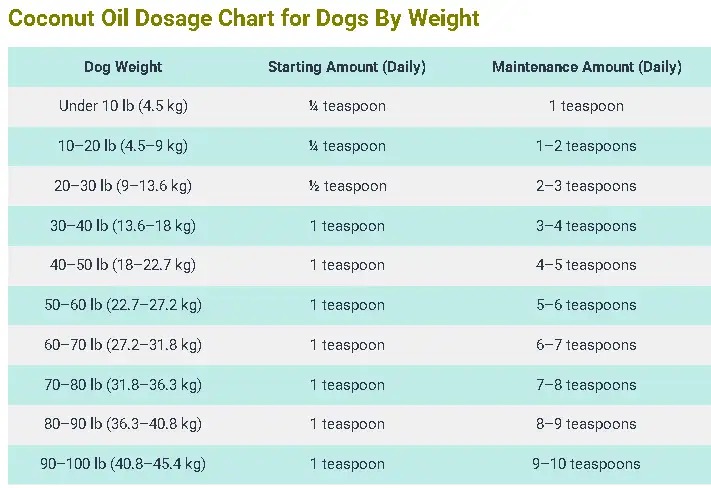
Coconut Oil Dosage Chart for Dogs By Weight
Note: Introduce coconut oil slowly. Start with the Starting Amount for 2–3 weeks. If your dog tolerates it well, gradually increase to the Maintenance Amount. Divide the daily amount between meals if possible.
| Dog Weight | Starting Amount (Daily) | Maintenance Amount (Daily) |
|---|---|---|
| Under 10 lb (4.5 kg) | ¼ teaspoon | 1 teaspoon |
| 10–20 lb (4.5–9 kg) | ¼ teaspoon | 1–2 teaspoons |
| 20–30 lb (9–13.6 kg) | ½ teaspoon | 2–3 teaspoons |
| 30–40 lb (13.6–18 kg) | 1 teaspoon | 3–4 teaspoons |
| 40–50 lb (18–22.7 kg) | 1 teaspoon | 4–5 teaspoons |
| 50–60 lb (22.7–27.2 kg) | 1 teaspoon | 5–6 teaspoons |
| 60–70 lb (27.2–31.8 kg) | 1 teaspoon | 6–7 teaspoons |
| 70–80 lb (31.8–36.3 kg) | 1 teaspoon | 7–8 teaspoons |
| 80–90 lb (36.3–40.8 kg) | 1 teaspoon | 8–9 teaspoons |
| 90–100 lb (40.8–45.4 kg) | 1 teaspoon | 9–10 teaspoons |
Important: This chart is a general educational guide based on the commonly cited recommendation of about 1 teaspoon of coconut oil per 10 pounds (4.5 kg) of body weight per day after gradual introduction. If your dog develops diarrhea, greasy stools, vomiting, or other digestive upset, reduce the amount or discontinue use and consult your veterinarian. Coconut oil may not be appropriate for dogs with obesity, pancreatitis, or certain other health conditions.
What Is Coconut Oil?
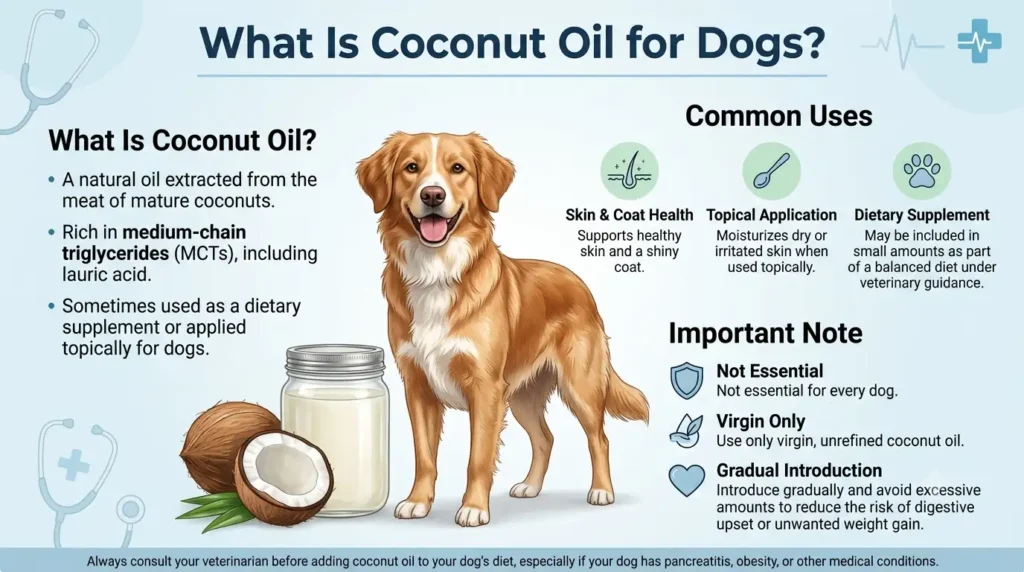
Coconut oil is a natural oil which is extracted from the white flesh (meat) of mature coconuts of the coconut palm tree. It’s packed with medium-chain triglycerides (MCTs) and other fatty acids, and is a preferred supplement for humans and animals.
Coconut oil comes in two different types:
- Unrefined (Virgin) Coconut Oil: A coconut oil that has been processed to the minimum. The aroma, flavor and nutrients of the fresh coconut meat are still retained. For dogs, the best supplement form of coconut oil is unrefined (virgin) coconut oil that is organic and cold pressed.
- Refined Coconut Oil: Processed to make it milder and more heat stable, thus better suited for cooking. However, it is processed further and it is not the preferred choice of food for dogs.
Coconut oil For Dogs can be administered either orally by adding small amounts into a dog’s food or topically by adding to dry skin, coat or cracked paw pads. It is a popular natural supplement however should be taken in small quantities and gradually as too much may lead to digestive upset or other health issues.
Is Coconut Oil Good for Dogs?
The quick answer is yes but with care. When used sparingly, coconut oil can be safe for many healthy dogs but is not a magic pill, and there is still research to be done to determine its usefulness. It includes medium-chain triglycerides (MCTs), mainly lauric acid, capric acid and caprylic acid, which are known for their antimicrobial, antifungal and antiviral properties, and as a quick source of energy.
There is some evidence that MCTs can help the brain function and increase cognitive health, especially in older dogs. One study compared dogs fed an MCT enriched diet to dogs fed a standard diet; the dogs fed the MCT enriched diet made fewer cognitive errors and learned tasks faster than dogs fed a standard diet. However, this is the result of the MCT rich diet, and not necessarily the effect of coconut oil alone.
Coconut oil for dogs might be beneficial by providing the following:
- Helping to maintain healthy skin and a shiny coat.
- Topically moisturizing dry skin and cracked paw pads.
- Providing a readily available source of energy.
- Providing antimicrobial, antifungal and antiviral activity via its fatty acids.
- Supporting brain health and mental function particularly in older dogs.
However, there is still a lack of scientific evidence in dogs. Coconut oil is a recommended treatment for itchy skin, but there isn’t enough research to support its use. In some dogs, there may even be a tendency for overgrowth of yeast, as yeast thrive on oil containing lipids (triglycerides) when it is applied topically on their skin and coats, in the case of skin allergies. Veterinarian-formulated ceramides are usually the preferred option for allergic skin conditions.
Dogs are allowed to consume coconut oil, but should always be introduced slowly and in small amounts. Coconut oil is a concentrated source of fat and calories, and can cause:
- Loose or greasy stools.
- Stomach upset or vomiting.
- Weight gain due to excess calories.
- Risk of pancreatitis in susceptible dogs.
- Rare allergic symptoms include itchiness or hives.
It can be given on its own, added to the dog’s food, given as an oral supplement, or applied topically for dry skin. When buying coconut oil, opt for organic, virgin, cold-pressed, and unrefined coconut oil for the highest quality if you decide to use it.
But not all dogs can have coconut oil. Should generally not be used in dogs with pancreatitis, liver disease, irritable bowel syndrome (IBS), or on low-fat diets, unless directed by a veterinarian. Many vets actually have a food for dogs that’s specifically formulated with higher levels of the botanical oils (MCT sources), so if you’re looking to boost cognition, you may prefer to use one of those.
In conclusion, coconut oil medication for dogs is not toxic to dogs and can be beneficial if used properly, but is not a necessary part of a dog’s diet. Due to the lack of studies, each dog is unique, and there may be other health factors involved, it is best to consult your veterinarian before adopting coconut oil as a staple in your dog’s diet or skin care regimen.


Paid Links - As an Amazon Associate, I earn from qualifying purchases.
Topical Use of Coconut Oil on Dogs
Yes, you can use coconut oil topically on a dog, and many pet owners use it for their dogs when dealing with dry skin and paws. If applied properly, it can aid in soothing dry, flaky skin; moisturizing cracked paw pads; and brightening dog coats. Coconut oil is also added to some dog grooming products, such as shampoos and conditioners, which help to hydrate the skin and soften the fur.
To safely apply coconut oil to your dog’s skin:
- Apply once a week, or as needed, on affected area or coat.
- Let stand for about 5 minutes.
- Rinse off your dog afterwards.
- Follow with a mild dog shampoo, if the coat still feels greasy, and rinse once more.
Although coconut oil is popular for treating hot spots, dry skin and cracked paws in dogs, there is not enough scientific evidence to back up its use for skin problems. If your dog is still itching, continues to have skin infections or allergy problems, take him/her to the vet to find the right treatment.
It is also important to note that coconut oil shouldn’t be used to treat constipation in dogs. The medium-chain triglycerides (MCTs) in coconut oil are easily digested, but get absorbed quickly in the intestine and do not act as a laxative. Giving excessive amounts to “improve” the constipation can lead to stomach upset, diarrhea, pancreatitis, or allergies.
There is also research that looks at the potential of virgin coconut oil to help with cancer, but there is currently no research that supports this in dogs. There are some studies and research carried out in the lab and human and other animals which have proved useful, such as the effects on tumor cells and enhancement of quality of life while on chemotherapy. These studies do not, however, mean coconut oil is a way to treat or prevent cancer in dogs, and should not be used as a substitute for dogs’ cancer treatment provided by a veterinarian.
Another can be beneficial to dogs that are undergoing cancer treatment is that coconut oil can improve food palatability. Dogs have been seen to eat food that’s smeared with coconut oil so it might be a good idea to try using this to get them to eat more if they’re not eating enough. This can be useful to supplement nutrition; however, changes to the dog’s diet should always be in consultation with a veterinarian in case of a cancer diagnosis.
Potential Benefits of Coconut Oil for Dogs
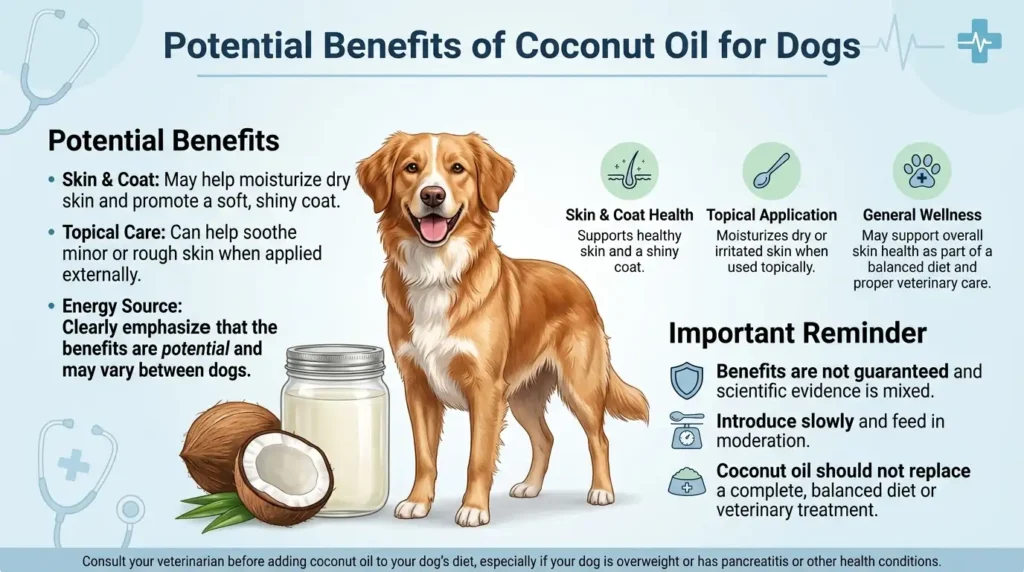
Coconut oil is touted as a natural supplement for dogs, as it contains medium-chain triglycerides (MCTs) which are a form of fatty acid that can offer a number of health benefits. Scientific studies in dogs are still limited, however, and many of the benefits that are claimed have been derived from human or other animal studies rather than from studies that involve dogs. Therefore coconut oil is not a substitute for a balanced diet or veterinary care.
Some of the potential benefits of coconut oil include:
- Rich in MCTs, which provide a quick source of energy.
- May help maintain healthy skin and coat, particularly when combined with a veterinarian-recommended skin care program.
- May improve skin barrier function; decreases dry skin or mild itchiness.
- Includes compounds that are said to have antibacterial, antifungal, antiviral and antioxidant properties, but their efficacy for canine skin disease has not been established.
- May help promote brain health and cognitive function, especially in senior dogs.
- May assist support of heart health.
- May help to digest food and in some cases, decrease inflammation in the gut, such as in dogs with inflammatory bowel disease (IBD).
- Some research indicates that MCTs can be used to decrease seizure activity in dogs with epilepsy.
While these potential benefits are exciting, there are a few popular claims that aren’t strongly supported by science, such as coconut oil can:
- Stop and cure cancer.
- Promote weight loss.
- Improve thyroid function.
- Dissolve dental tartar, or treat periodontal disease.
As a topical application, coconut oil can be part of a veterinarian-recommended skin care program to help keep the skin moisturized and healthy. It can also be messy, clog the pores, and lead to excessive licking, which is a problem for some dogs and can further irritate, inflame or cause skin infections in some dogs.
Many vets will suggest using coconut oil supplements in dogs as an added source of MCTs, but if cognitive, or nutritional support is desired, use a commercial dog food containing MCTs as a botanical oil. Never add coconut oil to your dog’s diet or skin care routine without consulting with your veterinarian first.
Risks and Side Effects of Coconut Oil for Dogs
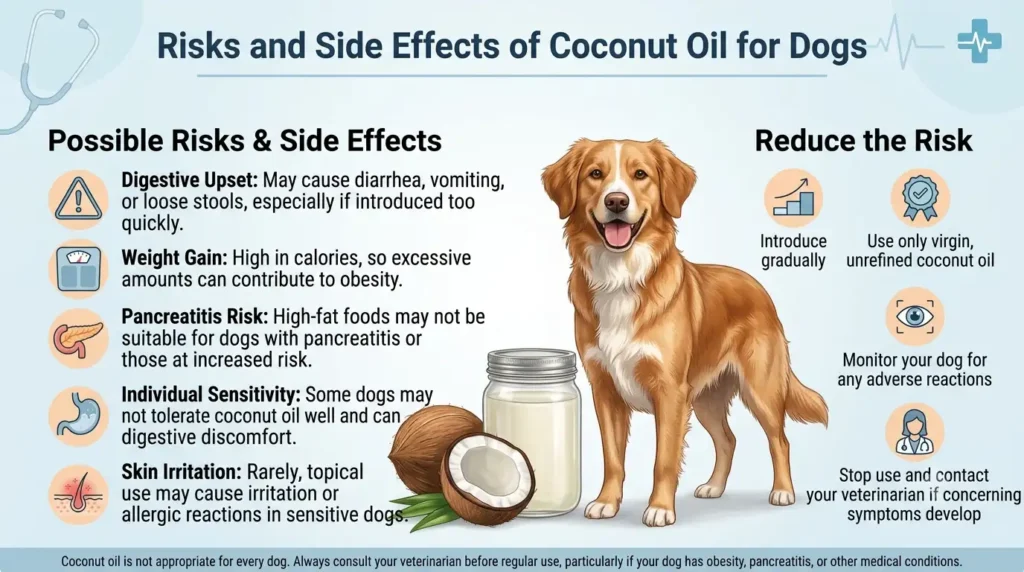
While coconut oil might have some beneficial properties, it is not without risk and should be used in conjunction with your veterinarian’s advice. The research studies in dogs are few, and the health benefits that have been touted aren’t necessarily fact. In some instances, coconut oil might even aggravate the very same issues it can be made use of for, including making digestion worse.
Coconut oil is high in fat and calories, with about 100 calories per tablespoon.
Too much or too soon can cause a number of side effects, such as:
- Loose, greasy stools or diarrhea.
- Stomach upset and vomiting.
- Excessive weight gain or overweight.
- High levels of the LDL (“bad”) cholesterol.
- Any allergic reactions, such as itchy skin, hives, red bumps or scabbing.
- An increase in skin irritation or itching.
- Painful abdomen and loss of appetite.
- Lethargy and dehydration.
- Collapse and shock in severe cases of pancreatitis.
The most serious of these is pancreatitis, an inflammation and pain in the pancreas that can be caused by foods that are high in fat. Dogs with pancreatitis, inflammatory bowel disease (IBD), obesity, liver disease or any condition that requires a low fat diet should not receive coconut oil. Fat-sensitive dogs tend to have digestive issues as well.
Coconut oil is rich in medium-chain triglycerides (MCTs), but does not contain enough amounts of essential fats to satisfy a dog’s nutritional needs, particularly the omega-3 and omega-6 fatty acids that are lacking. Furthermore, while lauric acid has been found to be anti-bacterial, anti-viral, and anti-fungal in experimental studies, there is no clear evidence that coconut oil can offer the same protective benefits to dogs in amounts that can be realistically included in the diet.
It is also crucial not to use coconut oil as an alternative to effective veterinary care. For instance, if a dog is prescribed an antibiotic to treat an infection and you decide to treat it with coconut oil, it may not get the treatment it needs and the infection may be exacerbated.
If you want to minimize any possible side effects, you should introduce the coconut oil slowly, and watch for any digestive or skin issues and stop giving it if they occur. Before you begin incorporating it into your dog’s diet or health care regimen on a regular basis, always check with your veterinarian, particularly if your pooch has medical issues.
How to Use Coconut Oil for Your Dog Safely
Before you start giving coconut oil to your dog, talk to your vet. As there is no standard dosage that is known to be safe for all dogs, the amount should be determined by your dog’s size, condition and type of use. Your veterinarian can advise you if coconut oil is right for your pet and the correct dosage.
If you are purchasing coconut oil, opt for organic, virgin (unrefined), and cold-pressed (minimally processed) coconut oil to retain the most of the natural nutrients. Coconut oils may taste and smell different so you will have to try coconut oils from various companies to see what your dog likes. Otherwise, a skin and coat supplement for dogs may be suggested by your veterinarian.
Feeding Coconut Oil
When feeding coconut oil:
- Feed it gradually, a little at a time to see how your dog tolerates it.
- Some veterinarians suggest giving 1 teaspoon a day for a small dog and 2 teaspoons a day for a larger dog, and then modifying the dosage according to your veterinarian’s recommendations.
- Split up the daily portion into portions at meals to minimize stomach upset.
- Add it to your dog’s food, let the dog drink it straight from the spoon if he enjoys by all means, or hide a medication in it.
- It can also be used to make dog treats with dog-friendly ingredients.
- Be sure to use coconut oil as a treat, limiting all treats to a maximum of 10% of your dog’s daily calories.
- Keep an eye on your dog for weight gain, diarrhea, greasy stool or other problems with digestion, and lower or stop use if these are observed.
How to Use Coconut Oil on the skin
If using coconut oil topically:
- Try a little bit on a patch of bare skin, such as a belly.
- Then wait 1-2 hours to see if redness, irritation or any other undesirable effect occurs before reapplying.
- Apply the oil well and massage the product into skin/paw pads for optimum absorption and a non-greasy feel on furniture and flooring.
- If your dog develops more skin irritation, dryness or itching, talk to your veterinarian.
Other uses of Coconut oil:
Coconut oil can also be used with your veterinarian’s permission as:
- As a food topper in meals.
- Used to conceal medicines.
- Added to homemade dog treats.
- Massage into dry paw pads and/or into dry skin.
- Used on small areas of skin, such as insect bites.
- When used in a spray bottle as a light coat conditioner or detangler with water.
While it’s not necessarily dangerous to lick on some of the topical coconut oil, licking too much on a regular basis can cause weight gain, gastrointestinal upset, diarrhea, greasy stools, obesity and pancreatitis overtime. Introduce coconut oil gradually, watch how it affects your dog and get advice from your veterinarian before you make it a part of your dog’s diet or skin care routine.
You May Also Like to Read:
- Diatomaceous Earth Dosage For Dogs Calculator & Safe Guide
- Phenobarbital Dosage For Dogs: Calculator & Safe Guide
FAQs
Is it OK to put coconut oil on my dog’s skin?
Yes. One can use coconut oil dosage for dogs in dry skin, cracked paw pads or coat. Put a small amount in the affected area and watch your dog for signs of irritation or over licking.
What type of coconut oil is best for dogs?
To get the best benefit from coconut oil, it is best to use virgin unrefined cold-pressed coconut oil, which is less processed and contains more beneficial coconut compounds than regular coconut oil.
What’s the difference between extra virgin coconut oil and virgin coconut oil?
No. In the USA virgin and extra virgin coconut oil are not legally distinguished. They are usually used for marketing and are fine with either product, as long as it is not refined and cold-pressed.
Is Store-bought Coconut Oil OK for My Dog?
Yes. Food grade virgin coconut oil from a grocery store can be used for dogs. There are coconut oil products for pets as well, with usage guidelines on their own.
Where can I buy coconut oil for dogs?
Virgin coconut oil is available from most grocery stores, pet stores and credible online vendors. When possible, select a high quality, organic, and cold pressed product.
So where is the best place to store coconut oil dose?
Keep coconut oil in a cool and dry area out of direct sunlight. It can naturally melt in warmer weather and re-solidify when it gets colder, but this has no impact on quality or safety.
Can puppies have coconut oil?
Coconut oil can be fed to puppies, but should be added in small amounts with the guidance of your veterinarian, as puppies have different nutritional requirements than older dogs.
Is it advisable to consult my vet before feeding my dog coconut oil?
Yes. Before you introduce coconut oil to your dog’s diet or use it in your dog’s skin care routine, it is best to check with your veterinarian, particularly if your dog has liver disease, digestive issues, is on a diet, has pancreatitis or other medical conditions.
Final Thoughts
When used properly and in moderation, coconut oil can be a beneficial supplement for some dogs’ diets and skin care plans, but it is not a magic bullet. It does have medium-chain triglycerides (MCTs) which can benefit skin health, coat condition and cognitive function, but many of its touted benefits to dogs are still under scientific study.
When picking a coconut oil Dosage for dogs, if you choose to use it, be sure to look for high-quality, organic, virgin, cold-pressed oil; add it slowly and watch your dog for any digestive upset, allergic reactions, or weight gain. When using topically, use sparingly and stop if your dog’s skin irritation becomes more severe.
However, the main thing to remember about coconut oil is that it should only be used to enhance a balanced diet or veterinary treatment. Each dog is different when it comes to nutrition and health issues; you should ask your vet about the use of coconut oil before making it a habit for your dog. With proper dosage and guidance, you can find out if coconut oil is safe and beneficial for your furry friend.