Adequan® Canine Dosage Calculator For Dogs
Calculate the recommended intramuscular injection volume for your dog.
© medsdog.com
Adequan® Canine is an FDA Approved Disease Modifying Osteoarthritis Drug (DMOAD) for dogs, which works to treat the joint disease, rather than just the pain. Adequan Canine contains polysulfated glycosaminoglycan (PSGAG), a semi-synthetic compound that helps protect joint cartilage, improve synovial (joint) fluid lubrication, reduces inflammation and aids in the natural repair of cartilage, unlike medications that just mask the effects of arthritis.
It can help to improve mobility, reduce lameness and delay the progression of non-infectious degenerative or traumatic arthritis in canine synovial joints by treating the underlying joint damage.
The reason for early treatment is that osteoarthritis is a chronic and progressive condition, and can impact dogs of any age, breed or size. The veterinarian may recommend beginning Adequan Canine as early as possible in the course of the degenerative joint disease (DJD) before any significant damage to the cartilage has taken place.
It’s given as an intramuscular (IM) injection under a veterinarian’s supervision, and is frequently prescribed to treat arthritis-induced joint dysfunction, to increase comfort in dogs following some types of joint surgery, and to help dogs be more active longer. Adequan Canine has PSGAG 100 mg per ml with sterile water for injection and a preservative (benzyl alcohol).
In this complete guide, you’ll learn the correct Adequan Canine dosage for dogs by weight, including the standard dosing schedule, dosage chart, dosage calculator, administration instructions, benefits, potential side effects, safety precautions, and frequently asked questions. Whether this is your dog’s new OA diagnosis or you are researching your veterinarian’s recommended treatments you will find this guide helpful to understand how and when to use Adequan Canine safely and effectively.
What is Adequan Canine Dosage For Dogs?
The Dog Dosing of Adequan® is an extremely focused veterinary treatment program for managing dog joint dysfunction and mobility problems associated with degenerative osteoarthritis that is not caused by an infection. The recommended standard FDA-approved dose is 2 mg per pound of body weight (4.4 mg/kg) and should only be given intramuscularly (IM).
This clinical regimen consists of 2 injections twice a week (3-5 days apart) for up to 8 injections over a 4-week period of time. The medication comes in a standard strength (100mg/mL) so a veterinarian needs to know the exact volume of liquid (mL) required for a dog’s exact weight to provide safe and effective joint relief without exceeding the dose limit.
Adequan® Canine Dosage Chart For Dogs By weight
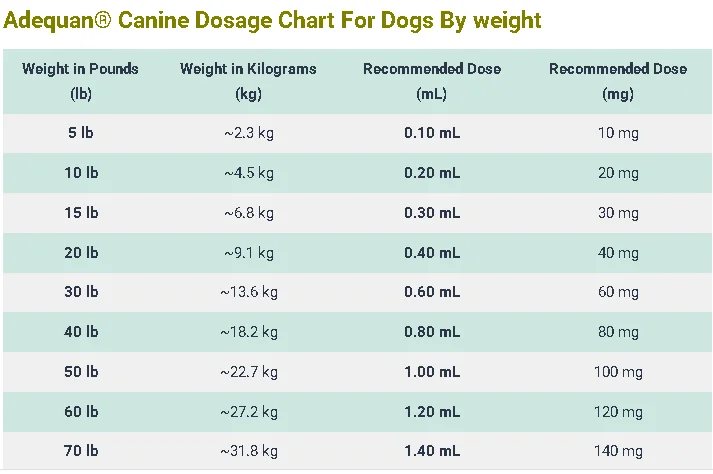
Here is the quick-reference dosage guide for Adequan® Canine (standard concentration of 100 mg/mL), calculated at the recommended rate of 2 mg/lb (4.4 mg/kg).
| Weight in Pounds (lb) | Weight in Kilograms (kg) | Recommended Dose (mL) | Recommended Dose (mg) |
| 5 lb | ~2.3 kg | 0.10 mL | 10 mg |
| 10 lb | ~4.5 kg | 0.20 mL | 20 mg |
| 15 lb | ~6.8 kg | 0.30 mL | 30 mg |
| 20 lb | ~9.1 kg | 0.40 mL | 40 mg |
| 30 lb | ~13.6 kg | 0.60 mL | 60 mg |
| 40 lb | ~18.2 kg | 0.80 mL | 80 mg |
| 50 lb | ~22.7 kg | 1.00 mL | 100 mg |
| 60 lb | ~27.2 kg | 1.20 mL | 120 mg |
| 70 lb | ~31.8 kg | 1.40 mL | 140 mg |
| 80 lb | ~36.3 kg | 1.60 mL | 160 mg |
| 90 lb | ~40.8 kg | 1.80 mL | 180 mg |
| 100 lb | ~45.4 kg | 2.00 mL | 200 mg |
Key Treatment Parameters
- Administration Method: Intramuscular (IM) injection only.
- Frequency: Twice a week (every 3 to 5 days).
- Maximum Duration: 8 total injections over a 4-week period. Do not exceed this limit.
- Formulation Warning: Do not mix Adequan® Canine with any other medications, drugs, or solvents. Avoid accidental injection into blood vessels.
What Is Adequan Canine?
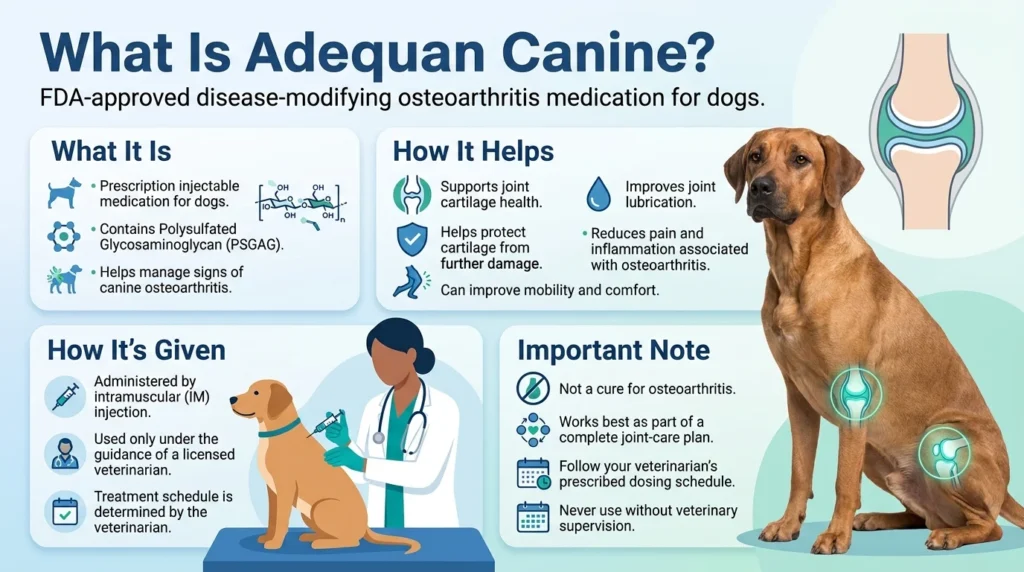
Adequan® Canine is a veterinary medicine that’s approved by the FDA for the treatment of canine osteoarthritis (OA) and other non-infectious degenerative and traumatic arthritis of the synovial joints. Polysulfated glycosaminoglycan (PSGAG) is its active ingredient and it is a disease modifying osteoarthritis drug (DMOAD) which treats the underlying joint disease as opposed to just the pain and other symptoms. Helps to protect cartilage from further breakdown and helps to maintain long-term joint health by mimicking the natural building blocks of healthy cartilage.
Adequan Canine works to restore lubrication to the joints by improving synovial fluid; it also works to decrease inflammation, stop enzymes that can damage cartilage and promote the growth of healthy cartilage, unlike medications that only help symptoms for a short period of time. These actions make moving easier, help minimize lameness and make the dogs more comfortable as the disease progresses. It’s also frequently used to treat symptoms of arthritis after some surgical operations to the joints.
Adequan Canine is injected intramuscular (IM) and works best when started early in the stages of degenerative joint disease (DJD) to help slow the progression of the joint disease known as osteoarthritis. OA is a chronic painful condition that may lead to stiffness, limping and decreased mobility in all breeds, sizes and ages of dogs, and early veterinary treatment can help keep the dog mobile and maintain quality of life. To get the most benefit from the use of Adequan Canine it should always be used at the veterinarian’s prescription.
How Adequan Canine Works in Dogs
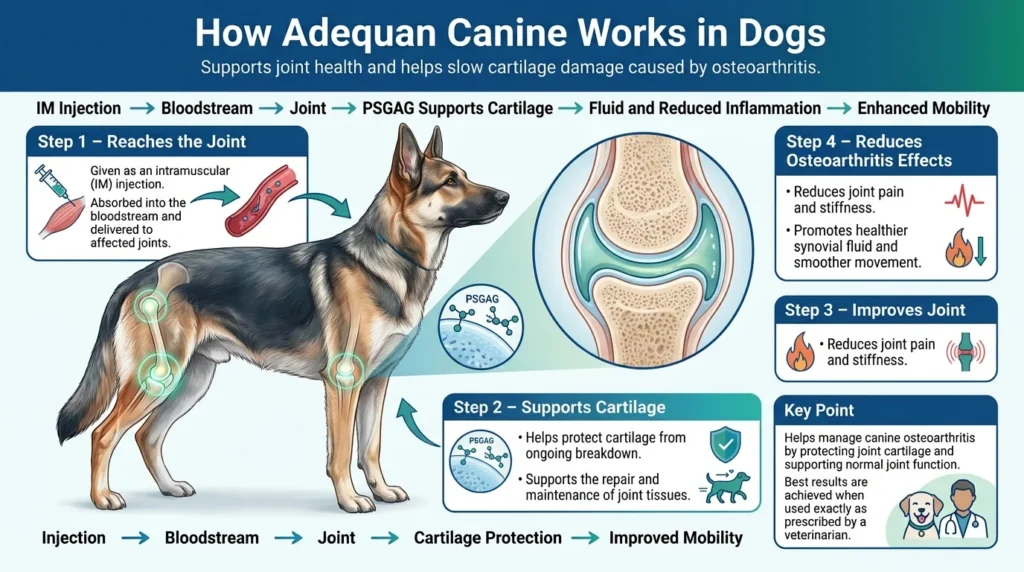
Adequan® Canine is different from traditional pain medications, as it is not a painkiller. Rather, it contains an active ingredient called polysulfated glycosaminoglycan (PSGAG) that helps maintain and promote the health of your dog’s joints, instead of just covering up symptoms, slows the progression of the osteoarthritis. PSGAG is similar to the naturally occurring glycosaminoglycans (GAGs) that are needed to build healthy cartilage.
Adequan Canine dosage for dogs, once injected, provides multiple significant actions that maintain joint health. It attaches to the present glycosaminoglycans in the cartilage to prevent additional cartilage destruction, inhibits the action of enzymes and inflammatory chemicals that cause cartilage damage and joint inflammation, and enhances activity of collagen and increases the quality of the synovial (joint) fluid. These cumulative effects contribute to maintaining cartilage, facilitating joint lubrication, mitigating inflammation and ensuring smoother and more comfortable movement.
Since Adequan Canine works on the underlying disease process, vets will sometimes suggest beginning treatment before the continued development of pain or mobility problems.
By using early, you can help break the cycle of joint degeneration that can accompany arthritis, and slow the disease’s progression. The treatment usually starts with a loading dose of injections, followed by daily injections as necessary depending on your dog’s response to the treatment and condition.
Adequan vs. Librela: Should You Choose Pain Relief or Joint Repair?
Both Adequan® Canine and Librela® are treatments that help dogs suffering from arthritis, but in different ways and for different purposes.
Adequan Canine is a disease modifying osteoarthritis treatment that works to preserve the joint cartilage, aid in joint repair and slow the progression of osteoarthritis. Veterinarians have found it helpful to begin the use of Adequan at the first signs of arthritis, since it is treating the actual joint disease and not just the symptoms.
But Librela is more commonly prescribed to help relieve pain and make dogs more comfortable and mobile if they are in pain due to arthritis. It does not repair damaged joints, but primarily work to relieve pain from osteoarthritis.


Paid Links - As an Amazon Associate, I earn from qualifying purchases.
In many instances, you do not have to opt for Adequan or Librela. While veterinarians may prescribe Adequan to help protect and maintain joint health, they may prescribe Librela to control significant arthritis pain. The most suitable treatment (or combination of both medicines) will be determined by your dog’s condition, the severity of symptoms and advice from your vet.
Benefits of Adequan Canine for Dogs
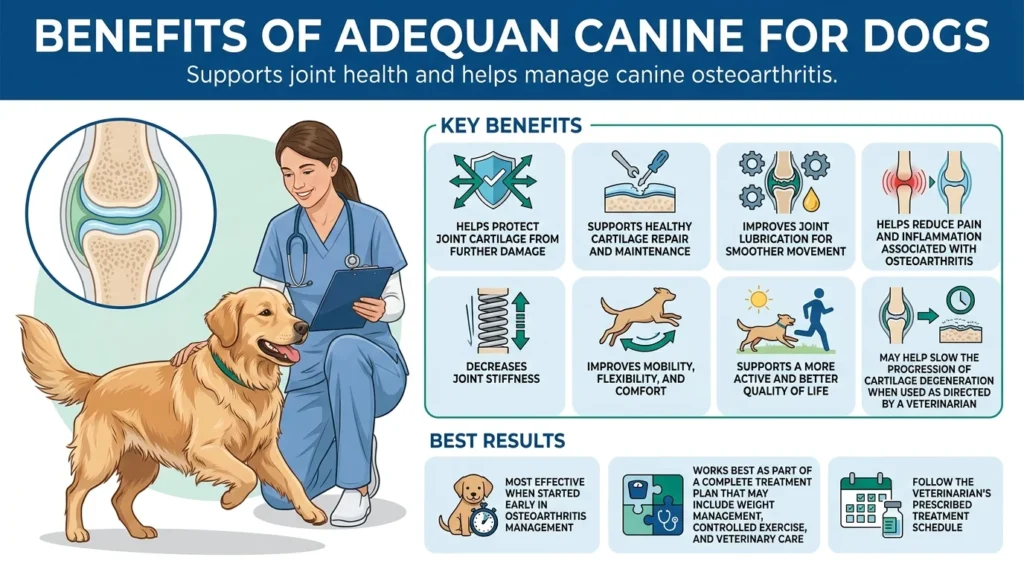
Adequan® Canine drug is a shot for arthritis in dogs that helps maintain joint health and mobility for dogs suffering from osteoarthritis and other degenerative joint diseases. It can be used as a part of a long-term veterinary treatment plan and can aid in managing the disease by supporting a natural process of repairing joints.
Key Benefits
- Helps support the process of joint repair to help keep joints healthy.
- Helps manage the symptoms of degenerative joint disease (DJD), such as loss of mobility due to arthritis.
- Supports better joint function and mobility in the management of arthritis.
- May be used as a part of post surgical joint care to help aid in the recovery of some types of joint surgeries.
- Starts working within hours after administration with early therapeutic activity after injection.
The use of Adequan Canine should always be followed by your veterinarian’s instructions and be part of a comprehensive arthritis treatment program.
Side Effects of Adequan Canine in Dogs
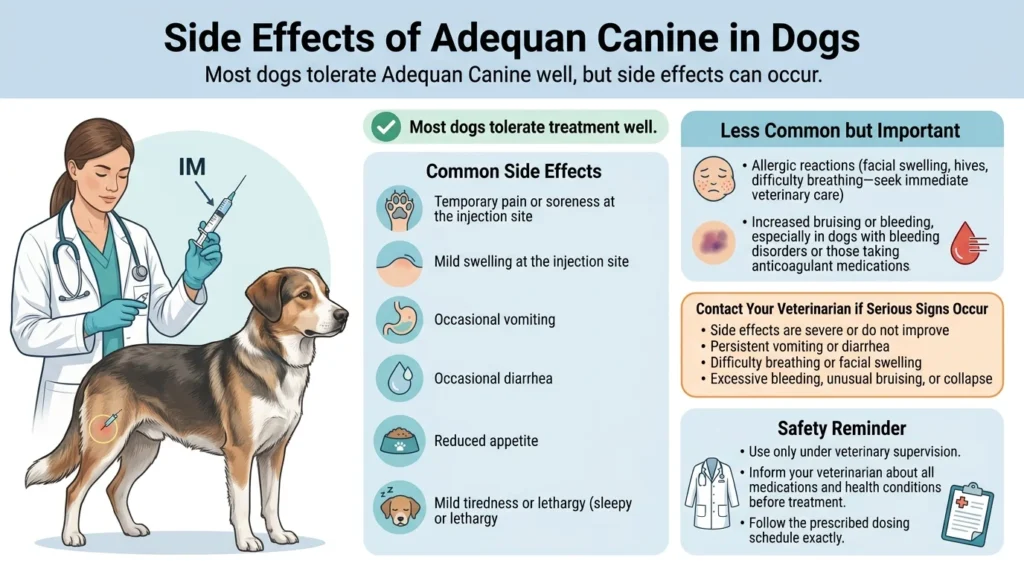
Adequan® Canine is generally well-tolerated with few side effects. In clinical studies, the majority of reactions were mild, transient (self-limited) and did not necessitate discontinuation of treatment. But like any other drug, certain dogs can have side effects and owners should keep a close eye on their dog following shots.
Common or Mild Side Effects
- Pain at the injection site that lasts for only a short period of time.
- Swelling at the injection site (mild)
- Transient diarrhea
- Vomiting
- Decreased appetite (anorexia)
- Depression or lethargy (post-approval use)
Serious Side Effects (Contact Your Veterinarian Immediately)
While not a common condition, if your dog develops the following symptoms, see a veterinarian right away:
- Pain, a large bulge or a blood blister (hematoma) at the injection site, which can be a sign of infection
- Abnormal or decreased blood clotting
- Nosebleeds
- Bleeding in the gastrointestinal tract (GI tract) such as bloody or dark (coffee ground) stools
- Vomit that continues or has blood in it.
- Unusual behaviour or reaction following a shot
- Side effects that do not go away or that cause problems
Warnings and Precautions
- Dogs known or suspected to have a bleeding disorder should not be treated with Adequan Canine; nor should it be used in dogs known to be sensitive to the medication.
- Dogs suffering from liver or kidney disease may be more susceptible to side effects, especially if given an overdose. It is generally safe for dogs’ liver and kidneys.
- Adequan Canine’s safety has not been demonstrated in breeding, pregnant or lactating dogs.
- Death has occurred in some patients during post-approval experience, but no specific causal relationship has been proven.
If your dog shows any abnormal symptoms following the administration of Adequan Canine, please consult your veterinarian right away for evaluation and instructions.
Precautions for Adequan Canine in Dogs
Before starting Adequan® Canine, it’s important to discuss your dog’s medical history with your veterinarian. The drug is well tolerated, but some dogs may need more monitoring, or may not be the right dog for this drug.
Important Precautions
- Adequan Canine should not be used in dogs that are known to be sensitive (allergic) to polysulfated glycosaminoglycan (PSGAG).
- Avoid use in dogs with known or suspected bleeding disorders since PSGAG is a synthetic heparinoid which could be affecting blood clotting.
- Be careful when using in dogs with liver or kidney disease as they may be more likely to experience side effects.
- Caution to be used when dogs are on long-term nonsteroidal anti-inflammatory drug (NSAID) therapy or as directed by your veterinarian.
- Never use the dose or direction for use more than indicated.
- Do not give intravenously; Adequan Canine is for intramuscular (IM) use only.
- Adequan Canine is not known to be safe in breeding, pregnant or lactating dogs and any effects on fertility or reproductive function have not been studied.
- If drugs are prescribed concurrently, your veterinarian may need to adjust the doses or monitor the dog more closely if there are possible drug interactions.
- Before treatment, tell your veterinarian if your pet has known drug allergies or is taking any medications or supplements.
Watch for Allergic Reactions
Allergic reactions are rare, but can happen. Discontinue the medication and contact your veterinarian immediately if your dog becomes any of the following:
- Lips, tongue, face or airways that are swollen
- Difficulty breathing
- Agitation
- Excessive salivation
- Vomiting
- Itching all over or severe itching
Adequan Canine is for injection into a dog only and should be used with the direction of a licensed veterinarian, keep out of the reach of children.
Pharmacology of Adequan Canine
Adequan® Canine consists of a compound, polysulfated glycosaminoglycan (PSGAG), which is chemically similar to the natural glycosaminoglycans (mucopolysaccharides) of healthy cartilage. Though the mechanism of how PSGAG works in the canine joints is not completely understood, it is known to be a disease modifying osteoarthritis drug (DMOAD) meaning it helps protect joint tissues and slow the progression of osteoarthritis, and not just relieve pain.
How PSGAG Works
To help maintain good health in the joints, PSGAG has adopted a number of complementary approaches:
- Inhibits the activity of cartilage-degrading (catabolic) enzymes such as serine proteinases, elastase, stromelysin, metalloproteases, cathepsin B1 and hyaluronidases, which are involved in cartilage destruction and joint degeneration.
- May help to reduce inflammation by blocking Prostaglandin E2 (PGE2) and other inflammatory processes involved in diseased joints.
- Encourages anabolic (repair) activity, leading to a greater production of protein, collagen, proteoglycans and hyaluronic acid, which are vital for healthy cartilage and function of the joints.
- Improves synovial membrane function, increases hyaluronic acid in synovial fluid and increases joint lubrication.
- Relieves pain and enhances the motion of arthritic joints.
In addition, research indicates that PSGAG is absorbed into the affected joints more readily than the healthy joints, so that it can treat the area most damaged by OA.
Absorption and Distribution
PSGAG is quickly absorbed and diffused after intramuscular (IM) injection. It is partly bound to serum proteins and is transported from the blood to the synovial fluid where it gets deposited in the cartilage matrix. The recommended dose is 4.4 mg/kg (2 mg/lb) which is effective for about 72 hours after injection in the synovial fluid and in the articular cartilage.
The liver, spleen, bone marrow, and perhaps the kidneys seem to be the major sites of PSGAG metabolism, with the majority of the free drug eliminated in the urine and a small portion in the feces.
Safety and Toxicology
At the recommended therapeutic dose, Adequan Canine has shown to be well tolerated and have an excellent safety profile. Only a few minor and transient side effects were reported in clinical trials in the U.S. and Canada and these included:
- Mild diarrhea
- Transient lethargy and/or lowness of mood following injection
- A dog’s appetite and stool amount go up
At the recommended dose no clinically significant effects on blood clotting, kidney function or liver function were seen.
Toxicity studies, however, indicated that doses more than the recommended dose (3 to 10 times the labeled dose) given over a long period of time resulted in dose-related adverse effects, including:
- Inflammation, bleeding and musculoskeletal degeneration at the injection site
- Hematoma formation
- High bleeding times and low platelets
- Abnormal liver and kidney development, such as liver and kidney weight increases and microscopic changes in the tissue structure
These results confirm the need to use Adequan Canine strictly in the recommended dose and for the recommended time.
Clinical Effectiveness
Clinical trials have proven that Adequan Canine works for dogs that have been diagnosed radiographically with either trauma- or degenerative joint disease. It has also been shown to be effective for canine osteoarthritis with significant improvement in range of motion and overall orthopedic scores seen in dogs receiving the recommended 2 mg/lb dose intramuscularly two times a week for four weeks (8 injections) compared with placebo-treated dogs.
Is My Dog a Candidate for Adequan?
Adequan® Canine medication may be a suitable treatment for dogs with osteoarthritis, hip dysplasia, elbow dysplasia, and other joint conditions that affect mobility and comfort. This is a very popular treatment for older dogs, but older dogs are not necessarily the right candidates. Rather, your veterinarian will assess your dog’s health, joint condition, clinical signs and treatment requirements before recommending Adequan.
If your pooch is limping, stiff, not able to stand, not willing to jump or go up stairs, or is less active than normal you should make an appointment to see the vet. Early detection and early treatment can help to slow the development of joint disease and can help your dog live a better life.
For many cases, a combination of modalities (Adequan Canine in combination with other therapies such as veterinary rehabilitation and physical therapy) is best for maintaining or restoring mobility. Your veterinarian will be able to decide if this is appropriate and create a treatment plan to best fit your dog’s condition.
You May Also Like to Read:
- Clomicalm Dosage For Dogs: Calculator & Complete Guide
- Calcium Gluconate For Dogs: Calculator, Chart & Safe Guide
FAQs
Are there any drugs that should not be used with Canine Adequan?
Yes. If suitable for your dog, your veterinarian may prescribe Adequan Canine in combination with other arthritis medications. Never combine medications unless directed by your veterinarian.
What should be the storage conditions for Adequan Canine?
Store Adequan Canine at 68–77°F (20–25°C). A brief exposure to a temperature of 104°F (40°C) should be avoided, but a brief exposure to 59 – 86°F (15 – 30°C) is acceptable. Ensure that the medicine is kept away from children and pets and that used needles are disposed of safely as per local requirements.
If my dog misses an Adequan Canine dose what should I do?
Contact your vet for instructions if you forget to make a scheduled injection. In many instances, they might recommend that the missed dose be taken once it’s remembered, and then resume the usual dose schedule. Do NOT double next dose unless told to do so.
Should my dog be monitored frequently while taking Adequan Canine?
Not all dogs need to be monitored routinely. Depending on your dog’s medical history, current health status or treatment response, however, your veterinarian may recommend follow-up examinations or laboratory testing.
When do I need to reach out to my vet during therapy?
If your dog has severe side effects, does not seem to be getting better or worse arthritis symptoms, was possibly overdosed, has been injured by the injection or if you are concerned about using the medication, contact your veterinarian immediately.
What will happen if your dog gets too much of Adequan Canine?
Overdose symptoms can include pain at the injection site, swelling and formation of a hematoma, and reduced platelets which may lead to bleeding. Symptoms can include nosebleeds, bloody or dark stools, vomiting and in severe cases liver or kidney damage. Get veterinary help ASAP if you suspect an overdose.
How long does it take Adequan Canine dose to work after injection?
Following an intramuscular injection, Adequan Canine penetrates into the joints in about 2 hours and may penetrate the joint cartilage in about 3 days. Visible improvements in mobility may require several doses.
Why are veterinarians picking Adequan Canine over lots of joint supplements?
Adequan Canine is a disease modifying osteoarthritis drug (DMOAD) clinically tested for safety and efficacy, unlike many over the counter joint supplements.
How to know if Adequan Canine is right for your dog?
Ideally, an appointment with your veterinarian should be made for an examination. They can identify what’s causing your dog’s joint issues, whether or not Adequan Canine will be right for your dog, and develop a personalized treatment plan based upon your dog’s health and the severity of the arthritis.
Key Takeaways
- Adequan® Canine is the only FDA approved injectable dog disease-modifying osteoarthritis drug (DMOAD).
- It is rich in polysulfated glycosaminoglycan (PSGAG) which works to help maintain cartilage and help lubricate the joints and slow down the effects of osteoarthritis.
- Label rate is 4.4 mg/kg (2mg/lb) IM twice a week for a max of 4 weeks (8 injections).
- Adequan Canine is most effective if started early, before the joints become severely damaged and mobility becomes a problem.
- It is not a painkiller or a steroid but it is targeted towards the joint disease itself.
- Adequan Canine dosage for dogs is generally well tolerated by most dogs, but it is possible to have some minor reactions at the site of the injection and digestive upset.
- The following conditions must be considered before treatment: bleeding disorders, renal disease, hepatopathy or PSGAG hypersensitivity.
- Keep in a cool dry place between 68-77°F (20-25°C), away from extreme heat, and under the supervision of a licensed veterinarian.
Final Thoughts
Adequan® Canine is not just a drug to manage the symptoms of arthritis, it is a disease-modifying treatment to help preserve joint cartilage, maintain joint lubrication and promote long-term joint health in dogs with osteoarthritis. Used as directed by veterinarians and on a recommended dosage schedule, it may help to slow the progression of joint disease, enhance mobility and comfort.
Each dog is an individual, so check with your veterinarian to figure out if Adequan Canine medicine is right for your dog, when to start therapy, and if other arthritis therapies are needed. Your dog can remain active, comfortable and have a better quality of life for years to come with early diagnosis, the correct dose, and regular follow-up.