Disclaimer: All information in this guide is provided for educational purposes only and should never replace professional veterinary advice. Gluconate solution should be administrated slowly by intravenous injection with careful monitoring of the heart rate. For dogs with dystocia may be given subcutaneously.
Calcium Gluconate Dosage Calculator For Dogs
Veterinary dosing guide for dogs
The duration of administration depends on the condition being treated, response to the medication, and the development of any adverse effects. Be certain to complete the prescription unless specifically directed by your veterinarian. Even if your pet feels better, the entire treatment plan should be completed to prevent relapse.
© medsdog.com
Calcium Gluconate Dosage for Dogs is a veterinary-prescribed medication that treats or prevents hypocalcemia (low calcium in the blood), which may be life-threatening and can disrupt normal muscle contraction, heart function, nerve transmission, blood clotting and much more. One of the most frequently used calcium supplements in veterinary medicine is calcium gluconate, a calcium salt of gluconic acid which is soluble in water and rapidly increases blood calcium levels when rapid correction is required. Oral calcium supplements are not recommended in a crisis, and should only be given with veterinary supervision, but may be used for dogs with mild or gradual onset of calcium deficiency or for chronic calcium supplementation.
Calcium is needed for the growth of healthy bones and teeth, muscle and heart action, nerve conduction, enzyme action and the normal functioning of glands. Dogs that are lacking calcium may become weak, have muscle tremors, seizures, irregular heart rhythms, and other serious problems. While calcium gluconate is a common drug, it is not usually used as a supplement in commercial dog food products and is therefore not a regular ingredient, just a supplemental calcium source.
This complete guide will teach you how vets determine safe calcium doses, calcium dosage by weight for dogs, available forms of calcium (injectable and oral), potential benefits, side effects, safety precautions, and when calcium supplementation is or isn’t recommended. There’s also a convenient Calcium Gluconate Dosage Calculator for Dogs that can be used to estimate doses recommended by your veterinarian. There are potential dangers associated with incorrect calcium supplementation, so calcium gluconate should only be administered under the direction of a licensed veterinarian.
What is Calcium Gluconate Dosage For Dogs?
You may be asking yourself what is calcium gluconate dosing for dogs? Calcium gluconate is a very important veterinary medication that is used to treat acute hypocalcemia (dangerously low calcium) and dystocia (difficult labor) in female dogs. In dogs, the usual dose of a 10% calcium gluconate solution is 25 to 75 mg per pound (50 to 150 mg/kg), it should be given as an intravenous (IV) injection slowly and with careful monitoring of the heart rate.
For dystocic dogs, veterinarians may give them 1 mL/10 lb (4.5 kg) body weight subcutaneously. Improper calcium administration can cause serious cardiac problems, always check with a licensed vet to make sure that you’re working out the correct dosage and administration for your pet.
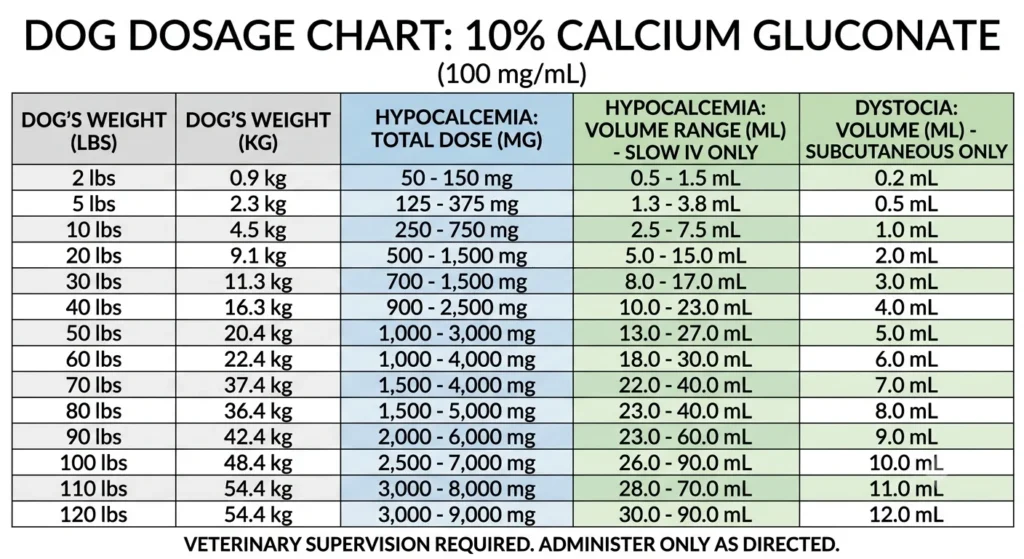
Calcium Gluconate Dosage Charts For Dogs By Weight
Important Clinical Note: Calcium gluconate should only be given on the advice of a vet. Dosage is dependent on the dog’s response and cardiac monitoring is strongly recommended during intravenous use.
1. Dosage Rates & Guidelines
| Indication | Dosage Rate (US / Imperial) | Dosage Rate (Metric) | Route of Administration | Key Monitoring / Instructions |
| Hypocalcemia (Usual Dose) | 25 to 75 mg/lb (0.25 to 0.75 mL/lb) | 50 to 150 mg/kg (0.5 to 1.5 mL/kg) | Slow Intravenous (IV) | Must be given slowly with continuous monitoring of the heart rate. |
| Dystocia | 1 mL per 10 lbs | 1 mL per 4.5 kg | Subcutaneous (SQ) | Administered under skin as directed by your vet. |
2. Sample Reference Table by Dog Weight
This table uses 10% Calcium Gluconate solution (equivalent to 100 mg of active calcium gluconate per 1 mL).
| Dog Weight (lbs) | Dog Weight (kg) | Hypocalcemia: Total Dose Range (mg) | Hypocalcemia: Volume Range (mL) | Dystocia: Fixed Volume (mL) |
| 10 lbs | ~4.5 kg | 250 – 750 mg | 2.5 – 7.5 mL | 1.0 mL |
| 20 lbs | ~9.1 kg | 500 – 1,500 mg | 5.0 – 15.0 mL | 2.0 mL |
| 30 lbs | ~13.6 kg | 750 – 2,250 mg | 7.5 – 22.5 mL | 3.0 mL |
| 40 lbs | ~18.1 kg | 1,000 – 3,000 mg | 10.0 – 30.0 mL | 4.0 mL |
| 50 lbs | ~22.7 kg | 1,250 – 3,750 mg | 12.5 – 37.5 mL | 5.0 mL |
| 60 lbs | ~27.2 kg | 1,500 – 4,500 mg | 15.0 – 45.0 mL | 6.0 mL |
| 80 lbs | ~36.3 kg | 2,000 – 6,000 mg | 20.0 – 60.0 mL | 8.0 mL |
Crucial Safety Reminder
- Never shorten the treatment: If your dog seems to be recovered, do not stop the treatment plan as prescribed by your veterinarian, otherwise your dog may return to normal.
- Adverse Reactions: length of treatment is directly related to the dog’s ability to tolerate the medication and to possible side effects of the medication.
What Is Calcium Gluconate for Dogs?
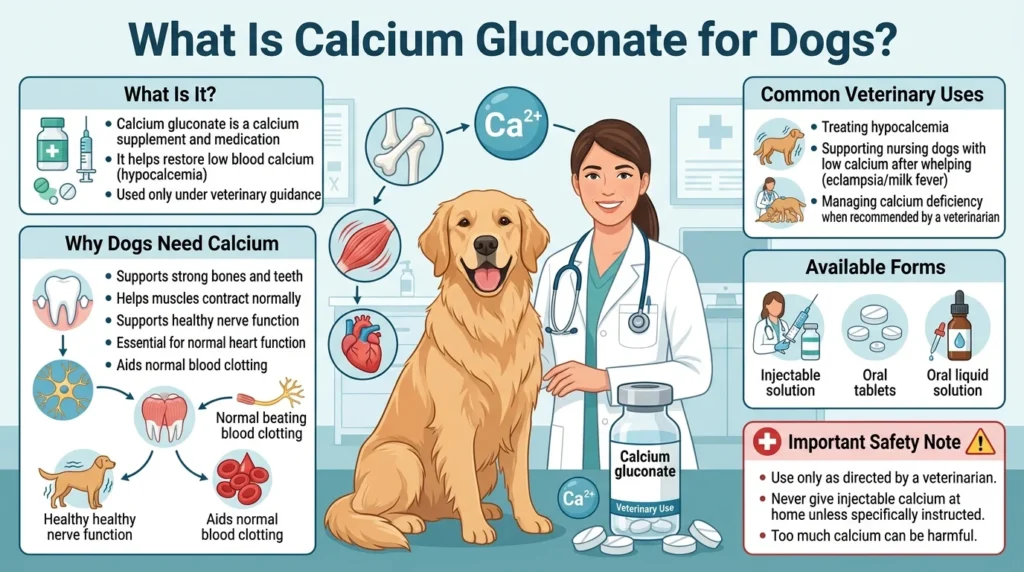
Calcium Gluconate is a calcium supplement and prescription veterinary medicine which is mainly used to treat or prevent low calcium levels (hypocalcemia) in dogs. Glucobiogen, also named D-gluconic acid calcium salt, or calciofon can be used to restore normal calcium levels in the blood if calcium deficiency impairs essential functions of the body. Calcium gluconate in veterinary medicine comes in oral and injectable forms, with the latter being preferred in cases of emergency or acute hypocalcemia, and the former being preferred in cases of mild hypocalcemia that develops over a longer period, or for continuous supplementation.
Calcium is essential for a dog’s general health because it is needed for strong bones and teeth, for muscle (including heart muscle) contraction, for nerve impulse transmission, for the activation of enzymes, for cellular signaling, for blood vessel function and for normal secretory activity of glands. Oral calcium products can also be used to bind dietary phosphate in chronic kidney disease in dogs.
Oral calcium gluconate products can be flavored liquid suspensions that can be mixed with food to enhance palatability and ease of administration. Calcium gluconate should only be administered under veterinary supervision as administration of calcium salts can cause problems. Oral calcium supplements are often used in veterinary medicine, but many are not FDA-approved for veterinary use, and supplement products are not subjected to the same scrutiny as prescription medications.
Be sure to follow your veterinarian’s dosing directions; even natural or nutritional supplements may have side effects or toxicity when given incorrectly.
Uses of Calcium Gluconate for Dogs
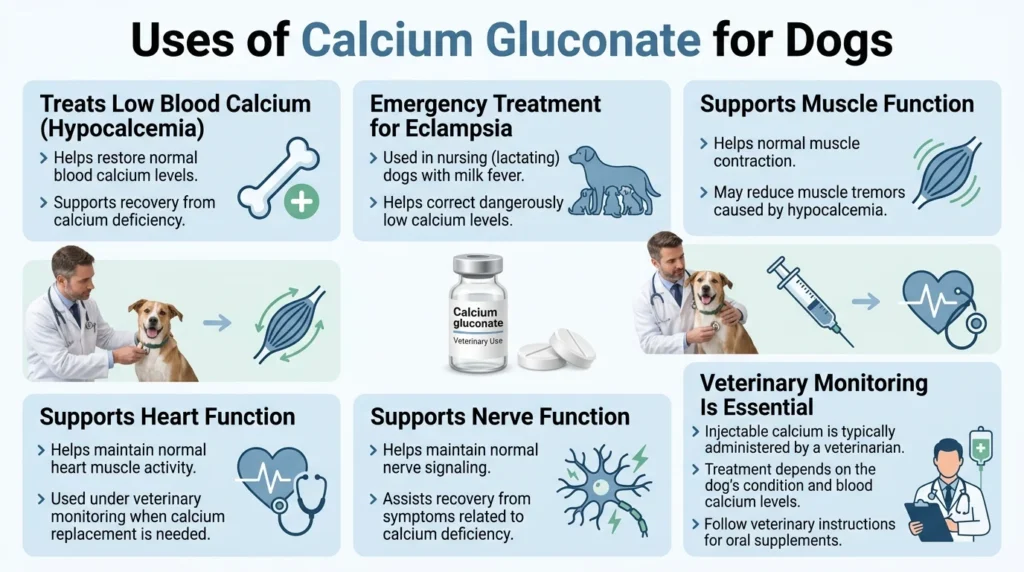
Calcium Gluconate is a veterinarian-prescribed drug, mainly used to treat low calcium levels in the blood and various emergency and medical conditions in dogs. It restores calcium to its normal level, making it easier to have a healthy muscle contraction, heart function, nerve transmission and other physiological processes. Your veterinarian can prescribe calcium gluconate for the following uses, depending on the condition:
- Effective in the treatment of hypocalcemia from all causes including hypoparathyroidism.
- Helps avoid hypocalcemia during blood transfusion by keeping blood calcium normal.
- Treats eclampsia (milk fever); calcium deficiency in nursing dogs, which can be life-threatening and requires quick veterinary attention.
- Antagonist to potassium for a dog that has high blood K+ levels (hyperkalemia) to reduce the risk of heart damage.
- May be used as a heart stimulant in emergency situations (under strict veterinary supervision) when epinephrine has failed.
- Helps treat uterine inertia or dystocia (difficulty in giving birth) due to calcium deficiency.
- Used as an adjunct to treat allergic reactions, insect bites and stings to decrease blood vessel permeability and swelling (edema).
- May help treat: Inflammatory conditions and some skin disorders with excessive inflammatory exudates.
- May be used as a hemostatic in select clinical cases where parenchymal bleeding is to be controlled.
- Works as an antidote to magnesium salt poisoning as directed by a veterinarian.
- May administer supportive therapy in toxic liver disease as part of treatment.
Given many of these uses require serious or emergency situations, calcium gluconate should only be used under the direction and supervision of a licensed veterinarian.
How Does Calcium Gluconate Work in Dogs?
Calcium gluconate supplement is a water-soluble calcium salt of gluconic acid that acts to quickly increase the calcium concentration of the blood (plasma) and restore the balance of calcium in the blood of dogs suffering from hypocalcemia. It is available in a variety of formulations, but most often the injectable form is used if a rapid rise in calcium is required.
The extra calcium post-absorption is used for the body’s calcium dependent cell signaling (messenger) systems which control many fundamental biological functions. It supports the contraction of skeletal and heart muscles, which decreases muscle weakness, stiffness, tremors, amongst others, that may be associated with low calcium. Calcium is also essential for the normal functioning of nerve impulse transmission, enzyme activation, and normal secretory activity of the excrine glands.
Calcium Gluconate dosage for dogs can be used to restore calcium levels to the normal range, thereby minimizing the negative effects of hypocalcemia, and can be important as part of the treatment plan for dogs with diseases that require rapid or prolonged calcium supplementation.
Calcium Gluconate Health Benefits for Dogs
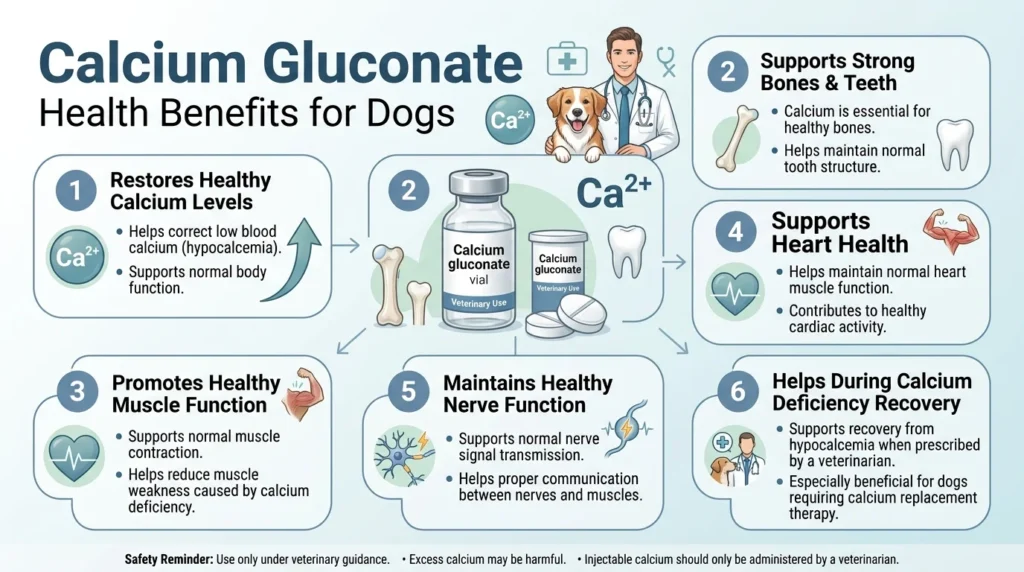
Calcium gluconate drug is a critical source of calcium, and is used to aid in the maintenance of various important functions within the dog’s body, especially for preventing and correcting calcium deficiency.
It has the following major health benefits:
- Helps to build and maintain healthy bones and teeth with calcium for bone development and care.
- Supports regular muscle activity, such as the normal contractions of the heart muscle.
- Assists with nerve conduction and cell function to enable the body to perform normal functions.
- Important for enzyme activity and proper functioning of glands for general health.
- Helps to bring calcium levels back to normal in hypocalcemic dogs, which helps to minimize complications due to the calcium deficiency.
Some sources say that calcium gluconate medication can be used to help with joint health, digestion, skin and coat health, or anxiety, but there isn’t enough veterinary evidence to indicate that these are direct health benefits of calcium gluconate. It is well known that it is used to provide calcium, and calcium dependent body functions.


Paid Links - As an Amazon Associate, I earn from qualifying purchases.
Calcium Gluconate Side Effects and Precautions for Dogs
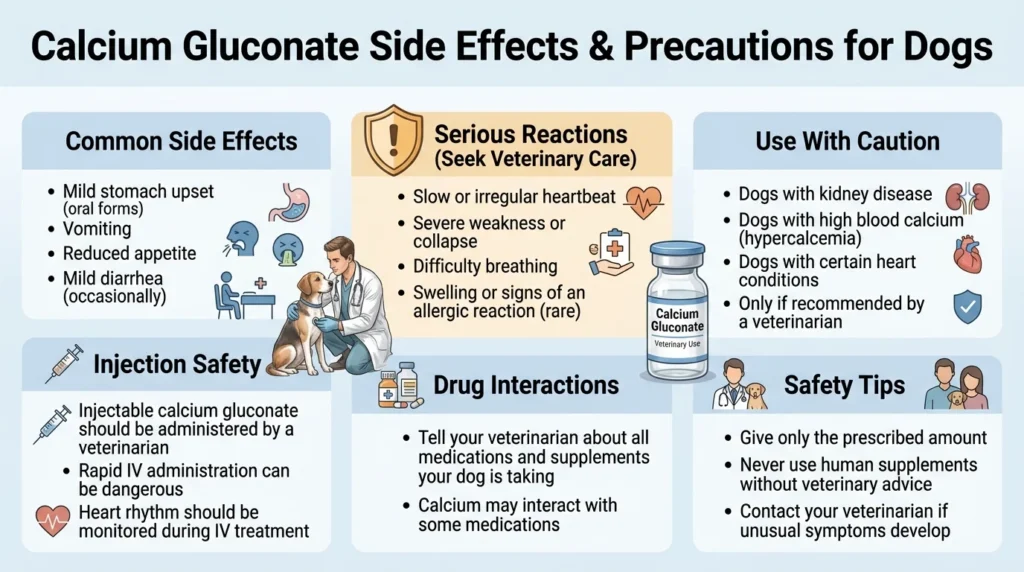
When prescribed by a veterinarian, calcium gluconate is generally safe, effective, but may have side effects and should only be administered under veterinary supervision. It is important to have the right dosage as too much calcium can create serious health issues.
Precautions
- Avoid calcium gluconate for dogs that are known to be hypersensitive (allergic) to calcium gluconate.
- Before supplementing your dog’s diet with calcium, seek veterinary advice first.
- Only use the dose that is suggested, as an overdose can lead to high blood calcium levels (hypercalcemia), kidney stones and skeletal abnormalities.
- Oral calcium gluconate may not be absorbed well by some dogs which decreases its effectiveness.
- Accidental contact with calcium gluconate can cause skin, eye or respiratory irritation.
- This drug is short acting and the effects last less than 24 hours, but can be longer in dogs with kidney or liver problems.
Possible Side Effects
- Increased blood calcium levels (hypercalcemia).
- Side effects of oral calcium supplements are nausea or constipation.
- Local reactions, such as subcutaneous masses, redness (erythema), blisters (bullae), granulomas, or skin sloughing, especially following subcutaneous injection.
Serious Reactions
If your dog shows reactions to this allergy, speak with your veterinarian right away, as these are some symptoms to be aware of:
- Laboured and/or irregular breathing.
- Skin rash.
- Fever.
- Puffiness or swelling around the face.
Even if your dog was fine with the first few doses of the drug, it can develop a sensitivity to it over time. Keep an eye on your pet during the entire treatment and reach out to your veterinarian if you observe any symptoms or side effects that seem unusual to your pet.
Drug Interactions of Calcium Gluconate for Dogs
Calcium gluconate supplement may interact with a few medications and may decrease the effectiveness of some medicines or cause more serious side effects. Let your veterinarian know if your dog is taking any other medicines, vitamins, supplements or herbal products before beginning calcium gluconate.
Major Drug Interactions
- Cardiac glycosides (such as digoxin): Their use is generally contraindicated as it can greatly raise the chance of cardiac toxicity and hazardous heart rhythm irregularities (arrhythmias).
- Calcium chelators: Calcium binds to tetracyclines, which form complexes that inhibit absorption and efficacy of antibiotics. Do not give these medicines together.
Drugs that should be avoided or used with caution
Calcium gluconate may also interact with the following drugs and should only be used together under veterinary supervision:
- Aspirin
- Antifungals (azole; e.g., itraconazole, ketoconazole)
- Calcitriol
- Cefpodoxime and rifampin
- Corticosteroids (such as dexamethasone, prednisolone)
- Digoxin and sotalol
- Diuretics (such as furosemide, chlorothiazide)
- Famotidine, ranitidine, and omeprazole are all effective at preventing or treating gastric reflux.
- Fluoroquinolone antibiotics (e.g., enrofloxacin)
- Levothyroxine
- Mycophenolate
- Oral bisphosphonates and phosphate products.
- Propranolol
- Sucralfate
- Tetracycline antibiotics
Calcium may interact with the absorption or effects of many drugs, so be sure to follow your veterinarian’s advice on dosing schedules and timing of drugs to minimize interaction risks.
Risk Factors and Contraindications of Calcium Gluconate for Dogs
Calcium gluconate is not for all dogs. Your vet will check your dog’s medical history and any other medications before beginning treatment.
Do Not Use Calcium Gluconate If Your Dog:
- Has a calcium gluconate allergy or allergy to any of the components.
- Has high blood calcium level (hypercalcemia).
- Does not eat – unless advised so by vet
- Has kidney disease, as calcium balance may already be impaired.
- Has had a myocardial infarction (heart attack).
- Taking cardiac glycosides (Foxglove or strophanthus glycosides, digoxin), because when these drugs are taken together, there is a high risk of serious heart rhythm problems.
Use With Caution
Calcium Gluconate medication should be administered with care to dogs that are:
- Taking calcitriol, since the combination may increase blood calcium levels and require close veterinary monitoring.
The following risk factors may make it more likely that adverse effects or complications may occur and calcium gluconate should not be used without the supervision of a licensed veterinarian.
You May Also Like to Read:
- Citravet Dosage For Dogs: Calculator, Chart & Safe Guide
- Cosequin DS Dosage For Dogs: Calculator & Safe Guide
FAQs
Calcium gluconate supplement is used in dogs for what purpose?
Calcium gluconate dosage is mainly indicated for the treatment of hypocalcemia (low blood calcium levels). Supports normal calcium levels for healthy muscle contractions, heart function, nerve transmission and bone health.
So when is a dog calcium gluconate needed?
In dogs with hypocalcemia, a veterinarian might prescribe calcium gluconate. Symptoms include muscle twitching and trembling, stiff muscles, poor coordination, vomiting and fever-like symptoms. If you see any of these symptoms, see a veterinarian as soon as possible.
Does my dog need any monitoring while taking the calcium gluconate?
Yes. Blood tests to keep track of calcium and phosphorus levels and closer follow-up with your veterinarian may be indicated. Monitor your dog at home and if you see anything that does not sound like normal behavior, call your veterinarian.
What is the best way to store oral calcium gluconate?
Oral calcium gluconate should be stored at room temperature (25°C/77°F) out of the reach of moisture. Store away from children and pets.
If my dog accidentally gets too much calcium gluconate, what should I do?
Immediately contact your veterinarian if you suspect an overdose or serious adverse reaction. In case your regular veterinary clinic is not available, get to the nearest emergency veterinary clinic as soon as possible.
Is it possible to add calcium gluconate in the food?
Yes. Several oral calcium gluconate products are flavored and are more palatable to mix with food, but always follow veterinarian’s directions.
Is it safe to administer calcium gluconate to my dog without vet’s recommendations?
No, Calcium Gluconate dosage must only be administered under the direction of a veterinarian as it can cause severe health issues if given incorrectly or if it is not needed.
How long does my dog need calcium gluconate treatment?
Treatment will last as long as it takes to correct the calcium deficiency, depending on the cause, and how your dog responds to the treatment. Your veterinarian will assess you and your cat to make a recommendation about when to consider reducing or stopping treatment.
What should I do if my dog develops unusual symptoms while taking calcium gluconate?
If your dog has any unusual symptoms, like swelling of its face, trouble breathing, excessive vomiting, weakness or other unexpected side effects, discontinue use and call your vet immediately.
Key Takeaways
- Calcium gluconate is a medication which is formulated for use in dogs, and is prescribed for the treatment of low blood calcium levels (hypocalcemia).
- It can help normalize calcium levels, which is necessary for proper muscle contraction, heart function, nerve transmission, enzyme activity and healthy bone and teeth.
- Treatment usually is calcium gluconate injected into the body and/or calcium carbonate in the mouth.
- The symptoms of hypocalcemia are muscle tremors, twitching, stiffness, poor coordination, vomiting, and weakness, all of which need immediate veterinary care.
- Only give calcium gluconate under veterinary supervision as it can cause serious problems if not given in the correct dose.
- Calcium levels may need to be monitored by blood testing during calcium gluconate therapy, as may be calcium and phosphorus levels.
- Calcium gluconate dosage for dogs may interact with some medications; consult your veterinarian for any medication, supplement or herbal products your dog is taking.
- Oral calcium gluconate should be stored at room temperature (25°C/77°F) and out of reach of children and pets.
- If you have any concerns about an overdose or allergic reaction or unusual side effects during treatment contact your veterinarian immediately.
- Always begin and end calcium gluconate treatment under the direction of your veterinarian for safe and effective treatment.
Final Thoughts
Calcium is a necessary mineral which helps in your dog’s bones, teeth, muscle, heart, nerves and several other essential body functions. If calcium is too low, dogs can develop a serious condition, called hypocalcemia, which can lead to muscle tremors, weakness, poor coordination, seizures and heart problems, if untreated.
Fortunately, calcium gluconate is an effective veterinary remedy to restore normal blood calcium levels when used properly. Depending on the severity of the condition, your veterinarian may give an injectable form to rapidly correct the condition, and then switch your dog to an oral supplement if necessary.
Never administer calcium gluconate without veterinary advice – calcium deficiency and excess calcium can be detrimental. If you think your dog may be having some symptoms of calcium deficiency or too much calcium, you should get your dog to the vet right away. However, if your dog is diagnosed quickly, receiving the right dose, and monitored closely, calcium gluconate can be used to bring your dog back to normal calcium levels and keep him on the path to recovery safely.