Thiamine Dosage Calculator For Dogs
Accurately determine Daily Maintenance requirements or Clinical Deficiency emergency dosages based on your dog’s profile.
Calculated Dosage Results
⚠️ CRITICAL SAFETY NOTICE
Thiamine is water-soluble with a high margin of safety. NEVER administer Thiamine rapidly via an Intravenous (IV) line, as rapid IV injection can trigger fatal cardiac arrhythmias. Injections must be Subcutaneous (SQ) or Intramuscular (IM). Always verify formulas and steps with a licensed veterinarian before dosing.
© medsdog.com
Thiamine Dosage for dogs is an important subject for pet owners because vitamin B1, known as thiamine, is vital to their normal brain function, nerve signaling, energy metabolism and overall health. Thiamine deficiency is relatively rare but can be a life-threatening problem if untreated. Low thiamine levels can be caused by inadequate or imbalanced nutrition, malnutrition, gastrointestinal diseases that interfere with absorption, increased thiamine losses, prolonged illness, or some diseases that increase thiamine needs.


Paid Links - As an Amazon Associate, I earn from qualifying purchases.
Symptoms are often initially gastrointestinal: loss of appetite, vomiting, weight loss and then neurological: weakness, poor co-ordination, changes in vision, decreased response to light, convulsions, and in severe untreated cases, a rapid deterioration leading to death within days.
This article will cover the safe dosage of thiamine for dogs, its uses, dosage guidelines, thiamine deficiency symptoms, side effects and precautions about overdose, and natural food sources high in vitamin B1. You will also discover when a veterinarian might recommend thiamine injections, the methods used to diagnose thiamine deficiency through a physical examination and laboratory tests, and how recovery depends on certain factors.
The treatment is effective if started early, always consult your veterinarian for proper dose or dosage (particularly when using prescription injectable medications or off label medications). From preventing deficiency to aiding your dog’s recovery, this guide offers accurate, practical and evidence-based information so you can make informed choices for your pet.
What is Thiamine Dosage For Dogs?
Thiamine dosage rates for dogs determine the exact milligram to weight ratio needed to safely give Vitamin B1 for a dog’s health needs. Two main dosage rates have been recommended for use based on standard veterinary practice: a nutritional maintenance dose of 0.56 mg/1,000 kcal of metabolized energy and an emergency clinical treatment dose of 1.1 mg to 2.2 mg/kg for severely depleted dogs.
Since thiamine can be under dosed or under effective when administered at the wrong rate for the particular dog, comparing the exact weight and caloric intake to the professional veterinary measurements is of critical importance when giving thiamine safely.
Thiamine Dosage Charts For Dogs By Weight
Based on the precise formulas and guidelines provided for canine thiamine dosing, here are the reference dosage charts for both Daily Maintenance and Clinical Deficiency Treatment.
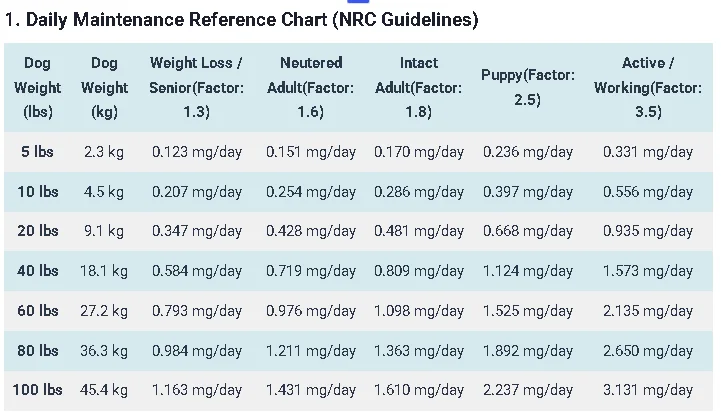
1. Daily Maintenance Reference Chart (NRC Guidelines)
This chart displays the Daily Thiamine Intake Requirement based on a dog’s weight and their life stage factor.
Target: 0.56 mg of Thiamine per 1,000 kcal of Metabolized Energy (ME), calculated via Resting Energy Requirement (RER = 70 x weight in kg^0.75).
| Dog Weight (lbs) | Dog Weight (kg) | Weight Loss / Senior(Factor: 1.3) | Neutered Adult(Factor: 1.6) | Intact Adult(Factor: 1.8) | Puppy(Factor: 2.5) | Active / Working(Factor: 3.5) |
| 5 lbs | 2.3 kg | 0.123 mg/day | 0.151 mg/day | 0.170 mg/day | 0.236 mg/day | 0.331 mg/day |
| 10 lbs | 4.5 kg | 0.207 mg/day | 0.254 mg/day | 0.286 mg/day | 0.397 mg/day | 0.556 mg/day |
| 20 lbs | 9.1 kg | 0.347 mg/day | 0.428 mg/day | 0.481 mg/day | 0.668 mg/day | 0.935 mg/day |
| 40 lbs | 18.1 kg | 0.584 mg/day | 0.719 mg/day | 0.809 mg/day | 1.124 mg/day | 1.573 mg/day |
| 60 lbs | 27.2 kg | 0.793 mg/day | 0.976 mg/day | 1.098 mg/day | 1.525 mg/day | 2.135 mg/day |
| 80 lbs | 36.3 kg | 0.984 mg/day | 1.211 mg/day | 1.363 mg/day | 1.892 mg/day | 2.650 mg/day |
| 100 lbs | 45.4 kg | 1.163 mg/day | 1.431 mg/day | 1.610 mg/day | 2.237 mg/day | 3.131 mg/day |
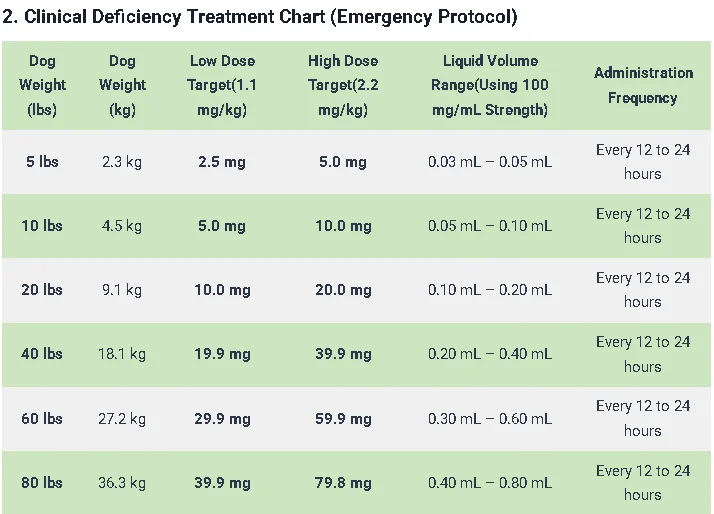
2. Clinical Deficiency Treatment Chart (Emergency Protocol)
This chart displays the therapeutic range for dogs experiencing clinical deficiency.
Target Range: 1.1 mg to 2.2 mg of Thiamine per kg of body weight, administered every 12 to 24 hours. Liquid volume examples are calculated using a standard 100 mg/mL product strength.
| Dog Weight (lbs) | Dog Weight (kg) | Low Dose Target(1.1 mg/kg) | High Dose Target(2.2 mg/kg) | Liquid Volume Range(Using 100 mg/mL Strength) | Administration Frequency |
| 5 lbs | 2.3 kg | 2.5 mg | 5.0 mg | 0.03 mL – 0.05 mL | Every 12 to 24 hours |
| 10 lbs | 4.5 kg | 5.0 mg | 10.0 mg | 0.05 mL – 0.10 mL | Every 12 to 24 hours |
| 20 lbs | 9.1 kg | 10.0 mg | 20.0 mg | 0.10 mL – 0.20 mL | Every 12 to 24 hours |
| 40 lbs | 18.1 kg | 19.9 mg | 39.9 mg | 0.20 mL – 0.40 mL | Every 12 to 24 hours |
| 60 lbs | 27.2 kg | 29.9 mg | 59.9 mg | 0.30 mL – 0.60 mL | Every 12 to 24 hours |
| 80 lbs | 36.3 kg | 39.9 mg | 79.8 mg | 0.40 mL – 0.80 mL | Every 12 to 24 hours |
| 100 lbs | 45.4 kg | 49.9 mg | 99.8 mg | 0.50 mL – 1.00 mL | Every 12 to 24 hours |
⚠️ CRITICAL SAFETY REMINDER: Thiamine injections must only be given via Subcutaneous (SQ) or Intramuscular (IM) routes. NEVER administer rapidly via an Intravenous (IV) line, as this can cause fatal cardiac arrhythmias. Always have a veterinarian confirm the final dose before administering therapeutic amounts.
What is Vitamin B1 (Thiamine) for Dogs?
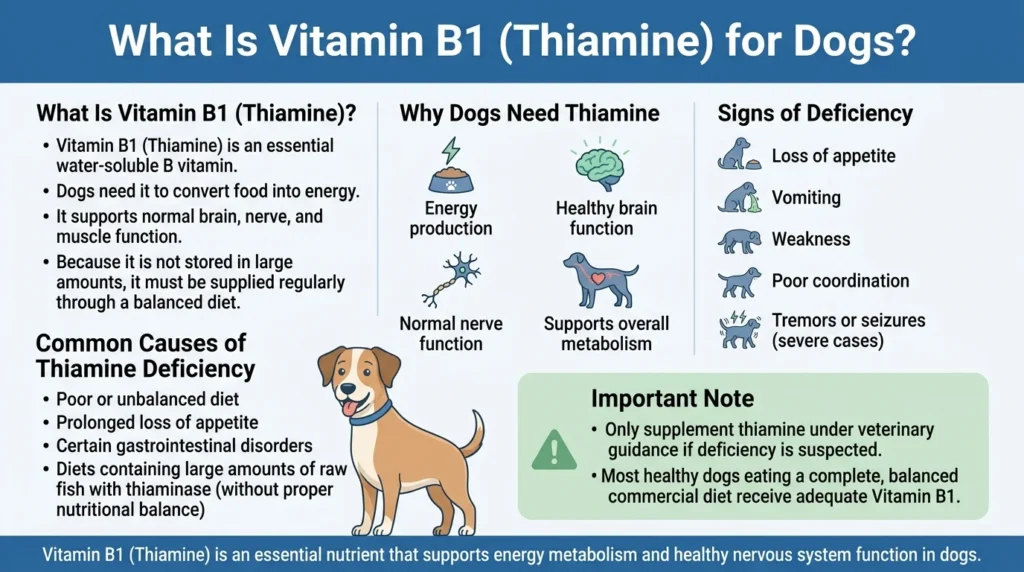
Dogs do not have as much thiamine (vitamin B1) stored in their bodies as they need and must get this essential, water-soluble vitamin on a regular basis through a complete, balanced diet or as recommended by the veterinarian. It is important for converting carbohydrates into energy, normal brain and nervous system function and overall health. Thiamine is not known to be toxic at recommended levels and is one of the most safe vitamins to be added to the diet correctly, either in food or as a supplement.
The main uses of thiamine in the dog is in the treatment and prevention of thiamine (vitamin B1) deficiency, which may be caused by insufficient food intake, poor food digestion, or excessive losses in the digestive tract, and can be life threatening if not treated. Other conditions such as malnutrition, nutritional deficiencies, prolonged illness, fever, intestinal disease, liver disease, hyperthyroidism, chronic stress, burns, gastrectomy, chronic hemodialysis or long term physical exertion may also cause thiamine requirements to increase. Thiamine medication can also be used in veterinary medicine as an adjunctive treatment for seizures and in the treatment of ethylene glycol (antifreeze) toxicity and lead toxicity as prescribed by a veterinarian.
Thiamine dose for dogs can be given as a prescription injection or oral supplement. Prescription of any thiamine product for injection is required by a veterinarian and some veterinary or human formulations can be used ‘off label’, that is, in a manner not specified in the product label. Dosage and treatment will depend on the specific case; always follow the instructions of the veterinarian.
Thiamine deficiency normally goes through three stages. Symptoms begin with anorexia, vomiting and weight loss, and then move to a decrease in response to light, blindness, weakness, poor coordination and seizures. If not treated quickly, it can quickly deteriorate and is deadly within days. Since the condition can be hard to diagnose, it may be necessary to combine a physical examination with blood tests and diagnostic imaging.


Paid Links - As an Amazon Associate, I earn from qualifying purchases.
Most dogs make a recovery within a few days if the thiamine is given early; if it is not, permanent damage to the nervous system or death can occur. Even natural supplements can have side effects or interactions and should be used with caution, with veterinary advice.
How Do I Give My Dog Thiamine?
Depending on the condition of the dog and veterinarian’s advice, thiamine can be administered orally or as an injectable medication. Oral thiamine can be administered as a powder, tablet, capsule, elixir or liquid solution and may be administered with or without food. Ideally, the supplement should be given at the same time every day, and always according to your veterinarian’s advice and the instructions on the label.
Thiamine dog dosage can be injected in the vein (slow IV), the muscle (IM), or just under the skin (SQ). IV injections are usually done by a veterinarian; however, if necessary, a pet owner may be instructed in correct, safe IM and SQ injection. When giving injections at home, use sterile equipment, and use your vet’s technique carefully, if any injection equipment is used, make sure to dispose of the containers, needles and syringes in a sharps container for safe delivery to the veterinary clinic. IV injections must always be administered slowly and a dog should be watched for any signs of anaphylaxis or allergic response.
While your dog is in treatment, keep fresh, clean drinking water available at all times, wash your hands after handling thiamine and do not handle the thiamine if you are known to be sensitive to it. Thiamine usually becomes effective after a few days, but you may not notice the results right away. Side effects, if any, can happen quite quickly after administration; watch your dog closely and call your veterinarian if you observe any unusual reactions.
The Importance of Thiamine for Dogs
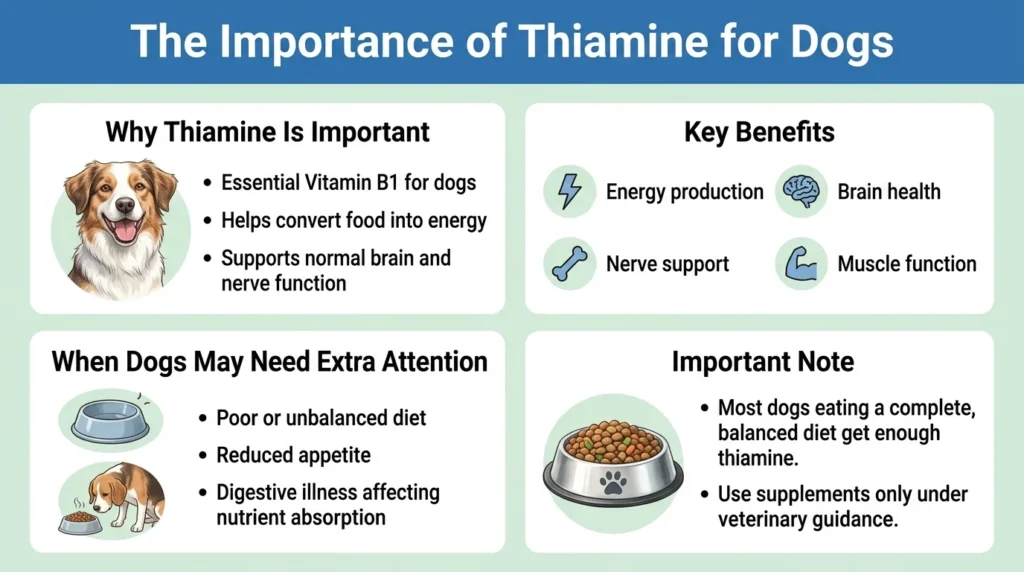
Thiamine (vitamin B1 for dogs) is one of the essential water-soluble vitamins for your dog’s good health. Because the dog stores very little thiamine, it must be supplied regularly from a balanced diet and/or with dog food supplements recommended by the veterinarian. One of the most critical vitamins for normal body function, it is important for energy production, nervous system function, muscle movement, heart health and digestion.
Some of the most important benefits of thiamine for dogs are as follows:
- Supports Energy Production: Thiamine assists in converting carbohydrates to glucose, and participates in the Kreb’s (citric acid) cycle which is the process of forming ATP (adenosine triphosphate), the major energy source of the body’s cells.
- Supports Brain and Nervous System Health: Aids in the production of the neurotransmitter acetylcholine which is important for transmitting nerve signals, maintaining a normal brain function, mental alertness and healthy nervous system communication.
- Supports ATP Production: Thiamine dosage helps fuel ATP production for proper muscle contraction, movement and strength, and can help prevent muscle weakness related to thiamine deficiency.
- Supports Heart Function: Thiamine provides energy for proper heart muscle contractions and helps maintain normal blood vessels and blood flow.
- Supports Digestive Health: It helps break down carbohydrates, fats, and proteins, ensuring efficient digestion, absorption, and overall gut health. Thiamine may also be helpful in stimulating appetite, which promotes healthy food intake and weight.
vitamin b1 for dogs is important for your dog to remain active and to function normally and to avoid the serious health issues that can result from a thiamine deficiency.
Are There Any Potential Side Effects of Thiamine for Dogs?
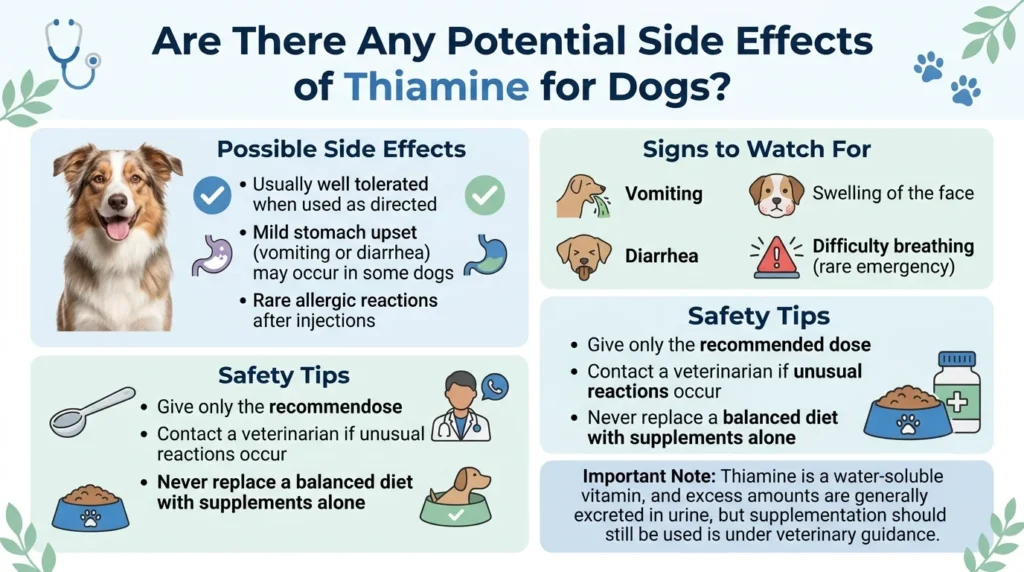
When used as prescribed by a veterinarian, thiamine is safe for use in dogs. Oral supplements and injections are generally well tolerated by most dogs, but there are side effects and allergic reactions, especially with the injections.
Common Side Effects
- Temporary pain or soreness where the needle was given into a muscle (intramuscular injection).
Although rare, serious side effects may occur
Serious allergic (anaphylactic) reactions are rare but possible, particularly when large doses of the drug are given in a short time intravenously. If your dog develops: Stop treatment and seek immediate veterinary attention.
- Swelling
- Hives
- Agitation
- Any alterations in breathing or heart rate.
- Severe weakness
- Collapse
- Seizures
Repeated exposure can result in sensitivity even if the dog didn’t react to the initial doses. Therefore, it is important for owners to pay close attention to their dog during treatment, and if they notice any abnormal symptoms, they should consult their veterinarian as soon as possible.
Thiamine is a short acting supplement and the effects typically last for 24 hours, but longer in dogs with liver or kidney disease.
It is also important to recognise that thiamine deficiency can develop from low dietary intake, reduced intestinal absorption and/or high renal losses. A deficiency may be more likely to occur in dogs that are fed unbalanced home-made diets, those with intestinal disease, kidney disease, or are on diuretic medications. Although thiamine is added to most commercial dog foods, it is easily destroyed by the food processing and if deficiency is suspected, a veterinary recommendation may be necessary.
Are There Any Risk Factors for Thiamine in Dogs?
Thiamine (vitamin B1) is normally safe if used as a veterinary prescription, but there are some circumstances in which it is advisable to be careful. Moreover, thiamine deficiency can cause serious health problems if it goes undiagnosed and untreated.
Dogs That May Be at Higher Risk
- Thiamine should not be used by humans with a known allergy to thiamine or any of the ingredients in the supplement.
- Do not use in pregnant or lactating dogs, or in the absence of veterinary supervision.
- If your dog’s condition doesn’t improve or gets worse during the treatment, talk to your veterinarian.
Factors that predispose to thiamine deficiency
Although uncommon, thiamine deficiency is a potentially fatal condition. Dogs at higher risk if they:
- Eat primarily a homemade diet that is not nutritionally balanced.
- Eat a prepared raw food diet lacking in thiamine.
- Present with early signs that are commonly missed and diagnosis is made at the critical/teminal stage when disease progresses quickly.
Thiamine deficiency can lead to several health issues
Thiamine deficiency can have a negative impact on several body systems, and can cause:
- Neurological issues: Confusion, disorientation, seizures, peripheral nerve damage (peripheral neuropathy), weakness, numbness and decreased mobility.
- Digestive issues: Anorexia, weight loss, vomiting, diarrhea, gastrointestinal inflammation and poor nutrition.
- Heart and muscle problems: muscle weakness, muscle wasting (atrophy), tiredness and, in severe cases, heart failure, which is a decrease in the heart’s ability to function.
The thiamine deficiency can be rapidly fatal, so early diagnosis and treatment is important for the best possible outcome.
Thiamine Deficiency in Dogs: More Common Than You May Realize
Thiamine (Vitamin B1) deficiency is thought to be rare, but may be more prevalent than many dog owners realize. It may occur due to insufficient thiamine intake, poor intestinal absorption due to disease or excessive thiamine loss from certain medications, like diuretics. Dogs that are fed unbalanced home-prepared diets, particularly those made from raw fish or shellfish, are at higher risk because the raw fish or shellfish may contain enzymes that destroy thiamine. But only homemade foods are not the only ones that can be lacking—commercial dog foods can be as well.
Thiamine medication is a heat-sensitive (heat-labile) vitamin; large quantities are destroyed in the process of making food, especially in the high-temperature sterilization process in canning. Thiamine levels can also be lowered by food pH, some gelling agents and long-term storage. Good pet food manufacturers make up for these losses by supplementing the food with additional thiamine prior to processing and then testing the processed food to assure that it is adequate.
Thiamine deficiency may be hard to diagnose because the early clinical symptoms include decreased appetite (hyporexia), vomiting and loss of weight. With the onset of time, the deficiency causes neurological and cardiovascular issues. It is a usually disease that progresses from induction to critical to terminal stages. Initial symptoms can occur within approximately one week of a severe deficiency diet and the terminal stage can occur within slightly over one month. If left untreated, the terminal stage may last for a few days and affected dogs will die.
Thiamine deficiency in dogs can be difficult to diagnose, since no single test is diagnostic. The combination of clinical signs, laboratory tests, medical history and diagnostic tests (MRI) are often used by veterinarians to diagnose the disease, sometimes finding characteristic changes in the brain of a dog with neurological symptoms. Since the advanced stage of the disease is life-threatening, a veterinarian might start treatment with thiamine before a diagnosis is confirmed if the disease is strongly suspected.
When treatment is started early it is usually simple and effective. Thiamine injections are usually given to dogs for 3 to 5 days, with thiamine tablets being given by mouth for 2 to 3 weeks. Long-term recovery also requires correction of the underlying problem such as correcting an unbalanced diet, treating the intestinal disease or changing medications that are causing a thiamine deficiency. Early diagnosis and treatment provides the best opportunity for complete recovery and prevents permanent neurological damage or death.
Does Thiamine for Dogs have any drug interactions?
Thiamine (vitamin B1) is safe to use, but some drugs, foods and supplements may interfere with it. Always let your veterinarian know if your dog is on any other medications, vitamins, herbal products or dietary supplements before beginning thiamine to prevent potential problems with interactions.
Prescription drugs that need to be used with caution:
If your dog is on one of the following treatments, use thiamine with caution:
- Amprolium
- Fluorouracil
These drugs may interact with the action of thiamine, or may need to be monitored more closely by the vet.
Certain foods should not be taken while taking thiamine supplements
Do not feed raw fish, raw shellfish or some bacteria, yeasts or fungi during the period of thiamine administration. These may include thiamine enzymes, thiaminases, which degrade and inactivate vitamin B1, thus making it less available. Thiaminases are destroyed by cooking and will not present a danger in cooked foods.
Always follow your veterinarian’s advice, and when giving thiamine to your dog, be sure to discuss any changes in his diet or medication.
Thiamine Rich Foods for Dogs
A balanced diet will help meet your dog’s daily thiamine (vitamin B1) requirements as there are many animal and plant-based foods that contain it. Dogs have a small uptake capacity for thiamine so a consistent supply is crucial to maintain proper energy metabolism, brain function and nervous system health.
Foods with high thiamine content
- Pork (the richest natural source)
- Lean meats
- Fish
- Poultry
- Eggs
- Dairy products
- Brewer’s yeast
- Fortified grains
- Whole grains
- Legumes
- Nuts
Thiamine Plant Sources
Some vegetables are also rich in thiamine, such as:
- Broccoli
- Spinach
- Peas
When possible, it’s best to feed thiamine-rich whole foods as a complete and balanced dog food to help optimize vitamin B1 levels and promote a healthy dog.
You May Also Like to Read:
- DL-Methionine Dosage For Dogs: Calculator & Safe Guide
- Certifect Dosage For Dogs: Calculator, Chart & Safe Guide
FAQs
If my dog misses a thiamine dose what should I do?
Give missed dose as soon as remembered. Do not take a missed dose if it is near the time of the next dose, just resume the normal schedule of doses. Do not give twice simultaneously unless directed to do so by your veterinarian.
Do I need to monitor my dog when he or she is on thiamine?
Yes. Your vet might want to perform a baseline blood test before you begin thiamine and repeat blood tests periodically if your dog is taking it long term to see if it’s doing what it should and if any dosage changes are required.
What are some of the effects I should look out for when my dog begins taking thiamine?
Watch your dog for any reactions, such as allergic reactions, changes in behaviour, weakness, swelling, vomiting or any other unexpected reaction. If you detect something unusual, please give your veterinarian a call.
What is the best way to store thiamine medication?
The various forms of thiamine for injection should be kept below 40°C (104°F), and preferably between 15°C and 30°C (59°F and 86°F), out of the light. Do not freeze it. Oral supplements should be stored in tightly-closed containers in a cool, dry location.
May I place my dog’s thiamine supplements in a place where he can reach them?
No. Remember to store thiamine products safely, away from pets and children, to avoid accidental ingestion.
If my dog gets too much thiamine, what should I do?
Be sure to contact your veterinarian right away if you suspect an overdose or if your dog has an adverse reaction. If your regular vet is not available, go to the closest vet hospital.
What do you want me to know in a thiamine emergency?
Bring the thiamine product with you to the vet, along with how much was administered, the weight of your dog, when it was given and symptoms your dog is experiencing.
Does my veterinarian have the discretion to adjust my dog’s thiamine dose while the dog is being treated?
Yes. Your veterinarian may make changes in dosage depending on the results of blood tests, the clinical response of your dog, and any side effects that are seen during the treatment.
Key Takeaways
- Thiamine (vitamin B1) for dogs is an essential nutrient that helps your dog produce energy, helps maintain a dog’s brain and nervous system, helps to maintain a dog’s muscle, heart and digestive health.
- Dogs have limited thiamine storage, and therefore need a continual supply in the form of a balanced diet or via a supplement prescribed by a vet.
- A thiamine deficiency can lead to anorexia, vomiting, weight loss, weakness, neurologic issues, seizures and eventually be fatal if untreated.
- Generally oral thiamine is best administered with or without food and injectable thiamine is only administered under veterinary supervision.
- Thiamine deficiency diagnosed early and treated promptly with proper supplementation will result in most dogs being able to recover well.
- Thiamine is considered safe, with allergic side effects and pain at the injection site being possible, particularly with the injected form.
- Thiamine deficiency may be a risk for dogs that are fed an unbalanced homemade diet, a raw fishbased diet, or a dog with intestinal disease or certain medical conditions.
- Feed the thiamine correctly, do not double dose, and always consult your veterinarian if you think you may have overdosed or if there is a serious reaction.
Final Thoughts
Thiamine (vitamin B1) is a crucial nutrient that allows your dog to function properly because it aides in energy metabolism, brain and nerve health, muscle function, heart performance and healthy digestion. Thiamine deficiency is not a common occurrence, but progresses rapidly and can become a medical emergency unless recognized and treated early.
Always follow the recommended dosage and keep an eye out for any unusual symptoms, whether you’re using thiamine to correct a deficiency or as part of a veterinarian recommended treatment plan. The best way to do this is to provide a complete balanced dog food and to watch your dog closely and get veterinary attention if a deficiency appears to be the problem. Most dogs make good recoveries with early diagnosis and proper medical treatment, and return to a healthy active life.