Vitamin E Dosage Calculator For Dogs
Calculate precise dietary and therapeutic dosages based on your dog’s weight and vitamin form.
© medsdog.com
Vitamin E Dosage For dogs is a fat-soluble nutrient which is essential for every dog’s health. Most notably, vitamin E for dogs is recognized for its potent antioxidant effect which aids in the elimination of harmful free radicals that lead to oxidative stress and damage to cells, while helping to maintain healthy nerves, liver, muscle, heart, immune system and normal cell function.
It also helps to maintain healthy skin and a soft, shiny coat and is one of the most critical vitamins found in complete and balanced dog foods. Most dogs get enough vitamin E in their regular diet, but dogs that are very active, working dogs, pregnant females, nursing females, dogs with certain health conditions and dogs with a diagnosed vitamin E deficiency may require extra vitamin E.


Paid Links - As an Amazon Associate, I earn from qualifying purchases.
When it comes to vitamin E, it can be confusing to know what dosage to use for your dog, as recommendations can widely vary. Dosages can be expressed in either International Units (IU) or milligrams (mg); there are two types of vitamin E (natural (d-alpha-tocopherol) and synthetic (dl-alpha-tocopherol) and these are not equally potent in terms of biological activity. The correct dose will then depend on the precise kind of supplement being used, your dog’s health, weight, age and diet.
In this guide, you will discover the answer to all your questions about vitamin E dosage for dogs, how much of this vitamin your dog might need, its beneficial health effects, signs of a vitamin E deficiency, natural food sources of vitamin E, how to get it as a supplement, side effects of vitamin E, and safety precautions. At the end of the day, you will know when it is safe to use vitamin E and when to avoid it, with your veterinarian’s advice.
Key Takeaways
- Vitamin E for dogs is an essential fat soluble antioxidant that helps to protect your dog’s cells from oxidative damage from free radicals.
- It helps to strengthen the immune system, heart, muscles, liver, nerves, skin and coat and cellular health.
- If your dog is on a complete and balanced diet, it’s not always necessary to supplement with vitamin E.
- Under veterinary supervision, dogs with certain medical conditions, as well as those that are highly active, pregnant or nursing, or those that are known to be deficient may need more vitamin E.
- The amount of vitamin E that a dog needs depends on their weight, health, diet, and the form of vitamin E supplement they are taking.
- Dosages can be either in International Units (IU) or milligrams (mg), and natural vitamin E (d-alpha-tocopherol) is more effective than synthetic vitamin E (dl-alpha-tocopherol).
- Vitamin E dosage for dogs is available from natural foods and from high quality supplements, but excessive intake could lead to side effects or may interact with some drugs.
- Before beginning any vitamin E supplementation, always do so under the advice of your veterinarian, particularly if your dog is on other medications or has any health problems.
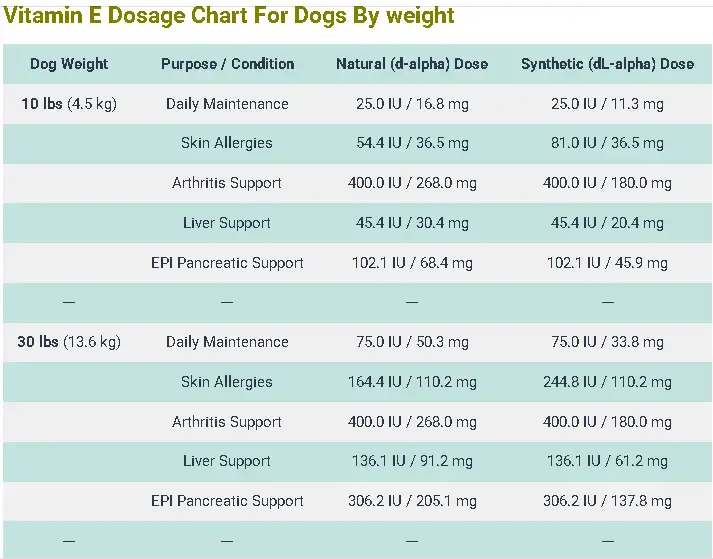
Vitamin E Dosage Chart For Dogs By weight
Here is the complete reference table mapping out standard dog weight brackets across all five health conditions, broken down by both International Units (IU) and Milligram (mg) targets for both vitamin forms.
| Dog Weight | Purpose / Condition | Natural (d-alpha) Dose | Synthetic (dL-alpha) Dose |
| 10 lbs (4.5 kg) | Daily Maintenance | 25.0 IU / 16.8 mg | 25.0 IU / 11.3 mg |
| Skin Allergies | 54.4 IU / 36.5 mg | 81.0 IU / 36.5 mg | |
| Arthritis Support | 400.0 IU / 268.0 mg | 400.0 IU / 180.0 mg | |
| Liver Support | 45.4 IU / 30.4 mg | 45.4 IU / 20.4 mg | |
| EPI Pancreatic Support | 102.1 IU / 68.4 mg | 102.1 IU / 45.9 mg | |
| — | — | — | — |
| 30 lbs (13.6 kg) | Daily Maintenance | 75.0 IU / 50.3 mg | 75.0 IU / 33.8 mg |
| Skin Allergies | 164.4 IU / 110.2 mg | 244.8 IU / 110.2 mg | |
| Arthritis Support | 400.0 IU / 268.0 mg | 400.0 IU / 180.0 mg | |
| Liver Support | 136.1 IU / 91.2 mg | 136.1 IU / 61.2 mg | |
| EPI Pancreatic Support | 306.2 IU / 205.1 mg | 306.2 IU / 137.8 mg | |
| — | — | — | — |
| 50 lbs (22.7 kg) | Daily Maintenance | 125.0 IU / 83.8 mg | 125.0 IU / 56.3 mg |
| Skin Allergies | 274.4 IU / 183.9 mg | 408.6 IU / 183.9 mg | |
| Arthritis Support | 400.0 IU / 268.0 mg | 400.0 IU / 180.0 mg | |
| Liver Support | 226.8 IU / 152.0 mg | 226.8 IU / 102.1 mg | |
| EPI Pancreatic Support | 510.3 IU / 341.9 mg | 510.3 IU / 229.6 mg | |
| — | — | — | — |
| 70 lbs (31.8 kg) | Daily Maintenance | 175.0 IU / 117.3 mg | 175.0 IU / 78.8 mg |
| Skin Allergies | 384.4 IU / 257.6 mg | 572.4 IU / 257.6 mg | |
| Arthritis Support | 400.0 IU / 268.0 mg | 400.0 IU / 180.0 mg | |
| Liver Support | 317.5 IU / 212.7 mg | 317.5 IU / 142.9 mg | |
| EPI Pancreatic Support | 714.4 IU / 478.7 mg | 714.4 IU / 321.5 mg | |
| — | — | — | — |
| 90 lbs (40.8 kg) | Daily Maintenance | 225.0 IU / 150.8 mg | 225.0 IU / 101.3 mg |
| Skin Allergies | 494.3 IU / 331.2 mg | 736.0 IU / 331.2 mg | |
| Arthritis Support | 400.0 IU / 268.0 mg | 400.0 IU / 180.0 mg | |
| Liver Support | 408.2 IU / 273.5 mg | 408.2 IU / 183.7 mg | |
| EPI Pancreatic Support | 918.5 IU / 615.4 mg | 918.5 IU / 413.3 mg |
What Is Vitamin E?
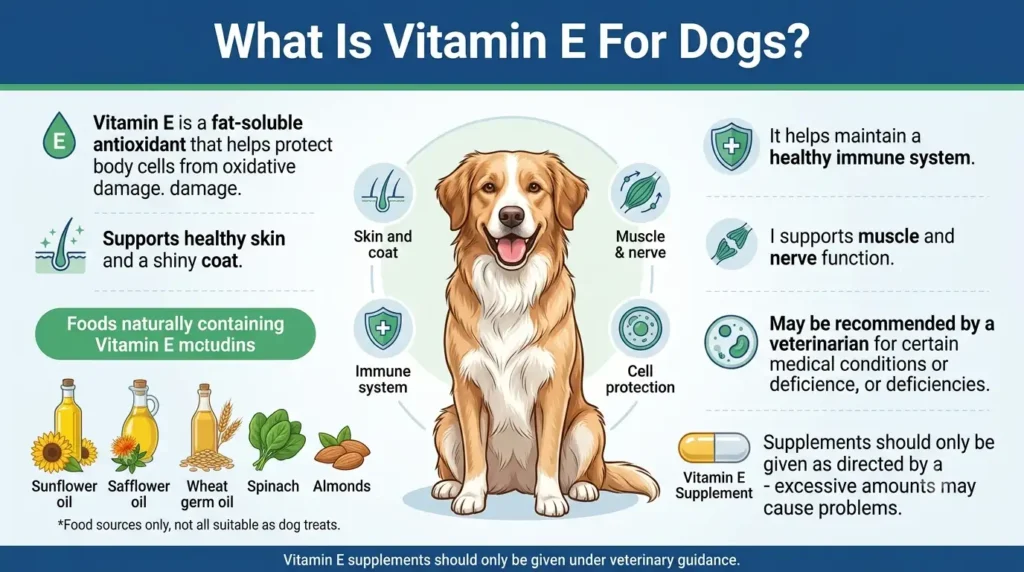
Vitamin E Dose for dogs is a fat soluble vitamin that is essential for a dog’s nutrition but cannot be synthesized in the body. Vitamin E is one of the most vital nutrients for Canines, is stored in the fatty portions of the body and found in the liver and is vital to the health of their cells, organs and bodily functions. The major chemical forms of vitamin E are referred to as tocopherols, and the most biologically active form of vitamin E commonly present in foods and supplements is alpha-tocopherol.
Vitamin E Dosage For Dogs is a potent antioxidant, one of its most vital roles. Free radicals are unstable molecules that are naturally formed in your dog’s body during normal activities like breathing and digestion. These molecules, when present in excess, can cause damage to cells in a process called oxidative stress, which can help lead to aging and health issues. Vitamin E removes these free radicals and aids in their reduction, thereby preventing the oxidative damage of the cell membranes and tissues in the body.
This antioxidant protection helps maintain many body functions in your dog including immune system, healthy skin and coat, muscles, eyesight, heart, fertility, fat metabolism and normal cell functions. Vitamin E may also play a role in preventing cell damage and promoting healthy aging and cognitive function, which is especially beneficial for older dogs, but is also important for all dogs.
Fortunately, deficiencies of vitamin E are rare as most dogs are fed complete and balanced commercial dog food and vitamin E is added to their food as a nutrient, as well as for its natural antioxidant properties to help prevent fat spoilage. Due to this reason, most healthy dogs do not need supplementation unless advised their veterinarian after assessing their needs.
Foods that are rich in vitamin E are:
- Nuts and seeds (sunflower seeds, almonds, peanuts)
- Vegetable oils such as sunflower, safflower, soybean and wheat germ oil.
- Leafy green vegetables (e.g. spinach, broccoli)
- Eggs
- Salmon, trout and sardines
These foods are loaded with Vitamin E, but are not really needed for dogs on a balanced diet.
A dog with a deficiency of vitamin E may experience vision defects, muscle weakness or inflammation, painful inflammation of body fat (steatitis) and abnormal neurological defects (rarely). Previously, a veterinarian can take blood tests to find out if the deficiency exists prior to suggesting supplementation.
Topical vitamin E (alpha-tocopherol in an oil such as olive oil) is safe for use to wet dry noses, cracked paw pads and irritated or crusty skin, for moisturizing and protecting the skin.
Benefits of Vitamin E for Dogs
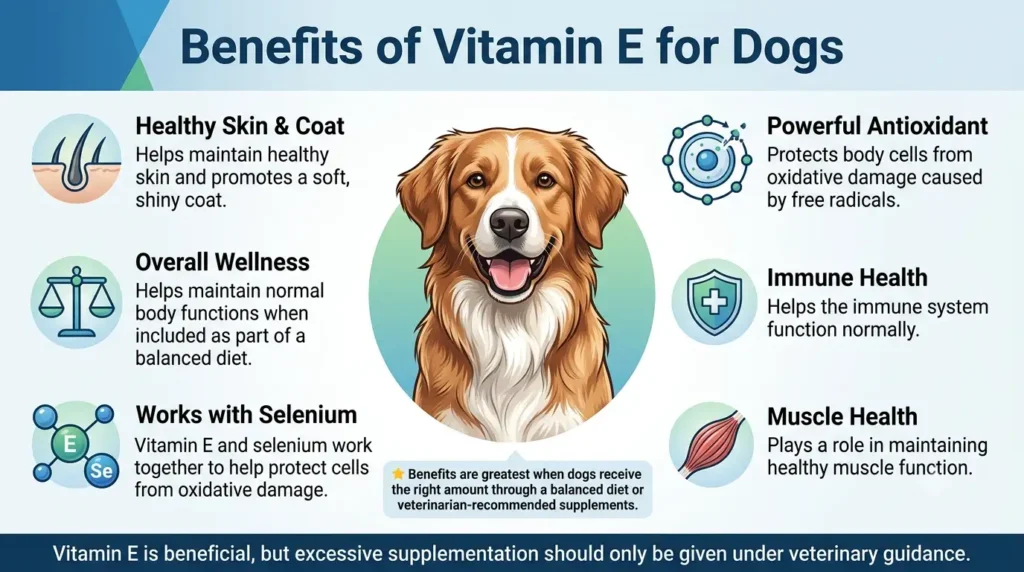
Vitamin E medication for dogs is one of the fat soluble vitamins that are essential for many areas of your dog’s health. It is used mainly as a potent antioxidant that helps to neutralise harmful free radicals that are generated naturally in the usual metabolic process. Vitamin E helps minimize oxidative stress to maintain the integrity of cell membranes, proteins, and DNA, thereby slowing the aging process of cells and reducing the incidence of inflammation associated health issues.
Powerful Antioxidant Protection
Vitamin E works to prevent free radicals from oxidizing cells by stabilizing them first, before they can cause damage to the tissues. It also supports the integrity of cell membranes, supports normal cellular repair and contributes to healthy metabolism. This antioxidant action is particularly significant in safeguarding organs and tissues against the daily stresses.
Enhances Immunity
Vitamin E dosage plays a role in the normal function of the immune system, research indicates that vitamin E increases activity of immune cells such as T-cells which in turn increases the dog’s ability to defend itself against infections. It can also help to curb excessive inflammation which is linked to allergic conditions and can help to boost your dog’s immune systems, especially in older dogs.
Promotes Healthy Skin and a Shiny Coat
Vitamin E is known for its positive effect on skin and coat. It also has an antioxidant and anti-inflammatory effect that helps to calm dry, itchy, or irritated skin, such as from allergies or dermatitis. It also acts to reduce the damage to the skin that oxidative factors like UV radiation may cause. Vitamin E helps maintain healthy fat metabolism and normal protein production in hair follicles for a soft, healthy and glossy coat.


Paid Links - As an Amazon Associate, I earn from qualifying purchases.
Helps Reduce Inflammation
Vitamin E dosage for dogs naturally helps to curb inflammation throughout the body. This can help relieve itchy skin symptoms of allergies and skin conditions as well as maintaining healthy tissues. Part of the reason why it is added to complete and balanced canine food is because of its anti-inflammatory properties.
Helps promote healthy joints and mobility
It has been thought that Vitamin E might help the dogs that suffer from arthritis (osteoarthritis) to reduce inflammation and discomfort. Vitamin E is believed to help reduce oxidative damage, which can lead to cartilage and joint degeneration, promoting healthier joints and better mobility, particularly in older dogs.
Provides Nourishment to Heart, Liver, Muscles and Nervous System
Vitamin E helps maintain healthy function of various important systems of the body, like heart, liver, muscle cells and nerve cells. It also helps maintain proper muscle function, healthy circulation and normal metabolism, and is a key nutrient for overall wellness.
Helps Blood to clot and aids fertility
Vitamin E is involved in the regulation of blood coagulation, and has been found to support reproductive health and fertility, thus promoting physiological functions throughout the body.
Helps in maintaining the general well being of the cells
Vitamin E helps prevent damage to the cells caused by oxidation and allows cells to repair. Diets rich in vitamin E, particularly in conjunction with other antioxidants like vitamin C and beta-carotene, have been proven to fight oxidative damage and cellular breakdown and to aid in immune function.
While vitamin E offers many health benefits, for most dogs, a complete and balanced diet should be sufficient to provide all the Vitamin E they need, and supplementation is unnecessary for the vast majority of dogs. Vitamin E is fat soluble, so can be stored in the body and may cause nutritional imbalance. For this reason, vitamin E supplements should only be given under the guidance of a veterinarian.
Vitamin E Deficiency in Dogs
In dogs, vitamin E deficiency is rare, particularly in those fed a complete balanced commercial diet, which will usually contain adequate amounts of vitamin E. Deficiency is uncommon and symptoms often are vague, making it hard to diagnose without veterinary examination. Your veterinarian can do blood tests to determine if your dog is low in vitamin E if they suspect a deficiency.
What causes Vitamin E Deficiency?
Vitamin E deficiency is rare, but may be seen in some situations, such as:
- Feeding a home-prepared diet that is not nutritionally balanced by a veterinary nutritionist
- A diet rich in fish or fish oil, which can be consumed over a period of time and lead to low vitamin E reserves.
- Medical disorders that cause poor nutrient absorption (malabsorption disorders)
- Genetic predisposition (as reported in some English Cocker Spaniels)
- Consuming a diet that is unusual or not well balanced.
Vitamin E Deficiency Signs and Symptoms
Since vitamin E is needed to prevent cells from being damaged by oxidation, a deficiency of the vitamin can have a wide-ranging impact on various body systems. Possible signs include:
- Muscle weakness or inflammation of the muscles
- Sluggishness or decreased activity
- Abnormalities or malfunctioning of the nerves
- Vision problems or decreased eyesight
- Dry, flaky, itchy, and irritated skin
- Rashes or areas of crusts on skin.
- Dry, coarse or heavy shedding of hair
- Sore inflammation and deterioration of body fat (steatitis), which may result in abnormal lumps.
- Weight loss
- Problems with reproductive or fertility.
These symptoms are not specific to the problem of a lack of vitamin E; they can also occur with other medical problems. If your dog exhibits any of these symptoms, see your vet for a correct diagnosis; don’t assume that it’s a vitamin deficiency.
If there is any skin irritation or the skin is dry with skin crusty areas, dry noses or cracked paw pads, then it is safe to apply topical vitamin E oil (alpha-tocopherol in a suitable carrier oil) to help moisturize the area. Topical treatment however will not resolve a deficiency of vitamin E and should always be diagnosed and treated under veterinary supervision.
Best Vitamin E Supplements for Dogs
A healthy dog’s diet, unless inadequate, contains enough vitamin E, and most do not require a supplement. But, if your veterinarian finds that your dog would benefit from an extra dose of vitamin E, a high-quality dog vitamin E supplement is the safest choice.
There are a few different types of Vitamin E supplements for dogs, such as:
- Soft gels
- Liquid oils
- Powders
- Soft chews
The most effective supplement will vary based on your dog’s age, health and nutritional requirements. In some instances it may be recommended to use vitamin E capsules that are made for humans, but these should only be used under veterinary guidance. Some of the ingredients or sweeteners (like xylitol) used in many human supplements are harmful to dogs, or they may have unnecessary additives.
Canine-specific supplements are often recommended by veterinarians as these supplements have the correct dosage and may also contain other nutrients in addition to vitamin E that benefit dogs.
Common options include:
- Vetoquinol Flexadin Advanced with UC-II Collagen Soft Chews – Protects joint health and can help dogs that suffer from arthritis.
- Purina Pro Plan Veterinary Diets Skin Care Soft Chew Supplement – formulated for dogs with allergic skin conditions and skin health.
- Pet-Tabs Plus Vitamin-Mineral Dog Supplement – A multi-vitamin supplement that contains Vitamin E and other vitamins and minerals.
- NaturVet All-in-One Multivitamin – A complete daily multivitamin supplement with vitamin E.
- Fera Pets Fish Oil & Vitamin E Supplement – Provides omega-3 fatty acids and vitamin E for promoting skin, coat health and overall well-being.
Your veterinarian will be able to advise you if your dog really needs more vitamin E and which vitamin E supplement is best for your dog and in what form and dosage.
Vitamin E Food for Dogs
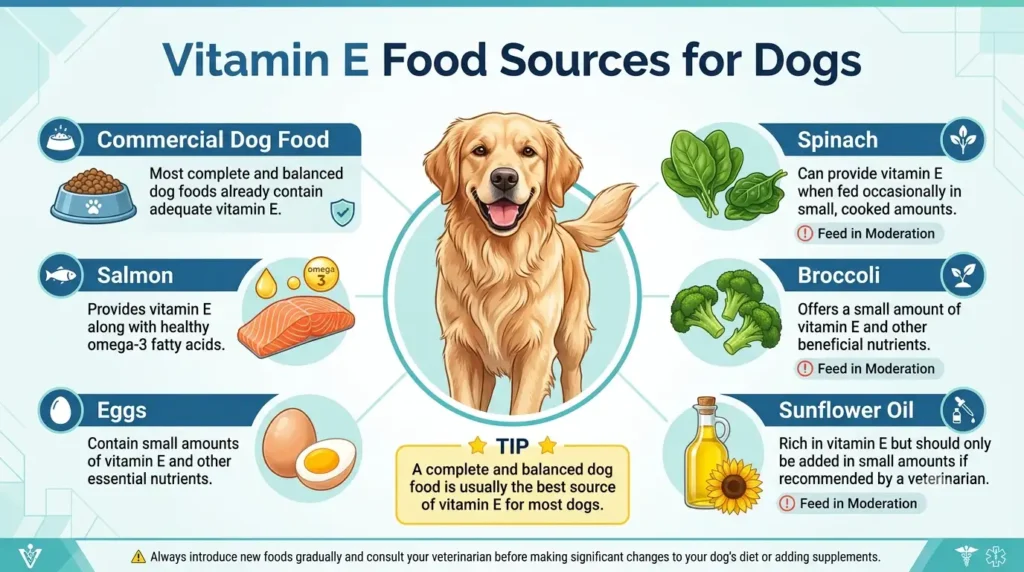
A complete and balanced dog food will likely supply all the vitamin E your healthy dog requires. The Association of American Feed Control Officials (AAFCO) recommends that a minimum amount of vitamin E, at least 50 IU per kg of feed, be supplied in adult dog foods; many dog foods provide much more—e.g., 100-500 IU/kg—to support antioxidant protection and decrease cellular oxidative stress.
Generally, a food with sufficient vitamin E is one that has a label that indicates it provides “added vitamins and minerals” or “complete and balanced nutrition.” Vitamin E is often included as mixed tocopherols which also act as a natural preservative by preventing fats from going rancid.
The dog foods may contain higher levels of Vitamin E
Certain diets for specific health conditions have higher vitamin E content and other beneficial nutrients. Examples include:
- Purina ONE +Plus Adult Skin & Coat Formula Dry Dog Food – Helps maintain skin and coat health.
- Blue Buffalo True Solutions Mobility Care Formula Dry Dog Food – Joint Support Formula.
- Purina Pro Plan Veterinary Diets NeuroCare Dry Dog Food – formulated to support brain function.
- Purina Pro Plan Sensitive Skin & Stomach Dog Food
- Small Breed Dog Food, Science Diet Sensitive Stomach & Skin by Hill’s Pet.
- Eukanuba Adult Large Breed Dog Food
To find out how much of a specific vitamin E is in any food, you can consult the label on the package, or call the manufacturer.
Dogs Vitamin E Rich Natural Food Items
There are a few healthy foods that are safe for your dog and contain vitamin E naturally that you can take as your healthy treats in moderation:
- Leafy greens, such as spinach
- Broccoli
- Pumpkin
- Sweet potatoes
- Peas
- Bell peppers
- Blueberries
- Peanut butter
- Egg yolks
- Chicken
- Salmon
Other quality dog foods may also contain ingredients like chicken, salmon, peas and sweet potatoes, which are all natural sources of vitamin E.
What About Processed Dog Foods?
The vitamin content in the original feed ingredients may be lost during commercial processing, which often involves high heat. Manufacturers typically fortify the food with vitamins afterwards to make sure that it meets nutritional standards. The best method of ensuring adequate vitamin E levels in your dog’s diet is to select a good complete and balanced food.
Most dogs can simply eat a good commercial food and will not need supplements unless the veterinarian suggests trying it for a particular condition, such as chronic skin or ear issues.
You May Also Like to Read:
- Selegiline Dosage For Dogs: Calculator, Chart & Safe Guide
- Pedialyte Dosage For Dogs: Calculator, Chart & Safe Guide
FAQs
Can Vitamin E cure dog warts?
Vitamin E dose is not well supported by science when it comes to treating or getting rid of dog warts (papillomas). Many canine warts will resolve on their own over time, although some think it may also help wounds heal and strengthen the immune system. Warts that change in size or bleed, or result in discomfort should be evaluated properly by your veterinarian.
Can vitamin E alleviate itching in dogs?
Vitamin E dosage for dogs can make a difference in itching from allergies, dermatitis and dryness, especially when combined with correct veterinary care. It does not, however, cure the cause of the itching, which might be from skin infection, flea bites, contact with irritants, or mange mites. It is crucial to identify the root cause and to treat it.
Is there Vitamin E in coconut oil?
Yes, if it is in small quantities. Coconut oil does not contain a considerable amount of vitamin E, so it should not be used as a vitamin E supplement. Sunflower, safflower, soybean and wheat germ oil have significantly more vitamin E. Coconut oil should be used sparingly as it is rich in calories, but can be used in moderation as it may improve the appearance of coat.
Does vitamin E benefit a dog’s coat and skin?
Yes. Vitamin E helps protect skin cells from oxidative damage and aids in maintaining normal skin function, promotes a healthy coat and skin. It also helps with the creation of collagen fibers that help with healthy skin and hair growth. Vitamin E can help keep skin healthy and have good condition in the coat.
Is it possible for a dog to have too much vitamin E?
Yes. Vitamin E dose can be safely used and is not poisonous when overdosed, but excessive doses can create issues. An acute overdose can cause digestive upset, like vomiting and diarrhea. Excessive intake over a long period of time can inhibit the absorption of other fat soluble vitamins such as vitamins A, D, and K. Excess vitamin E can be a risk of abnormal blood clotting and bleeding in dogs with low vitamin K. Vitamin E supplements should always be given as prescribed by your veterinarian.
Final Thoughts
An essential nutrient, vitamin E medication for dogs is a vital part of your dog’s overall health. It is a potent antioxidant which is essential for the protection of the cell from oxidative damage, for the immune system, skin and coat, muscles, heart, nerves and normal cell function. Luckily, a balanced dog food contains everything a dog needs and, in most cases, vitamin E is not a supplement that a dog requires.
If your dog has any medical issues or has a diagnosed vitamin E deficiency or high nutritional requirements, your veterinarian may suggest a specific vitamin E supplement and dosage. Be cautious as it is a fat soluble vitamin and can cause nutritional imbalances or interfere with other vitamins if given in excess, and should not be given unless advised by a professional.
Through a high-quality diet, careful attention to your dog’s health and consulting your veterinarian, you can be sure your dog is getting the correct amount of vitamin E to maintain an active and healthy life.