Ashwagandha Dosage Calculator For dogs
© medsdog.com
As more and more dog owners seek to provide their furry companions with natural remedies to boost their overall health, Ashwagandha Dosage for Dogs has emerged as a significant trend. This ancient ayurvedic herb, also known as Withania somnifera, is termed as an adaptogen, which is a plant that is said to help the body adapt to stress and restore balance. Ashwagandha is a plant that has been utilized for centuries in people for stress relief, energy, immune health and overall wellness. Today, it’s also increasingly added to canine supplements that are formulated to support calmness, joint health, healthy aging, and immunity.
Some dogs will easily adjust to new circumstances, while others might not cope well with loud noises, traveling, leaving home, changes in routine, getting older, or previous experience. As a result, numerous pet owners are curious about the safety of using ashwagandha to make their dogs more relaxed and comfortable. While the initial studies and anecdotal reports are encouraging, there are still limited scientific studies assessing its safety and effectiveness in dogs, and its long-term effects are not completely understood. Some dogs may also experience different results.
This is the ultimate ashwagandha guide for dogs, where you’ll discover the suggested dose for your pet by weight, benefits, potential side effects, safety concerns, and how to select and give the correct supplement. Most importantly, you will learn when ashwagandha might be right for your pup, when it is not, and why it is always best to check with your veterinarian before adding any herbal supplement to your dog’s diet—particularly if they have any pre-existing health issues, are pregnant, or are on any medication.



Paid Links - As an Amazon Associate, I earn from qualifying purchases.
Key Takeaways
- Ashwagandha (Withania somnifera) is a herb that has been used as an adaptogen in traditional medicine to assist with stress management, balanced energy and overall wellness.
- Although more dogs are now turning to ashwagandha, there are currently few studies on the safety and efficacy of ashwagandha in dogs and further research is required.
- There is no one-size-fits-all ashwagandha dosage for dogs, and that’s due to a few factors.
- Some dogs may benefit from Ashwagandha for calm behavior, immune support, joint comfort and support of healthy ageing however results vary.
- Side effects include slight upset stomach, drowsiness, or allergic reaction, particularly when administered in large amounts.
- Ashwagandha dosage for dogs can interact with some medications, and it could also affect thyroid activity, so it is important to talk with a vet before using this supplement if your dog has other health issues.
- Look for a high-quality supplement that is specially formulated for pets, and gradually add it to your dog’s diet, keeping an eye out for any negative reactions.
- Prior to administering ashwagandha to your dog, always check with your vet if your dog is pregnant, nursing, has a medical problem, or taking prescription drugs.
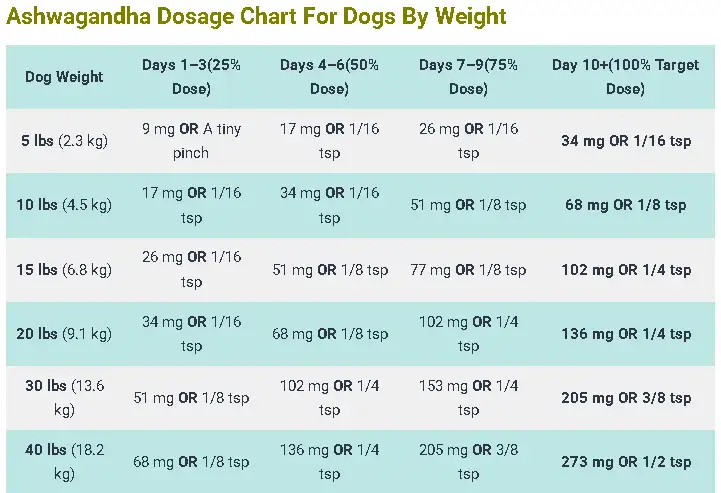
Ashwagandha Dosage Chart For Dogs By Weight
This safe-titration reference guide covers both Method 1 (Standardized Root Extract) and Method 2 (Raw Whole Root Powder) across standard canine body weights.
| Dog Weight | Days 1–3(25% Dose) | Days 4–6(50% Dose) | Days 7–9(75% Dose) | Day 10+(100% Target Dose) |
| 5 lbs (2.3 kg) | 9 mg OR A tiny pinch | 17 mg OR 1/16 tsp | 26 mg OR 1/16 tsp | 34 mg OR 1/16 tsp |
| 10 lbs (4.5 kg) | 17 mg OR 1/16 tsp | 34 mg OR 1/16 tsp | 51 mg OR 1/8 tsp | 68 mg OR 1/8 tsp |
| 15 lbs (6.8 kg) | 26 mg OR 1/16 tsp | 51 mg OR 1/8 tsp | 77 mg OR 1/8 tsp | 102 mg OR 1/4 tsp |
| 20 lbs (9.1 kg) | 34 mg OR 1/16 tsp | 68 mg OR 1/8 tsp | 102 mg OR 1/4 tsp | 136 mg OR 1/4 tsp |
| 30 lbs (13.6 kg) | 51 mg OR 1/8 tsp | 102 mg OR 1/4 tsp | 153 mg OR 1/4 tsp | 205 mg OR 3/8 tsp |
| 40 lbs (18.2 kg) | 68 mg OR 1/8 tsp | 136 mg OR 1/4 tsp | 205 mg OR 3/8 tsp | 273 mg OR 1/2 tsp |
| 50 lbs (22.7 kg) | 85 mg OR 1/8 tsp | 170 mg OR 1/4 tsp | 256 mg OR 3/8 tsp | 341 mg OR 1/2 tsp |
| 60 lbs (27.3 kg) | 102 mg OR 1/4 tsp | 205 mg OR 3/8 tsp | 307 mg OR 1/2 tsp | 409 mg OR 3/4 tsp |
| 70 lbs (31.8 kg) | 119 mg OR 1/4 tsp | 239 mg OR 3/8 tsp | 358 mg OR 1/2 tsp | 477 mg OR 3/4 tsp |
| 80 lbs (36.4 kg) | 136 mg OR 1/4 tsp | 273 mg OR 1/2 tsp | 409 mg OR 3/4 tsp | 545 mg OR 1 tsp |
| 90 lbs (40.9 kg) | 153 mg OR 1/4 tsp | 307 mg OR 1/2 tsp | 460 mg OR 3/4 tsp | 614 mg OR 1 tsp |
| 100 lbs (45.5 kg) | 170 mg OR 1/4 tsp | 341 mg OR 1/2 tsp | 511 mg OR 7/8 tsp | 682 mg OR 1 and 1/8 tsp |
⚠️ Important: Administer only one method—do not combine both. Powder measurements are rounded to standard kitchen measuring spoon fractions for practical use. Always closely monitor your dog for signs of digestive changes during the initial 10-day induction period.
What Is Ashwagandha?
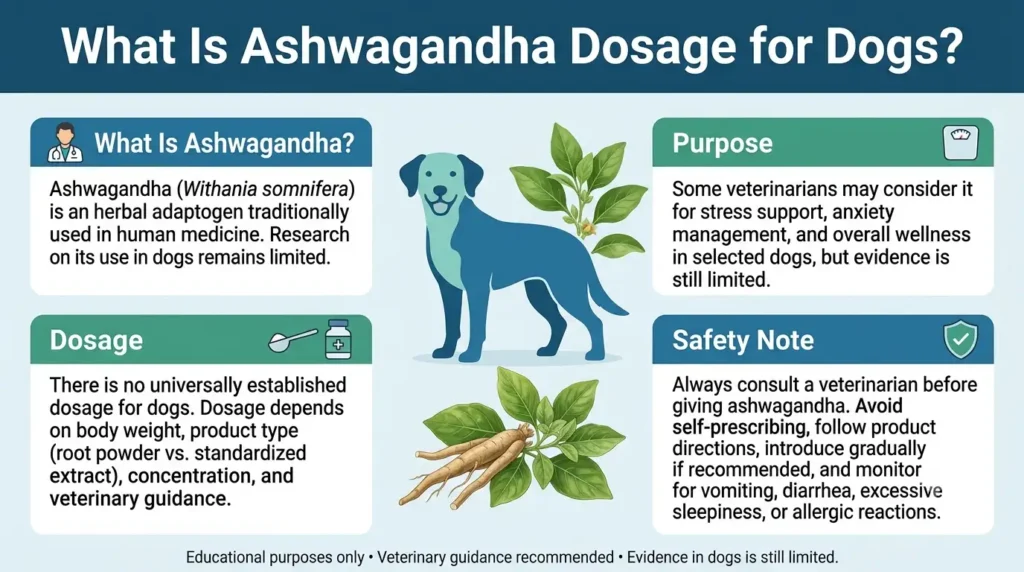
Ashwagandha (Withania somnifera) is an evergreen shrub that has been utilized for thousands of years in Ayurvedic medicine, the traditional system for natural healing. It is also called Indian ginseng, or Indian winter cherry and is found in certain parts of Africa, South Asia, and the Middle East. The root of the plant is dried and ground into a powder or standardized extract, as it is the part with the greatest amount of the plant’s active compounds, so most supplements are made from this.
Ashwagandha for dogs is traditionally regarded as an adaptogen, an herb that helps to manage the body’s reactions to stress and balance it overall. It’s been popular in human use for stress management, relaxation, and overall wellbeing and there have been studies investigating its benefits for a number of health aspects.
In recent years, ashwagandha has gained more traction in pet care products as a calming supplement for increased pet wellness. It’s thought to be relatively harmless when used correctly, but there has been limited scientific study of its benefits and long-term effects in dogs.
How Does Ashwagandha Work in Dogs?
Ashwagandha medication for dogs is typically regarded as an adaptogen, which is a normal compound that is supposed to support the body to manage stress and balance. It has been investigated for its ability to help manage stress, relaxation and sleep in human beings, but there is not enough research to apply this to dogs.
The available research on dogs is conducted on a small number of healthy older dogs and involved measuring a stress hormone (cortisol) and various blood and antioxidant markers over a 60 day period. From these results, it was found that there may be biological effects that could be measured in dogs with ashwagandha supplementation. The study, however, was not designed to assess changes in behaviors, anxiety or obvious signs of stress.
Therefore, although ashwagandha appears to hold promise for use as a health aid in dogs, further quality studies are required to better understand its effect on dogs and if it has any real benefit on the behavior or stress levels of dogs.
Benefits of Ashwagandha in Dogs
Ashwagandha is an adaptogenic herb which is widely used in human and animal health for general wellbeing. It has been added into dog supplements due to its adaptogenic, antioxidant, and anti-inflammatory effects.
But although initial results and some anecdotes are promising, there is still a lack of scientific proof in dogs and its benefits have not yet been fully demonstrated. Depending on the condition of your dog, supplement type and dosage, the effects can vary.
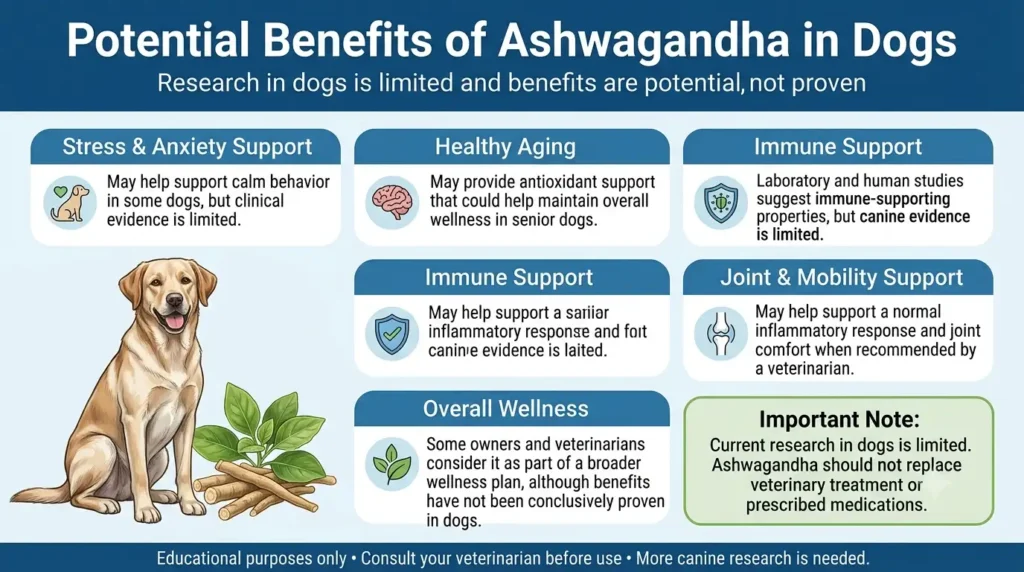
Here are some possible ashwagandha benefits for your dog:
- Helps to maintain relaxed behavior and aids the body in dealing with daily stress.
- Increasing comfort and mobility for joints with its natural anti-inflammatory agents.
- Helps maintain healthy immune function and overall resilience.
- Supplies antioxidant protection, which could help promote healthy ageing.
- Helping maintain normal cortisol and other hormone balance.
May help reduce stress and anxiety
Ashwagandha’s most popular attribute is its adaptogenic effect, which could enable dogs to cope better with physical and emotional stressors. It’s frequently utilized with dogs that worry when they:
- Vet visits
- Car rides or travel
- Thunderstorms and fireworks
- Being separated from their owners
- New places, visitors or animals.
- Familiarity with sickness or other unusual situations
Some pet owners have also found that it can help to sedate overly excited or hyperactive dogs, but more clinical studies are required to substantiate these claims.
Enjoy good joint health and mobility.
There are naturally occurring compounds in Ashwagandha, called withanolides, which are associated with anti-inflammatory activity. These compounds can help keep your joints comfortable and prevent inflammation associated with arthritis or ligament damage, and contribute to mobility, strength, and stamina — especially in older dogs.


Paid Links - As an Amazon Associate, I earn from qualifying purchases.
May Help with Everyday Pain
Many older dogs become stiff, achy and generally uncomfortable. Initial evidence indicates that some dogs can experience a decrease in the severity of the pain and increased daily comfort when using ashwagandha; however, more extensive studies are required.
May help support a healthy immune system
By assisting the body’s natural defenses and resilience to the physical stresses of daily living, Ashwagandha dose might support normal immune function. Some research also indicates that it can help diminish tiredness and have a general health benefit.
May Help Maintain Healthy Hormone Balance
Ashwagandha may have the ability to assist support typical hormonal agent standard, such as healthy cortisol (stress hormone) levels. It has also been investigated for its possible interactions with other hormone systems, but information at this time is limited in dogs.
May help protect against oxidative stress and overall health problems.
Ashwagandha’s antioxidant action can aid in shielding cells from oxidative tension and help bring a healthy aging process. It’s occasionally added to senior canine and digestive tract health supplements for overall health; however, these applications remain to be investigated over the long-term.
Ashwagandha appears to be an effective complementary wellness supplement; however, there is limited evidence in dogs. If you are contemplating using it for stress, joint health, or general health, always talk to your veterinarian first as there may be products that have more scientific evidence that are better suited to your dog’s needs.
Potential Side Effects of Ashwagandha in Dogs
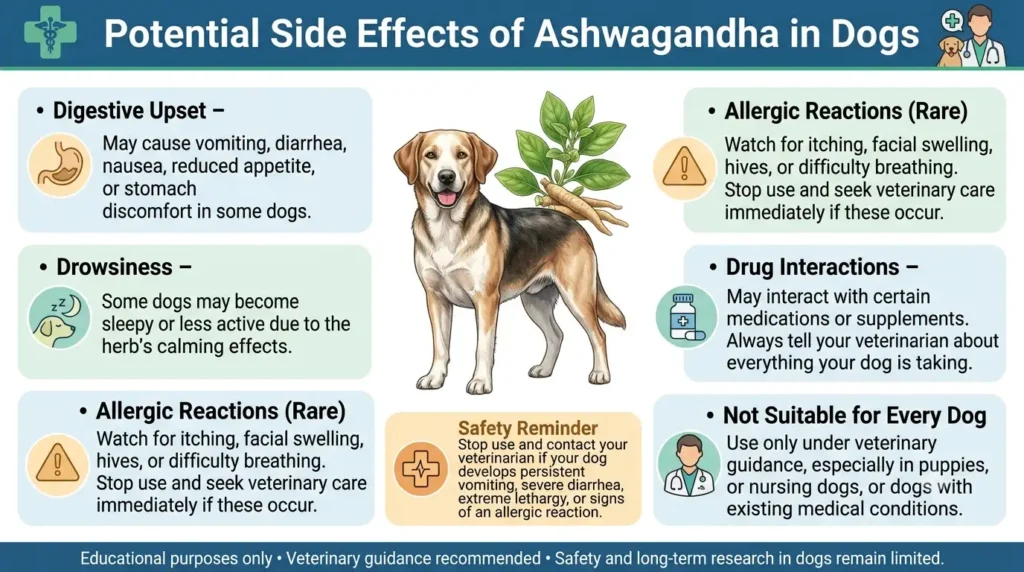
Ashwagandha is considered safe for most dogs when administered at the proper dosage; however, long-term use of Ashwagandha in dogs is not well studied. Most of the safety information is based on human research, so please use this herbal supplement with caution and under your veterinarian’s supervision.
The most common side effects are:
- Nausea, vomiting, diarrhea, loose or soft stool, upset stomach.
- Excessive sedation or drowsiness, particularly when taking a combination of ashwagandha with other sedative herbs or pharmaceuticals.
High doses, especially products that are made for people, can increase the risk of an upset stomach and excessive sleepiness.
Other Safety Considerations
These effects have not been definitively established in dogs, but in humans, there have been isolated incidences of liver damage, possible thyroid effects, and potential interactions with certain drugs. Ashwagandha might interact with:
- Thyroid medications
- Diabetes medications
- Blood pressure medications
- Immunosuppressant drugs
Also, the quality of herbal supplements can differ greatly from one manufacturer to another. The strength of some products may vary or they can have other ingredients which are not immediately apparent on the front label. Therefore, opt for a good product made for animals as much as possible.
If your dog does begin to show symptoms that you are concerned about, including vomiting, diarrhea, unusual drowsiness, or any other reaction, stop using the ashwagandha right away and see your vet.
How to Give Your Dog Ashwagandha
When your vet prescribes ashwagandha for your dog, always make sure to use a pet-specific or vet-recommended supplement. Do not use human ashwagandha supplements as they can contain a heavier dose or other ingredients that could be harmful to dogs. Your veterinarian should know of any medication, supplements or health issues your dog is on before beginning the supplement so they can avoid any potential interactions.
There are a variety of ways to add ashwagandha to your dog’s diet and it’s easy to incorporate into their daily routine:
- Chewable supplements: These are easy to administer and can be provided as a treat or a daily supplement.
- Soft treats: Good for giving the supplement and rewarding good behavior.
- Powder: Add to wet or dry food, sprinkle on kibbles, mix with dog friendly foods like plain yogurt or peanut butter, or add to homemade dog treats.
- Liquid drops: Give directly by mouth; or in the food if the product label instructs you to do so.
Follow your vet’s or manufacturer’s directions for dosage to get the best results. Do not give ashwagandha in the raw plant state or to exceed the recommended dose for the product. If your dog has any changes in stool, excessive drowsiness or any other unusual symptoms after beginning use of this supplement, discontinue and consult with your veterinarian.
What to Do If Your Dog Takes Too Much Ashwagandha
In case of an overdose, reach out to your veterinarian or emergency veterinary clinic immediately if your dog accidentally consumes more than the recommended dose of Ashwagandha. This is particularly crucial if your dog ate a significant amount or a human ashwagandha pill with other ingredients that aren’t good for dogs.
If you contact your veterinarian, be sure to have the product package so you can tell the name of the product, the amount of the product you know your dog consumed, the strength of the product, and the ingredient list of the product. This will help your veterinarian make the right decision.
Following an accidental overdose, watch your dog closely for signs and symptoms like vomiting, diarrhea, excessive drowsiness or unusual behavior. If your dog is very sleepy, hard to wake, shivering or looks very ill, you should take this as a serious veterinary emergency and have them seen immediately. With prompt veterinary care, you can help minimize potential complications and make sure your dog is treated properly.
You May Also Like to Read:
- Turkey Tail Dosage For Dogs: Calculator & Complete Guide
- Boswellia Dosage For Dogs: Calculator, Chart & Safe Guide
FAQs
Does ashwagandha dosage work for dogs?
Not yet, there is not yet much research conducted on the use of ashwagandha in dogs. While there is biological evidence in healthy older dogs in one small study, there is insufficient evidence to support the use of this for stress, anxiety or other health issues.
Can I give my dog ashwagandha every day?
Ashwagandha is frequently added to pet supplements designed for daily use to promote wellness. You should only administer it once a day as directed by your veterinarian or on the product’s directions, though, since the proper dosage can vary based on your dog’s health and size.
Is there any interaction between Ashwagandha and other medicines?
Yes. Ashwagandha can interact with thyroid medications, diabetes medications, blood pressure medications and immunosuppressants. Prior to introducing ashwagandha, make sure to inform your veterinarian of any other medications or supplements your dog may be taking.
What do you think about ashwagandha side effects in dogs?
When used at the correct dosage, most dogs do not have any issues with ashwagandha, though some may have digestive upset, vomiting, diarrhea, loose stools, nausea or drowsiness. Liver injury and thyroid effects have also been reported in rare instances, but not in dogs.
Can I supplement my dog with human Ashwagandha?
No: In human supplements, the amounts needed or other ingredients that are safe for humans may not be safe for dogs. Always use a pet-specific product or a product recommended by your veterinarian.
Can puppies or senior dogs take ashwagandha?
Ashwagandha can be added to supplements designed for various ages, such as seniors. But puppies, older dogs, pregnant dogs, or dogs with thyroid disease or other medical issues should only take ashwagandha under a vet’s supervision.
When does ashwagandha start being effective in dogs?
Some dogs may show signs of reduced stress after a couple of days, while others will need to take the medication regularly for several weeks before any effects are seen. This varies from person to person and the exact time has not yet been determined through research.
If my dog accidentally consumes too much ashwagandha, what should I do?
Call your veterinarian or an emergency vet clinic right away. Watch your dog for vomiting, diarrhea, excessive drowsiness, tremors or unusual behavior, and contact your veterinarian if your dog is hard to wake or is very sick.
Final Thoughts
Ashwagandha Dosage for dogs is a herbal supplement that has been traditionally used and has become a popular choice for maintaining calm behaviour in dogs and general well-being and healthy ageing. Its adaptogenic, antioxidant, and anti-inflammatory effects make it a desirable supplement in certain pet wellness plans; however, there is currently not enough scientific research to validate its benefits for dogs. While there is some promising research, larger, better-quality studies are needed to determine its safety, efficacy, and long-term effects.
If you think about using ashwagandha with your dog, be sure to use a high-quality ashwagandha that is formulated for dogs, use ashwagandha according to the instructions for your dog’s weight, and take it slowly when you first start to see if there are any side effects. Most important, check with your veterinarian before beginning any herbal program or supplement, particularly if your dog has an existing medical condition, is pregnant, or if he or she is on any prescription medications.
Ashwagandha can be a beneficial addition to a holistic care program when used under a veterinarian’s supervision, but it should never be used as a substitute for professional medical treatment or established care if it is required.